




⛪ Monasteries and Churches of Georgia: Where to Go for the Pilgrim and the Traveller
Holy sites from Kazbegi to Samegrelo
Monasteries and churches of Georgia at a glance
🏛️ Mtskheta, the heart of Christian Georgia
🏙️ Tbilisi and nearby
🍇 Kakheti
🏔️ Kazbegi
🍷 Kutaisi and the west
The holy sites are scattered across the country, so on one trip people take those that lie along the region's route.
The monasteries and churches of Georgia are the living heart of one of the world's oldest Christian countries: Georgia adopted Christianity as its state religion as early as the 4th century, and hundreds of churches, cathedrals and monasteries have grown up here since. Among them are the main holy sites that people travel to from everywhere: the Svetitskhoveli cathedral in Mtskheta, the rock-set Jvari, the Gelati monastery near Kutaisi, the Gergeti Trinity below Kazbegi. They are scattered across the country and belong to different eras, so on one trip people usually take those that lie along the route. This article helps you choose where to go for a holy site and where for architecture and views.
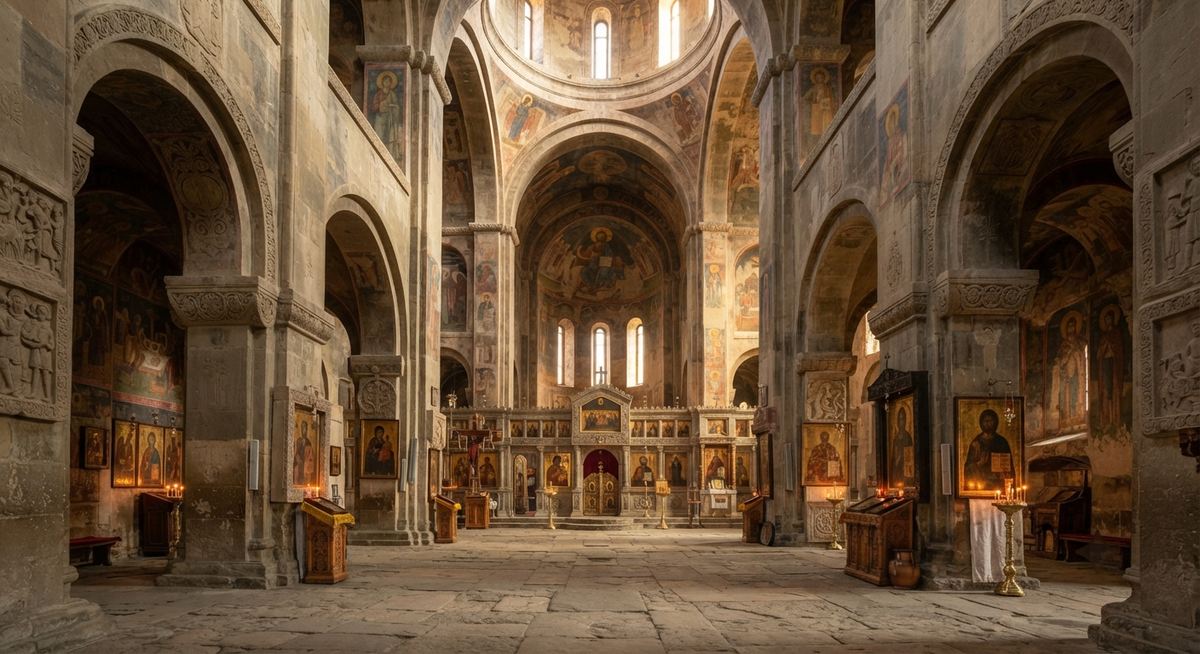
Churches and monasteries are a distinct, and the largest, layer of Georgia's antiquities, alongside its fortresses and cave towns. If you want the story of how the country came to Christianity, that is a separate topic on religion in Georgia; here the task is practical, to gather specific holy sites with history, region and road. How to fit them into a country-wide route is covered in the guide to what to see in Georgia on one trip.
In order below: first what counts as the country's main holy sites, then the sites by region, then a separate section for pilgrims, a map and the practical side with a table.
⛪ What Counts as Georgia's Main Holy Sites
A Georgian holy site is not always a lone church. More often it is a complex: a cathedral enclosed by a wall, with a bell tower, cells and outbuildings, set on high ground, on a cliff above a river, on a mountain, in a gorge. Many were raised at once as a spiritual centre and a fortress-refuge, so Georgian monasteries often have a stern, defensive look.
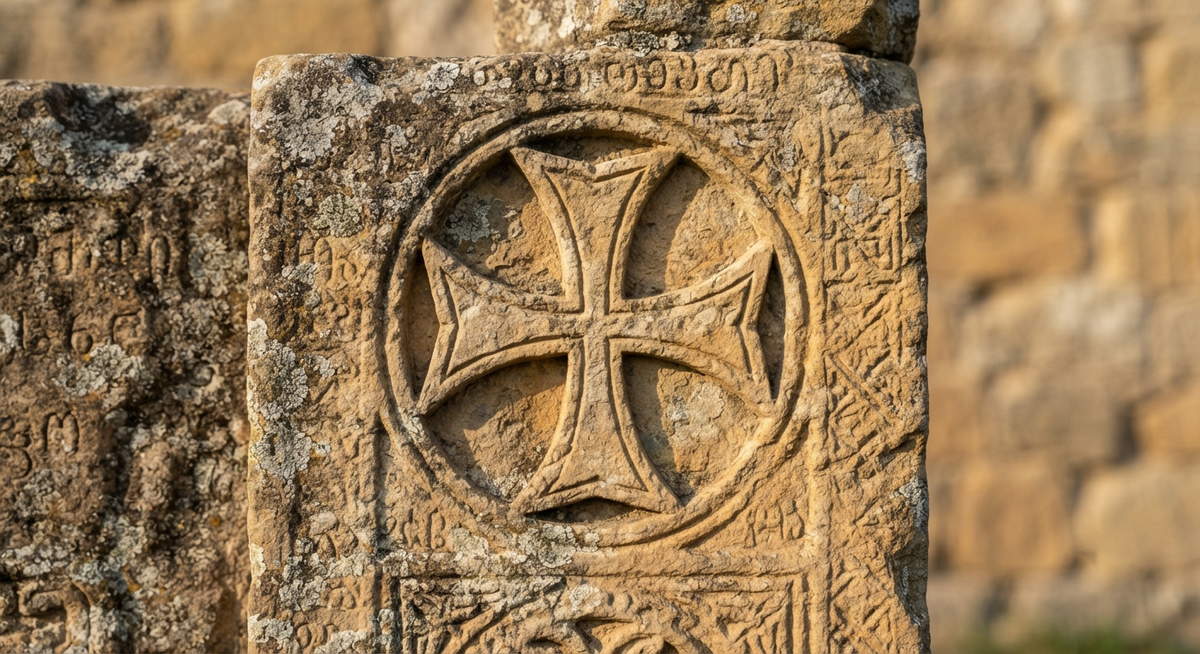
There are a few types worth telling apart. Cathedrals are the main churches of dioceses, the largest and most stately; Georgian tradition singles out four great cathedrals, Svetitskhoveli, Bagrati, Alaverdi and Oshki. Monasteries are communities with monastic life, from crowded to almost hermitic. Rock monasteries (David Gareja, Vardzia) are carved right into the mountain, and are covered separately in the article on cave towns. A separate category is modern cathedrals, like Tbilisi's Sameba, built in our own day but grown into the country's main church.
Some of Georgia's holy sites are on the UNESCO World Heritage list: the Gelati monastery and the historical monuments of Mtskheta (Svetitskhoveli, Jvari, Samtavro). Many churches are working, and that is important to remember on a visit. 👗 A dress code applies in monasteries: women need a headscarf and a skirt below the knee, men long trousers; many monasteries hand out skirts and scarves at the entrance, but it is better to have your own. Inside working churches you are usually asked not to make noise or photograph services.
🏛️ Mtskheta: The Country's Spiritual Centre
⛪ Svetitskhoveli and All of Ancient Mtskheta
Mtskheta is Georgia's ancient capital and its spiritual heart, only 20 km from Tbilisi, at the confluence of the Mtkvari and the Aragvi. It was from here that Christianity began to spread through the country, here St Nino preached, and here stands Georgia's main cathedral, Svetitskhoveli ("the life-giving pillar"). The present church was built in the 11th century on the site of the country's first church, from the 4th century. By tradition, the greatest relic, the robe of Christ, lies beneath the cathedral, and the very spot where it is hidden is marked by a special pillar. For centuries Svetitskhoveli was the place of coronation and burial of Georgian kings. The cathedral is on the UNESCO list and remains a working cathedral.
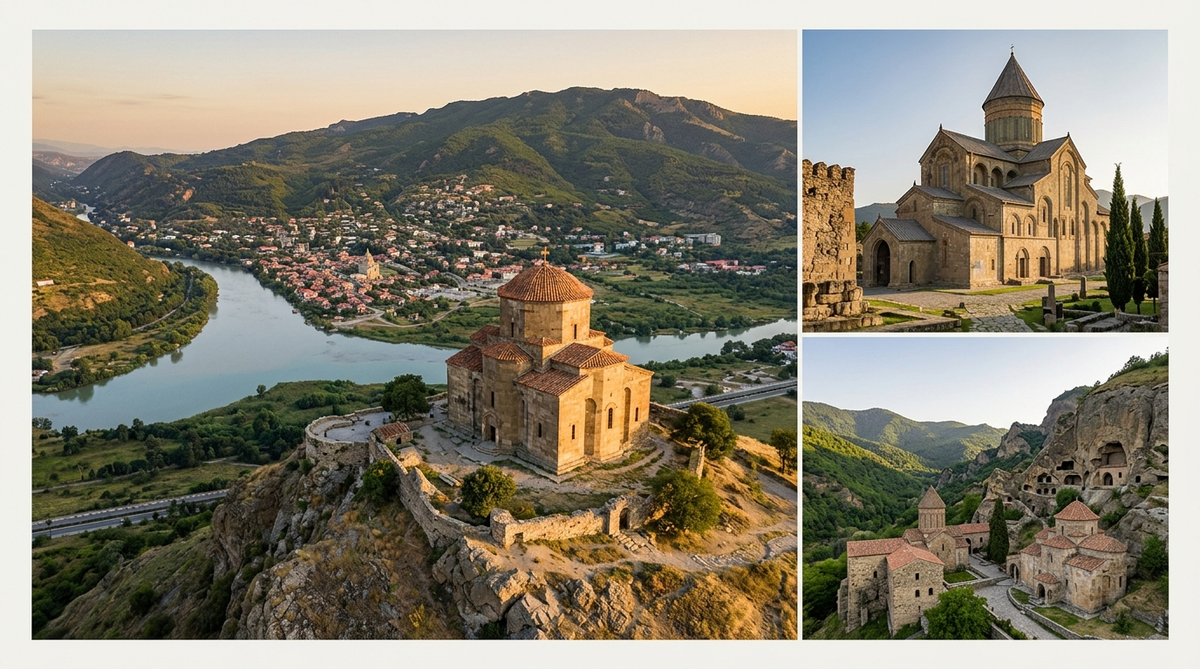
But Mtskheta is not just one cathedral, around it is a whole constellation of holy sites, and all are covered in a day. 🗻 Right above the town, on a cliff at the confluence, stands Jvari, a 6th-century church from which that classic view of Mtskheta opens up, the one sung by Lermontov; it too is under UNESCO protection. In the town itself the Samtavro convent is working, with the tomb of King Mirian and Queen Nana, who Christianised Georgia, and revered relics. And in the mountains nearby hides the rock monastery of Shiomgvime, founded by one of the Syrian fathers, quiet and atmospheric.
📍 Mtskheta is taken as a day trip from Tbilisi, often together with Jvari on the way. It is the country's most holy-site-rich point, and the best starting place for getting to know Christian Georgia. A full account is in the article on Mtskheta and Svetitskhoveli.
🏙️ Tbilisi and Around
⛪ The Holy Trinity Cathedral, Sameba
Tsminda Sameba, the Holy Trinity Cathedral, is the main church of modern Georgia and one of Tbilisi's most recognisable landmarks. Unlike the ancient holy sites, it is very young: built in 1995-2004 on St Elijah's Hill above the Old Town, for the 1500th anniversary of the Georgian church's autocephaly and the 2000th of Christianity. It is one of the largest Orthodox churches in the world: huge, multi-level, crowned with a golden dome visible from almost anywhere in the city.
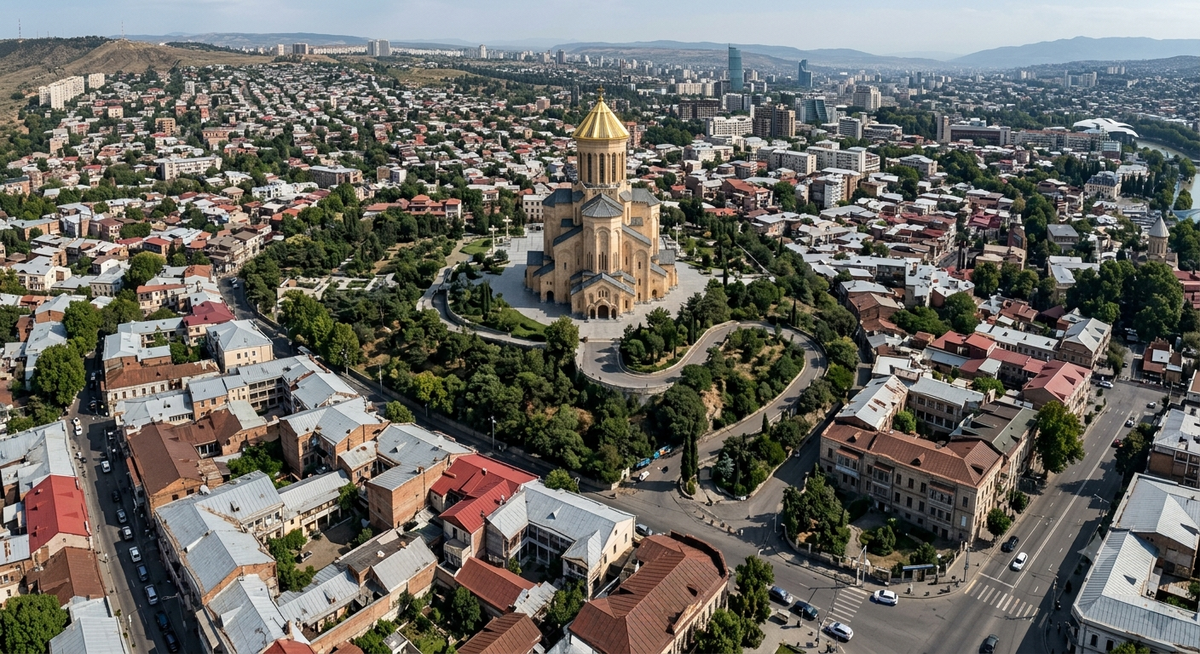
Sameba was conceived as a symbol of national revival after the Soviet period, and its look gathers the features of traditional Georgian architecture on an enlarged scale. Inside it is spacious and solemn, with a lower church holding several chapels. From the viewing area by the cathedral a fine panorama of Tbilisi opens up.
🏙️ Getting there is easy: the cathedral is in the city, in the Avlabari district, near a metro station. It is a working cathedral and the residence of the Patriarch, so the dress code and quiet are especially important here. More on the cathedral and the views is in the article on the Sameba Cathedral.
⛪ Sioni and Anchiskhati: Ancient Churches of the Old Town
Unlike the monumental Sameba, these two churches hide in the lanes of Old Tbilisi and win not by size but by age and atmosphere. Anchiskhati is the oldest surviving church in the city, a 6th-century basilica, plain outside and remarkably warm within; a 17th-century bell tower stands beside it. The name is tied to the miracle-working icon of the Saviour of Anchi that was kept here.
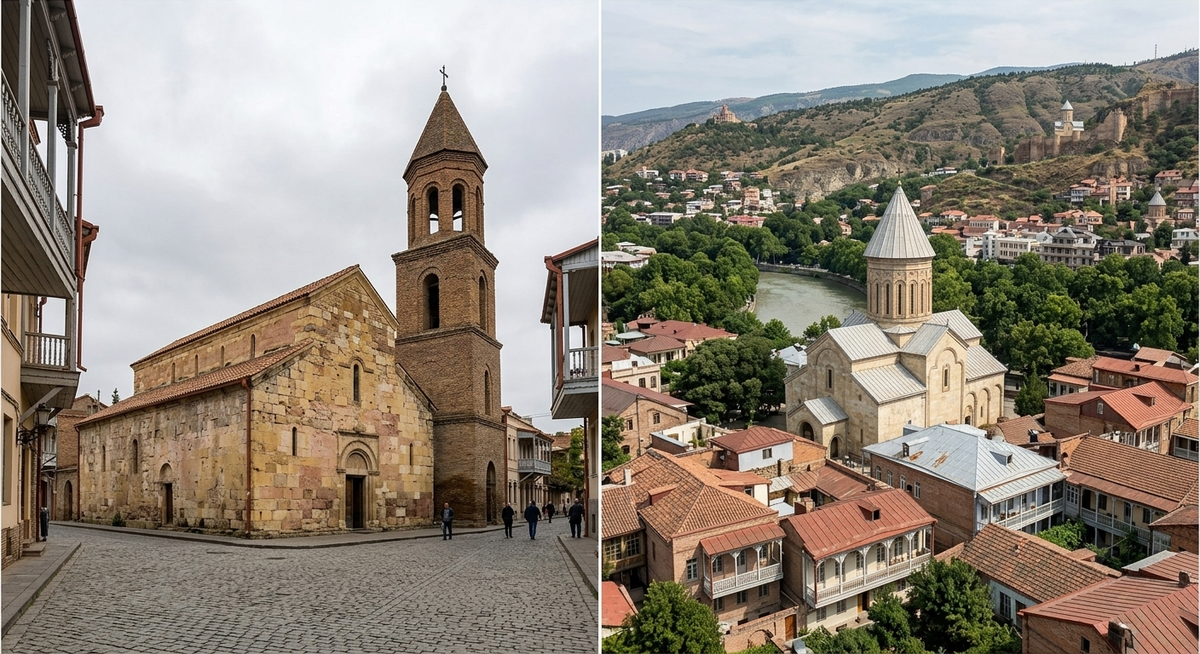
Nearby, right on the bank of the Mtkvari, stands Sioni, for a long time the main cathedral of Tbilisi, before Sameba was built. Its present form took shape mostly in the Middle Ages; the church was destroyed and rebuilt more than once. Its main relic, the cross of St Nino, woven, by tradition, from grapevine and tied with her own hair, is that very symbol of Georgian Christianity.
🚶 Both churches are within walking distance in the Old Town, easy to include in a stroll through historic Tbilisi along with the sulphur baths and the Narikala fortress. These are working churches, entry is free. More is in the article on the churches of Tbilisi.
🎨 Betania: A Monastery with Frescoes of Queen Tamar
Betania is what makes it worth leaving Tbilisi for the mountains: a working monks' monastery of the 11th-13th centuries, hidden in the wooded gorge of the Vere river about 16 km from the city. Its construction belongs to the Georgian golden age, the era of Queen Tamar, and it belonged to the noble Orbeliani family. Outside the church is austere in the Georgian way, but people do not come here for the facade.
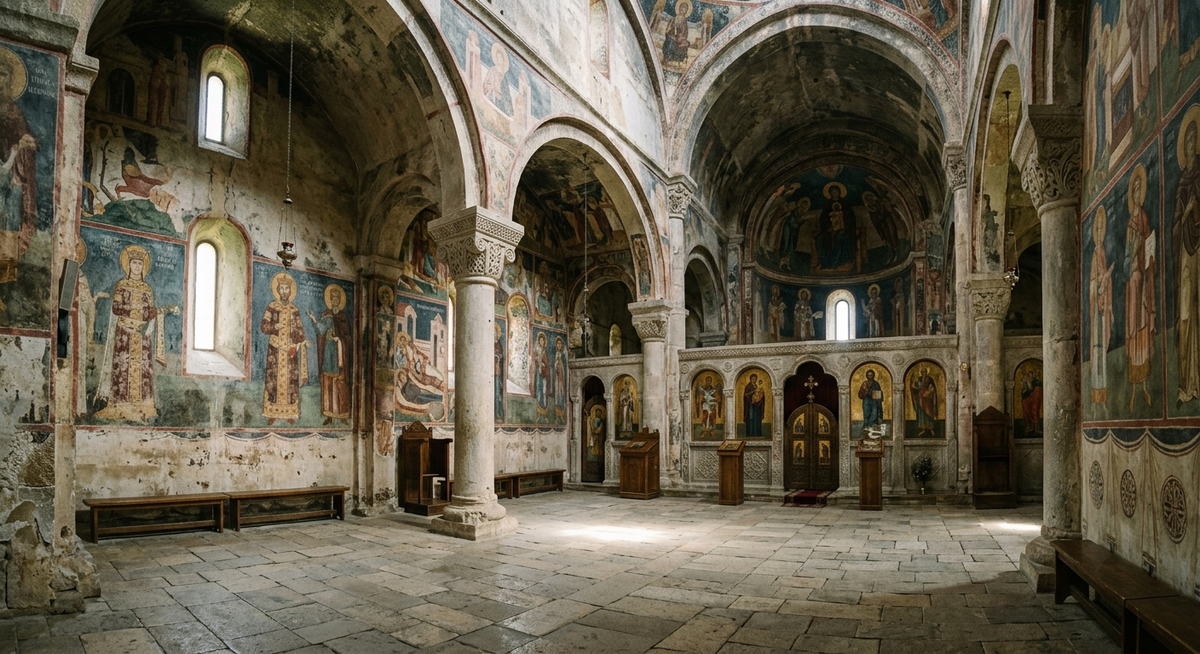
🖼️ Inside, Betania holds one of the main treasures of Georgian monumental painting, frescoes on Old Testament subjects and portraits of historical figures, including a lifetime image of Queen Tamar, her father George III and her son. Such surviving lifetime portraits of rulers are a great rarity, and art historians travel here specially for them. The monastery was so revered that it was not closed even at the peak of the 1930s persecutions, and remained working almost to the end of the Soviet era.
⚠️ A practical note: Betania stands off to one side, the last stretch runs along a gravel road, often about 7 km on foot from the village of Kveseti or by a prepared car. It is hard under your own steam; a transfer or a 4x4 is easier. More on the monastery and the frescoes is in the article on Betania.
🍇 Kakheti: Wine Country and Holy Sites
🙏 Bodbe: The Monastery of St Nino
Bodbe is one of Georgia's main pilgrimage sites, a convent near the town of Sighnaghi in Kakheti. Its significance is enormous: here, by tradition, St Nino, the enlightener of Georgia who Christianised the country in the 4th century, ended her earthly path and was buried. A church stands over her grave, and pilgrims flow here from all over the Orthodox world to venerate the relics of the one with whom Georgian Christianity began.
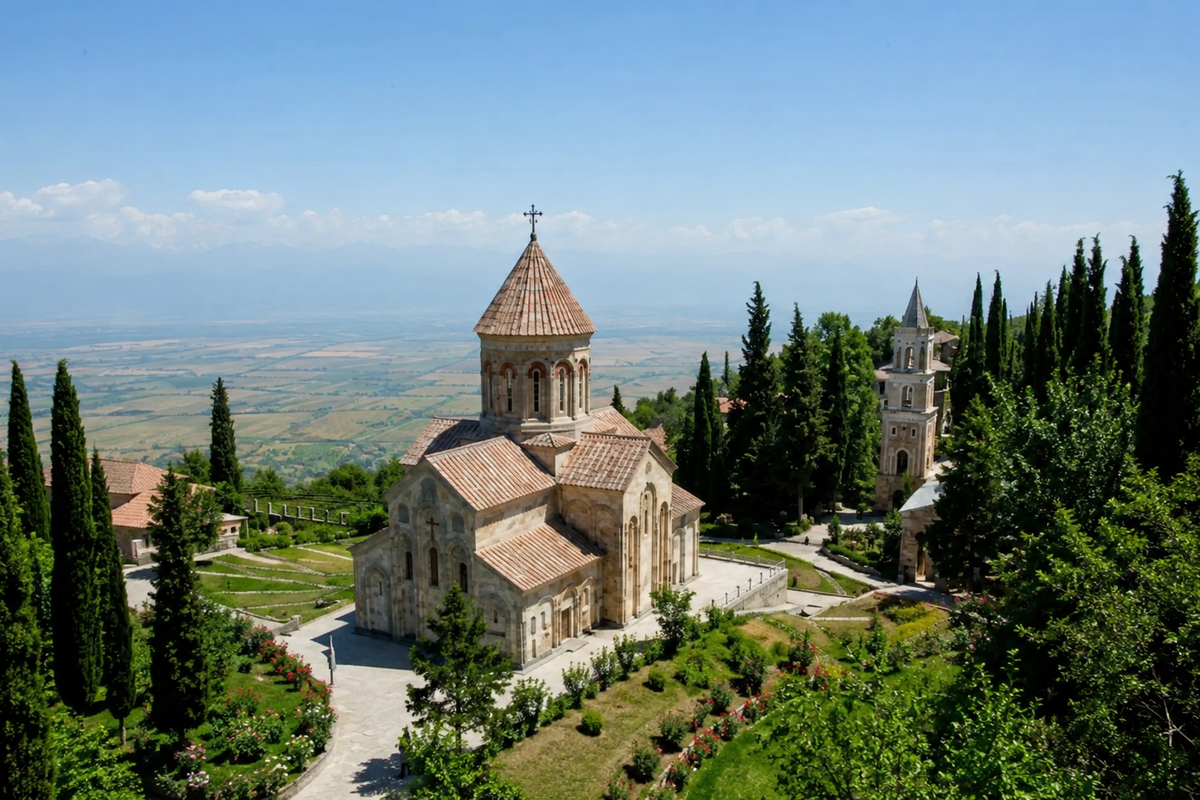
The monastery stands in a picturesque spot with a view of the Alazani valley and the Caucasus ridge, among tall cypresses. The complex is tidy and busy, with a working convent. Below the monastery, in a ravine, springs the healing spring of St Nino, where pilgrims descend; a font has been built there, and many come precisely for the water.
🚗 Bodbe is logical to combine with a visit to Sighnaghi, the "city of love" on a hill, a couple of kilometres away. This is a popular Kakhetian route; the road from Tbilisi takes about two hours. Remember the dress code, this is a working holy site with a large flow of pilgrims.
⛪ Alaverdi: A Cathedral in the Alazani Valley
Alaverdi is one of Georgia's four great cathedrals and the country's tallest ancient church: almost 55 metres, for centuries it was the tallest religious building in the country. The Cathedral of St George was built in the 11th century in the middle of the Alazani valley, and it is visible from almost everywhere in this part of Kakheti, a huge white church against the mountains.
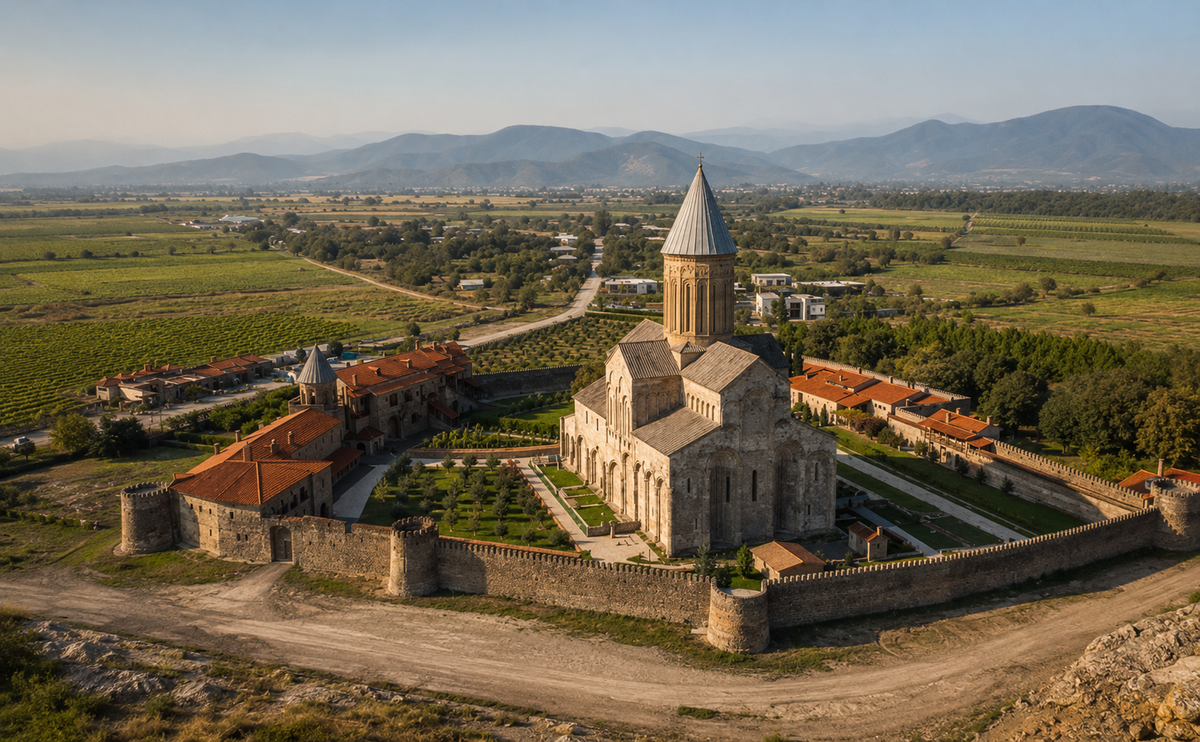
The cathedral is enclosed by a monastery wall with towers and buildings, and fragments of ancient frescoes survive inside. The place is tied to a monastic tradition begun by one of the Syrian fathers, and the scale and height of the cathedral were meant to underline the grandeur of the Kakhetian kingdom. Despite its scale, Alaverdi is stern inside and almost without decoration, which creates a special sense of space.
🍷 Alaverdi is a must on any route through Kakheti: it is easy to combine with Telavi, wineries and the region's other holy sites. It is a working monastery, the dress code is required. More on the cathedral is in the article on the Alaverdi monastery.
🏛️ Nekresi: An Ancient Monastery Above the Valley
Nekresi is one of the most atmospheric and ancient monasteries of Kakheti, hidden in the forest on a mountain above the Alazani valley. Its founding goes back to the 4th century, and its flourishing is linked to the Syrian father Abibos of Nekresi, a bishop who met a martyr's death. The complex is small and of mixed ages: here is a tiny 4th-century basilica, one of the oldest churches in the country, later churches too, and a bishop's palace.
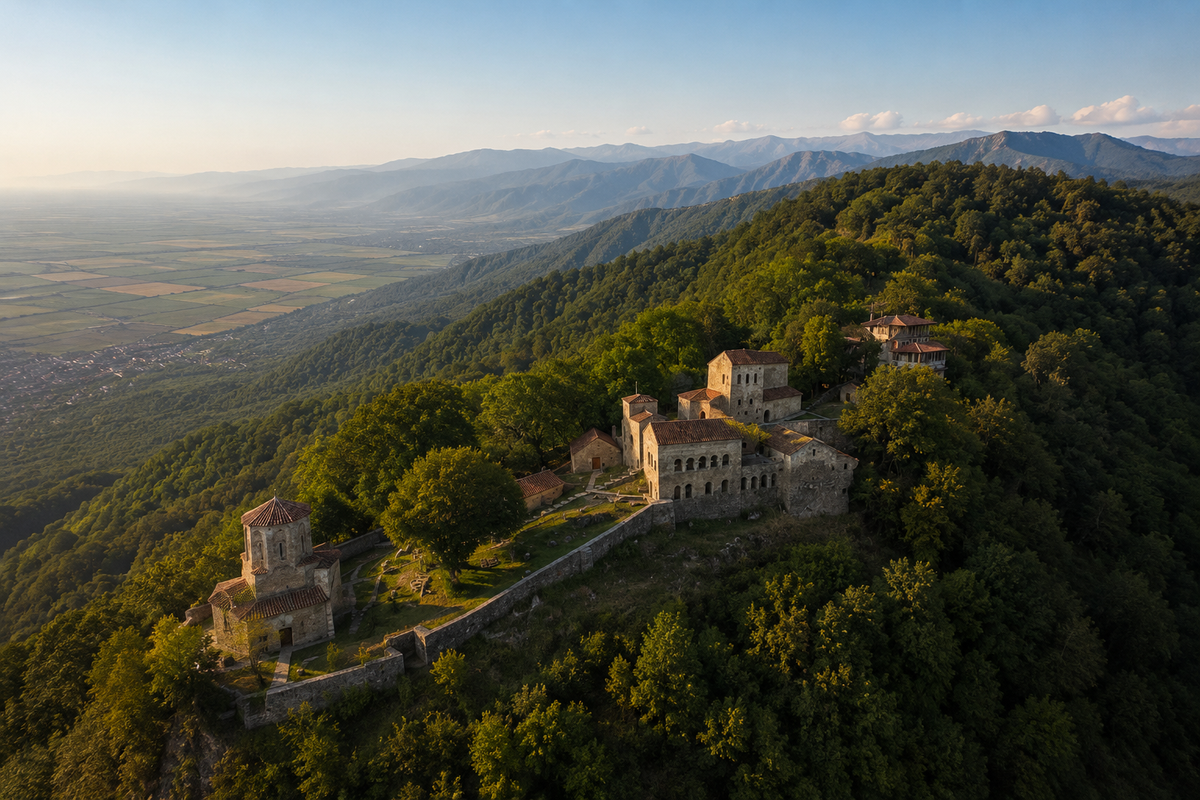
Nekresi's main charm is in its seclusion and its views. 🌄 The monastery stands high, and from the platform a wide panorama of the Alazani valley and the Caucasus ridge opens up; it is for this view and the quiet that people come. The monastery is also tied to a legend of how pigs helped defend it from invaders, hence the local tales.
🚐 A climb up the mountain leads to the monastery; part of the way from the car park is on foot or by shuttle. Nekresi is easy to fit into a Kakhetian route with Alaverdi and Gremi, all of them in one part of the valley. More is in the article on the Nekresi monastery.
🏔️ Kazbegi
🏛️ The Gergeti Trinity: A Church Beneath the Glacier
The Gergeti Trinity (Tsminda Sameba) is perhaps Georgia's most photographed church and a postcard symbol of the country. The 14th-century church stands in complete solitude on a green hill at 2,170 metres, and directly behind it rises the snowy cone of Mount Kazbek, 5,033 metres. It is the only medieval cross-dome church in this high mountain area, and its silhouette against the glacier is known from countless photographs.
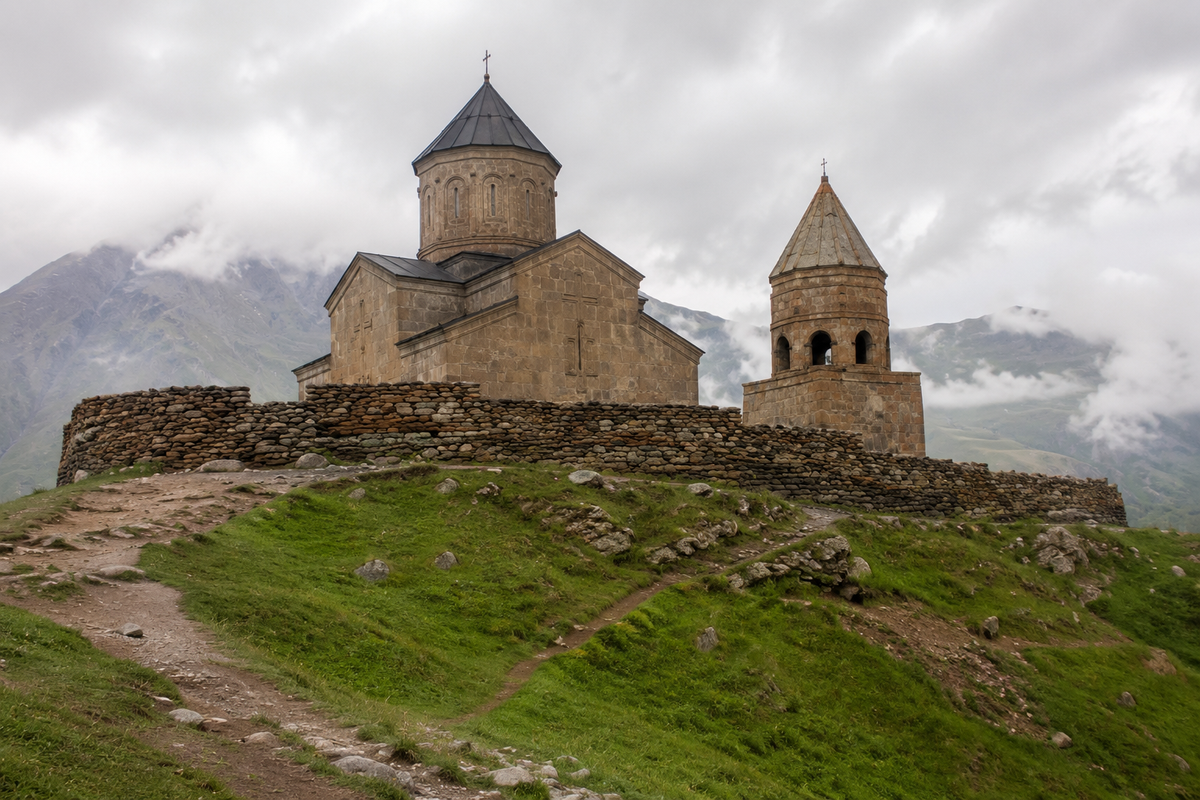
The church was raised as a spiritual outpost in the mountains, and in troubled times holy things were brought up here, to the unassailable height, for safekeeping, including, by tradition, the cross of St Nino from Mtskheta. Inside the church is modest; all its power is outside, in the joining of ancient walls, open space and the great mountain behind them.
🥾 People reach the church from the village of Stepantsminda (Kazbegi): either on foot uphill in about an hour and a half to two hours, or by 4x4 up a steep dirt road. The climb is noticeable, the altitude makes itself felt, and sturdy shoes and time to spare are needed. Gergeti is the climax of a trip along the Georgian Military Road. More is in the article on the Gergeti Trinity.
🍷 Kutaisi and Western Georgia
⛪ Gelati and Motsameta: Two Monasteries Side by Side
Near Kutaisi stand two monasteries almost always seen together. Gelati is a jewel of the Georgian Middle Ages and a UNESCO site. The monastery was founded in 1106 by King David IV the Builder, the country's most revered ruler, and he is buried here. A famous Academy, a centre of science and philosophy, worked at Gelati, while the monastery itself served as a burial place of Georgian kings. Its main treasure is its frescoes and mosaics, including a rare mosaic of the Virgin in the altar, one of the peaks of medieval art. Entry is free, the monastery is working.
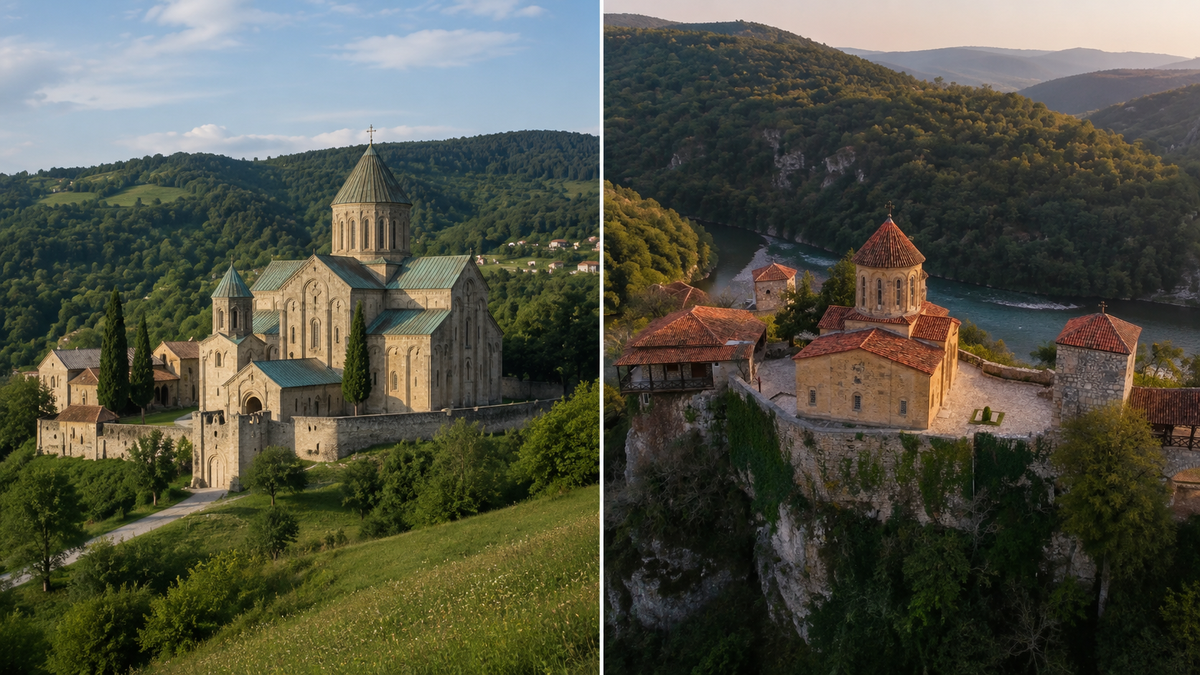
A few kilometres away, on a picturesque cliff above a river, stands Motsameta, a small and very atmospheric monastery. Its name means "the place of the martyrs": here rest the relics of the brothers David and Constantine, princes tortured by the Arabs for refusing to renounce their faith. 🌉 The monastery on a crag above a bend in the river is incredibly photogenic, and beneath the reliquary is a passage through which, by belief, you should pass while making a wish.
🚗 Both monasteries are within a short trip of Kutaisi and are seen in half a day. Gelati is about scale and art, Motsameta about atmosphere and views.
🏛️ Bagrati: A Cathedral Above Kutaisi
Bagrati is the signature sight of Kutaisi, a huge Cathedral of the Dormition reigning over the city from Ukimerioni Hill. It was built by King Bagrat III at the very start of the 11th century, around 1003, and the church became a symbol of the united Georgian kingdom. For centuries it was one of the country's four great cathedrals. In 1692, during a Turkish siege, the explosion of a gunpowder store destroyed the dome and vaults, and for several centuries Bagrati stood as a majestic ruin.
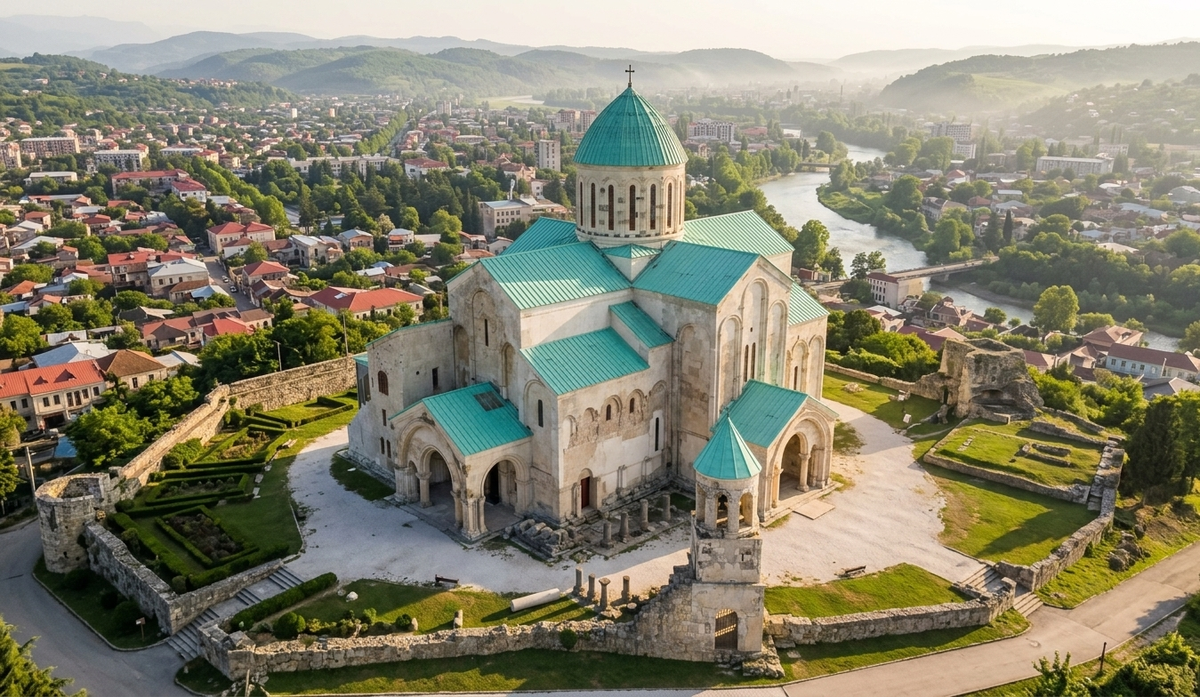
🔎 An important point worth knowing in advance: in the 2010s the cathedral was extensively and controversially reconstructed, its roof and finials restored. Because the restoration did not preserve the authenticity of the ruin, UNESCO removed Bagrati from the World Heritage list in 2017, a rare case in world practice. This does not make the cathedral any less imposing on the spot, but connoisseurs regard it differently.
🚶 Bagrati stands within Kutaisi, easy to reach, and the climb up the hill gives a good view of the city. It is logical to combine it with Gelati and Motsameta in one day. More is in the article on the Bagrati Cathedral.
⛪ Martvili: The Main Cloister of Samegrelo
Martvili (Chkondidi) is the main monastery of Western Georgia beyond Imereti, the spiritual centre of Samegrelo. It stands on a hill above the town of Martvili, and its Mingrelian name, Chkondidi, means "the great oak": by tradition, a sacred pagan oak grew on this spot, felled at the Christianisation of the region, and a church was raised in its place. The monastery was founded around the 7th century, and the main cathedral is dated to the 10th.
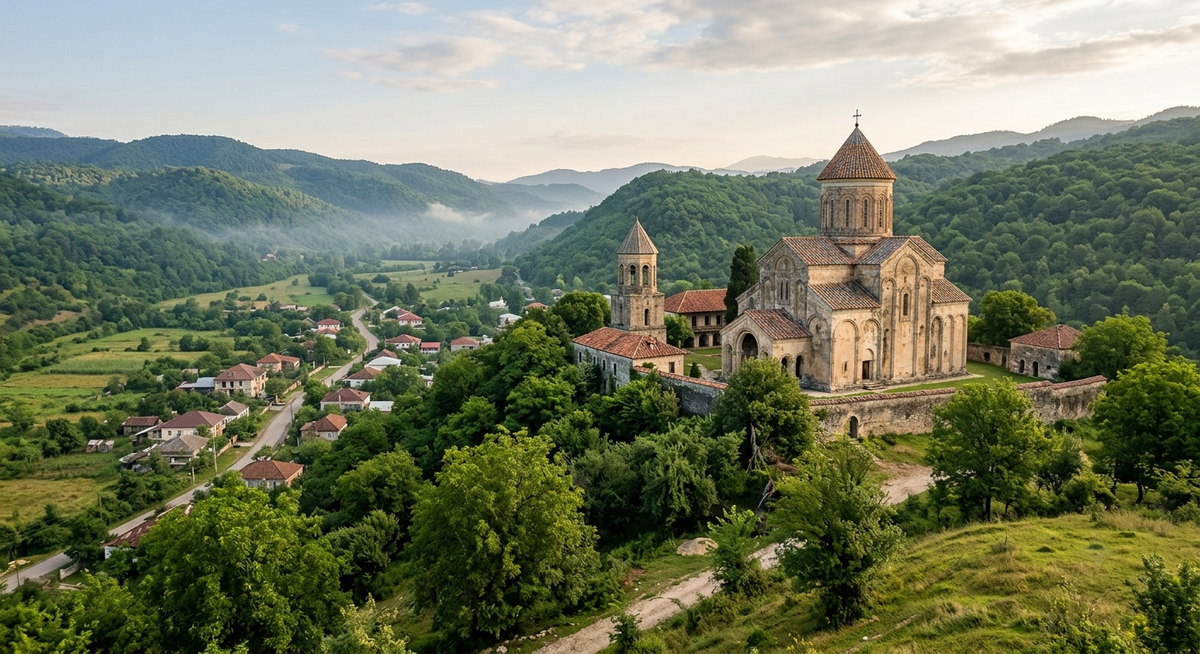
Martvili was long the seat of the powerful bishops of Chkondidi, who played a large role in the Georgian state. Fragments of medieval frescoes survive inside, and the complex includes several buildings and a bell tower. The place is quiet and green, with views over the surrounding hills of Samegrelo.
🏞️ Martvili is easy to combine with the popular Martvili Canyons nearby, where people go for boat trips on turquoise water; so a holy site and nature come together in one day. This is already the far west of the country; the road from Kutaisi takes about an hour. More is in the article on the Martvili monastery.
🙏 Where the Pilgrims Actually Go
If the aim of the trip is not architecture but holy things, the veneration of relics, revered icons, healing springs, then the route is built differently. Georgia's main pilgrimage points are tied to the birth of Christianity in the country and to the names of those who brought it.
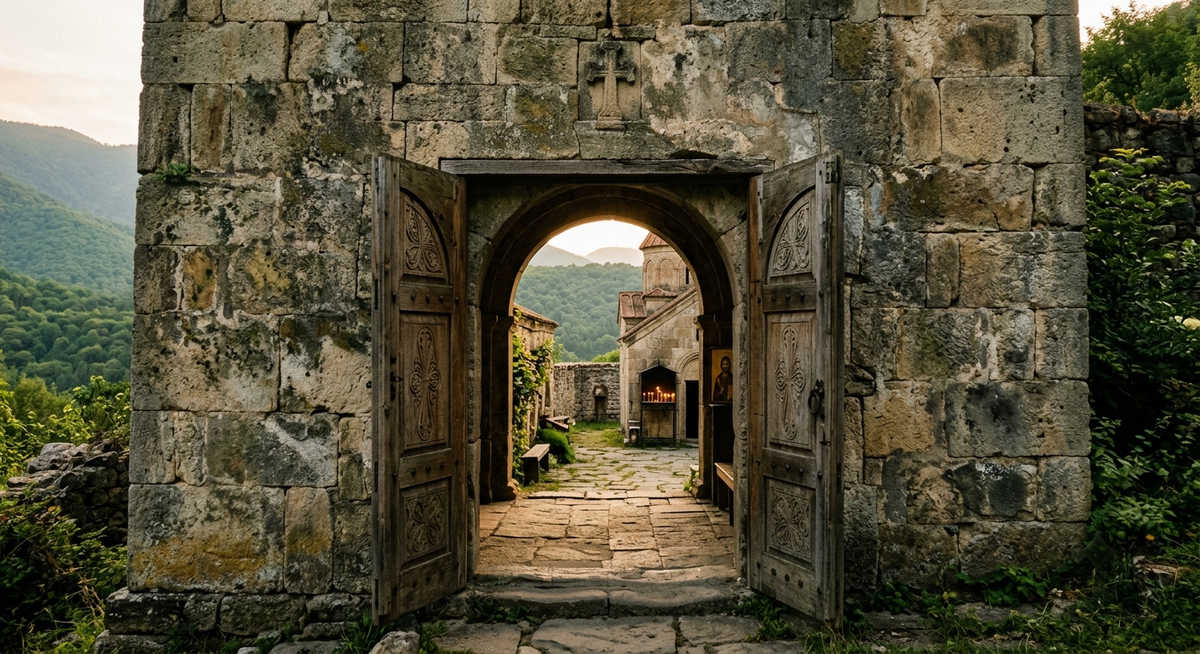
The core of it all is St Nino, the enlightener of Georgia. Her grapevine cross is kept in the Sioni Cathedral in Tbilisi, while her grave and relics are in the Bodbe monastery in Kakheti, where her healing spring rises nearby. Mtskheta is also tied to the country's Christianisation: in the Svetitskhoveli cathedral, by tradition, lies the robe of Christ, while in the Samtavro monastery are buried King Mirian and Queen Nana, under whom Georgia adopted Christianity.
A separate thread is the thirteen Syrian fathers, monks who came in the 6th century and founded Georgian monasticism. Tied to them are Shiomgvime near Mtskheta, and Nekresi and Alaverdi in Kakheti. For those who travel for the monastic tradition and seclusion, these cloisters are closer. And lovers of church art should add Betania with its frescoes and Gelati with its mosaics. At all working holy sites, remember the dress code and respect for those at prayer.
🗺️ Map of Georgia's Monasteries and Churches
The holy sites are spread across the whole country: Mtskheta and Tbilisi in the centre, Kakheti in the east, Gergeti high in the mountains to the north, Kutaisi and Martvili in the west. There is no single loop for all of them at once, so on the map below each point is marked separately, which makes it easier to plan by region.
🏛️ Mtskheta
🏙️ Tbilisi and nearby
🍇 Kakheti
🏔️ Kazbegi
🍷 Kutaisi and the west
Some monasteries (Betania, the Gergeti Trinity, Nekresi, Martvili) are reached by climbs and dirt roads. Before setting off, check the current road and accessibility on the spot.
⏳ How to Plan the Trip
The main rule is the same as with other sights: holy sites do not come together into one route, so plan them by region. Some stand in cities and on main roads and are easy to reach, some require a climb up a mountain or your own car.
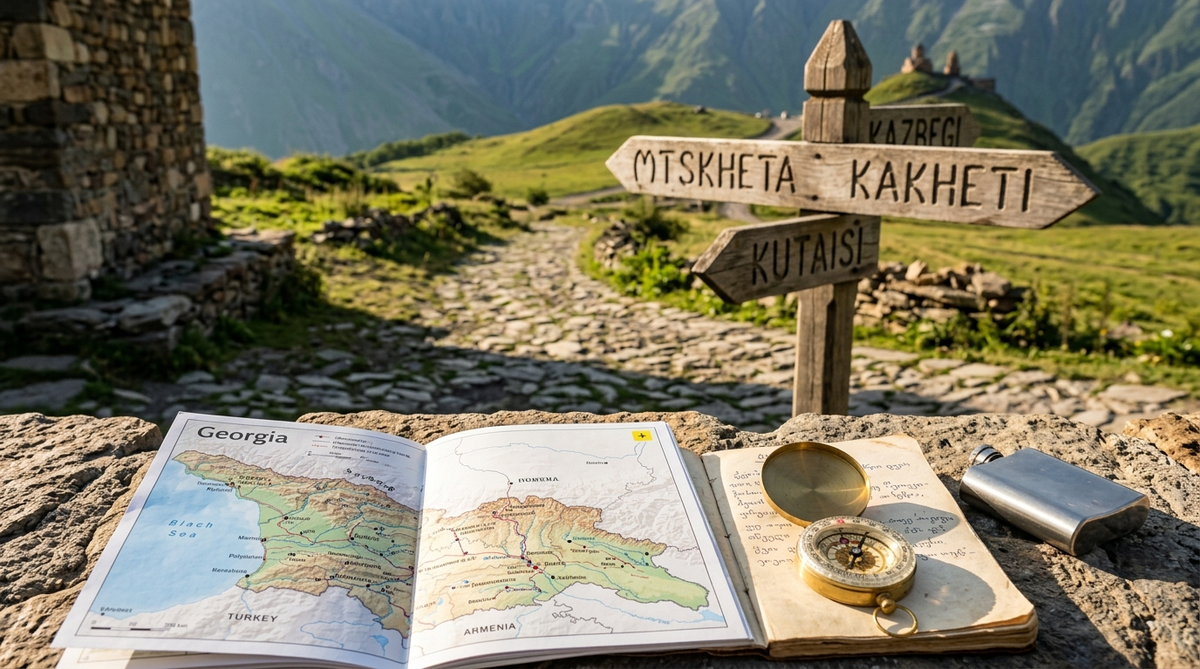
The comfortable logic of combining goes like this. Mtskheta is taken as one day from Tbilisi, often with Jvari on the way, the best start for getting to know Christian Georgia. The city churches Sameba, Sioni and Anchiskhati are seen within Tbilisi in a few hours, while Betania is a separate outing into the mountains. The Kakhetian Bodbe, Alaverdi and Nekresi are joined into a wine-and-church route with Telavi and Sighnaghi. Gelati, Motsameta and Bagrati are seen from Kutaisi in a day, while Martvili is from there too, adding the canyons. The Gergeti Trinity is the climax of a trip along the Georgian Military Road to Kazbegi.
How to get there and what to keep in mind:
- 🚗 A car or transfer is needed for holy sites off the main roads: Betania, Nekresi, Martvili, and for convenience in Kakheti.
- 🚌 By public transport you can realistically reach the city and roadside points: Sameba and Sioni in Tbilisi, Mtskheta, Bodbe via Sighnaghi, Kutaisi with Gelati.
- 🥾 A climb up a mountain is mandatory for the Gergeti Trinity and desirable for Nekresi; sturdy shoes and time to spare are needed.
- 👗 A dress code applies in all working monasteries: a scarf and skirt for women, long trousers for men; often handed out at the entrance.
One day from Tbilisi
Mtskheta with Jvari on the way: Svetitskhoveli, Samtavro and the view from the cliff, three holy sites in a day.
You are travelling for holy sites
Bodbe for St Nino and her spring, with Sighnaghi nearby. Add Alaverdi and Nekresi.
You are staying in Kutaisi
Gelati, Motsameta and Bagrati in a day, and Martvili with the canyons in the west.
You want mountains and views
The Gergeti Trinity below Kazbegi: a climb up the mountain and a church against the glacier.
📊 Georgia's Holy Sites Compared
Short and in one place, to help you choose for your route. Eras are given broadly; exact dates, where they are disputed, are covered in the separate articles on each site.
| Holy site | Era | Region | Type | For whom |
|---|---|---|---|---|
| Svetitskhoveli | 11th c. | Mtskheta | Cathedral, UNESCO | ⛪ for all |
| Jvari | 6th c. | Mtskheta | Church, UNESCO | ⛪ for all |
| Sameba | 2004 | Tbilisi | Cathedral | ⛪ for all |
| Sioni & Anchiskhati | 6th-13th c. | Tbilisi | City churches | ⛪ for all |
| Betania | 11th-13th c. | Near Tbilisi | Monastery, frescoes | 🏛️ traveller |
| Bodbe | From 4th c. | Kakheti, Sighnaghi | Monastery, St Nino | 🙏 pilgrim |
| Alaverdi | 11th c. | Kakheti | Great cathedral | ⛪ for all |
| Nekresi | From 4th c. | Kakheti | Monastery, views | 🏛️ traveller |
| Gergeti Trinity | 14th c. | Kazbegi | Mountain church | 🏛️ traveller |
| Gelati | 12th c. | Kutaisi | Monastery, UNESCO | ⛪ for all |
| Motsameta | 11th c. | Kutaisi | Monastery, relics | ⛪ for all |
| Bagrati | 11th c. | Kutaisi | Cathedral (ex-UNESCO) | 🏛️ traveller |
| Martvili | 7th-10th c. | Samegrelo | Monastery | ⛪ for all |
Download the holy sites guide as a PDF
Location map, coordinates of every site, era and region, who each suits, routes by region and a checklist with the dress code. Works offline on the spot.
Already been to one of Georgia's monasteries or churches? Leave a review on Madloba: tell us which holy site impressed you more, how long the road took, and what those going for the first time should know, especially about the dress code and the climbs. Live details from a trip help those still planning a route.
The information is current as of July 2026. Before travelling, check the season, the weather, the state of the roads and the opening hours of the monasteries, especially the mountain and remote ones. Remember that these are working holy sites: observe the dress code and the rules of conduct.
❓FAQ
💬 The country's spiritual centre is the Svetitskhoveli cathedral in Mtskheta, where, by tradition, the robe of Christ is kept. The main modern church is the Sameba Cathedral in Tbilisi, the largest and most visible. Both are working and open to visitors.
💬 The Svetitskhoveli cathedral in the town centre, the Samtavro convent nearby, and the Jvari church on the cliff above town with its classic view of the confluence. With time, the Shiomgvime rock monastery not far off. All of this is realistic to cover in a day from Tbilisi.
💬 These are working holy sites: women need a headscarf and a skirt below the knee, men long trousers and covered shoulders. Many monasteries hand out skirts and scarves free at the entrance, but it is safer to have your own. Inside you are asked not to make noise.
💬 On the World Heritage list are the Gelati monastery near Kutaisi and the historical monuments of Mtskheta: Svetitskhoveli, Jvari and Samtavro. The Bagrati Cathedral in Kutaisi was on the list but was removed in 2017 after a controversial restoration.
💬 The main point is the Bodbe monastery near Sighnaghi in Kakheti, where her grave and relics are, with a healing spring rising nearby. Her grapevine cross is kept in the Sioni Cathedral in Tbilisi. Mtskheta, with the Samtavro monastery, is also tied to the country's Christianisation.
💬 The Gergeti Trinity below Kazbegi: a lone 14th-century church at 2,170 metres against snowy Mount Kazbek. It is the country's most photographed church. Jvari above Mtskheta and Motsameta on a cliff above a river near Kutaisi are picturesque too.
💬 Not for all of them. Mtskheta, the Tbilisi churches, Bodbe and Gelati are reachable by public transport. But for Betania, Nekresi, Martvili and convenience in Kakheti, your own car or a transfer greatly eases the road, and Gergeti needs a climb up the mountain.
💬 Entry to most monasteries and churches is free, these are working holy sites. Donations are voluntary; you sometimes pay for parking, candles or the 4x4 climb to Gergeti. Exact conditions and hours are worth checking on the spot.
Read also
- Unusual Places in Tbilisi: Top 6 Hidden Gems
- The Carved Temple of Pitareti: How an Abandoned Monastery in the Ktsia Gorge Became Active Again
- Inside Kvatakhevi in Kaspi Municipality: Timur's Invasion, the Martyred Nuns and the Church Itself
- Martvili (Chkondidi): a Monastery of Frescoes and a Scriptorium
- Tbilisi 2026: Tourist Reviews and Travel Tips

3 comments
Log in to leave a comment