




Betania Monastery: Ancient Georgian Architecture Landmark
⛪ Active monastery · ⏱️ Half day · 📍 Vere Gorge, Tbilisi outskirts
🏛️ Must-Know Before Your Visit
| 📍 Location | Vere River Gorge, right bank. Kveseti village. About 30–40 km southwest of Tbilisi |
| 📅 Period | Founded at the turn of the 12th–13th centuries. Restored in the second half of the 19th century. |
| 🏛️ Type | Cross-domed church (Nativity of the Mother of God) + a small hall church from 1196 |
| 🖼️ Frescoes | Portraits of George III and Queen Tamar (1207). Scenes of the Savior's miracles, the Old Testament, and the Last Judgment |
| ⛪ Status | Active monastery. Free admission |
| 🚶 Descent to the Church | About 10 minutes along a forest path from the parking lot |
| 👔 Dress Code | Modest clothing. Women must cover their heads and shoulders |
🧭 Who This Article Is For
Betania Monastery is not just an old church shown to tourists. It is an active monastery nestled in a forest gorge, far from city noise. It stands as one of the most significant architectural monuments of the era of Queen Tamar — the Golden Age of Georgia. This article is for those who want to understand exactly what to look for here, how to get there, and what to experience inside.
📜 History: Georgia's Golden Age in Stone
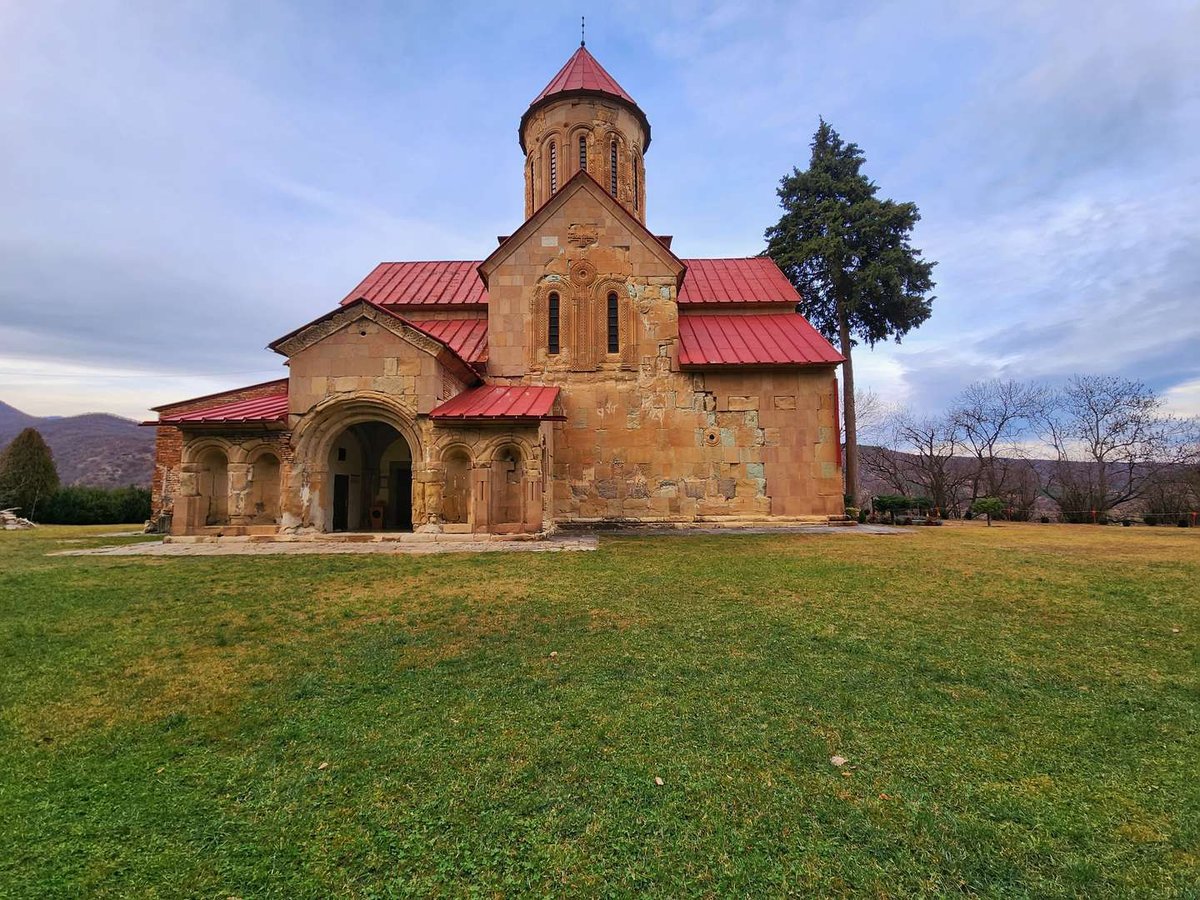
Betania Monastery was founded at the turn of the 12th–13th centuries — an era that Georgian historians call the Golden Age. This was a period of prosperity for Georgia under Queen Tamar and her father George III, when the country experienced a cultural, political, and architectural boom.
The main church is dedicated to the Nativity of the Mother of God (Kveseti Betania, or simply Betania). Next to the main building stands a small hall church founded in 1196 — it is older than the main temple.
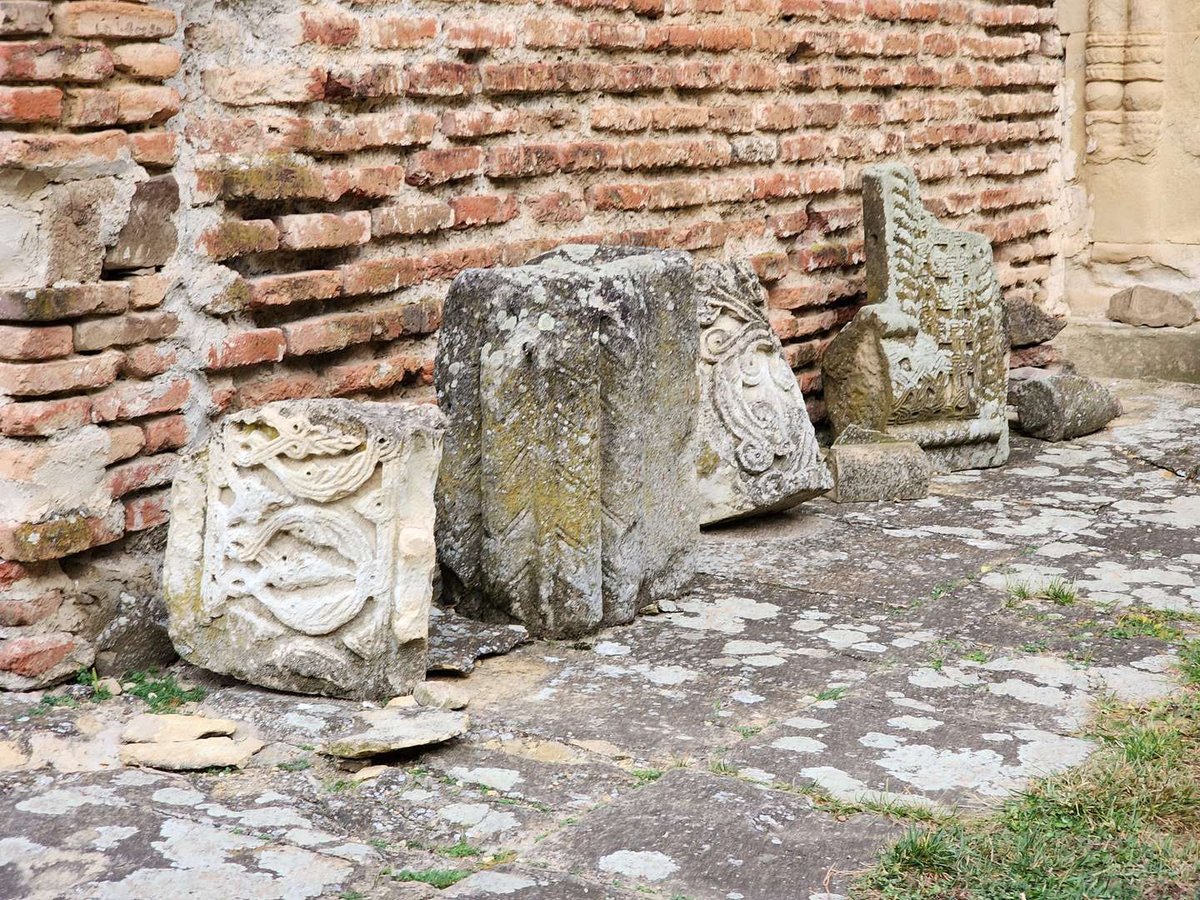
Over time, the monastery fell into disrepair, and restoration work was carried out in the second half of the 19th century. It was then that part of the stone masonry was replaced with brick — this is visible upon a close inspection of the walls.
Father Giorgi and Father Ioane served in the monastery — both were subsequently canonized as saints by the Georgian Orthodox Church.
🏛️ Architecture: What Exactly to Look For
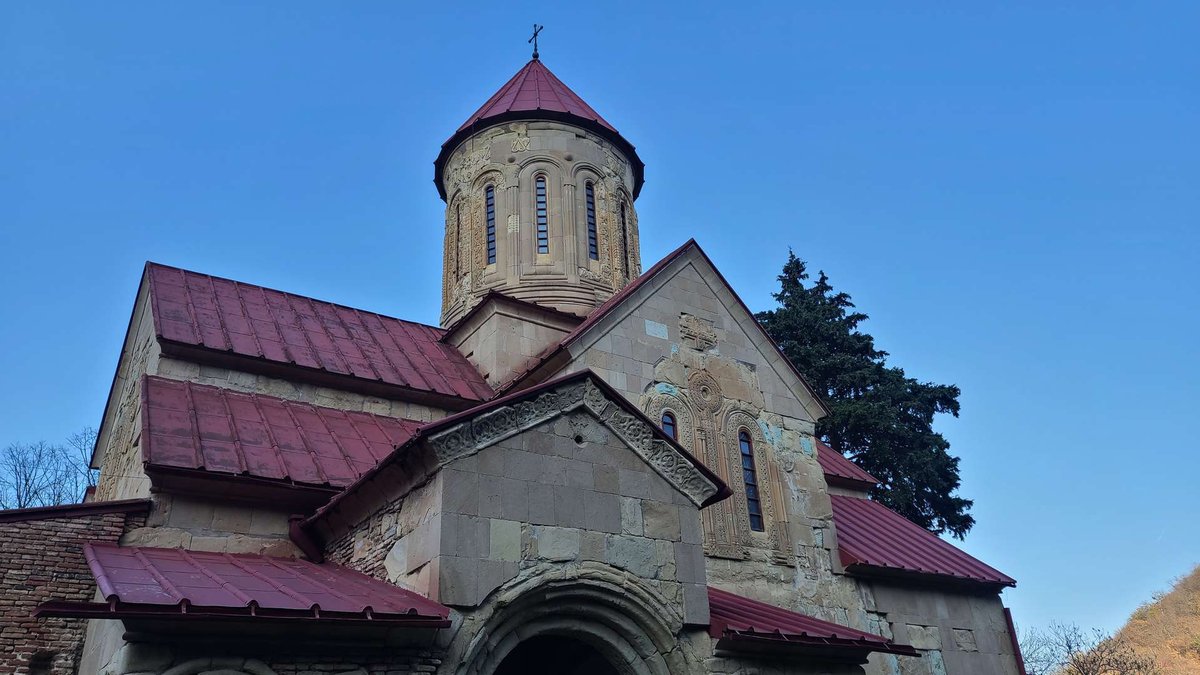
- The cross-domed type is characteristic of Georgian architecture of the 12th–13th centuries. The building is rectangular in plan; the dome rises significantly above the structure and is shifted to the east — a typological feature of Georgian churches of that period.
- The southern entrance is covered by a star-shaped vault — a rare element that deserves separate attention.
- On the outside, the building is faced with carved stone. The walls and domes are made of brick. The visual contrast between the carved stone and the brick indicates the layers of construction and restoration: the original 12th–13th century and the 19th-century alterations.
Three separate entrances (from the south, north, and west) correspond to the traditional Georgian three-nave layout.
🖼️ Frescoes: What Is Visible on the Walls
This is the main artistic treasure of the monastery. The murals are largely covered with plaster applied during different periods. This creates a special atmosphere: some images are visible, while others can be guessed through the layers.
- The altar apse features depictions of vices holding scrolls with Georgian inscriptions. This is a rare and unusual iconographic program.
- The northern wall features scenes of the Savior's miracles.
- The southern wall features Old Testament scenes.
- The western wall is assumed by researchers to feature a composition of the Last Judgment.
Portraits of George III and Queen Tamar
Among the frescoes are historical portraits: the Georgian King George III and Queen Tamar. Historians date these images to 1207, the time when George-Lasha was appointed co-regent alongside his mother.
This is not just religious painting — these are documentary portraits of the ruling dynasty created during the lifetime of those depicted.
🌲 Vere Gorge: The Road to the Monastery
The monastery is located in the forested gorge of the Vere River, on the right bank. Getting there is not easy — the last section of the journey goes along a forest trail, about a 10-minute descent. This is exactly what makes the place special: you leave your car, enter the forest, and within a few minutes, you find yourself in the silence of the 8th–12th centuries.
In summer, the surroundings are covered in lush greenery. According to visitor reviews, the monastery is particularly beautiful in summer and early autumn: the greenery of the gorge, the murmuring of the river, and peace. You can have a small picnic near the spring next to the monastery.
Arrive in the morning — there are fewer people and the light is better for viewing the frescoes. Bring a flashlight: it is quite dark inside the monastery, and the frescoes deserve a close look. For the descent along the trail, you will need comfortable shoes with good soles — the path is slippery after rain. Check the route before your trip: satellite navigators do not always lead the right way. Round-trip transportation (taxi/transfer) costs about 15 GEL, but prices vary.
🗺️ How to Get There and Spend Your Time
1️⃣ Get to the area of Kveseti village (~30–40 km from Tbilisi). By taxi or transfer — about 15 GEL one way. Confirm the route in advance.
2️⃣ Leave your car in the parking lot. Next is a forest trail, about a 10-minute descent.
3️⃣ When entering the monastery, follow the dress code: modest clothing; women need a headscarf.
4️⃣ Inside, start with the altar apse — the vices with scrolls. Then move to the northern and southern walls (miracles and Old Testament scenes).
5️⃣ Find the portraits of George III and Queen Tamar — ask the ministers exactly where they are located.
6️⃣ See the small hall church from 1196 next to the main building.
7️⃣ After the tour, visit the spring near the monastery. It is a good place for a break and a picnic.
💬 What Those Who Have Been Here Say
"I was amazed by the beauty and historical significance of Betania Monastery! When I found myself there, it was hard not to feel the entire atmosphere of antiquity and peace of this place. The temple's architecture and its unique murals are true works of art."
"A very beautiful place and a majestic temple. You can literally feel peace and tranquility there. It is an active monastery — it looks good, like a living building."
"The temple's architecture and its unique murals are truly mesmerizing, especially the depiction of vices and saints on the walls. This place certainly deserves the attention of anyone interested in Georgian history."
"I am convinced that this place is perfect to visit during the summer period, so you get the surrounding greenery and clear blue sky. 30 minutes from the capital — and you enter a completely different atmosphere."
🏁 Why It's Worth Going
Betania is one of those monasteries you keep thinking about for days afterward. Not because it is the biggest or the most famous, but because frescoes featuring portraits of living people, painted 800 years ago in the depths of a forest, provide a completely different sense of time. The descent along the trail, the silence of the gorge, the active monastery. It is worth it.
ℹ️ The monastery is active, admission is free. Please respect the silence and follow the dress code. The descent to the monastery takes about 10 minutes along a forest path. Check the route in advance: GPS can lead you incorrectly. Information is current at the time of publication.
Have you been to Betania Monastery? What stood out to you the most — the frescoes with portraits of Queen Tamar, the Vere Gorge, the silence inside, or the descent along the trail? Tell us — we read all comments ❤️
❓ Frequently Asked Questions
💬 The monastery is located approximately 30–40 km from Tbilisi, in the Vere River Gorge, near the village of Kveseti. The most convenient option is a taxi or transfer (about 15 GEL one way, check prices). GPS sometimes leads incorrectly — confirm the route with locals or the driver. The last 10 minutes are on foot along a forest trail.
💬 Yes, the monastery is active. A monastic brotherhood lives there. This means: maintain silence, dress modestly, and women need a headscarf. Admission is free.
💬 Yes. The road and trail are accessible to everyone. The landmark is Kveseti village, then follow the signs. Comfortable, non-slip shoes are recommended, especially after rain. The navigator is not always accurate on the final stretch — guide yourself by local signs.
💬 The frescoes date back to 1207 — they were created during the lifetime of the historical figures depicted on them. Among them are portraits of King George III and Queen Tamar, the ruler of Georgia during its peak prosperity. These are not icons — they are historical portraits painted concurrently with the events.
💬 This is the result of multiple historical layers. Part of the frescoes is covered with plaster from different periods — some images were intentionally covered up in different historical eras, while others simply ended up under a layer of later restorations. The visible frescoes date back predominantly to the 12th–13th centuries.
💬 Next to the main cross-domed temple stands a small hall church founded in 1196 — it is older than the main building. It is a separate, independent structure and part of the monastery complex.
💬 The monastery welcomes visitors year-round. In summer, you get the lush greenery of the gorge and pleasant coolness. Spring and early autumn are also great. Arrive in the morning — there are fewer people and better lighting for viewing the frescoes.
💬 Photography in active Georgian monasteries requires compliance with etiquette. Before shooting, check with the ministers. During services, photography is generally not allowed.

27 comments
Log in to leave a comment
Мадлоба делится советами от картлисцев: утро без жары, скромная одежда, сезон круглый год. Отзывы подсказали тайную фреску Сумбата, FAQ — вход бесплатно, трансфер 15 лари. Планирую повторить на закате!
А вы открывали Бетанию — что круче, фреска Тамары или ущелье Вере? Расскажите! 🤔