




🏛️ The Fire Temple of Nekresi: Pre-Christian Sun Worship in Kakheti
What to know before visiting the sun temple
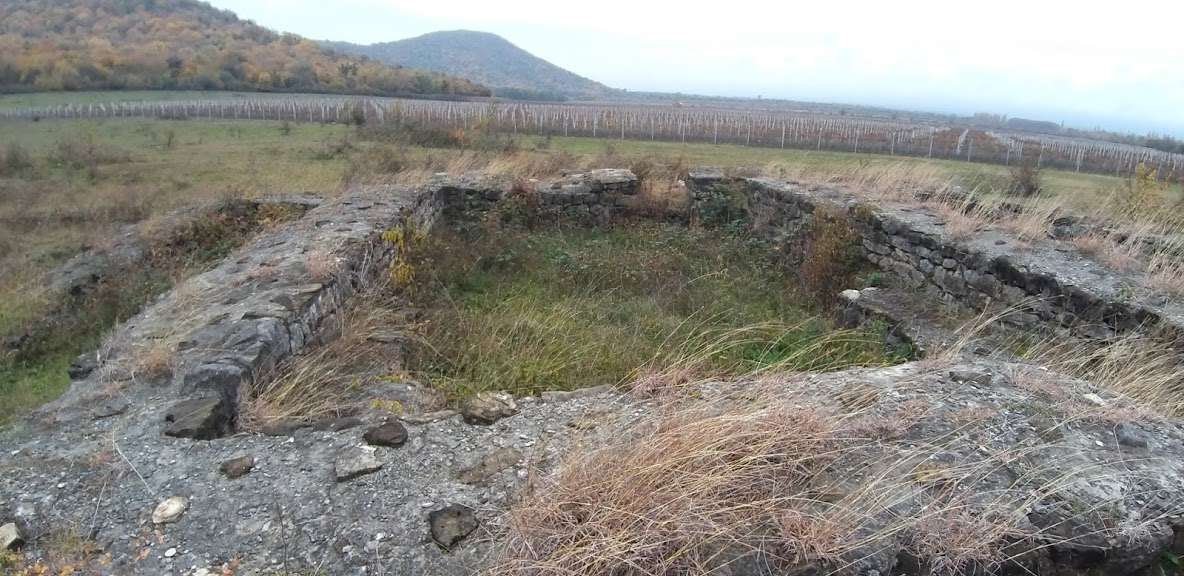
The ruins of a Zoroastrian fire shrine from the 2nd to 5th centuries, at the foot of a hill a few minutes from Nekresi Monastery. Not an active temple, just foundations in the open. A different site from the monastery, though neighbours.
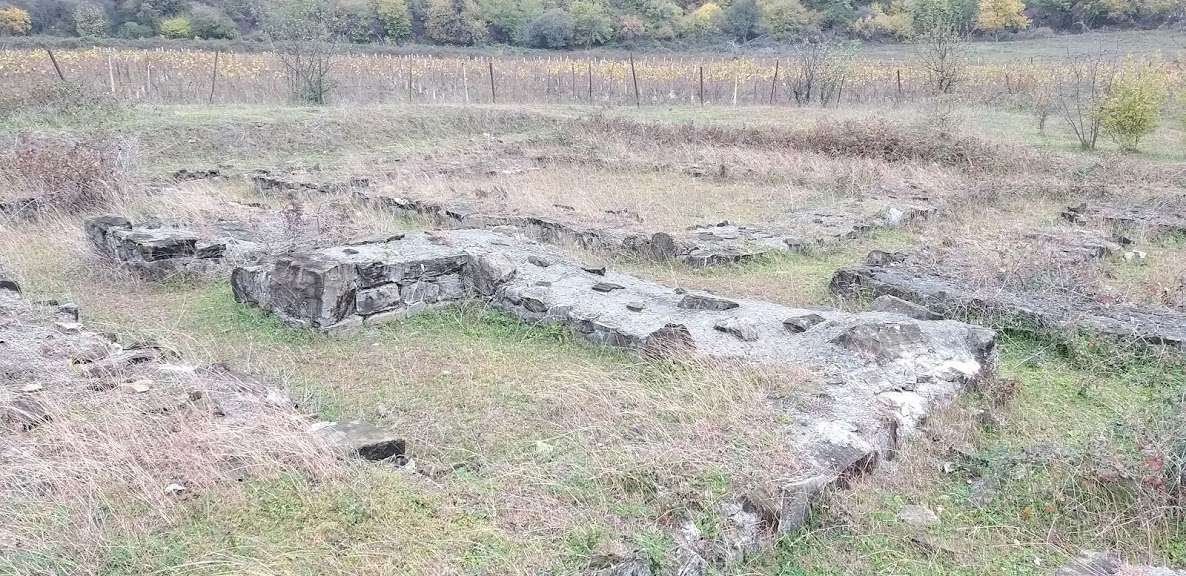
Next to Nekresi Monastery, which stands on a hill above the Alazani Valley, an entirely different set of ruins lies in the open field at the base of the slope. This is the Nekresi Sun Temple, a Zoroastrian fire shrine built centuries before Christianity ever reached this hillside. Today only the foundations remain, but the find reshapes the usual picture of Nekresi as a purely Christian site.
Before it became a centre of Georgian Orthodox religious life, Nekresi was the most important centre of Zoroastrianism in the region. This article covers the pre-Christian temple. For the monastery itself and its history, see Gremi and Nekresi.
🔥 Nekresi Before Christianity: A Centre of Fire Worship in Kakheti
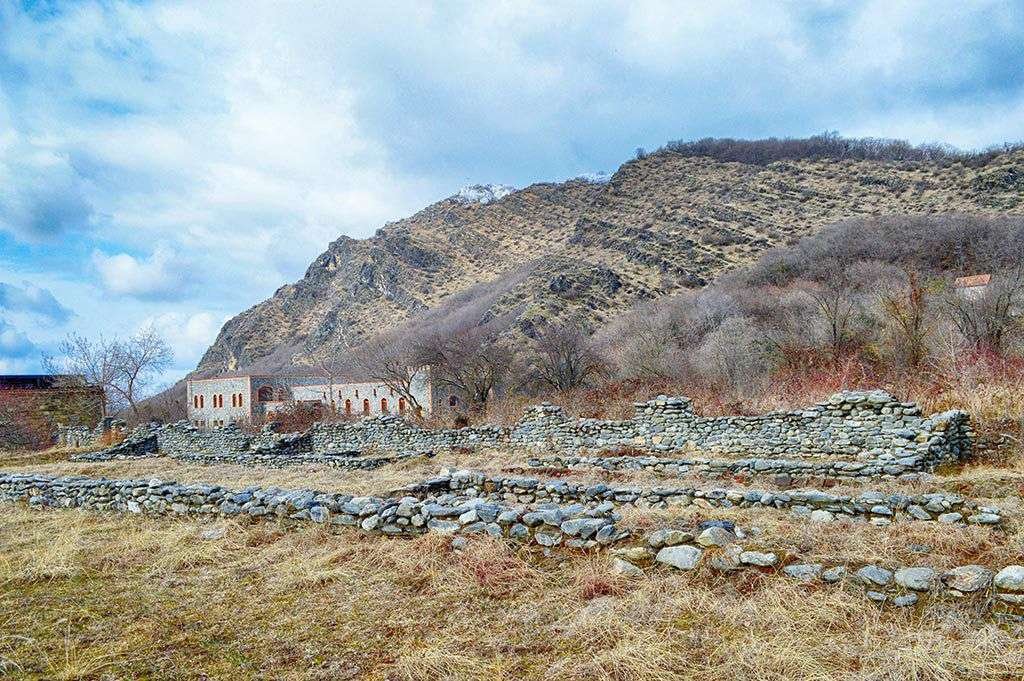
When discussing fire worship in pre-Christian Georgia, the ancient site of Nekresi in Kvareli district, eastern Kakheti, deserves particular attention. Before the spread of Christianity, Nekresi was not only a political centre but also the region's most important religious one: its influence extended into the mountainous areas of the Caucasus.
Ancient inscriptions have been found on the same territory. One of them contains the term "azati," meaning "free," likely adopted during the Parthian era. This shows that Nekresi was not an isolated Georgian settlement, cultural and religious influences from neighbouring Persia passed directly through it.
🏛️ Architecture: The "Great Square"
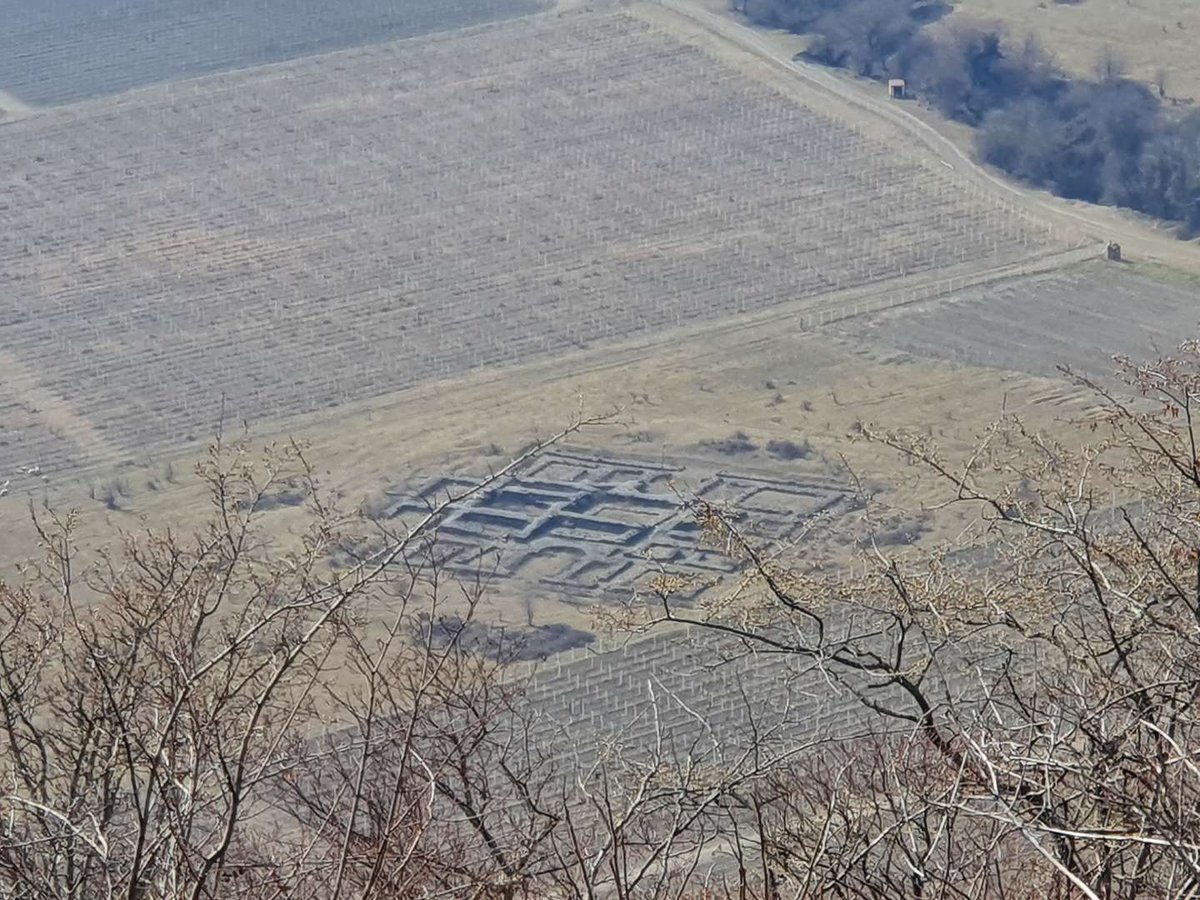
Excavations revealed two construction layers within the structure. The upper layer takes the form of a fortress-palace; the lower, earlier layer is the fire temple itself, with a complex plan. The building was constructed from large river stones and rubble stone bound with lime mortar, with brick used in the upper layers. The archaeological material recovered during excavation dates to the 1st through 5th centuries. The fire temple itself was most likely built in the 2nd century.
The monument was surveyed and measured by architect and archaeologist Nodar Bakhtadze. Professor Guram Kipiani named the square plan of this complex the "Great Square." Around all four walls of the temple stood four apsidal buildings, separated by corridors, each facing the central square with the curve of its apse. Inside the square, opposite each entrance, stood a block of three to four rooms with a hall facing the central entrance.
☀️ Who Was Worshipped Here: Fire, Mithra and Ahura Mazda
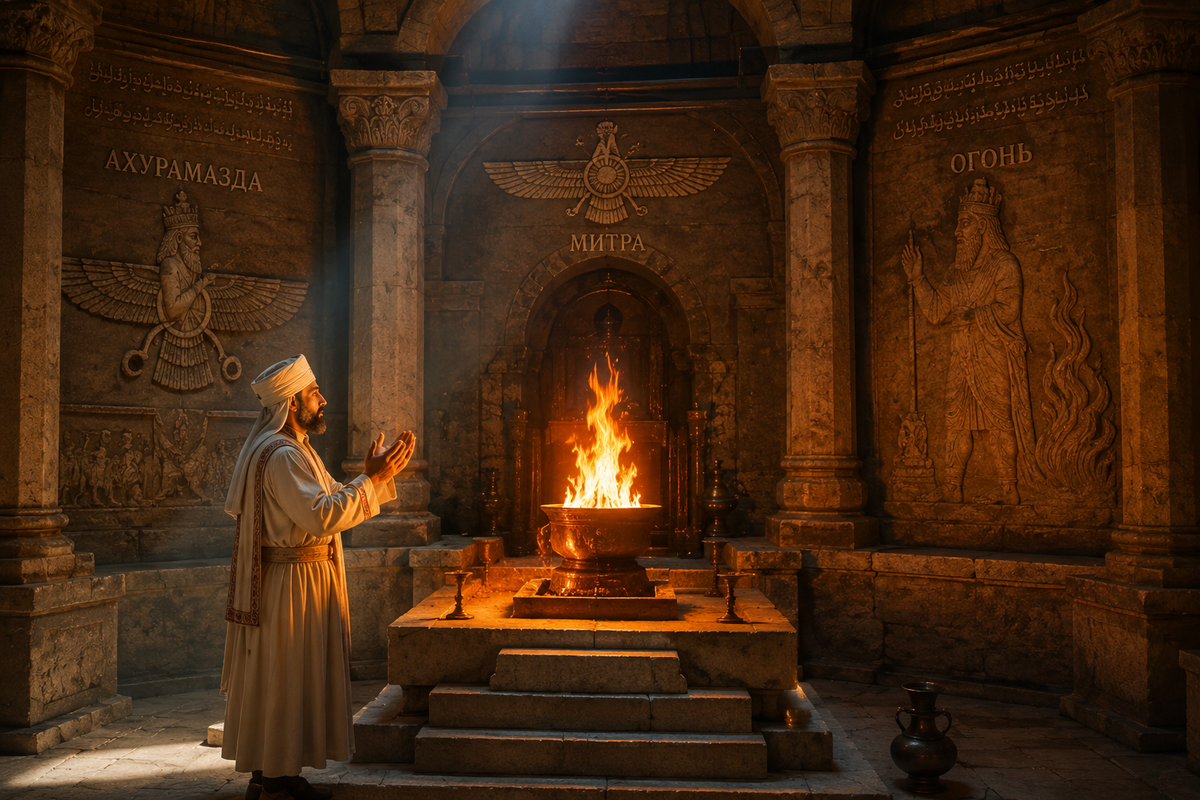
Zoroastrianism is a religion that originated in Persia. Its founding is attributed to the semi-legendary prophet Zarathustra, who, according to tradition, received a revelation from the supreme god Ahura Mazda. For nearly thirteen centuries, from the 6th century BC to the 7th century AD, Zoroastrianism was the state religion of three great Iranian empires. At the centre of the cult was the worship of fire as an embodiment of purity and divine light: priests kindled and tended an undying flame in purpose-built temples, much like the one that stood at Nekresi.
Among the finds at Nekresi is an inscription bearing the abbreviation "M-B," which researchers interpret as a shorthand for two words. Given that this concerns the pre-Christian cult of fire worship, the inscription is thought to refer to Mithra, the god of justice and concord, whose cult, Mithraism, was one of the most powerful pagan doctrines of antiquity. This remains a scholarly hypothesis rather than an established fact, but it fits well within the broader picture: Nekresi genuinely sat at a crossroads of Persian and local Caucasian religious traditions.
Don't expect dramatic standing walls at the sun temple. What you'll find on site is foundations and outlines traced into the ground, difficult to read without some preparation. Read this article before you visit so you know what you're looking at. Pair the visit with the climb up to Nekresi Monastery, where the entire Alazani Valley opens up, and the two stories, pre-Christian and Christian, click into a single picture.
⚔️ The End of the Temple: Two Versions
Sources disagree on exactly when the sun temple's story ended, and that disagreement is worth stating honestly rather than flattening into a single narrative.
One account holds that the fire temple, built in the 2nd century, was destroyed by Christians in the early 4th century, shortly after Christianity began spreading across Iberia.
A second account suggests fire worship persisted at Nekresi considerably longer. In the 6th century, thirteen Assyrian Fathers arrived in Georgia, monks who laid the foundations of Georgian monasticism. One of them, Abo (Abibos) of Nekresi, settled here and actively worked against the local fire cult. According to tradition, when he refused to renounce Christianity, he was put to death by the Persians. This same figure is credited as the founder of Nekresi Monastery, which still stands on the hill today.
If both accounts hold some truth, the picture looks something like this: the sun temple as a built complex may have ceased functioning earlier, while the beliefs and practices of fire worship in the region persisted into the 6th century, when Abibos of Nekresi encountered them directly.
🗺️ What to See Nearby
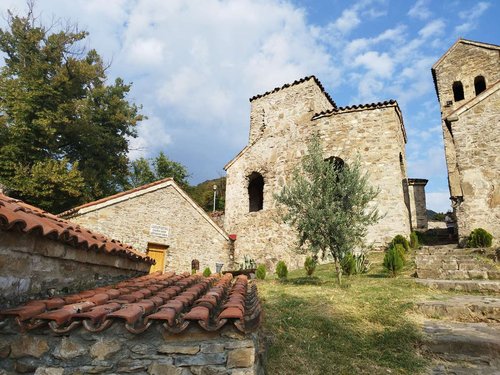
Nekresi Monastery. Directly above the sun temple on the hill, a 5 to 10 minute climb. An active convent, a 4th-century basilica among the oldest churches in Georgia, and a panorama across the entire Alazani Valley. Full details in Gremi and Nekresi.
Kakheti's wine country. The territory around Nekresi sits at the heart of Georgia's oldest wine-growing region. For a deeper look at the wineries and cellars of the area, see Kakheti: Georgia's Largest Wine Enclave.
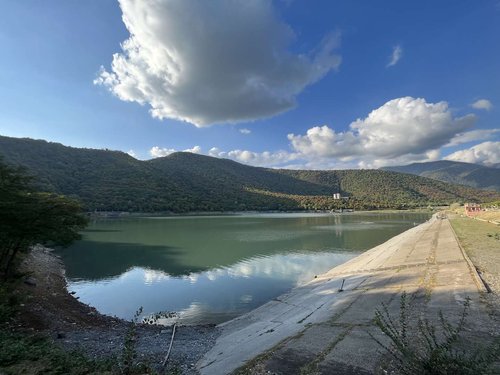
Lakes of Kvareli. A few kilometres away, the "Ilia's Lake" reservoir sits amid dense forest. A good place to unwind after a day spent among ruins and monasteries. Full details in Lakes of Kvareli.
Have you visited the sun temple at Nekresi? Leave a review on Madloba — share whether the ruins were easy to find, whether you combined the visit with the climb to the monastery, and what stood out most. It helps others planning the same trip.
Information current as of June 2026. Site access and the condition of excavated areas may change, check before travelling.
❓Frequently Asked Questions
The ruins of a Zoroastrian fire shrine dating from the 2nd to 5th centuries, located at the foot of a hill beside Nekresi Monastery in Kakheti. A pre-Christian temple dedicated to fire worship, also known as the "Great Square" for the shape of its plan.
No. These are two separate, though neighbouring, sites. The monastery is an active Christian convent on the hilltop with a 4th-century basilica. The sun temple is the pre-Christian ruin of a Zoroastrian shrine below, in an open field at the base of the same hill.
Archaeological material dates to the 1st through 5th centuries; the temple itself was likely built in the 2nd century. Sources disagree on when it ceased to exist: one account holds it was destroyed by Christians in the early 4th century, another suggests fire worship persisted in the region until the 6th century, when it was confronted by the monk Abibos of Nekresi.
This is the name Professor Guram Kipiani gave to the square plan of the archaeological complex: four apsidal structures arranged around a central courtyard, separated by corridors and facing inward.
Yes, though only foundations and outlines traced into the ground, with no reconstruction. Entry is free.
From Kvareli via Nekresi Monastery, then on foot to the base of the hill. Temple coordinates: 41.967493, 45.761029.
Nekresi Monastery (5 to 10 minutes up the hill), the wineries and cellars of Kakheti's wine country, and the Lakes of Kvareli. All three fit comfortably into a single day.

2 comments
Log in to leave a comment