




Georgian Military Road: History, Route and Mountain Passes
A three-story house formerly belonging to Polish engineer Bolesław Statkowski has been preserved in Tbilisi. Who was he? How did he end up in Tbilisi, and what is he famous for?
All of this is covered in this article.
Georgian Military Highway
The Georgian Military Highway is the main land transport route linking Russia and Georgia, stretching 208 km.
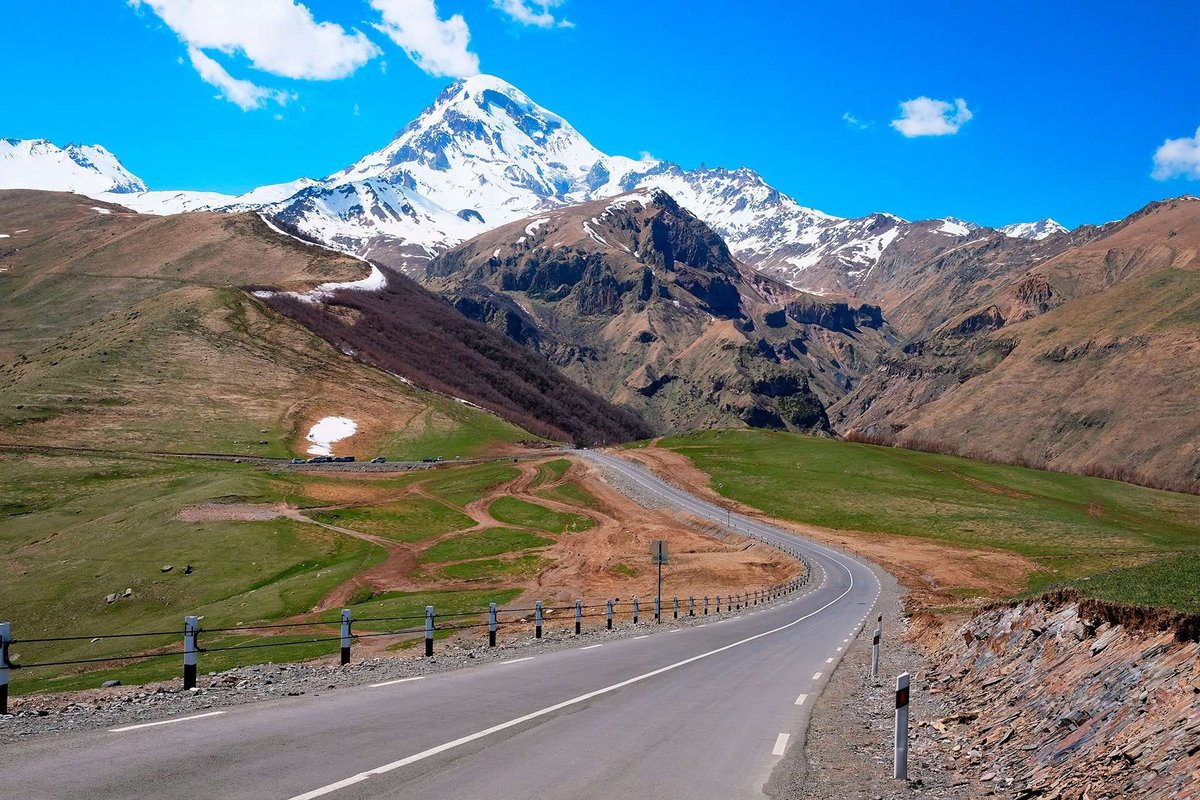
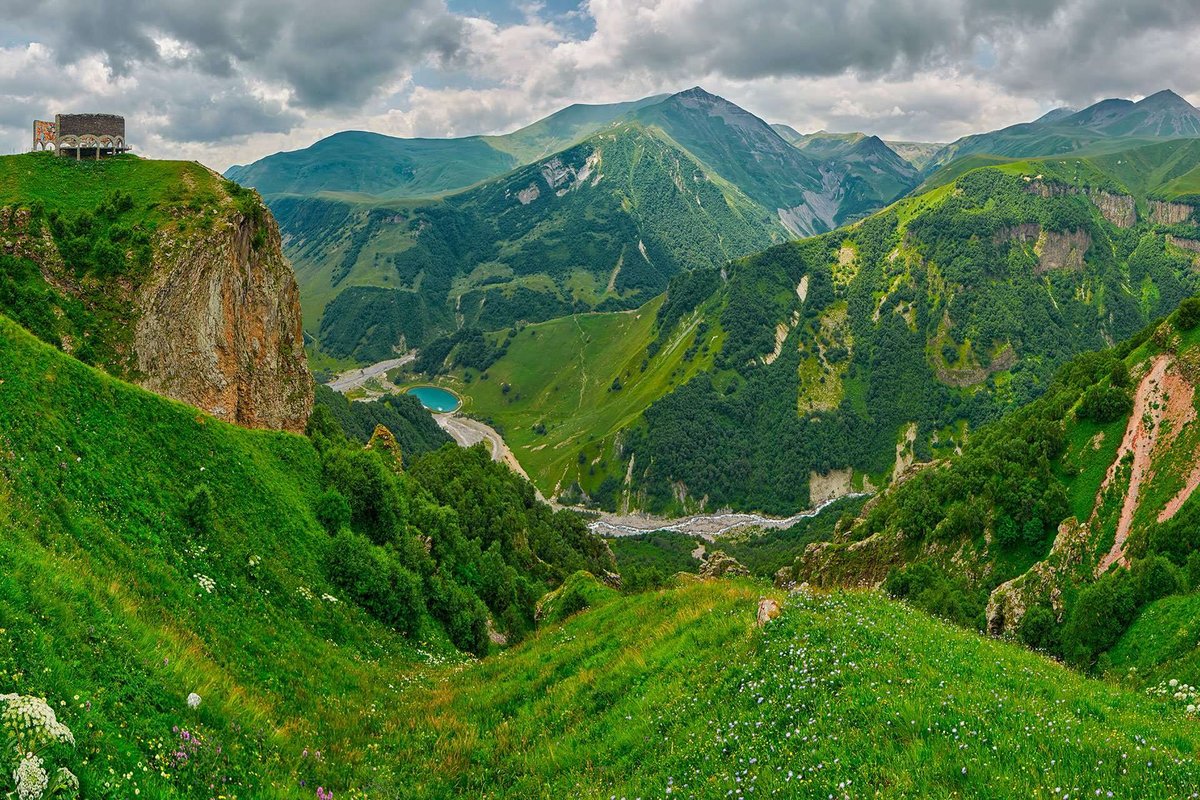
This mountain road is dangerous, but incredibly picturesque at any time of year. In adverse weather conditions (snowfall, avalanches, etc.), the road is closed, forcing you to wait in a long line of cars until the road is cleared. But all these difficulties fade into the background as soon as you hit the highway. Because the surrounding beauty is so breathtaking!
A trip along this road can be considered a full-fledged excursion. It passes through the Darial Gorge, reaching its highest point, the Cross Pass, at 2,379 meters above sea level. It then descends into the Aragvi River valley. Several interesting tourist attractions are located along it.
This is a historic route. Even in ancient times, trade caravans and nomads traveled along it. Permanent communication between Russia and Georgia began here in 1799. Work was periodically carried out to strengthen and improve the road. Attempts were made to bypass the dangerous Krestovy Pass, but nothing worked.
In the mid-19th century, a young engineer named Statkovsky arrived in Tiflis. He was tasked with improving the Georgian Military Highway. After completing the work according to his design, the road opened on August 30, 1861.
During the Soviet era, the road was repaired, bridges were renovated, curves were slightly straightened, and the road surface was widened. After the Great Patriotic War, regular bus service was established.
Passengers who rode on overcrowded buses recall the extreme crossing of the Krestovy Pass along a narrow road, right on the edge of a precipice. From the window, one could see pebbles flying from under the wheels. And one marveled at how the bus managed to successfully navigate such a difficult journey.
Boleslav Statkovsky
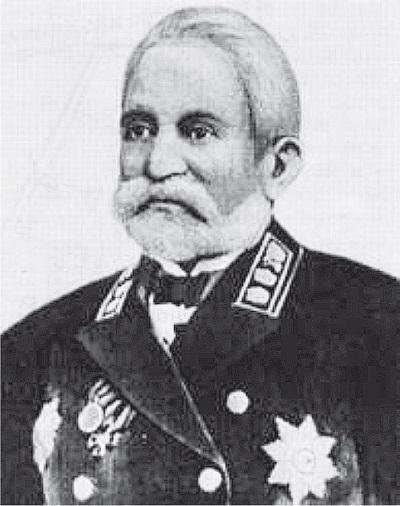
Polish nobleman Bolesław Kospesza-Statkovsky (born in 1825) hailed from the city of Pinsk, formerly part of the Polish-Lithuanian Commonwealth and the Polish Republic, and now part of Belarus.
From childhood, Bolesław had an inquisitive mind and a love of the exact sciences. After graduating from high school, he entered the St. Petersburg Institute of Railway Engineers.
His student years were filled with calculations, measurements, drawings, and complex projects. After completing his studies, the young engineer was sent to the Caucasus.
Many who come here on business trips fall in love with Georgia and stay there forever. This was the case with Statkovsky. He arrived in the Caucasus in 1847. At that time, Georgia was actively developing and being rebuilt.
Bolesław worked with enthusiasm and quickly earned respect among his colleagues. He was tasked with the reconstruction of the Georgian Military Highway. Russia lacked extensive experience in building high-mountain roads, and this complex project required additional knowledge. Therefore, Boleslav traveled to Europe and became familiar with construction practices in the Alps.
Three years later, having completed his training, the young engineer returned to Georgia. His project to improve the road earned the approval of a commission under the Governor-General of the Caucasus. The construction was supervised by Grigol Orbeliani, a renowned statesman and Governor-General of Tiflis from 1860 to 1866.
At the opening of the renovated Georgian Military Road in August 1861, G. Orbeliani cut the ribbon to the sounds of an orchestra, and a cavalry squadron was the first to pass along Mletsky Descent. Civilian traffic was then permitted.
A copper plaque was installed in the "White Rock" on the Zemomletsky Descent, stating that the road was built according to the design of B. Statkovsky.
The experienced engineer also participated in the construction of the railway. He proposed an original solution for the road's crossing of the Greater Caucasus Range.
The Alpine Society and the Development of Tourism in the Caucasus
Statkovsky was engaged in scientific work, was a member of the Imperial Russian Geographical Society, and was a member of its administrative committee. He studied the climate and natural environment of the Caucasus. In 1878, he published a book based on his research, "Problems of Climatology of the Caucasus."
In 1878, the Caucasian Alpine Club was founded by the Tiflis intelligentsia under the auspices of the Society of Natural Science Enthusiasts. Boleslav Statkovsky was its founder, and the organization was housed on the first floor of his mansion.
The club, small in number, with about 40 members, lasted only six years. Its goals were challenging and not always clear to ordinary members.
The society was engaged in educational work. Particular attention was paid to the establishment of weather stations to predict weather changes and various natural disasters and to warn mountain residents about them in a timely manner.
One of the club's goals was the development of mountain tourism. But organizing expeditions required funding, which was unavailable. Moreover, the Caucasus at that time often caused concern among the general public in Russia. The region was considered difficult to access, even though the Georgian Military Highway had already been reconstructed. Media coverage of the region was sparse and not entirely optimistic.
The Caucasus doesn't have the cheerful, peaceful appearance of the European Alps: everything about it is gloomy! Furthermore, the Caucasus is distinguished by the inaccessibility of its high passes, its impassability. The roads leading through it are mere impassable paths, and the stories of those who have traveled such trails are full of astonishing, sometimes even terrifying details. The traveler must tread with the utmost caution, leading his horse by the bridle, along a narrow, slippery path.
On one side is a sheer mountain wall, on the other a precipice, deep within which the roar of a torrent can be heard. If you encounter thick fog, rain, and snow, which often happens in the mountains in summer, you must stop and stand still, even though your teeth are chattering from the cold. There have been instances of people unaccustomed to mountain treks and susceptible to the horrors of such paths, their nervous systems overwhelmed by the shock they had experienced, and they went mad (Georgian Military Highway, 1887).
The Alpine Club was the first mountain tourism community in Russia. Despite its short existence, it had a following. Soon after its dissolution, new mountain travel groups began to emerge.
It could be said that this challenging form of tourism originated in Tiflis.
In summer any car will do; in winter you need winter tires or chains, so check this with the rental company when booking.
Driving the whole road without missing Ananuri or the Friendship arch works only if the stops are yours to choose.
Planning to drive in Georgia?
Compare prices and availability from local rental companies.
A car with a driver: the price is fixed in advance, stops along the way are free.
Affiliate link: we may earn a commission, your price stays the same.
Statkovsky's Mansion
A three-story mansion with an unusual façade, built in 1880, stands in Tbilisi's Sololaki district. Not everyone knows who owned this house.
Its owner not only developed a project to improve the Georgian Military Highway, he also headed the Caucasus Railway District and chaired the Caucasus branch of the Imperial Russian Technical Society.
Perhaps this is why the façade of his house was decorated with gears and other technical details made of plaster.
Now, one part of the house retains the decorations, while the other is simply plastered, without any frills. This is because major renovations began in 2019. The foundation was reinforced. Before the pandemic, only the walls had been plastered.
Renovations were expected to continue in 2021, but they have not yet begun. The decorations from the façade are stored at the district administration office; authorities promise to restore the house to its original appearance as soon as possible.
The interior of the entrance hall deserves special attention. The staircase railings are decorated with cast iron, the glass ceiling, and the unusual curve of the staircase are all works of 19th-century art.
The house's layout is unusual. The façade is designed in a European style, while the courtyard is in keeping with traditional Georgian traditions. It features numerous carved balconies entwined with grapevines. Voices can be heard from the open balcony doors, and the delightful aroma of freshly brewed coffee can be smelled. The mansion lives on.

36 comments
Log in to leave a comment
Военно‑Грузинская дорога — это не просто трасса, а легендарный путь через Главный Кавказский хребет, который издавна соединял Грузию с Севером: от Тбилиси до Владикавказа через Дарьяльское ущелье и перевал Джвари на высоте почти 2 400 м. 
Автор рейтинга интересно связывает историю этой дороги с именем инженера Болеслава Статковского, который стоял у совершенствования её конструкции — не только как транспорта, но и как символа инженерной мысли XIX века. Его дом в районе Сололаки в Тбилиси до сих пор напоминает о тех временах, когда развитие дорог было делом национального масштаба. 
Военно‑Грузинская дорога была стратегически важным маршрутом ещё с древности: через неё проходили торговцы, войска и дипломаты, а Россия в начале XIX века укрепила её, чтобы ускорить движение армии и связи между Кавказом и остальной частью империи. 
Сегодня этот путь — популярный туристический маршрут: мимо замка Ананури, через живописные ущелья, к вершинам гор выше облаков и к знаменитой церкви Святой Троицы в Казбеги, где открываются панорамы, которые забываются редко. 
Спасибо автору за такой живой гид по этой исторической трассе!
А вы когда‑нибудь планировали путешествие вдоль Военно‑Грузинской дороги — какие места по пути хотели бы увидеть больше всего: Ананури, вид на Казбек или перевал Джвари? 🏞️✨
Именно Статковский внёс величайший вклад в усовершенствование Военно-Грузинской дороги.
Спасибо, что пишите такие интересные статьи.
Подскажите, насколько безопасно ездить по этой дороге? Я опасаюсь горных поездок, если честно.