

Religions of Tbilisi: Temples of Seven Faiths in One City
🕌 Quick reference: religions of Tbilisi
| ⛪ Orthodox Christianity | 13 churches; key ones — Sameba, Sioni, Anchiskhati, Metekhi |
| 🏛️ Armenian Church | 3 churches; full guide in a separate article |
| ✝️ Catholicism | 3 cathedrals, Mass in Georgian, English, Polish |
| ✡️ Judaism | 2 synagogues, one of the world's oldest Jewish diasporas |
| ☪️ Islam | 1 mosque — the only one in the world where Sunnis and Shias pray together |
| 🦚 Yazidism | 1 temple — one of the few in the world outside Iraq |
Who this article is for
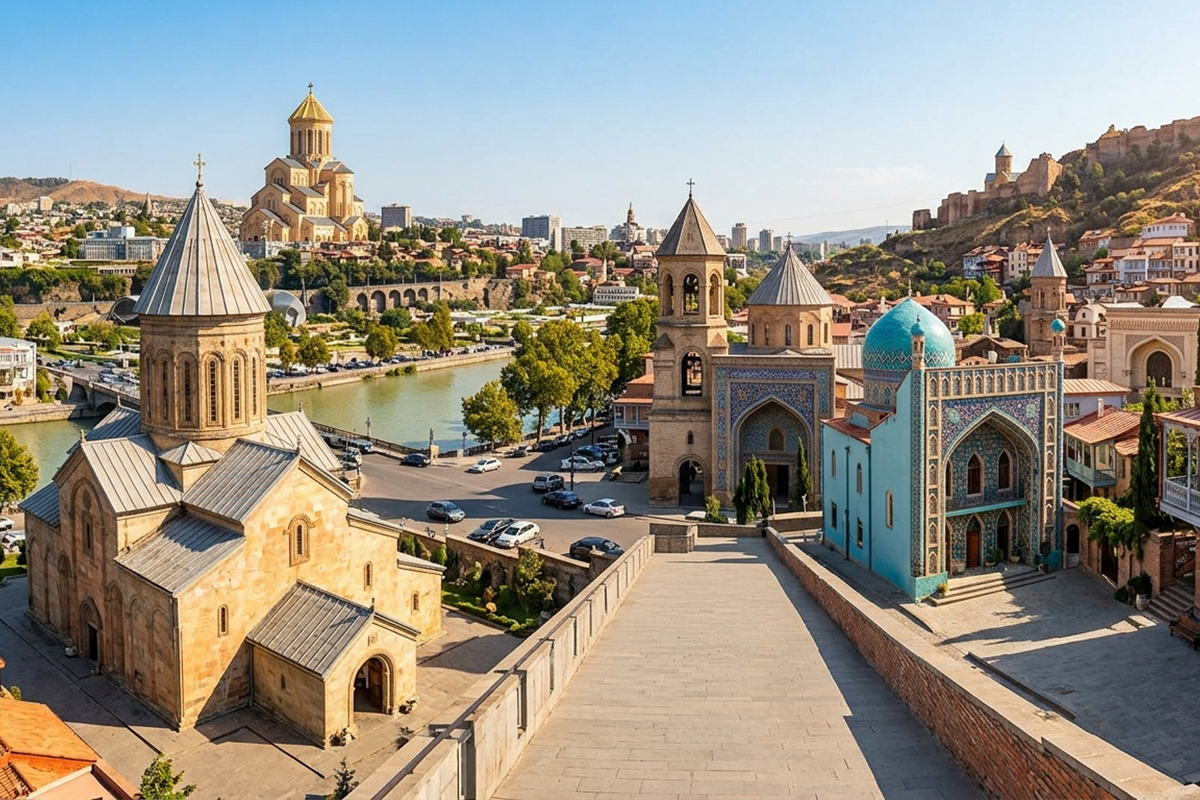
Tbilisi is one of the few cities in the world where you can see active places of worship for seven different religions within walking distance of each other in a single day. This isn't an open-air museum — every community here is alive, with weekly services. This guide explains what's here, where to start, and why this city became so religiously diverse in the first place.
Why Tbilisi has so many religions
For centuries, Tbilisi sat on trade routes connecting Persia, the Ottoman Empire and Russia. Merchants, settlers and refugees passed through, and each wave left behind its own community and its own temple. Armenians settled in Avlabari as early as the Middle Ages, Jews have been here since antiquity, Muslims arrived alongside Arab and Persian conquests, and German Lutherans and Polish Catholics came in the 19th century, when Tiflis became the centre of the Russian Caucasus Viceroyalty.
Georgia is officially an Orthodox Christian country, and the Georgian Orthodox Church (GOC) holds the central place in religious life. But the state doesn't restrict other faiths: every one of them has its own active temple in the city, sometimes more than one.
🕌 Religions of Tbilisi on the Map
Open in Google Maps⛪ Orthodox Christianity — the foundation of Tbilisi's religious landscape
The Georgian Orthodox Church is the country's oldest: Georgia adopted Christianity as a state religion in the 4th century. Tbilisi has 13 active Orthodox churches spanning from the 6th century to the present day. Below are the four key ones that shape the city's religious and architectural character.
Sameba Cathedral
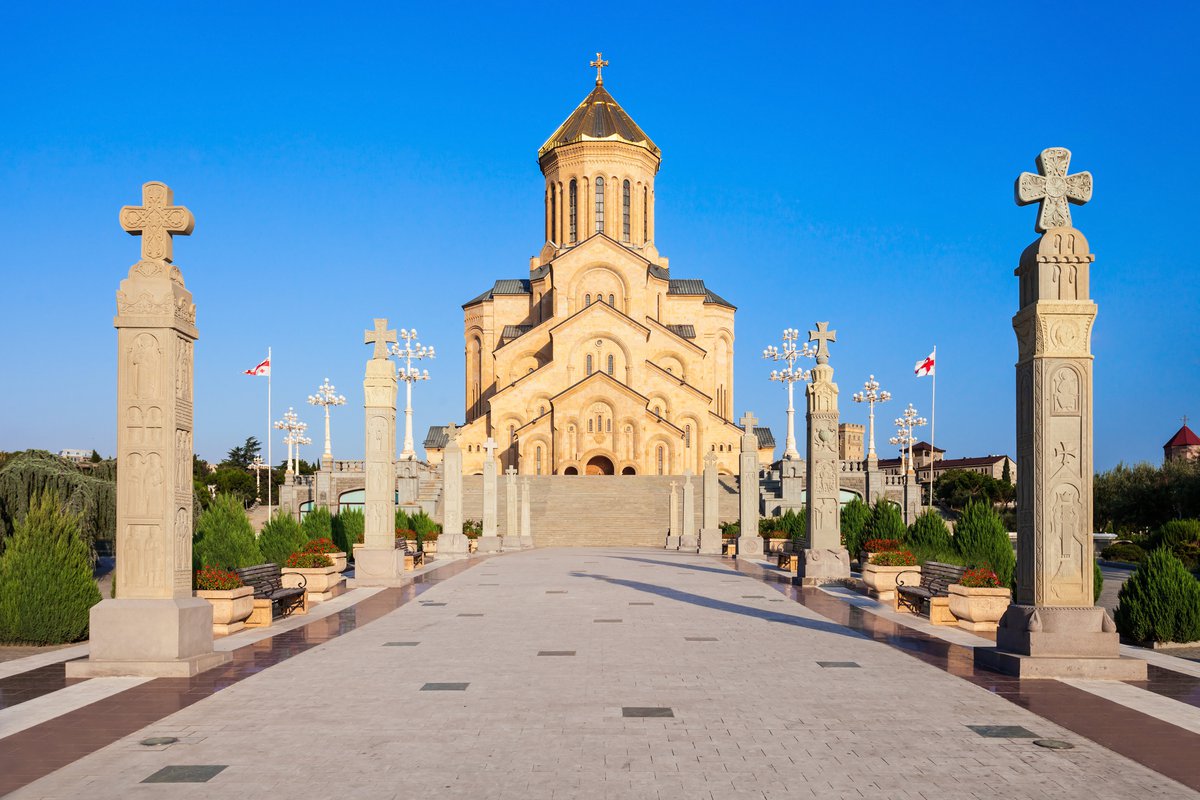
Georgia's tallest church — 101 metres from ground to the top of the cross, the third-tallest Orthodox cathedral in the world. Built 1995–2004 on St. Elijah's Hill, designed by architect Archil Mindiashvili, to mark 1,500 years since the Georgian Church gained autocephaly. Stones from Mount Zion, water from the Jordan River, and earth from Jerusalem were placed in the foundation.
Worth knowing: the cathedral was built partly on the site of the old Armenian Khojivank cemetery from the 17th century — a historical fact sometimes raised in discussions about the city's development. Inside, the "Hope of Georgia" icon contains 30 kg of gold and depicts 432 Georgian saints. The hill offers a panoramic view of the whole city.
Sioni Cathedral
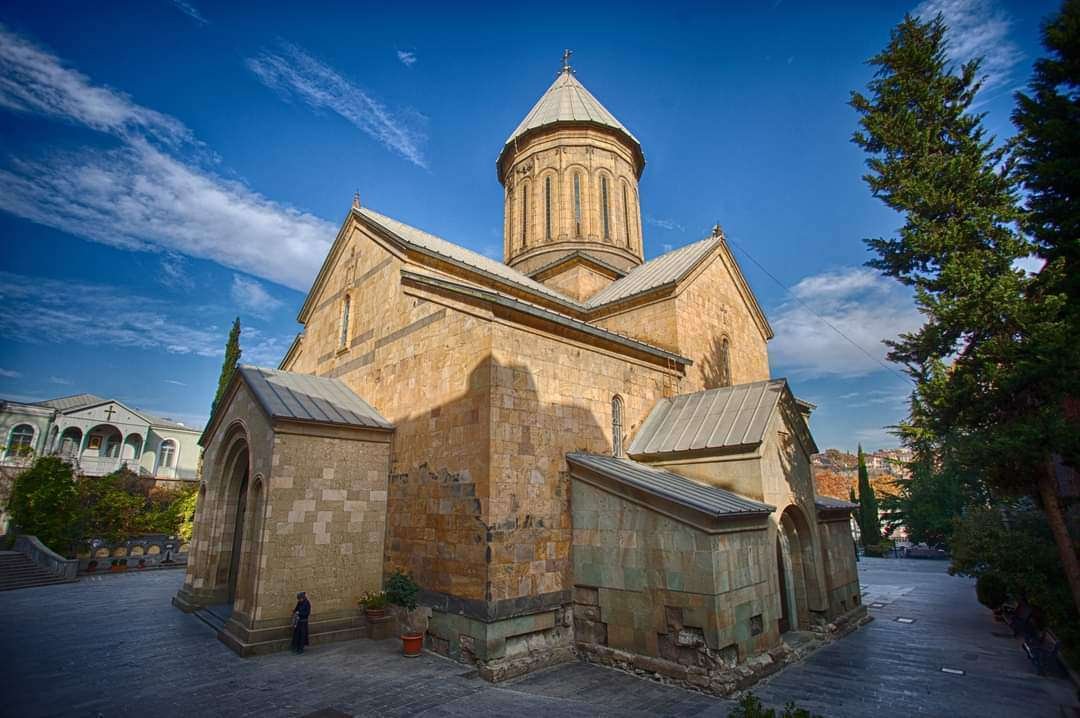
The city's main church before Sameba was built, dating from the 6th century. It holds the cross of St. Nino, the symbol of Georgia's conversion to Christianity, said to be woven from grapevine and bound with her own hair. The cathedral survived Persian and Arab invasions, fires and destruction, and was last rebuilt in the 19th century.
In 1828, Alexander Griboyedov married Nino Chavchavadze here. He dropped the wedding ring during the ceremony — considered a bad omen, which is believed to have come true: he was killed in Tehran a few months later.
Anchiskhati Basilica
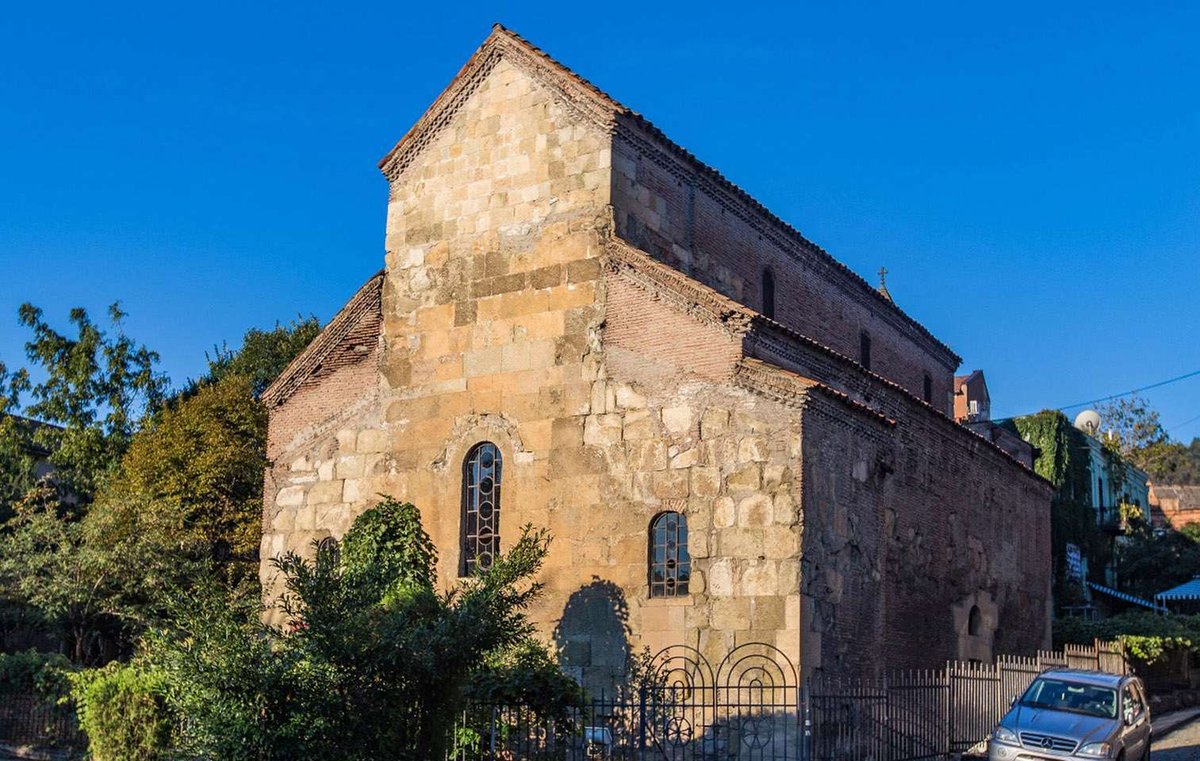
Tbilisi's oldest surviving church, built in the 6th century on the banks of the Kura River by King Dachi Ujarmeli. A three-nave basilica with horseshoe-shaped apses — a rare surviving example of early Christian architecture in the region. It got its current name in the 17th century, when an ancient icon of the Saviour was moved here from the Anchi monastery to protect it from Ottoman invasion.
During the Soviet period it housed a museum of handicrafts; the church has been active again since 1989. It maintains a choir known for performing ancient Georgian chant.
Metekhi Church
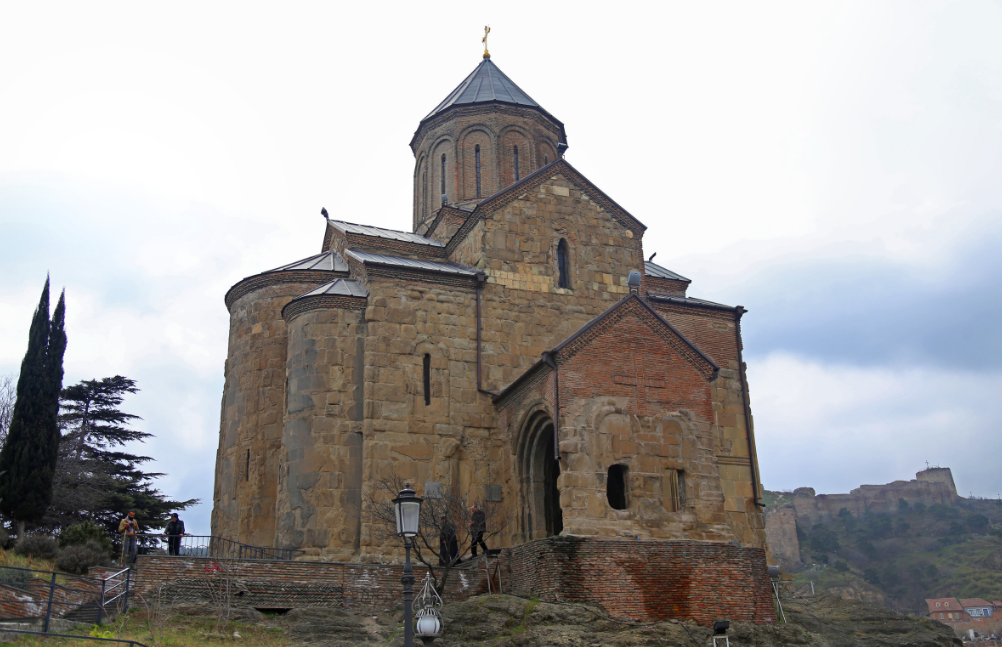
Standing on a cliff above the Kura, this is one of Tbilisi's most recognisable landmarks. The current building dates from the 12th–13th century, though tradition links the first church on this site to King Vakhtang Gorgasali (5th century). St. Shushanik is buried here, and Queen Tamar prayed here before the Battle of Shamkor.
Over the centuries the building served as a gunpowder store and a prison. In 1937 it was slated for demolition — public protest, led by art historian Dimitri Shevardnadze, saved the church, but Shevardnadze himself was exiled to Siberia for it.
Kashveti Church
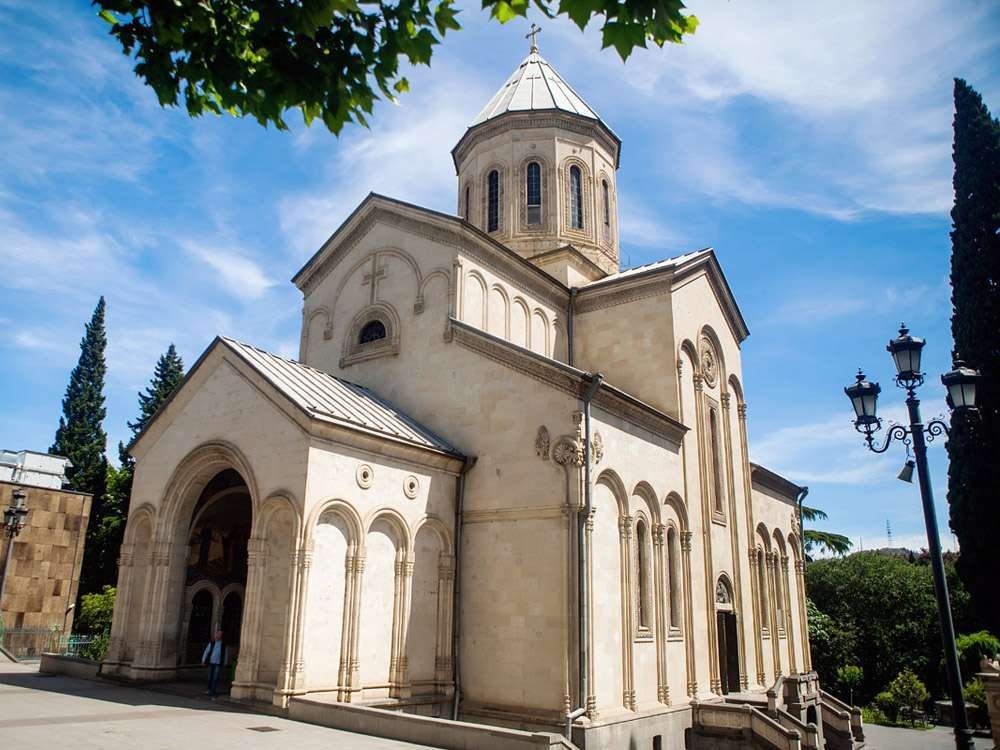
Standing directly across from the Parliament building on Rustaveli Avenue, this is the most "urban" of Tbilisi's churches. Built 1904–1910 on the site of an older church, architect Leopold Bielfeld modelled it on the 11th-century Samtavisi Cathedral. Its visibility from the avenue means it often appears in photos alongside the modern Parliament building.
The remaining Orthodox churches of Tbilisi
Beyond the five key sites, the city has eight more active GOC churches:
- St. Nicholas inside Narikala Fortress (restored 1996–1997),
- St. Nino's Church near the Mtatsminda funicular,
- St. Andrew the First-Called in the Isani district with a cosy courtyard garden,
- Jvaris Mama (Church of the Cross, 5th century, with 16th-century frescoes) on Jerusalem Street,
- The Vera district's St. John the Divine Church — built with the support of Tsar Nicholas II,
- Mama Davit Church on Mount Mtatsminda — home to the Pantheon of Georgian writers and public figures,
- The cemetery basilica of Peter and Paul, open daily.
A detailed look at Alexander Nevsky Church and the Vera St. John the Divine church is available in a separate hub, Russian Churches of Tbilisi, where these two churches have their own history tied to the city's Russian community.
🏛️ Armenian Apostolic Church
Armenians form one of Tbilisi's oldest and largest communities, concentrated particularly in the Avlabari district. The Armenian Church split from other branches of Christianity as early as the 5th century and maintains its own liturgical tradition. The city has three Armenian churches: the active St. George's Cathedral (13th century), the 18th-century Echmiadzin Church in Avlabari, and the closed, restoration-needing Surb Nshan church.
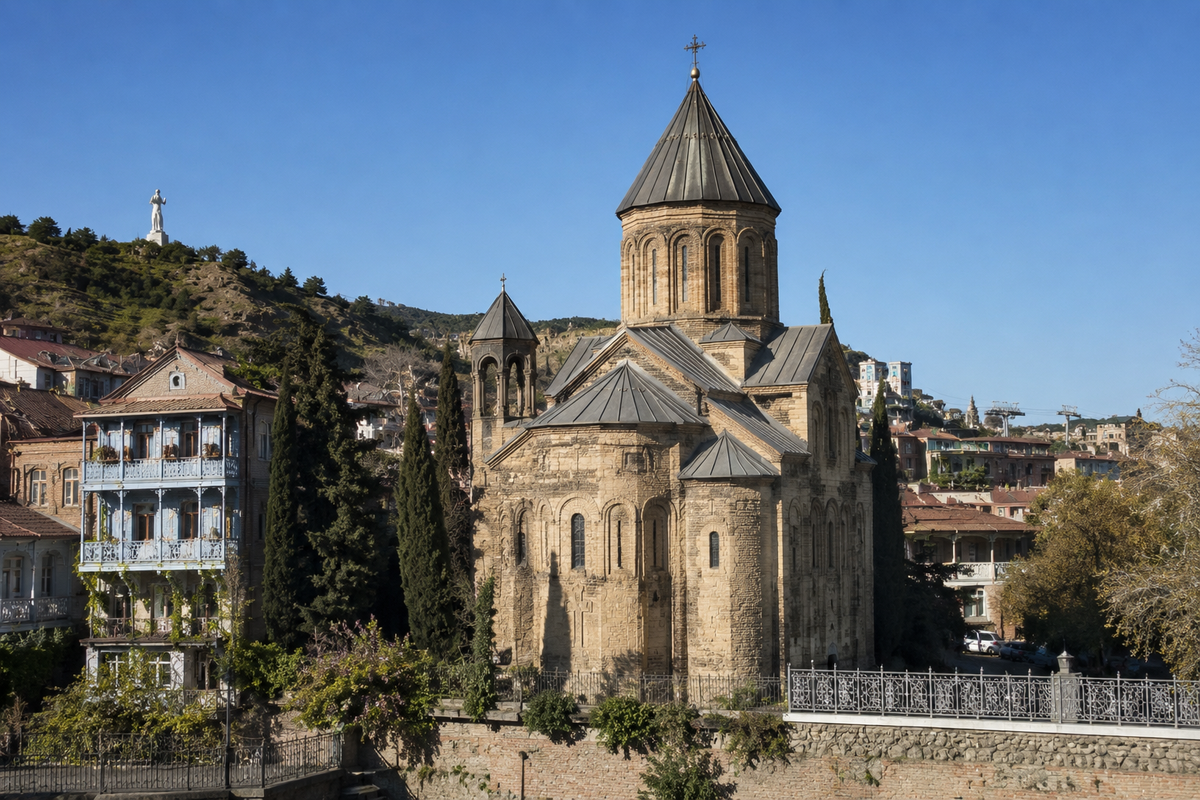
A full guide on the subject, covering all six significant Armenian churches in the city (including the ruins of a cathedral destroyed in 1989), is available in a separate hub: Armenian Churches of Tbilisi.
✝️ Catholicism
A Catholic community has existed in Tbilisi since the 13th century, when the first Dominican monks settled here, but Georgian Catholics had no church of their own until the early 19th century. The city now has three active Catholic cathedrals.
Cathedral of the Assumption of the Virgin
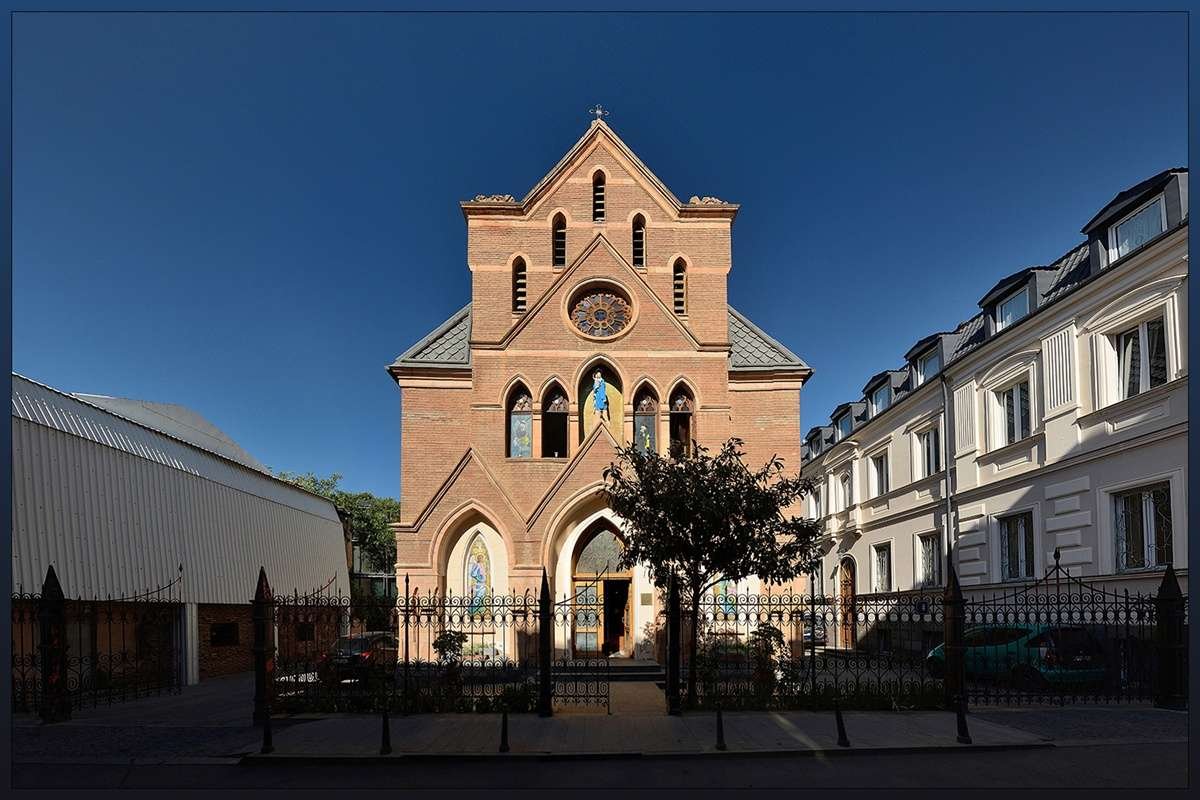
Tbilisi's oldest Catholic church, on Gia Abesadze Street. Built 1804–1808 at the request of Tiflis prefect Francesco Paduel to Emperor Alexander I — Tiflis Catholics were granted land and 6,000 roubles, with a further 1,286 piastres donated by the Austrian monarch. Closed by Soviet authorities in 1937, it was reconsecrated only in 1999, during Pope John Paul II's visit to Georgia.
The architecture blends Gothic and Romanesque styles with local details: an unplastered red-brick facade, pointed-arch windows, a rose window, and a statue of the Virgin and Child above the entrance. Inside: frescoes, ribbed vaulting, gilding, and two-tiered chandeliers. Today Mass is celebrated in Georgian, English, Polish and Latin.
Cathedral of Saints Peter and Paul
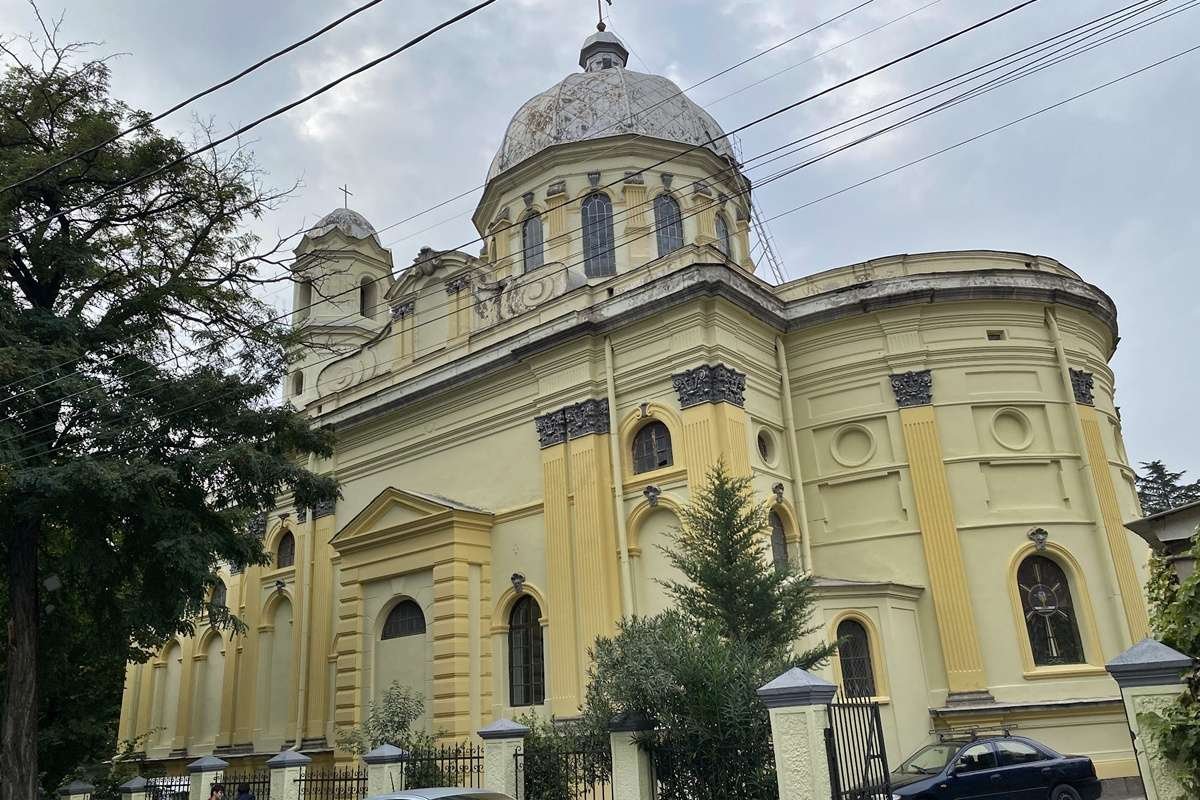
A later, more ornate Baroque church on Ivane Javakhishvili Street. Construction began in 1870, designed by architect of German descent Albert Salzmann, and was completed in 1877. The project was initiated by Polish priest Maksymilian Orlowski, who had served in Tiflis since the 1860s and became the church's first rector. Funding came from the local Polish community and Georgian Catholic princes.
What makes this cathedral unique is that it has never once stopped functioning throughout its history — even during Soviet-era persecution, its doors stayed open. Pope John Paul II celebrated Mass here in 1999. Today services are held in Georgian, English and Russian, led by priests of both the Roman Catholic and Armenian Catholic churches.
New Catholic Church of St. James and St. Diana
The youngest of Tbilisi's three Catholic churches, on Lado Asatiani Street — a contemporary building serving the city's growing Catholic congregation.
✡️ Judaism
Georgian Jews are among the world's oldest Jewish diasporas: historians estimate the first Jews arrived in Kartli as early as the 6th century BCE, long before the destruction of the Second Temple. This is a Sephardic, not Ashkenazi, tradition — a distinct branch with its own character. By the early 20th century Tbilisi had five synagogues; today there are two.
The Great Synagogue (Akhaltsikhe)
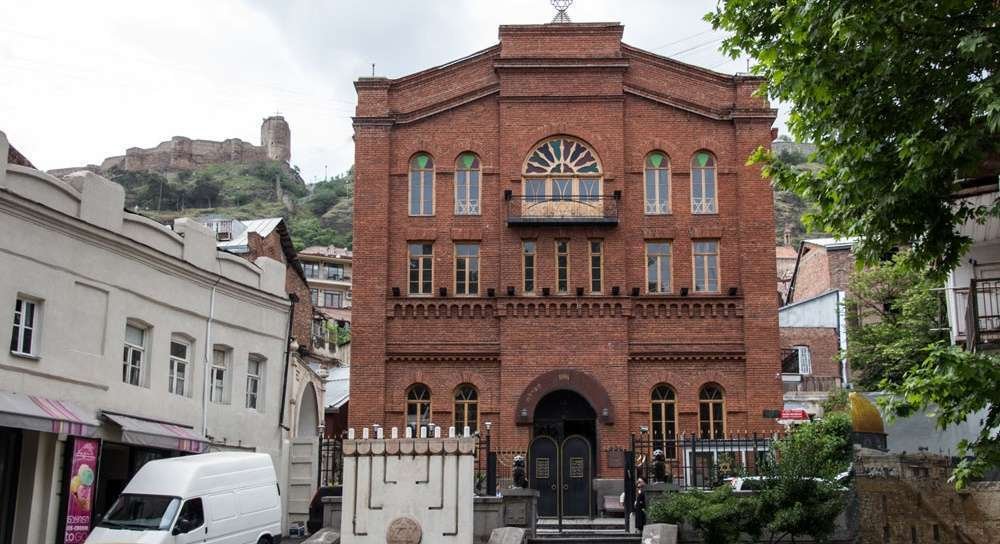
The main active house of worship for Tbilisi's Jewish community, on Hovhannes Tumanyan Street near Jerusalem Square. Built of brick 1895–1913 with funds from Jews who had moved from Akhaltsikhe, hence its other name. The architect gave the building a Moorish-eclectic appearance with a vaulted, illuminated ceiling.
Inside are two prayer halls: an upper, main hall with wall and ceiling paintings from the 1940s — geometric patterns, verses from the Tanakh, fragments of prayers — and a smaller, plainer lower hall used for daily prayers, without a separate women's gallery. The upper hall has one. The courtyard holds a kosher restaurant and a small shop selling kosher products. The synagogue remains the centre of the city's Jewish community, surrounded by the traditional Jewish quarter.
The Small Synagogue (Beit Rachel)
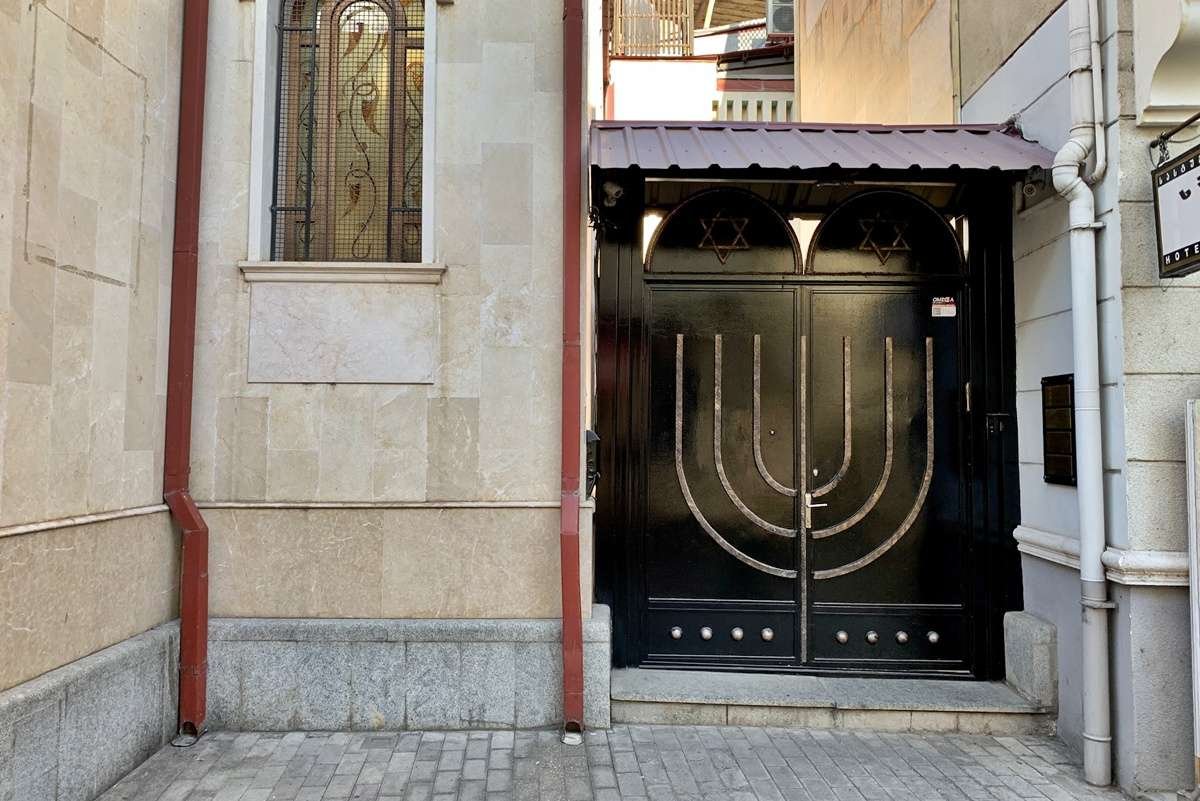
An Ashkenazi synagogue tucked into a courtyard of the Old Town, reached through an archway marked with a sign in Hebrew off Tkavi Lane. The building dates from roughly 1900, built by Ashkenazi Jews who had moved here from the Russian Empire after Eastern Georgia's annexation in 1801 — which is why it's sometimes called the "Russian synagogue."
Women have a separate entrance leading to a wooden balcony four metres above the main hall. The renovated building reopened in 2009, when the Torah scrolls were ceremonially brought in. Around 200 families worship here today.
☪️ Islam
Until the mid-20th century, Tbilisi had several mosques representing different branches of Islam. Today only one remains active.
Jumah Mosque
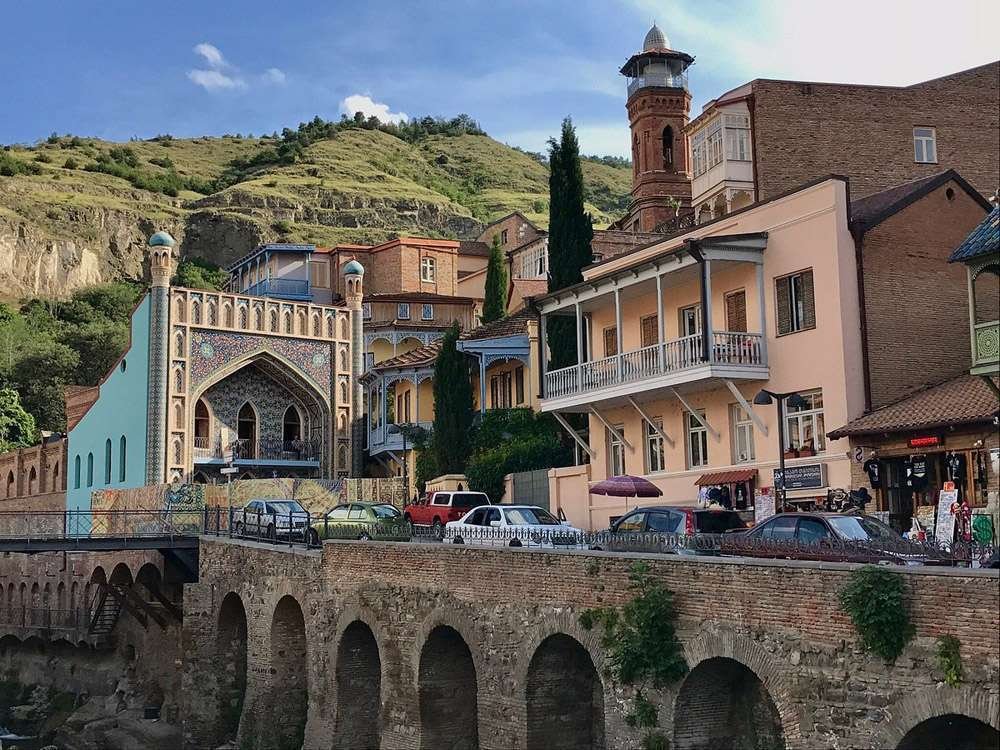
Tbilisi's only active mosque, on Botanical Street at the foot of Narikala. The first mosque on this site was built in 1724 but soon destroyed during the Persian-Ottoman war. The current building dates from the 19th century, designed by Italian architect Giovanni Scudieri — originally built as a Sunni mosque by two brothers of Kazan Tatar origin. Out of respect for their memory, the building kept two mihrabs, the niches indicating the direction of Mecca.
The mosque's defining feature traces back to 1951: that year, Soviet authorities demolished the Shia Blue Mosque on the banks of the Kura to build a bridge. With nowhere left to pray, the Shia community was welcomed into Jumah. Until 1996, the prayer hall was divided by a black curtain into Sunni and Shia sections — the curtain has since been removed. Today it's one of the few mosques in the world where Sunnis and Shias pray together in the same hall, side by side, without separation. The architecture combines Islamic elements with neo-Gothic touches, the minaret is octagonal, and the facade is decorated with mosaics. Most worshippers are Azerbaijanis, with Friday prayers also drawing Turks and visitors from Iran.
🦚 Yazidism
The Yazidis are a distinct monotheistic people, ethnically related to Kurds, whose faith draws on pre-Islamic beliefs of the region. The Yazidis' principal shrine worldwide is in Lalish, in northern Iraq.
The "Quba Sultan Ezid" temple
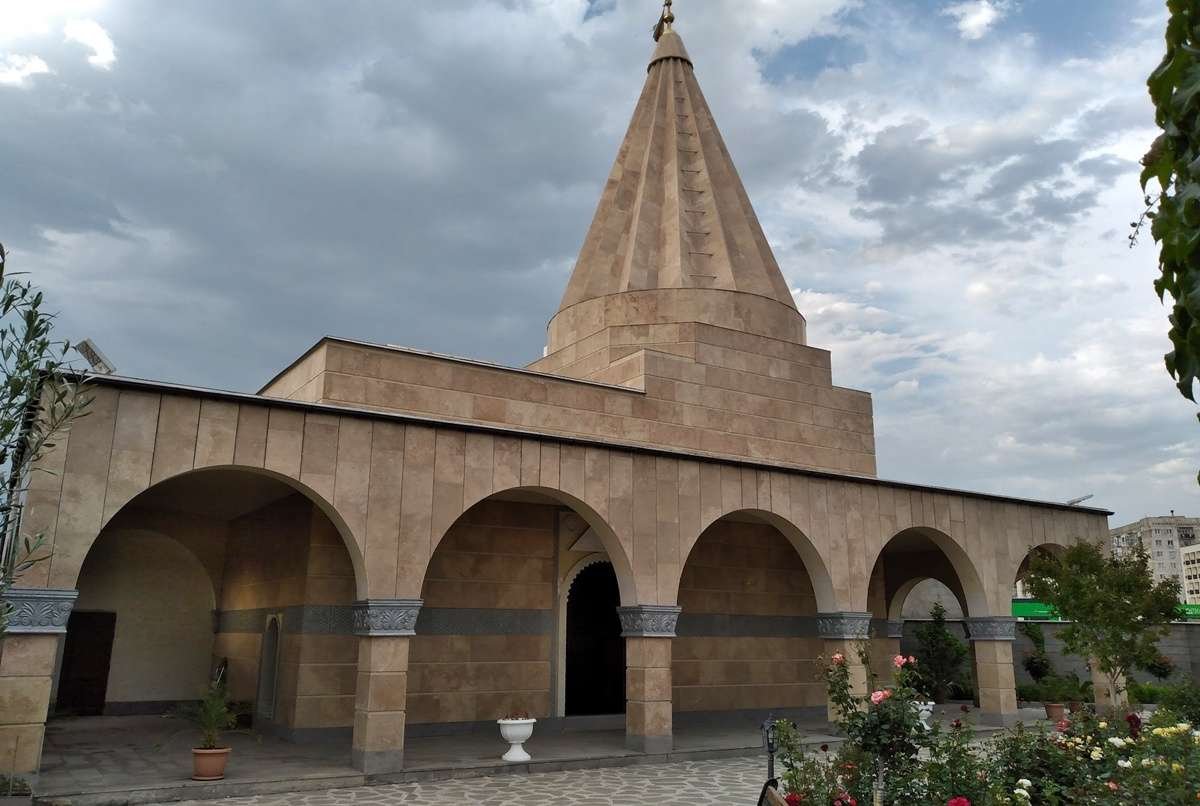
Located in the Varketili district on Tbilisi's outskirts — from outside, the building could easily be mistaken for an ordinary earth-toned office block, if not for its distinctive conical dome. One of the first Yazidi temples built outside Iraq: the foundation stone was laid in October 2012, construction began in 2013, and the grand opening took place on 16 June 2015, attended by senior clergy from Lalish, Georgian government representatives, and religious leaders from other faiths.
The temple follows classical Yazidi architectural style, topped with the traditional "khelel" finial — two spheres and an open palm. The site houses the House of Yazidis of Georgia and a Yazidi research centre, with a garden of rare plants in the courtyard. The head cleric receives visitors daily from 9am to 9pm: according to Sheikh Nuri, the temple sees 10–15 visitors a day, not only for prayer but also for guidance. Census figures put Georgia's Yazidi population at around 12,000 — the community has shrunk noticeably since Soviet times, when it numbered over 30,000.
The densest religious route is Abanotubani in the Old Town: the Jumah Mosque, the synagogues and the Sioni Cathedral all stand within a few minutes' walk of each other. On Kote Abkhazi Street, Armenian, Georgian and Jewish communities have historically lived side by side. If your time is limited, start here rather than at Sameba — the cathedral's scale is impressive, but the density of religious diversity is best felt in the Old Town.
🗺️ A one-day route through Tbilisi's religions
The route runs from the Old Town uphill — a natural walking path that covers the maximum number of faiths in the least time.
1️⃣ Start in Abanotubani near the sulphur baths: the Jumah Mosque, the synagogues on Tumanyan Street and the Sioni Cathedral are all nearby.
2️⃣ Walk 5 minutes to the Anchiskhati Basilica on Shavteli Street — the city's oldest church.
3️⃣ Continue to the Cathedral of the Assumption of the Virgin on Gia Abesadze Street, just a few blocks away.
4️⃣ Cross the bridge to Metekhi Church on the cliff — the whole Old Town opens up from there.
5️⃣ Make your way to Avlabari: the Armenian churches and Sameba Cathedral on St. Elijah's Hill are concentrated here.
6️⃣ If you have time, head to the outskirts, to Varketili, for the Yazidi temple. This is the only stop on the route that needs a separate taxi ride.
💬 What visitors say
"It struck me that a mosque, a synagogue and a church stand almost directly across from one another. I've never seen anything like that before."
"Sameba is impressive in scale, but the Sioni Cathedral and the story of St. Nino's cross stayed with me more — there's a real sense of antiquity there."
"The blend of neo-Gothic and Islamic elements at this mosque is truly captivating, especially with the unique octagonal minaret."
"It's remarkable that after the Blue Mosque was destroyed, Sunnis and Shias started praying in the same hall — to me, that's the best illustration of what kind of city Tbilisi is."
🏁 Before you go
Tbilisi's religious map isn't a tourist backdrop — it's the living structure of the city. Each community has existed here for centuries, and most temples are still active. A route through all seven faiths takes about half a day if you stay compact through the Old Town and Avlabari, or a full day if you include the trip to the Yazidi temple.
For a deeper dive, separate detailed guides exist for the Armenian churches of Tbilisi and the Russian churches of Tbilisi. The full catalogue of the city's churches is at madloba.info/en/tbilisi/churches/.
ℹ️ Information about status and service schedules is current as of publication. Please verify service times and visiting rules before your visit, especially at the mosque and synagogues.
Which religious site in Tbilisi impressed you most? Maybe you saw Sunnis and Shias praying together at the Jumah Mosque, or attended a service at one of the pre-revolutionary churches? Leave a comment — we read every one.
❓ Frequently asked questions
💬 Seven main ones: Orthodox Christianity (Georgian Church), the Armenian Apostolic Church, Catholicism, Protestantism, Judaism, Islam and Yazidism. Each has at least one active temple in the city; Orthodox Christianity alone has 13.
💬 Yes, the mosque is open to visitors outside prayer times, for both men and women, with modest dress and shoes removed. It's Tbilisi's only active mosque, known for being a place where Sunnis and Shias pray together in the same hall.
💬 The Great (Akhaltsikhe) Synagogue is at 12 Hovhannes Tumanyan Street in the Old Town. Built 1895–1913 with funds from Jews from Akhaltsikhe. Inside you can see 1940s wall paintings, a separate women's gallery, and a kosher restaurant in the courtyard.
💬 Anchiskhati Basilica on Shavteli Street, built in the 6th century — the city's oldest surviving church. Sameba Cathedral, by comparison, is the newest of the major churches, built 1995–2004.
💬 As of this article's publication, there is no officially registered Buddhist temple in Tbilisi. The city represents seven Abrahamic and pre-Abrahamic traditions: Orthodox Christianity, Armenian Christianity, Catholicism, Protestantism, Judaism, Islam and Yazidism.
💬 Until the mid-20th century Tbilisi had several mosques. In 1951, Soviet authorities demolished the Shia Blue Mosque to build a bridge over the Kura. Since then, Jumah Mosque has been the city's only active one, and it became a shared place of prayer for both Sunnis and Shias.
💬 The "Quba Sultan Ezid" temple is in the Varketili district, on the city's outskirts — best reached by taxi. It's one of the first Yazidi temples built outside Iraq, opened in 2015.
💬 A compact route through the Old Town and Avlabari (without the trip to the Yazidi temple) takes about 3–4 hours. A full day, including the journey to Varketili, requires separate transport for part of the route.
Read also
- Free Places in Tbilisi: Where to Go on a Budget
- Iveron Icon of the Mother of God in Tbilisi: a Modern Church
- Sultan Ezid Temple in Tbilisi: faith, history, and how to get there
- The Ascension Cathedral of Akhaltsikhe: A Church in a Town of Four Faiths
- What to See in Georgia on a Single Trip: Main Regions and Routes

33 comments
Log in to leave a comment