

♨️ The Royal Baths of Borjomi: Sulphur Pools at the Far End of the Park and the Walk There
♨️ The sulphur pools: what to know before you set out
Three open-air pools on a forest clearing at the far end of Borjomi park. Not a spa complex and not a scheduled treatment, but a place you have to reach on foot.
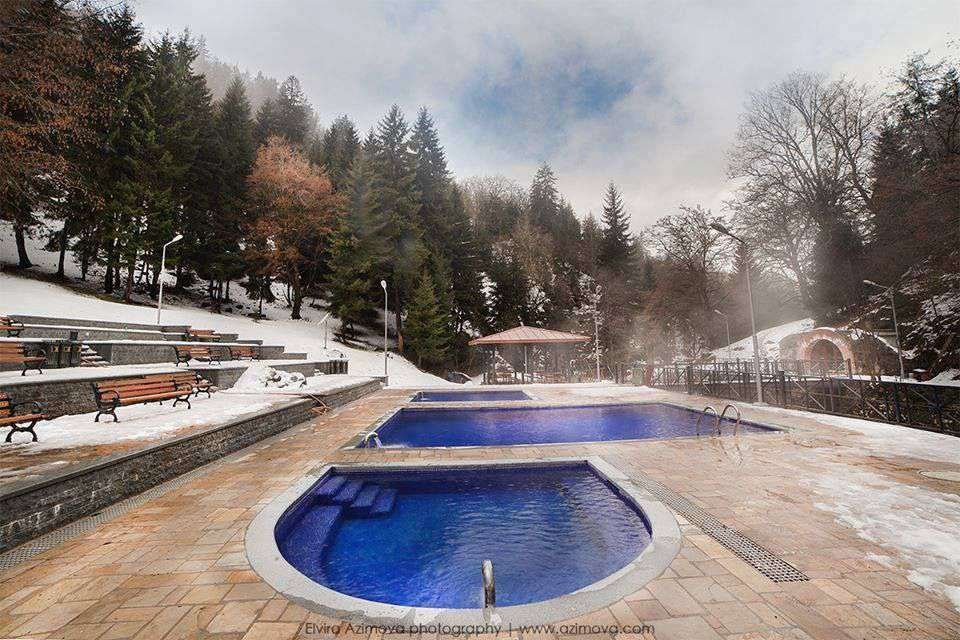
The sulphur pools are the furthest point of Borjomi park and one of the few places in Georgia where you bathe in thermal water in the open air, surrounded by forest.
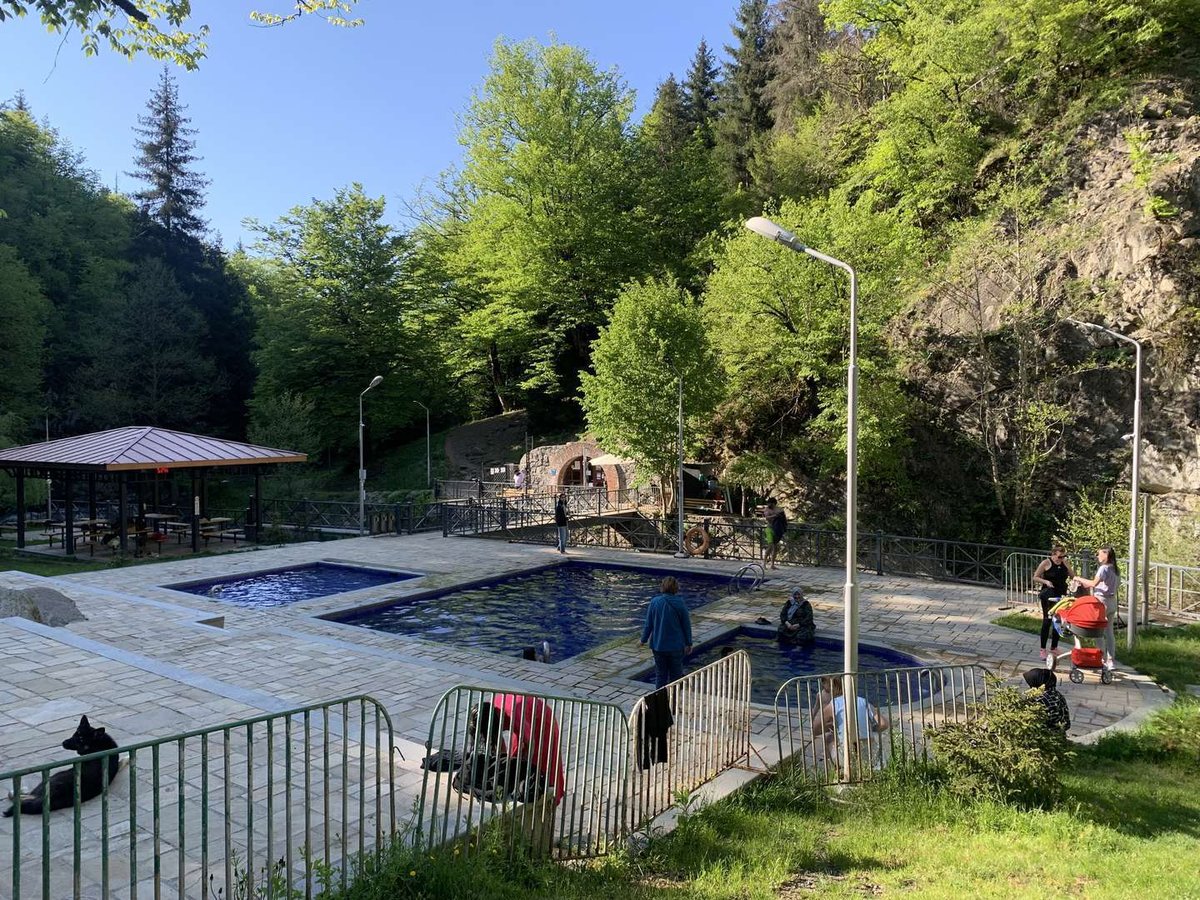
The pools sit on a clearing by the Borjomula, ringed by firs and pines. There are exactly three, and each is built for a different purpose.
Map point and visitor reviews: Borjomi sulphur pools.
🚶 The walk you should know about in advance
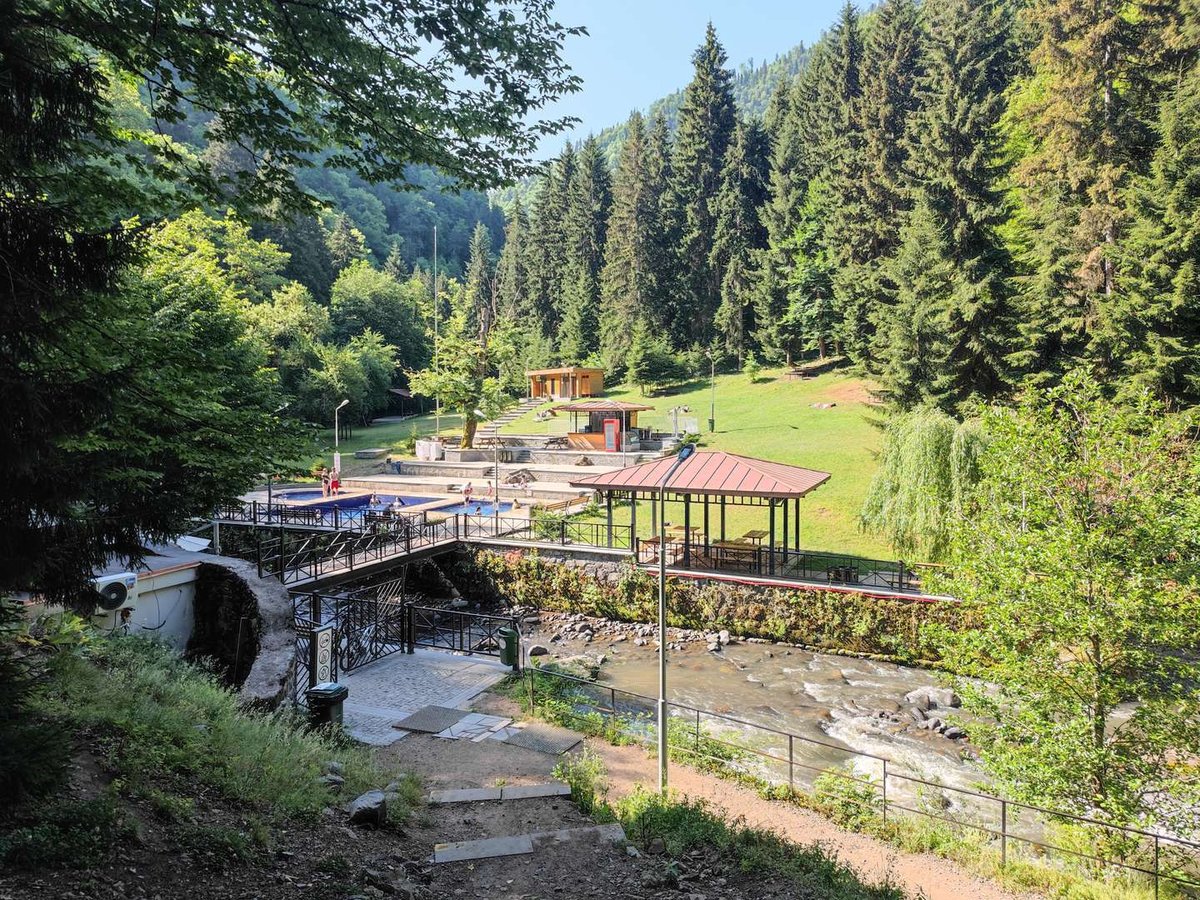
This is the thing that shapes the whole experience.
It is three kilometres from the park's main gate to the pools, and two of those are on a dirt track. The path follows the river through conifer forest: it is wide, with tall pines on either side and the Borjomula alongside.
The walk is pleasant, but factor it in: three kilometres out and three back, and after a swim the return tends to feel longer.
The alternative is a taxi. A good many visitors drive up, and taxis are readily found by the embankment. It is a sensible option if you have children, luggage or limited time.
♨️ Three basins and what each is for
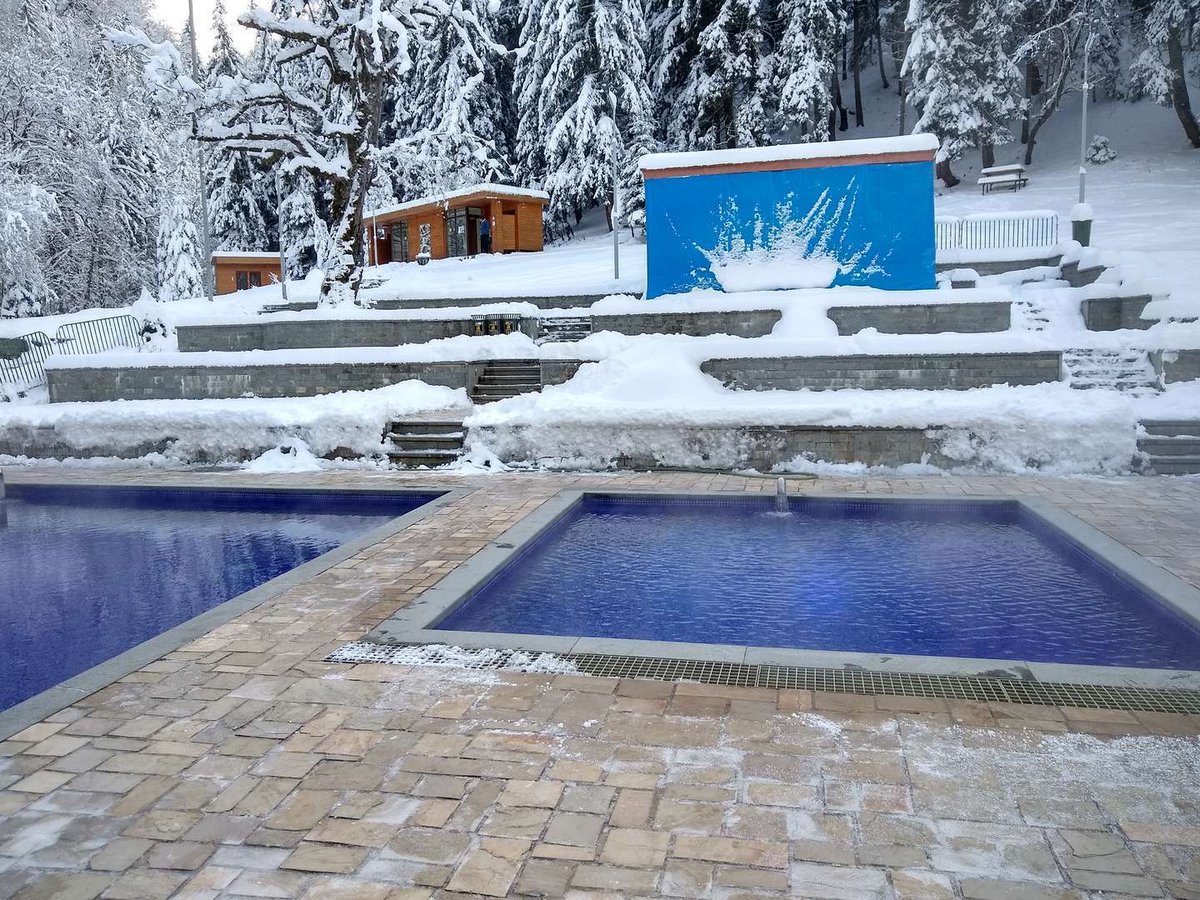
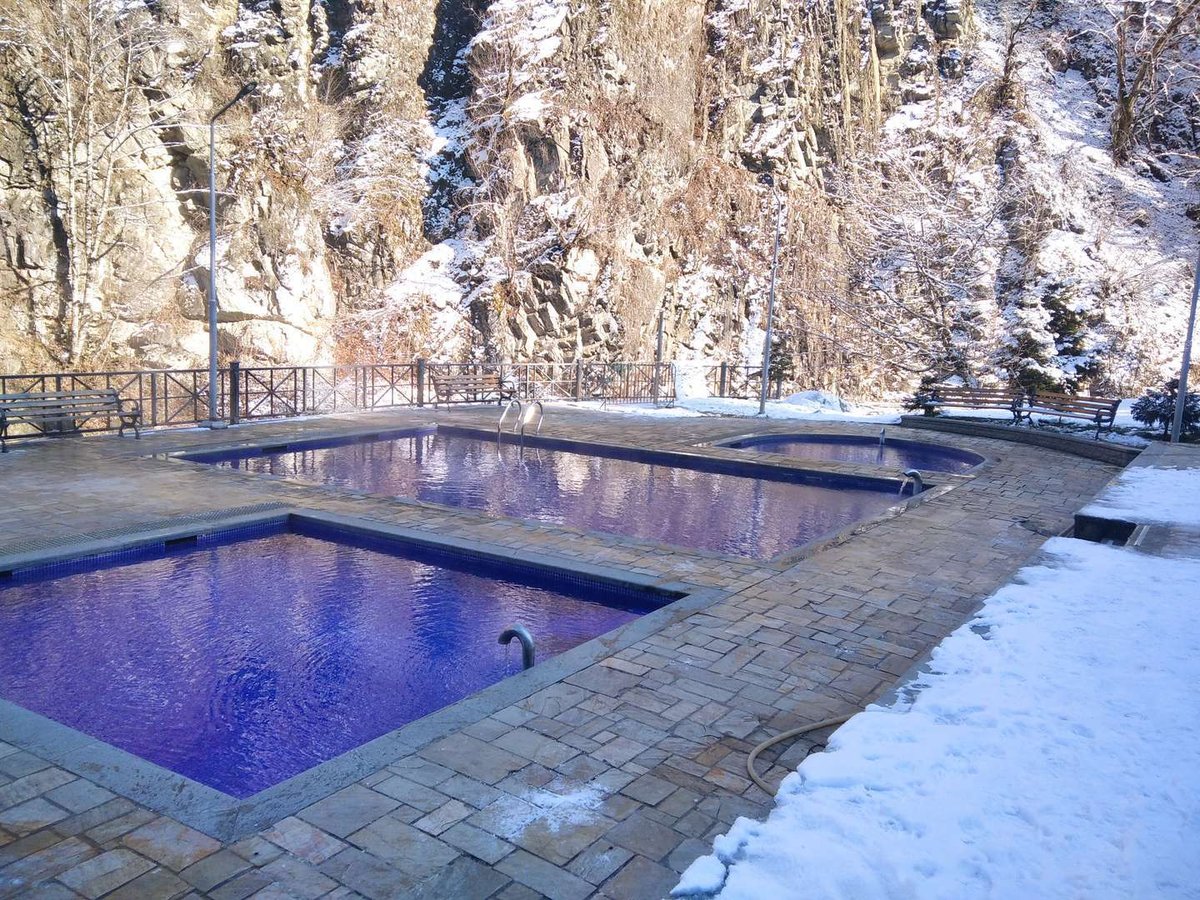
The pools differ in shape, depth and temperature, and knowing which is which saves time on arrival.
The rectangular one, the largest, is for swimming. Its water is the coolest of the three.
The semicircular one is for warming up. Nobody swims here; people lie in it, and the temperature is higher than in the others.
The small square one is for children. It also feels the warmest, and the depth matches its purpose.
An honest word on temperature. Sources disagree: some give a range of roughly 26 to 30 degrees, others 32 to 38. The spread reflects both the season and which basin was measured. Go by the principle instead: one basin is cool enough to swim in, one is noticeably warm, one is warm and shallow.
The water is flowing, and even in April, when it is around thirteen degrees outside, the pools are warm.
💧 Why this is not the water people drink
Here lies the misunderstanding that sends people off with the wrong expectations.
The Borjomi that comes in bottles is a bicarbonate-sodium mineral water from the spring in the central part of the park. It is drunk.
The water in the sulphur pools is a different thing. In composition it is closer to the waters of Abanotubani in Tbilisi than to bottled Borjomi. You bathe in it, but you do not drink it.
So the park holds two distinct sources with different properties, at opposite ends of it. The drinking pavilion is at the entrance; the pools are three kilometres in.
Sulphur water is traditionally counted among Borjomi's spa assets and is used in balneological practice. The wording matters: this is an established resort tradition rather than a medical prescription, and with a chronic condition the decision belongs to a doctor.
👑 Why they are called the royal baths
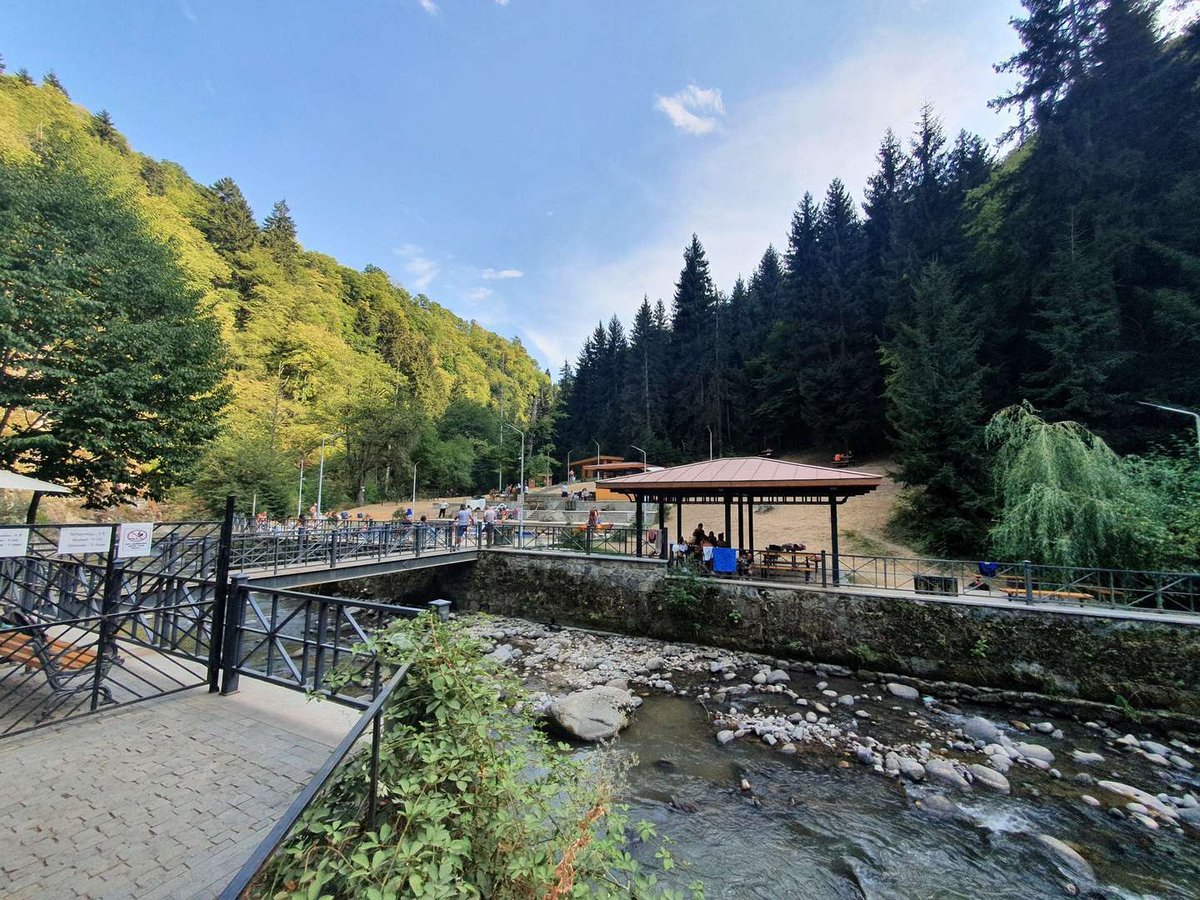
The place has a second name, and it explains where the whole resort came from.
Members of the Romanov family took the waters here, their summer residence standing at Likani nearby. Hence the everyday 'royal baths'.
Borjomi became a resort thanks to the Russian nobility of the nineteenth century, and the sulphur baths at the far end of the park belong to the same story as the palace at Likani and the park laid out as a landscape ensemble.
What is there, and what you must carry in
The facilities here are basic but not absent. The difference between the columns decides whether the trip is comfortable.
🎒 Swimwear is neither provided nor sold on site. Forgetting it means six kilometres walked for nothing, and it is the most common mistake visitors make.
📸 About photographs
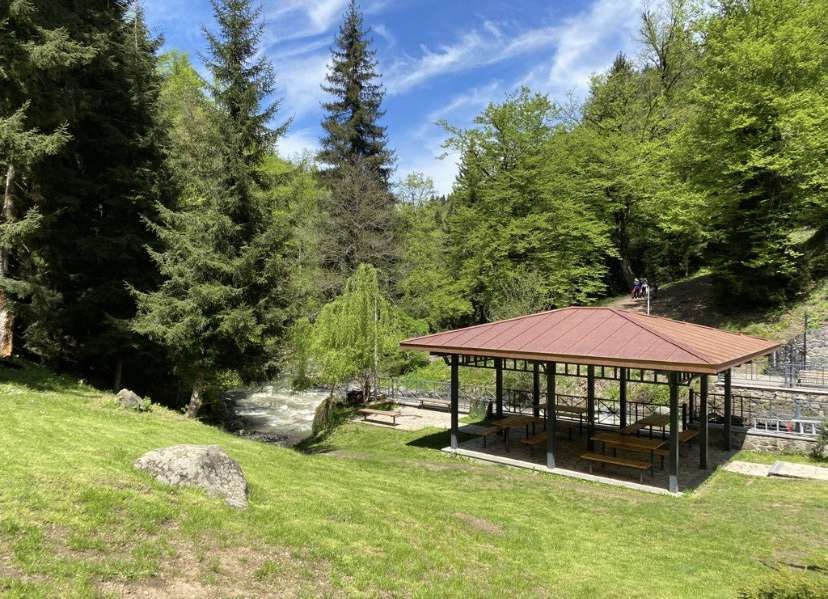
The place photographs well, though not in the way people expect.
The basins themselves are plain: ordinary concrete pools with cloudy water. The 'turquoise thermal spring in the mountains' shot is not available here.
The setting does the work. A clearing in conifer forest, the river alongside, steam rising off the water on a cool day. It is that contrast, water against pines, that ends up in the best pictures.
The path photographs well too, and many people shoot that instead: the track along the Borjomula beneath tall pines.
The marker shows the pools themselves. The walking route starts at the park's main gate: three kilometres along the river, the last two on a dirt track.
🚗 Getting to Borjomi
From Tbilisi, about two and a half hours by marshrutka from Didube station via Gori and Khashuri. There is also a train.
From Bakuriani, roughly half an hour down the gorge.
From Akhaltsikhe, around an hour along the Mtkvari gorge.
From the bus station it is a few minutes' walk to the park entrance, and from there either three kilometres on foot or a taxi.
More on the journey in getting to Borjomi from Tbilisi.
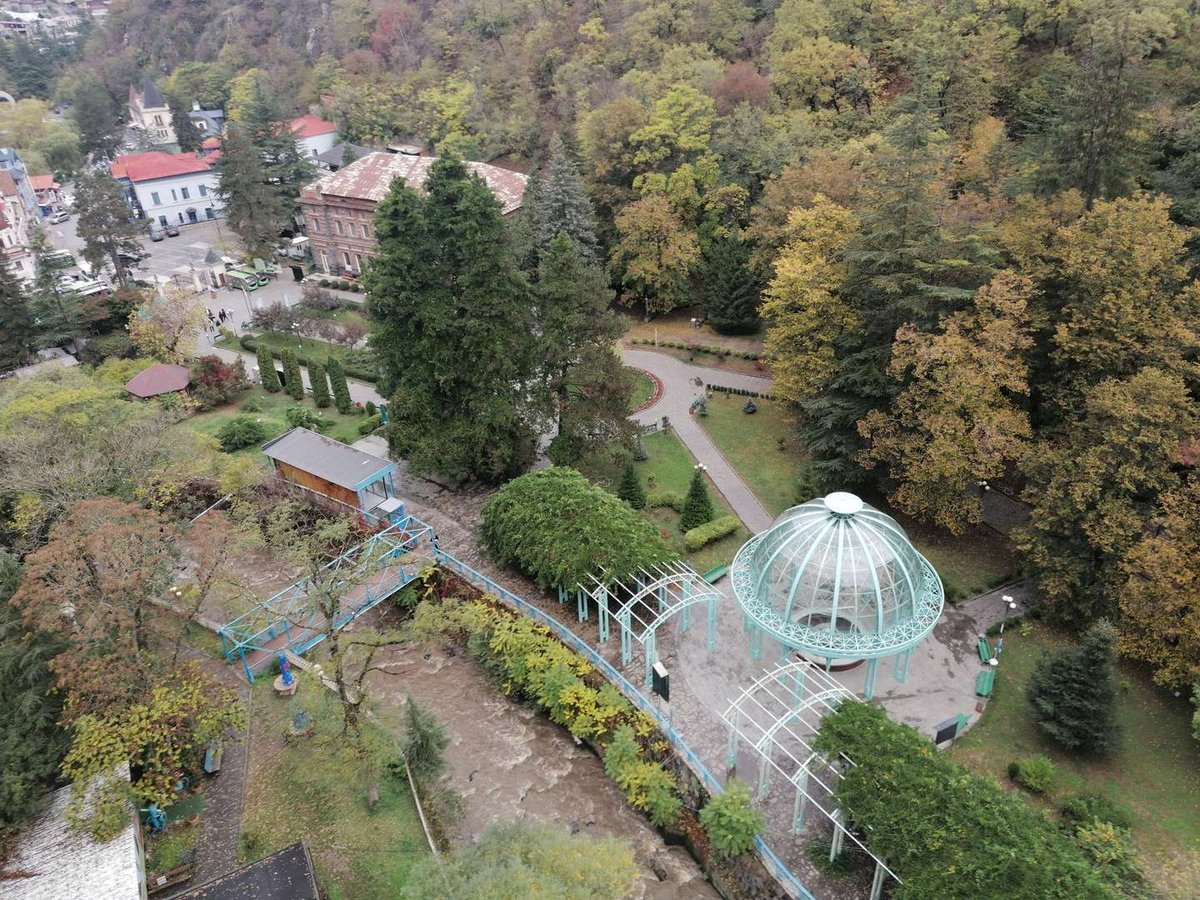
🧭 What you pass on the way
The route to the pools crosses the whole park, so you will see half of Borjomi's sights without trying.
The drinking pavilion at the entrance, where the mineral water is tasted free, poured into containers of up to a litre.
The cable car from the park to the plateau, with its bottle-shaped cabins.
Sculptures and bridges over the Borjomula, scattered the length of the park.
St Nicholas Church in Kostava Square, if you want to add the town to the walk.
The Borjomi gorge and its mineral water, on where all of this came from.
🧭 Where to stay and what is nearby
Borjomi is a spa town with accommodation at every budget, from Soviet-era sanatoriums to guesthouses by the park. Many people come for several days, and then the pools become one day of the programme rather than the sole objective.
In winter the spa side of town goes quiet, and Bakuriani up the gorge makes the more sensible base.
🗣️ Over to you
Been to the sulphur pools? Tell us whether you walked or took a taxi, how long the journey took and in which month the water felt best. Leave a review on Madloba: neither fares nor opening hours are published officially, and the temperatures shift with the season, so visitors' notes are worth the most.
Information is current as of August 2026. Entry prices, sunlounger hire and opening hours all change, so check on site.
📚 Read next
❓ Frequently asked questions
💬 On a clearing by the Borjomula river, at the far end of Borjomi central park, three kilometres from the main gate. The last two kilometres are on a dirt track.
💬 On foot through the whole park along the river: the path is wide, with conifer forest around. Three kilometres one way. Many people prefer a taxi, taken by the embankment, especially with children or on the way back.
💬 Three, differing in shape, depth and temperature: a large rectangular one for swimming, a semicircular one for warming up and a small square one for children. Sources quote different figures, from roughly twenty-six to thirty-eight degrees, so go by the principle: one basin cool, one noticeably warm, one warm and shallow.
💬 No. Bottled Borjomi is a bicarbonate-sodium water from the spring in the central part of the park, and it is drunk. The pool water is closer in composition to the Abanotubani sulphur baths in Tbilisi; you bathe in it but do not drink it.
💬 We do not quote current fares: they change. What matters is the structure: park entry, entry to the pool grounds and sunlounger hire are charged separately. The park ticket desk may take cash only, so carry some.
💬 Swimwear, a towel, a change of shoes, a bag for wet things and cash. Swimwear is neither provided nor sold on site. There are changing cabins, a toilet, a gazebo, tables and a small bar on the grounds.
💬 Members of the Romanov family took the waters here, their summer residence standing at Likani nearby. Borjomi became a resort in the first place thanks to the Russian nobility of the nineteenth century.
💬 Sulphur water is traditionally counted among Borjomi's spa assets and used in balneological practice. That is an established tradition rather than a medical prescription: with a chronic condition the decision belongs to a doctor.
💬 Half a day if you walk: three kilometres out, a swim, three back. By taxi, two to three hours will cover it.
💬 About two and a half hours from Tbilisi by marshrutka from Didube station via Gori and Khashuri; there is also a train. Roughly half an hour from Bakuriani down the gorge, and about an hour from Akhaltsikhe.

5 comments
Log in to leave a comment
С каждой минутой всё больше ощущала, как усталость уходит. Странный, почти магический эффект. Когда в следующий раз поедем, как вы думаете, стоит взять с собой что-то особенное для этих серных вод?