




Shiomgvime: David the Builder’s Monastic Complex
In the sixth century, thirteen Assyrian founding fathers arrived in the territory of modern-day Georgia. They were Christian missionaries who, in modern parlance, were engaged in the popularization of Christianity. One of them, according to historical records, was named Shio. His name later became part of the Shiomgvime monastic complex. Here, Shio founded one of the first monastic communities.
Near ancient Mtskheta, there is a cave named in his honor. Shio spent the last years of his life there, becoming a hermit. It must be acknowledged that Shio accomplished his mission magnificently—by the end of the sixth century, the monastic community numbered over two thousand people, sincerely devout Christians who renounced earthly goods in favor of serving God.
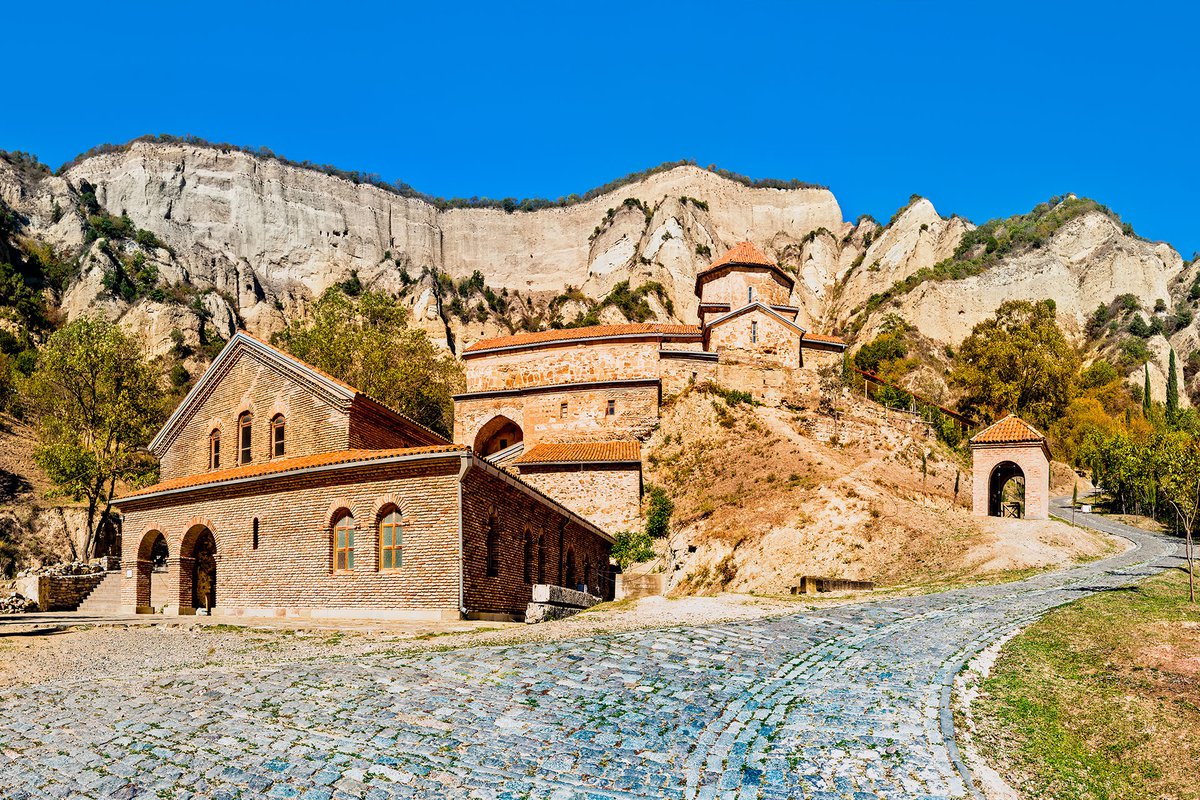
The first building in the Shiomghvime monastic complex was the Church of John the Baptist. Its construction dates back to 560-580. To enter the church, one must pass through a bell tower and several dark halls. From the perspective of ancient Georgian church architecture, the design appears quite unusual.
Subsequently, the monastery was taken under the personal protection of the renowned and still revered Georgian King David the Builder. He transformed it into a royal domain, and the monastery itself and the surrounding territory became the king's personal possession.
However, the monks were not at all perturbed by this turn of events; quite the contrary. It was during this time that the monastery gradually transformed into a vibrant cultural and religious center. A second building, named in honor of the Mother of God, was constructed on the complex's grounds.
A series of continuous invasions and foreign invasions led to the decline of the Shiomghvime Monastery. This state of affairs continued until the mid-15th century, when the Georgian king George VIII transferred, or rather, entrusted the monastery lands to the Zevdginidze-Amilakhvari family.
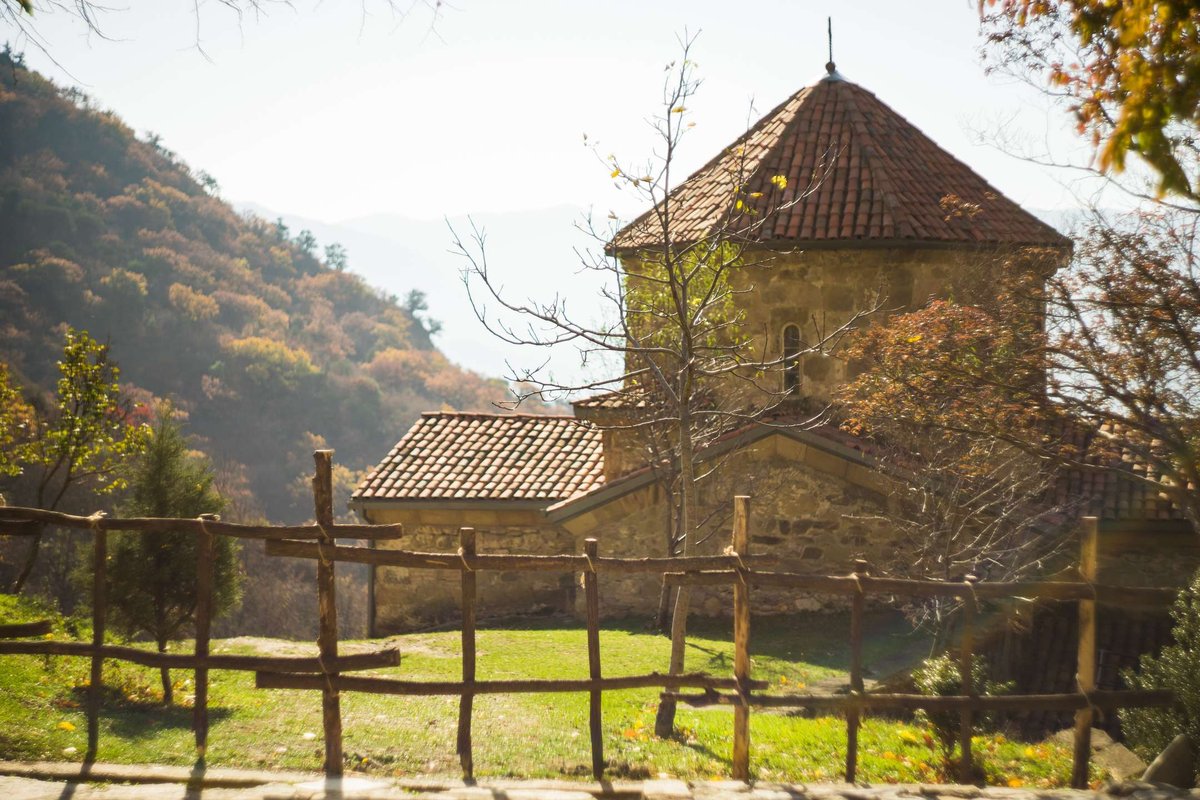
Throughout its history, the Shiomghvime monastic complex has been repeatedly involved in various wars, inevitably resulting in the partial destruction of various buildings within its grounds. In the 17th century, troops led by the Persian Shah Abbas I completely devastated the monastery.
Restoration, led by the Georgian Prince Givi Amilakhvari, took several years. Peace was short-lived—in the early 18th century, as a result of the Ottoman occupation of Georgia, the monastery was destroyed again. Although Amilakhvari restored it again, just a couple of years later, the Persians destroyed the building again.

Relatively peaceful times for the monastery began in the mid-19th century. Shiomghvime Monastery was restored. The buildings that survived the succession of wars were restored, and the interior was renovated. However, Shiomghvime Monastery failed to regain its former significance in the religious, cultural, and spiritual life of Georgia. After the Revolution, under the Soviet Union, Shiomghvime Monastery was closed.
Today, the monastery is open and functioning, attracting tourists and travelers with its ancient, unusual history and architecture. The monks who live there are self-sufficient, raising sheep, producing wine, and cultivating the land.
If you've already decided to visit, don't refuse wine—it's a second religion for Georgians. Therefore, if you're offered wine, this gesture can be considered a certain degree of trust. Reaching the Shiomghvime monastic complex is quite easy. There's a regular bus from Tbilisi to Mtskheta. Once you arrive in the city, it's best to take a taxi.

36 comments
Log in to leave a comment
不过,尽管如此美丽,我也常常在想,为什么这样的地方里,常常能听到来自游客的低语,似乎是向过去的伟大致敬,或是对当今生活的思考。你觉得,在这样神圣的空间里,最打动人心的故事是什么呢?
Мадлоба делится советами от мцхетурцев: утро без жары, скромная одежда, сезон круглый год. Отзывы подсказали тайный вход в пещеру, FAQ — вход бесплатно, трансфер 10 лари. Планирую повторить на службу!
А вы открывали Шиомгвиме — что круче, храм Шио или Верхняя церковь? Расскажите! 🤔