



🏰 Fortresses of Georgia: 12 Best and How to Get There
12 fortresses across the country
Fortresses of Georgia at a glance
Twelve citadels, grouped by route. Below, each is covered on its own, with a map and a comparison table at the end.
🏙️ Tbilisi and nearby
🛣️ Georgian Military Road and the east
🏛️ Centre and south
🌊 Coast and Adjara
The fortresses stand in different corners of the country, so on one trip people take those that lie along the way.
The fortresses of Georgia are defensive citadels, castles and forts that guarded the country's passes, roads and cities for centuries. There are hundreds of them, but twelve stand out for recognition, preservation and ease of visiting: from Narikala above Tbilisi and seaside Gonio to mountain Ananuri and southern Rabati. They are scattered across different regions and belong to different eras, so on one trip people usually take those that lie along the route. This article helps you choose and understand how to reach each one.
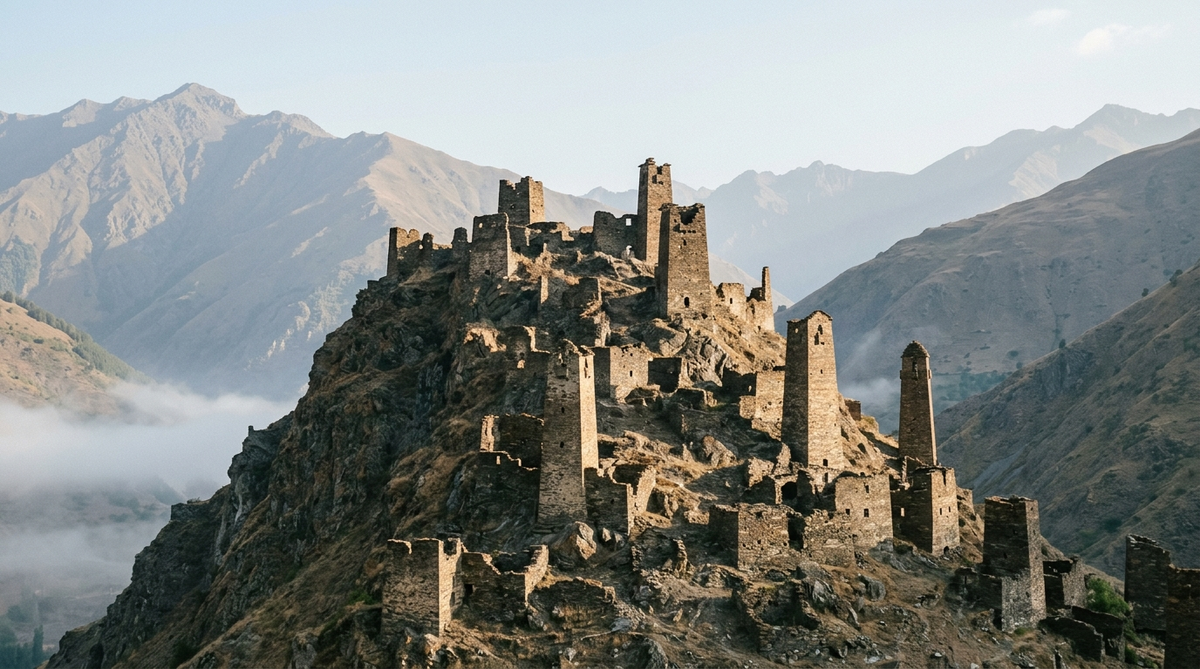
Fortresses are a distinct layer of Georgia's antiquities, alongside its churches and cave towns. If you want a general list of the country's top sights rather than just fortifications, there is a catalogue ranking of Georgia's sights for that. Here the task is narrower: to gather the fortresses themselves, with history, region and road. How to fit them into a country-wide route is covered in the guide to what to see in Georgia on one trip.
In order below: first what counts as a Georgian fortress, then twelve by region, then a map, the practical side of getting there, and a comparison table.
🏰 What a Georgian Fortress Is, in Plain Terms
A Georgian fortress is a fortified structure raised on commanding high ground: on a cliff above a river, on a hill by a road, on a pass. Thick walls, towers, a water cistern, sometimes a church and hall inside. The purpose was one: to block the enemy's path and let locals shelter behind the walls during a raid. The country stood for centuries at a crossroads between empires, so a great many fortresses were built here.
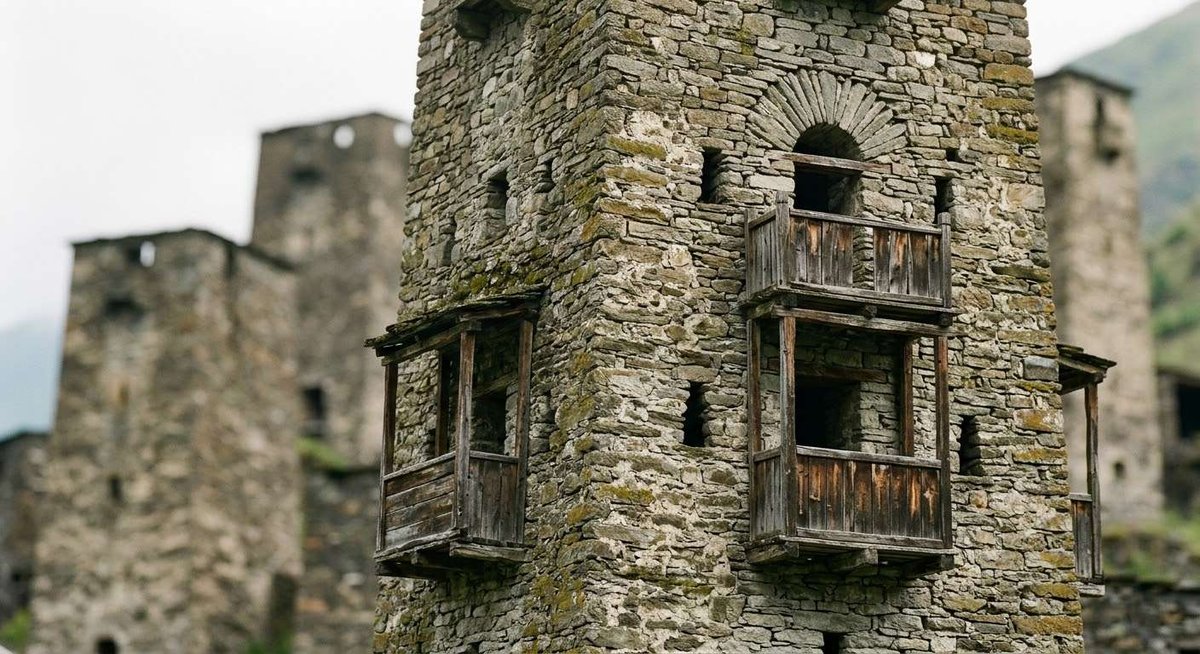
There is no single type, and that matters. There are citadels above a city (Narikala). There are castle-residences of noble families (Ananuri, Gremi). There are rock forts built into a sheer mountain (Khertvisi, Tmogvi, Birtvisi). There are seaside bastions from antiquity (Gonio). And there are watch fortresses on passes and trade routes (Surami). The selection below gathers different types, united by a defensive purpose and a striking, recognisable look.
Their preservation also varies. Some are restored and open for walking along the walls, some have reached us as ruins that impress not by smooth masonry but by scale and their setting on a cliff. That is fine: even a half-ruined fortress on a crag above a river makes a strong impression, and that is exactly what people come for. 💡 So below, each fortress honestly notes what you can see there now and how easy the access is.
🏙️ Fortresses of Tbilisi and Around
🏰 Narikala: Symbol of Tbilisi
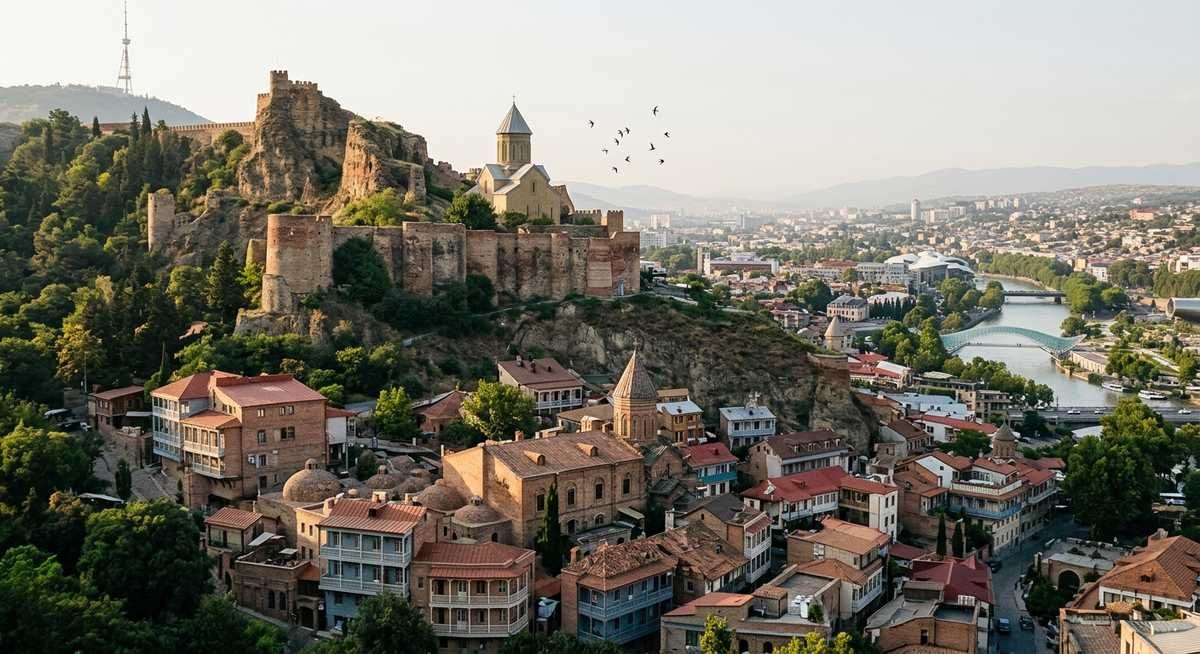
Narikala is the main fortress of the capital and one of Georgia's symbols. It stands on the Sololaki ridge above the Old Town, between the sulphur baths and the botanical garden, and its history begins as far back as the 4th century. The walls here are of different ages: the oldest parts are put down to the Persian and Arab periods, and the fort was built up and rebuilt over centuries. For a long time it was a complex system of towers and bastions, divided into an upper and a lower citadel.
The fateful year for the fortress was 1827: the explosion of a gunpowder store together with an earthquake almost destroyed the inner buildings and badly damaged the walls. Narikala has reached us as fragments of towers, among which the Church of Saint Nicholas was restored in the 1990s. 📸 But people climb up here above all for the panorama: the whole Old Town, the bend of the Mtkvari, the Bridge of Peace, roofs and domes as if on your palm. A cable car runs up from Rike Park, just a couple of minutes over the river, and along the ridge nearby stands the "Mother of Kartli" monument.
⚠️ Important right now: major restoration works are under way in the fortress, the walls are in scaffolding, and part of the grounds and the approach to them are temporarily closed for safety. That said, the cable car works and the panorama from the viewpoints is available, and the church is open at weekends. It is worth checking current access before your visit. More on the history and what to see is in the separate article on Narikala fortress.
🧗 Birtvisi: A Fortress Hidden in the Rocks
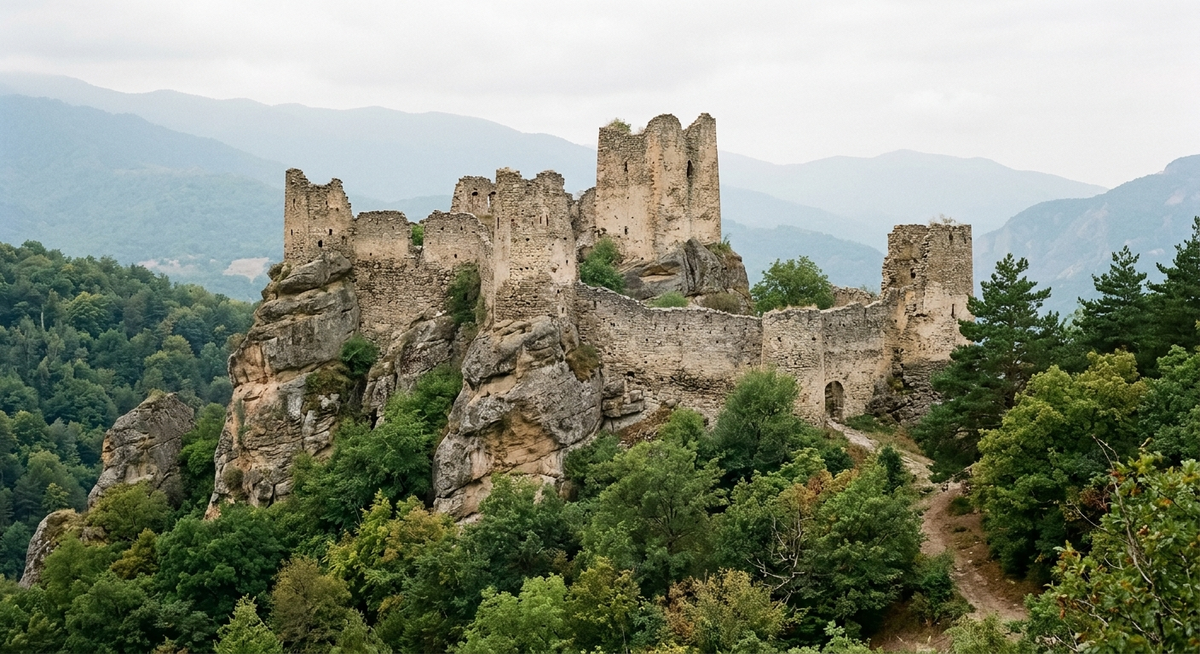
Birtvisi is a completely different story from urban Narikala. The fortress lies in the mountains of Kvemo Kartli, south-west of Tbilisi, and is considered one of the most impregnable in the country's history: its builders skilfully used the natural rocks, so the stronghold literally merges with the mountain and is almost unreadable from outside. Of the buildings, the famous Sheupovari ("undaunted") tower survives, standing on a separate crag reached by steps cut straight into the stone. Inside is a small courtyard with the ruins of dwellings.
Birtvisi's history is known only roughly, but it is recorded that taking it was extremely hard even for large armies, and by legend it held out against the hordes of Tamerlane too. It was the terrain, not the thickness of the walls, that made the fortress nearly invincible: you could only approach it along narrow passages exposed to fire from every side.
🥾 Today Birtvisi is in a half-ruined state, and people come here not for whole walls but for the place itself: rocks, the tower on its crag, steps in the stone and views from up high. It is a popular route for hiking enthusiasts, but the trail to the fortress is not always marked, it is about 3.5 km from the nearest village, and you need sturdy shoes and time to spare. For those looking for adventure and nature rather than a museum stroll, Birtvisi lands better than any restored fortress. Route and history details are in the article on Birtvisi fortress.
🛣️ The Georgian Military Road and the East
🛡️ Ananuri: A Castle by the Water
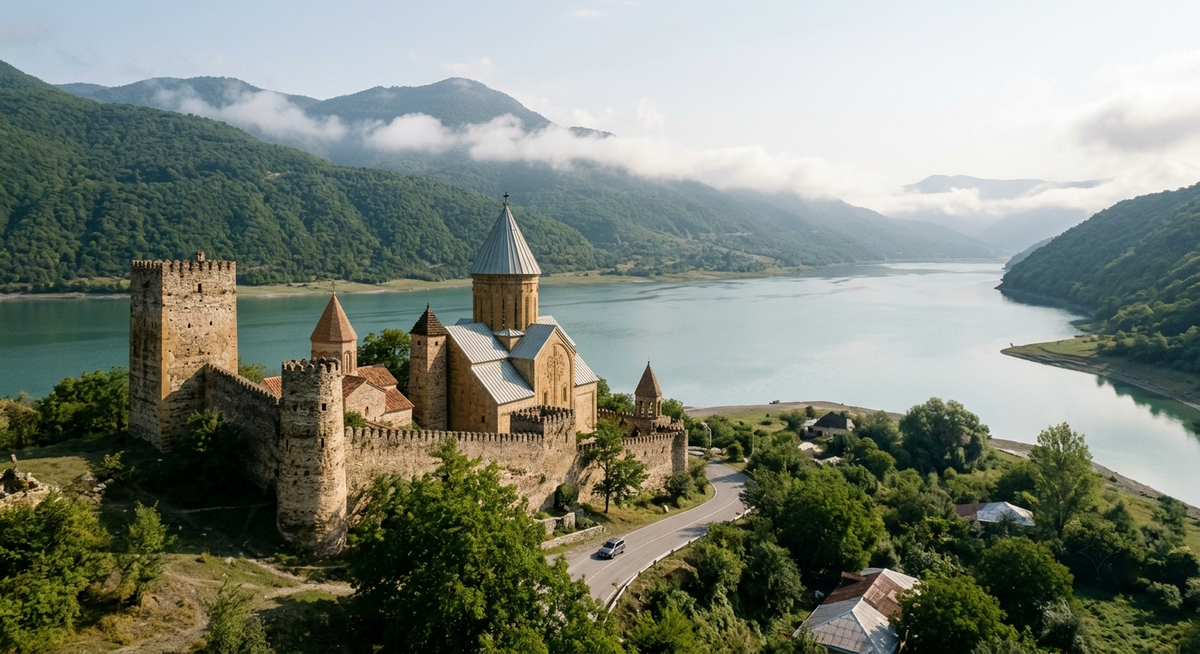
Ananuri is perhaps the most photogenic fortress in the country. It stands right on the Georgian Military Road about 65-70 km from Tbilisi, on the shore of the turquoise Zhinvali reservoir, where a small river joins the Aragvi. Its towered silhouette, reflected in the water, is known from hundreds of postcards. The fortress was built by the Aragvi eristavis, local rulers of the region, mainly in the 16th-17th centuries, though the oldest tower with a pyramidal roof belongs to an earlier time. It was a northern outpost blocking the road from the Darial Gorge.
Ananuri is beautifully preserved: a whole perimeter of walls, towers and three churches. The main tower, Sheupovari, was seven storeys high, and the stairs inside are so narrow that two people cannot pass, yet from the top tier the whole area is in view. The most beautiful building, the Church of the Dormition of 1689, is decorated with stone carving; the neighbouring Church of the Virgin is older but not yet restored. In 1829 Pushkin stopped here on his way to the Caucasus. Entry to the grounds is free, and a small tourist market usually operates below the walls.
🚗 Ananuri's huge advantage is its accessibility: it stands on a road you cannot avoid on the way to Kazbegi, so people take it as the first stop on the Military Road route, and the best shot comes from the car bridge nearby. More on the history and the visit is in the article on Ananuri fortress.
⚔️ Ujarma: An Ancient Royal Fortress
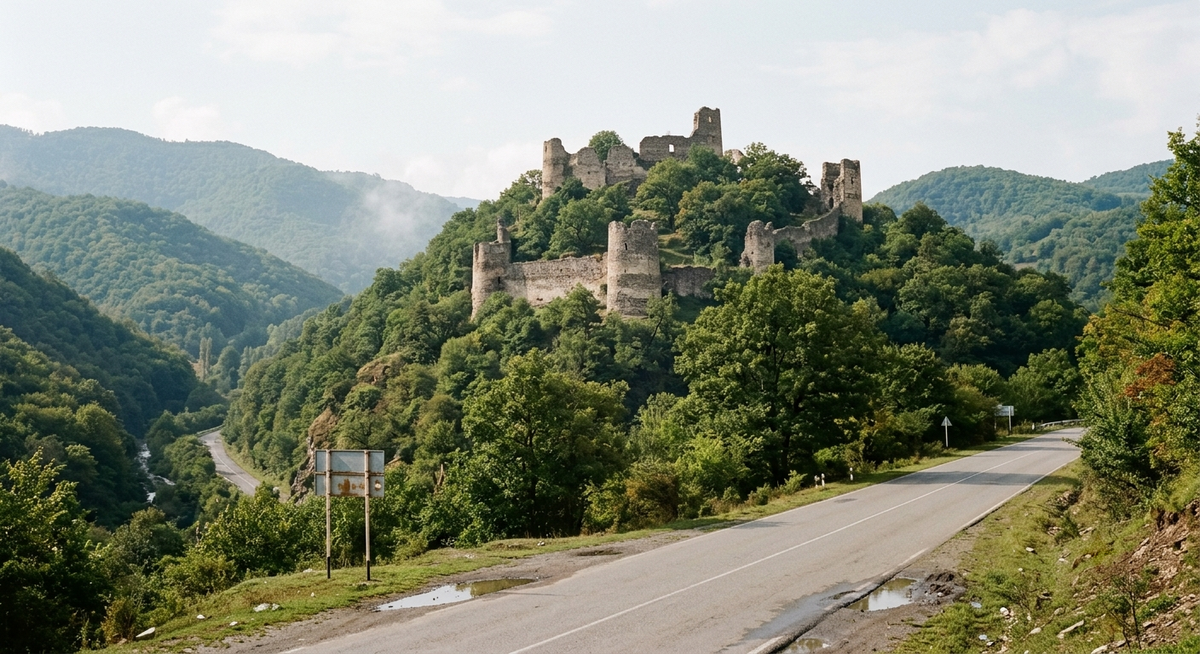
Ujarma is one of the old fortress-towns of the Kingdom of Kartli, standing in the east, on the road towards the Gombori Pass in the direction of Kakheti. It was once a significant fortified centre: Ujarma is linked to the name of King Vakhtang Gorgasali, and its strategic position made it a place where defence was held against Persians and Arabs for centuries. As one of the country's most protected sites, the fortress also served for a time as a store for the royal treasury. Like the adjoining town, Ujarma declined after the Mongol invasion.
The fortress has reached us as ruins, part of them restored, and is clearly visible from the road on rising ground. Inside you can read the walls, towers and remains of buildings, with surviving fragments of fortifications running down the slope. The place is quiet and not overrun by tourists, which adds to its atmosphere: people come here more for the history and views than for an equipped museum.
🧭 A quick look takes about an hour, and a trip here is convenient to fit into a Kakheti route via Gombori, adding the Shuamta monasteries, Ikalto and Telavi along the way. It is simplest under your own steam by car, though the minibuses towards Telavi also pass by the fortress. More on the history and the visit is in the article on Ujarma fortress.
⛪ Gremi: What Remains of Kakheti's Capital
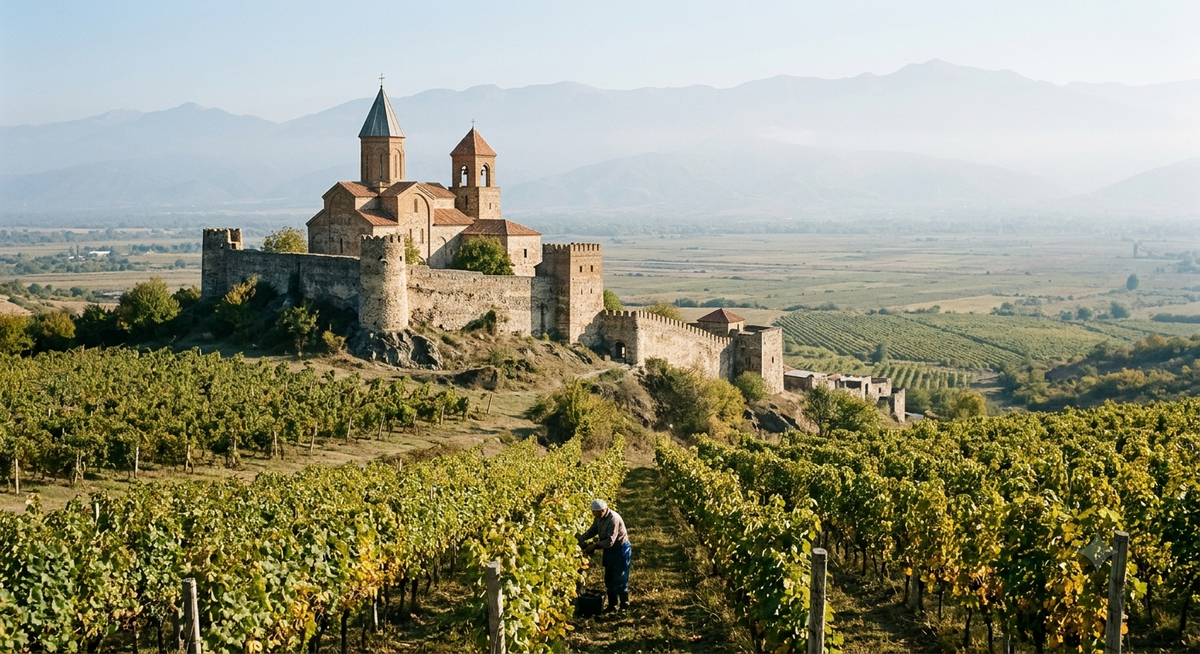
Gremi is a 16th-century architectural complex that was once the capital of the Kingdom of Kakheti. Under King Levan it was a rich, flourishing city on a trade route, but at the start of the 17th century it was razed to the ground by the Persian Shah Abbas, and of its former grandeur there survive the citadel on a hill, the royal residence with a small museum, and the main landmark, the Church of the Archangels Michael and Gabriel with a bell tower.
Today Gremi is a signature sight of Kakheti and one of its most picturesque points: a red-brick church on a green hill, a view over the Alazani valley, and you can climb the palace tower and look out over the area through the loopholes. Inside the palace section a museum works with finds that tell of the city's brief rise and fall. The complex is well preserved, and its compactness makes the visit calm and unhurried.
🍷 The fortress stands right by the road in the wine country, about 20 km from Telavi, so it is logical to fit it into a Kakheti route together with Telavi, the Nekresi monastery, cathedrals and tastings. You cannot miss it, and the museum works almost all week, except Monday. More on the history of the complex is in the article on Gremi fortress.
🏛️ The Centre of the Country and the South
🗝️ Surami: A Fortress on the Pass and Its Legend
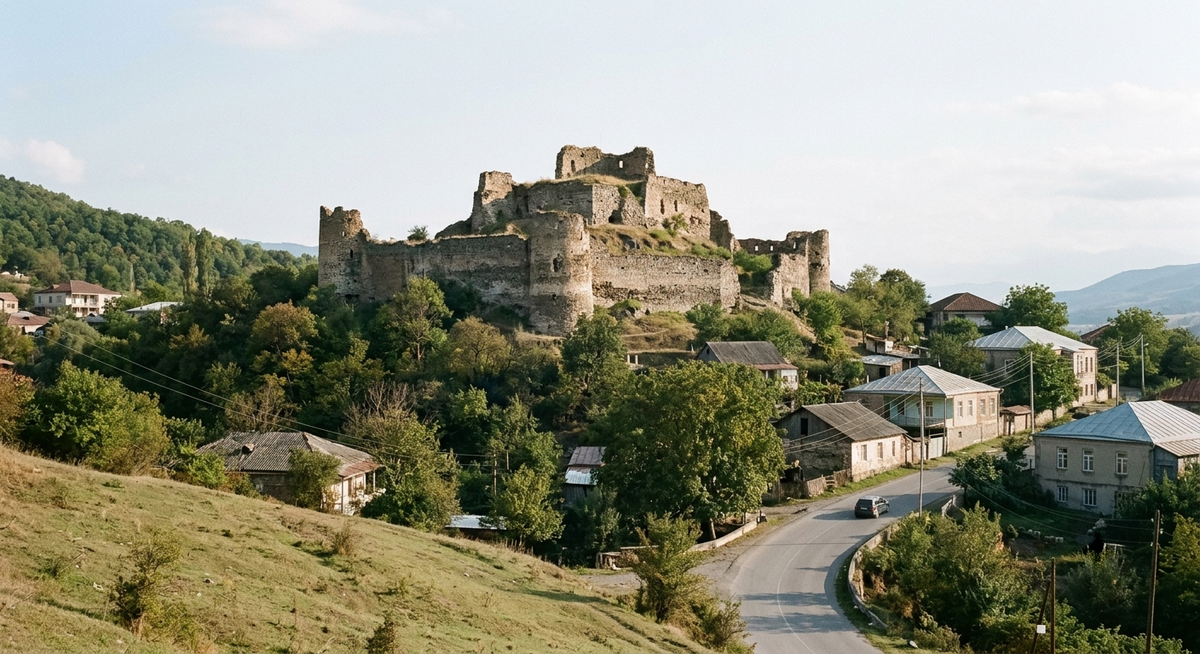
Surami stands in the centre of the country, in Shida Kartli, at a crucial crossroads: here met the road from Western Georgia over the Surami Pass and the road from the Borjomi gorge along the Mtkvari. Whoever held Surami controlled the link between the west and the east of the country, so the fortress was considered one of the main and almost impregnable ones, taken neither by raid nor by siege. In the walls, building layers of the 15th-16th centuries can be distinguished, though the settlement on this spot is far older, and the exact date of construction is disputed.
Picturesque walls and towers are clearly visible on the rock above the town. Surami is tied to a famous legend: to stop the walls from collapsing, a beautiful youth named Zurab was willingly walled up in them. 📜 This story became the basis of a novella by Daniel Chonkadze and Sergei Parajanov's film "The Legend of Suram Fortress", so the place is known well beyond Georgia. Next to the fortress stands the Church of Saint Gregory the Illuminator.
⚠️ An honest note: Surami itself is not touristy, the fortress stands among residential houses, and parking can be difficult. But climbing to the walls and taking in the views is worth it, all the more so on the way between Tbilisi and Kutaisi. Along the road here they also sell the famous Surami nazuki, a sweet spiced bread. More is in the article on Surami fortress.
🏯 Rabati: Georgia's Most Restored Fortress
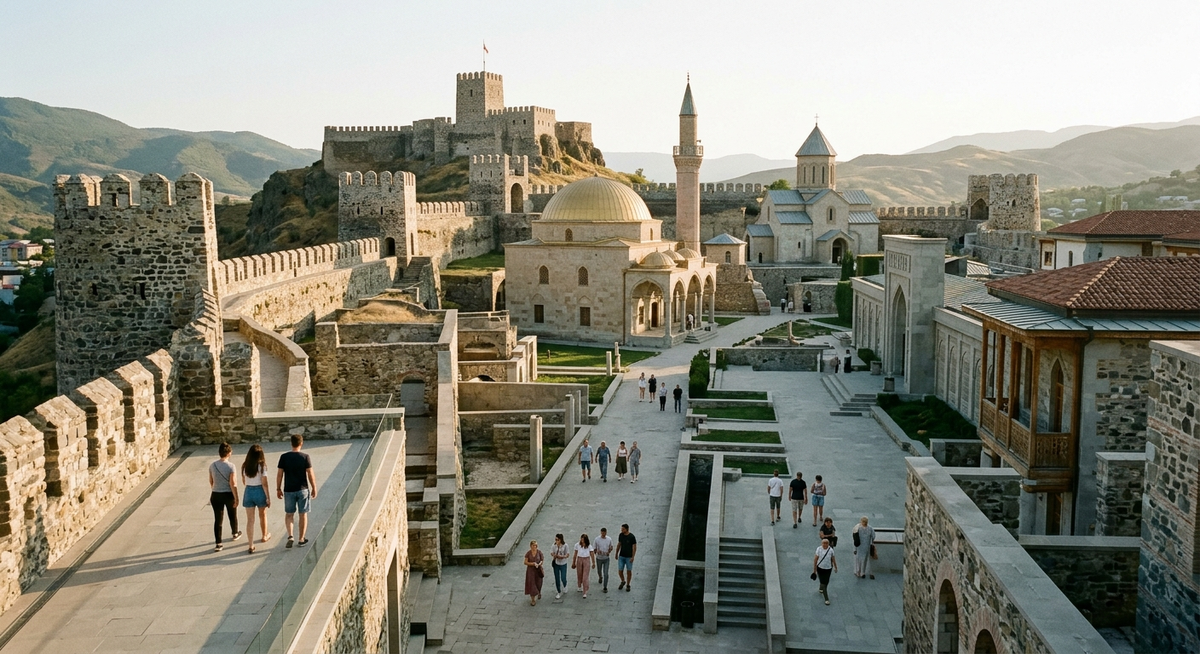
Rabati in Akhaltsikhe is perhaps the most equipped and "dressed-up" fortress in the country. It was founded back in the Middle Ages, and the name comes from the Arabic "ar-ribat", a fortified monastery. For centuries cultures intersected here: on the grounds stood a church side by side with, later, a mosque with a minaret, a court, an arsenal, a bath and a mint. Akhaltsikhe was in general a remarkably multi-ethnic city, where Georgians, Armenians, Jews and other peoples lived together. In 2012 the fortress was extensively restored and turned from ruins into a full-fledged tourist complex.
Today you can walk freely around Rabati: walls, towers, tidy courtyards from which views of the city and the surrounding mountains open up. It is one of the few fortresses where almost everything is restored and where the interest is precisely in "climbing about" rather than looking at ruins from afar. A local legend is attached to the mosque, and from the towers you can see how the fortress dominates the valley.
🎟️ It is conveniently arranged: the lower part is free to enter, tickets are sold for the upper museum part, an information centre and audio guide operate, and there is a hotel and restaurant right in the walls. Rabati is taken as the centre of a southern route with a night in Akhaltsikhe, and it is from here that it is convenient to travel on to Khertvisi and Vardzia. More on the history and the visit is in the article on Rabati fortress.
🪨 Khertvisi: One of the Country's Oldest Fortresses
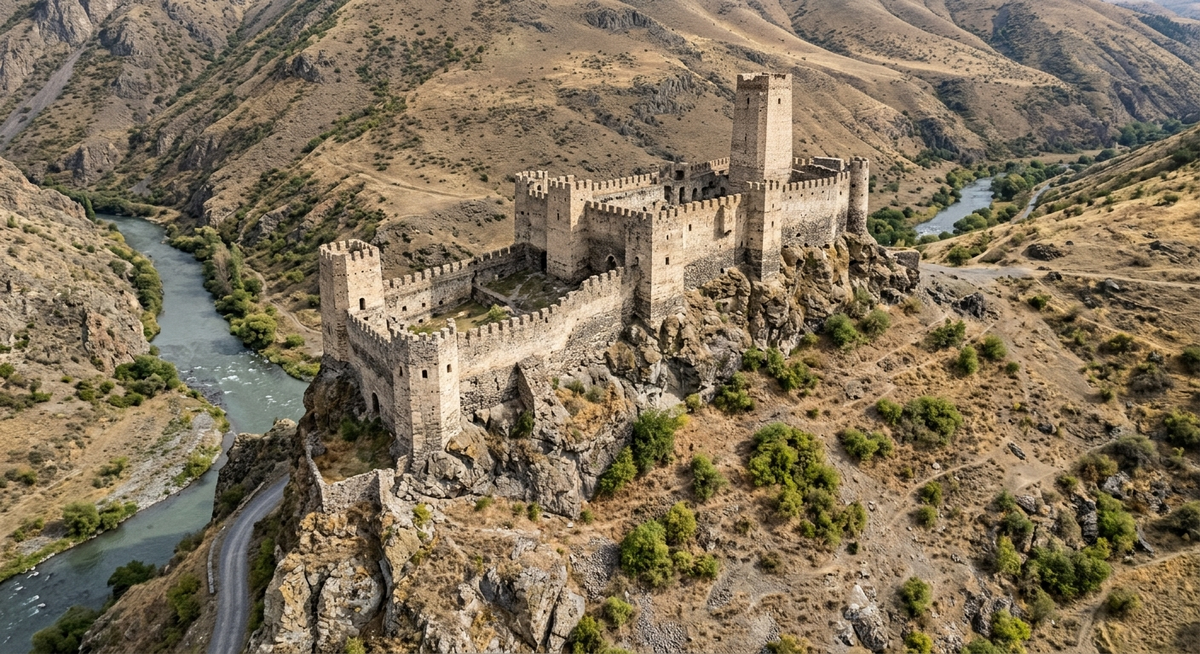
Khertvisi is one of the oldest and best-preserved fortresses of the Georgian Middle Ages. It stands in the south, in Samtskhe-Javakheti, on a high cliff at the confluence of the Mtkvari and the Paravani, and guards the passage through the gorge. By legend, the first walls here were built by the soldiers of Alexander the Great, while the church inside the fortress is dated to 985. In the 10th-11th centuries Khertvisi was the centre of the region, and later belonged to the powerful Jakeli family, rulers of Samtskhe.
The fortress suffered more than once: an earthquake at the end of the 12th century brought down the walls, then the town at its foot was razed to the ground by the Mongols, leaving no trace of it. But the fortress itself was rebuilt by the mid-14th century, and in 2017-2018 a thorough restoration was carried out with international support, putting the gates, walls and access roads in order. 📸 Today it is a beautiful and photogenic monument: towers on a sheer cliff, inside a 10th-century church and a water cistern cut into the stone.
🚗 Khertvisi is clearly visible right from the road, so it is almost always viewed on the way to Vardzia, together with neighbouring Tmogvi. The climb to the walls is short, about fifteen minutes, and the panorama over the gorge and the view towards Vardzia are worth it. The fortress, incidentally, is on the tentative list of UNESCO heritage candidates together with Vardzia. More on the history is in the article on Khertvisi fortress.
⛰️ Tmogvi: Rock Ruins Above the Mtkvari
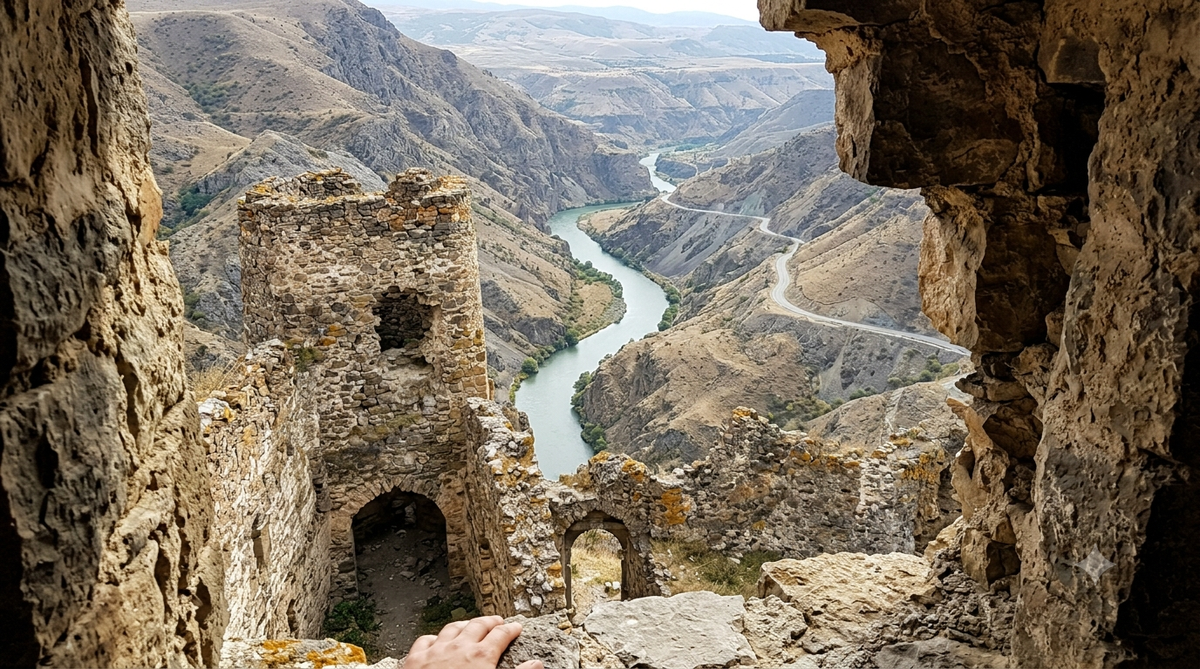
Tmogvi stands very close to Khertvisi and Vardzia, on cliffs above the Mtkvari, and is mentioned in sources from the early 10th century. The fortress spreads across three hills enclosed by a wall, with towers on each, and guarded the trade route to Asia, which made it strategically important. Tmogvi is linked to the name of the medieval poet and scholar Sargis Tmogveli. The area by the fortress was busy and not always peaceful: in later centuries the Ottomans set up a large slave market nearby, whose ruins survive.
Tmogvi has reached us poorly preserved, having suffered badly, like the whole area, from the devastating 13th-century earthquake. These are ruins, but they look monumental, and the views from them and of them are captivating: the fortress is set strikingly into the sheer cliffs above the river and reads at once in the landscape of the gorge.
🧭 Tmogvi is clearly visible from the road and stands not far from it, so it is viewed together with Khertvisi and Vardzia on one southern day, often from afar, as part of the scenery. The climb to the ruins themselves takes time and care, so many limit themselves to viewpoints from the road. More is in the article on Tmogvi fortress.
🏞️ Atskuri: A Fortress Above the Mtkvari near Borjomi
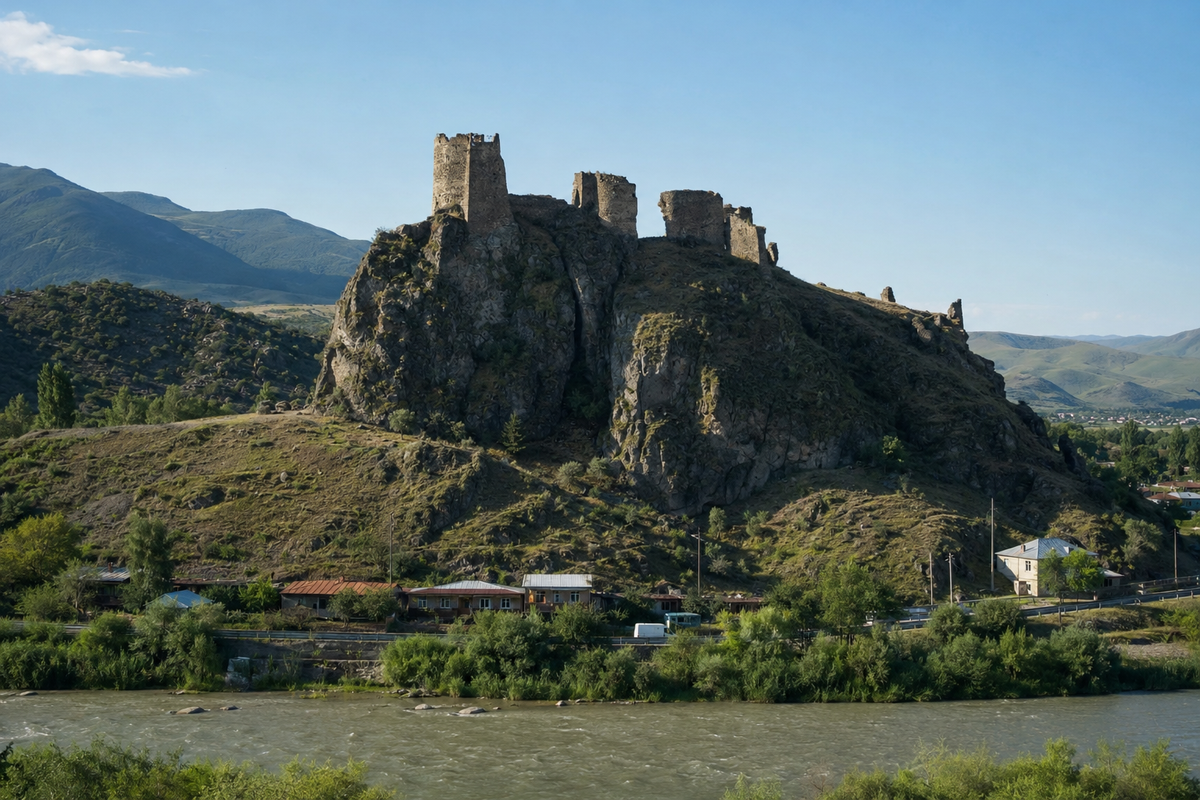
Atskuri stands on the right bank of the Mtkvari by the village of the same name, on the road between Borjomi and Akhaltsikhe. The fortress spreads across a high cliff and looks very imposing from outside: it is clearly visible from the road, easily accessible, and from the top a fine view of the surroundings and the valley opens up. Different parts of the walls belong to different eras, the earliest to the southern and eastern sides, while the north-western wall was added as late as the 17th-18th centuries, so the fortress "reads" like a chronicle of several periods.
The place is historic and venerated: Atskuri is linked to an ancient miracle-working icon of the Mother of God, while the fortress itself guarded the valley and controlled movement along it for centuries. Today Atskuri is partly ruined, but the scale and its setting on the cliff are impressive, and the climb gives a good panorama of the river and the mountains around.
🚗 Its main advantage for a trip is its handy location: Atskuri lies literally on the way to Vardzia and Rabati, so it is viewed at the same time, without a detour, and it nicely rounds out a southern route. There is little point coming here specially for one fortress, but taking it as a stop along the way is worthwhile.
🌊 The Coast and Adjara
🏺 Gonio-Apsaros: A Roman Fortress by the Sea
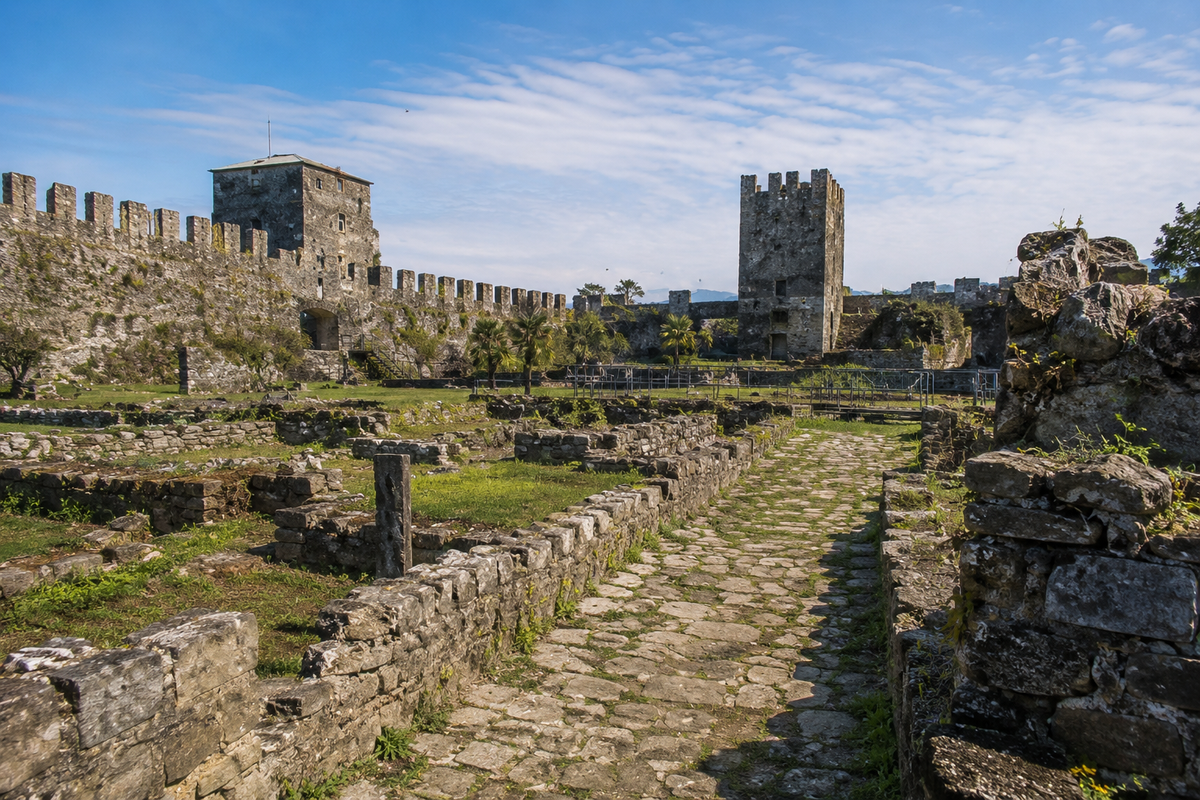
Gonio is the most unusual fortress of the selection: a Roman fort right on the shore of the Black Sea, 15 km south of Batumi, at the mouth of the Chorokhi river and just a few kilometres from the Turkish border. Its history reaches into antiquity: the fortress was once called Apsaros, and on this spot stood a well-fortified Roman city in Colchis, the first mention dated to the 1st century and linked to Pliny. Later Gonio belonged to Byzantium, Genoese merchants and the Ottomans, and in the 19th century passed to the Russian Empire. The city, by accounts, even had a theatre and a hippodrome.
Gonio also has its own relic-riddle: by legend, somewhere on its grounds may lie the grave of the Apostle Matthias, but the authorities do not yet permit excavations at this spot. Unlike many fortresses on the list, Gonio has kept a whole powerful perimeter of walls with towers, and inside a museum and an archaeological zone with digs operate.
🌊 A walk along the walls, the view of the sea and mountains, the sense of living antiquity, all of this makes it a strong point of a coastal route. Gonio is convenient to visit from Batumi: close, accessible by public transport, easily combined with a beach holiday. Entry is paid but cheap. More on the history and the excavations is in the article on Gonio fortress.
👑 Tamar's Fortress near Batumi
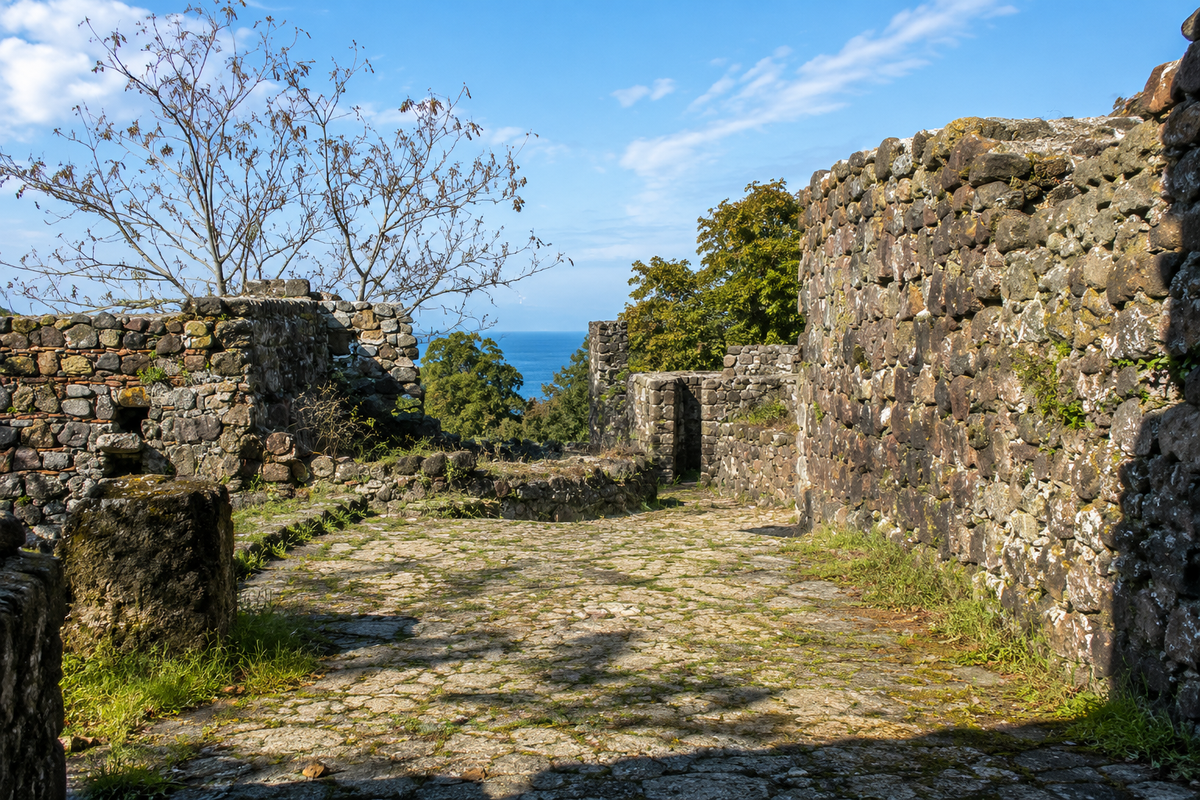
Tamar's Fortress (Tamaris Tsikhe) stands in the surroundings of Batumi, near Makhinjauri, north of the city centre, on rising ground with a view of the coast. It is dated to the Middle Ages and linked to the era of Queen Tamar, and the popular name attached itself to it, as to a number of other sites of her time. It is one of the first stone structures on this part of the coast, and served as a watch point from which the approaches to the valley and the sea were visible.
In scale it is a small fortress, more a fortified lookout than a large castle, and fragments of walls and a tower survive from it. There is no point coming here specially for grandeur, and that is honest: nearby is the far more impressive Gonio. But Tamar's Fortress has its own trump card, the reason it is added to a route, and that is the view over the coast and the green slopes of Adjara.
🚗 The main advantage is its closeness to Batumi: the fortress is easy to add to a walk around the city and the coast, combined with Gonio, the botanical garden and the sea. As a standalone goal it falls short, but as a pleasant scenic stop on a day by the sea it is quite good. More is in the article on Tamar's Fortress in Batumi.
🗺️ Map of Georgia's Fortresses
The twelve fortresses stand in different corners of the country: from Tbilisi and the Georgian Military Road to the south of Samtskhe-Javakheti, Kakheti and the Black Sea coast. There is no single loop for all of them at once, so on the map below each is marked separately, which makes it easier to plan by the clusters that lie close together.
🏙️ Tbilisi and nearby
Route from Tbilisi
Route from Tbilisi
🛣️ Georgian Military Road and the east
🏛️ Centre and south
Route from Tbilisi
Route from Tbilisi
Route from Tbilisi
Route from Tbilisi
Route from Tbilisi
🌊 Coast and Adjara
Route from Tbilisi
Route from Tbilisi
Access to some fortresses (Birtvisi, Tmogvi, Ujarma) runs along dirt roads and trails. Before setting off, check the current road and accessibility on the spot.
⏳ How to Plan and Get There
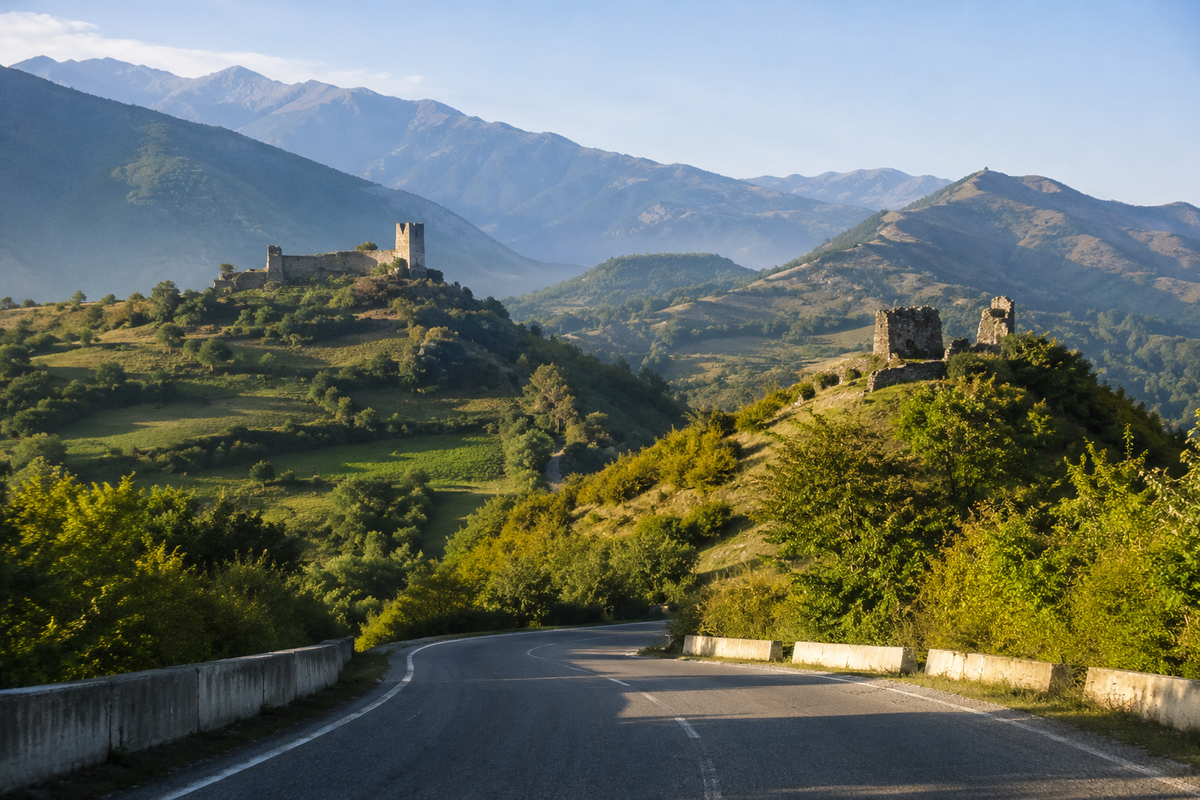
The main rule is the same as with other sights: the twelve fortresses do not come together into one route, so plan them by clusters that lie close. Some stand right in cities or on main roads and are easy to reach, some require your own car and a dirt road.
The comfortable logic of combining goes like this. Narikala is seen within Tbilisi, Ananuri is taken as the first stop on the way to Kazbegi. The southern trio of Rabati, Khertvisi and Tmogvi is joined into one trip through Samtskhe-Javakheti, usually with a night in Akhaltsikhe and a visit to Vardzia, adding Atskuri and Surami along the way. The Kakhetian Gremi and Ujarma are fitted into a wine route. The coastal Gonio and Tamar's Fortress are seen from Batumi. Birtvisi is a separate hiking outing from Tbilisi.
How to get there by fortress type:
- 🚗 Your own or a rented car opens up everything, including the mountain and southern fortresses with dirt approaches. For Samtskhe-Javakheti and Kakheti this is the most convenient option.
- 🚌 By public transport you can realistically reach those on main roads and in cities: Narikala within Tbilisi, Ananuri by minibuses towards Kazbegi, Rabati in Akhaltsikhe, Gonio from Batumi. Minibus schedules are loose, so check return transport in advance.
- 🥾 A walking part is mandatory for Birtvisi and desirable for the rock fortresses: climbs over stone and trails, so sturdy shoes are needed.
- 🧭 Remote points (Tmogvi, Ujarma) are seen along the way to neighbouring fortresses and usually need no separate day.
Only Tbilisi and no car
Narikala is in the city, take the cable car up. Ananuri is reached by a minibus towards Kazbegi.
You are heading south, to Vardzia
Gather Rabati, Khertvisi, Tmogvi and Atskuri into one route with a night in Akhaltsikhe.
You are holidaying in Batumi
Gonio and Tamar's Fortress are near the city, easy to add to the sea and the botanical garden.
You want mountains and hiking
Birtvisi as a separate outing: rocks, a trail, views. Sturdy shoes and time to spare are a must.
📊 The Twelve Fortresses Compared
Short and in one place, to help you choose for your route. Eras are given broadly; exact dates, where they are disputed, are covered in the separate articles on each fortress.
| Fortress | Era | Where | Type | Road |
|---|---|---|---|---|
| Narikala | From the 4th c. | Tbilisi | Citadel above the city | Cable car, under restoration |
| Birtvisi | Medieval | Kvemo Kartli | Rock fortress | Hiking, trail |
| Ananuri | 16th-17th c. | Military Road | Castle by the water | Easy, on the road |
| Ujarma | Early medieval | Kakheti, Gombori | Royal fortress | Car, visible from road |
| Gremi | 16th century | Kakheti | Complex-residence | Easy, by the road |
| Surami | Medieval | Shida Kartli | Fortress on the pass | On the Tbilisi-Kutaisi road |
| Rabati | From the 9th c. | Akhaltsikhe, south | Restored complex | Easy, in the city |
| Khertvisi | 10th-11th c. | Samtskhe-Javakheti | Rock fortress | Visible from Vardzia road |
| Tmogvi | From the 10th c. | Samtskhe-Javakheti | Rock ruins | From road, often from afar |
| Atskuri | Medieval | Near Borjomi | Fortress above the river | Easy, on the way south |
| Gonio | From the 1st c. | Adjara, by the sea | Roman bastion | Easy, from Batumi |
| Tamar's Fortress | Medieval | Near Batumi | Watch fortress | Easy, from Batumi |
Already been to one of Georgia's fortresses? Leave a review on Madloba: tell us which citadel impressed you more, how long the road took, and what those going for the first time should know. Live details from a trip help those still planning a route.
The information is current as of July 2026. Before travelling, check the season, the weather, the state of the roads and the current accessibility of the sites, especially those under restoration or with a dirt-road approach.
Download the fortresses guide as a PDF
Location map, coordinates of all 12 fortresses, era and region, access status, routes and a checklist. Works offline on the spot.
❓FAQ
💬 Narikala above the Old Town of Tbilisi, the symbol of the capital, which people climb to by cable car for the panorama. Restoration is under way there now and part of the grounds is closed, but the views from the viewpoints are available. Of the photogenic ones outside the city, Ananuri on the Georgian Military Road is named first.
💬 Best equipped and restored are Rabati in Akhaltsikhe and Ananuri on the Military Road, which you can walk around freely. Gremi, Gonio, Khertvisi and Atskuri hold up well. Part of the fortresses have reached us as ruins that impress by scale and their setting on a cliff.
💬 Narikala itself stands in the centre of Tbilisi. Of those out of town, closest are Ananuri on the Military Road, about 65-70 km, and Birtvisi in the mountains of Kvemo Kartli for hiking lovers. All three are realistic to see while based in the capital.
💬 Yes. The main seaside fortress is Gonio, 15 km south of Batumi, an ancient Roman fort with powerful walls and a museum. Near Batumi there is also the small Tamar's Fortress with a view of the coast. Both are easy to combine with a seaside holiday.
💬 Not for all of them. Narikala, Ananuri, Rabati and Gonio are reachable by public transport. But for the southern, Kakhetian and mountain fortresses your own car or a transfer greatly ease the road, and some have a dirt-road approach.
💬 In the south, Rabati, Khertvisi, Tmogvi and Atskuri are gathered into one route, often together with Vardzia and a night in Akhaltsikhe. In Kakheti, Gremi and Ujarma are combined. By the sea, Gonio and Tamar's Fortress. Fortresses from different regions are not combined in one day.
💬 Major restoration works are under way at Narikala, the walls are in scaffolding, and part of the grounds and the approach to them are temporarily closed for safety. That said, the cable car works, the panorama from the viewpoints is visible, and the church is open at weekends. It is best to check access before your visit.
💬 Most often no. Entry to the grounds of Narikala, Ananuri and many others is free; you only pay for the cable car or for the museum part, as in upper Rabati or Gonio. Exact conditions and prices change, so they are worth checking on the spot.

1 comment
Log in to leave a comment