




🏰 Gonio Fortress (Gonio-Apsaros): History, Museum-Reserve and How to Get There From Batumi
Gonio Fortress (Gonio-Apsaros)
Gonio Fortress is one of those places that does not announce itself loudly. Fifteen kilometres south of Batumi along the Black Sea coast, a short bus ride from the city centre, you arrive at a rectangle of Roman stone walls standing since the first century AD. There is an on-site museum, active archaeological digs you can watch, a tomb that local tradition links to one of Christ's apostles, and a pebble beach a two-minute walk away. This guide covers what is actually here, the story behind the site, how the museum-reserve works, and the practical details for getting there on your own.
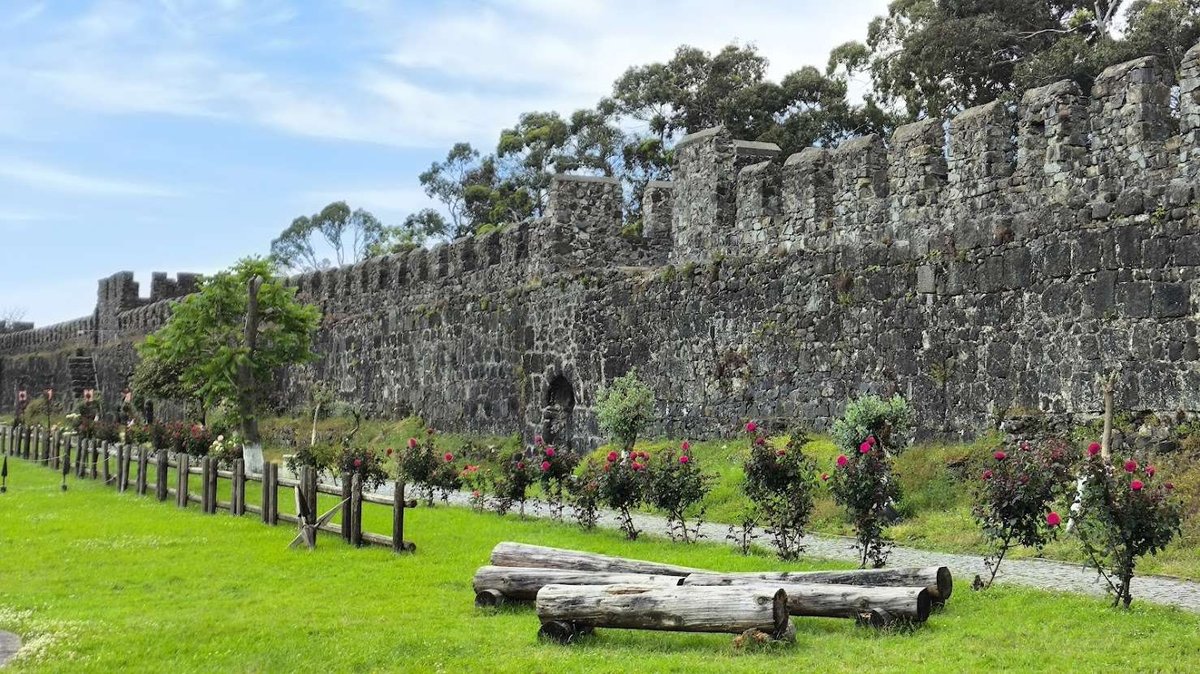
🏛️ What Is Gonio Fortress (Gonio-Apsaros) and Why Does It Matter
Gonio-Apsaros is a rectangular stone citadel occupying about 4.5 hectares at the mouth of the Chorokhi river, four kilometres from Turkey. The Romans built it in the 1st century AD as a military post to guard the eastern end of the Black Sea and control the passes into the Caucasus. The Greek historian Arrian recorded the condition of the garrison here in his Periplus of the Euxine Sea in the 2nd century, making Gonio one of the few sites in the South Caucasus with near-continuous written documentation spanning almost two millennia.
The name Apsaros is rooted in Greek mythology: one legend says this is where Jason killed Absyrtus, son of the Colchian king Aeetes, and that the river Chorokhi was once called the Apsaros. The name Gonio only entered the written record in the 14th century, in a chronicle by the Trapezuntine historian Michael Panaretos.
What makes Gonio genuinely unusual is that its rectangular layout and much of its perimeter wall survive from the Roman period with minimal alteration. Each later power, Byzantine, Ottoman, Russian, used what was there rather than rebuilding from scratch. As a result, you can walk along walls that Roman legionaries walked nearly intact, which is rare anywhere in the world.
Two thousand years at a glance
🗝️ What to See Inside Gonio Fortress
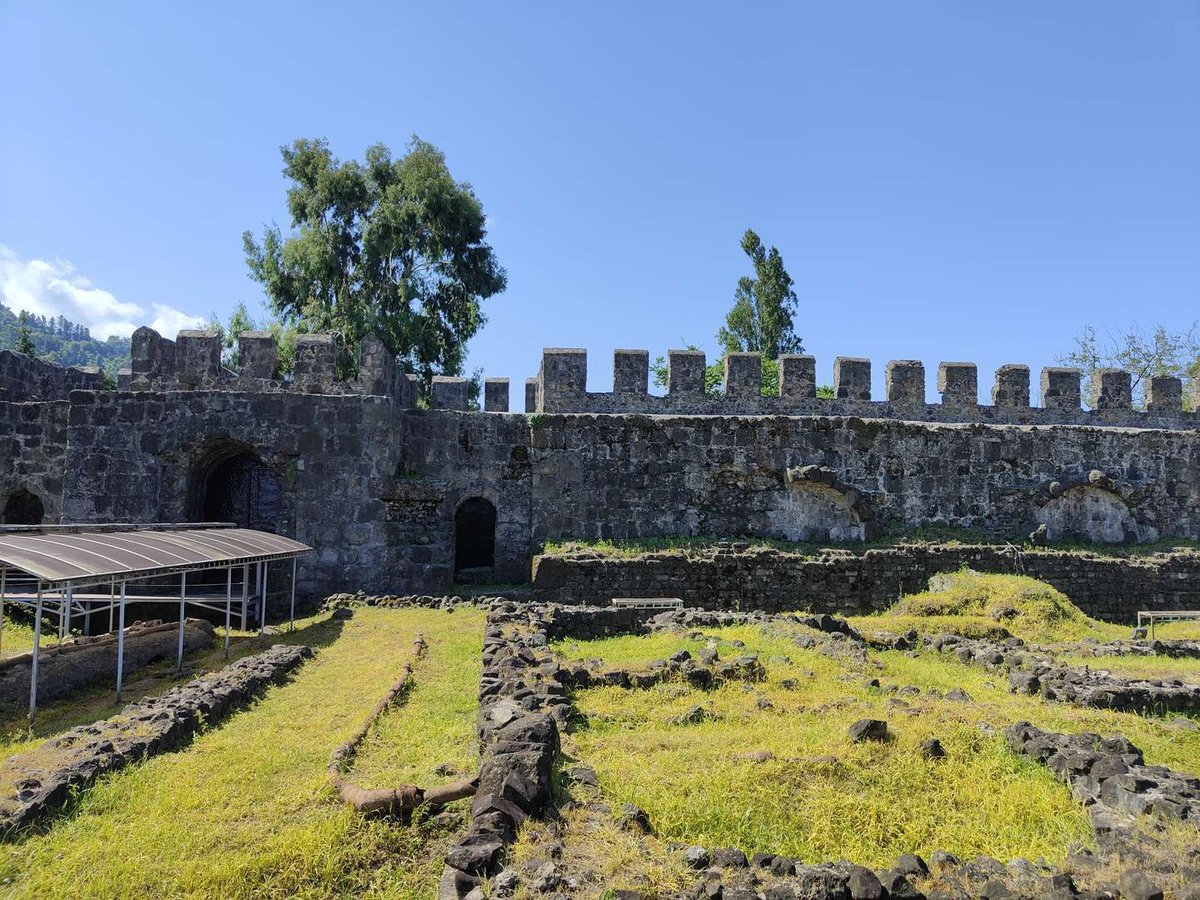
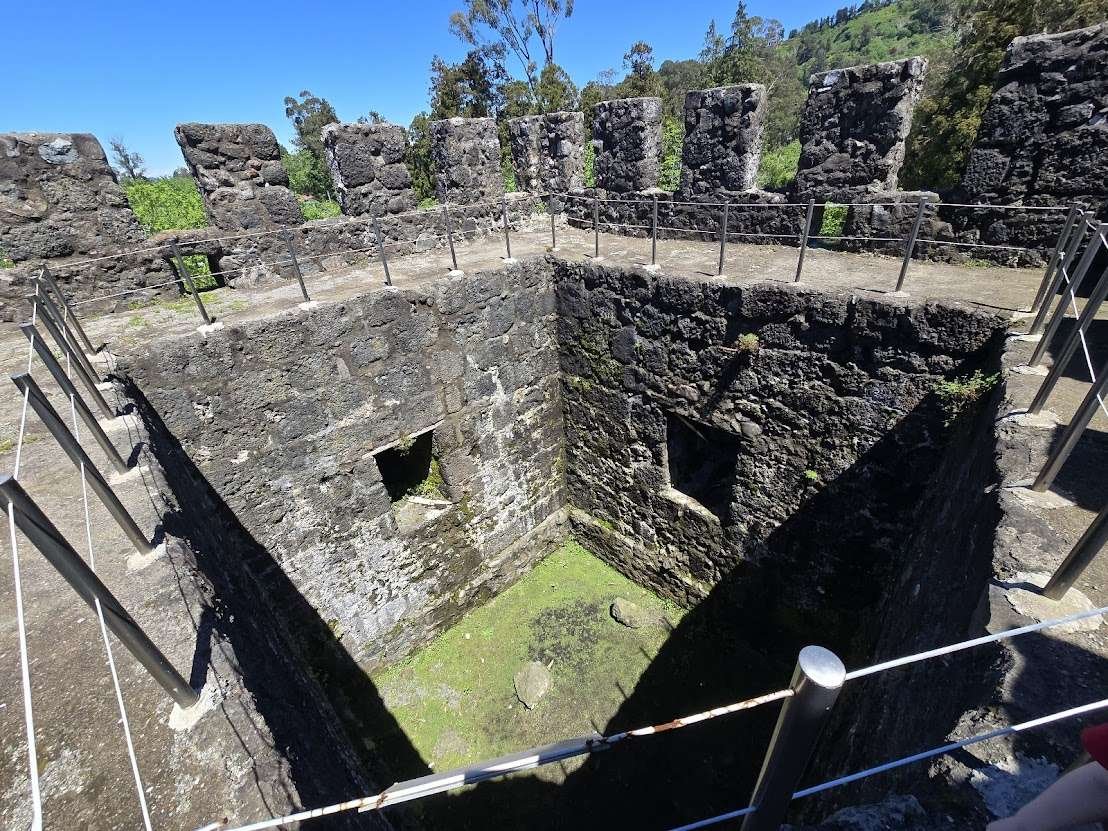
Walls and towers. Of the original 22 towers, 18 are standing. You can climb several of them. The walls run to about five metres in height. From the top you see the Chorokhi delta and the Black Sea to the west.
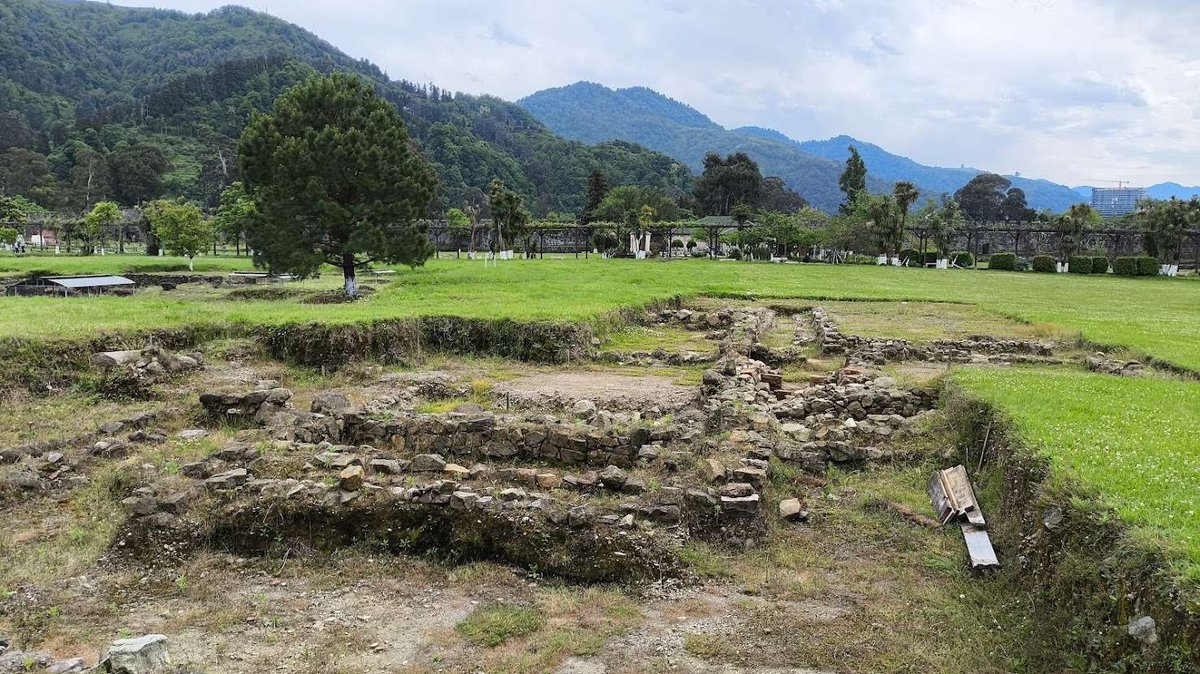
Active excavations. Several sections of the interior have ongoing archaeological work, with labelled stratigraphic profiles. Among the most striking things on the ground: the clay pipes of the Roman sewage and water supply system, including pipes that delivered hot water to senior officers.
The Apostle Matthias tomb. A cross in the central compound marks what local tradition identifies as the tomb of the Apostle Matthias, chosen by the disciples to replace Judas Iscariot. The Georgian government prohibits excavations in this area, so the claim remains neither confirmed nor refuted. The marked grave draws a steady stream of pilgrims alongside the general tourists.
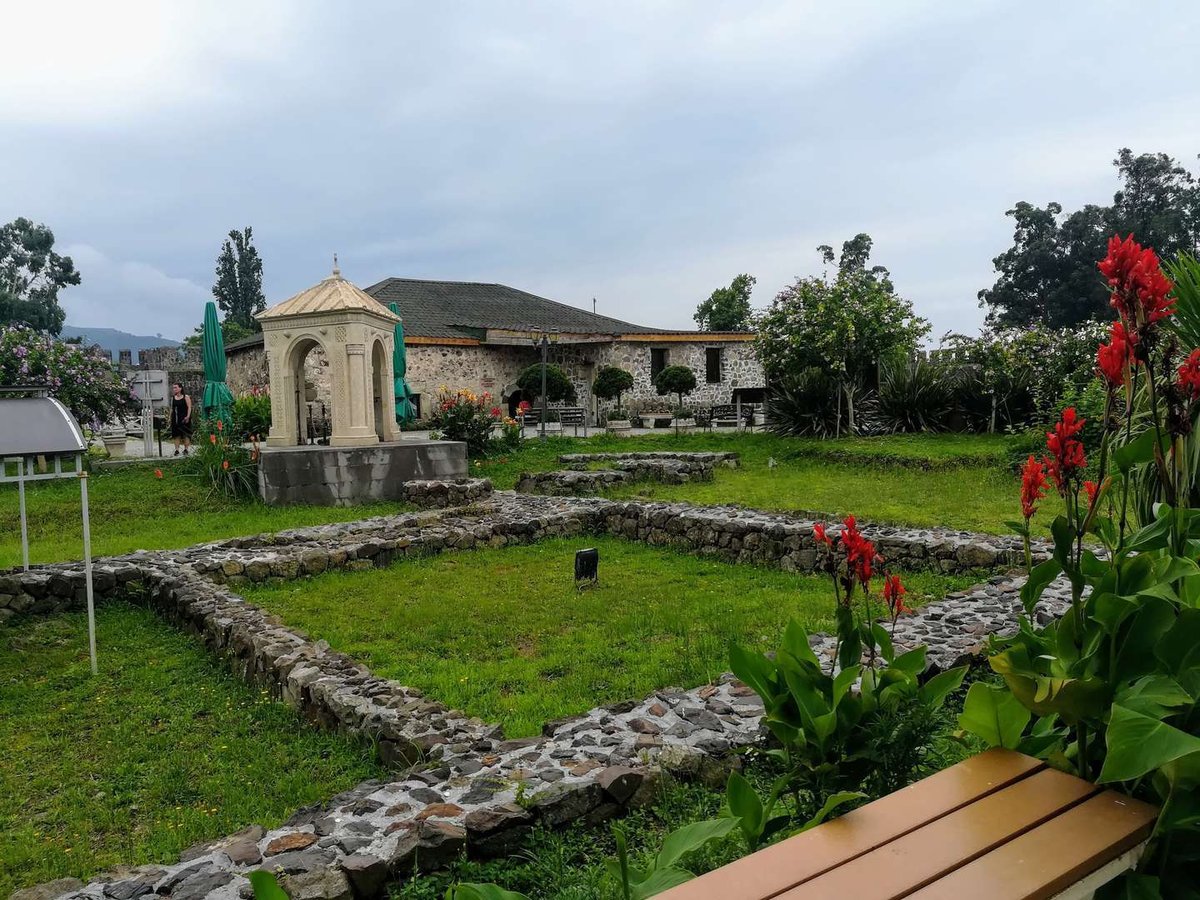
Ottoman garrison mosque. Small remains of a mosque built during Ottoman rule, positioned opposite the Matthias grave. A visible layer of one culture laid over another, in one rectangular space.
🏺 Gonio-Apsaros Museum-Reserve: What It Is and What Is Inside
The full official name of the site is the Gonio-Apsaros Archaeological-Architectural Museum-Reserve, a status granted in 1994. Excavations began in 1964, and the museum building inside the walls houses what has been found since: Roman and Byzantine coins, ceramics, amphorae, weapon fragments and architectural pieces. Exhibits are labelled in Georgian and English.
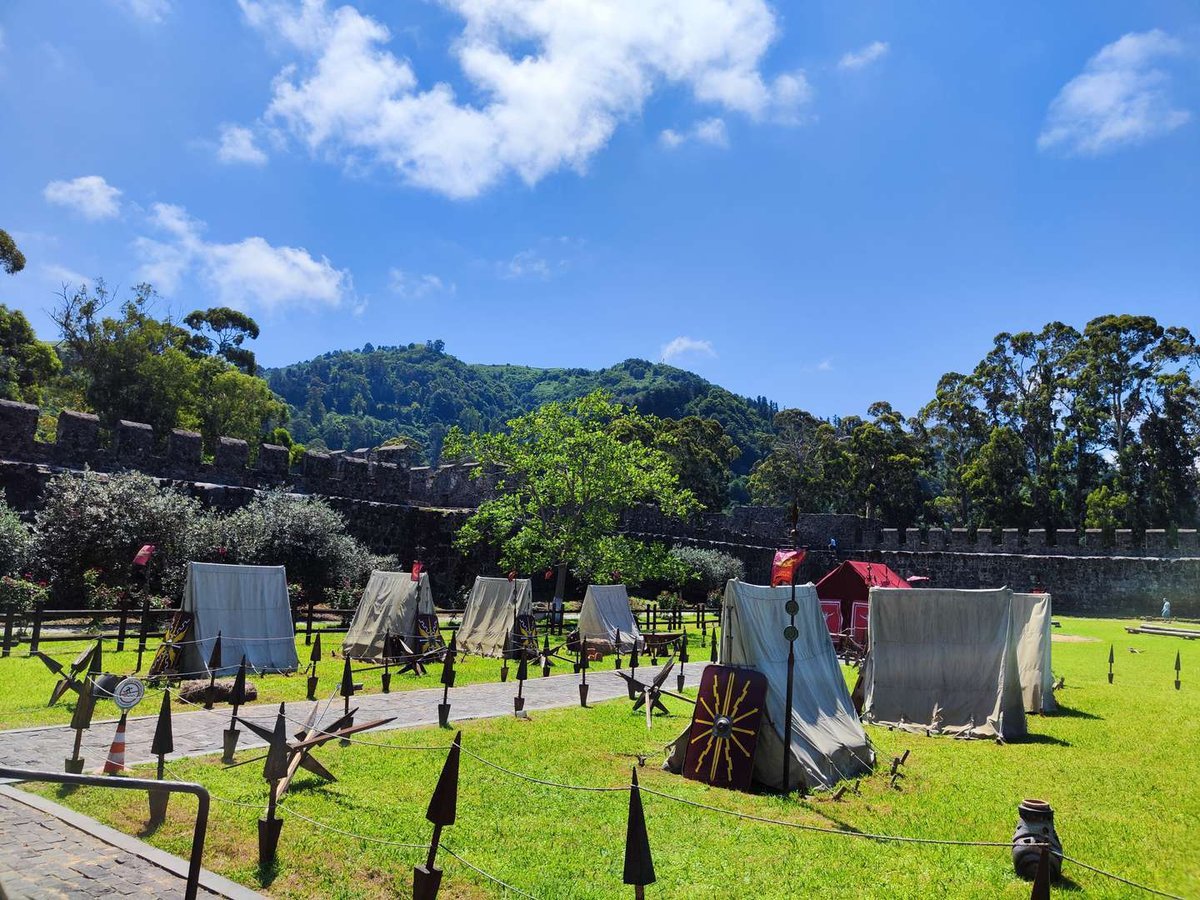
The most significant find, a hoard of 5th-century jewellery discovered near the southern wall in 1974, is now held at the Batumi Archaeological Museum. The on-site museum has scale models reconstructing the appearance of the fortress in Roman, Byzantine and Ottoman periods. For a deeper look at the collection, our dedicated article on the Gonio-Apsaros Museum-Reserve covers it in full.
An audio guide costs around 5 GEL for two people. A personal guided tour runs around 10 GEL.
🚌 How to Get to Gonio Fortress From Batumi
From Tbilisi Square (Shavsheti area) in Batumi, bus no. 16 and minibuses no. 33 and no. 88 run south toward Gonio, Kvariati and Sarpi. The fare is around 1.50 GEL and the journey takes 20-25 minutes. Get off at the Gonio stop; the fortress walls are visible from the road.
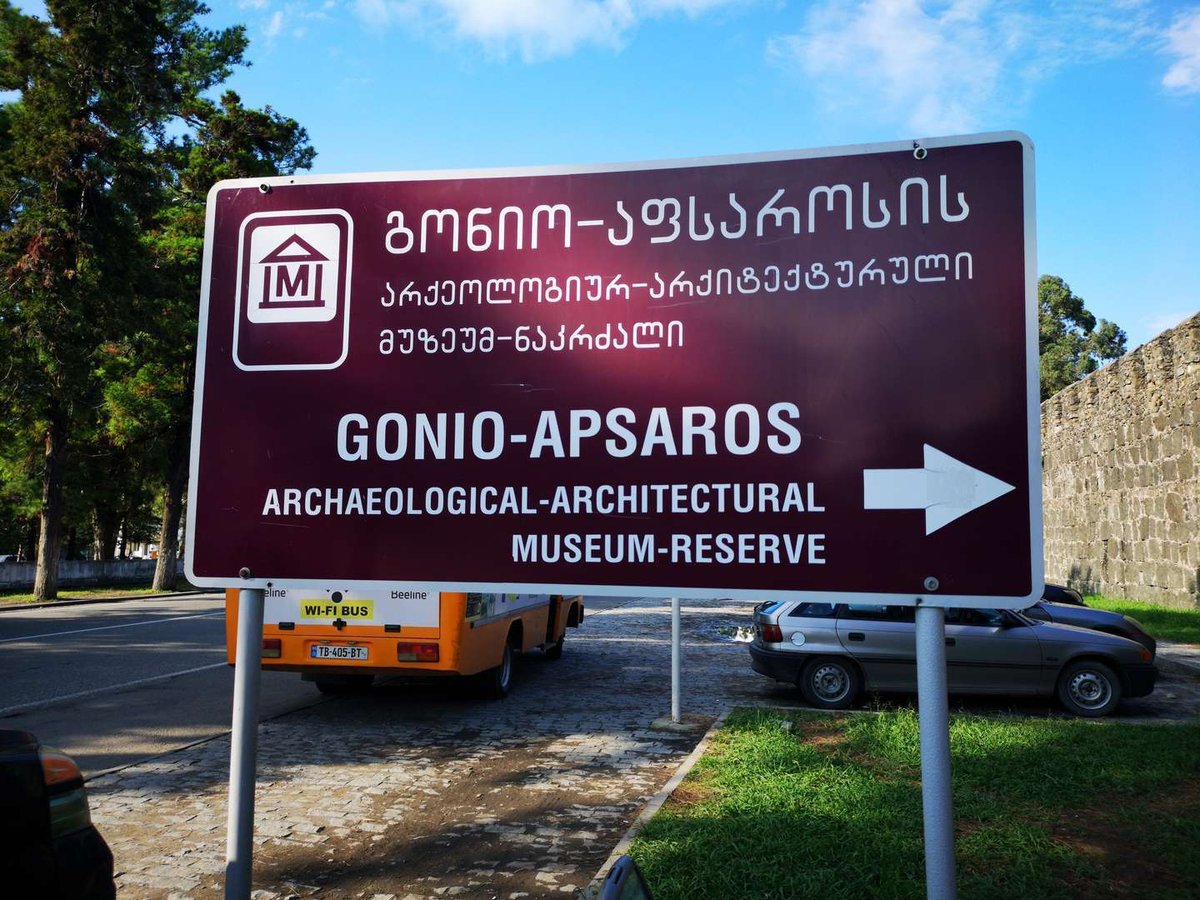
By taxi from central Batumi the journey takes 12-15 minutes and costs roughly 10-15 GEL. A car works well if you plan to combine the fortress with other points: Makhuntseti Waterfall is about 20 minutes away in the mountain direction. The site's address is 55 Apsarosi Avenue, Gonio.
🗓️ When to Go and How Long to Allow
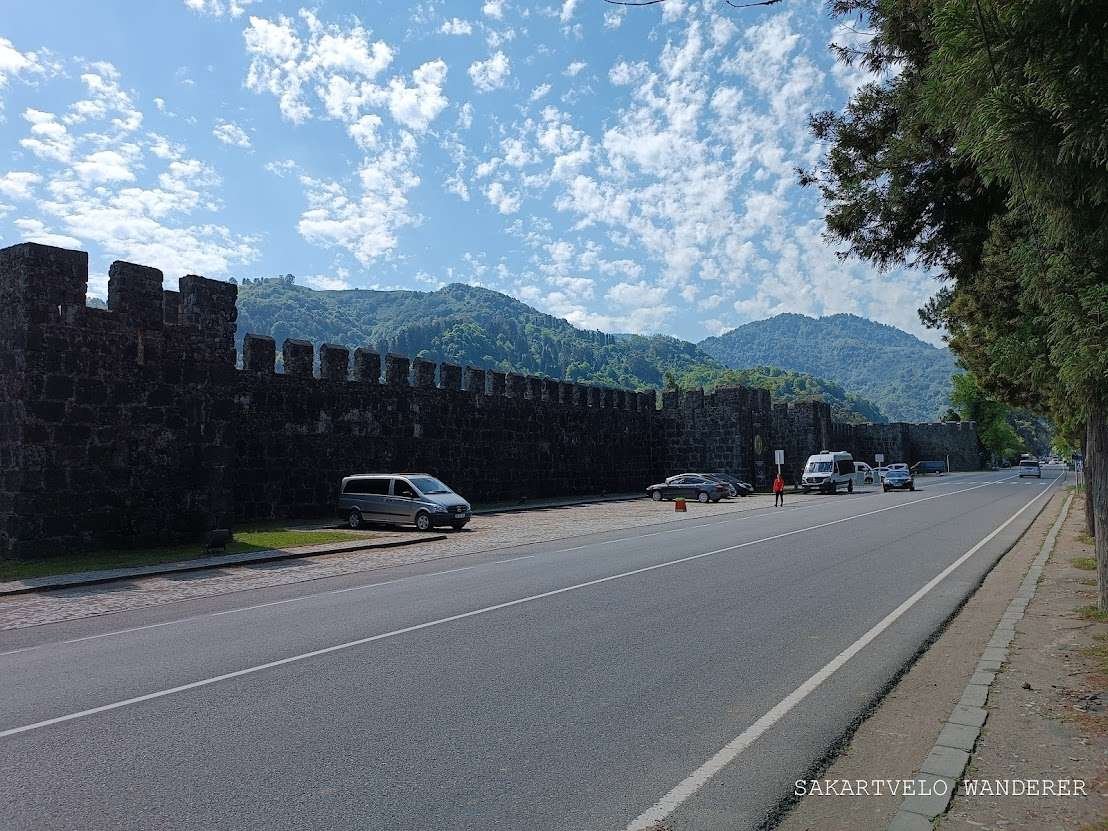
Gonio Fortress is open year-round, approximate hours 10:00 to 18:00. Allow one to one and a half hours for a self-guided visit. With a guide, budget two hours.
Summer is the busiest and hottest period; the stone walls concentrate heat noticeably. Morning visits before 11:00 avoid both the crowd and the temperature. Spring and early autumn are the most comfortable months. Gonio Beach is a five-minute walk from the fortress gate and is generally quieter than the Batumi beaches.
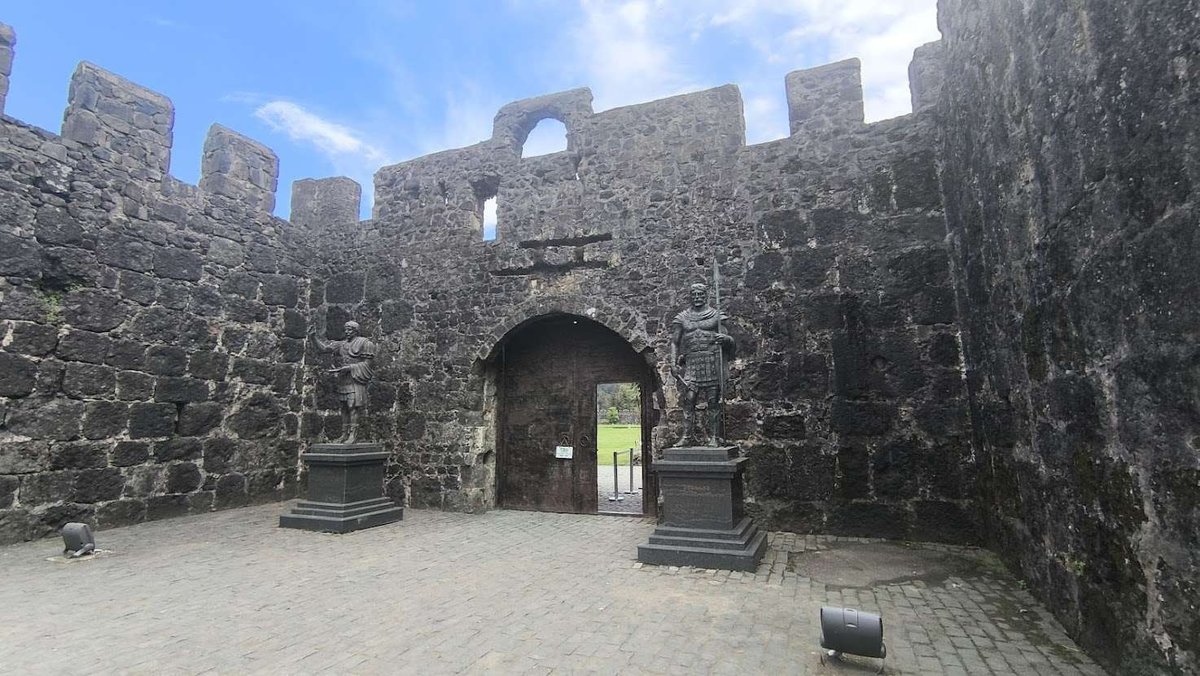
📍 What to See Near Gonio Fortress
A Roman outpost on the edge of the empire
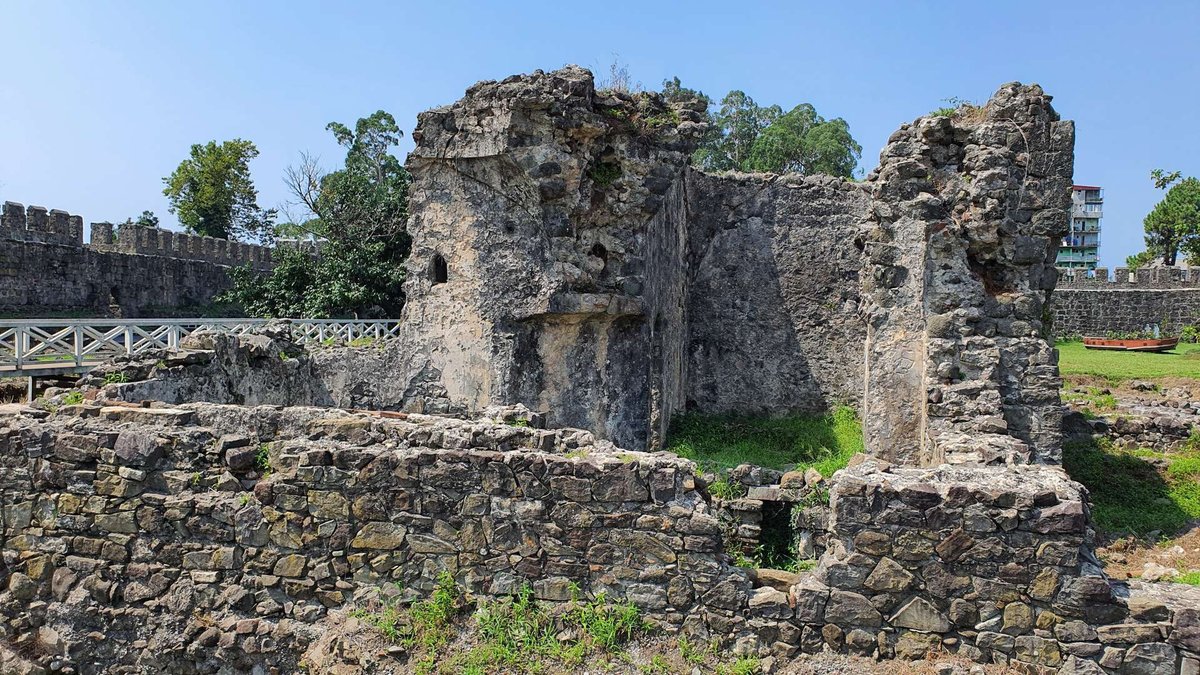
Gonio does not perform. There is no gift shop at the gate, no audiovisual introduction, no reconstructed centurion. What there is: walls in the same stone the Romans laid, a sewage pipe still visible in the ground, a hole in the earth where an archaeologist was working last week, and a label noting which century each layer belongs to. For a traveller interested in what the eastern frontier of the Roman Empire actually looked like, this is one of the more honest places to find out. It is also fifteen kilometres and one bus ride from the Batumi waterfront.
🗨️ Over to you! Have you visited Gonio Fortress? Did it match your expectations, or were you hoping for more? Did you go into the museum? Share your experience and tips in the comments.
Information is current as of 16 June 2026. Entry fees, opening hours and transport schedules are subject to change.
❓ Frequently asked questions
In the village of Gonio, Adjara, 15 km south of Batumi, four kilometres from the Turkish border, at the mouth of the Chorokhi river.
Entry fees vary: free to around 3-10 GEL for adults depending on the source. Confirm at the gate. Audio guide around 5 GEL for two; personal guide around 10 GEL.
Bus no. 16 or minibuses no. 33 or 88 from Tbilisi Square (Shavsheti). Around 1.50 GEL, 20-25 minutes. Get off at the Gonio stop.
The status granted in 1994 designating the fortress as a protected site. The museum inside holds finds from excavations dating back to 1964: coins, ceramics, amphorae, weapons and scale models.
A strong local tradition places the tomb of the Apostle Matthias inside Gonio Fortress. The Georgian government prohibits excavations in this area, so the tradition cannot be confirmed or refuted archaeologically.
One to one and a half hours for a self-guided visit. Around two hours with a guide. The site combines well with a beach stop at Gonio Beach, a five-minute walk from the gate.
No. Gonio-Apsaros is a Roman fortress from the 1st century AD. Petra Fortress is a separate Byzantine site located near Tsikhisdziri further north along the Adjara coast.

31 comments
Log in to leave a comment