




Mother of Kartli in Tbilisi: History, Overview & Route
🗿 Monument · ⏱️ 1–2 hours (including ascent) · 📍 Sololaki Hill, Tbilisi
🗿 Before the Ascent
| 📍 Location | Top of Sololaki Hill, next to Narikala Fortress, Tbilisi |
| 📐 Statue Height | About 20 meters. Material — aluminum |
| 🗓️ Erected | 1958 — for the 1500th anniversary of Tbilisi. In 1997, replaced with an identical new one |
| 🎨 Author | Sculptor Elguja Amashukeli (1928–2002). State Prize laureate |
| 🚡 How to Get There | Cable car from Rike Park (5–7 minutes) or walking trail (~30 minutes) |
| 🌅 Best Time | Sunset — panoramic view of Tbilisi in golden light. At night — illuminated monument |
🧭 Who This Article Is For
"Mother of Kartli" is the first thing you see when entering Tbilisi, and one of the last things that stays in your memory. The 20-meter aluminum monument on top of the hill has become a symbol of the city just as firmly as the Eiffel Tower is a symbol of Paris. But most tourists only see it from below. This article is for those who want to climb up, understand what the symbolism means, and know the best time to do it.
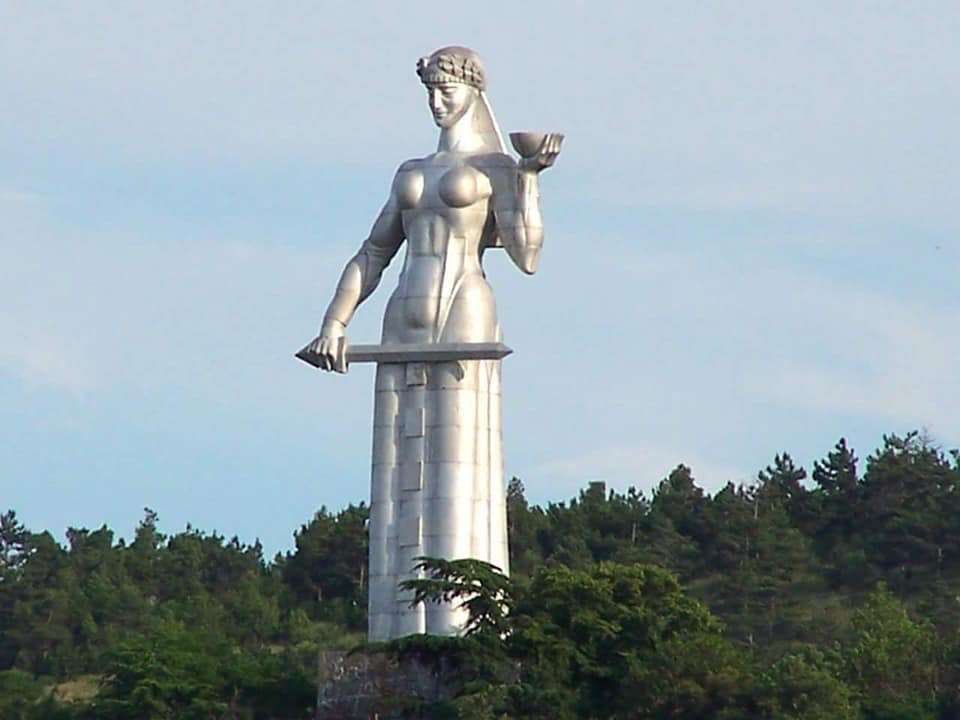
🗿 History: From Temporary Decoration to Eternal Symbol
In 1958, Tbilisi celebrated its 1500th anniversary. For this occasion, a monumental statue was erected on top of Sololaki Hill. The idea belonged to the sculptor Elguja Amashukeli — he received the State Prize for it.
Initially, the monument was named "Capital" — but Tbilisi residents immediately renamed it in their own way: "Mother of Kartli" (Georgian: Kartlis Deda). The popular name stuck and became official. This is an important detail: the monument took the name given to it not by the author or the authorities, but by the city itself.
According to the original plan, the statue was supposed to decorate the hill only for a certain period of time. The government changed its decision — and left it forever. Thus, a temporary gesture became a permanent symbol.
In 1997, the original statue was replaced with a new one — identical in shape, but more durable. The original monument, after several decades under the open sky, required an update.
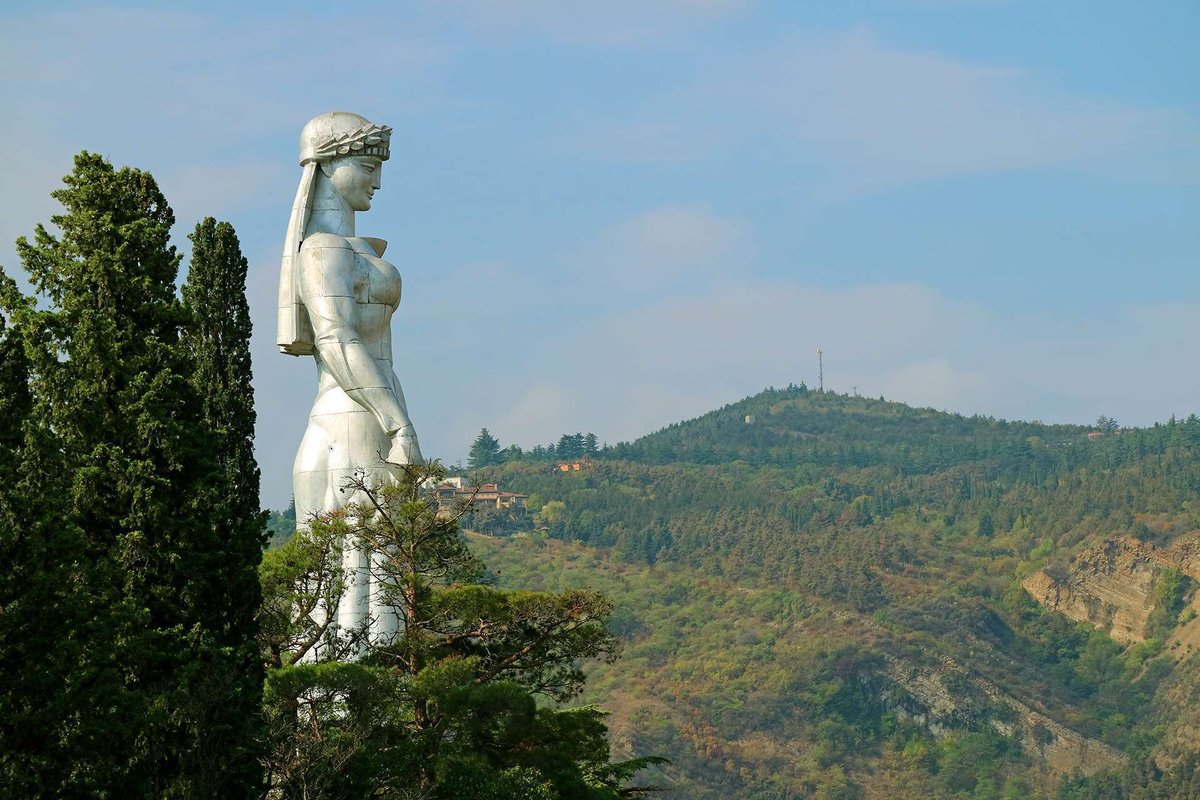
🍷⚔️ Symbolism: Wine and Sword
It is in these two objects that the entire essence of the image lies.
The right hand holds a bowl of wine — for those who come in peace. For friends. For guests. Georgian hospitality is not just a tradition; it is a way of seeing the world. Wine here is not a decoration, but a literal invitation to the table.
The left hand holds a sword — for those who come as enemies. Throughout its history, Tbilisi has survived hundreds of sieges and destructions. Eleven times the city was practically destroyed and rebuilt from scratch. The sword in the Mother's hand is not a threat. It is a memory and a warning.
It is this exact pair — wine and sword — that reflects what Georgians themselves call their national character: openness to guests and readiness for defense.
The monument is dressed in traditional Georgian women's clothing — not a faceless Soviet ideal, but a specific cultural image. This was also a deliberate decision by the author.
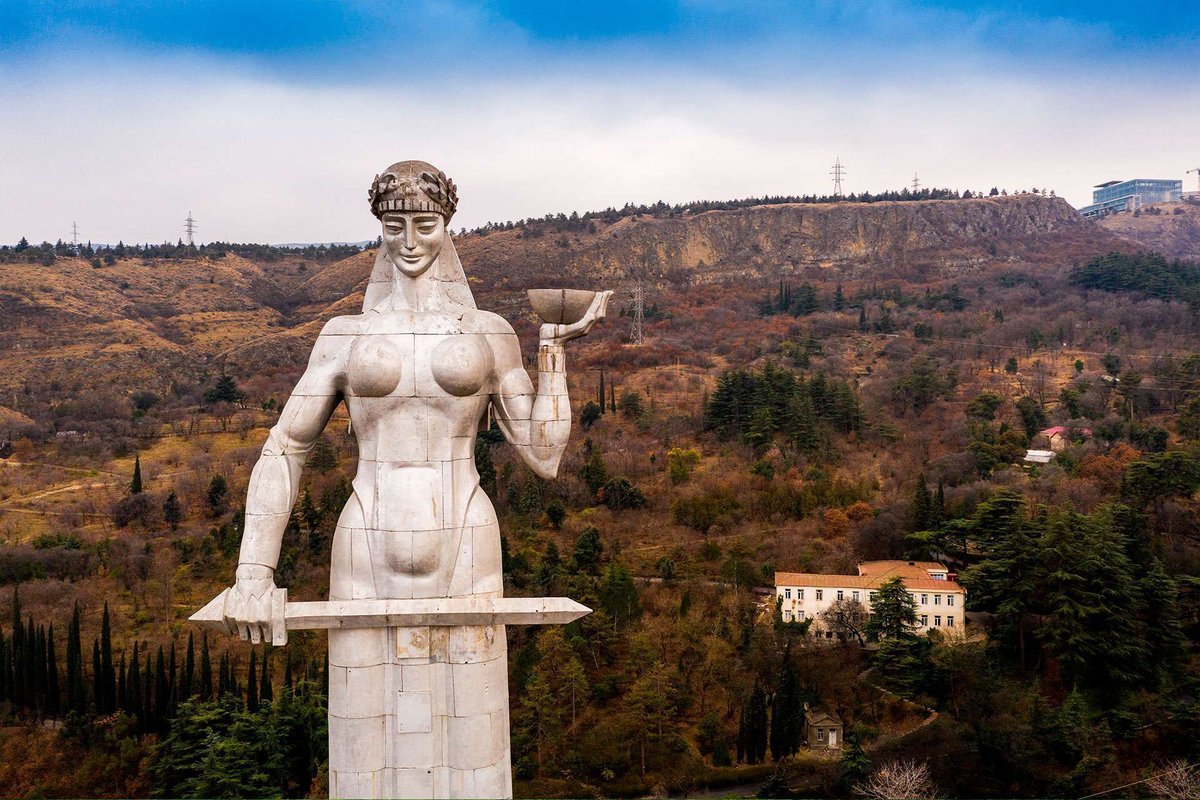
🏔️ The View from the Hill: What You Will See at the Top
The panorama from the top of Sololaki Hill is one of the best in the city. In good weather, you can see:
The entire historical center of Tbilisi: the Old Town, Abanotubani sulfur baths, the Bridge of Peace, Metekhi Church on the cliff above the Mtkvari river. Narikala Fortress is right next to the monument. Mountains on the horizon. On a clear day — distant ridges.
At night, the monument is illuminated. Climbing up at sunset is one of the best ways to spend an evening in Tbilisi.
HTML
If you are going for the view, choose sunset, about an hour before the sun goes down. All of Tbilisi is painted in warm tones, and the monument looks especially striking from behind. The cable car operates from Rike Park — it's fast and pleasant, and the park itself is worth your time. The walking trail from the sulfur baths takes about 30 minutes, but along the way, you can drop by Narikala. Bring water — the climb during the warm season is quite noticeable.
🗺️ How to Get to Mother of Kartli
1️⃣ Cable car from Rike Park — the most comfortable option. It starts in the park near the Bridge of Peace. About 5–7 minutes of ascent. It operates until late evening.
2️⃣ Walking trail — from the Abanotubani sulfur baths or from the side of Narikala Fortress. About 25–35 minutes depending on your pace. Along the way, there are good views and Narikala itself.
3️⃣ Taxi or car — there is a road that allows you to drive up close. Convenient for those who do not want to walk.
4️⃣ At the top — explore the Narikala Fortress next to the monument.
5️⃣ Before descending — pause: the monument offers a view of the entire city. That is exactly why people come here.
💬 What Those Who Have Been Here Say
"Visiting Mother of Kartli is like a journey into the heart of Georgia. The monument seems to combine strength and hospitality. The view from the hill is simply mesmerizing, you can see the whole of Tbilisi."
"This statue personifies all the hospitality and strength of Georgia. In one hand is a bowl of wine for peaceful guests, in the other is a sword to protect against enemies. Sunset from the hill offers an simply incredible view of the whole city and its surroundings."
"It always amazed me how the statue of Mother of Kartli skillfully combines peace-loving nature and readiness for defense, and all this with a stunning view of Tbilisi."
"The monument perfectly reflects the mentality of Georgia — hospitable, but when necessary, unconquerable."
🏁 Why It's Worth Climbing Up Here
The monument is visible from everywhere. But to confuse looking at it with climbing up to it is like looking at the Acropolis from the street and not going inside. Here, from above, it becomes clear that Tbilisi is not a flat map, but a living landscape: mountains, a river, fortresses, domes, neighborhoods. And above all this is the aluminum figure with wine and a sword, which Tbilisi residents once called their Mother and have not renamed since.
ℹ️ The cable car from Rike Park operates daily, please check the schedule and prices before your visit. The walking trail is open 24/7. The monument is illuminated at night. Information is current at the time of publication.
Have you been to Mother of Kartli? Did you climb on foot or take the cable car? And which view do you remember more — the daytime panorama or the night illumination? Tell us — we read all comments ❤️
❓ Frequently Asked Questions
💬 "Mother of Kartli" (Georgian: Kartlis Deda) is a monumental aluminum statue about 20 meters high, located on top of Sololaki Hill in Tbilisi, next to Narikala Fortress. It is one of the main symbols of the city and Georgia.
💬 In her right hand is a bowl of wine: a symbol of hospitality and goodwill towards those who come in peace. In her left hand is a sword: a symbol of readiness to protect the native land from enemies. Together they convey the character of the Georgian people — open to guests and unconquerable before invaders.
💬 In 1958, for the 1500th anniversary of Tbilisi. According to the original plan, the monument was supposed to stand temporarily, but the government decided to leave it for good. In 1997, the original statue was replaced with a new one — identical in shape, but more durable.
💬 The author of the idea and the sculptor is Elguja Amashukeli (1928–2002), an outstanding Georgian sculptor. He was awarded the State Prize for the monument. The original name proposed by the author was "Capital". The popular nickname "Mother of Kartli" quickly became official.
💬 Entirely of aluminum — a light and durable metal that holds its shape well outdoors. It is because of this choice that the monument looks the same at different times of the day — both matte-silver under the sun and bright in the night illumination.
💬 Three options. Cable car from Rike Park (near the Bridge of Peace) — fast, about 5–7 minutes. Walking trail — from the sulfur baths or Narikala Fortress, about 25–35 minutes. Taxi or car — there is a road that allows you to drive close to the top.
💬 For the view — come an hour before sunset. All of Tbilisi is in warm lighting, and the monument is clearly visible against the sky. At night, the statue is illuminated and also looks impressive. Early in the morning, there are practically no tourists.
💬 Yes. The walking trail is accessible at any time of the day. At night, the monument is illuminated, and the view of the city from below with the lit statue is one of the classic photographs of Tbilisi.

39 comments
Log in to leave a comment
Соглашусь, монумент идеально отображает менталитет Грузии, гостеприимный, но, когда это нужно, воинствующий, непокоримый.
Статуя Свободы это конечно замечательно, но я бы хотела взглянуть на монумент Мать Картли.
1. Почему статую заменили? Что произошло с предыдущей?
2. Я знаю, что алюминий ржавеет, как с этим борются при поддержании этой статуи?