




Old Town Tbilisi: Sights, History, Walking Route
Historical Overview
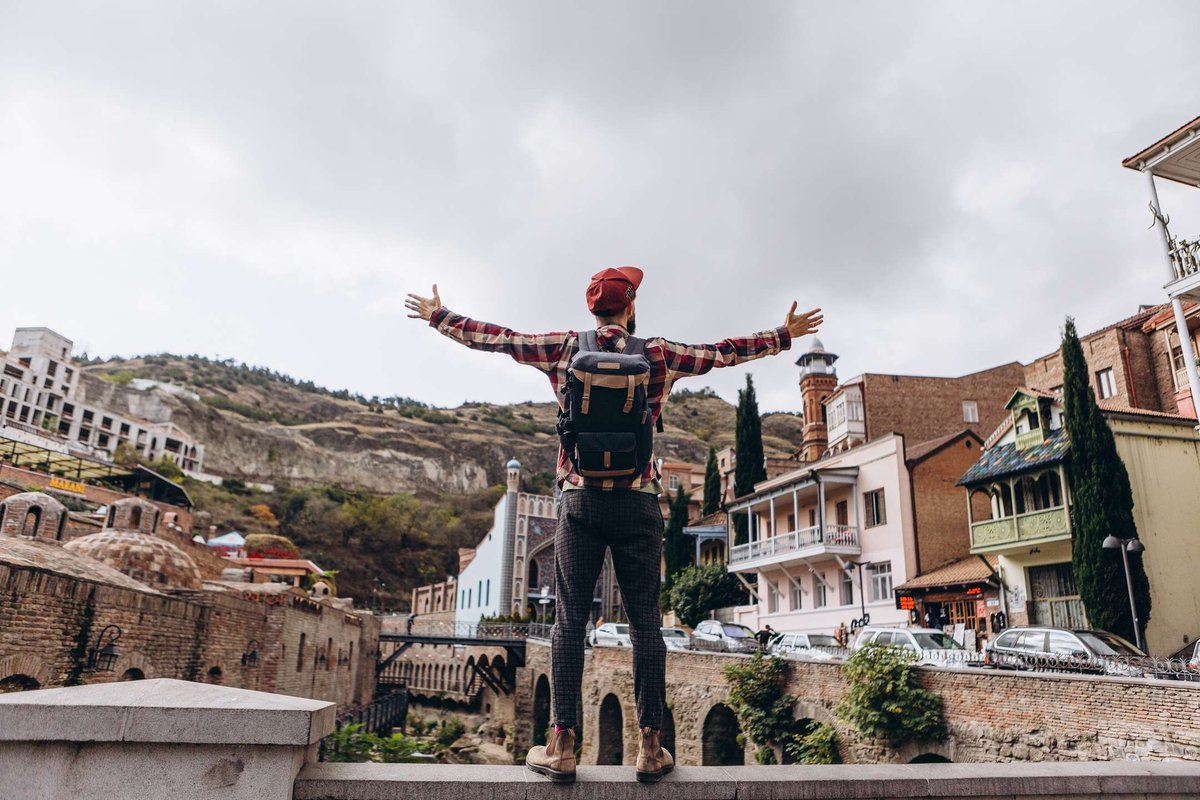
Tbilisi's Old Town, also known as Kala, is located on the banks of the Kura River, at the foot of Mount Mtatsminda. The medieval architectural appearance of Upper and Lower Old Tbilisi is shaped by winding cobbled streets winding along hills, ancient brick or clay two-story houses with attached staircases leading directly to the second floor, and, of course, vine-covered pavilions offering shade from the midday heat.
Originally, the old fortress of Kala, built by the Persians, was considered the city, and the residential settlement that developed around the fortification itself was called Tbilisi. It is also believed that the boundaries of the historical district coincide with the territory of Tiflis in the 12th century.
The city's appearance underwent significant changes in the 18th century, when the settlement was plundered and burned by the army of the Shah of Persia. However, it took residents just three years to rebuild the city from the ashes and restore its former beauty, adding elements that were contemporary to the time.
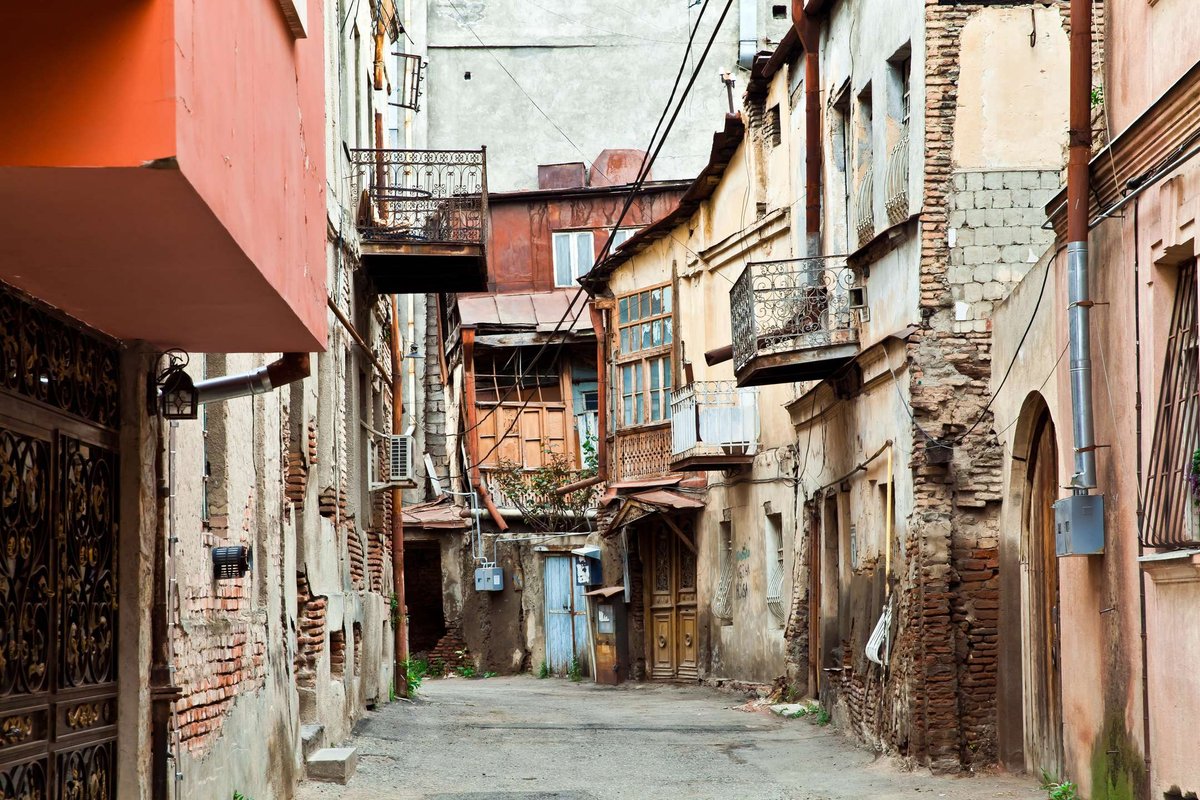
Georgia is a country with moderate seismic activity, with periodic earthquakes devastating the city. Today, the oldest civilian building in Tbilisi is the Aramyants Caravanserai, built in 1818.
So, what interesting things does ancient Tbilisi conceal? We recommend visiting the Anchiskhati and Metekhi churches, the Narikala Fortress and sulfur baths, the Sioni Cathedral and famous houses, and enjoying strolls through the ancient streets of medieval Georgia.
TOP most popular places in the Old City⬇️
Bathhouses
The famous sulfur baths complex is located in the Abanotubani district of the Old City. It is one of the most popular places in Tbilisi, not only among tourists but also among locals. Tbilisi's baths are based on sulfur thermal springs. The buildings were built in the Persian style; over time, some were destroyed, while others were rebuilt. In ancient times, the baths were renowned for their ornate decor, but today they are simple, unadorned spaces.
The complex includes approximately ten bathhouses, varying in service, comfort, and, consequently, price. The most prestigious are: Bathhouse No. 5, Irakliyevskaya, Garrison, and Mirzoyevskaya.
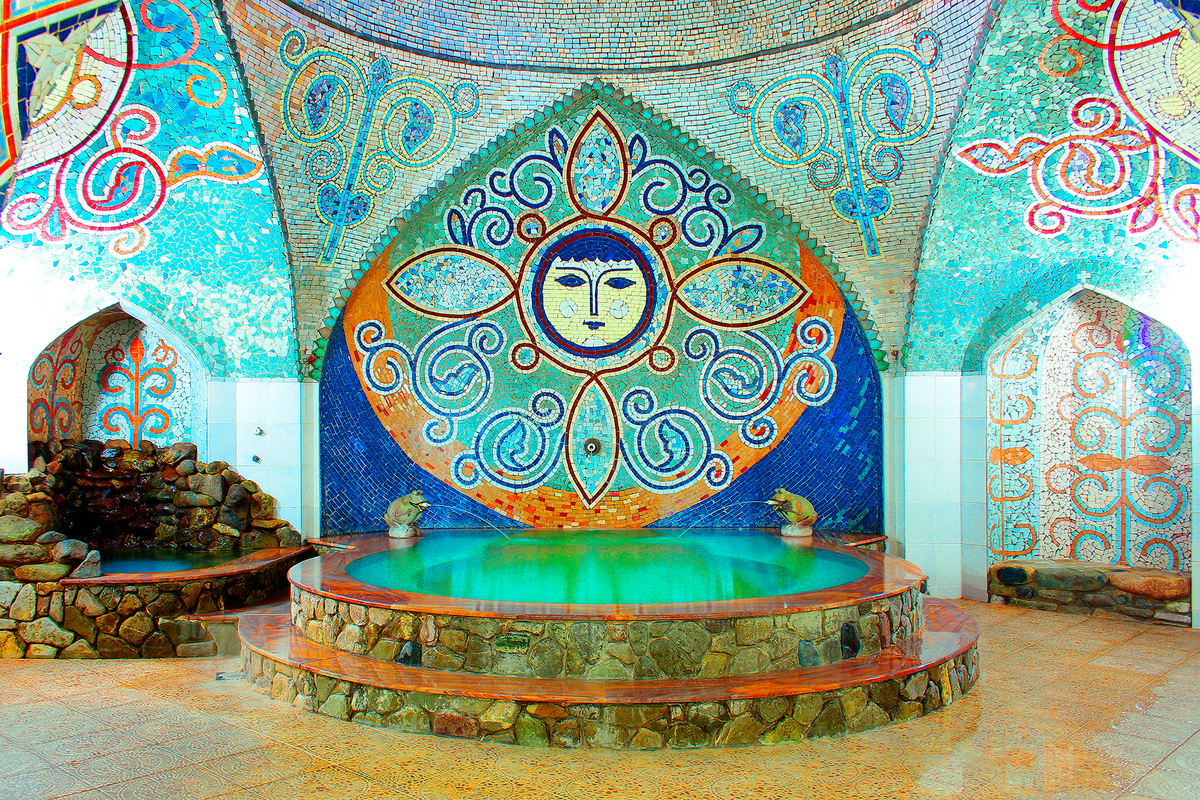
The baths' main attraction is the therapeutic sulfur steam, which is why tourists to Georgia flock to the complex. There are both public areas designed for large groups and VIP rooms. A family room with a thermal pool and steam room is available for rent. If desired, take advantage of the services of a professional bath attendant and massage therapist. Bath accessories, including sheets and towels, are not included in the price, so if you want to save money, bring your own.
Those sensitive to odors should be aware of the unique feature of these baths – the constant smell of sulfur.
Visiting the baths at the healing sulfur springs is recommended for the treatment of skin, neurological, and respiratory ailments.
Streets of Old Tbilisi
Kote Leselidze Street (modern name Kote Abkhazi), running from Vakhtang Gorgasali Square (Maidan) to Freedom Square, is one of the main tourist routes in the old city. It is Tbilisi's most attractive destination. Strolls until midnight, tours of architectural landmarks, fairs selling handicrafts and local gastronomic delights, and a multitude of restaurants and shops—all of this can be found on the main street of Old Tbilisi.
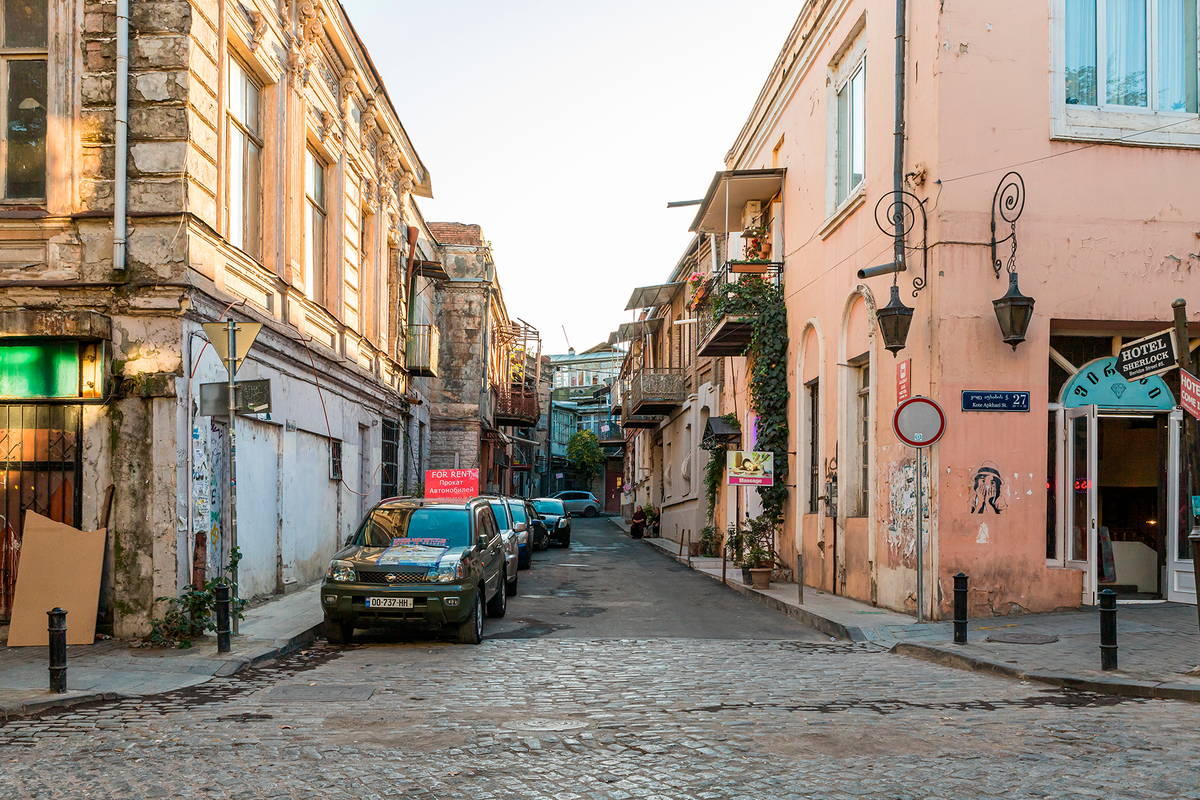
Turning off Maidan, you can stroll along Shardeni Street, named after the French traveler Jean Chardeni, who visited Tiflis in the 17th century and wrote a description of Georgia. In ancient times, the street was known as "Dark Street," home to artisan shops. Today, the pedestrian Shardeni Street is filled with various cafes, hookah bars, and restaurants with verandas and terraces, and its architecture is reminiscent of Paris. Live music and the enticing aromas of culinary delights entice weary tourists to relax after a busy day, while night bars and dance clubs await those seeking nightlife.
On Sioni Street is a large historic cathedral, one of the main Orthodox churches in Georgia. The cathedral was named after the biblical Mount Zion and was consecrated in honor of the Dormition of the Blessed Virgin Mary. The cathedral attracts tourists both as a monument of medieval architecture and because it houses an ancient Christian relic—the Cross of St. Nino. Tbilisi's oldest street, Botanicheskaya Street, is located between two architectural monuments: the Narikala Fortress and the Sulfur Baths. It's one of the most popular excursion routes through ancient Tbilisi. The street's main attraction is the botanical garden. Along this route, you can also climb the Narikala Fortress, explore the mosque, or take a turn toward the spiral staircase leading to the waterfall.
Narikala Fortress
The Narikala Fortress in Tbilisi is currently closed to visitors due to restoration work. City authorities are preserving this historical monument to restore its original appearance and ensure the safety of tourists. A precise completion date has not yet been announced, so it is recommended to check for up-to-date information before visiting.
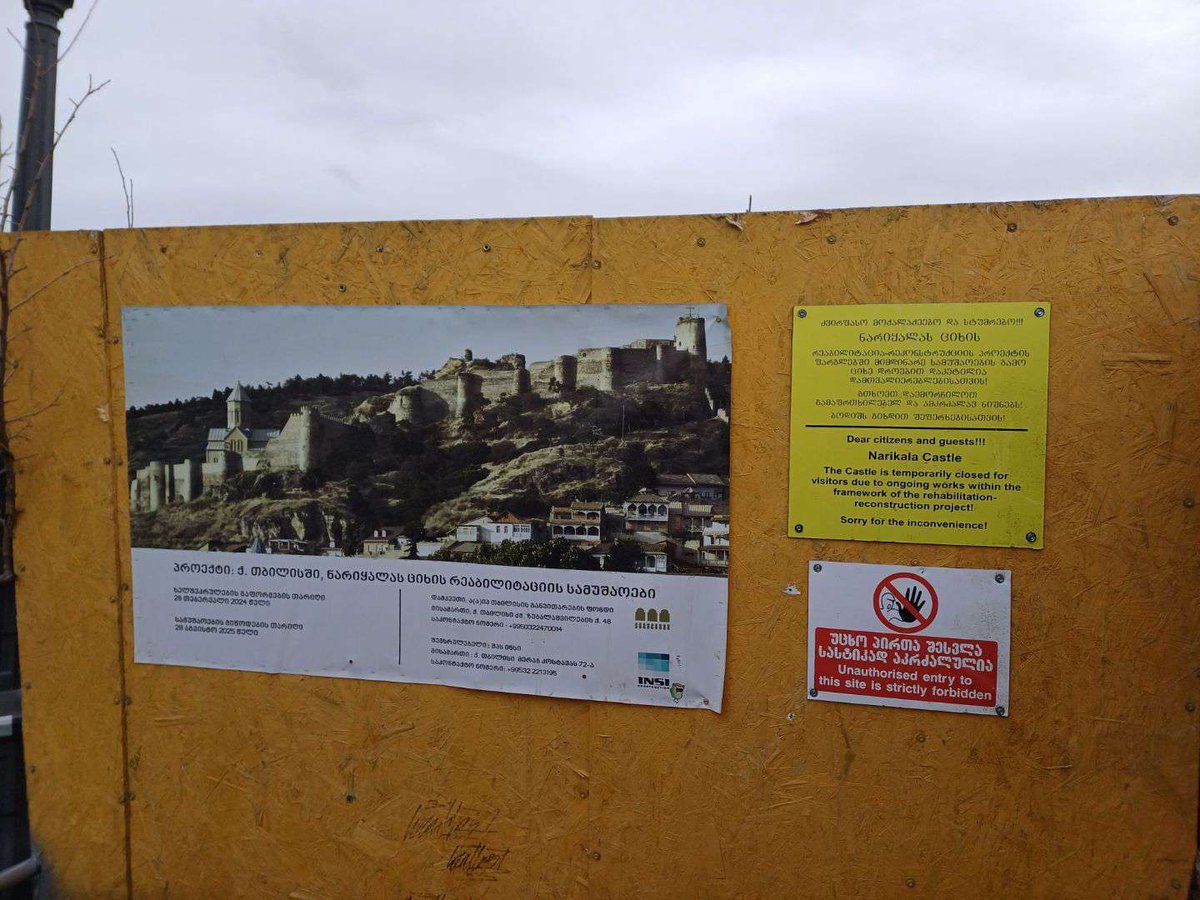
The Narikala Fortress, built high on a cliff in the Sololaki Range, is part of ancient Tbilisi. The city's fortified wall adjoins it. The exact date of the fortress's construction is unknown. Narikala is the first structure visited by tourists. Of the entire historical complex, the central part of the fort and the main gate, through which one can enter the Upper Fortress and the Lower Fortress, have survived to this day.
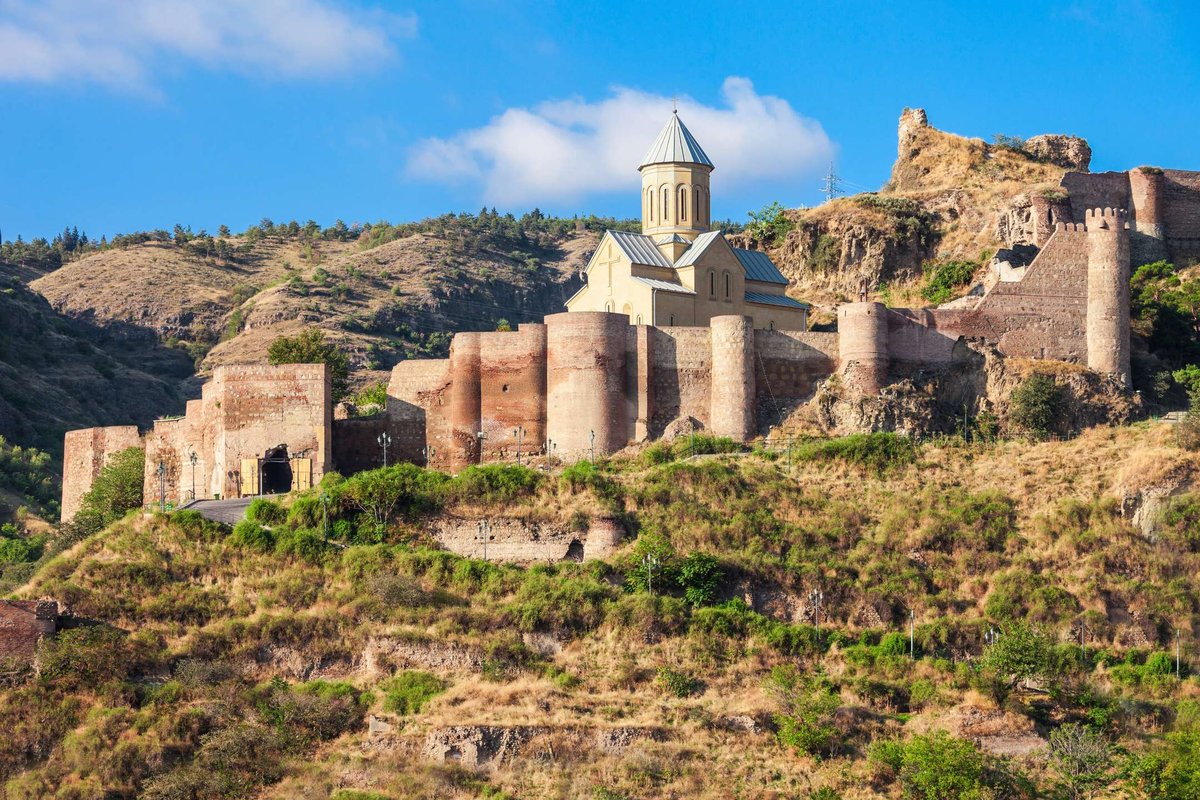
How to get to Narikala Fortress:
- Cable car. This is the most convenient way to the fortress: quick and comfortable, plus the opportunity to admire the sights from above.
- Walking up Orbiriu Street. This is a longer and more energy-consuming option, but the incomparable advantage is the opportunity to immerse yourself in the atmosphere of a medieval city.
The Medieval Churches of Metekhi and Anchiskhati
The Metekhi Orthodox Church, built in the 12th century on the cliff of the same name, is surrounded by the ancient buildings of the Metekhi Fortress, which served as the residence of Georgian kings. The fortress walls descend down the cliff to the Kura River. Due to its location, the church is visible from anywhere in the city. The complex boasts an observation deck offering magnificent views of Tbilisi's Old Town.
The Anchiskhati Church is the unofficial name of the Church of the Nativity of the Blessed Virgin Mary. The church received its second name due to the relic housed within its walls—the Anchiskhati Icon. This icon is currently housed in the Tbilisi Art Museum. The Anchiskhati Church is considered the oldest basilica in Tbilisi and the second oldest in Georgia: it was built in the 11th century.
Kaleidoscope Entrance
This ordinary residential building at 3 Betlemi Street attracts a stream of tourists with its unusual entrance. Once inside, you'll find yourself in a magical kaleidoscope of colors—all thanks to the stained-glass windows. Don't forget to take a photo! The building, built in the 19th century, has no historical significance. Free entry from 11 a.m. to 8 p.m., Tbilisi's Kaleidoscope Entrance is one of the most amazing places in the Old City.
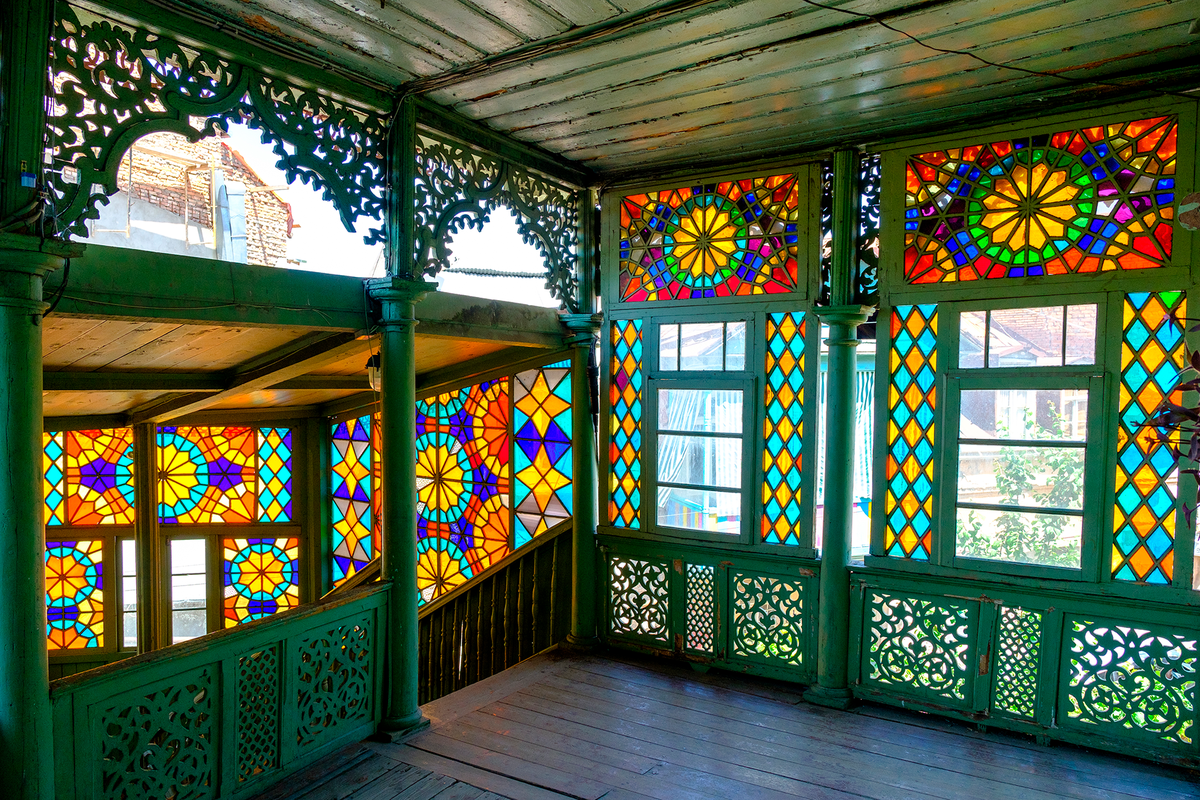
Sololaki
The Sololaki residential area is located in the central part of the city between Mount Mtatsminda and the Sololaki Ridge. This aristocratic neighborhood emerged at the turn of the 20th century and was once considered one of the wealthiest areas of Tbilisi. The neighborhood's residents were primarily wealthy Armenians, who competed with each other to build exquisite homes. The houses built here, in the Caucasian Art Nouveau style, are distinguished by their luxurious decor. We recommend strolling through the streets of the Sololaki neighborhood. The most famous buildings in the area are:
- Dzhibladze/Akhospireli Street, 3/7;
- Dadiani Street, 18;
- Galaktioni Street, 24.
Writers' House
The picturesque house of industrialist and philanthropist David Sarajishvili, located at 13 Ivan Machabeli Street, was built in the early 20th century by German architect Karl Zaar. The completion date is depicted on a bas-relief. The luxurious interiors of the house are combined with warmth and comfort. The house is still in use today, hosting concerts, exhibitions, creative evenings, and charity events.
How to get to the Old Town
The easiest way is to walk from Freedom Square. The journey takes no more than twenty minutes. However, don't underestimate the distance. The city's rugged terrain is strenuous, so when planning a tour, be sure to wear comfortable walking shoes.

37 comments
Log in to leave a comment
Жилые дома, хоть и придают городу колорит и уникальность, но одновременно напоминают о том, как людям приходится жить в таких условиях, что всегда удручает. Однако этот момент тут же сменяется восхищением перед старинными крепостями, в которых пропитана вся история этого великого города.