




Favnisi Church of St. George in Shida Kartli: History, Frescoes, Route
The Church of St. George of Favnisi is located literally in the heart of Georgia – in the Shida Kartli region, in the village of Garikula (Kaspi municipality).
Architecture
The church was built in the Middle Ages, the 9th and 10th centuries, during the heyday of Georgian architecture. Travelers interested in discovering new facets of this sunny country will certainly find something to see here.
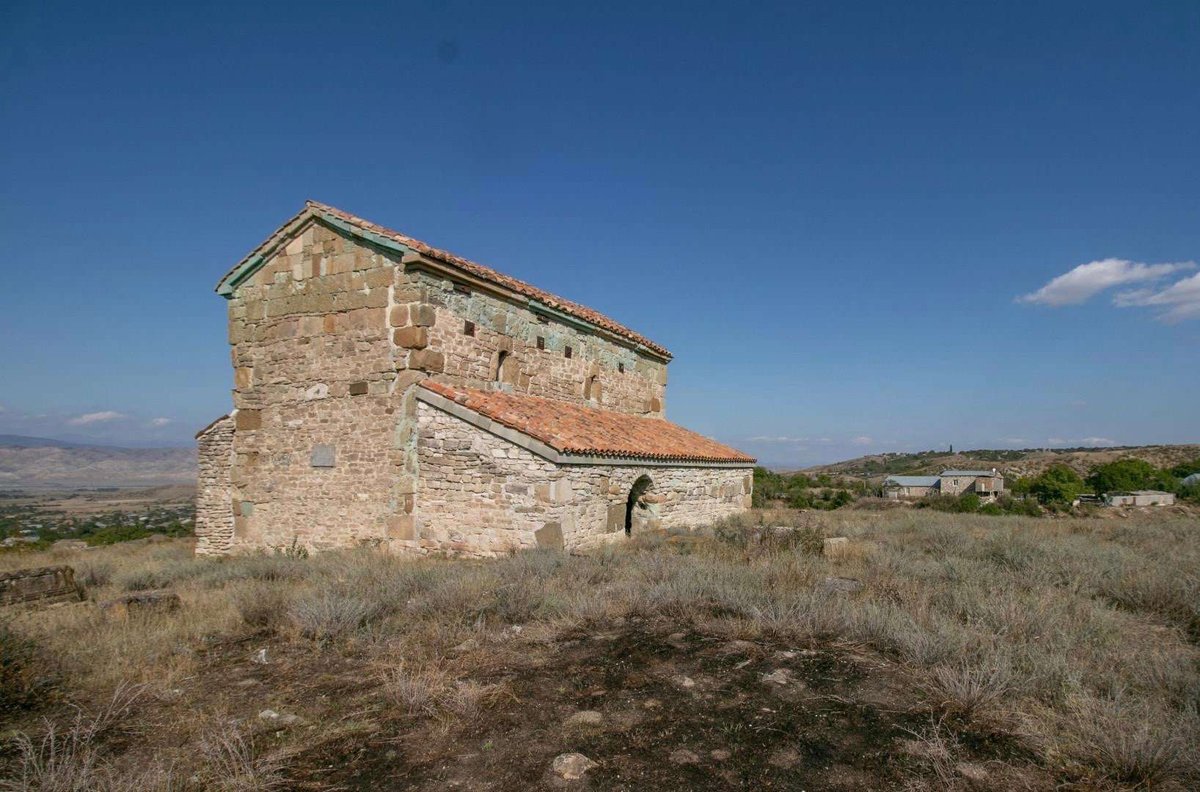
The church was constructed using materials abundant in the flat terrain of the Shida Kartli region – sandstone, polished stone, and tuff.
The rectangular building symbolizes salvation in the Orthodox faith, as if representing Noah's Ark. The structure is complemented by a semicircular apse on the east, arches with pilasters, and simple yet laconic pilasters.
On the west side, the church has been reconstructed and decorated in the style of the original building, using concrete as the material for the reconstruction. Inside the church, fragments of the altar and iconostasis with images of saints and martyrs remain, illuminated by a window carved into the stone wall of the apse. Light also comes from the north and south sides. A simple stone cornice overhangs the facades. The roof vault is decorated with tiled tiles, preventing water from accumulating. And on the eastern facade, decorative elements dating back a thousand years are visible: a relief tile depicting a serpent enclosed in a circle.
A miniature prayer room adjoins the Church of St. George of Favnisi to the south.
Paintings
Georgia's landmarks are distinguished not only as architectural monuments but also as living examples of medieval architecture, their walls often adorned with hand-made stucco, frescoes, and other forms of applied art. The Church of St. George is no exception.
Fragments of paintings have been preserved in the church's interior. The walls are covered with a layer of decoration, presumably applied in the 9th-10th centuries, but the state of preservation of this painting leaves much to be desired. Remnants of paintings are found on the vaulted walls, as well as the northern and southern walls. On the northern wall, it is difficult to discern the meaning of the image, as most of the painting has crumbled, leaving only a few patches of color. On the southern wall, a figure of a man with a crown can be discerned.
The second layer of paintings is better preserved and dates to the second half of the 13th century. Here, religious themes are clearly visible, such as depictions of holy feasts, prayers, and scenes from the life of St. George. Paintings also cover the prayer house. An ornamental line runs along the bottom of the walls and semicircular apses, as if framing the church's elements.
Visiting the Church of St. George of Favnisi will make you feel like a pioneer, exploring not only Georgia's most beautiful places but also immersing yourself in its culture and unique atmosphere.
Photo source: georgiantravelguide.com

27 comments
Log in to leave a comment
ბუნება და სიჩუმე ისე მირეკავდა, თითქოს მეკითხებოდა, რატომ არ მივდივარ და არ ვხედავ იმ სილამაზეს. მარის მარშრუტი კი სულ უფრო საინტერესოა. ხშირად ვფიქრობ, რას უნდა ველოდოთ იქ? რა ამბები გვეწვევა? თუ ვინმე უკვე იყო, როგორია იქაურობა გაზაფხულზე?