




🐺 Vakhtang I Gorgasali: Warrior King and Founder of Tbilisi
Vakhtang I Gorgasali was a king of Iberia (also known as Kartli) who ruled in the second half of the 5th century: he drew the lands of Kartli together under one hand, set out to move the capital to Tbilisi, and was later canonised as a saint by the Georgian Church. His nickname, Gorgasali, was given to him by the Persians, and it means “wolf’s head”. Almost everything we know about him rests on a single chronicle, written more than five hundred years after his death, so the real king and the legendary hero are fused together in this biography.
✅ In Short
- King of Iberia (also called Kartli) in the second half of the 5th century, of the Chosroid dynasty.
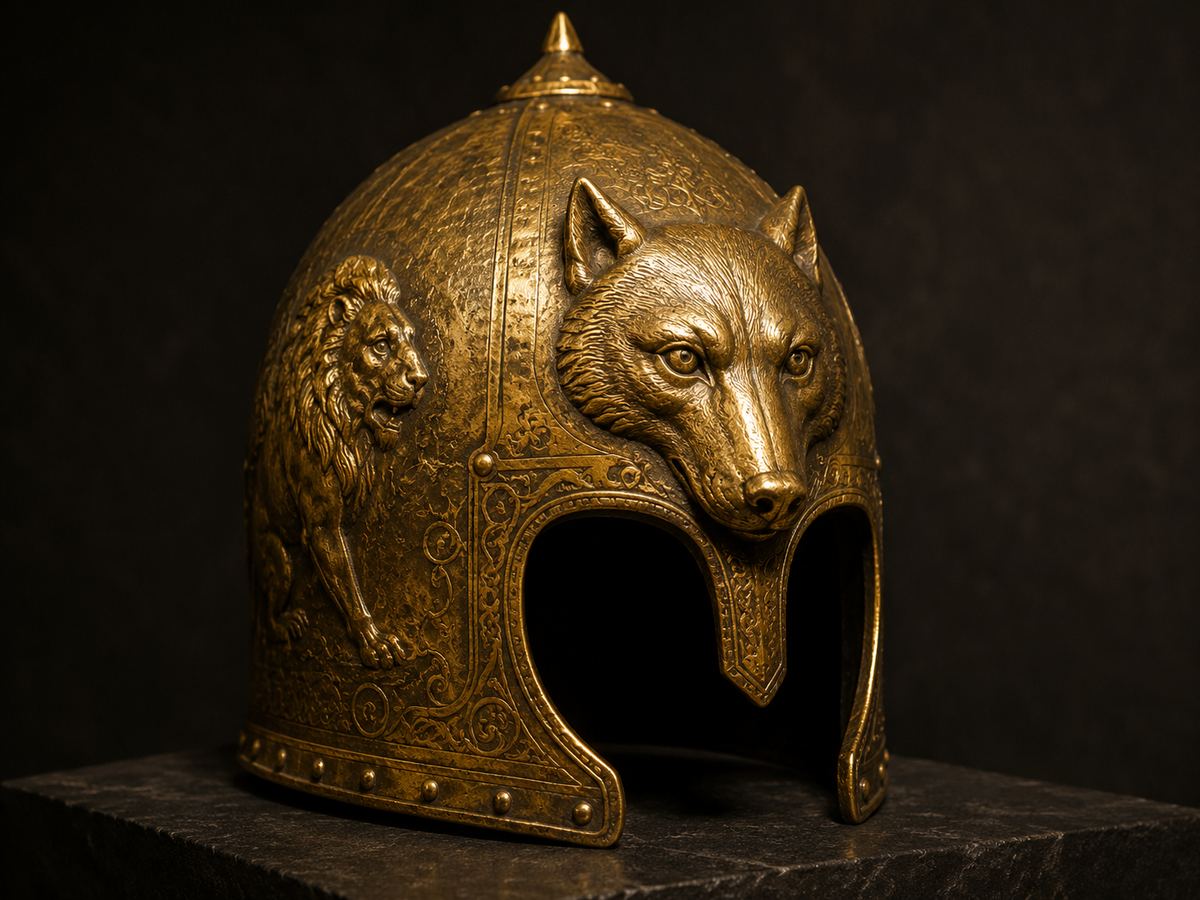
- The nickname “Gorgasali” was given by the Persians: wolf’s head, after a helmet bearing a wolf.
- Moving the capital from Mtskheta to Tbilisi was Vakhtang’s plan; his son Dachi completed it.
- Buried in Svetitskhoveli Cathedral in Mtskheta. Canonised; feast day 30 November.
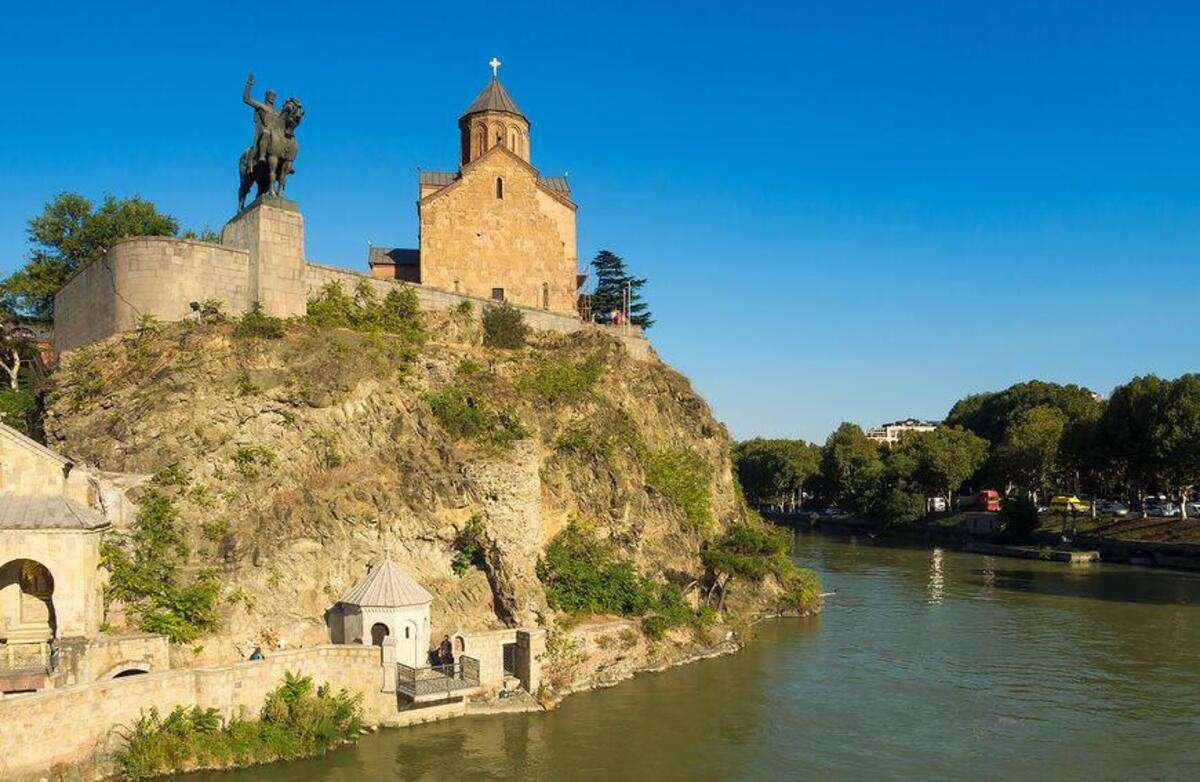
- His equestrian statue stands on the Metekhi cliff in Tbilisi and appears on the 20 lari banknote.
❓ Who Was Vakhtang Gorgasali, in Plain Words
The short version: he was the last strong king of Iberia before the country fell under Persian control for a long time. Vakhtang came to the throne as a child of seven, and for the first years his mother ruled in his place. Later he fought the Alans in the north and the Persians in the south, bargained with Byzantium, and spent his whole life trying to pull Kartli out from under the Sasanians. The kingdom outlived him by less than a century: in the second half of the 6th century the Persians abolished royal power in Kartli and installed their own governors.
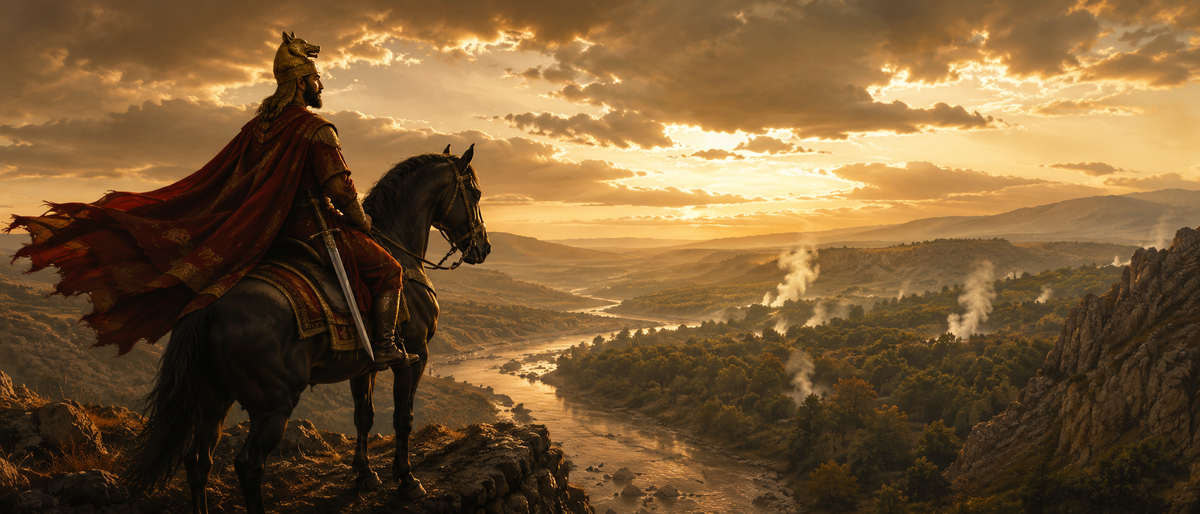
This is why he sits where he does in Georgian memory. Vakhtang is a threshold. In his time Kartli was still a kingdom with its own army, its own church, and its own choice of capital. After him came the long age of foreign governors.
| Detail | Value |
|---|---|
| Name | Vakhtang I Gorgasali (Georgian: ვახტანე I გორგასალი) |
| Lifespan | c. 440–502 |
| Reign | second half of the 5th century (traditional dating 447–502) |
| Dynasty | Chosroid |
| Title | King of Iberia, also known as Kartli |
| Father | Mirdat V (called Mihrdat or Mithridates in some sources) |
| Mother | Sagdukht, who ruled as regent for her young son |
| Heir | his son Dachi, who completed the move of the capital to Tbilisi |
| Canonisation | holy and pious king, Georgian Orthodox Church |
| Burial | Svetitskhoveli Cathedral, Mtskheta |
| ⚠️ On the dates | All of Vakhtang’s dates are approximate. The only source was written more than five hundred years after his death, and the chronology of his reign is disputed among historians. |
🐺 Why “Gorgasali”: The Wolf’s Head on the Helmet
The king’s nickname is Persian, and his enemies coined it. Gorgasar in Persian means wolf’s head. The chronicle explains it like this: Vakhtang had a golden helmet made, with a wolf on the front and a lion on the back. When the Persians saw that helmet in battle, they would shout to one another: beware the wolf’s head. The name stuck, the Georgians took it up, and for a millennium and a half the king has been known by it.
Now for the source, because we cannot go further without it. Everything we know about Vakhtang comes from one text: The Life of Vakhtang Gorgasali, written by Juansher Juansheriani in the 11th century and included in the chronicle compilation Kartlis Tskhovreba. More than five hundred years separate the king’s death from the writing of his biography. Juansher most likely drew on some earlier chronicles, but there is almost nothing to check him against: independent sources of that scale simply do not exist. So from here on I keep legend and history apart out loud: where the chronicle speaks, it is marked as such.
And one line so as not to confuse people who share a name. Vakhtang I Gorgasali (5th century) is not Vakhtang VI the Lawgiver (18th century, a scholar-king who compiled a code of laws), and not Vakhtang Chabukiani (a 20th-century dancer, founder of the Georgian ballet school). Three different men, three different eras.
💡 Interesting Fact: The Warrior of the Chronicle
In The Life of Vakhtang Gorgasali the king is drawn as a true warrior-hero. At the age of ten he loses his sister: the Alans carry her off into captivity. At sixteen he raises an army, marches north, and brings the captives home. Juansher then describes the king’s single combats with “goliaths”, naming one opponent the giant Bakatar.
Popular tradition later moved this duel to the very edge of Tbilisi, onto the Metekhi cliff. All of this is worth reading as a chronicle’s portrait of the ideal king, not as a battlefield report.
⚔️ The Warrior King: Between Persia and Byzantium
To understand Vakhtang, you have to understand where he stood. Fifth-century Iberia was wedged between two giants: Sasanian Persia to the east and Byzantium to the west. On paper Kartli was a vassal of the Persians, and that vassalage ran deep. In Mtskheta itself lived fire-worshippers with their own chief priest, and his place at the royal court was an honoured one: Mazdaism, the religion of pre-Islamic Iran, held legal standing in Kartli. Persian influence reached all the way into matters of faith.
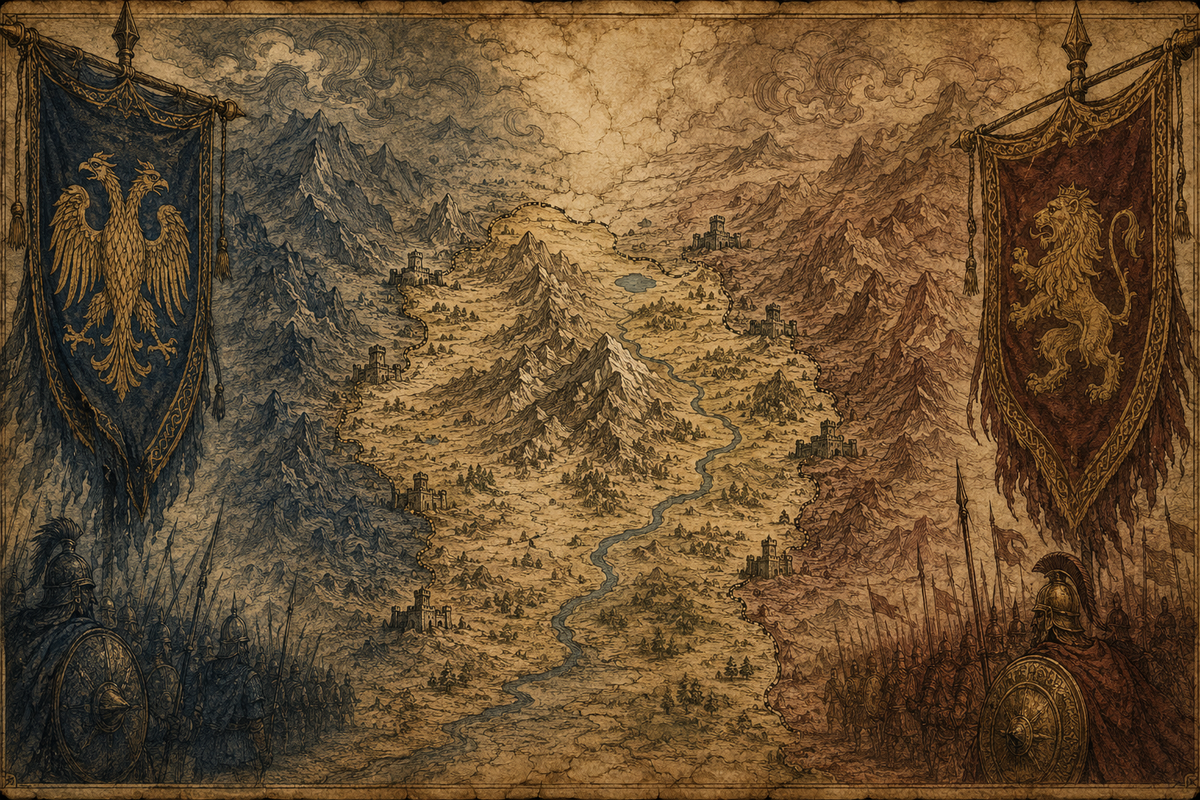
Vakhtang spent his life trying to shift that balance. While still young he marched north against the Alans and secured the Darial Gorge, the main gateway from the North Caucasus. He recovered Klarjeti, which the Byzantines held. He annexed Hereti. He extended his influence over Egrisi in western Georgia. He built and rebuilt fortresses: Darial, Ujarma, Cheremi, Khornabuji, Artanuji. Separate towers grew into a single system of defence.
Then he took a bigger risk. In the 470s Vakhtang refused to march for the Persians against Byzantium, threw the chief fire-priest into prison, and drove the fire-worshippers out of Kartli. Iran sent a punitive army. The talks ended with the king once again acknowledging himself a vassal, but fire-worship never regained its former standing in Kartli. In the 480s Vakhtang led a large anti-Persian uprising together with the Armenians. The uprising was crushed, yet the Sasanians were forced to ease their grip.
The chronicle tells two stories about his marriages, and both should be read as tradition. His first wife is named as Balendukht, daughter of the Persian king. The second, after his turn towards Byzantium, is named as Helena, daughter of the emperor in Constantinople, said to have been sent to Mtskheta with an embassy. Neither line is confirmed by independent sources.
🏙️ The Founding of Tbilisi: The Legend and What Really Happened
Everyone who has ever been to Tbilisi knows the legend. The king was hunting in the wooded gorge of the Kura, his falcon struck a pheasant, and both birds fell into a spring. When the hunters came up, the water turned out to be hot. From here the versions part ways: in some the pheasant is boiled, in others the wounded bird is healed by the hot water. Vakhtang saw that the place was special and ordered the forest cleared and a city raised. Hence the name: tbili in Georgian means warm.
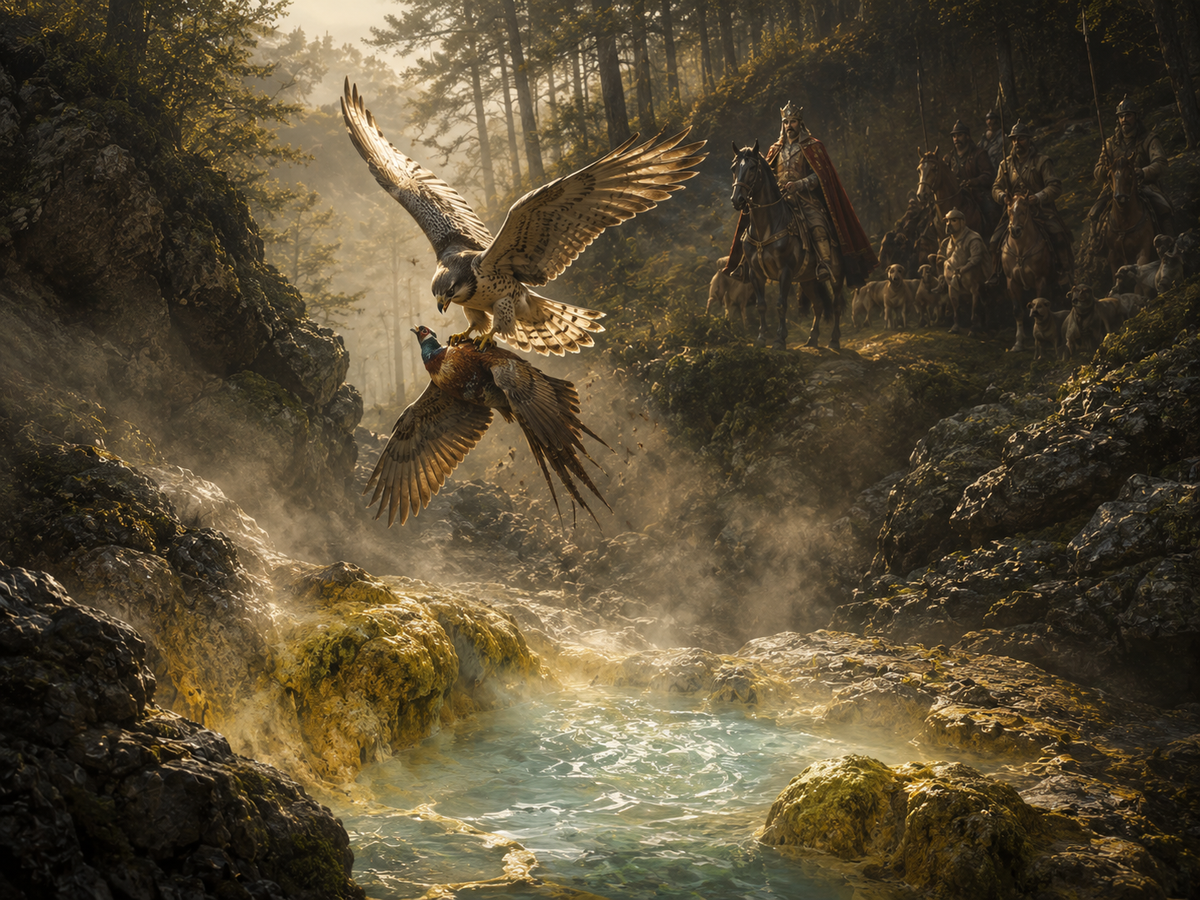
We have already covered the full legend, all its variants and a proper look at it, in a separate article: The Legend of the Founding of Tbilisi. Here it belongs only as part of the biography, so we move on to the history.
And the history is at once duller and more interesting. People had lived on these slopes long before the 5th century, and no one “discovered” the sulphur springs: they were in use earlier too. Vakhtang’s achievement lies elsewhere, in a decision. Mtskheta stood on open ground and was exposed, while the point lower down the Kura, in a tight gorge, was easier to hold and controlled the roads better. The king began building here and left the move of the capital to his successor. His son Dachi saw it through. So “founder of Tbilisi” is a title by tradition, but the tradition does not stand on nothing: without Vakhtang’s decision the capital might have stayed in Mtskheta.
| What the legend says | What historians say |
|---|---|
| The king was hunting, a falcon struck a pheasant, and both birds fell into a hot spring | The sulphur springs here were in use long before the 5th century |
| Vakhtang founded the city on an empty site, in the middle of wild forest | A settlement on the slopes above the Kura existed before Vakhtang too |
| The city was named Tbilisi because of the warm water | No dispute here: tbili in Georgian means warm |
| Vakhtang moved the capital from Mtskheta to Tbilisi | He made the decision and began the building; his son Dachi completed the move |
| The date the city was founded is known precisely | There is no exact date: the chronicle gives none, and historians still disagree |
Those same sulphur springs are still here: above them stands the Abanotubani quarter with the brick domes of its bathhouses, and it remains the liveliest corner of the old city.
The baton then passes to other rulers. Six centuries later David IV the Builder would take Tbilisi back from the Arab emirate and make it the capital of a united Georgia, and under Queen Tamar the country would reach its golden age. But the first choice was Vakhtang’s.
⛪ Vakhtang and the Church: A Catholicos and New Cathedrals
Under Vakhtang the head of the Kartli church received the rank of Catholicos for the first time. According to the chronicle it went like this: the king asked Constantinople to send a Catholicos to Mtskheta, and from there came a priest named Peter with twelve bishops. The former archbishop of Kartli, Michael, stood against it, called the king an apostate, and cursed him along with his army. Vakhtang came to make peace and knelt before him, and the archbishop, if Juansher is to be believed, kicked the king and knocked out a tooth. It ended with Michael being sent off to Constantinople.
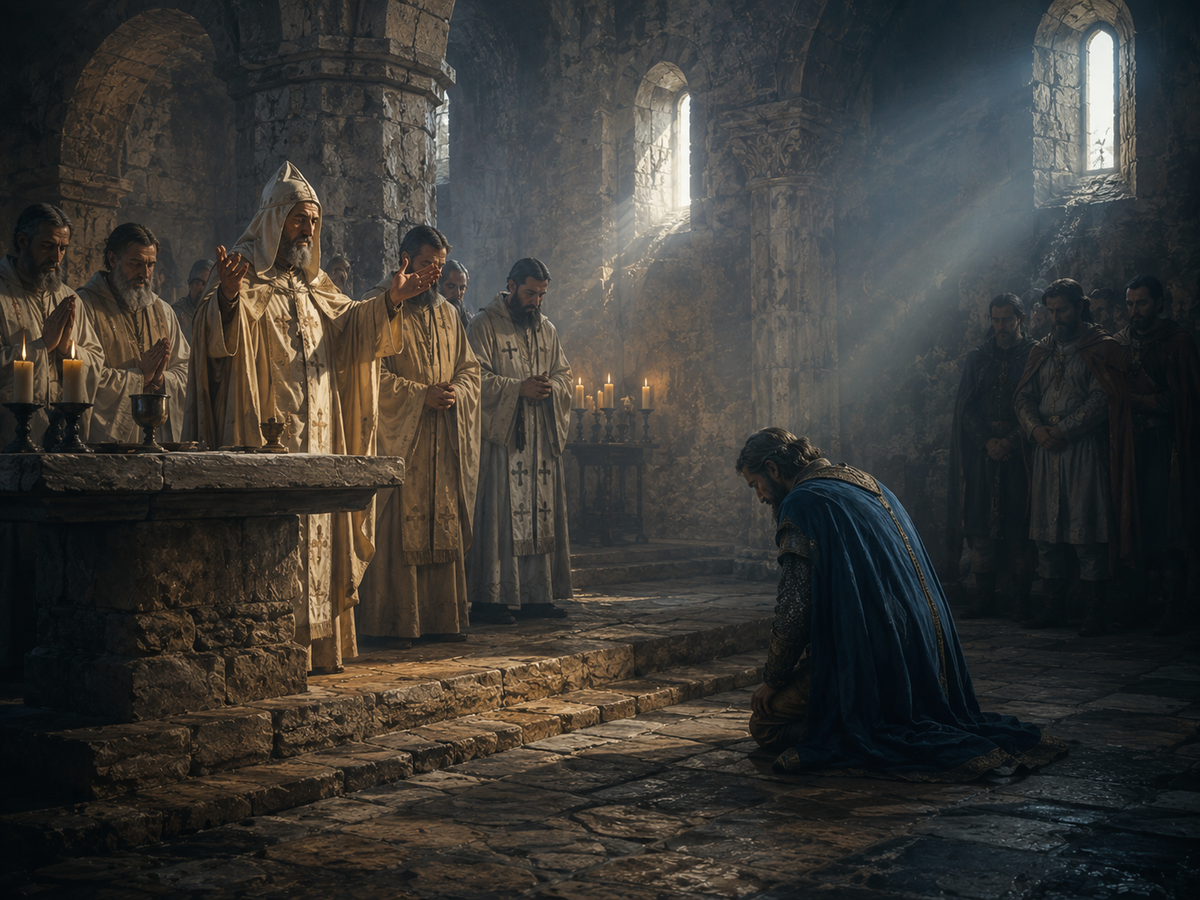
Calling this the granting of autocephaly would be inaccurate. The independence of the Georgian church took shape over centuries, and under Vakhtang an important step was taken in that direction, though not the last one. What did change for certain: the number of dioceses grew noticeably (sources speak of roughly two dozen by the end of the 5th century), and the church structure of Kartli no longer rested on the will of a single archbishop.
Vakhtang built a great deal too. His name is linked with the churches of Nikozi and Ninotsminda, the fortress-town of Cheremi, and the rebuilding of the church in Mtskheta on the site of today’s Svetitskhoveli. Tradition names the Metekhi cliff in Tbilisi as the site of his palace: the Metekhi Cathedral that stands there today was built much later, but the link between the king and this place holds firm in popular memory.
🕯️ The King’s Death and His Grave in Svetitskhoveli
Vakhtang died as he had lived, at war with the Persians. By the traditional dating this was the year 502, in a battle fought on the banks of the Iori. The chronicle says an arrow found a spot left unguarded by his armour, and the wound proved fatal. There is nothing to verify this detail with, so we give it as tradition.
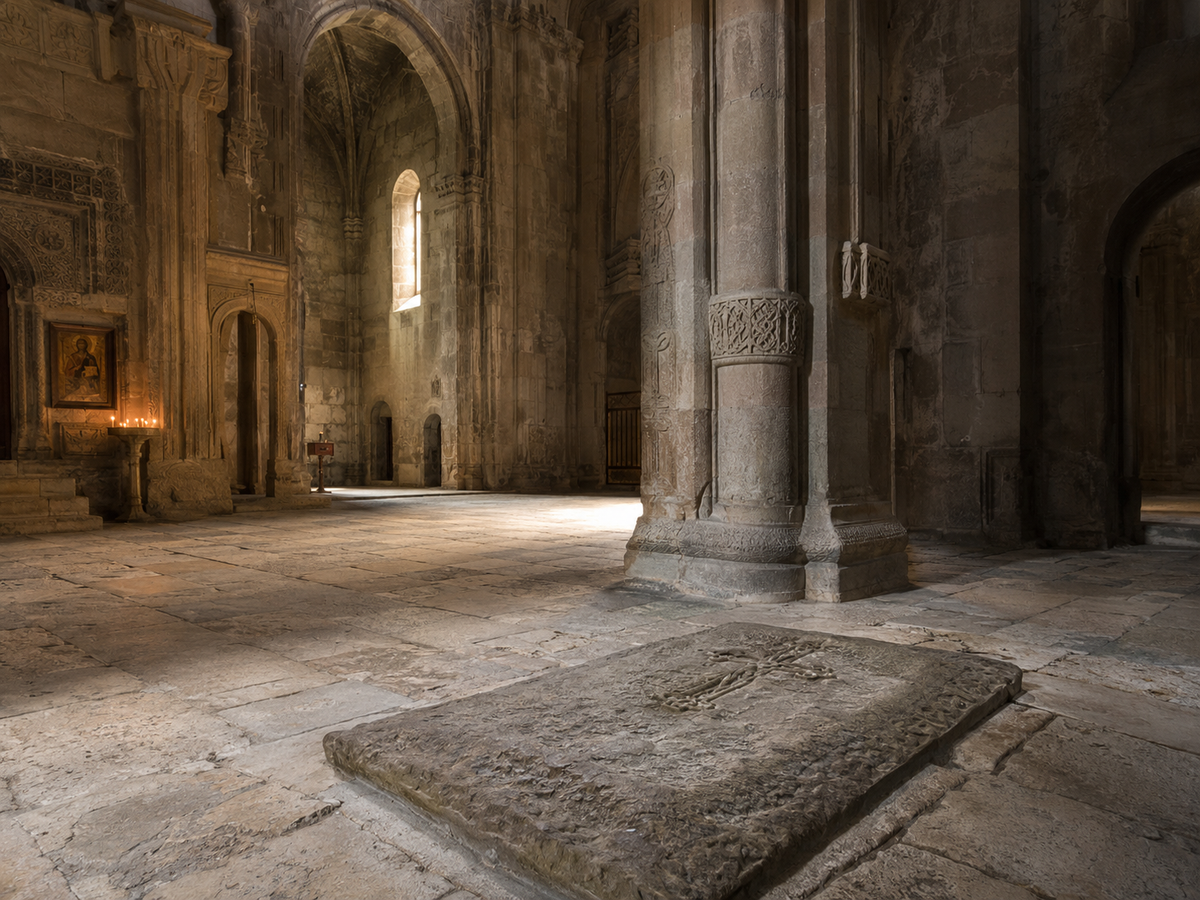
The king was buried in Svetitskhoveli Cathedral in Mtskheta, in the very church he himself had rebuilt. The grave is shown inside the cathedral, and pilgrims still come to it. The slab a visitor sees today appeared later than the burial itself.
🕯️ Vakhtang’s Testament (a retelling of the chronicle)
The wounded king called his family, the royal court and the clergy to him. He asked one thing of them: to stand firm in the faith and not to fear death for Christ, for such a death is repaid with eternal glory.
This is a retelling, not a quotation: the text was written more than five centuries after the events and has come down to us in translation.
🙏 The Saint King: Canonisation and Feast Day
The Georgian Orthodox Church canonised Vakhtang as a holy and pious king. His feast day is 30 November.
He is venerated for two things at once. He defended his country against the Persians and died in battle with them, and the chronicle calls him outright a martyr for the faith of Christ. From this grew the image that endures to this day: a king with a sword and a cross, fallen for his land and his faith.
His memory is fixed in stone as well. A chapel bearing his name is attached to Tbilisi Sioni, a cathedral in Rustavi is dedicated to him, and in Batumi there stands the Church of Vakhtang Gorgasali.
🗺️ Remembering Vakhtang Gorgasali: The Statue, the Square, the Churches
Vakhtang’s name is scattered all across Georgia: streets, squares, churches, a state award. Here are the places where his memory turns up most often.
| Place | Where | What it is |
|---|---|---|
| Equestrian statue of Vakhtang Gorgasali | Tbilisi, Metekhi cliff | Unveiled in 1967, sculptor Elguja Amashukeli. This view appears on the back of the 20 lari banknote |
| Metekhi Cathedral | Tbilisi, above the Kura | The church beside the statue. By tradition Vakhtang’s palace stood on this cliff |
| Gorgasali Square (Meidan) | Tbilisi, Old Town | A historic square at the entrance to the sulphur-bath quarter, named after the king |
| Streets named Vakhtang Gorgasali | Tbilisi, Batumi, Gori | The king’s name on the map of several Georgian cities |
| Church of Vakhtang Gorgasali | Batumi | A church consecrated in the king’s name, one of the most visited in the city |
| The king’s grave in Svetitskhoveli | Mtskheta | A gravestone inside the cathedral, a place of pilgrimage |
| Order of Vakhtang Gorgasali | Georgia | One of the country’s highest state awards |
❓ FAQ: Common Questions About Vakhtang Gorgasali
💬 By the chronicle tradition he lived roughly from 440 to 502 and ruled Kartli in the second half of the 5th century. The exact dates are disputed: the only source was written five hundred years after his death.
💬 Wolf’s head. The word is Persian, from gorgasar. According to the chronicle, the king had a helmet with a wolf on it, and in battle the Persians shouted to one another: beware the wolf’s head.
💬 By tradition, yes, but with a caveat. People lived here before him, and the sulphur springs were in use long before the 5th century. What belongs to Vakhtang is the decision to move the capital here, and it was his son Dachi who completed the move.
💬 In Svetitskhoveli Cathedral in Mtskheta. The gravestone is shown inside the church.
💬 On the Metekhi cliff above the Kura, next to Metekhi church. The equestrian statue was unveiled in 1967; the sculptor was Elguja Amashukeli. This same view appears on the back of the 20 lari banknote.
💬 He died of a wound taken in battle with the Persians, and the chronicle calls him a martyr for the faith of Christ. The Georgian Church venerates him as a holy and pious king, with a feast day on 30 November.
📌 The Key Points
Vakhtang Gorgasali lived his life between two empires and spent all of it trying to break free. He fought the Persians, negotiated with Byzantium, rebuilt fortresses, reshaped the church structure of Kartli, and decided to bring the capital down the Kura. He died from an arrow, was laid to rest in Svetitskhoveli, and was canonised. Strictly speaking he did not build Tbilisi from nothing, but it was his choice that made this city the capital. And almost everything we know about him comes from a single chronicle: keep that in mind whenever you read any lovely detail.
💗 Read Next
- The Legend of the Founding of Tbilisi: the falcon, the pheasant and the hot spring, all the versions in one article.
- Abanotubani: the very sulphur baths where the capital began.
- Metekhi Cathedral: the church on the cliff beside the king’s equestrian statue.
- Svetitskhoveli Cathedral: Vakhtang’s burial place and the main church of Mtskheta.
- David IV the Builder: the king who won Tbilisi back for Georgia six centuries after Vakhtang.
- Queen Tamar: the summit of the statehood whose foundations Vakhtang laid.
🗣️ Now Over to You
Tell us in the comments:
- Do you believe the legend of the pheasant and the hot spring, or do you take it for a later invention?
- Have you been to the equestrian statue on the Metekhi cliff? From which spot does it look best?
- Which Vakhtang is closer to you: the warrior who fought the Persians, or the man who chose the site of the capital?
- Which Georgian ruler should we cover next?
Write in, we read everything.

1 comment
Log in to leave a comment