




Old Tbilisi: Architecture, Courtyards and Sololaki
Georgian architecture is unique. Many houses built in the 19th century still stand. You just have to find them.
The thing is, street names and house numbers have changed many times. Two adjacent houses can have the same number.
Choosing the "right" house is like solving a puzzle or a riddle. It's very exciting!
Where is this house? It's a mystery...
There are many interesting houses on Geronti Kikodze Street in the Sololaki district. Background information: the design for one of them was prepared by the popular Tbilisi architect Alexander Ozerov. The house appears to be number 3.
Once we get there, it turns out there are two houses next to each other—numbers 1 and 3. They are beautiful and very similar. Both have identical mascarons, or decorations in the shape of human heads. The rest of the façade decoration is also identical.
According to a 19th-century directory, the Gupaspov brothers' families lived at number 1 on Paskevich Street (the old name). In other words, there were two houses, but they shared the same number.
However, in modern times, they have been assigned different numbers. This has led to a slight confusion and a discrepancy with the historical address. This information has been confirmed by local residents.
Georgian architecture, Tbilisi courtyards, stairway to heaven
The next house turned out to be "Ozerov's." Residential building number 6 was also built according to Alexander Grigorievich's design. Incidentally, Ozerov served as the city architect of Tiflis from 1079 to 1885, and he designed many buildings in the city.
All of them are noteworthy for their original design, just like the house we're talking about. The stucco on the façade, the columns, the balconies with interesting railings... While the façade of the house currently requires renovation, the interior isn't all that bad.
A local resident says he knew the son of the house's owner, a hereditary physician named Makarov. After the advent of Soviet power, the house was nationalized, and the former owners were given one small room.
Unfortunately, the murals in the house have not survived. Only the fireplaces in two apartments remain. To view them, you need the owners' permission.
People of different nationalities used to live harmoniously, almost like one family. Together in times of sorrow and in joy. The traditional layout of Tbilisi buildings—long balconies shared by several apartments, open verandas—also contributed to this.
A spiral staircase runs through the courtyard. It leads to the upper floors directly from the street, bypassing the main entrance. Similar staircases can be found in many Tbilisi courtyards.
A Tbilisi courtyard is something unusual. They are often called "Italian courtyards" because they are noisy, constantly buzzing with activity, and full of life.
One of the long-time residents, Nadir, recounts his childhood spent in these courtyards.
An intelligent family, Vakhtang and Nelli, lived in the ground-floor apartment. The head of the family was the chairman of the city's Society of the Blind. They often invited children living in the courtyard to their home and set up a "sweets table" for them—candy, fruit, and other delicacies.
They never quarreled when young soccer players set up goalposts near their apartment and kicked a ball against the wall. In recent years, the appearance of courtyards has changed, with verandas being glassed in. People have become isolated, isolated from one another. This is also fueled by recent challenges, with quarantine and social distancing recommended.
Every era leaves its mark on the lives of ordinary people. And there are practically no old neighbors left; everyone is new…

Sketches from a Past Life: The Fate of One Unusual Tbilisi Resident
Nadir talks about his life. His story is similar in some ways, and unusual in others.
He is a former military officer. After the collapse of the USSR and demobilization, he worked in all sorts of jobs. He jokingly calls his work record a city guide. After all, a person always looks for the best.
Nadir is an Azerbaijani. Sometimes he would go to "his own people" in the hopes of being offered a better job. But it turned out that the one offering him a job was a Georgian.
He openly shares his personal life. He lives alone and says he's not suited for family life. It didn't work out for him, though, as he has two sons—his biological son and his adopted son.
His biological son lives with his mother in Belarus. He used to visit, but that was a long time ago. His father suggested he move to Tbilisi and bring his mother with him. Then the war in Abkhazia happened. Nadir fought, was wounded, and lost contact with his son. His second wife, a Georgian, had a son, and Nadir raised him from the age of 6 to 15. He treated him like his own. The boy viewed him as a father figure and tried to be like him. He even considered taking Nadir's Azerbaijani surname, but Nadir advised him to keep his native Georgian name.
One day, Nadir's wife bought him some fabric to make trousers. The son saw the material and was upset. It turned out he also wanted trousers made of the same fabric, so he could resemble his father. Nadir gave him some money and sent the boy to the store, persuading his wife not to scold him. So they wore identical trousers from then on—the grown man and the thirteen-year-old boy.
Although the family broke up, the connection with his adopted son remained. He often visited his father. A young man used to drive along the street where Nadir lived on his way to work. If he saw Nadir on the street, he would stop for at least a few minutes to check on his health.
Such is the friendship of nations in old Tbilisi. However, even now, representatives of different nationalities live peacefully here. The main thing is that the person is good...
These days, life is not easy for a lonely elderly man. His sister helps him, cooks. And he remembers his childhood as the best years of his life...

40 comments
Log in to leave a comment
Автор великолепно показывает, что Tbilisi — это не просто столица, а настоящий музей под открытым небом, где можно увидеть старинные крепостные стены, колоритные балконы XIX века и авангардные архитектурные решения XXI века, которые органично соседствуют друг с другом.
Мне особенно запомнилась прогулка по району Абанотубани, где традиционные серные бани стоят рядом с модернистскими постройками, а каждая дверь и балкон как отдельная история. Советы местных в рейтинге помогли мне заметить детали, которые обычно остаются незамеченными: сложные узоры на кованых решётках, оригинальные арки и сочетания камня с деревом.
Отзывы других путешественников тоже вдохновляют: многие называют Тбилиси городом открытий именно благодаря его архитектуре — от древних церквей до смелых современных форм.
Спасибо автору за такой живой и вдохновляющий обзор!
А какое здание в Тбилиси вас впечатлило больше всего — старинная крепость на холме, уютный старый дом с резными балконами или что‑то современное? 🏙️✨
А то, что в Грузии путаница с нумерацией домов, так в этом тоже есть своя прелесть, этакий бунтарский дух и тяга к импровизации.) Заблудиться в Грузии все равно не получится, слишком здесь приветливые люди - они помогут найти дорогу.
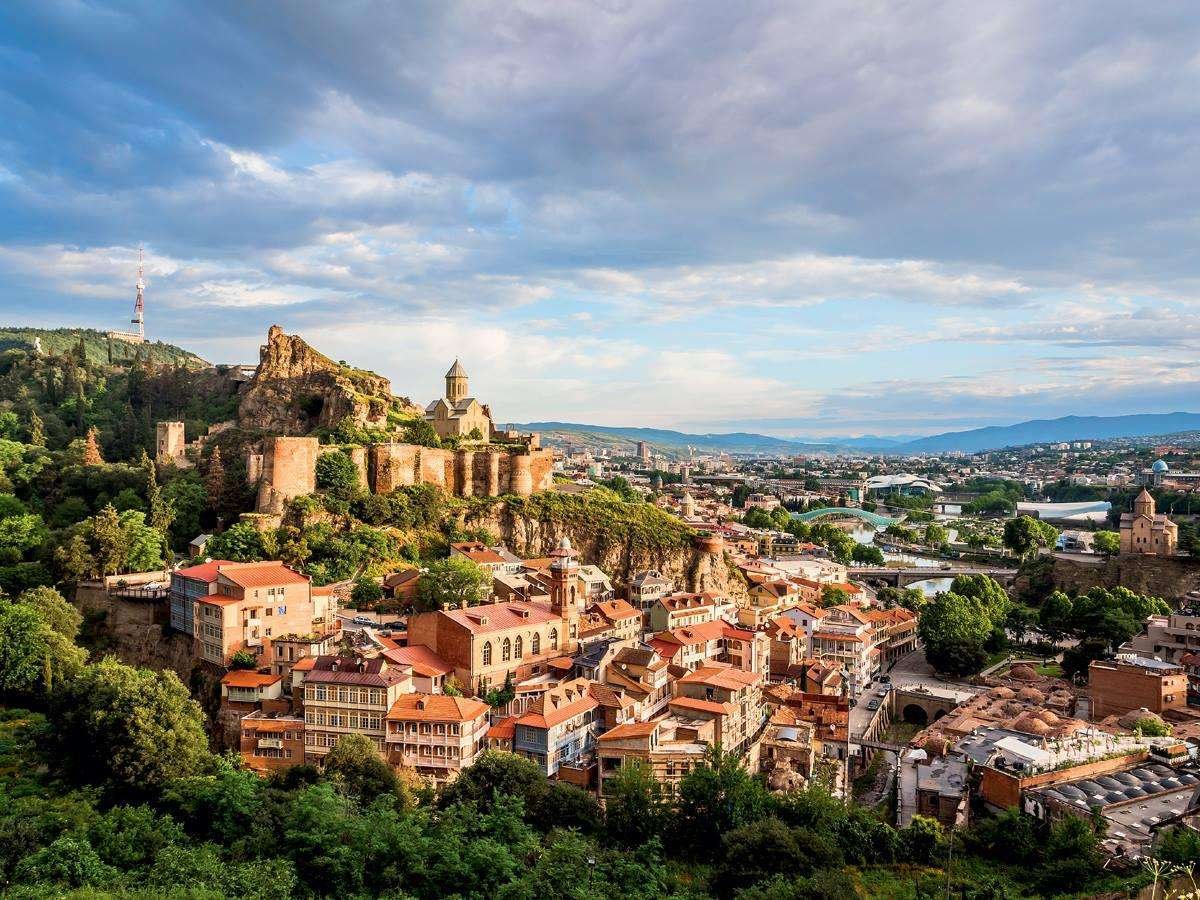
Tbilisi's architectural tapestry reveals its multifaceted character. The blend of medieval structures, Soviet-era buildings, and contemporary designs creates a visual symphony that tells the story of a city in constant flux. From the iconic Narikala Fortress perched atop a hill to the graceful facades of the old town, each edifice exudes a unique personality that mirrors the spirit of its inhabitants.
And speaking of the residents, the people of Tbilisi are truly a treasure trove of diversity. Their warm hospitality and genuine curiosity welcome you into their world, eager to share their traditions, stories, and, of course, their delicious cuisine. The flavors of khinkali, khachapuri, and other traditional dishes tantalize your taste buds and invite you to immerse yourself in the local culture.
Yet, beneath the surface of this enchanting city, lies an air of mystique. Tbilisi's narrow alleyways hide secrets waiting to be unraveled. The hidden courtyards, vibrant street art, and tucked-away cafes hold untold tales and whispers of a bygone era. Exploring the winding streets, you might stumble upon a hidden gem, a relic of the past, or a local artist passionately showcasing their craft.
Tbilisi, with all its enigmas, invites you to uncover its mysteries one by one. It's a city that rewards the curious and the open-minded, offering a glimpse into its rich heritage and an opportunity to forge lasting memories. So, embark on this journey of discovery, let the spirit of old Tbilisi guide you, and immerse yourself in the captivating allure of this extraordinary city and its remarkable inhabitants.