




🍇 Saint Nino: The Enlightener Who Brought Georgia to Christianity
Saint Nino, Equal-to-the-Apostles and Enlightener of Georgia, was a fourth-century preacher whose name is bound up with the conversion of the country to Christianity. By her Life she came from Cappadocia carrying a cross of vine wood and spent years in Kartli, over the course of which the country changed its faith. Today Nino is one of the most venerated figures in Georgia and one of the most widespread female names in the country.
📌 In Brief
- A fourth-century preacher whose name is bound up with the conversion of Georgia.
- By her Life she came from Cappadocia, a region in what is now Turkey.
- Her symbol is a cross of vine wood, bound with her own hair.
- At Mtskheta she lived in a bramble bush at the edge of the royal garden, on the site of the present Samtavro.
- Queen Nana and King Mirian III accepted Christianity through her.
- She is buried at Bodbe in Kakheti; her feast is Ninooba, and thousands of Georgian women carry her name.
❓ Who Saint Nino Was in Simple Terms
Nino was neither a queen nor a ruler, and that is the central peculiarity of her standing in Georgian history. She arrives in a foreign country alone, without an army and without patrons, and within a few years the royal court is listening to her; a few years after that the country is officially Christian. Nothing of that scale of influence without formal power appears anywhere else in Georgian history.
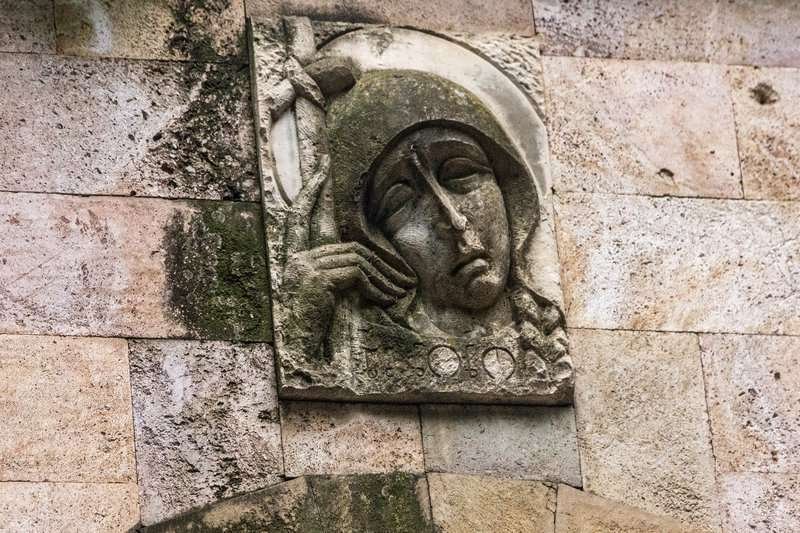
The word Equal-to-the-Apostles in her title has a simple explanation. The church uses it for saints whose work in bringing whole peoples to the faith is counted alongside the labour of the apostles. The rank is rare, and in the Georgian case three people hold it: Nino herself, King Mirian and Queen Nana.
The historical frame here is the same as across the cluster. That Kartli adopted Christianity under King Mirian in the fourth century is a fact. How exactly it happened is known from hagiographic tradition. The events themselves are set out in detail in the biography of King Mirian III: that article and this one cover the same ground from different sides.
| Detail | Value |
|---|---|
| Period | Fourth century. The traditional dates, roughly 280–335, are conventional |
| Homeland | Cappadocia, by hagiographic tradition |
| Standing | Equal-to-the-Apostles, Enlightener of Georgia |
| Chief symbol | The cross of vine wood |
| Connected with | Queen Nana and King Mirian III, and the baptism of Kartli |
| Burial | Bodbe Monastery, Kakheti |
| Sources | The Life of Saint Nino, the Moktsevai Kartlisai |
| Feast day | Ninooba, 14 (27) January; her arrival in Georgia is kept separately |
📜 How We Know About Nino: Hagiography and History
The main source is the Life of Saint Nino, part of the Moktsevai Kartlisai, the Conversion of Kartli. The texts were written down centuries after the events they describe, exist in several recensions, and those recensions differ in detail: one goes further into the journey, another into the miracles, a third into the genealogy.
So the honest way to present it is this: we tell the Life as a Life, without passing it off as a record, and we do not set out either to prove or to disprove the miracles. The historical layer does not go anywhere for all that: the change of state religion in Kartli did take place, and the link between that event and the preaching of Nino has held unbroken in Georgian tradition since the early Middle Ages.
The Life also gives her descent: by that tradition Nino was a kinswoman of Saint George the Great Martyr, and her maternal uncle was the patriarch of Jerusalem. These connections cannot be checked against independent sources, so they remain part of the Life.
🍇 The Cross of Vine Wood
The central image of the whole story appears before the story begins. By her Life, Nino had a vision: the Virgin gave her a cross and sent her to Iberia, as Kartli was then called, to preach and to find the Robe of the Lord, hidden at Mtskheta.
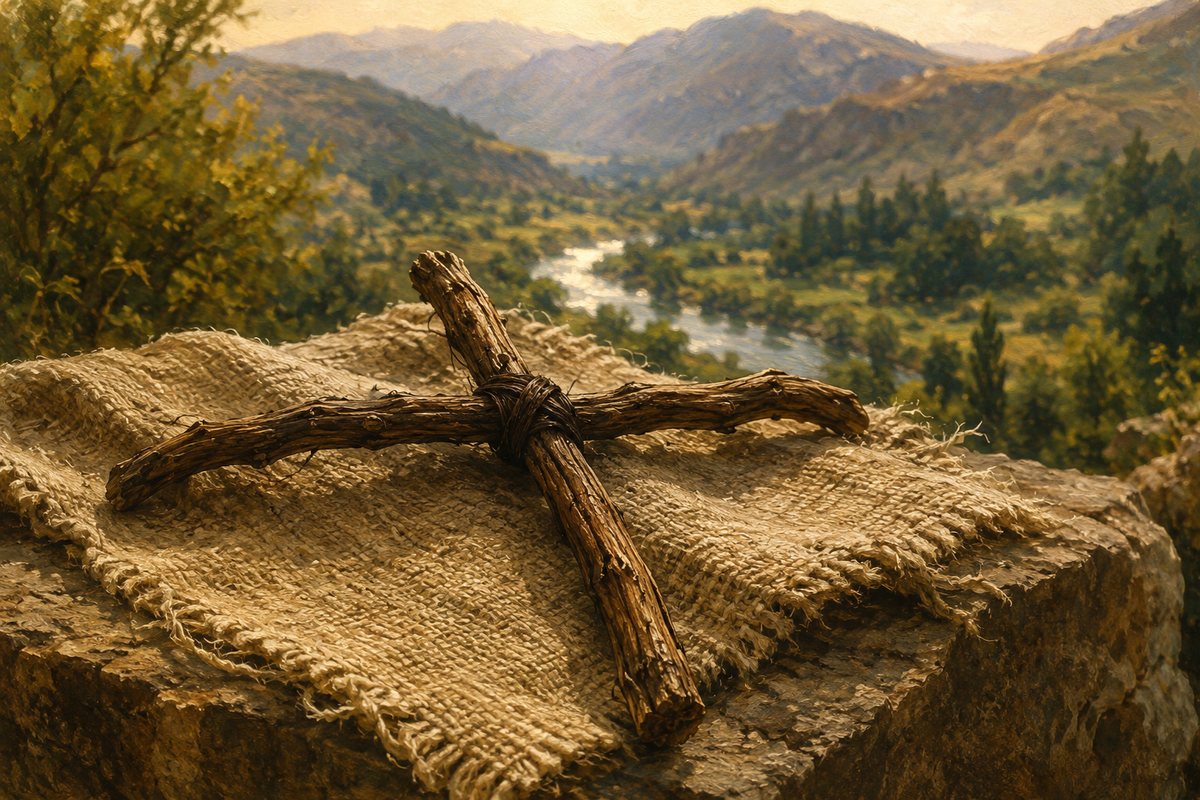
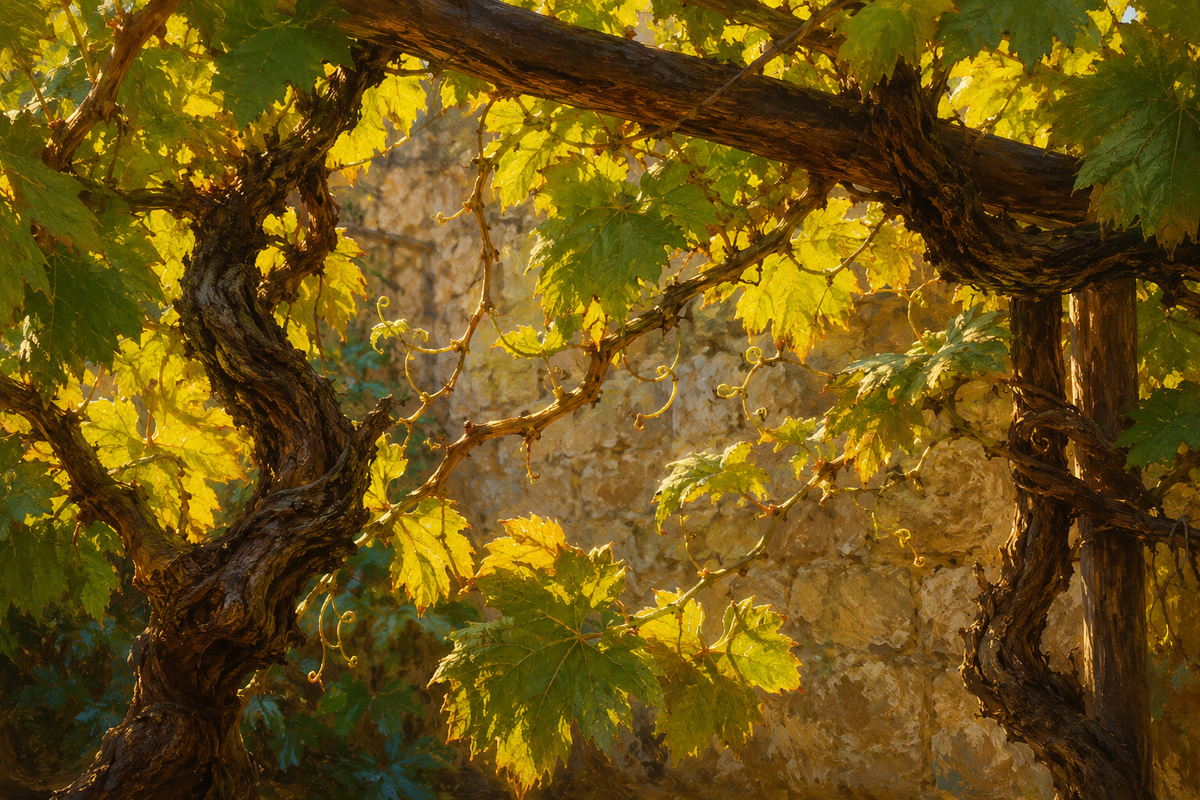
The cross was made of two vine branches and, on waking, Nino bound them with her own hair. The detail is not accidental: for Georgia the vine is not merely a plant but the basis of its economy and its culture, so the symbol landed exactly in local soil.
The cross of vine wood has survived and is kept at Tbilisi Sioni, the cathedral in the old town. The history of the cathedral and its relics is covered in a separate article.
💡 An Interesting Fact
The cross of Saint Nino is easy to recognise by its drooping arms. The shape is explained by the material: vine wood does not hold a strict geometry, and branches bound together sag naturally. Out of a practical detail came a national symbol, found all over Georgia from church furnishings to souvenir stalls.
🚶 The Journey to Iberia: From Cappadocia to Mtskheta
Cappadocia, where Nino came from, is a region in central Turkey today, famous for its cave towns and rock-cut churches. In the fourth century it belonged to the Roman world and was one of the early centres of Christianity, so her origin explains both her education and the very idea of a mission.

The road east ran through Armenia. By her Life, Nino travelled not alone but with a group of Christian women, and in Armenia a persecution overtook them: her companions were killed, Nino survived and went on. This part of the story belongs to the Georgian and the Armenian traditions at once, and each tells it in its own way, so we keep to the outline here.
She reached Kartli at the beginning of the fourth century. Tradition names no exact year, and the datings differ between recensions of the Life.
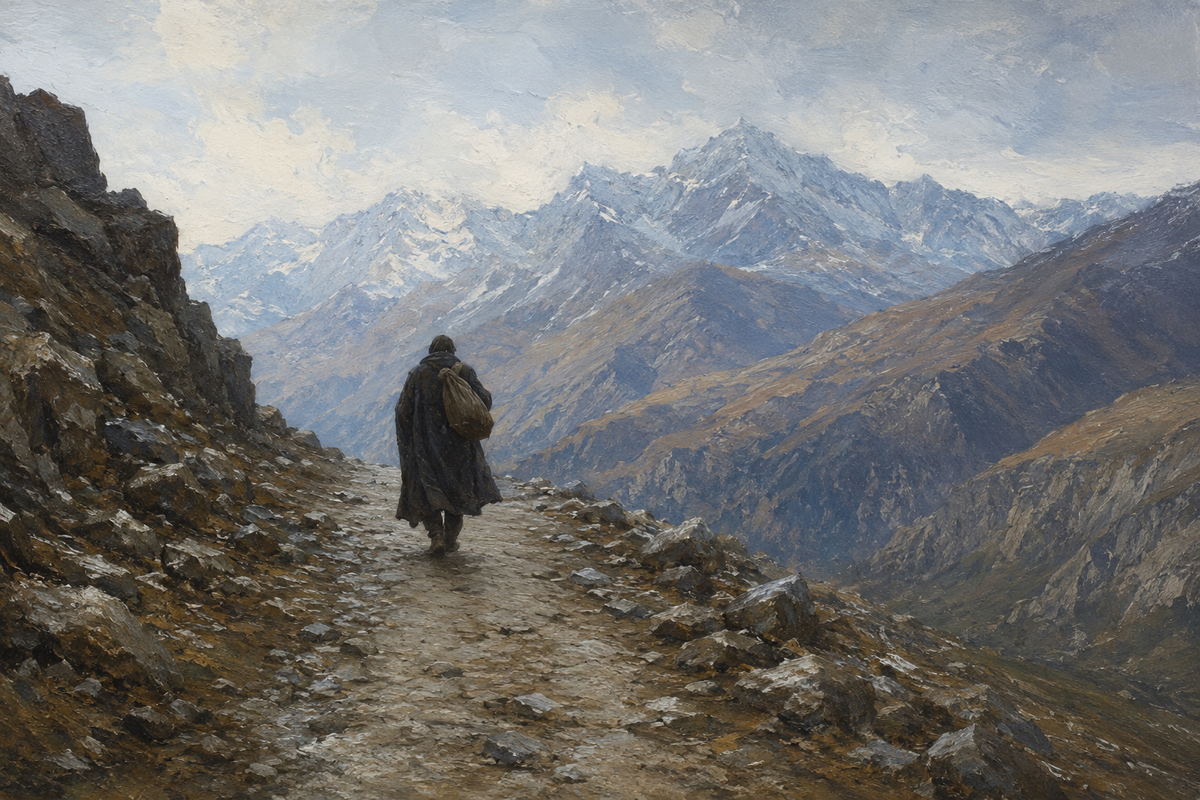
- STEP 1 🏔️ Cappadocia The homeland of the future enlightener: a region in what is now central Turkey, then part of the Roman world.
- STEP 2 🍇 The Vision and the Cross By her Life, Nino receives a cross of vine wood and the charge to go to Iberia and find the Robe of the Lord.
- STEP 3 🚶♀️ Through Armenia The road east runs through Armenia, where Nino lives through a persecution of Christians and survives.
- STEP 4 🌿 Mtskheta Arrival in the capital of Kartli: life in a bramble bush, preaching, and the years that changed a country.
🌿 The Bramble Bush at Mtskheta: Preaching and Healings
At Mtskheta, Nino settled neither in a house nor beside a church but in a bramble bush at the edge of the royal garden. The place exists: Samtavro Monastery stands there today, and its grounds show both the bramble and a church of her name.
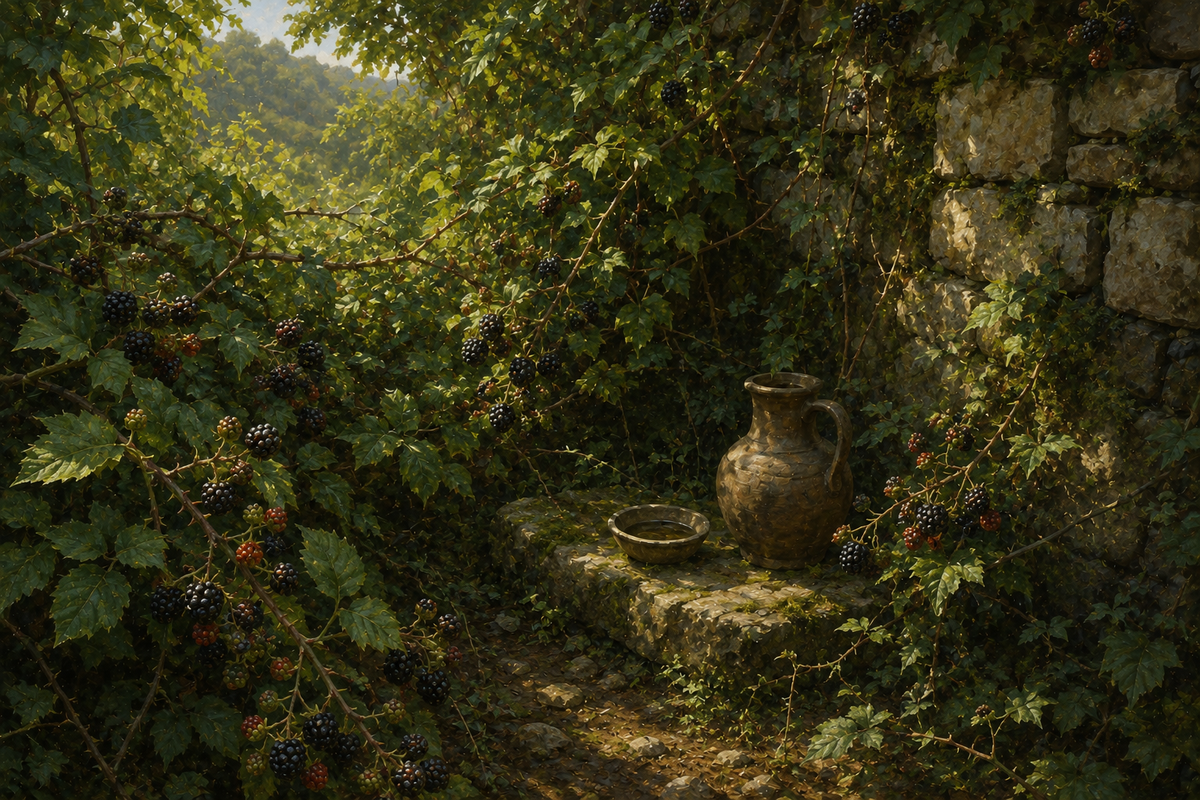
What follows in the Life is years of preaching and healing. Nino treated those who came to her with prayer, and word of it spread through the city, climbing steadily up the social ladder.
The turning point was the case of Queen Nana. The queen fell gravely ill, and when the usual remedies failed, Nino was sent for at the palace. By the Life, Nana recovered and accepted Christianity. In this way the new faith gained its first supporter inside the royal family.
✝️ Nino and King Mirian: The Baptism of Georgia
King Mirian took his wife’s faith coolly, and the turn came later, on a hunt near Mount Tkhoti, where tradition says a sudden darkness overtook him. That scene and the whole chronology of the baptism are set out in detail in the biography of Mirian III, so we will not linger on them here.
What matters more is the role of Nino in what came next. The Life describes her as the teacher of the king: she explained the foundations of the faith, took part in the decision to send an embassy to the emperor Constantine for clergy, and in organising the baptism of the people. A separate strand of the Life is given to the fall of the idols of the old faith, Armazi among them, the supreme deity of pre-Christian Kartli.
The outcome for the country turned out larger than any single biography: Kartli entered the Christian world, and with that came church building, a written culture and new ties. How the religious map of the country developed afterwards is set out in the piece on world religions in Georgia.
🕊️ Final Years: Kakheti and Bodbe
After the baptism of the country Nino did not stay at Mtskheta. By her Life she set out to preach further, into the mountain districts and east into Kakheti, where the new faith had not yet taken root.
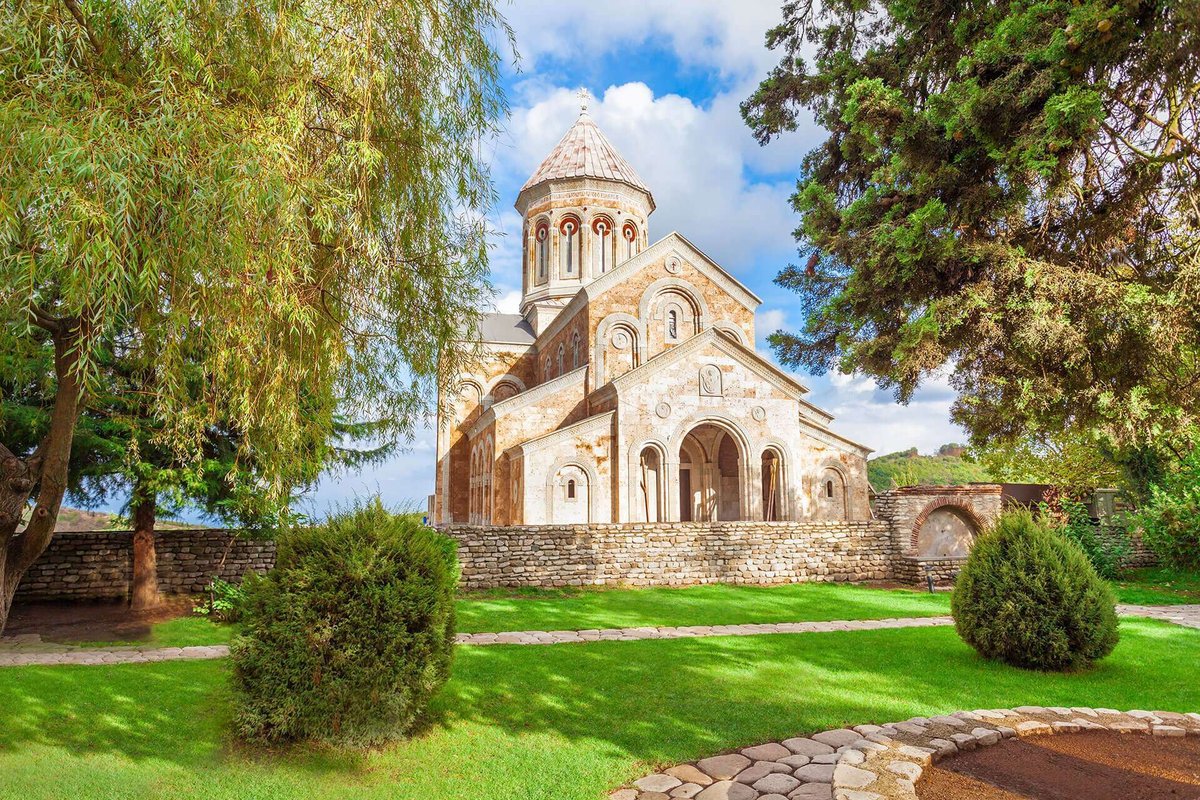
There, at a place called Bodbe, she ended her life. She was buried where she died, and tradition explains that beautifully: they wanted to move the body to Mtskheta and could not shift it, and in this they saw the will of Nino herself. King Mirian built a church over the grave, and out of it grew Bodbe Monastery, today one of the principal places of pilgrimage in Georgia.
Below the monastery, in the gorge, is a spring that carries her name. Pilgrims and visitors walk down to it, and search data suggests that for many readers the acquaintance with Nino begins precisely with that spring rather than with the Life.
By hagiographic tradition Nino asked before her death to be buried where she died, and left her disciples not an instruction about power or churches but a simple request: to hold to the faith for which she had walked a road half a lifetime long.
A paraphrase from hagiographic tradition
🙏 Veneration: Ninooba and the Name Nino
The chief feast of Saint Nino is Ninooba, kept on 14 (27) January, the day of her repose. The Georgian calendar keeps the day of her arrival in Georgia separately.
The liveliest trace of her veneration is not the feast but the name. Nino is one of the most widespread female names in Georgia, carried by hundreds of thousands of women. The result is a rare thing in history: a figure of the fourth century is present in the daily life of the country quite literally every day, in how one addresses a neighbour or a colleague.
🗺️ The Places of Saint Nino
The places connected with Nino make up a ready pilgrimage circuit: Mtskheta, Tbilisi and Kakheti. Below are the six main ones, a line for each.
| Place | Where | Link with Nino |
|---|---|---|
| Bodbe Monastery | Kakheti, near Sighnaghi | The grave of Saint Nino and the spring that carries her name |
| Samtavro Monastery | Mtskheta | The place where tradition sets the bramble bush and Nino’s dwelling |
| Tbilisi Sioni | Tbilisi | The cross of vine wood is kept here |
| Svetitskhoveli Cathedral | Mtskheta | The first church of Kartli, on the spot indicated by tradition |
| Jvari Monastery | The hill above Mtskheta | Where tradition says a cross was raised under Nino and Mirian |
| The Church of Saint Nino in the Tana Valley | Shida Kartli | One of the churches carrying the name of the enlightener |
❓ Frequently Asked Questions About Saint Nino
💬 A fourth-century preacher from Cappadocia whose name is bound up with the conversion of Georgia to Christianity. The church venerates her as Equal-to-the-Apostles and calls her the Enlightener of Georgia.
💬 By her Life, Nino received a cross made of two vine branches and bound them with her own hair. The cross is kept at Tbilisi Sioni, the cathedral in the old town.
💬 At the beginning of the fourth century. Tradition names no exact year, and the datings differ between recensions of the Life.
💬 By her Life she converted Queen Nana, became the teacher of King Mirian and took part in organising the baptism of the country, including the invitation of clergy from Byzantium.
💬 At Bodbe Monastery in Kakheti, near Sighnaghi. By tradition her body could not be moved to Mtskheta, and she was buried where she ended her life.
💬 On 14 (27) January, the day of the saint’s repose. The day of her arrival in Georgia is kept separately in the Georgian calendar.
📌 Key Points in Brief
The story of Nino rests on a contrast. On one side is a Life with visions, miracles and a cross of vine wood, a text written not for accuracy but for meaning. On the other stands an entirely verifiable event: Kartli did change its faith in the fourth century, and that shaped everything that followed. What exactly in the Life happened cannot be established and probably never will be. But the figure works regardless: her cross became a national symbol, her grave a place of pilgrimage, and her name is borne by an enormous number of Georgian women. Few historical figures manage to be present in a country quite so matter-of-factly.
💬 Now Over to You
- Have you been to Bodbe and walked down to the spring?
- Have you seen the cross of Saint Nino at Tbilisi Sioni?
- Is there a Nino among the people you know, and do they know the story behind the name?
- Which figure of that age should we write about next?
Tell us in the comments: good arguments and corrections make their way into the article.

4 comments
Log in to leave a comment