



The Church of Vakhtang Gorgasali in Batumi: Who Was the Georgian Saint-King
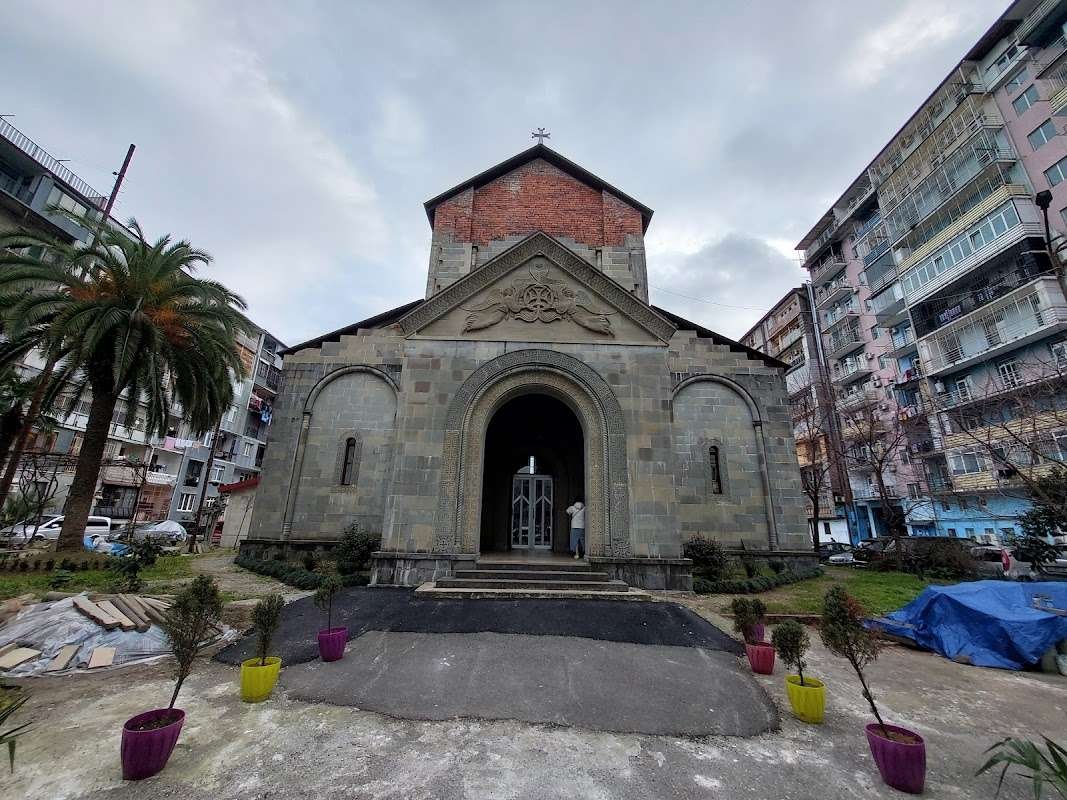
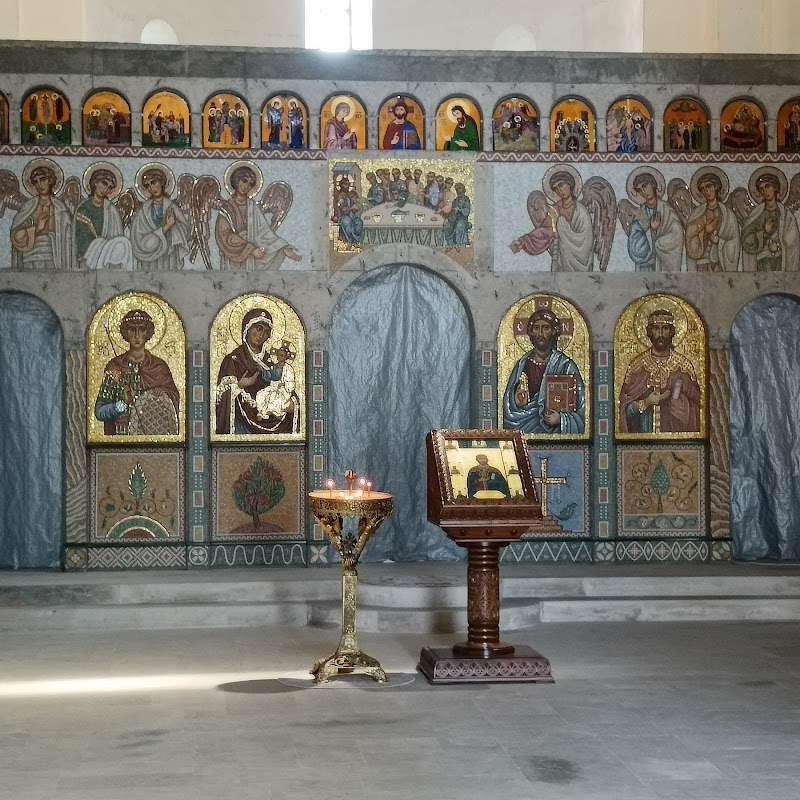
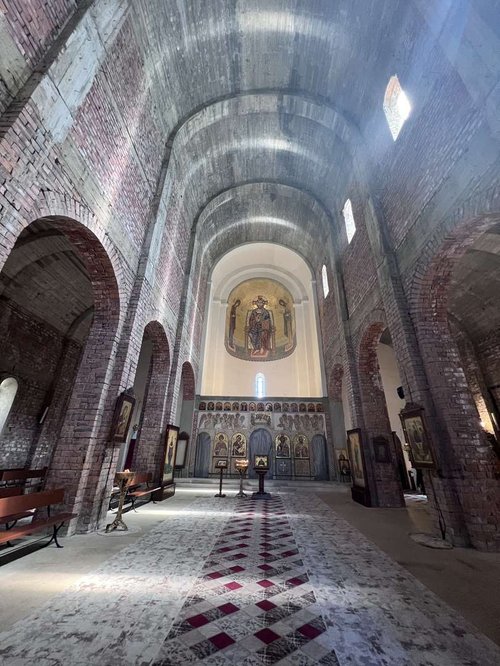
In the Rustaveli district of Batumi stands a church that is hard to miss: massive, with majestic arched vaults, it seems slightly at odds with the surrounding neighbourhood — in the best possible way. This is the Church of Vakhtang Gorgasali, one of very few in the world dedicated to this particular Georgian saint. The building is still under construction; the interior decoration is not yet complete. But services are running, a congregation is gathering, mosaics and icons are already in place. A church growing alongside its community is a rare thing to witness.
Most visitors immediately ask the same question: who is Vakhtang Gorgasali, and why does Batumi have a church in his honour? The answer is more interesting than it might sound.
🦁 Who Was Vakhtang Gorgasali
Vakhtang I Gorgasali was a Georgian king who lived approximately 440–502 AD. He ruled the Kingdom of Kartli — eastern Georgia — at a particularly difficult moment: the Sasanid Persian empire pressed from the south, the Alans from the north, and the whole country was caught between pagan and Christian traditions. Vakhtang did not merely hold the kingdom together; he made it stronger.
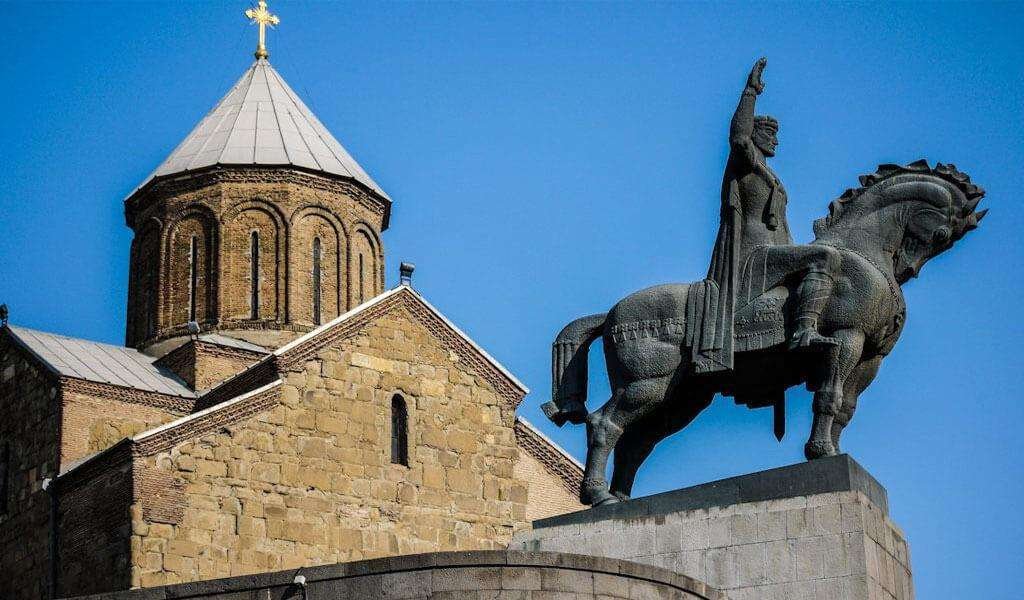
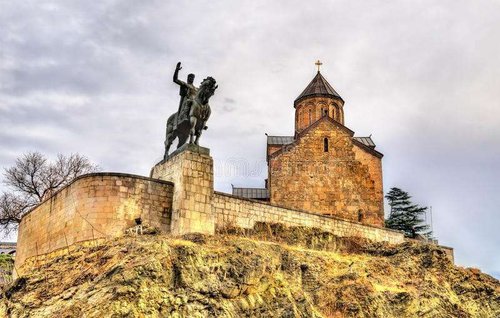
The mark he left on history is known to everyone who has been to Georgia: Vakhtang Gorgasali is credited with founding Tbilisi. According to tradition, during a royal hunt he discovered hot sulphurous springs where a wounded pheasant recovered in the warm water rather than dying. The king saw this as a sign, and moved the capital from Mtskheta to this place. Today his equestrian statue stands on Metekhi Hill in the very heart of old Tbilisi — one of the most recognisable monuments in the Georgian capital.
The Georgian Orthodox Church declared him a saint: he is venerated as a blessed king, with his commemoration set on 30 November in the Georgian church calendar. He is honoured as a guardian of Kartli and an embodiment of courage and wisdom. Georgian folk poetry, epic poems and oral legends devoted to this legendary ruler testify to the enduring love Georgians hold for him.
🐺 "Gorgasali" — Why "Wolf's Head"
The nickname "Gorgasali" is not a Georgian word. It translates from Persian as "wolf's head" — a reference to the shape of the king's battle helmet. His helmet bore the image or form of a wolf's head. On the battlefield this had a powerful psychological effect: when Persian soldiers caught sight of the wolf-head helmet, they would call out to each other "Dur az gorgasar!" — "Beware the wolf's head!"
This is why in Georgian the word "მუზარადი" (muzaradi) — meaning helmet — is so closely associated with this king's name. When search queries appear for "ვახტანგ გორგასლის მუზარადი" (Vakhtang Gorgasali's helmet), they refer to this symbol. It is not a separate museum object but an iconographic image: in icons and mosaics in Georgian churches, Vakhtang is typically depicted in armour, often with his distinctive helmet, emphasising his warrior's dignity and his martyrdom for the faith.
The wolf as a symbol in Georgian tradition is not a creature of evil — it is an image of strength, independence and fearlessness. In the context of the 5th century, when tiny Christian Iberia faced the enormous Sasanid Persian Empire, a warrior in a wolf-head helmet was exactly the image that inspired a nation.
⛪ The Church in Batumi — What Kind of Place Is This
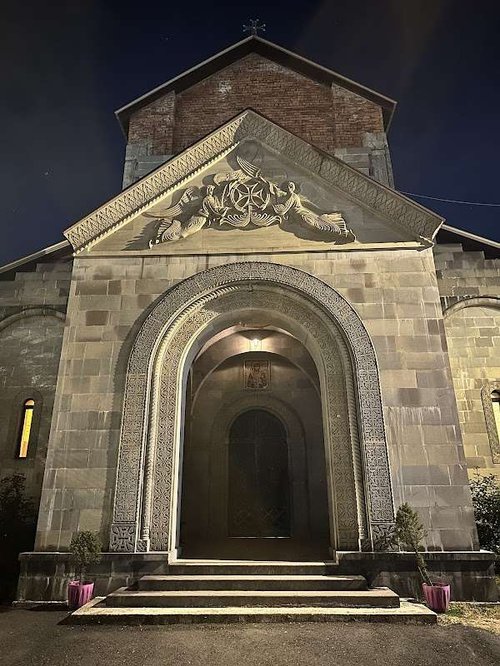
The Church of Vakhtang Gorgasali in Batumi is a comparatively new and, by the standards of church construction, unfinished object. But "unfinished" does not mean "inactive": services are held regularly, there is a congregation, and the atmosphere is genuinely alive — in the best sense. This is not a museum object that tourists visit to tick a box; it is a place where people genuinely come to pray.
Visitor reviews describe the church in consistent terms: impressive architecture, slightly massive for its neighbourhood, vivid details, magnificent arched vaults. Mosaics and icons are already in place inside — among them, according to reviews, are icons painted in Russia. The interior decoration continues: some surfaces are still being worked on, which is itself a special opportunity — it is rare to see such an object in the process of becoming.
A rating of 4.9 out of 5 across nine reviews tells its own story. This is unusually high, even among the worthy churches of Batumi.
The church is located in the Rustaveli district of Batumi — coordinates 41.62128, 41.64416. This is not the most tourist-heavy part of the city, which gives the visit an extra quality of authenticity: no crowds, no souvenir stalls nearby, and the experience feels like a genuine discovery. By taxi from the centre it is 5–10 minutes. Enter the coordinates in Yandex Taxi, Bolt or Google Maps. On foot from the central streets, allow 20–25 minutes depending on your starting point.
🧭 Context: Other Places Connected to Gorgasali
Vakhtang Gorgasali is a figure of national significance in Georgia, and references to him appear across the country. In Tbilisi: the equestrian statue on Metekhi Hill, one of the symbols of the old city; a chapel added to the Sioni Patriarchal Cathedral in his honour; a cathedral named after him in the city of Rustavi. Now Batumi joins this list.
It is interesting that Batumi — a port city, historically multi-ethnic and not among the most traditionally Orthodox Georgian cities — has given space to such a church. It speaks to the growing interest in Georgian Christian heritage across the entire country.
For a broader picture of the churches of Batumi across different denominations, the separate hub covers 30+ sites. For a sense of the city's wider sights and attractions, start there.
🏛️ Who Should Visit
This is not a standard tourist stop. Come here if you are interested in the living religious life of the city, if you want to see a new architectural object in the process of becoming, or if the name Vakhtang Gorgasali means something to you — as a historical figure or as a saint.
For those who came looking for the answer to "who is Vakhtang Gorgasali" — we hope this article has answered it fully. The man with the wolf-head helmet was the founder of Georgia's capital, a canonised saint, a soldier, a statesman and a cultural reformer who lived 1,500 years ago and remains relevant to Georgia today.
Over to you
Have you visited the Church of Vakhtang Gorgasali in Batumi? Tell us in the comments what impression it made and whether you saw any icons depicting the king himself. And — did you know before reading this that "Gorgasali" means "wolf's head"? 👑
FAQ — frequently asked questions
Vakhtang I Gorgasali (c. 440–502 AD) was the king of eastern Georgia (Kartli), the founder of Tbilisi and a Georgian Orthodox saint. He defended Georgia against the Sasanid Persians and strengthened Christianity in the country. Canonised by the Georgian Orthodox Church; his commemoration is on 30 November.
"Gorgasali" translates from Persian as "wolf's head". The nickname was given to the king by Persians, referring to the wolf-head shape of his battle helmet. When Persian soldiers saw it, they cried "Dur az gorgasar!" — "Beware the wolf's head!"
In the Rustaveli district of Batumi. Coordinates: 41.62128, 41.64416. By taxi from the centre — 5–10 minutes.
Not yet. Services are running and mosaics and icons are installed, but the interior decoration is still in progress. This is an opportunity to see the church while it is still taking shape.
Not officially published. We recommend visiting in the morning or late afternoon — active Batumi churches are generally open at those times.
Yes, entry is free. Donations are voluntary.
Vakhtang Gorgasali is a saint of all Georgia, not just Tbilisi. Churches dedicated to him exist in Tbilisi, Rustavi and now Batumi. His veneration is growing across the whole country.
According to visitor reviews, the church has icons and mosaics. Since the church is specifically dedicated to this saint, his image should be among them — in traditional iconography he is shown in warrior's armour. The church staff can confirm details.
4.9 out of 5 across nine reviews — one of the highest ratings of any church in Batumi.
Information is accurate as of 1 June 2026. Since construction is ongoing, the interior may change. We recommend checking the current status before your visit.

1 comment
Log in to leave a comment