




Mtskheta: What to See in the Ancient Capital of Georgia
Georgia is a country with a fascinating history and captivating natural landscapes. It boasts the mountainous Svaneti region, the enticing sea and sun-drenched coastlines of Adjara, and the stunning capital, Tbilisi.
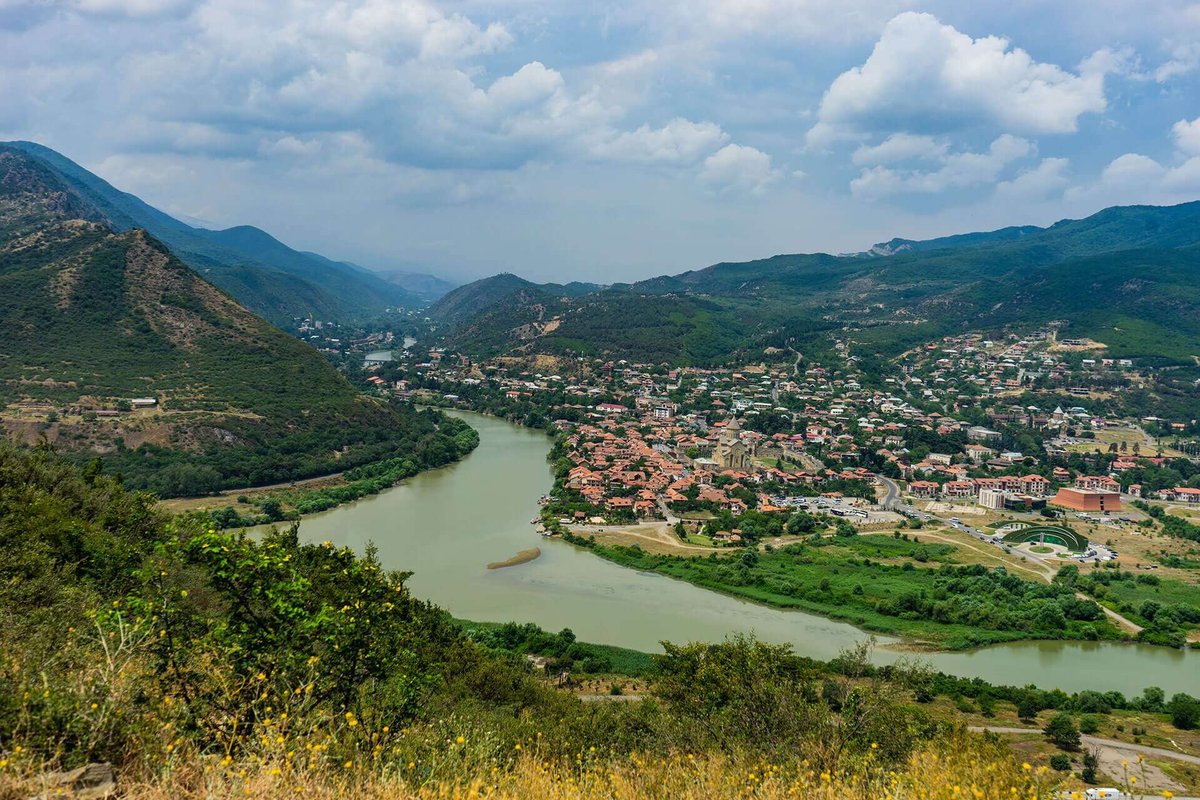
One of the most ancient sites is Mtskheta, Georgia's second capital.
History of Mtskheta
The village is believed to have been founded by Noah's descendant, Mtskhetos, the king of Kartli, who inherited the land at the confluence of the Mtkvari and Aragvi rivers from his mother. She divided the lands among her sons after her husband's death. The king's son named the city he built in his own honor. Mtskheta is mentioned in chronicles as early as the mid-1st century BC.
For a thousand years, Mtskheta was the Georgian capital until King Vakhtang bequeathed this title to Tbilisi. Conquerors led by Caliph Marwan destroyed Mtskheta in 737. The settlement was never fully restored, having lost its former beauty. Today, this city is called the "Second Jerusalem" as it is the religious center of Georgia.
The most popular attractions
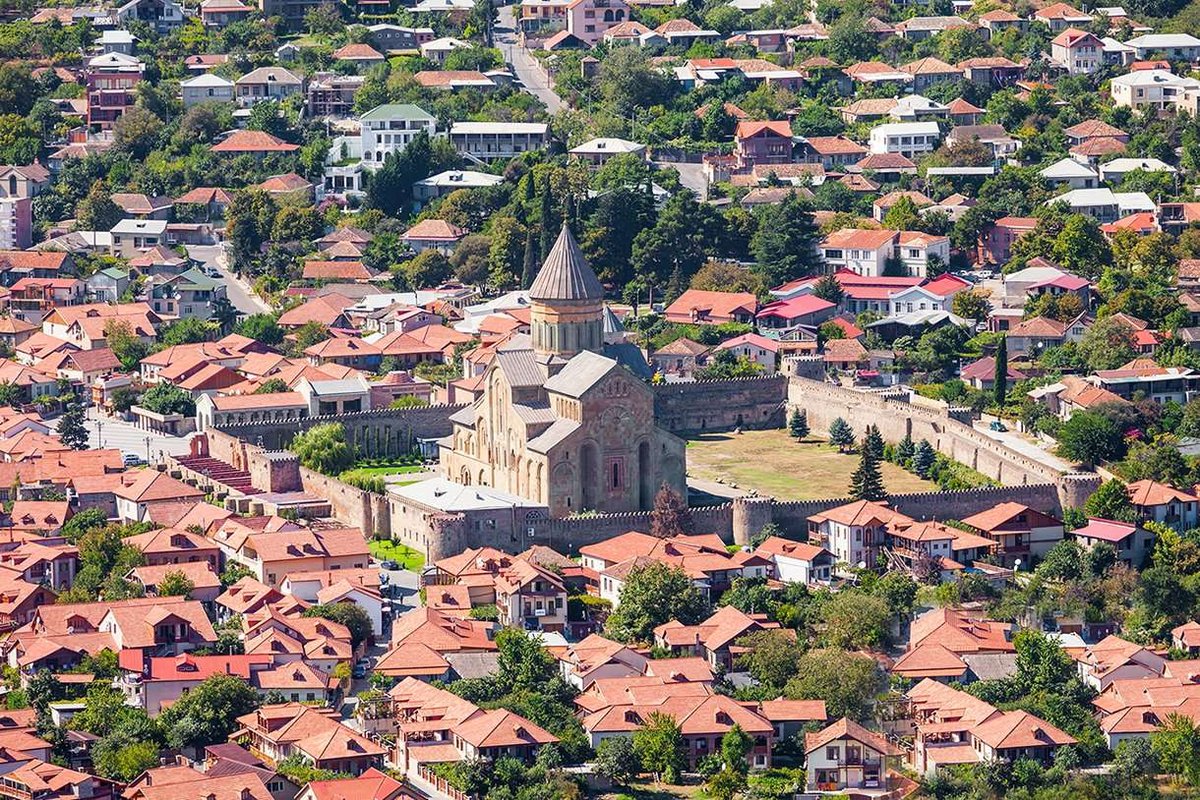
The city boasts numerous attractions. The surrounding area of this small settlement, with a permanent population of seven thousand, boasts numerous ancient temples, monasteries, churches, and fortresses. These include:
- Shiomghvime, Samtavro, and Jvari.
- Svetitskhoveli Cathedral.
- Pompey's Bridge.
- The Bebristsikhe and Armazi Citadels.
The Armazi Citadel was tactically advantageously located; its observation deck oversaw the main Caucasian road through the Darial Valley. The citadel was named after a pagan god. The fortress was destroyed in the 8th century BC. In 2011, restoration and reconstruction of its components were completed.
Bebristsikhe Castle, a structure damaged by a 2010 landslide and half-destroyed, is located on the northern elevation of Mtskheta. The fortress likely formerly served as a guard post. The Shio-Mgvime Monastery is named after its founder, who built it in the 6th century AD. It has been preserved in its original form.
The Pompeii Bridge was built by order of a Roman general in the 1st century BC and remained in use until the 19th century. It was constantly reinforced and repaired. After the construction of the hydroelectric power station, the bridge sank under water. It is now visible during the release of water from the sluice gates.
Samtavro
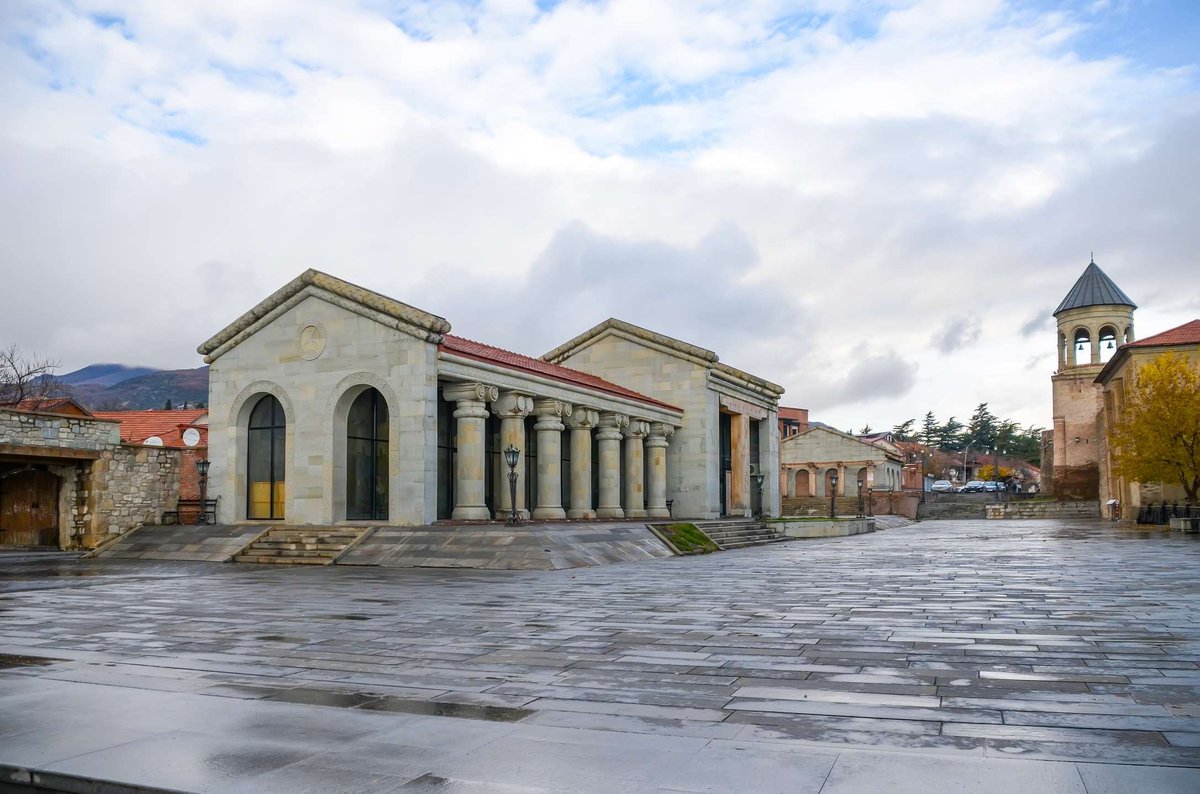
The functioning Samtavro Convent consists of several buildings. It includes the lower church of Makvlovani, on the grounds of which stands St. Nino's hut, hidden among the blackberry bushes. Nino had a vision that she would guide the Georgians to Christianity. Following her instructions, subsequent kings converted to Christianity, including Mirian,
who considered himself unworthy to approach the main church due to his pagan past. Mirian ordered the construction of an upper church for prayer. It later served as a bedroom for him and other rulers.
The monastery was founded later, in the 19th century. Among the artifacts housed within are St. Nino's tombstone, holy relics, and a life-giving pillar.
The relics of St. Gabriel are considered the most revered. Monk Gabriel was declared a saint in 2015. Gabriel saved people through healing and preached. He founded a church at his home four times, but it was constantly destroyed. Gabriel died, his relics were declared incorruptible, and his blood was preserved in a test tube. According to legend, it has not clotted to this day.
Svetitskhoveli Cathedral
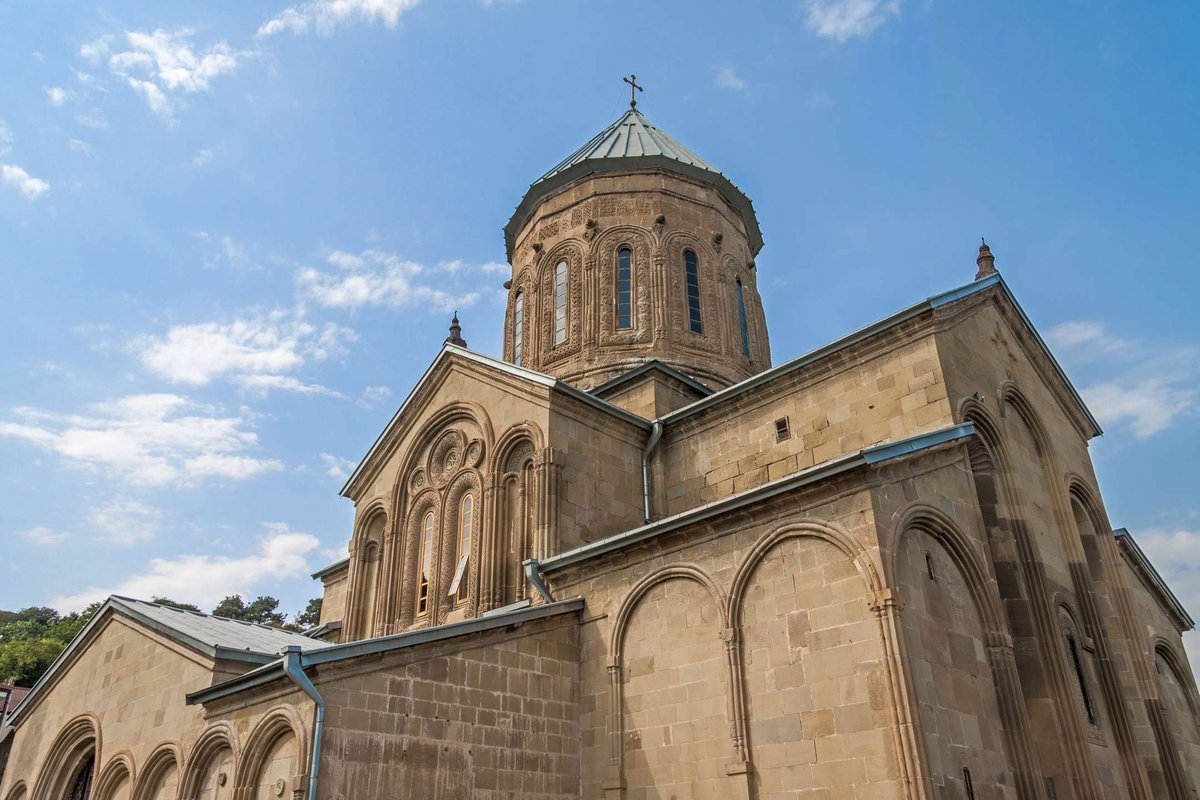
This church in Mtskheta is its main landmark. Its construction is shrouded in numerous legends dating back centuries.
The priest who lived there, Eloise, purchased a life-saving robe from the soldiers who had participated in Christ's crucifixion during a trip to the Holy Land. A deeply religious woman named Sidonia asked the priest to bring her an object somehow connected to Jesus. Upon holding the robe, the woman was deeply moved and died of rapture, unable to release the cloth from her hands. She was buried with the religious robe, and a cedar from Livadia, believed to have healing powers, grew on her tombstone.
According to legend, during the adoption of Christianity, Mirian ordered the tree cut down to build the first church. But the cedar soared upward and descended only after Nino said a prayer. During construction, the column continued to rise. In honor of this event, the cathedral was named Svetitskhoveli, meaning "life-giving pillar."
The monastery still survives, housing ancient artifacts: the holy relics of St. Andrew the First-Called, an icon of St. Elijah, and the remains of a stone chapel and the first church building materials.
The monastery also houses the oldest baptismal censer. Upon request, every third child in a family can be baptized by the current Georgian patriarch.
Jvari Temple
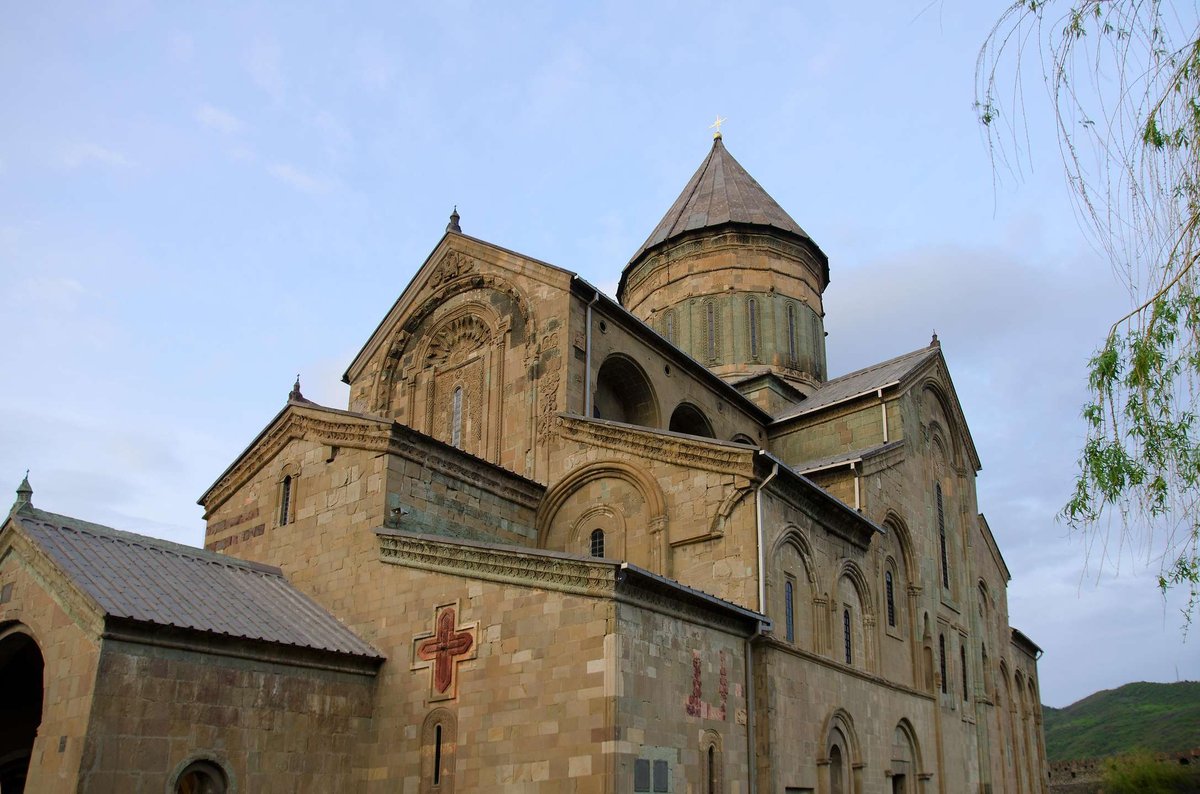
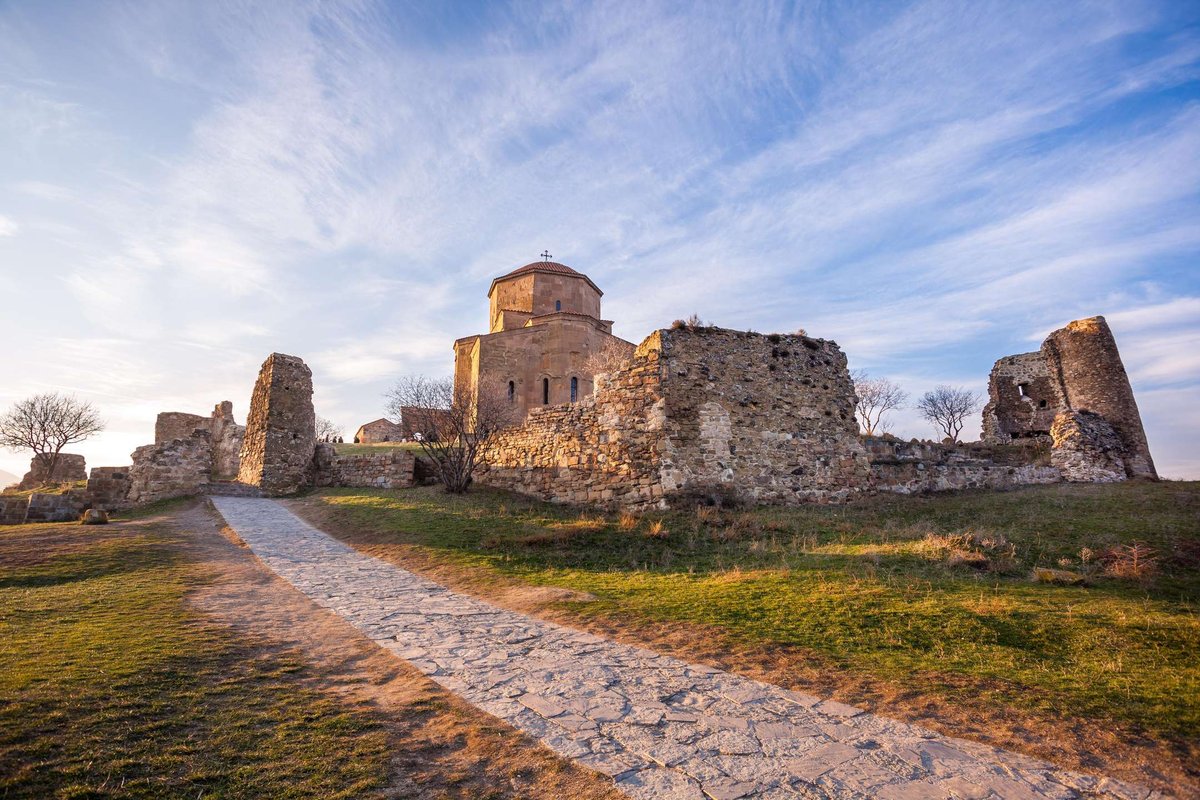
It was built in the 6th century near Mtskheta. Its significance makes it one of the most important existing Georgian holy sites. Its archaic interior has been preserved, and its dimensions are consistent with historical buildings of the time. It was founded where Saint Nino saw her destiny in converting all residents to Christianity. This was the beginning of the religious education of the entire Georgian people.
The cross located in the temple marked the highest point of the hill. A pagan church was founded beneath it. This signified the rise of Christianity over paganism.
Temple construction later became common practice for Georgians, but it was during this period that the tetrakhonka form first appeared. This means that the church structure is cruciform, with rounded dome edges.
The interior of Jvari Temple is devoid of icons and frescoes, only ancient stonework illuminated by sunlight through small windows. This temple is listed as a UNESCO World Heritage Site in Georgia.
A visit to the church offers panoramic views of the religious city. The scenery is truly stunning. You can photograph the entire city from here.
It is believed that Lermontov wrote about the Jvari Monastery in his poem "Mtsyri."
If you're interested in visiting Mtskheta, we recommend taking a guided tour, but if you're planning to travel independently, the next section is for you.
Independent Travel from Tbilisi
Mtskheta is located just twenty kilometers from the capital. It can be reached by any mode of transportation.
- By metro.
- By taxi.
- By bus.
- By commuter train.
When traveling by metro, you need to get off at Didube station, which is also the name of the bus stop. Buses to Mtskheta depart early in the morning, every 10-20 minutes, and continue until 8 pm. The bus ride takes about 30 minutes. The fare is 50 rubles. Tickets can be purchased from the cashier at the bus station.
A taxi to Mtskheta is expensive – 50 lari, which is 1,300 rubles in Russian currency. You can get to Mtskheta by car from anywhere in the capital.
Commuter trains depart from the train station. A ticket costs 1 lari, or 25 rubles. You'll have to walk a couple of kilometers from the station to the city center. If you want to save money on your way to Jvari Monastery, you can take a bus from Tbilisi to Gori, Borjomi, or Kutaisi and get off at the "Cross Mountain" stop. The climb up takes about 30 minutes.
For a more budget-friendly option, you can walk from Mtskheta. It will take at least three hours. Before starting this journey, be sure to grab a map and be prepared for a short climb.
Unique tip: find the large balcony behind the church; you can take amazing panoramic photos from it.
For your return journey to the capital, you can use all of the above options.
When visiting the religious city of Mtskheta, it's worth noting that it's impossible to catch a bus anywhere other than at a stop. In Georgia, this type of transport is strictly prohibited from stopping outside of stations. Drivers are fined for doing so.
The ancient settlement of Mtskheta is the site where the foundations of Christianity and Georgian statehood were laid. Countless pilgrims, priests, and monks come here to venerate the shrines and pray for healing. Churches built centuries ago blend harmoniously with the mountain scenery, and no photograph can capture the grandeur and solemnity of the monastic atmosphere. Mtskheta is definitely worth a day trip from the capital. It's best to spend more time there to fully appreciate the religious culture and the ancient spirit of the city.

39 comments
Log in to leave a comment
Искренне рекомендую подняться к крепости Бебрисцихе - виды оттуда просто захватывают дух. Но вот вопрос меня волнует: как лучше спланировать день, чтобы успеть все увидеть и не запутаться среди исторических памятников?