




👑 Pharnavaz I: The First King and the Birth of the Georgian Monarchy
Pharnavaz I, also spelled Parnavaz, was the first king of Kartli and the founder of the Georgian monarchy, the ruler who began the Pharnavazid dynasty. Georgian tradition places his reign in the third century BC. Everything known about him was written down in medieval chronicles, which is why he is called semi-legendary: behind the name stand both a memory of how the state was born and a good deal of later literary shaping.
📌 In Brief
- The first ruler in Kartli to bear the royal title of mepe.
- According to the chronicle he came to power after finding a treasure in a cave and raising a revolt against the governor Azon.
- He divided the country into eristavates, provinces run by the king’s deputies.
- He set up the idol of Armazi near Mtskheta, the supreme god of pre-Christian Kartli.
- Tradition credits him with creating Georgian writing, although the evidence does not support it.
- He is known only from medieval Georgian chronicles; classical authors say nothing about him.
❓ Who Was Pharnavaz I in Simple Terms
Kartli, which classical authors called Iberia, was an ancient kingdom in eastern Georgia with its capital at Mtskheta. Georgian tradition names Pharnavaz as the first ruler here to take the royal title. Before him, the chronicle says, the country was governed without royal standing, and shortly before his accession power lay with a governor named Azon.
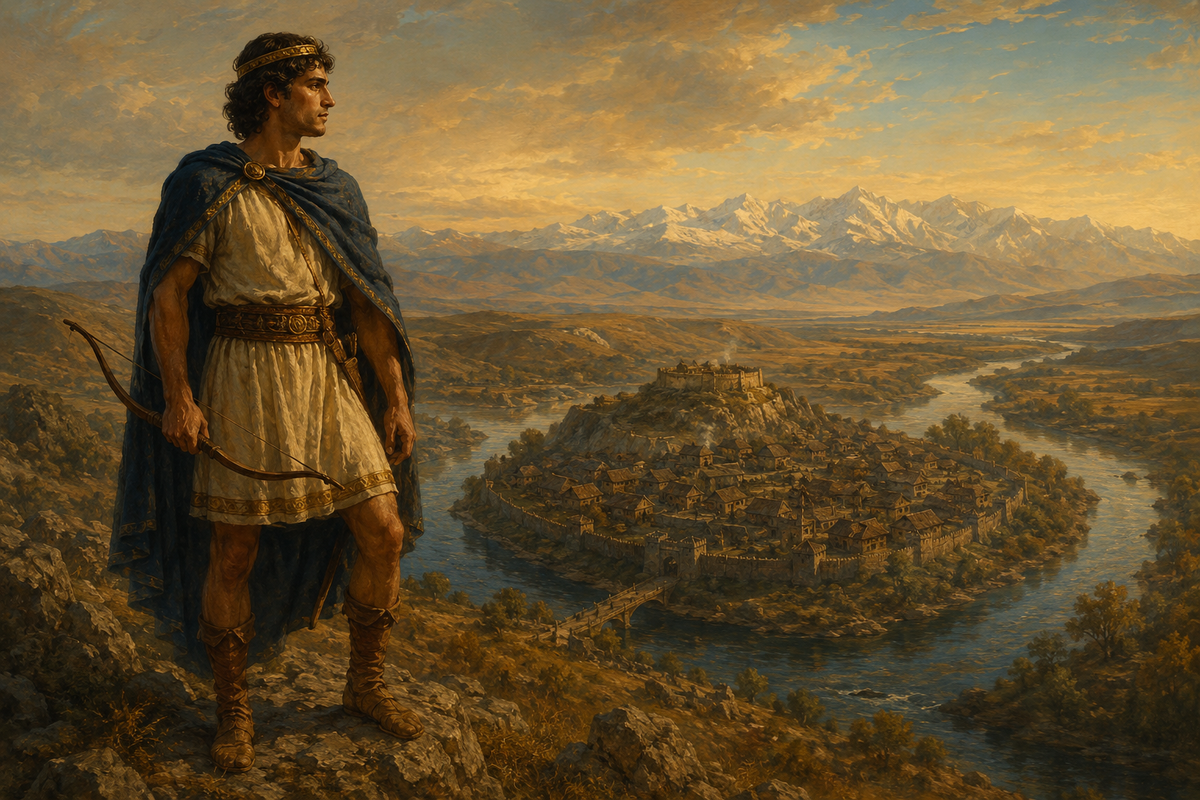
What is known about Pharnavaz comes from two medieval compilations, set down more than a thousand years after the events they describe. Greek and Roman authors who wrote about Iberia never mention him. Hence the careful wording: Pharnavaz is the first king of Georgian tradition. Whether a real person stands behind the name is still argued, and both positions are set out below.
| Detail | Value |
|---|---|
| Period | Third century BC. Tradition gives roughly 299–234 BC, though every date is conventional |
| Title | Mepe, the first king of Kartli in Georgian tradition |
| Dynasty | Founder of the House of Pharnavazid |
| Capital | Mtskheta, with the fortress of Armaztsikhe above the Kura |
| Religion | Paganism, with the state cult of Armazi |
| Sources | Kartlis Tskhovreba, Moktsevai Kartlisai |
| Status | A semi-legendary ruler, unmentioned in classical sources |
📜 How We Know About Pharnavaz: The Chronicles and the Forms of His Name
The main source is Kartlis Tskhovreba, the corpus of Georgian chronicles known from medieval manuscripts. The second text, Moktsevai Kartlisai (The Conversion of Kartli), deals with the Christianisation of the country and lists the kings down to Mirian along the way. Both were compiled when more than a thousand years had passed since Pharnavaz, and both drew on oral tradition and on earlier records that have not survived.
Hence the spread of opinion. Some scholars see in Pharnavaz a real founder of Kartlian statehood whose name popular memory preserved. Others treat him as an eponymous hero, a figure worked out in hindsight to explain where the dynasty and the kingdom came from. A third group keeps to the middle ground: a man of that name may well have lived, but the details of his life in the chronicle are literary.
In English his name appears in two forms, Pharnavaz and Parnavaz. Both transliterate the same Georgian name ფარნავაზ, and both turn up in translations and reference works.
💡 An Interesting Fact
The name Pharnavaz is linked to the Iranian root farn: divine grace, radiance, royal fortune. On that reading the name of the first king of Kartli means the bearer of farn. The etymology is plausible but not finally proven: Iranian influence on Kartli was strong in this period, and names built on the root are known far beyond Georgia.
🏹 The Legend of the Treasure: How a Hunter Became King
The chronicle account of how Pharnavaz came to power reads like a ready-made film script.

When Azon seized power in Kartli, the family of Pharnavaz was killed. He himself, still a boy, survived and lived quietly in Mtskheta, drawing no attention. The chronicle calls him a kinsman of the former ruler of the city.
One day, out hunting, Pharnavaz followed a deer and took shelter from bad weather in a cave. Inside he found a treasure said to have been left by his ancestors. The gold gave him what he lacked for revenge: money for an army.
He then secured the support of Kuji, ruler of Egrisi, the western Georgian land the Greeks knew as Colchis. According to the chronicle the alliance was sealed by marriage: Kuji took the sister of Pharnavaz as his wife. Their combined forces marched against Azon, broke his army, and Pharnavaz returned to Mtskheta a king.
One detail needs explaining. The chronicle calls Azon a governor appointed by Alexander the Great. History knows of no real campaign by Alexander in Iberia: this is a literary frame, common in medieval compilations that tied local history to famous names from the wider world. Within that frame Azon is a figure of chronicle tradition rather than a documented ruler.
- STEP 1 🏹 Treasure in a Cave Out hunting, Pharnavaz shelters from bad weather in a cave and finds gold said to have been left by his ancestors.
- STEP 2 🤝 The Alliance with Kuji The ruler of Egrisi brings an army. The chronicle says the alliance was sealed by marriage: Kuji took Pharnavaz’s sister as his wife.
- STEP 3 ⚔️ The Revolt Their combined forces march against the governor Azon and break his army.
- STEP 4 👑 The Coronation Pharnavaz enters Mtskheta as king and becomes the first in Kartli to take the title of mepe.
👑 The First King: What Pharnavaz Gave Georgia
What tradition ties to Pharnavaz is not the victory over Azon but what he did after it.
The title. Pharnavaz was the first in Kartli to call himself mepe (მეფე). Georgian monarchy begins with that word: the same title would be used for David the Builder and Queen Tamar fifteen centuries later.
Government. According to the chronicle, Pharnavaz divided the country into eristavates, provinces each governed by an eristavi, the deputy of the king. The chronicle counts eight of them, and the commander of the capital province held the separate title of spaspet. How far this scheme reflects the third century BC and how far it reflects the arrangements of the chronicler’s own day cannot be said, but the idea of dividing the country into governorships outlived the Pharnavazids.
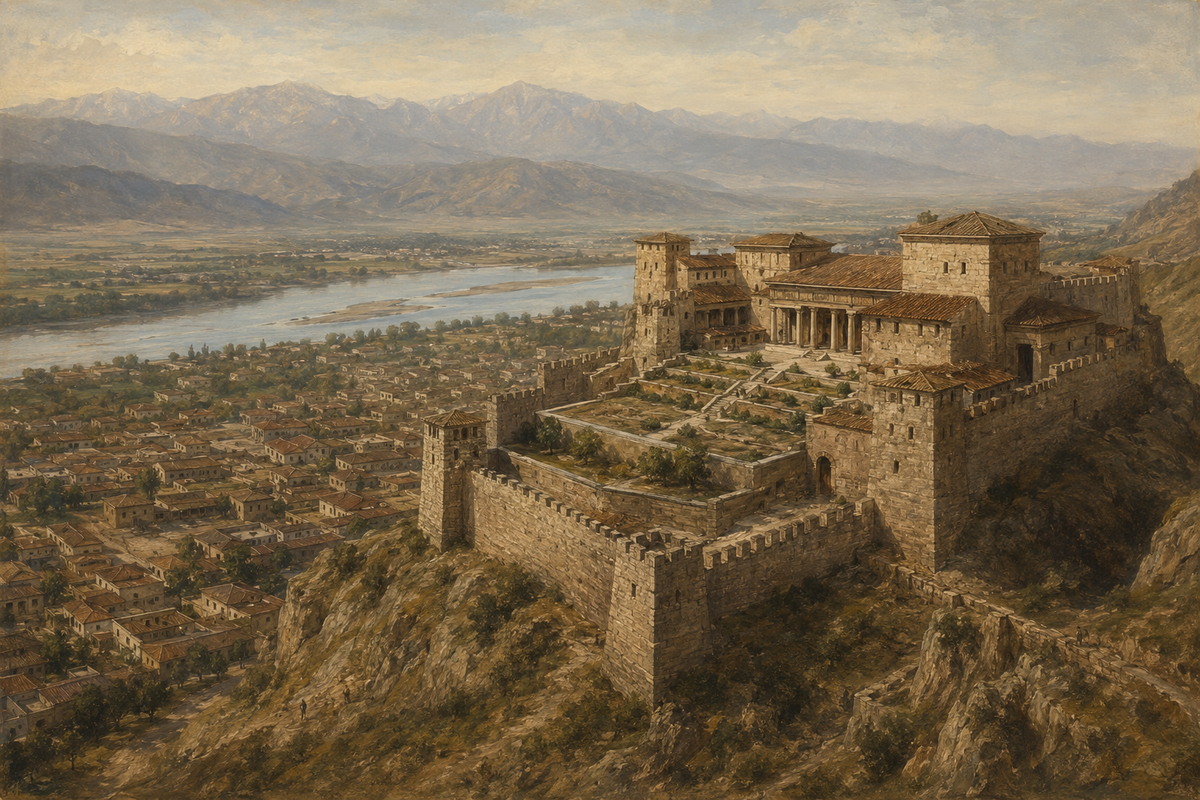
The capital and the fortress. Mtskheta became the royal seat, and on the hill above the meeting of the Aragvi and the Kura rose the fortress known as Armaztsikhe. What survives of it, and what archaeologists have uncovered, is covered in the article on the site of Armaztsikhe-Bagineti.
| What He Introduced | What It Was | What Remains Today |
|---|---|---|
| The title of mepe | Royal standing for the ruler of Kartli | Mepe still means king in modern Georgian |
| Eristavates | Provinces headed by an eristavi, the king’s deputy | Provincial government on this model lasted in Georgia for centuries |
| A capital at Mtskheta | The political centre of the kingdom at the meeting of the Aragvi and the Kura | Mtskheta remains the spiritual capital of the country |
| The fortress of Armaztsikhe | A fortified royal residence on the hill above the river | The ancient site of Armaztsikhe-Bagineti, open to visitors |
| The cult of Armazi | State worship of the supreme deity | The name survives in local place names: the hill, the fortress, the site |
⛰️ The Idol of Armazi: The Faith of the First King
Kartli in the time of Pharnavaz was pagan, and the chronicle credits the king with setting up the chief idol of the country. The god Armazi gave his name both to the hill above Mtskheta and to the fortress on it. The sources describe the idol sparingly, and its exact position has not been established: the chronicle places it above the city, but there is no direct archaeological confirmation.
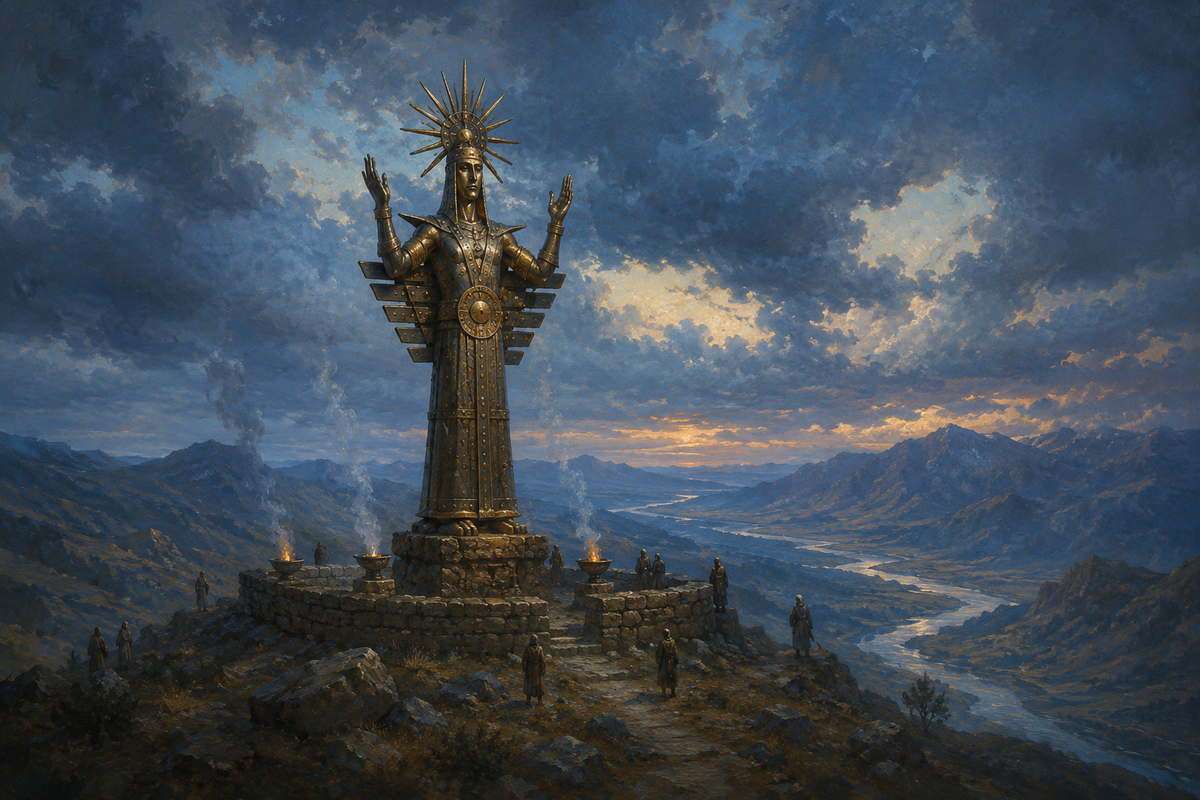
For the biography of the first king something else matters more. The cult of Armazi was a state cult, and in the telling of the chronicle its founding is as much an act of royal power as the division of the country into eristavates. The wider Georgian pagan pantheon and the other gods are covered in a separate article on the pagan pantheon of Georgia.
The same chronicle says Pharnavaz was buried before the idol of Armazi. That detail is worth holding as a statement of the chronicle rather than an archaeological fact.
The name Armazi causes confusion. It is attached to several different things: the god himself, the ancient site of Armaztsikhe-Bagineti near Mtskheta, which is the fortress of Pharnavaz, and the medieval monastery and castle of Armazi, built many centuries later. The last two have nothing to do with the story of the first king.
✍️ Did Pharnavaz Create the Georgian Alphabet?
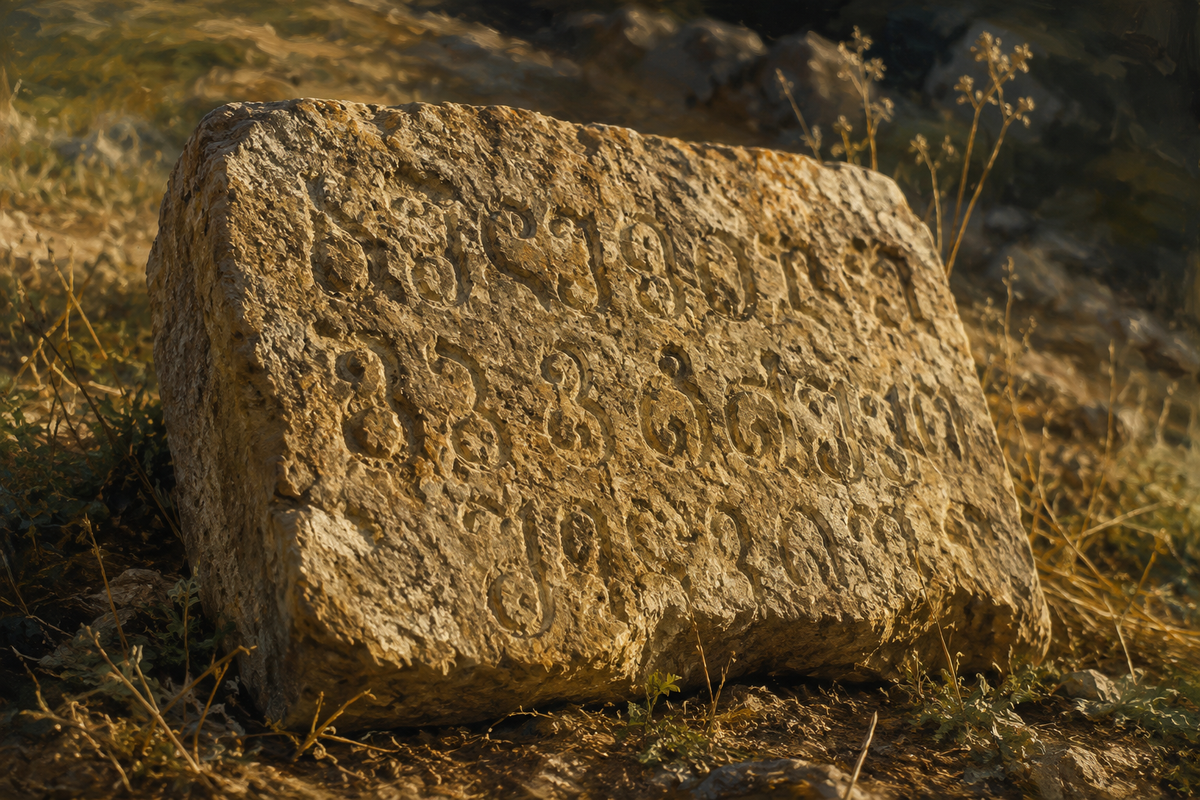
The chronicle says it plainly: Pharnavaz spread the Georgian language and created writing. From that sentence grew the durable tradition that the Georgian alphabet appeared in the third century BC at the will of the first king.
The evidence looks different. The oldest surviving monuments of Georgian writing date from the fifth century AD. They are inscriptions in asomtavruli, the earliest of the three Georgian scripts. Roughly seven centuries separate Pharnavaz from those first inscriptions, and not one indisputable specimen of Georgian writing has been found in between.
The two cannot be strictly reconciled. Some researchers allow that a written tradition existed earlier and simply did not survive, since people may have written on perishable materials. Others see in the account of the chronicle a device common in the Middle Ages, whereby the founder of a state is credited with the creation of writing as well, in order to make the culture look older.
| 📜 What the Chronicle Says | 🔬 What the Evidence Shows |
|---|---|
| Pharnavaz created writing in the third century BC | The oldest surviving monuments of Georgian writing date from the fifth century AD |
| The alphabet appeared at once, by royal will | Georgian writing passed through three scripts: asomtavruli, nuskhuri, mkhedruli |
| Writing belongs to the birth of the state | The earliest inscriptions belong to the Christianisation of the country |
| The evidence is the text of Kartlis Tskhovreba | The evidence is dated inscriptions and manuscripts |
How the three Georgian scripts work, and when the familiar mkhedruli appeared, is covered in the article on the Georgian alphabet.
🏛️ The Pharnavazid Dynasty: What Came Next
After Pharnavaz the kingdom passed to his son Saurmag, and power in Kartli stayed for a long time with the house named after its founder, the Pharnavazids. The line was broken, the throne was contested, yet it was to Pharnavaz that the kings of later centuries traced their descent.
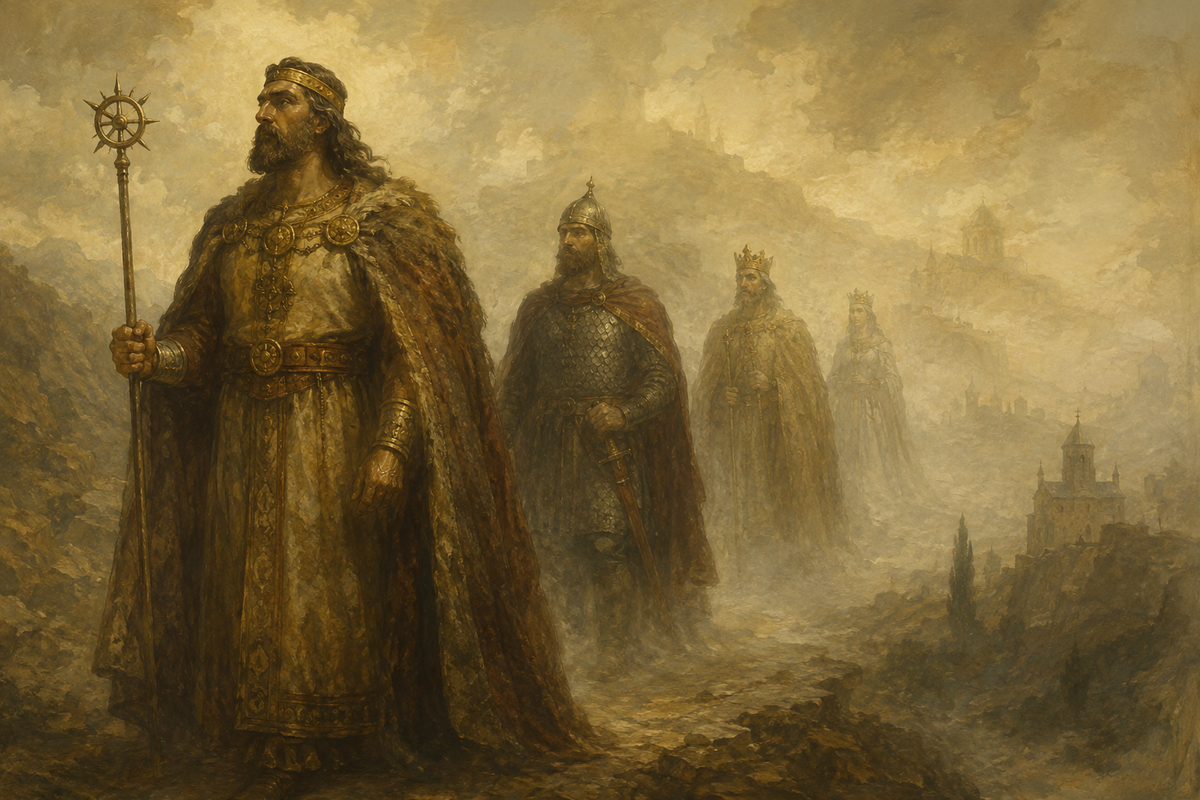
Later the country was ruled by the Chosroid house, to which tradition assigns Vakhtang Gorgasali, and from the end of the first millennium the Bagrationi held the Georgian throne. Their best known members are David the Builder and Queen Tamar. So the line begun by a semi-legendary hunter with a treasure runs through the whole of Georgian history.
The chronicle traces the descent of every later king of Kartli back to Pharnavaz: to count as his descendant was to hold a lawful claim to the throne.
A paraphrase of the formula in Kartlis Tskhovreba
🗺️ Where to Find Traces of Pharnavaz Today
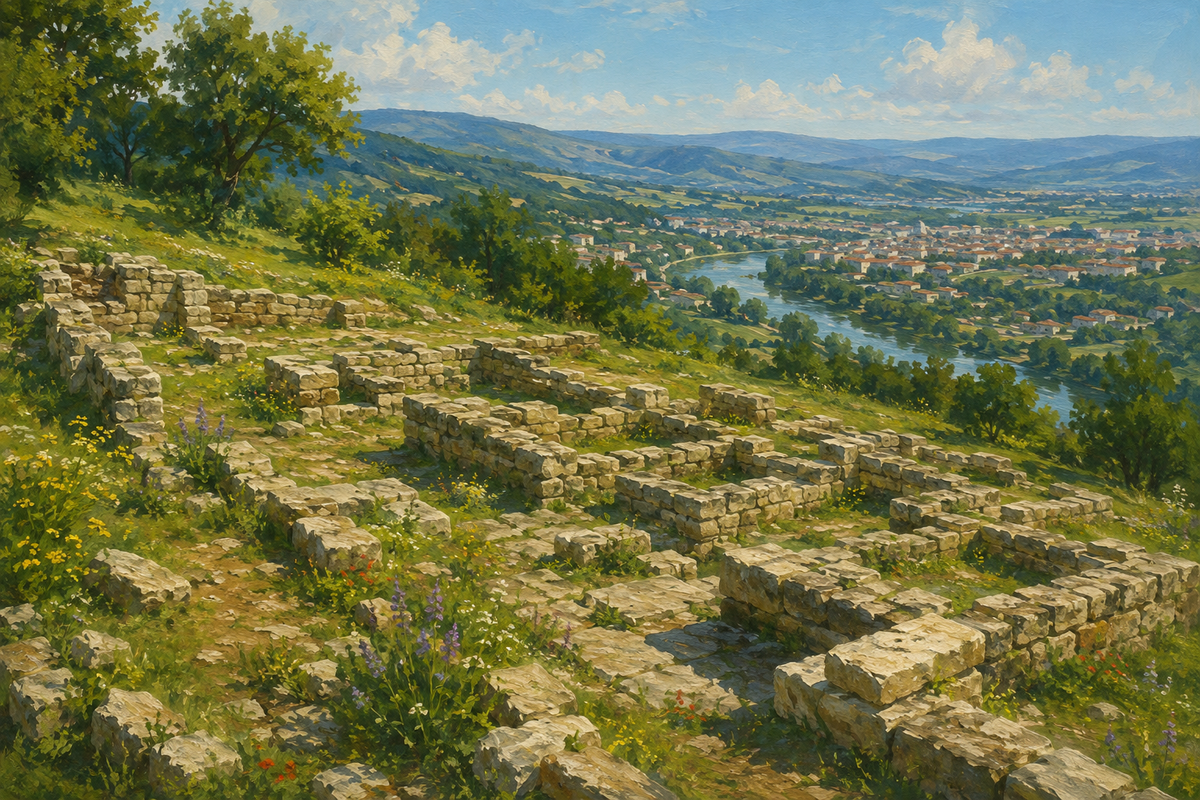
There is no tomb, no palace and no inscription signed by Pharnavaz. The places the chronicle ties to his name can still be visited, though, and they all lie close to Mtskheta. What else is worth seeing in the area is gathered in the guide to the historical monuments of Mtskheta.
🗺️ Traces of Pharnavaz on the Map
Schematic map, distances not to scale
The ancient capital of Kartli and the city of the first king. 20 km from Tbilisi.
An ancient site on the right bank of the Kura, linked by tradition to the fortress of Pharnavaz.
Finds from excavations nearby, including Armazis-khevi.
A modern monument to the founder of the Georgian monarchy, in Tbilisi.
| Place | Where | Why Go |
|---|---|---|
| Armaztsikhe-Bagineti | Mtskheta, the hill above the Kura | An ancient site on the spot of the fortress that tradition links to Pharnavaz |
| Mtskheta | 20 km from Tbilisi | The ancient capital of Kartli and the city of the first king |
| Museum Reserve of Greater Mtskheta | Mtskheta | Finds from excavations nearby, including Armazis-khevi |
| Monument to King Pharnavaz | Tbilisi | A modern monument to the founder of the Georgian monarchy |
❓ Frequently Asked Questions About Pharnavaz I
💬 Georgian tradition names Pharnavaz I as the first king: he was the first to take the title of mepe and ruled Kartli, the eastern Georgian kingdom with its capital at Mtskheta.
💬 Tradition places him in the third century BC, roughly 299 to 234 BC. There are no exact dates: the chronicles were written far later, and every regnal year is approximate.
💬 According to the chronicle the future king sheltered in a cave while hunting and found a treasure left by his ancestors. With that gold he raised an army, joined forces with Kuji of Egrisi and overthrew the governor Azon.
💬 The chronicle says so, but there is no confirmation. The oldest monuments of Georgian writing date from the fifth century AD, so tradition and evidence stand about seven centuries apart.
💬 Armazi was the supreme deity of pre-Christian Kartli. The chronicle says Pharnavaz set the idol up near Mtskheta, on the hill that carries the same name. Its exact position has not been established.
💬 There is no clear answer. Classical authors say nothing about him, and the Georgian chronicles were written more than a thousand years after his time. Assessments range from a real founder of the kingdom to a legendary ancestor of the dynasty.
💬 The dynasty named after Pharnavaz. His son Saurmag ruled after him, and later kings of Kartli traced their descent back to him. The house was followed by the Chosroids and then by the Bagrationi.
📌 Key Points in Brief
Pharnavaz is where the Georgian monarchy starts counting. The chronicle gave him everything a state begins with: the royal title, a capital, the division into provinces, a state cult and even writing. None of it can be checked against documents of the period. Archaeology confirms something else: Mtskheta and Armaztsikhe really were the centre of a strong kingdom in antiquity. So Pharnavaz is read on two levels at once, as a possible real ruler of the third century BC and as the figure in whom Georgian tradition gathered the memory of its own statehood being born.
💗 Read Next
- The Pagan Pantheon of Georgia: Gods of Pre-Christian Kartli
- The Georgian Alphabet: Three Scripts and Their History
- The Kingdom of Colchis: Western Georgia Before Our Era
- Vakhtang Gorgasali: Warrior King and Founder of Tbilisi
- David the Builder: How Georgia Became the Strongest Kingdom in the Caucasus
- Queen Tamar: The Golden Age of Georgia
- Mtskheta: The Oldest Georgian Capital
💬 Now Over to You
Do you think a real person stands behind Pharnavaz, or is he a composite figure?
Have you been to Armaztsikhe-Bagineti, and what stayed with you most?
Which legend is the stronger one: the treasure of Pharnavaz in the cave, or the pheasant of Vakhtang Gorgasali?
Which of the ancient kings of Georgia should we write about next?
Tell us in the comments: good arguments and corrections make their way into the article.

3 comments
Log in to leave a comment
Я вот смотрю на современную Грузию и понимаю, как важно помнить свои корни. Наверное, именно такие личности, как Фарнаваз, стали основой для формирования уникальной культуры. Его правление похоже на начало эпопеи, где каждая страница несёт в себе отголоски древности. Странно, что мы порой забываем о таких важнейших фигурах. Хотелось бы, чтобы такие истории звучали чаще, чтобы мир не только смотрел на Грузию через призму вина и гор, но и осознавал, откуда пошла вся эта красота.