



🍇 A September Trip to Georgia: Where It Is Warm, Where It Rains and Where to Go for the Grape Harvest
🍇 September in Georgia: where it is warm, where it pours
The month when the whole country works at once: the sea is still warm, the mountain trails are still open, and Kakheti is in the middle of the grape harvest. But September varies by region far more than you would expect of a country this size.
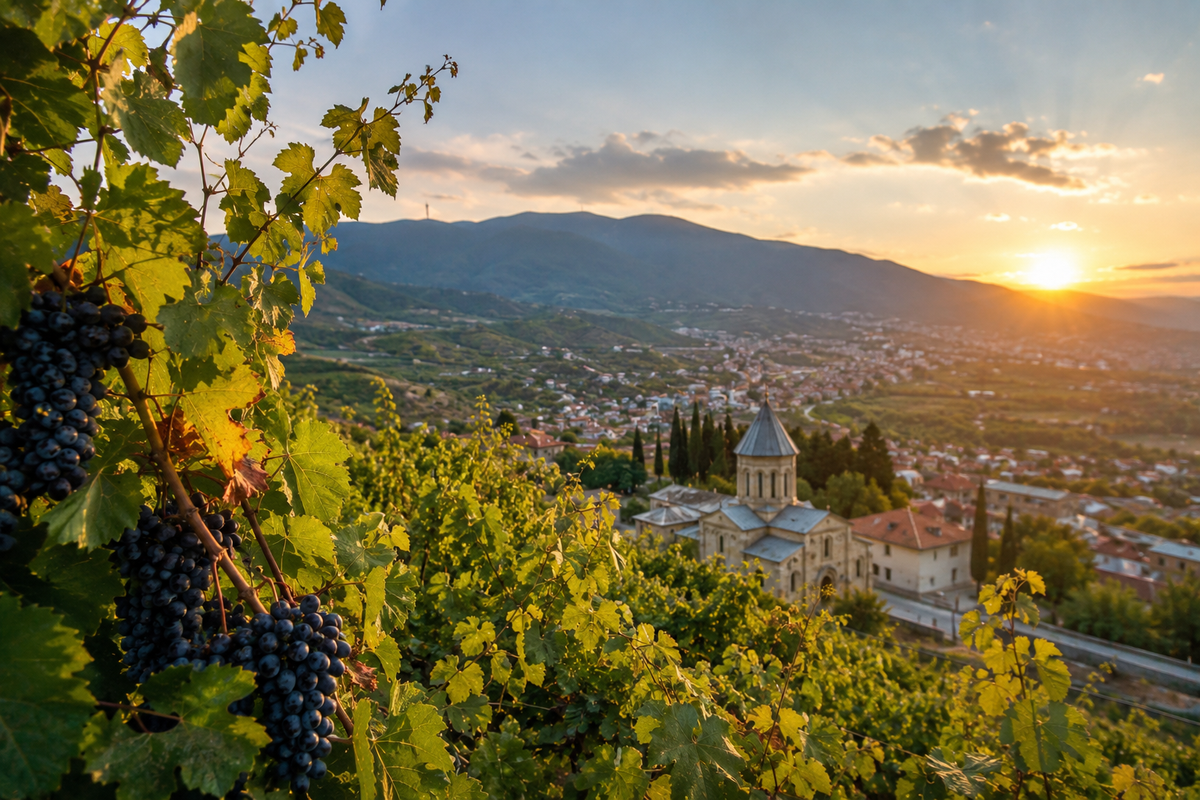
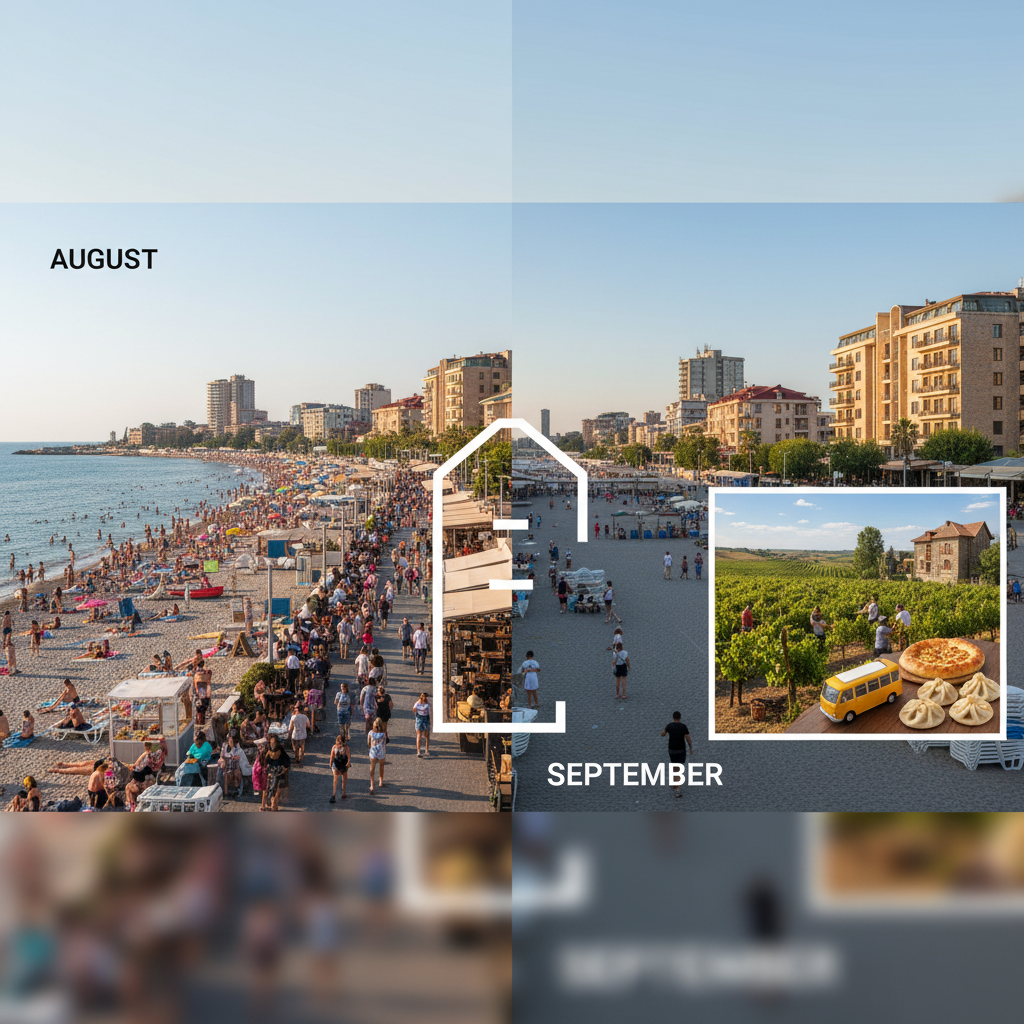
September in Georgia is what Russian-speaking travellers call the velvet season: the heat breaks, the sea holds around 25°C, and Kakheti starts bringing in the grapes. There are noticeably fewer visitors than in August, and prices drift down from mid-month.
If you are flying in from further away and have one week rather than one weekend, the choices below matter more, so we will start with where September actually delivers.
☀️ Why September is called the best month
The argument usually runs: same weather as August, without the crowds and cheaper. Mostly that is true.
Cities become walkable in daylight again. Mountain trails have dried out after the summer storms, and the fog and evening downpours give way to clear, settled days. Markets carry figs, grapes and pomegranates at once, with persimmon arriving by the end of the month.
And there is one thing no other month has: rtveli, the grape harvest. It turns all of Kakheti upside down, and September is the only time you can see it.
There is also a downside that rarely gets written about, and it is easier to start there.
🌤️ Weather by region: three different Georgias
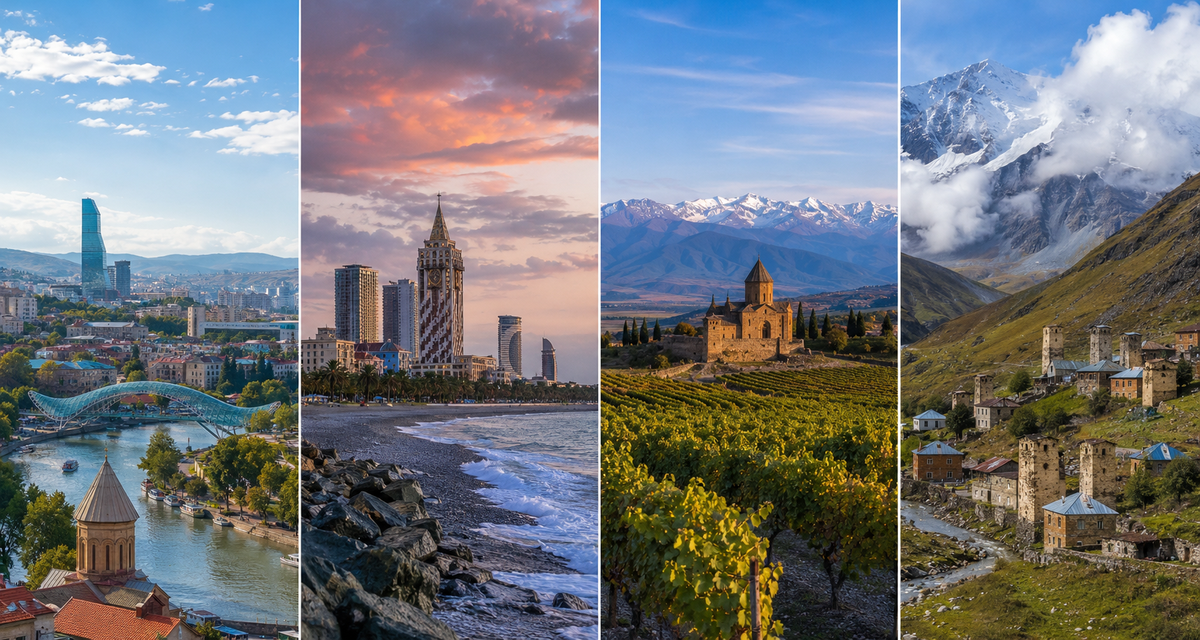
The country is small, but it holds so many climate zones that September in Tbilisi and September in Ushguli are two different months. Georgia has eleven regions, and the season diverges between them more than you would guess.
Tbilisi and the east. Early in the month days still reach a summery 25-28°C, easing noticeably by the end. Evenings are cool and midday walking is fine again, which you could not say of August. Rain is scarce.
Adjara and the coast. Around 23°C by day, about 16°C at night. Humidity is lower than in summer, which helps. The catch is elsewhere: by climate normals September is the wettest month of the year here, roughly 250 mm of rain across about thirteen wet days. Showers are usually short and heavy with sun in between. Beyond Batumi the region has other bases, collected in our guide to the resorts of Adjara.
Kakheti. Dry and warm, comfortable by day, fresh in the evening. The best conditions of the year for wineries and walking in the hills. The wider picture is in our piece on Kakheti as a wine region.
The mountains. Kazbegi belongs to Mtskheta-Mtianeti, Svaneti to Samegrelo-Zemo Svaneti, and Tusheti sits administratively within Kakheti. Days are comfortable for walking everywhere, nights drop to 5-8°C and lower with altitude. A warm layer is not optional, even if you were in a T-shirt down in the valley.
Month-by-month figures for the capital are in average temperatures in Tbilisi by month.
🌊 The sea in September: swimming yes, sunbathing not always
The water averages around 25°C over the month, dropping to 22-23°C by the end. On temperature alone the swimming season covers all of September and part of October.
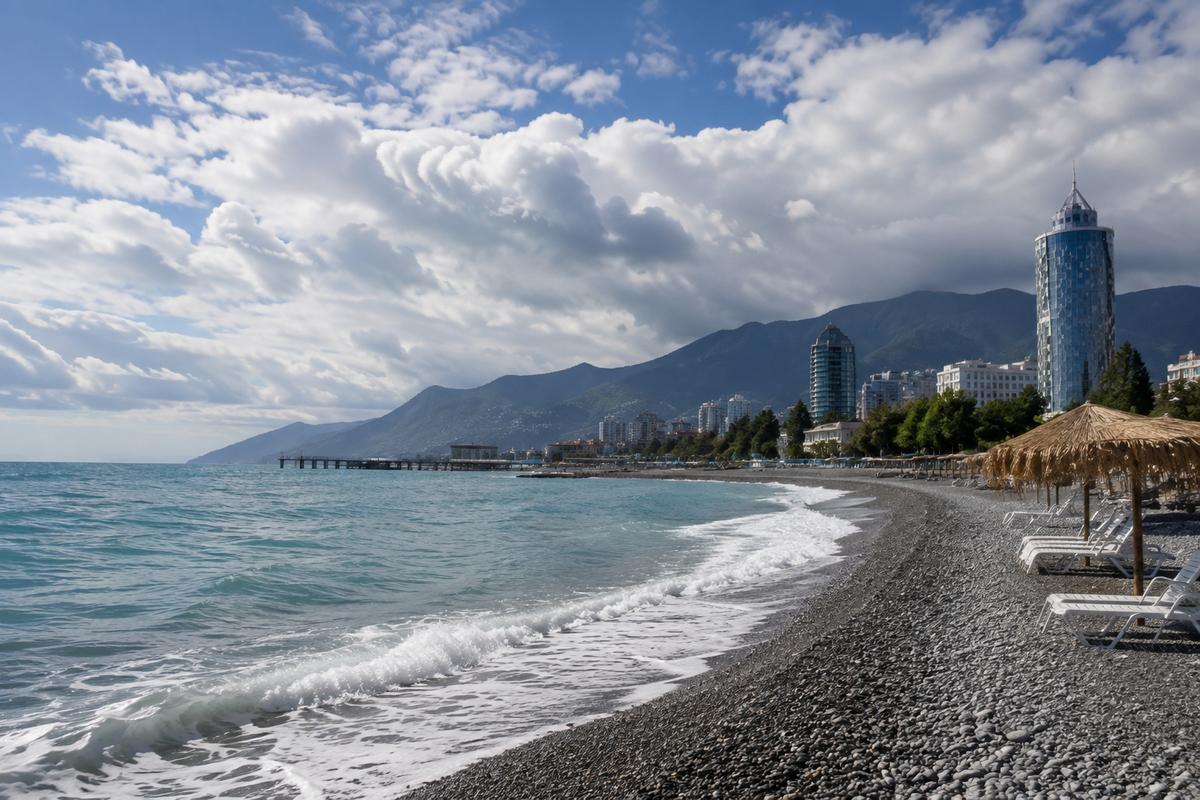
The question is the sky, not the water. Thirteen wet days out of thirty means statistically every second or third day sees rain. It usually passes quickly, but on a five-day trip the odds of losing one or two are real.
The first half of September on the coast is close to August; the second half is already autumn. If the sea is the main point of the trip, take the first two weeks.
If you are staying longer than a week, build in a couple of days that do not depend on the beach. The Batumi Botanical Garden is at its best in September: the heat is gone but the greenery is still full. The Argo cable car runs too, and you can walk up to the top station instead. Next along the coast is Kobuleti, quieter and cheaper, described in our piece on the town of Kobuleti.
Swimming conditions are covered in detail in Batumi in September, and the shoulder season itself in the velvet season in Georgia.
🍇 Kakheti and rtveli: the reason to choose September deliberately
This is what makes September worth picking on purpose rather than by default.
Rtveli, the grape harvest, begins in Kakheti in late August and the first days of September, later in the mountain districts. The active phase falls in the second half of the month: in 2025 the region had processed over a hundred thousand tonnes of grapes by the third week, with daily throughput above ten thousand tonnes.
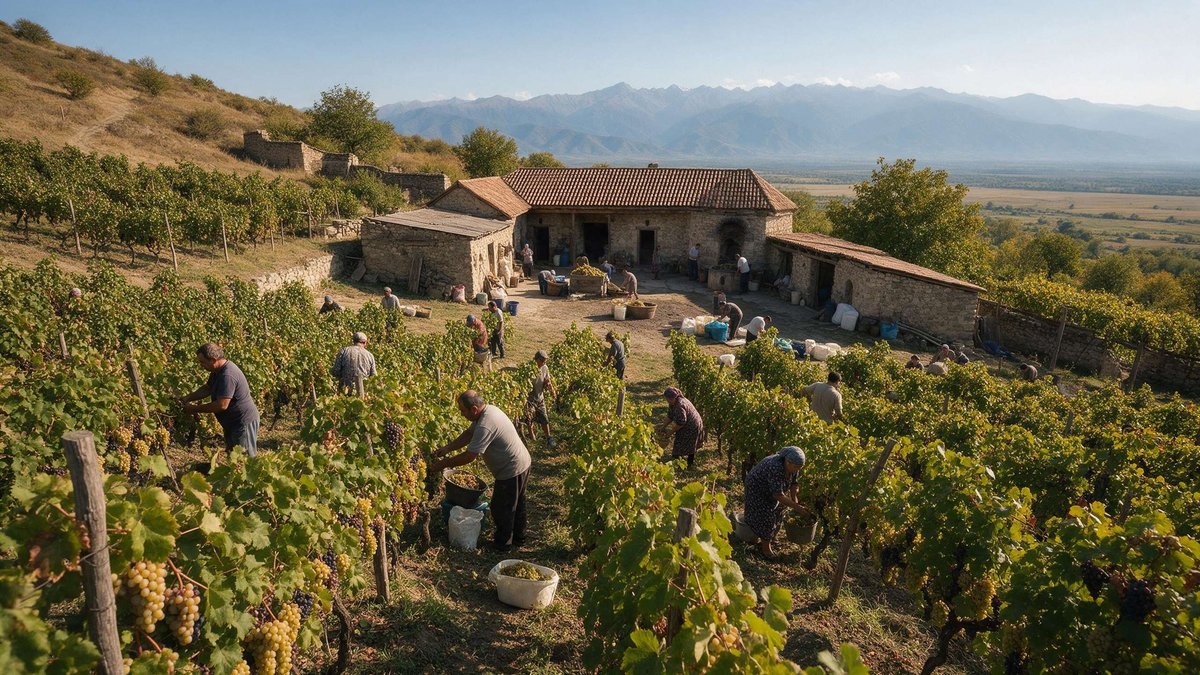
For a visitor that means one simple thing: the entire region is at work. Vineyards are full of people, grapes are being pressed in courtyards, and wineries smell of must. Many estates let visitors take part, and this is not a staged programme laid on for coaches but ordinary life you are allowed to watch.
Two towns anchor it. Telavi, the administrative centre with Batonis Tsikhe fortress and its famous plane tree, covered in our piece on the town of Telavi. And Sighnaghi, a hill town above the Alazani valley with the Caucasus range visible on a clear day.
Getting there from the capital is covered in Tbilisi to Kakheti. The festival itself has its own piece, rtveli, and the grape varieties and producers are in Georgian wine.
Which estates to visit is covered in our ranking of Kakheti wineries, and where to sleep in where to stay in Kakheti.
One caveat. Harvest dates depend on the variety, the district and the weather, and they shift from year to year. If you are coming specifically to take part, write to the estate in advance.
⛰️ The mountains: September is the last predictable month
September is valued in the mountains for being settled. Summer thunderstorms and fog give way to dry, clear days, the trails have dried out, and by the end of the month the slopes start turning.
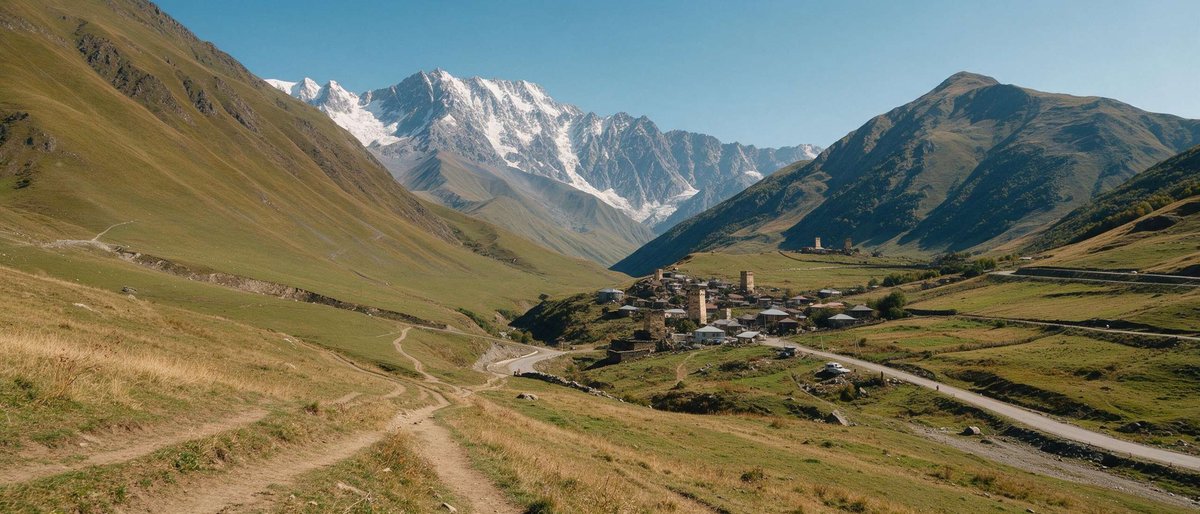
Kazbegi, Mtskheta-Mtianeti. The most accessible option and the easiest to reach. The base village is Stepantsminda, with Gergeti Trinity Church above it. The drive is covered in Tbilisi to Kazbegi and the Georgian Military Road.
Svaneti, Samegrelo-Zemo Svaneti. Mestia and Ushguli run all September and the roads are open. For an overview see Svaneti: mountains, towers, glaciers, and the walk from Mestia up the Mestiachala valley suits September weather exactly.
Tusheti. Administratively this is northern Kakheti; in practice it feels like another country. What to see is collected in Tusheti, a region of reserves, and a route through it in from Omalo to Omalo. Tusheti carries the only hard deadline in the whole of September, and it comes next.
Routes across the country are gathered in hiking in Georgia.
🏙️ Tbilisi and around, without the summer heat
Walking Tbilisi in daylight in August is hard work. In September it is a normal city again: you can climb to Narikala at midday, wander Abanotubani, and sit out on terraces in the evening.
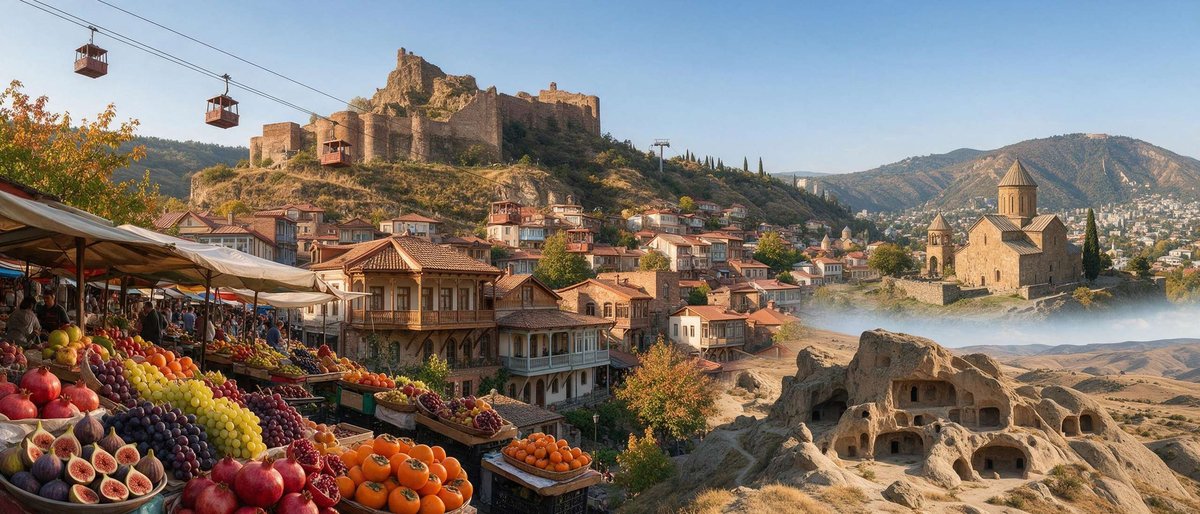
The same holds for day trips. Mtskheta and David Gareja are punishing under summer sun and simply pleasant in September. Gareja sits in semi-desert, where the difference between August and September is especially sharp, as our piece on the Gareja desert makes clear.
One more thing the month is good for: fruit. Figs, grapes, pomegranates and, by the end of September, persimmon, all in the markets at once and cheap. Seasonality is covered in Georgian fruit.
💰 Prices: why September costs less than August
The logic is simple. Coastal accommodation holds high-season rates until roughly mid-month, then drifts down, and by late September the gap with August is noticeable.
Food and transport carry no seasonal markup at all: khachapuri, khinkali, marshrutkas and taxis cost the same as they do in February.
Kakheti moves the other way. Rtveli is its high season, and guesthouses in Telavi and Sighnaghi go early. If that is your plan, book ahead.
The same weather as August, cheaper and without the crowds. That is what the month is chosen for.
🎒 What to pack
The organising principle for September is layers. T-shirt by day, something over it in the evening, and that holds for Tbilisi and the coast alike.
A rain jacket or light windproof is essential for Adjara. An umbrella works less well there: the rain usually comes with wind.
For the mountains, hiking boots and something warm for the night. Five degrees after dark at altitude is normal, not unusual.
More on what belongs in the bag is in ten things to bring to Georgia.
🗓️ September or October
Short answer: in September you can still swim, in October you cannot.
October offers other things: Tbilisoba at the start of the month, colour in the mountains, late-district harvests, and lower prices still. But the sea cools and mountain roads begin to close.
If you only have one trip, September is the more versatile choice. If you have already been in summer and do not need the sea, October is the better-looking month.
The full twelve-month picture is in when to visit Georgia, and August for comparison in a trip to Georgia in August.
If this is your first visit and you have a week, do not try to combine the sea with the mountains. September makes it tempting because both are working, but the transfer from the coast to Svaneti eats a daylight day in each direction.
A seven-day plan that works. Three nights in Kakheti for the harvest, two in Tbilisi, two days out to Kazbegi. Leave the sea for a separate trip, especially since July and August are warmer for it anyway.
Put like that it stays abstract, so look at the map. Tbilisi, Kakheti and Kazbegi form a compact triangle in the east of the country, while Batumi and Mestia sit at the opposite end.
Been to Georgia in September? Leave a review on Madloba: tell us whether the weather held on the coast, whether you caught the harvest, and which dates you travelled. Those details are exactly what helps people planning for next year.
Information is current as of September 2026. The climate figures are long-term averages, not a forecast. Harvest dates, accommodation prices and the state of mountain roads all change, so check current conditions before you travel.
❓ FAQ
💬 Yes, it is one of the easiest months of the year. The heat breaks, there are fewer visitors, prices sit below August, and Kakheti is in the middle of the grape harvest. The one caveat concerns the coast: September is the wettest month of the year in Adjara.
💬 Yes. It averages around 25°C over the month and 22-23°C by the end. Swimming is comfortable throughout. The question is the weather above the water rather than the water itself.
💬 By climate normals this is the wettest month of the year in Adjara: around 250 mm of rain across about thirteen wet days. Showers are usually short with sun in between, but plan a beach week with a fallback.
💬 In September you can still swim, in October you cannot. October brings colour in the mountains, Tbilisoba and lower prices, but the sea cools and mountain roads start closing. For a single trip, September is more versatile.
💬 In Kakheti the harvest begins in late August and the first days of September, later in the mountain regions. The active phase falls in the second half of the month. Exact dates depend on variety, district and weather, so if you are coming to take part, write to the estate in advance.
💬 Yes. The Abano pass is open from mid-May to the end of October, and September is the last month with predictable weather. Snow can settle at 2,950 m as early as late September and there is no fixed closing date, so plan the drive back with a spare day.
💬 Layers: a T-shirt for the day and something over it in the evening. A rain jacket or windproof for Adjara, where an umbrella loses to the wind. For the mountains, hiking boots and a warm night layer, since five degrees at altitude is common after dark.
💬 On the coast, yes, particularly from mid-month. Food and transport carry no seasonal markup at all. The exception is Kakheti: rtveli is its high season, and accommodation in Telavi and Sighnaghi should be booked ahead.
💬 Everything you would do in summer, without the heat: the climb to Narikala at midday, Abanotubani, terraces in the evening. Day trips to Mtskheta and David Gareja are far easier too. A particular pleasure of the month is the markets: figs, grapes, pomegranates and persimmon towards the end of September.
💬 Technically yes, but you will spend the week driving. The transfer from the coast to Svaneti eats a daylight day in each direction. For seven days the eastern plan works better: Kakheti, Tbilisi and Kazbegi are all close together.

0 comments
Log in to leave a comment