




🍇 The Grape Harvest in Georgia: What Rtveli Is and How to Join It
🍇 Rtveli: what it is and when to go
Rtveli is the grape harvest and everything that goes with it: pressing the fruit, filling the qvevri with must, and the feast that marks the end of the work. Not a single-day festival but a season roughly six weeks long that turns all of Kakheti upside down.
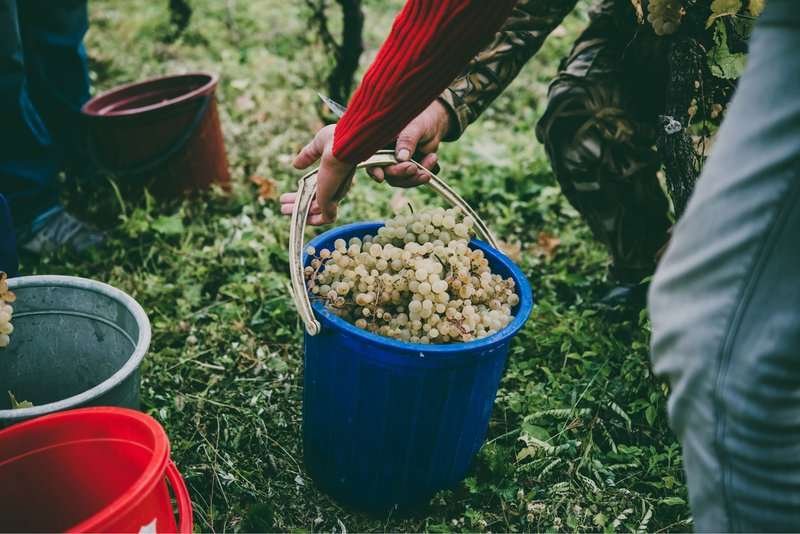
Arrive in Kakheti in mid-September and the first thing you notice is the smell. It hangs over the villages, faintly sour, faintly sweet, heavy. That is fermenting must, and in these weeks it soaks into everything: the courtyards, the roads, the clothes of people who have been in the vineyard since morning.
The second thing you notice is that everyone is busy. Not "there's a festival on" but genuinely busy: in the vines from early morning, then at the press in the yard, then in the marani. Rtveli is not a festival with a programme and a stage. It is work that a whole family and all the neighbours do together, and then drink to afterwards.
And here is the part that surprises people: joining in as a visitor is easier than it sounds. Many estates hand a guest a pair of secateurs and put them in the row with everyone else. No stage, no guide with a flag. You have simply been put to work.
🍇 What rtveli actually means
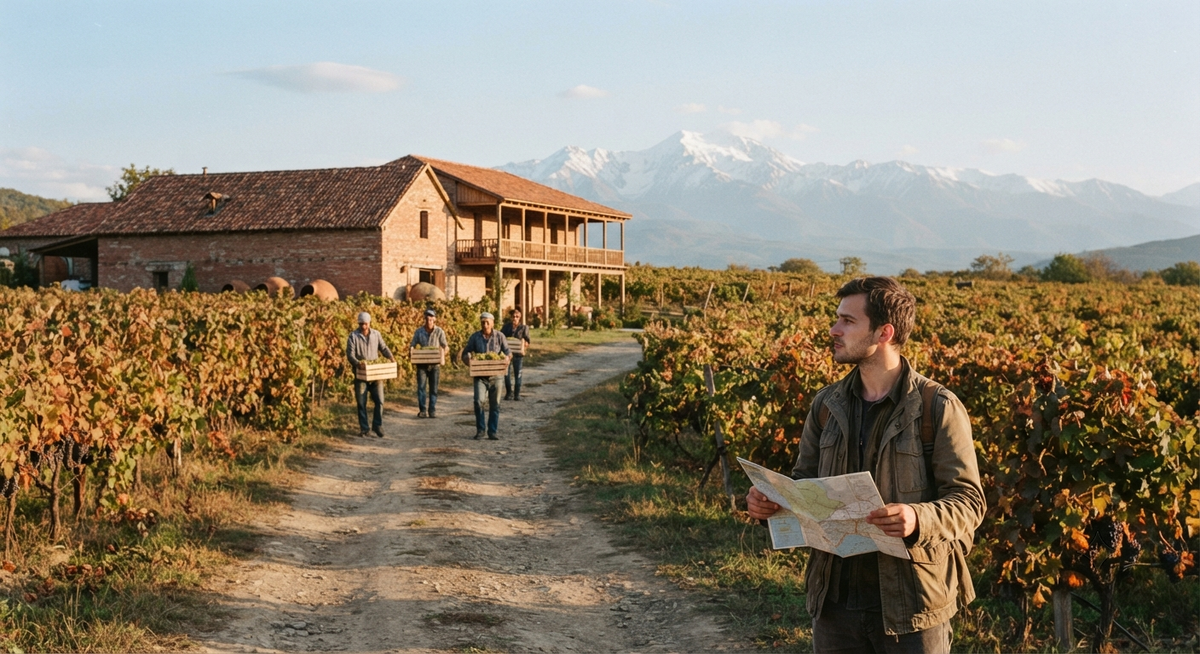
Rtveli is the grape harvest in Georgia and the whole cycle that follows it: cut, brought in, pressed, sealed into qvevri, and celebrated at the table.
The word translates literally as grape-picking, but in Georgian it has long meant more. When someone says "rtveli was good this year," they mean the whole season: the weather, the work and how the table went afterwards.
Why this matters more than it sounds. Winemaking in Georgia is not a hobby or an industry. Archaeologists have found evidence of cultivated vines and winemaking roughly eight thousand years old, and by current evidence this counts among the oldest traditions of its kind anywhere. People have been making wine on this land for longer than most of the states we know today have existed.
And much of it is still made the same way. Not everywhere, and not by everyone, but the qvevri tradition is a living practice, not a museum piece.
📅 Rtveli 2026: when exactly to go
Now for the practical part, since it is the first thing anyone asks.
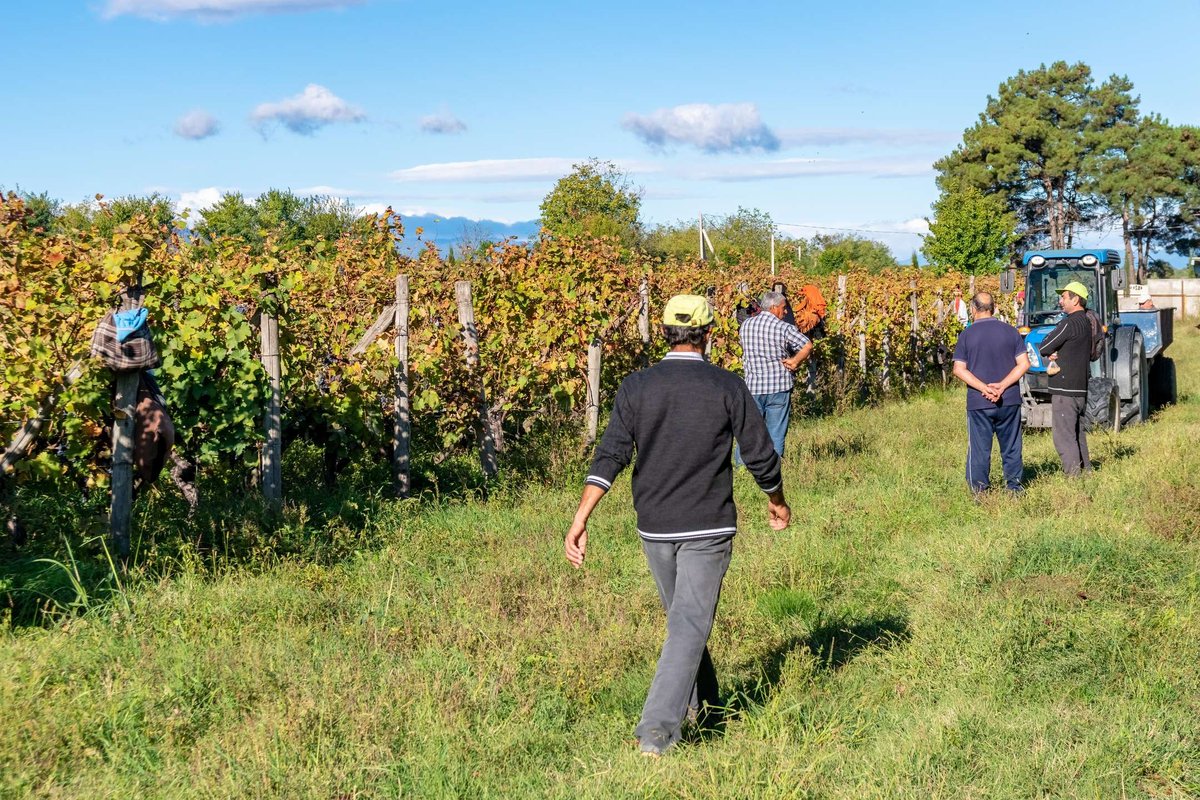
There is no fixed date. In Kakheti the harvest begins in late August and the first days of September, later in the mountain districts. Everything depends on the variety, the district and how the summer went: a hot one moves things a week earlier, a wet one a week later.
But the peak is fairly reliable, and it falls in the second half of September. For scale: by the third week of September 2025, Kakheti had processed over a hundred thousand tonnes of grapes, with daily throughput above ten thousand tonnes. The region runs around the clock in those weeks.
🏺 From vine to qvevri: how it actually works
This is where the Georgian way of making wine parts company with the European one, right down to the vessel it happens in.
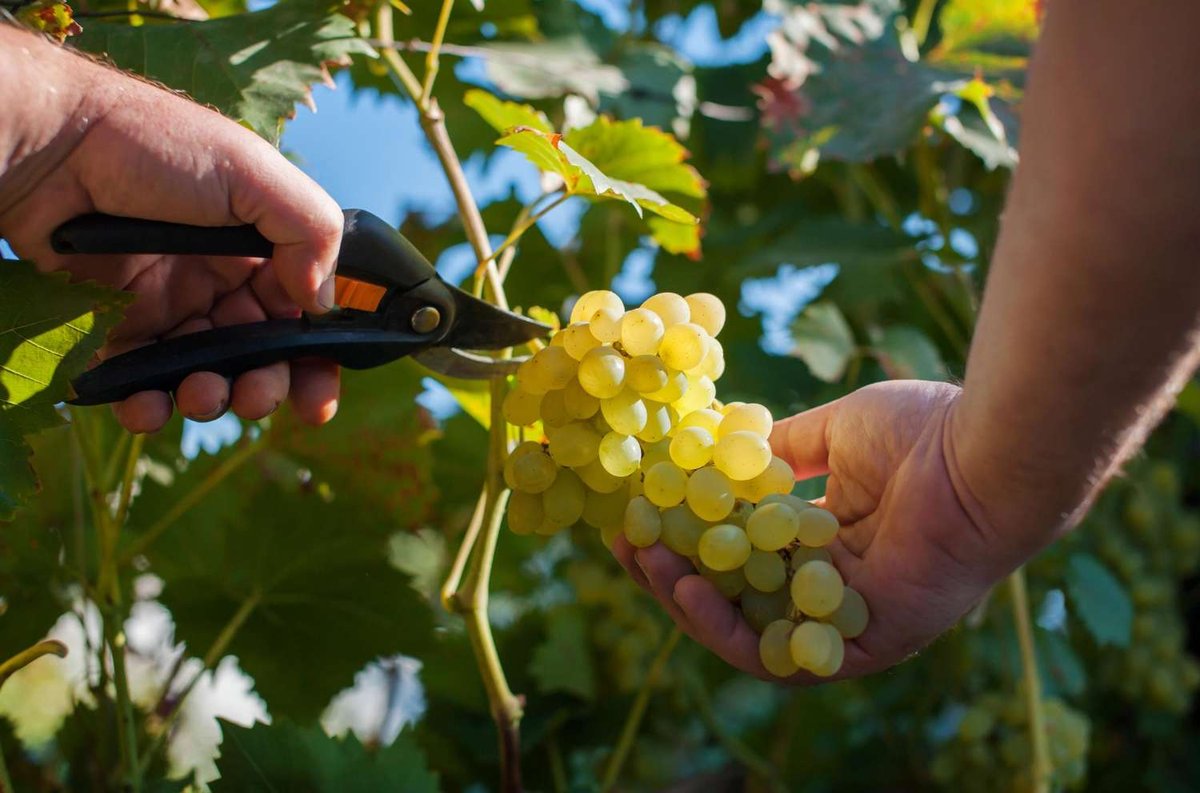
People go out into the vineyard early, around seven, before the heat sets in. It is done with secateurs: a bunch is cut, dropped into a bucket, the bucket emptied into a crate. It sounds simple, and the first half hour genuinely is. Then your back starts to ache, because the vines here grow low and you spend the morning bent over.
The grapes are then brought back to the yard. Larger estates run a mechanical press; smaller ones still tread the fruit in a satsnakheli, a trough hollowed from a single log. Barefoot, and this is not a show put on for visitors but the working method: it keeps the pips whole, which keeps the wine from turning bitter.
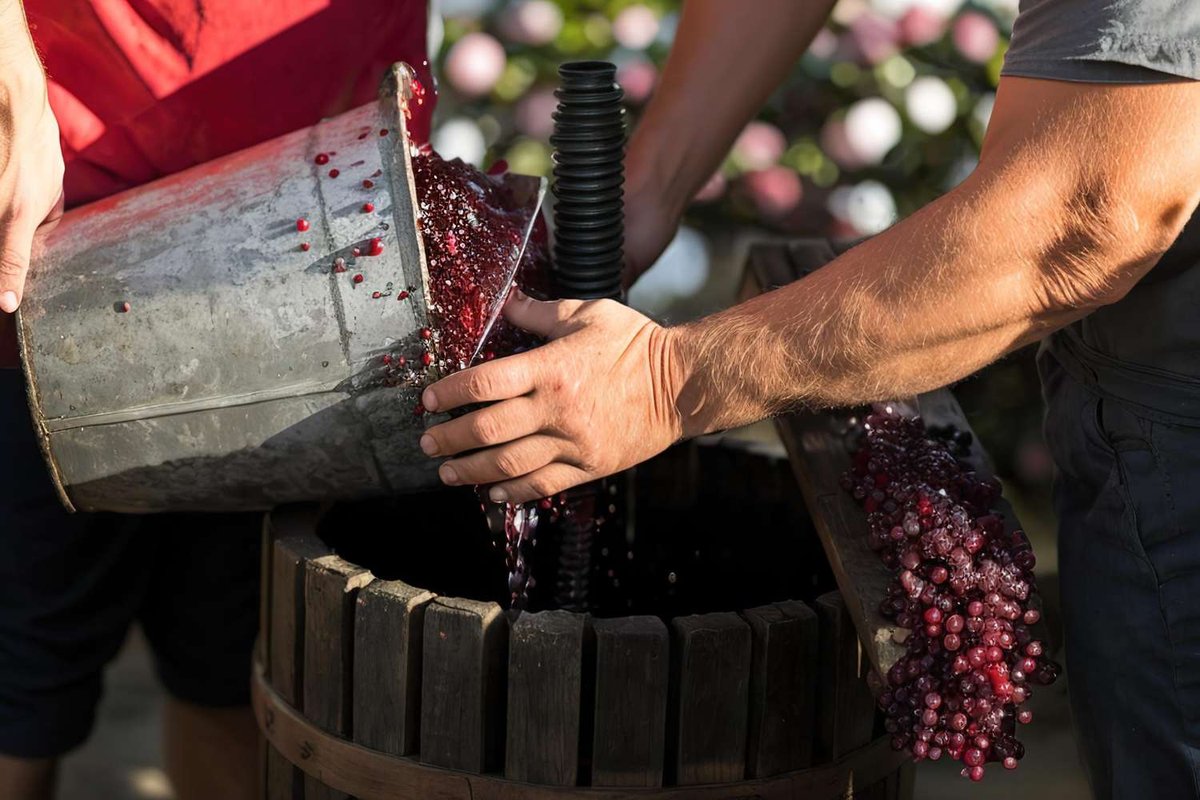
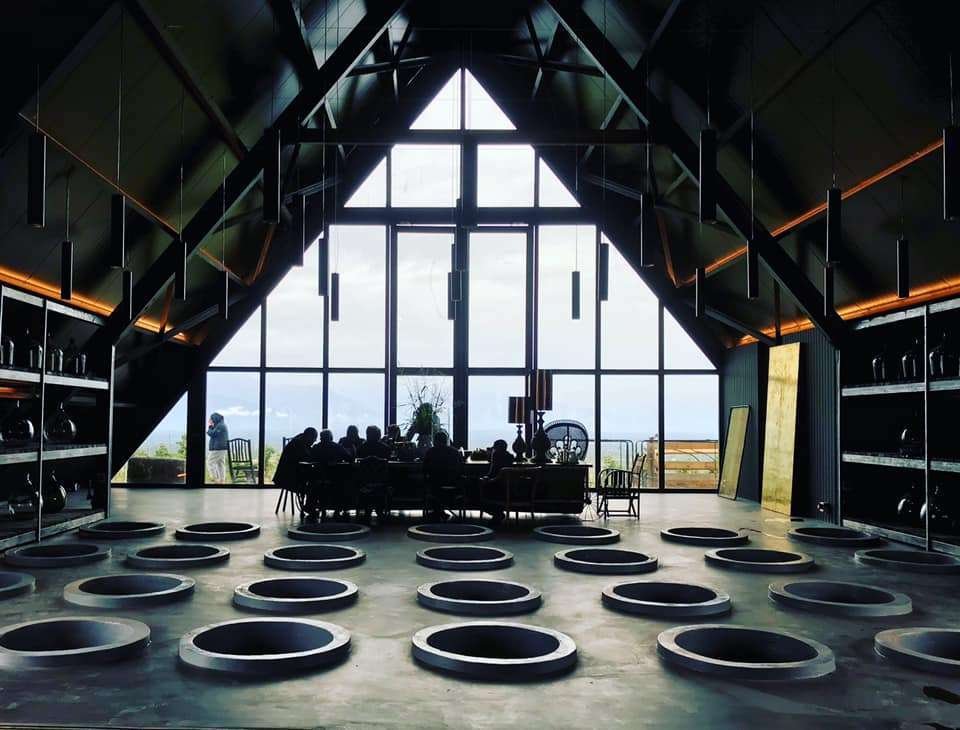
Then comes the part that sets Georgian wine apart. The must is not poured into a barrel or a steel tank but into a qvevri, a clay vessel buried in the ground up to its neck. The earth holds a steady temperature, and the wine ferments on its own, with no cooling and no heating.
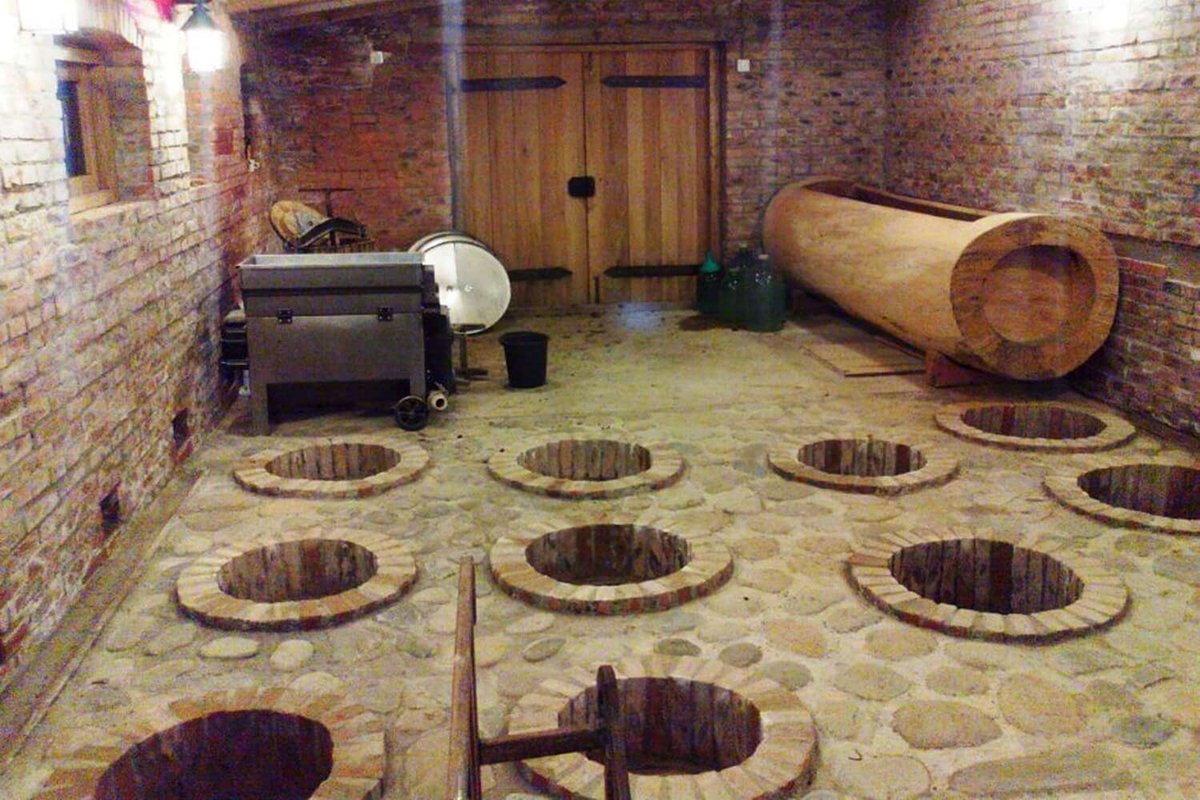
The key difference from European practice. By traditional Kakhetian method, the skins, pips and sometimes the stems go into the qvevri along with the juice. This is where the amber wines come from: white grapes left in contact with the skins produce a colour anywhere from gold to deep orange and a taste quite unlike a European white.
The qvevri is sealed, the lid daubed with clay, and left until spring. The qvevri method is on UNESCO's list of intangible cultural heritage, and this is a case where the recognition went to a living practice rather than a monument: it is still done this way in thousands of yards.
The room where the qvevri stand is called the marani, and for a family it carries a status beyond that of a cellar. Guests are shown into it, decisions are made in it, and it is often where the table is laid once the work is done.
🍽️ The supra: what many people stay for
The table after the harvest is not an add-on to the work. It is the completion of it, and it is treated that way.
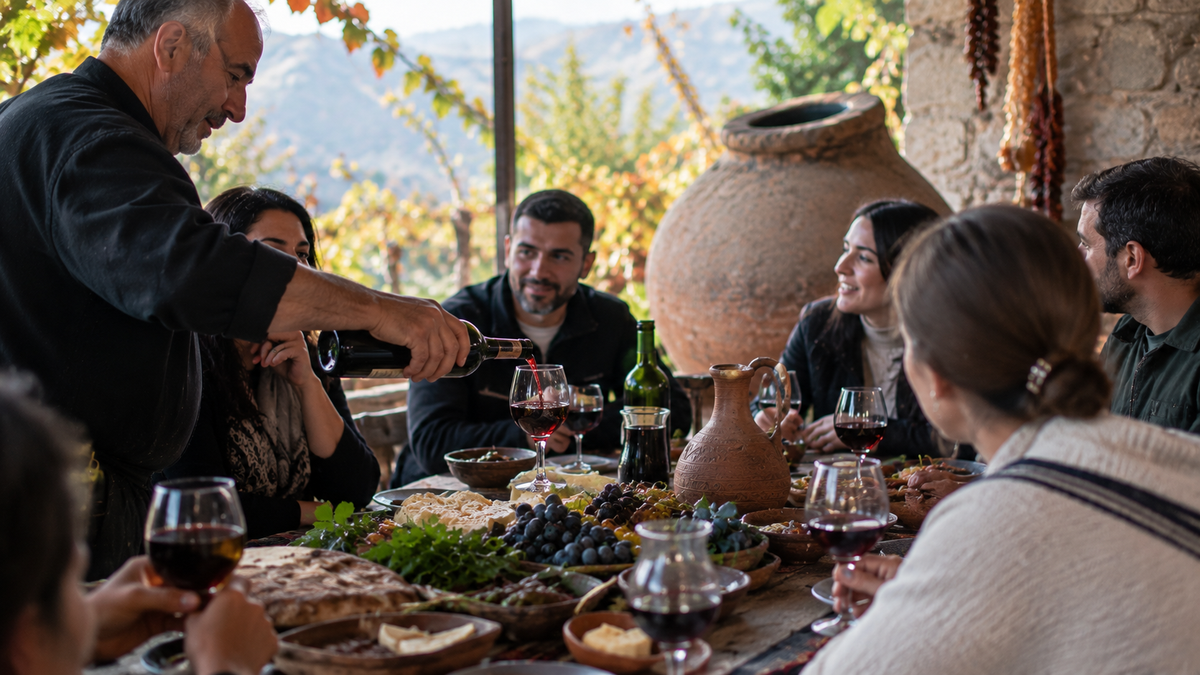
It is usually laid in the yard or in the marani, a long table. The food is simple and there is a lot of it: cheese, herbs, bread, mtsvadi off the grill, vegetables from the garden behind the house. Nothing elaborate, because the food is not the point.
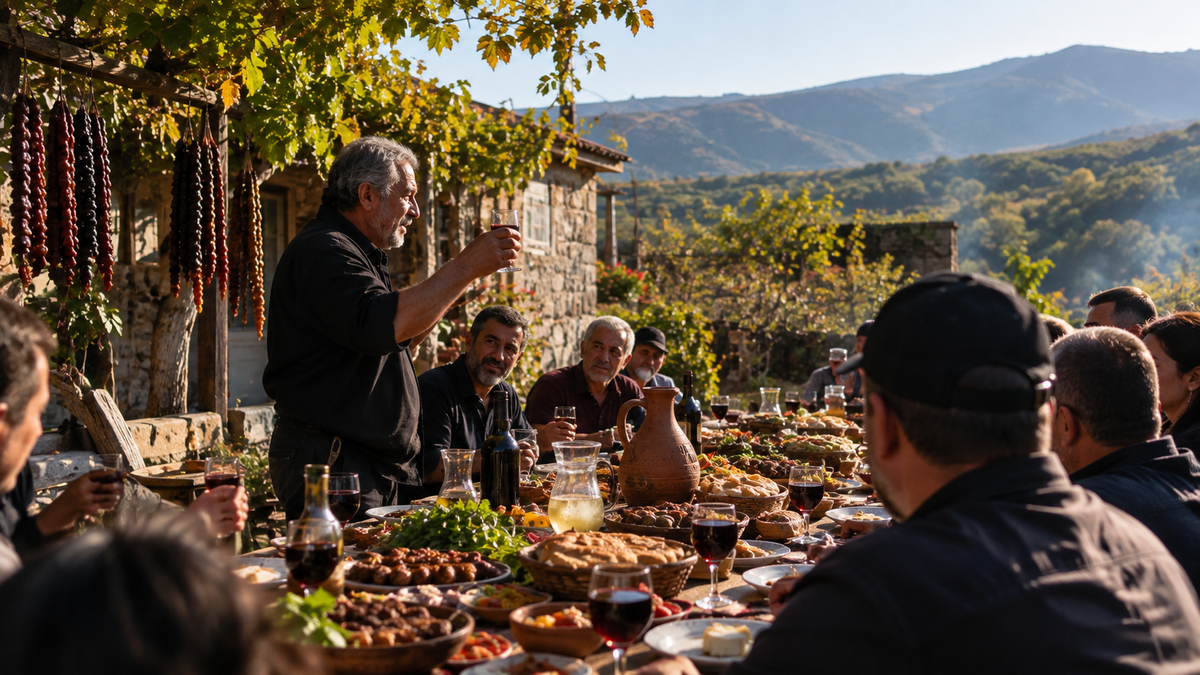
The point is the tamada. Not a host or master of ceremonies in the usual sense, but the person who keeps the order of toasts and, in effect, runs the conversation all evening. Toasts follow a set sequence, each with its own theme, and interrupting is not done.
The wine on the table is most likely last year's: this year's is still fermenting in the qvevri under a layer of clay. Sometimes madjari is poured, young, half-fermented wine, cloudy and slightly sweet. It goes down easily, and the effect arrives later, which is worth knowing in advance.
There is also churchkhela, made in these very days from fresh juice: walnuts on a string dipped in grape must thickened with flour, then hung to dry. What you buy at markets all year round and what is taken down from a line in a yard in September are two different things.
🗺️ Rtveli happens nationwide, but never the same way twice
Kakheti is the heart of the season, and most visitors head there. But grapes are picked all over Georgia, and each region has its own rhythm.
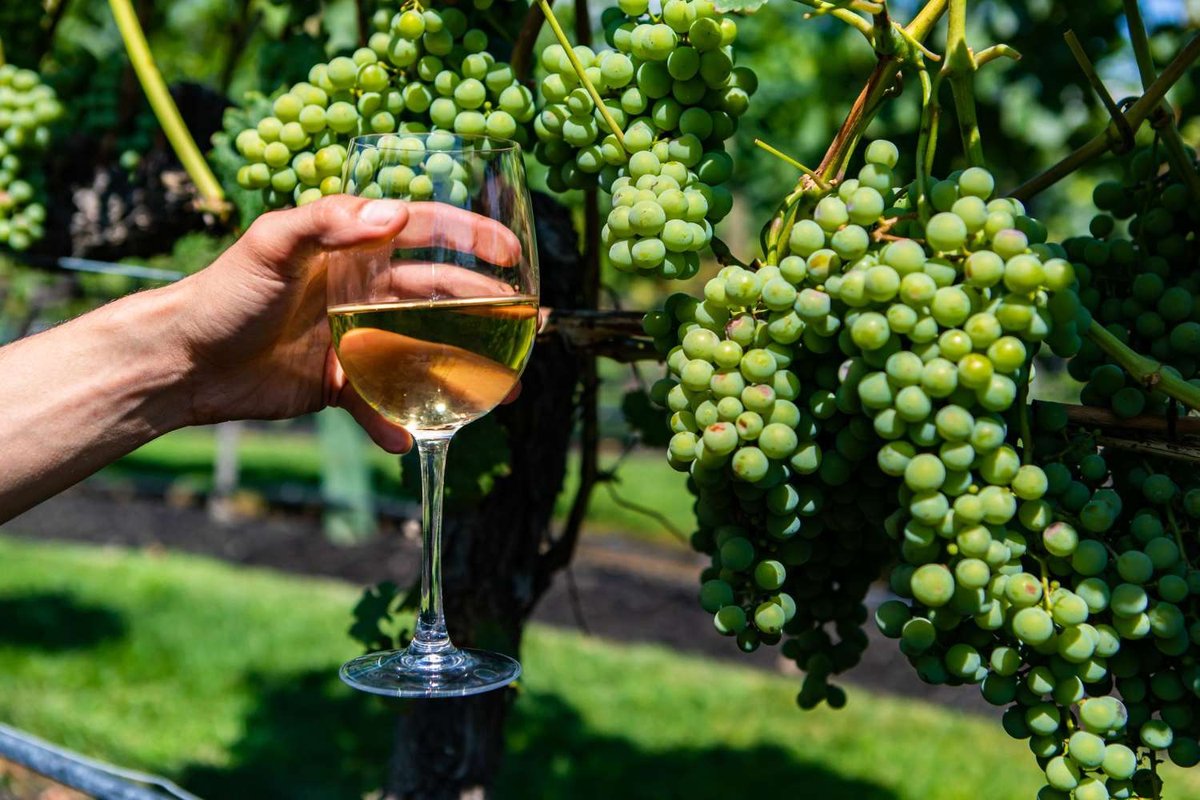
- Kakheti. The main grapes, Saperavi and Rkatsiteli, with the main flow through the second half of September. It also has the densest network of estates set up for guests. The anchor towns are Telavi and Sighnaghi.
- Imereti. Different grapes, Tsitska and Tsolikouri, and a different style: the must spends less time on the skins, so the wines come out lighter than Kakheti's. The season runs about the same, but with far fewer visitors. Where to go is in the guide to Imeretian wineries near Kutaisi.
- Racha. A mountain region, home to Khvanchkara. Picking runs later than in the lowlands, since the fruit ripens more slowly there.
- Samegrelo and the west. Late varieties run into October, and some later still: Ojaleshi is traditionally among the last grapes picked in the country, well into late autumn.
If you want to catch the harvest but September does not work for you, the west of the country is your option.
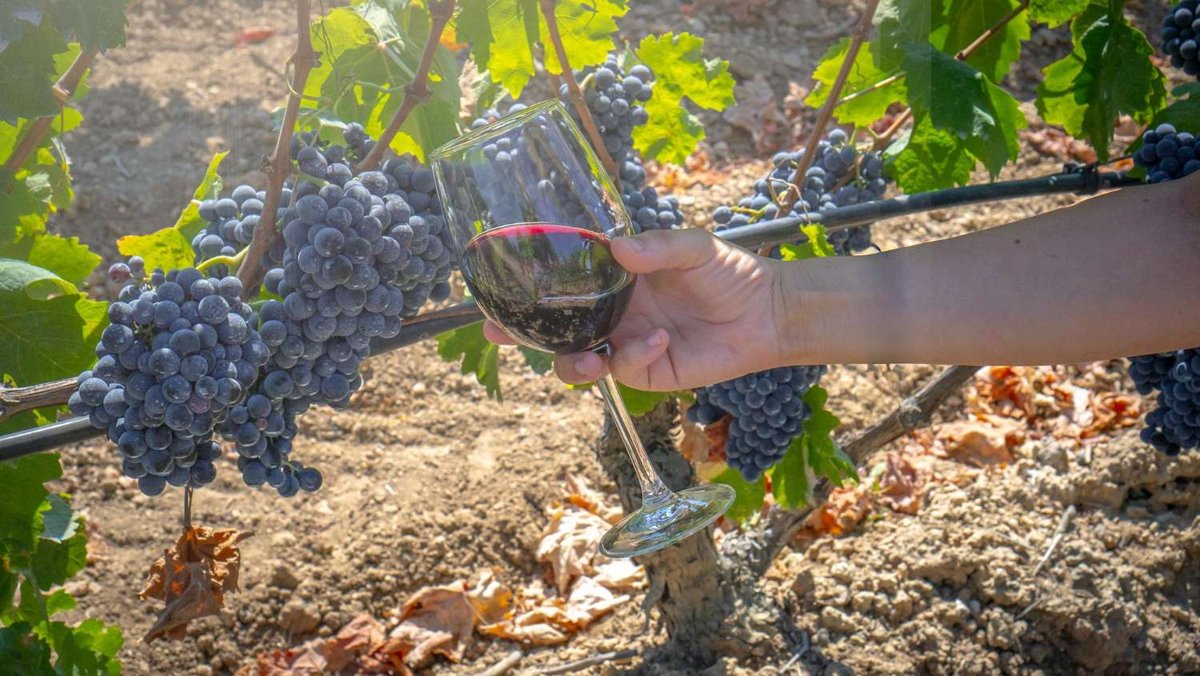
👋 Joining in: an honest guide
Now for the reason you probably came here.
First and most important: write ahead. Not the day before. Estates plan their picking around their own plots, and "we'll come Friday" can land exactly on a lull between batches. A week either way decides whether you see a full yard or the tanks already washed out.
Second: understand the format. This is not a ninety-minute tour. A typical day runs like this: the vineyard in the morning, the press by midday, the table in the evening. Turning up just to watch will not get you turned away, but taking part is valued far more. Take the secateurs.
Third: accommodation. Telavi and Sighnaghi book out weeks ahead for September. This is the local high season, and prices in those weeks run above the usual autumn rate.
🍷 A few things not to do
A handful of things visitors do without meaning any harm, and regret afterwards.
- Do not look into an open qvevri without the owner's say-so, and certainly do not reach into one. This is not superstition but hygiene: fermentation is a living process, and it does not need extra microflora.
- Do not drink between toasts. Nothing stops you technically, but it looks odd, roughly like starting to eat while everyone else is still waiting.
- Do not spend the evening deflecting if you don't drink. Say so plainly at the start; that is taken perfectly well. A full glass untouched for three hours looks far stranger than an honest no.
- Do not come for an hour. Rtveli does not fit a tight schedule well: the work finishes when it finishes, the table is laid when it is laid. If you have a bus at seven, a standard tasting is the better choice.
- And do not treat it as a show. You have been invited into someone's working day. That is generous, and the best way to repay it is to work alongside them.
🗓️ Fitting rtveli into a trip
The practical question: how many days, and what around it.
Two days minimum. One for the journey and the estate, a second to recover and see the surroundings. One day is possible but makes for a marathon.
Three is ideal. Telavi, wineries around Kvareli, Sighnaghi. A ready-made route with distances and overnight stops is in autumn routes in Georgia, and a week-long version of the country in a week in Georgia.
What else is happening in these weeks. September is the most convenient month of the year for a Georgia trip generally: the sea is still warm, the mountains are still open. The regional breakdown is in a September trip to Georgia. And if you want to combine it with the city festivals, the autumn calendar is in autumn 2026 holidays and events.
On grapes and wine styles, so you know what you are tasting, there is a separate piece on Georgian wine.
If you are choosing between a large, well-known winery with a set programme and a small family estate, take the family one. The first is polished and predictable; the second is chaotic and alive.
The difference is simple. At the first you are a guest being shown a process. At the second you are someone invited to help. That is usually the reason people remember the trip afterwards.
Been to rtveli? Leave a review on Madloba: tell us which estate, which dates, whether you were put to work, and what surprised you most.
Information is current as of September 2026. Harvest timing shifts every year with the grape variety, the district and the weather. Confirm dates directly with the estate before you travel.
❓ FAQ
💬 The grape harvest in Georgia and the whole cycle around it: cutting, pressing, filling the must into qvevri, and the table afterwards. Not a single-day festival but a season roughly six weeks long.
💬 In Kakheti it begins in late August and the first days of September, later in the mountain districts. The peak falls in the second half of September, and in October only the late and mountain plots are still being picked. There is no fixed date: timing depends on the grape, the district and the weather.
💬 Yes, many estates invite guests and let them work alongside everyone else. Write ahead, not the day before: a week either way decides whether you catch the pressing or the tanks already washed out.
💬 Clothes you don't mind ruining, since grape juice does not wash out. Closed shoes, a hat, sunscreen and a change of clothes for the evening. Secateurs, buckets and everything else will be provided.
💬 A clay vessel buried in the ground up to the neck, in which the wine ferments and ages. The earth holds a steady temperature all year. The qvevri method is on UNESCO's list of intangible cultural heritage.
💬 Because by the Kakhetian method the qvevri takes in not just the juice but the skins, pips and sometimes stems. White grapes left in contact with the skins produce a colour from gold to deep orange and a taste quite unlike a European white.
💬 The main destination is Kakheti, with the densest network of guest-friendly estates and the anchor towns of Telavi and Sighnaghi. Imereti offers a different wine style and fewer visitors. Racha and the west of the country pick later, running into late autumn.
💬 A supra, a long table in the yard or the marani. The tamada keeps the order of toasts, the wine is usually last year's since this year's is still fermenting, and sometimes madjari is poured, young half-fermented wine that goes down easily and hits later.
💬 Two at minimum: one for the journey and the estate, a second for the surroundings. Three is ideal, with nights in Telavi and Sighnaghi. A single day is possible, but the supra after the harvest does not run to a schedule.
💬 Yes, definitely. September is Kakheti's high season: guesthouses in Telavi and Sighnaghi fill up weeks ahead, and prices in those weeks run above the usual autumn rate.

41 comments
Log in to leave a comment
Это так здорово, когда люди находят повод отпраздновать даже в своем быту, в том, что для многих является работой или даже рутиной.
Уверена, этот фестиваль объединяет людей и укрепляет множество семей, разбавляет их повседневную жизнь недельным празднованием.
The festival takes place in the scenic region of Rtveli, where vineyards stretch as far as the eye can see. It serves as a gathering point for wine enthusiasts, connoisseurs, and tourists from around the world. The atmosphere is electric, filled with anticipation and excitement.
During the festival, visitors have the opportunity to taste an impressive variety of wines, each with its own unique character and flavor profile. From the renowned Saperavi to the delicate Rkatsiteli, the range of Georgian wines on display is a testament to the country's winemaking prowess.
Beyond wine tasting, the festival offers a plethora of activities to engage attendees. Traditional music and dance performances fill the air, adding a lively and joyous vibe to the festivities. Artisans showcase their craftsmanship, displaying handcrafted wine vessels and traditional winemaking tools.
One of the highlights of the Rtveli Wine Festival is the traditional Georgian supra, a feast characterized by an abundance of food, wine, and heartfelt toasts. This communal experience brings people together, fostering a sense of unity and camaraderie.
The festival also serves as a platform for educational sessions and workshops, where experts share their knowledge about Georgian winemaking techniques and the importance of preserving the country's winemaking traditions.
In summary, the Rtveli Wine Festival in Georgia offers an immersive and enchanting experience for wine enthusiasts and culture seekers alike. It showcases the beauty of Georgian winemaking, the warmth of its people, and the pride they take in their traditions. It is a celebration that leaves a lasting impression and a desire to explore more of Georgia's wine heritage.