




Narikala Fortress in Tbilisi: History, Facts, Route
🏰 Medieval fortress · ⏱️ 1.5–2.5 hours · 📍 Sololaki Hill, between Abanotubani and the Botanical Garden
🏰 Before you climb
| 📍 Location | Sololaki Hill, between Abanotubani sulphur baths and the Botanical Garden |
| ⚠️ Important | The fortress is under restoration — access is limited. Panoramic views are available from adjacent platforms |
| 🚡 Cable car | From Rike Park, ~680 m, about 2 minutes. Glass floor in the cabins |
| 🚶 On foot | From Meidani Square or through the sulphur baths quarter. Signs are posted |
| 🗿 What to see | Tbilisi panorama, Kartlis Deda statue, St Nicholas Church (12th c.), 4th–8th century walls |
| 🌙 Best time | Sunset and night — the fortress is floodlit, city lights spread below |
| 💰 Entry | Fortress grounds — check current access. Cable car — paid |
🧭 Who this article is for
Narikala is not just ruins. It's 17 centuries of Tbilisi's history packed into walls on a hill above the Old Town. Byzantines, Mongols, Persians, a gunpowder explosion and Soviet restoration — and it's still standing. This article is for those who want to climb with some sense of what they're looking at: what to see, where to go and why the night view is better than the day one.
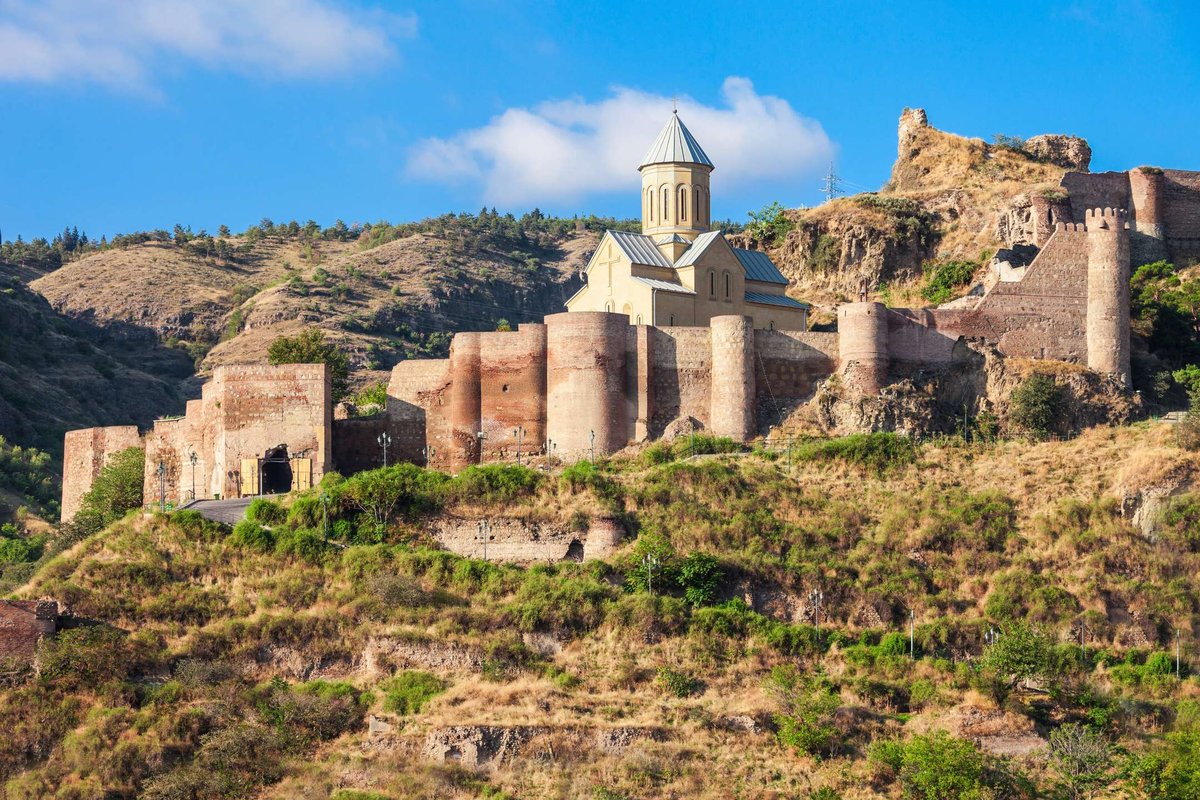
📜 The history you can see in the walls
The exact date of construction is unknown, but by the 4th century the fortress already existed — it was called "Shuris-Tsikhe" at the time. One translation of "Shuris" is "envy" in Georgian, giving the fortress the nickname "Castle of Envy." The oldest sections of the walls genuinely date from the 4th century — this was when the citadel was part of a Persian defensive system.
The walls on the tourist-facing side are from around the 8th century — the period when an Emir's palace stood here. Locals sometimes call the fortress "Mother Fortress."
The first recorded attack came in 627 AD, by Byzantine forces. During the Tbilisi Emirate the fortress was reinforced: bastions were enlarged and walls were extended down toward the river. In 1236 the Khorezm army — operating under Mongol authority — destroyed the city. The fortress was rebuilt, but not for the last time.
In 1827 a gunpowder stockpile inside the fortress exploded, followed by an earth tremor. This caused the worst damage in the fortress's history. By the 1980s only fragments of the 16th-century Istanbul Tower and some sections of tower fortifications remained. In 1996–1997 the 12th-century Church of St Nicholas, which stood within the fortress, was restored.
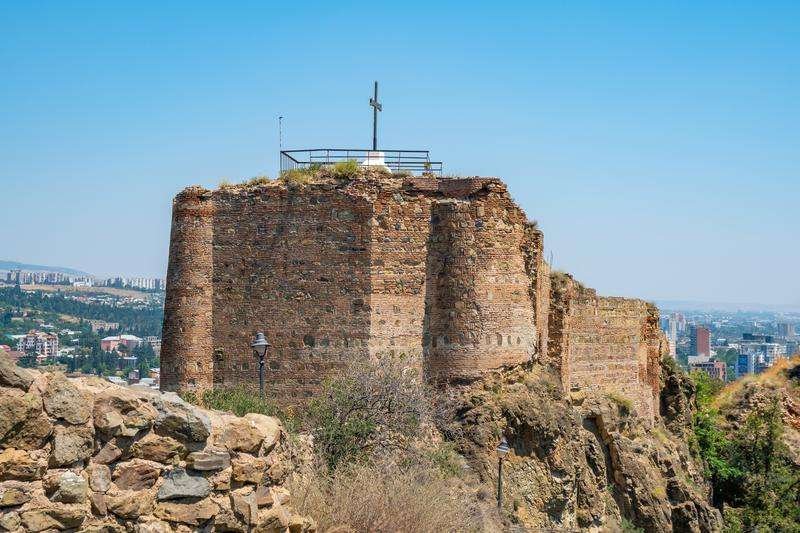
🏔️ What's here today
- City panorama. From the top: the Mtkvari River, the Old Town, the sulphur bath domes, Rike Park and the mountains beyond. The most famous moment is sunset and night, when Tbilisi lights up and the fortress is illuminated from below.
- Kartlis Deda — Mother of Kartli. In the western section of the fortress stands an aluminium figure — the symbol of the Georgian woman and national spirit. In one hand: a cup of wine for those who come as friends. In the other: a sword for those who come as enemies. The statue is visible from the entire Old Town below.
- Church of St Nicholas. A 12th-century church restored in 1996–1997. Small but active — and one of the few elements of the fortress complex that survived the 1827 explosion and the Soviet period in any recognisable form.
- Exit to the Botanical Garden. The fortress grounds have a direct exit into the Botanical Garden — around 4,500 plant species across approximately 161 hectares. Easy to combine into one route.
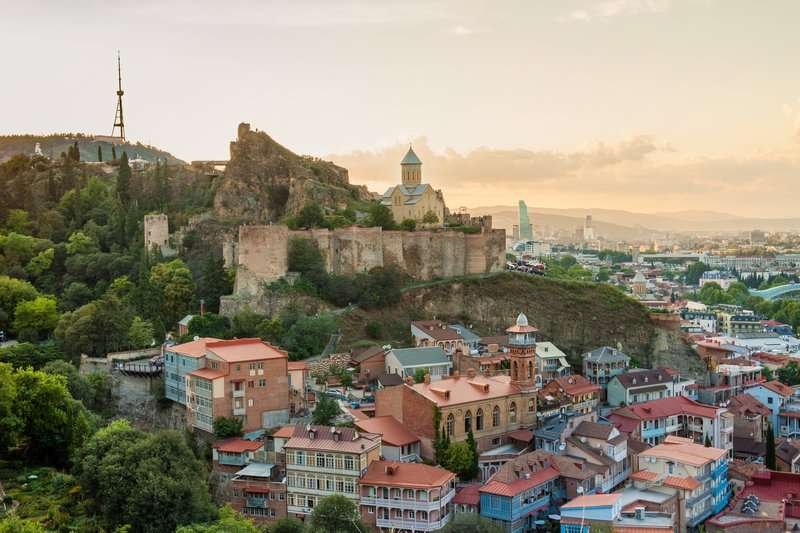
🚡 Two ways up
- Cable car from Rike Park — around 680 metres, about 2 minutes. Cabins have glass floors — interesting if you're not afraid of heights. Rike Park itself is worth time: giant chess sets, singing-dancing fountains, mazes and quiet corners. The cable car is paid.
- On foot — from Meidani Square or through the Abanotubani quarter. The climb takes 20–30 minutes depending on pace. Signage on the paths is clear; getting lost is unlikely. In hot weather — bring water.
Take the cable car up and walk down — or the other way round. Both routes are genuinely different: from the cable car you see the city layout all at once; on foot you move through the quarter and pick up the details. At night the view from the fortress changes completely — city lights in the valley below, floodlit walls, silence. If you're only going during the day, at least stay for sunset.
🗺️ Route through the fortress and surroundings
1️⃣ Start at Rike Park — walk around, watch the fountains, find the cable car station.
2️⃣ Ride the cable car up — 2 minutes and a glass floor below your feet.
3️⃣ At the exit platform — browse the souvenir market and take in the first view of the Old Town.
4️⃣ Walk to the Church of St Nicholas — 12th century, restored in the 1990s.
5️⃣ Head to the Kartlis Deda statue in the western section — best frame of the fortress and city together.
6️⃣ If the Botanical Garden exit is open — go down that way: 161 hectares and 4,500 plant species.
7️⃣ Or walk down through Abanotubani — and see the sulphur bath domes up close along the way.
💬 What visitors say
"My kids loved the glass floor on the cable car — they squealed. Then they ran around the fortress grounds. Ancient walls don't intimidate children — they make it an adventure."
"Every time I'm in Tbilisi I go up to Narikala. Especially at sunset, when the sun fills the old walls with golden light."
"From the cable car you look down at the city and suddenly understand how it all fits together: rivers, quarters, mountains. In 2 minutes — the best map of the city."
🏁 Is it worth going while restoration is underway
Yes. The fortress is partially inaccessible, but the panoramic viewpoints nearby are open. The cable car runs. The Kartlis Deda statue and the Church of St Nicholas are in place. This is still the best elevated view of Tbilisi — restoration doesn't change that.
ℹ️ Due to ongoing restoration, access to the fortress grounds is restricted. Check the current visiting situation before you go. Cable car prices and hours may change. Information is current at the time of publication.
🏛️ Nearby attractions


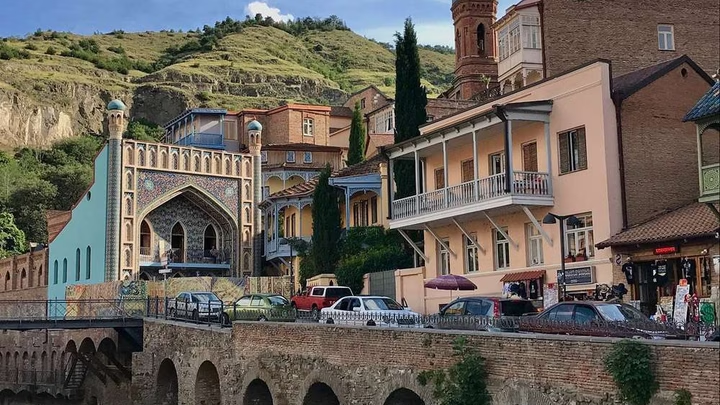


Have you been up to Narikala? Cable car or on foot — and which is better? Tell us what stayed with you most — the view, the history, children amazed by the glass floor? We read every comment ❤️
❓ Questions people ask most often
💬 At the time of publication the fortress is undergoing major restoration and access is limited. Panoramic views are available from adjacent platforms and the cable car is running. Check the current status before you visit.
💬 Both are good and genuinely different. Cable car from Rike Park: ~680 metres, about 2 minutes, glass floor. On foot: 20–30 minutes from Meidani Square or through the sulphur baths, signs posted. The ideal approach: go up one way and come down the other.
💬 Prices change — check on the spot or on official resources. Visitor reviews suggest somewhere around 2–5 lari one way.
💬 Until the 12th century "Narikala" referred only to the lower tower of the city fortress; the name then spread to the whole complex. The original name — "Shuris-Tsikhe" (4th century) — is sometimes translated as "Castle of Envy" or "Jealous Castle."
💬 The cable car is comfortable and fast. The glass floor is a hit with children. The walk up is harder with small children as the incline is steep. With a pushchair — cable car only.
💬 Evening and night — when the fortress is floodlit and the city lights come on below. The daytime panorama is also impressive, but the night view is in a different category. Open year-round.
💬 Yes. The fortress grounds have a direct exit into the Botanical Garden, so you can combine both in one route without going back through the Old Town.

32 comments
Log in to leave a comment
Мадлоба делится советами от тбилисцев: ехать на закате без жары, детям бинокль (2 лари), сезон круглый год. Отзывы подсказали ночную подсветку, FAQ — бесплатно, с коляской пешком сложно. Планирую повторить с фуникулёром!
А вы поднимались на Нарикалу — канаткой или пешком, и что круче, виды или история башен? Расскажите! 🤔
Интересна история названий, замок зависти? Почему же так?
Интересна история названий, замок зависти? Почему же так?