




🌿 Tusheti Protected Areas: Trekking, Wildlife and the Road Over Abano Pass
🌿 Tusheti National Park at a glance
Georgia's largest protected area: 113,660 ha of alpine meadows, glaciers and ancient villages. The only road is open from June to September. 4x4 is mandatory. No petrol stations, pharmacies or ATMs inside.
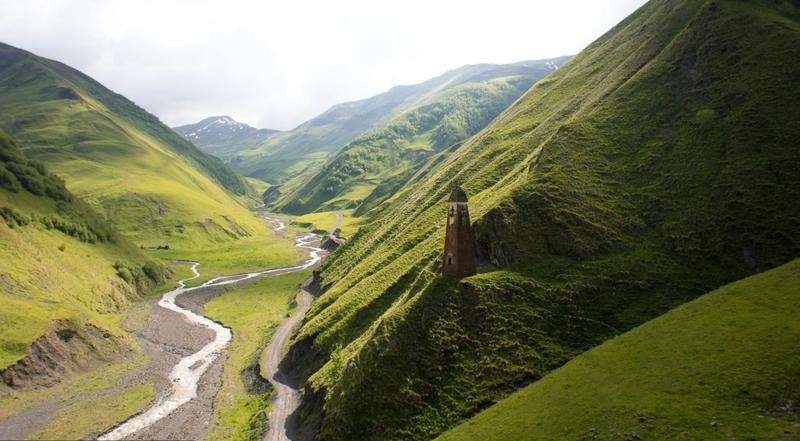
Tusheti is not just a destination. It is an experience people fly to Georgia specifically for. Until 1981 the only way in was by helicopter. Today there is a single road — over the Abano Pass — open for just four to five months a year. That is precisely what makes Tusheti what it is: untouched and deliberately difficult to reach.
Tusheti National Park covers the nature: trails, glaciers, wildlife. For the history of the Tush people, their villages and traditions, see the separate article Tusheti — the region.
🏔️ Three Protection Zones: Park, Reserve and Landscape
Tusheti National Park is part of a larger system. Three zones with different protection levels:
National Park: 83,453 ha. The main area for trekking, wildlife observation and village visits. This is where almost all visitors go.
Strict Nature Reserve: approximately 10,694 ha. For scientific research; tourist access is restricted.
Protected Landscape: expanded in April 2024 to 34,280 ha. Buffer zone where local communities can continue traditional land use.
Total: 113,660 ha. This is Georgia's largest protected area, established on 22 April 2003 by Parliament. Elevation runs from 900 to 4,800 metres. Highest peak: Mount Tebulo, 4,492 m. Also notable: Diklo — 4,285 m, Borbalo — 3,294 m.
Tusheti borders Chechnya and Dagestan to the north and east, and Georgia's historic regions of Pshavi and Khevsureti to the west.
🌿 Flora: Pines at 2,700 m and 230 Caucasian Endemics
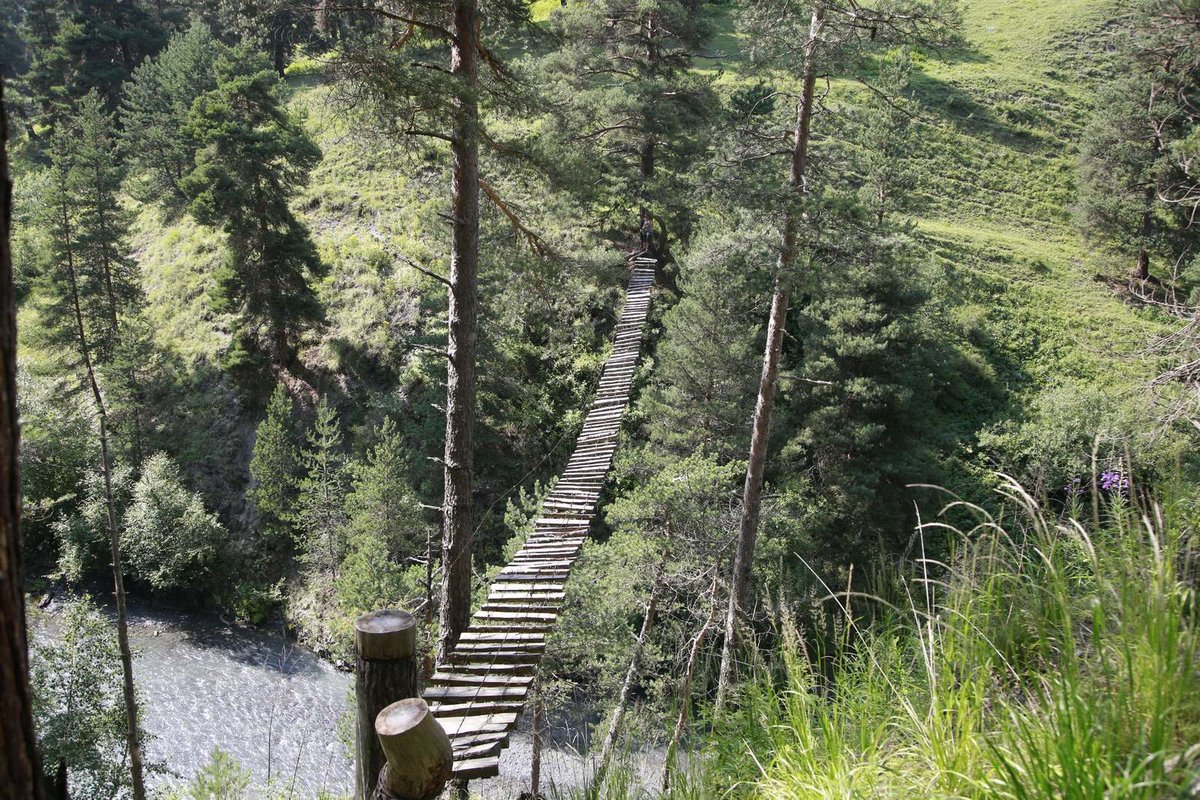
The vegetation of Tusheti is remarkable for its diversity within a relatively compact area. Pine forests reach 2,700 metres — unusual for the Caucasus. Two species of relict birch, wild apple, goat willow and rowan form mixed forests at mid-elevations.
The protected area contains 11 Georgian endemic plant species and 230 Caucasian endemics, including Red List species: dark birch, Caucasian evergreen azalea, bilberry and black cranberry. Above the tree line: subalpine meadows with rhododendrons, then alpine zone and glaciers.
🦌 Wildlife: the East Caucasian Tur's Last Refuge
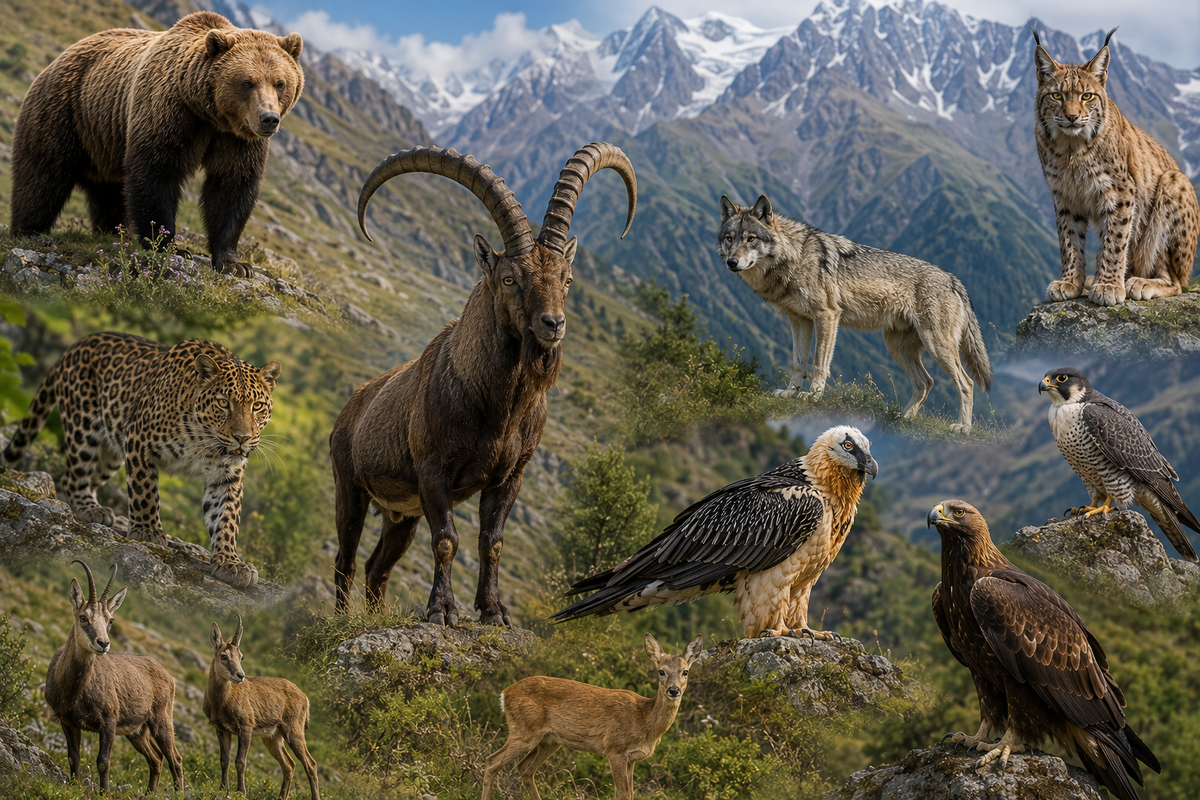
This is the park's strongest ecological argument. For the East Caucasian tur (Capra aegagrus), Tusheti National Park is its only remaining intact habitat. NACRES, an IUCN member organisation, ran a dedicated pilot project to study ways to protect this species from poaching and allow tourists to observe it.
Beyond the tur, the fauna is equally impressive. Large carnivores: brown bear, Eurasian lynx, grey wolf, Anatolian leopard (Panthera pardus saxicolor) — extremely rare. Ungulates: chamois, tur, roe deer. Birds: lammergeyer (Gypaetus barbatus), golden eagle, peregrine falcon, Caucasian snowcock. Over 190 vertebrate species in total — birds, mammals, reptiles, fish and amphibians.
For the best chance of seeing an East Caucasian tur, head out early in the morning to slopes above 2,500 m, away from the main trails. Bring binoculars — they can be hired at the visitor centre in Omalo. Turs are most often spotted in July and August, when the snow retreats and they move down onto the meadows.
🥾 11 Trails: from Half-Day Walks to the Shatili Trek
Tusheti National Park has 11 marked trails of varying difficulty — lasting 1, 2, 3, 4 and 6 days. Activity types: trekking, cycling, horse riding, birdwatching, tur-watching, cultural tours.
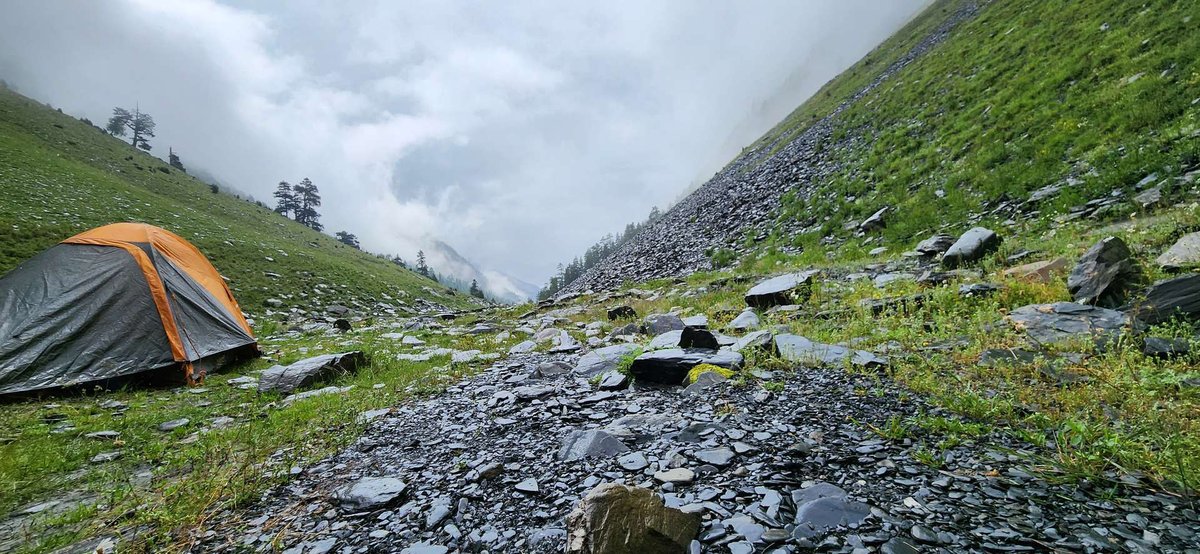
Omalo to Shatili via Atsunta Pass (3,431 m). This is not just Tusheti's premier route, it is one of the finest multi-day treks in the entire Caucasus. A six-day crossing linking two of Georgia's historic highland regions. The Atsunta Pass is technically straightforward but high: snow can persist into August. En route: the villages of Shenako, Diklo, Dartlo — medieval towers, narrow gorges, no motor vehicles.
Day hikes from Omalo: Keselo Fortress (2 km), Shenako (8 km), Ageurta (9 km). Good options for visitors with two or three days who want to see the villages without a serious trek.
Borbalo (3,294 m). A popular weekend ascent. The summit gives views across the entire Tusheti range and towards the Greater Caucasus on the Russian side.
⚠️ Local Customs Visitors Must Respect
Tusheti is not a closed region, but local traditions are very much alive. Two rules visitors are firmly asked to observe:
No pork. Pigs are taboo in Tusheti — an ancient local norm, not a religious prohibition in the modern sense. Local residents take violations of this seriously, seeing it as a sign of disrespect.
Women may not enter local sacred shrines. This too is an ancient Tushetian custom observed to this day. The shrines are visible in the villages and are generally marked.
🚗 Getting There: Abano Pass and the Road That Stops Everyone
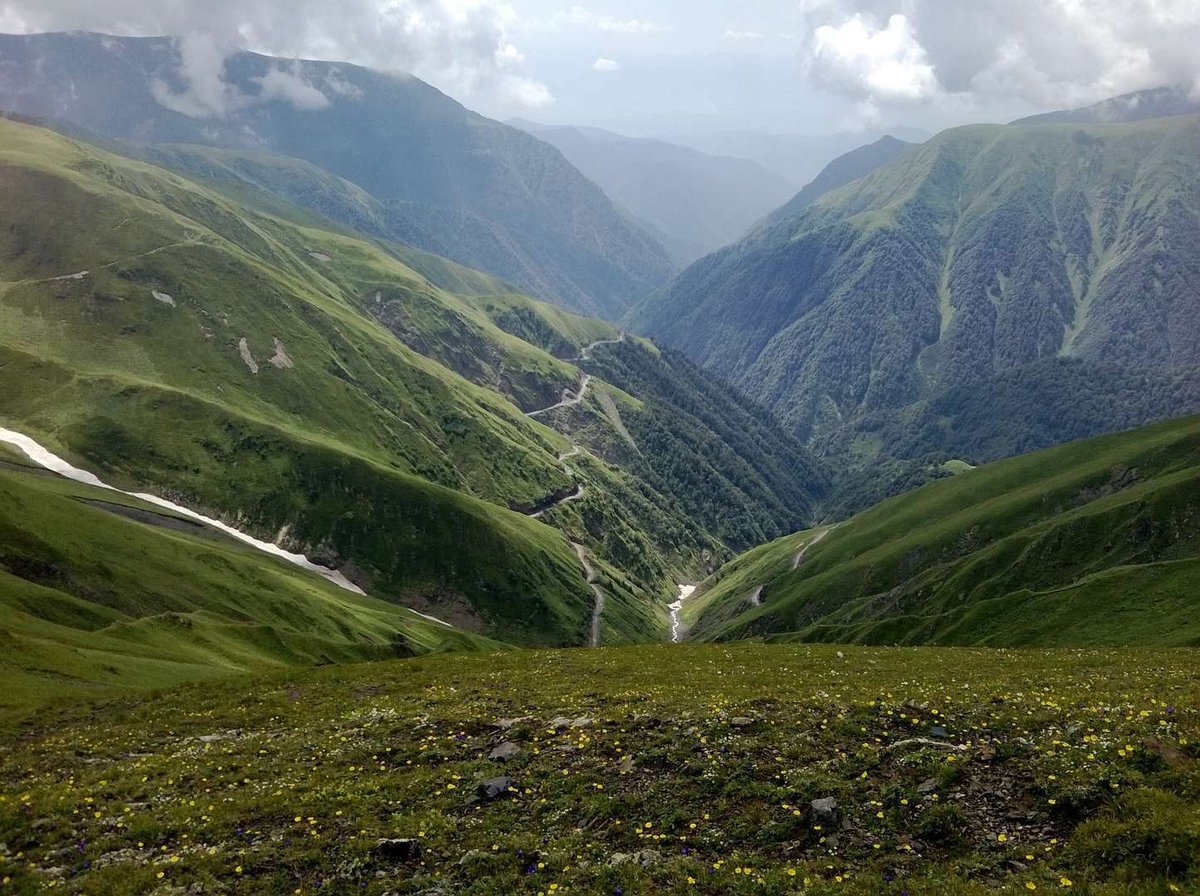
The road into Tusheti has existed since 1981. Before that, access was by helicopter only. The single route: from Akhmeta via Pshaveli → Abano Pass (2,926 m) → Omalo. About 190 km from Tbilisi, but the drive takes five to seven hours.
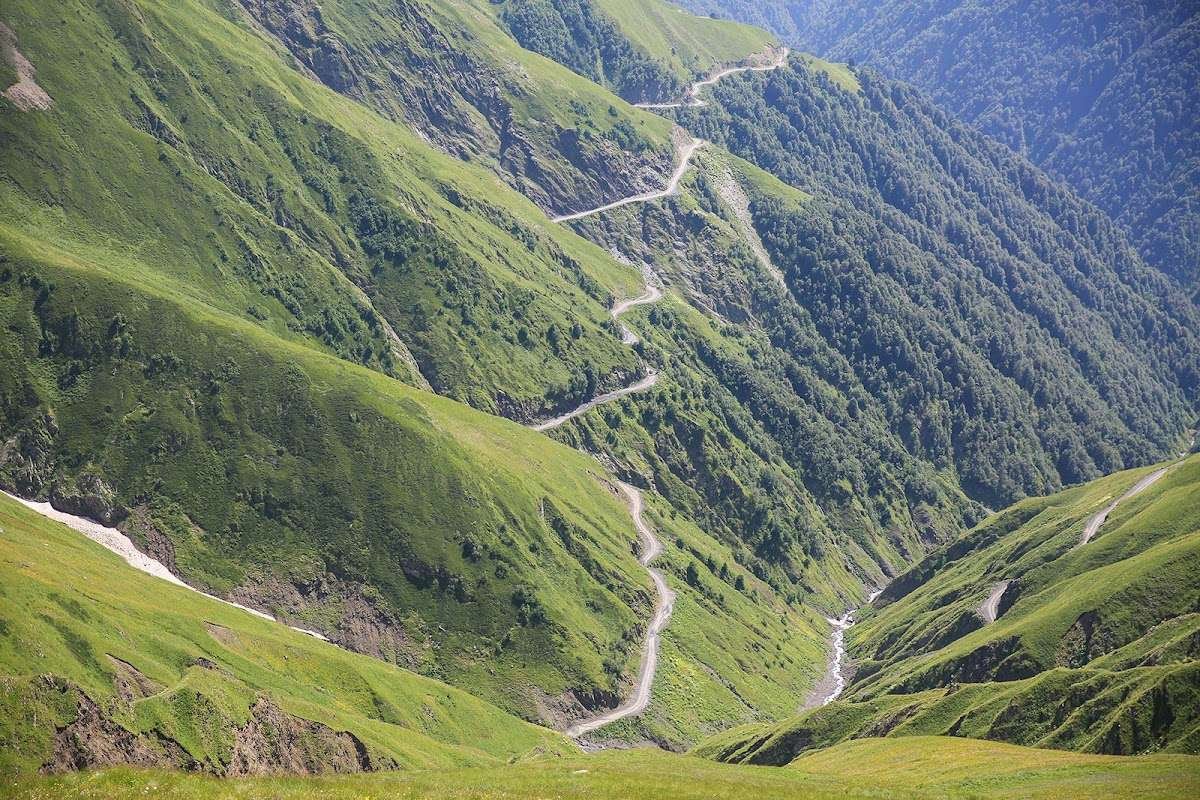
Abano Pass is approximately open from late May or early June to late September or early October. The exact opening date is announced separately each year.
4x4 is mandatory. The road is unpaved, runs along the edge of cliff faces. Washed-out sections, rockfalls and tight hairpin bends combined with heavy traffic in peak season require mountain driving experience.
Essential before departure: fuel up and take everything you need in Telavi or Akhmeta. Inside Tusheti there are no petrol stations, pharmacies, banks, ATMs or currency exchange points.
🏘️ Villages of the Park: Omalo, Bochorna and Dartlo
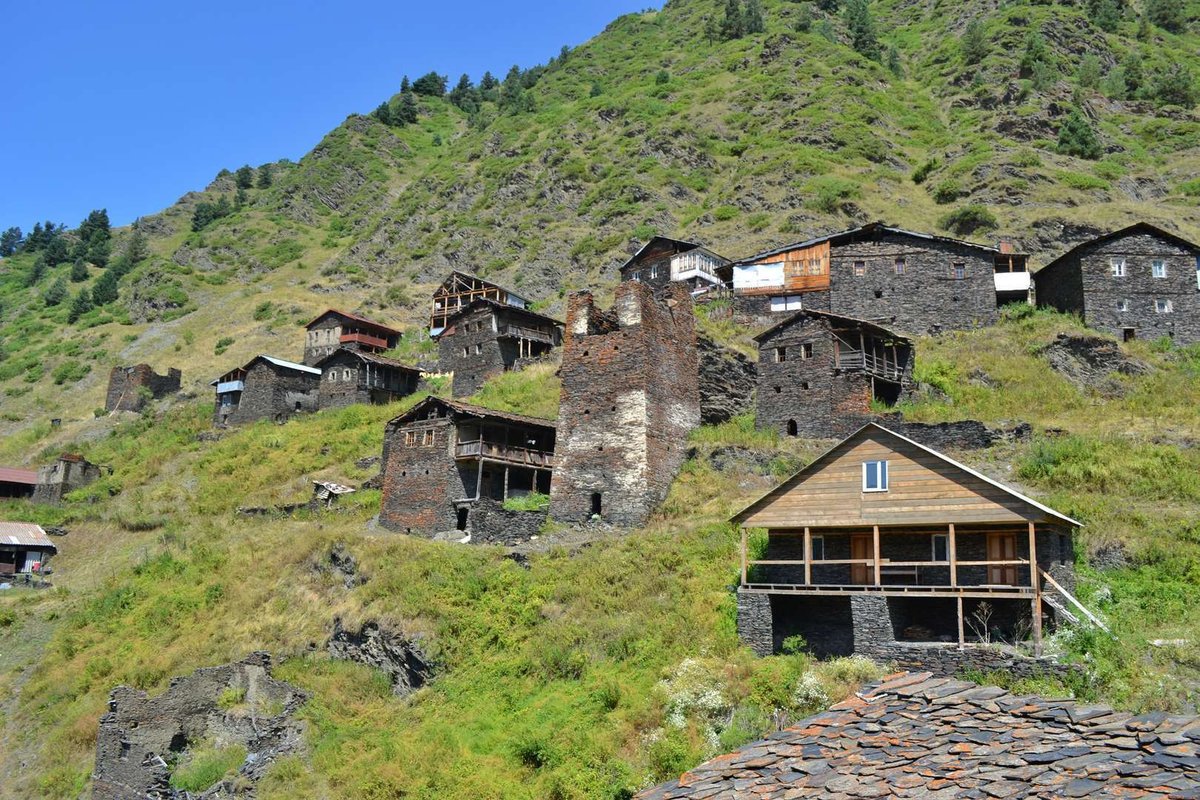
The national park contains over 50 historical settlements, most of them abandoned or inhabited only in summer. The Tush people relocated to Alvani in Kakheti during the Soviet era but return every summer.
Omalo (1,880 m) — the main village and gateway to the park. The visitor centre, guesthouses and most tourist services are here. Nearby stands the Keselo Fortress, a 17th–18th-century complex on a hilltop above the lower village.
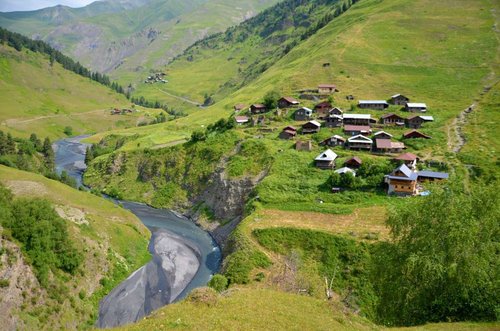
Bochorna (2,345 m) — Europe's highest continuously inhabited settlement. As of 2024, it has one permanent resident. Extraordinary views across the Greater Caucasus.
Dartlo — one of the most beautiful villages in Tusheti. Medieval towers on a rock shelf above the gorge. A key stop on routes toward the Atsunta Pass. Tusheti is included on UNESCO's Tentative List of World Heritage Sites as "Historic Villages of Tusheti."
Have you been to Tusheti National Park? Leave a review on Madloba — share which trail you took, what condition the Abano road was in and whether you managed to spot a tur. It helps everyone planning the same journey.
Information current as of June 2026. The Abano Pass opening date is announced annually — check before travelling.
❓ Frequently asked questions
In Akhmeta municipality, Kakheti, northeastern Georgia, on the borders of Chechnya and Dagestan. The nearest town is Akhmeta (110 km by road); from Tbilisi approximately 190 km.
The Abano Pass — the only land route into Tusheti — is open approximately from late May or early June to late September. In winter and spring Tusheti is inaccessible overland. The exact opening date is published annually by the Agency of Protected Areas.
No. Tusheti National Park (83,453 ha) and the full protected area (113,660 ha) make up Georgia's largest protected territory, but not Europe's. This is a widespread exaggeration online: Russia alone has nature reserves exceeding 280,000 ha.
Yes. The Abano Pass road is unpaved. Standard cars regularly get stuck or have accidents. Without four-wheel drive, the risk is not worth taking.
A six-day hike over the Atsunta Pass (3,431 m), connecting Tusheti with Khevsureti. One of the finest multi-day treks in the Caucasus. En route: the villages of Shenako, Diklo and Dartlo with their medieval defensive towers.
A wild goat (Capra aegagrus) under threat of extinction. Tusheti National Park is its last intact natural habitat. The park offers dedicated wildlife-viewing tours to observe turs in the wild.
Pigs are taboo in Tusheti, following an ancient local tradition. It is not a religious prohibition in a narrow sense but an important part of Tushetian identity. Local residents regard violations as disrespectful.
In Kakheti: Nekresi Monastery, Gremi, Kvareli Lake. On the road to Abano: the village of Ukanapshavi, Kabali Fort. From the park, the Omalo-Shatili route leads into Khevsureti.

37 comments
Log in to leave a comment
One of the most striking features of Tusheti National Park is its stunning landscapes. Towering snow-capped peaks, lush green valleys, and meandering rivers create a mesmerizing tapestry of nature's wonders. Whether you're exploring on foot or by vehicle, every step reveals a new panorama that leaves you in awe.
Beyond its natural splendor, Tusheti is also known for its unique cultural heritage. The region is home to ancient stone towers, traditional Tushetian villages, and hospitable locals who warmly welcome visitors. Immersing yourself in the local culture allows you to experience the rich traditions, folklore, and delicious cuisine of this enchanting region.
For outdoor enthusiasts, Tusheti National Park offers a wealth of activities. Hiking trails of varying difficulty levels wind through the park, providing opportunities to discover hidden waterfalls, alpine meadows adorned with vibrant wildflowers, and the chance to encounter rare wildlife such as Caucasus tur and chamois. Adventure-seekers can also try their hand at horseback riding or off-road exploration to remote corners of the park.
In the evenings, as the sun sets behind the mountains, Tusheti transforms into a place of tranquility. Gazing at the starlit sky, surrounded by untouched nature, one can't help but feel a sense of serenity and connection to something greater.
Tusheti National Park is a true gem of Georgia, offering visitors a chance to escape the hustle and bustle of everyday life and immerse themselves in the untamed beauty of nature. With its striking landscapes, rich culture, and boundless adventure, it's no wonder Tusheti is considered one of the most beautiful and captivating destinations in the country.
Оказывается, национальный парк Тушети - эта самая большая природоохранная территория в Европе. А всё потому, что здесь растут альпийские луга, смешанные леса с берёзами и хвойными деревьями, леса с липами и берёзами, сосновые леса. Сосна в Тушети встречается даже на высоте 2700 м над уровнем моря!!! Это очень интересный факт для Кавказа!
Целью создания такого ландшафта было сохранение традиционного вида тушинских деревень, а также защита от ущерба, вызванного развитием туризма и различных хозяйственных отраслей.
Здесь альпийские луга, нетронутые хвойные леса и покрытые снегом вершины, редкие виды растений и животных.