



🏰 Castles and Fortresses of Imereti: A Guide to the Region's Ruins and Kutaisi
🏰 Eight fortresses throughout Imereti · ⏱️ separate excursions, not just one day · 📍 Kutaisi and six municipalities in the region
🏰 What You Need to Know Before Your Trip
| 📍 Location | The sites are scattered across Imereti: Kutaisi and five other municipalities in the region |
| 🚗 Trip Format | This is not a one-day itinerary, but a collection of separate excursions from Kutaisi |
| 🏛️ Condition | All eight sites are ruins in varying states of preservation rather than restored castles |
| 💰 Admission | Free of charge, but reaching some fortresses requires a 4WD vehicle or a hike uphill |
🧭 Who Will Find This Guide Useful
This guide is ideal for travelers who have already explored central Kutaisi and are ready to venture beyond the city in search of historic ruins with fascinating stories. It is also useful for those planning trips to specific municipalities of Imereti, such as Sachkhere, Zestaponi, or Chiatura, and looking for places to visit beyond the region’s natural attractions.
📜 Fortresses on the borders of the Old Kingdom
In Imereti , about a dozen in the entire region, but each stands in its own location for a reason. Shorapani and Skanda guarded the eastern approaches to ancient Iberia and Egrisi before the Common Era, Ukimerioni was the military and political center of medieval Kutaisi, and later castles, such as Modinakhe , were built by private feudal families like the Tsereteli princes. All eight sites are scattered across six municipalities, making it physically impossible to visit them all in one day; this is more of a list of ideas for individual excursions than a comprehensive weekend itinerary.
🏰 Kutaisi
There are two fortresses in Kutaisi itself, both near the historical center of the city.
🏰 The ruins of the royal fortress of Ukimerioni and the Church of St. George
📍 st. Bagrati, 18, Kutaisi
| 📅 Known Since | 6th century, under the Greek name Uphimerey |
| 🏛️ Significance | The oldest fortification in Kutaisi |
| 📍 Location | On a hill next to Bagrati Cathedral |
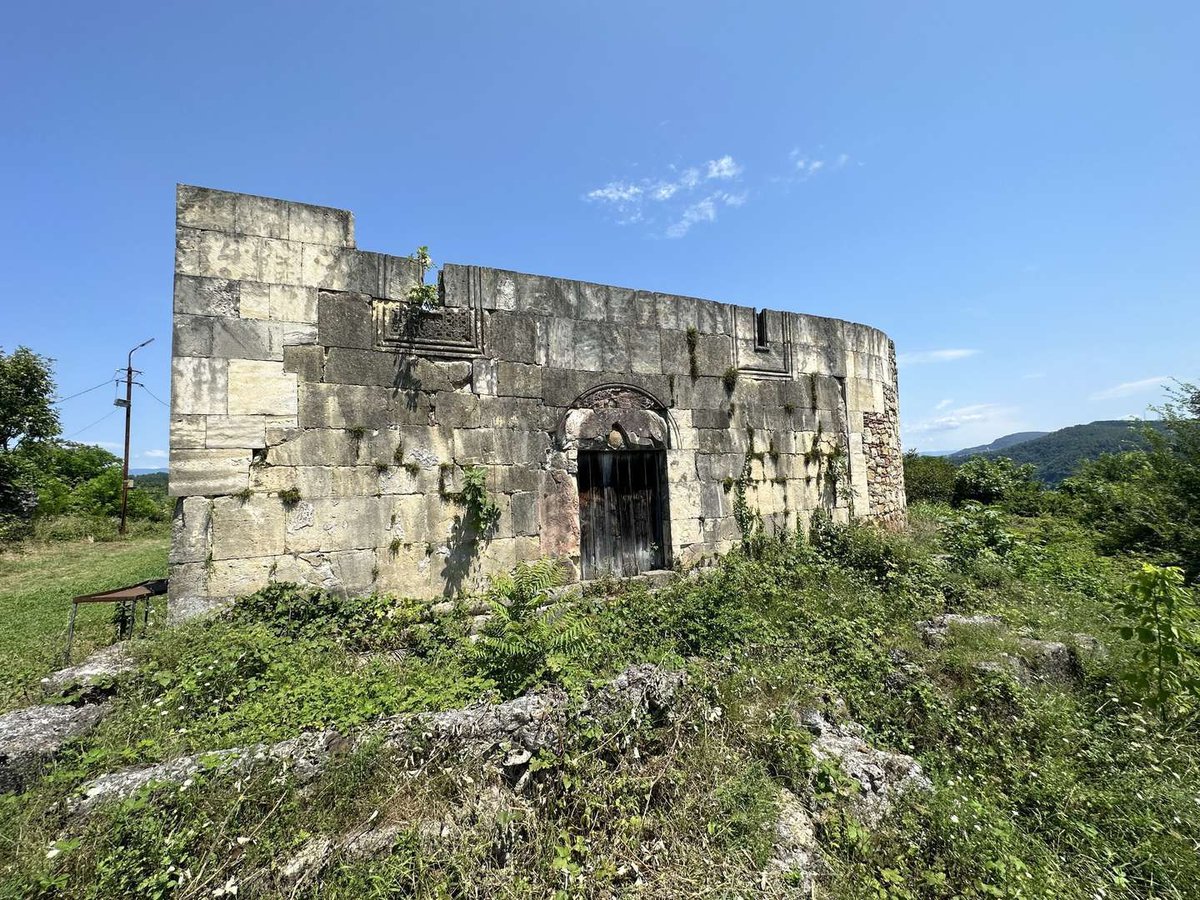
The oldest fortification of Kutaisi, standing on a hill next to the Bagrati Cathedral, has been known since the 6th century under the Greek name Ufimerei : the Byzantine historian Procopius of Caesarea mentioned it as a powerful fortress, guarded by a garrison of Lazi along with a few Roman soldiers.
It was on this hill that the political and spiritual center of the medieval Imeretian and united Georgian kingdoms later grew up, and the ruins of the palace and church of St. George, preserved here, remind us that long before the Bagrati Cathedral, this place was already a fortified royal center.
Today, only fragments of walls and ruins of buildings remain of the fortress, including a roofless church, but the hill still offers one of the best views of the city's panorama.
In 2019, the ruins of Ukimerioni were considered by authorities as a possible addition to the UNESCO World Heritage List, which already includes the neighboring Bagrati Cathedral.
🏰 Greenwood Castle Tower
📍 Kibuli Street, 1, Kutaisi
| 📍 Location | Residential district of Kutaisi, Kibuli Street |
| 📚 Historical Records | No documented history has been found |
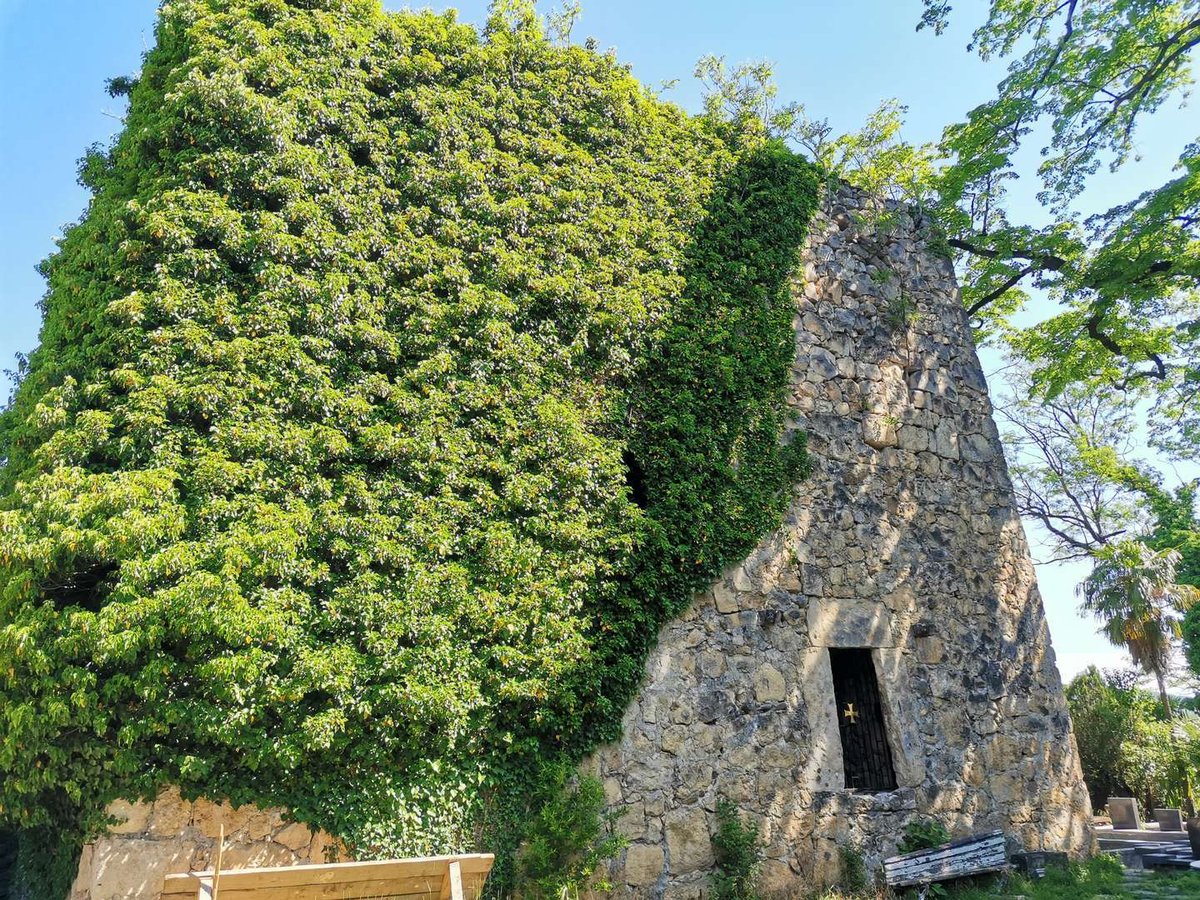
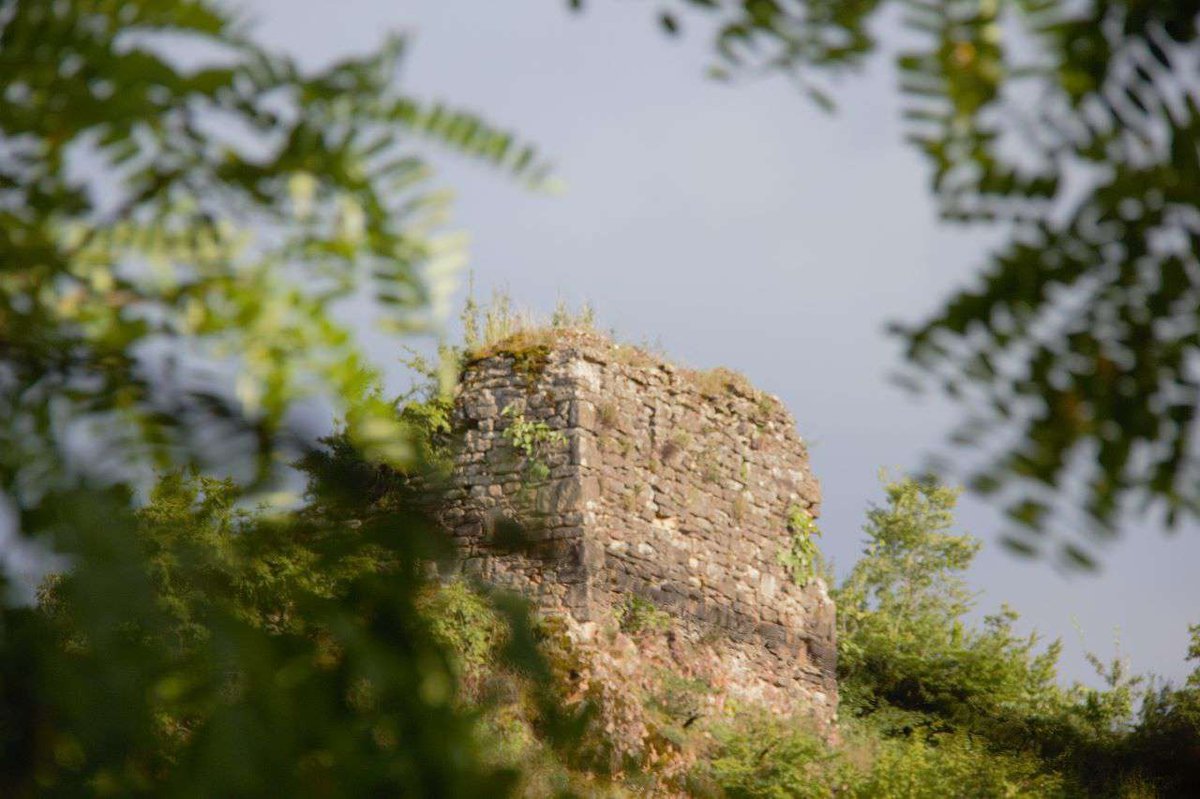
A small tower in a residential area of Kutaisi, on Kibuli Street, away from the city's main tourist cluster.
It was not possible to find a detailed documented history of the object in open sources, and the name itself, “Greenwood” , is not typical for medieval Georgian fortifications and rather indicates a later construction or renaming .
This is honestly worth keeping in mind for those who expect from the site an ancient history comparable to Ukimerioni or Shorapani.
⚔️ Border fortresses of Iberia: Shorapani and Skanda
These two fortresses stood in a pair on difficult terrain, guarding the same eastern border of the ancient kingdom, and their histories are inextricably linked.
⚔️ Shorapani Fortress
📍 Shorapani, Zestafoni Municipality, Imereti
| 📜 First Mention | By Strabo, no later than AD 23 |
| 🏛️ Masonry | Approximately the 6th century, with Byzantine influence |
| ⚔️ Captured | By the Ottoman Turks in 1730 |
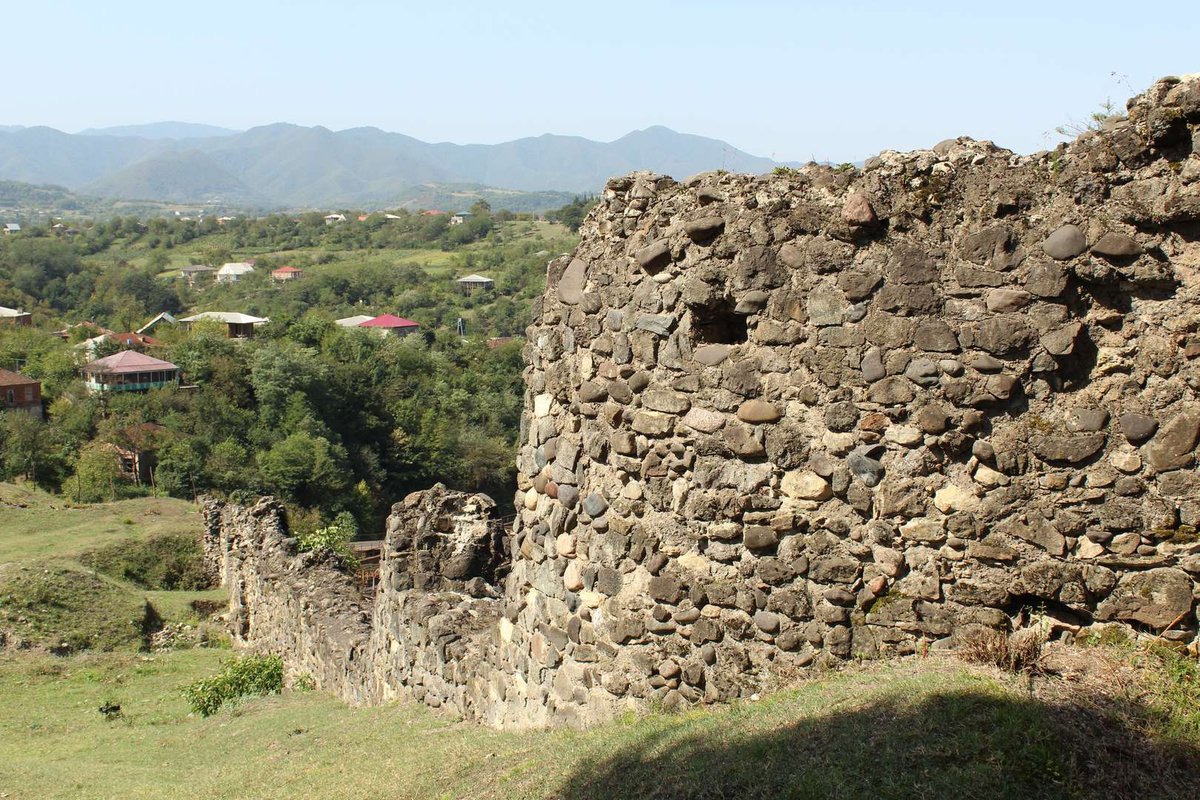
One of the oldest fortresses in Georgia: under the name Sarapana , it was mentioned by the ancient Greek geographer Strabo , who wrote no later than 23 AD.
The present masonry dates from around the 6th century , and the architectural techniques indicate strong Byzantine influence.
The fortress covers an area of approximately 6,000 square meters and rises approximately 100 meters above the surrounding area, remaining impregnable for many centuries until it was captured by the Ottoman Turks in 1730 .
According to legend, Shorapani was the residence of the princely brothers David and Constantine, after whom the Motsameta monastery was later named: excavations at the site of the fortress began in 1983 , and the finds are now kept in the Zestafoni Museum of Local History.
⚔️ Skanda Fortress
📍 Terzhol Municipality, Imereti
| 🌍 Neighboring Fortress | Shorapani, together they guarded the same frontier |
| 🏰 Rebuilt | By the Persians in AD 551 |
| 📜 Historical Mentions | Described by foreign travelers of the 15th–18th centuries |
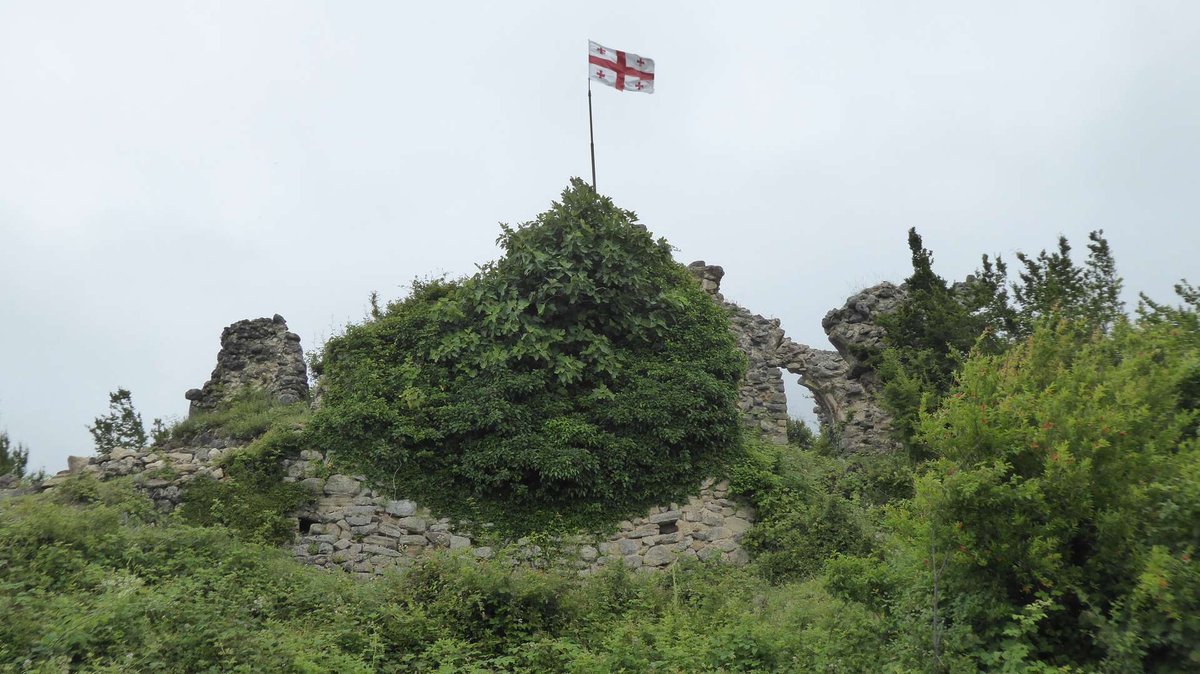
Together with Shorapani, the fortress of Skanda protected the eastern approaches to the country on the difficult border of ancient Iberia.
In 551, the Persians rebuilt the ruined fortress and held it for about 25 years, and the unification of Georgia in the 11th century temporarily deprived Scanda of its strategic importance, which returned only in the mid-15th century, when the Imeretian Kingdom gained independence.
The fortress was mentioned by foreign travelers of different eras: the Venetians Josaphat Barbaro and Ambrogio Contarini in the 1470s, the Russian ambassadors Nikifor Tolochanov and Alexei Ievlev in the 1650s, the Frenchman Jean Chardin in the 1660s, and the German Johann Anton Güldenstedt in the 1770s.
Such a number of independent foreign testimonies is rare even for much more famous Georgian fortresses.
⛰️ Fortresses of the rest of Imereti
Four sites in different municipalities of the region, each with its own separate history, with no common plot with each other.
⛰️ Modinakh Fortress
📍 Dunta village, Sachkhere municipality, Imereti
| 📅 Built | 1730s, by Prince Papuna Tsereteli |
| ⚔️ Captured | By Russian troops in 1810 |
| 🏛️ Status | National Heritage Monument since 2018 |
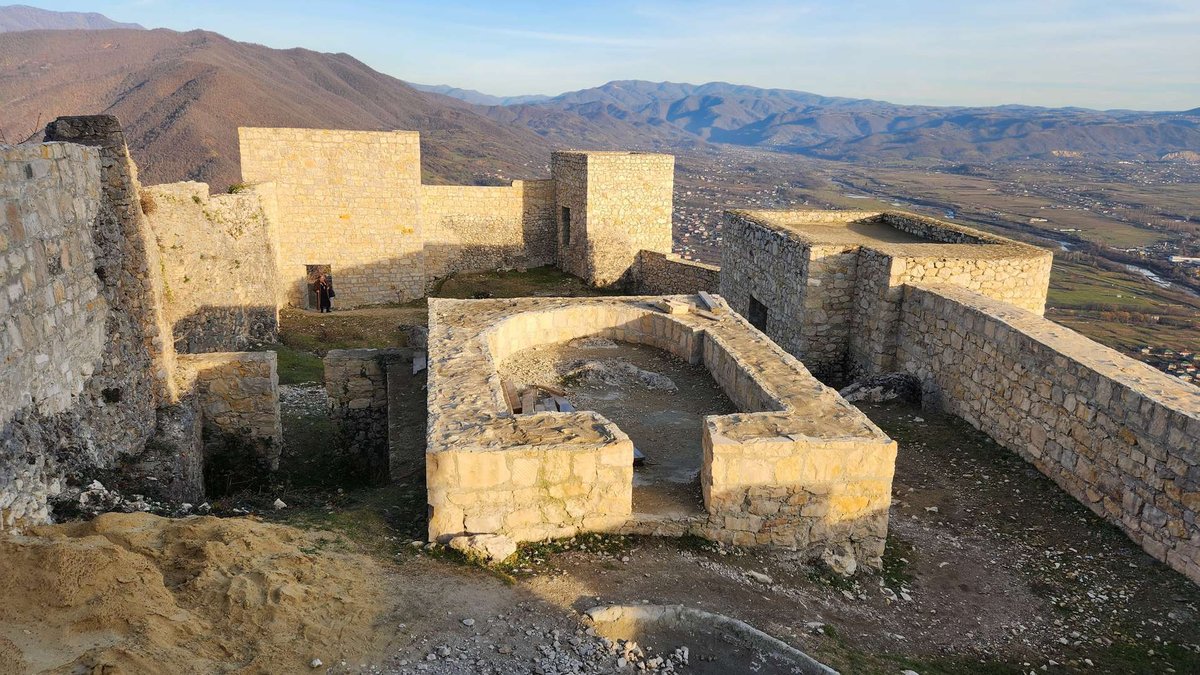
Built in the 1730s by Prince Papuna Tsereteli as a personal residence, the fortress is associated with a romantic legend about its own name.
According to legend, Prince David Abashidze refused to give his daughter to Papuna, citing the groom's lack of his own fortress. Papuna then built Modinakhe and wrote to his future father-in-law: " Modi da nakhe ," "Come and see," hence the fortress's name.
In 1810 , during the Imereti Uprising against Russian rule, the fortress was captured by Russian troops, and in 1991 it was severely damaged by an earthquake; the remains of the walls are still visible at the foot of the mountain.
In 2018, Modinakhe received the status of a monument of national significance in Georgia, and today serves primarily as an observation deck over the city of Sachkhere.
⛰️ Sveri Fortress
📍 Sveri, Chiatura Municipality, Imereti
| ⚔️ Associated With | The invasion of Marwan the Deaf, 8th century |
| 🗺️ On the Map | Depicted in 1737 on a map commissioned by King Alexander V |
| 📍 Distance | 7 km south of Chiatura |
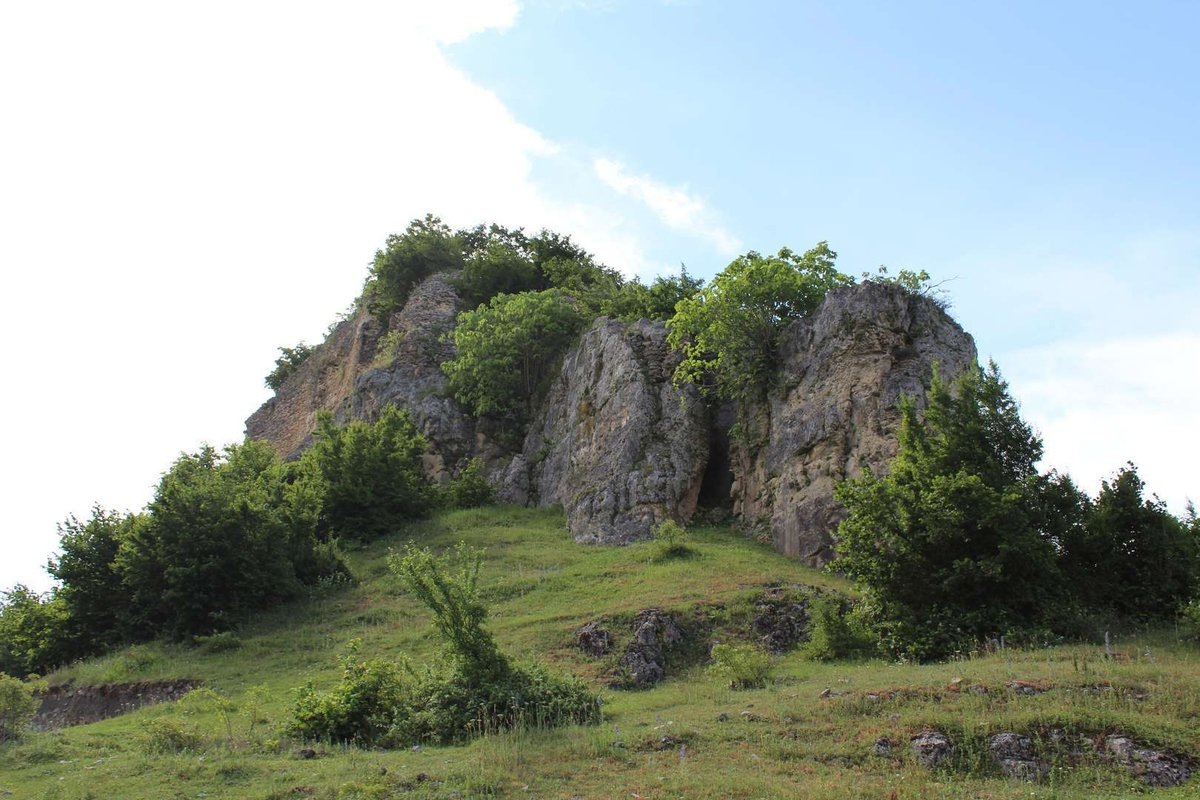
The history of the fortress is also connected with the invasion of the Arab commander Mervan ibn Muhammad , known in Georgia as Murvan the Deaf, in the 730s of the 8th century .
On a map drawn up in 1737 by the Tsar of Imereti, Alexander V, the fortress is depicted as an impressive crenellated structure with loopholes on a steep cliff face, with the entrance located on the eastern side.
Like many other fortresses in the region, Sveri suffered during the suppression of the Imereti Uprising of 1810 and later came under the control of the Russian Empire.
Today it is primarily a ruin, but picturesquely located just 7 kilometers south of Chiatura.
⛰️ Telefisi Fortress
📍 Tolebi, Samtredi Municipality, Imereti
| 📍 Location | Near the village of Tolebi, on the left bank of the Khevistskali River |
| 📚 Information | One of the least documented sites in this collection |
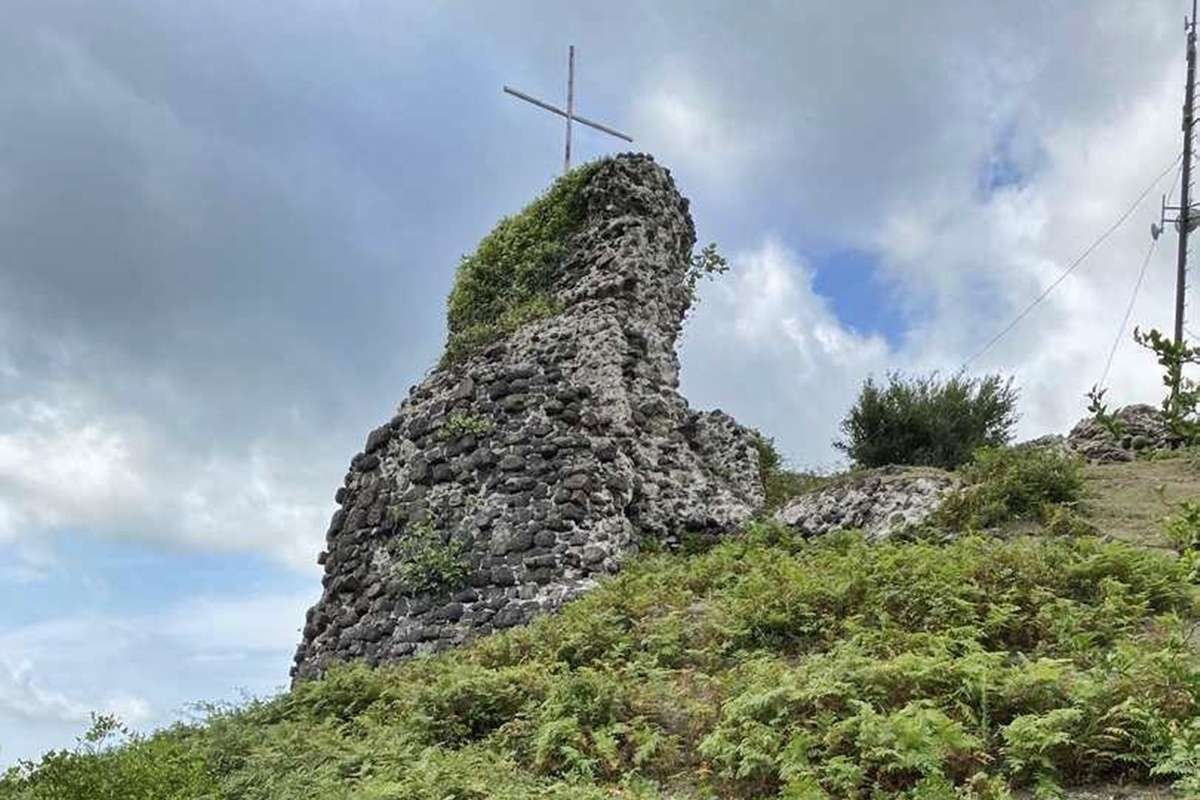
The fortress stands near the village of Tolebi, deep in the Samtredi municipality, on the left bank of the Khevistskali River, away from the region's tourist routes.
It was not possible to find a detailed documented history of the object in open sources: it is one of the least described objects in the collection.
Judging by its location far from the region's main roads, the fortress is more likely to be of interest to those who are specifically seeking to visit all the fortresses of Imereti than to casual tourists.
⛰️ Sazano Fortress
📍 Tklapivake, Zestafoni municipality, Imereti region
| ⛪ Main Structure | A two-nave church built on a stone platform |
| 🏔️ Location | A rocky mountain ridge near the village of Kveda Sazano |
A medieval castle complex on a rocky mountain ridge near the village of Kveda Sazano, surrounded by a fence with buildings for various purposes.
The earliest surviving building, a two-nave church , stands on a plinth about 2.5 metres high , with the southern nave separated from the main volume by two carved hexagonal columns with ornamental capitals.
Unlike many other objects in the collection, here the focus is not on the military but on the ecclesiastical architecture of the complex.
There is little precise information about the date of the fortress's founding and military history in open sources, which is typical for less well-known sites in this part of Imereti.
This is definitely not a one-day itinerary. Travel times between the municipalities of Imereti range from 40 minutes to an hour and a half by car, and reaching several fortresses, especially Modinakhe and Sveri, requires an uphill hike. A practical approach is to choose one or two fortresses for each trip—for example, visit Shorapani and Skanda together because of their historical connection, or combine Ukimerioni with a visit to Bagrati Cathedral. Hiking shoes and plenty of drinking water are essential for almost every site, with the exception of Ukimerioni, which is located within the city.
🛣️ How to plan a trip to the fortresses of Imereti
The map does not show a single driving route because such a route simply does not exist. The eight fortresses are located across six different municipalities of Imereti, with travel times of up to one and a half to two hours between some of them. Instead of numbering the locations, the map groups them by color, with each color representing a separate area that is best explored as an individual day trip.
Kutaisi (Ukimerioni, Greenwood), Zestaponi Municipality (Shorapani, Sazano), Terjola Municipality (Skanda), Sachkhere Municipality (Modinakhe), Chiatura Municipality (Sveri), and Samtredia Municipality (Telefisi): six separate destinations, each suitable for its own trip from Kutaisi.
🏁 Why go see the fortresses of Imereti
The fortresses of Imereti don't fit into a single tourist route, and that's their uniqueness: each one stands as a separate reason to visit a specific municipality in the region, whether it's Sachkhere for Modinakhe or Zestaponi for Shorapani. Together, they reveal the changing military and political history of Western Georgia, from ancient references in Strabo to the feudal castles of the 18th century and the annexation of the Kingdom of Imereti by the Russian Empire in the early 19th century. If you've already seen the center of Kutaisi and Gelati Monastery, these eight points offer a chance to explore the region beyond the usual tourist trails.
ℹ️ Information on the condition of the fortresses is current at the time of publication. Roads to remote sites should be clarified before traveling, as some routes are not accessible by all vehicles.
🧡 Continue Exploring Imereti
- 📜 Museums of Kutaisi: A Guide to Museums and Historic House Museums
- 🗿 Monuments of Kutaisi: A Guide to the City's Sculptures and Memorials
- 🕍 Kutaisi Synagogue: The Jewish Heritage of Imereti
💾 Save this article so you can return to it before your trip.
Which fortress in Imereti have you visited? Was it Ukimerioni in the heart of Kutaisi, the legendary Modinakhe near Sachkhere, or one of the region's lesser-known ruins? Share your experience in the comments—we read every one of them! ❤️
❓ Frequently Asked Questions
💬 This collection features eight sites in six municipalities of the region, including Kutaisi. According to various estimates, there are about a dozen surviving fortresses and castles in Imereti.
💬 No, the sites are scattered across six municipalities, with distances of up to an hour and a half to two hours' drive between some of them. This is a collection of individual excursions, not a single weekend itinerary.
💬 Shorapani Fortress, also known as Sarapana by the ancient Greek geographer Strabo at the beginning of the common era. The Ukimerioni Fortress in Kutaisi is also very ancient, first mentioned in the 6th century.
💬 According to legend, Prince Papuna Tsereteli built the fortress to marry the daughter of a neighboring prince, who refused him because he lacked his own fortress. After the construction, Papuna wrote to his future father-in-law, "Modi da nakhe," or "Come and see," hence the name.
💬 For most sites, yes: sturdy shoes for the climb, water, and, in some cases, an SUV for access. The exception is the Ukimerioni Fortress in Kutaisi itself, which can be reached on foot.
💬 Yes, according to legend, the Shorapani Fortress was the residence of the princes after whom the Motsameta Monastery near Kutaisi is named. The Ukimerioni Fortress, in turn, stands right next to the Bagrati Cathedral, a UNESCO World Heritage Site.

5 comments
Log in to leave a comment
но вот что меня терзает: некоторые из них кажутся заброшенными, будто прячут под собой целую историю ожидания. в том же Кутаиси, вот где мастера архитектуры, но не все крепости на уровне. все ли они открыты для посещения? или есть такие, о которых стоит знать заранее?