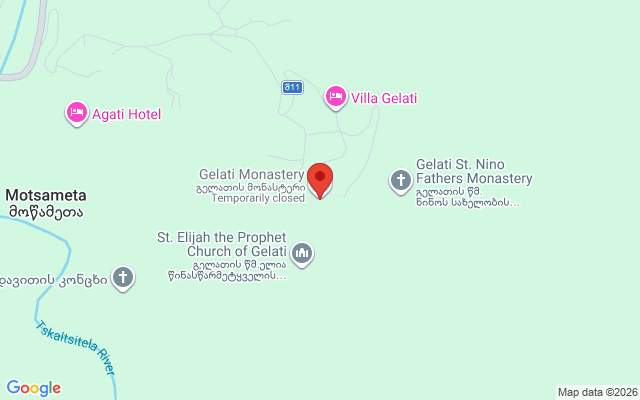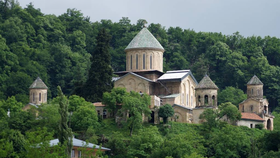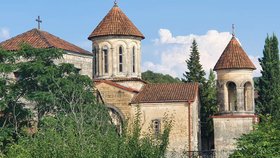





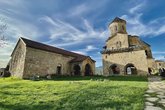

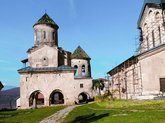

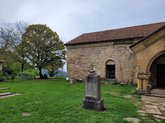

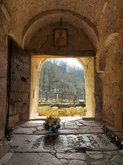

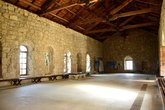

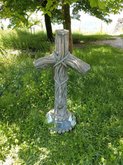

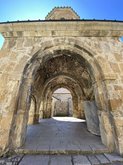

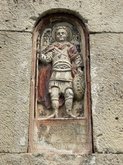

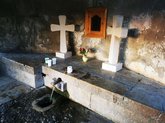

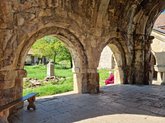

Gelati Monastery, one of the most important architectural ensembles of medieval Georgia, is located approximately 11 km northwest of Kutaisi, in the Tskaltsiteli River valley. The monastery was founded in 1106 by King David IV the Builder to commemorate his victory over the Seljuks. The main cathedral, the Church of the Nativity of the Virgin Mary, was built until 1125, and the mosaics in the apse were added for another five years.
King David the Builder is buried at the monastery gates; according to legend, his own will stipulated that everyone entering should step over his grave. The Gelati Academy, one of the largest scientific centers of medieval Transcaucasia, operated at the monastery. From the late 16th century until 1814, it served as the residence of the Catholicos of Western Georgia. Since 1994, the monastery has been a UNESCO World Heritage Site.
📜 History and Facts
- Founded in 1106 by King David IV the Builder
- The Cathedral of the Nativity of the Virgin Mary was built until 1125, and the mosaics in the apse were added for another five years.
- In the 13th century, the churches of St. Nicholas and St. George, along with a three-tiered bell tower, were added to the ensemble.
- From the late 16th century until 1814, it housed the residence of the Western Georgian Catholicos.
- Since 2017, it has been listed separately from the neighboring Bagrati Cathedral in Kutaisi, which was removed from the list.
👑 Personality and Connections
- The founder, King David IV the Builder, was buried at the monastery gates according to his own will.
- The Gelati Academy operated at the monastery; contemporaries called it the "second Athens."
- The academy was headed by theologian and philosopher Arsen Ikaltoeli.
📸 What to see and photograph
- Mosaic of the Virgin and Child in The cathedral's apse, one of the best preserved in the Transcaucasus
- 12th- and 18th-century frescoes with portraits of Georgian kings
- The Iron Gates of Ganja, a trophy that David's son brought back from the 1139 campaign
🧭 Where is it and how to get there
- About 11 km northwest of Kutaisi, in the Tskaltsiteli River valley
- A functioning monastery
💰 Paid or free admission
Free admission
A UNESCO World Heritage Site since 1994