



🕍 Kutaisi Synagogue: Jewish Heritage of Imereti
🟨 The key facts first
| 🕍 What it is | The main synagogue of Kutaisi, the centre of the city's historic Jewish community |
| 📍 Where | The Jewish quarter in the centre of Kutaisi, 12 Boris Gaponov Street |
| 📅 Era | Second half of the 19th century, Romanesque Revival style |
| ✡️ Community | Georgian Jews, one of the oldest communities in the country |
| 🕯️ Status | An active synagogue: check entry for tourists on site |
| 🗺️ More details | Kutaisi Synagogue (the building) |
💡 Tip: the synagogue stands in the historic Jewish quarter in the centre of the city, so it is easy to include in a walk through Kutaisi rather than travelling there separately.
🟦 What this article is about
For centuries Kutaisi was one of the main centres of Jewish life in Georgia, and the synagogue in the centre of the city is not just a beautiful building but the living memory of an entire community. Here we will sort out who the Georgian Jews of Kutaisi are and when they appeared here, what the main synagogue looks like and why there are several of them in one quarter, what state the community is in today, and what the monument at the entrance means.
It will be useful if you are interested in the Jewish heritage of Georgia and the history of Kutaisi, are planning to drop into the Jewish quarter during a walk through the city, or are searching online for "Kutaisi synagogue" and want to understand what exactly you will see.
✡️ Jews in Kutaisi: one of the oldest communities in Georgia
The Jewish community of Kutaisi is not a recent arrival but one of the oldest communities in the country. Georgian Jews (a distinct ethnic group, not Ashkenazi from Europe) lived in Kutaisi for centuries, and their presence in the city can be traced back to roughly the 17th century. They spoke Georgian, bore Georgian surnames and at the same time kept Judaism and their own traditions, so their history is an example of how two worlds lived side by side in one city for centuries.
The community flourished in the 19th century. After serfdom was abolished in the Russian Empire, Georgian Jews gained more freedom for trade and crafts, and the Kutaisi community grew noticeably. A whole Jewish quarter took shape in the centre of the city, in the Mtsvanekvavila district, with its own synagogues, shops and way of life. By the end of the century Kutaisi had become one of the main centres of Georgian Jewry, along with Tbilisi and several smaller towns.
It is this centuries-old way of life that explains why the synagogue in the centre of the city is so noticeable and why the special atmosphere of the old quarter has been preserved around it. This is not a free-standing monument but the heart of a district in which the community lived, prayed and worked from generation to generation.
🕍 The synagogue: architecture and the quarter of three synagogues
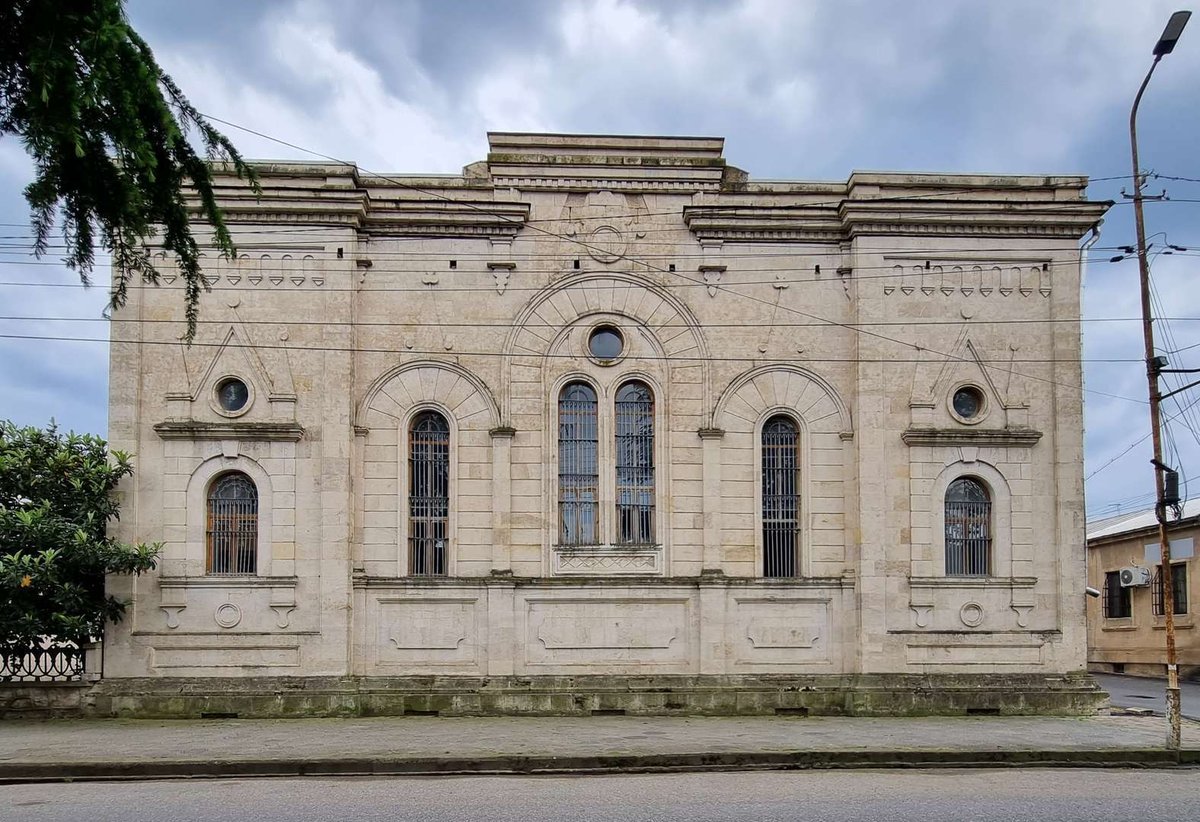
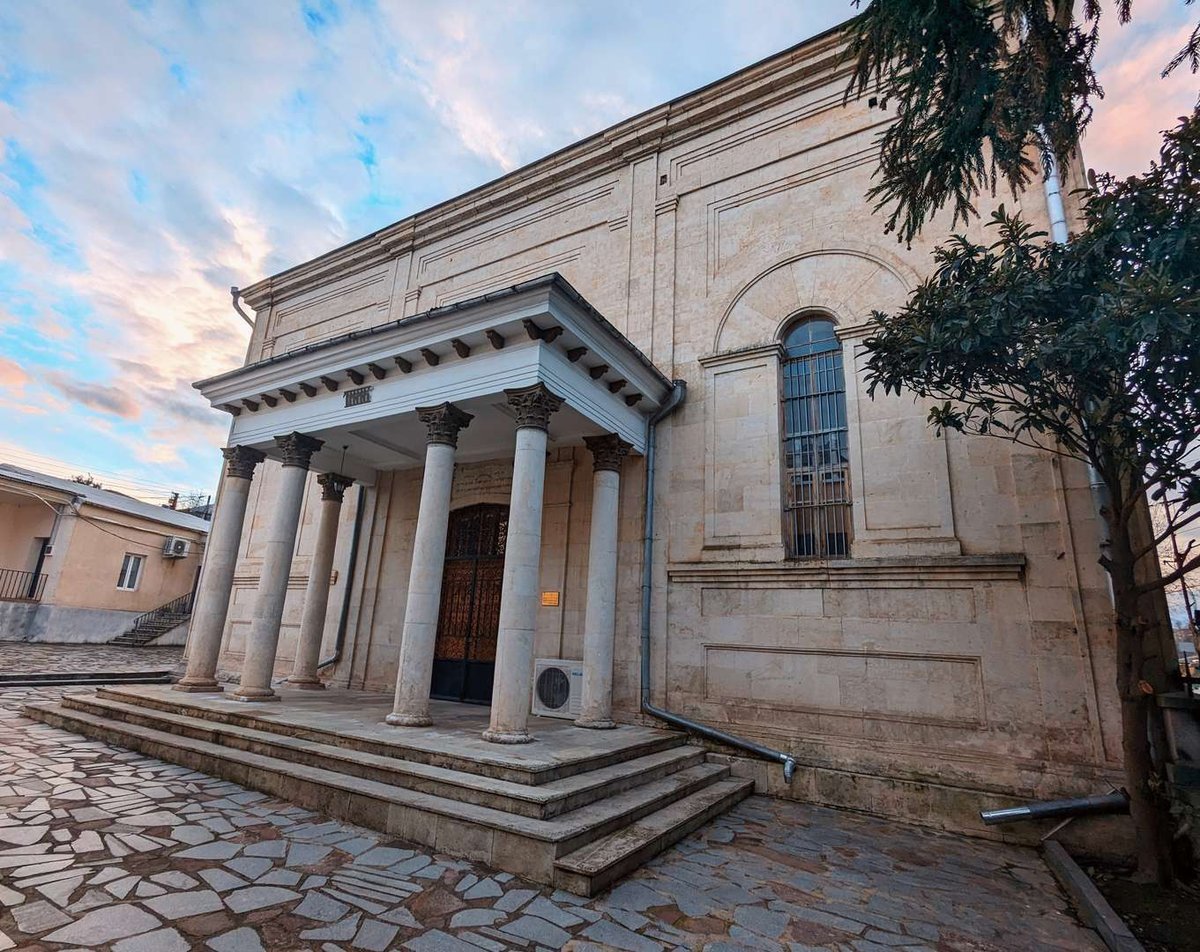
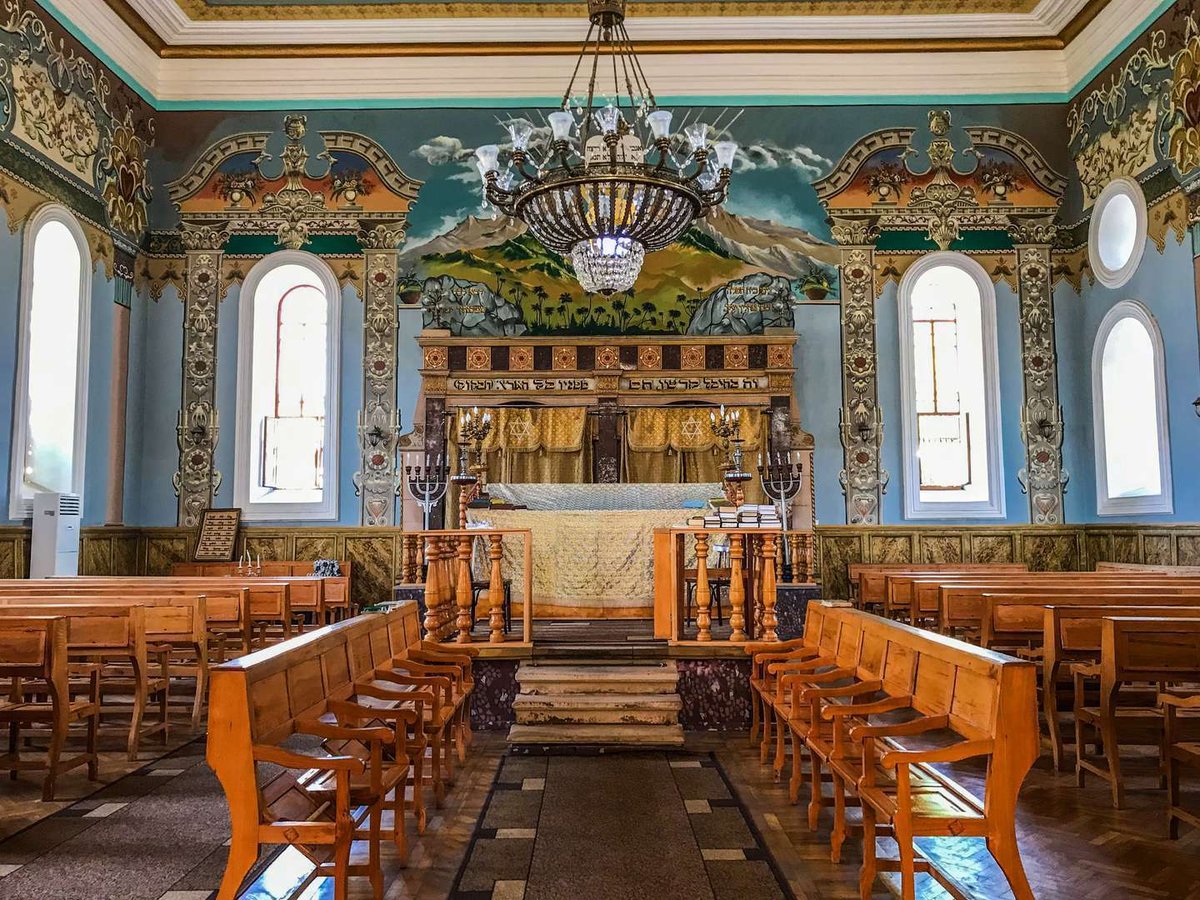
The main synagogue of Kutaisi was built in the second half of the 19th century in the Romanesque Revival style and still looks impressive today. It is easy to recognise by its facade with a triple arcade, while inside it has kept bright wall paintings, thanks to which the interior is no less expressive than the stone exterior. The hall seats roughly 350 people, and in scale it is one of the largest synagogues in all of Georgia.
An important detail that surprises many people: there is not one synagogue in the Jewish quarter but several, and they stand almost side by side. Besides the main one, the quarter has a small synagogue from the early 20th century and earlier prayer houses. So while walking through the quarter it is easy to take one building for another, and it is worth knowing in advance that what you see before you is a whole ensemble of different years, not a single structure.
🕍 Three synagogues of one quarter
- The main (Upper) synagogue — the largest and most ornate, Romanesque Revival style, a triple arcade, painted interiors. This article is about it.
- The small synagogue — a small early 20th century building where the community traditionally studies Hebrew, holds rituals and bakes matzo.
- Earlier prayer houses — older 19th century buildings of the quarter, part of the history of Jewish Kutaisi.
📍 All of them are in the centre of the city, in one quarter, near the main synagogue on Boris Gaponov Street.
🕯️ The active synagogue today: visiting
Even though the community has shrunk greatly, the synagogue remains active: people still gather here for prayer, and it is not a museum exhibit but a living religious centre. For a tourist this means that it is worth going inside respectfully and, if possible, checking in advance whether the building is open: the entrance for visitors is often a small door, and the access hours are narrow and may change. If you want to plan a visit, check the current schedule and details in the card: the active Kutaisi synagogue, where practical information about visiting is gathered.
📖 The memory of the place: emigration and the Gaponov monument
The history of the Kutaisi community in the second half of the 20th century is largely a history of departure. The first big wave of emigration to Israel began in 1969, and within a few years more than half of the Jewish community left the city. The second wave came in the 1990s, after the collapse of the Soviet Union. Today a small community is left from the once-crowded quarter, but the synagogue keeps working, and the quarter itself preserves the memory of the times when Jewish life in Kutaisi was one of the most prominent in Georgia.
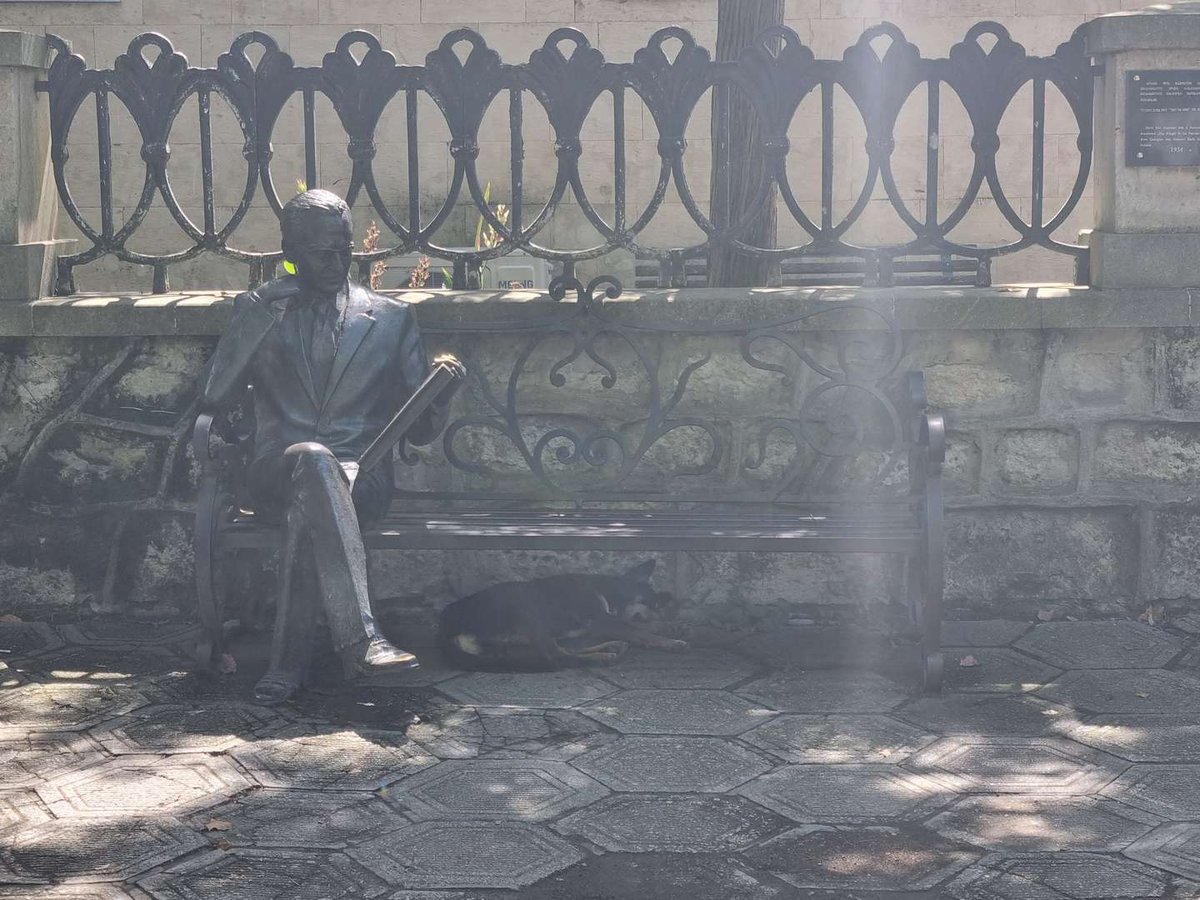
At the entrance to the synagogue stands the monument to Boris Gaponov, erected in 2014. Gaponov was a scholar and translator who rendered Shota Rustaveli's poem "The Knight in the Panther's Skin" into Hebrew. For Kutaisi he is a symbolic figure: his work connected Georgian and Jewish cultures, and the monument by the synagogue is a reminder of how closely these two worlds were intertwined in the city's history.
🧭 Do not mix them up: the synagogues of Kutaisi and other cities
In a search, synagogues of other cities often come up next to the Kutaisi one, and this easily causes confusion. It is worth keeping two things in mind. First, in Kutaisi itself, as we have already said, there are several synagogues in one quarter, and this article is about the main one, the Upper synagogue. Second, there are synagogues in other places in Georgia too: the large and well-known one in Tbilisi, as well as in Batumi, Oni, Akhaltsikhe and several other cities where Jewish communities historically lived.
So if you are looking specifically for the Kutaisi synagogue, use the Jewish quarter in the centre of the city and the address on Boris Gaponov Street as your reference. This will help you avoid confusing it with either the neighbouring buildings of the quarter or the synagogues of other Georgian cities.
🚶 How to get there and what to see nearby
The synagogue is in the historic Jewish quarter in the centre of Kutaisi, at 12 Boris Gaponov Street. This is a pedestrian, walkable part of the city, so it is most convenient to get there on foot: it is a few minutes' walk from the embankment of the Rioni and the main bridges. Before your visit it is worth checking whether the building is open, and remembering that this is an active religious site, not a museum. The exact address and location are given in the synagogue card.
The synagogue fits in well with a walk through the centre: nearby are the Rioni embankment with its bridges and the city's main symbol, Bagrati Cathedral on the hill. You can build a small route in which the Jewish quarter becomes one of the stops.
❓ Frequently asked questions about the Kutaisi synagogue
💬 In the historic Jewish quarter in the centre of the city, at 12 Boris Gaponov Street. This is the pedestrian part of Kutaisi, a few minutes from the Rioni embankment and the main bridges.
💬 The main synagogue dates to the second half of the 19th century. It is hard to name a single exact date, because there are several synagogues of different years in the quarter, and the sources give different years for each of them.
💬 Mostly Georgian Jews, a distinct ethnic group that lived in Georgia for centuries and kept Judaism while speaking Georgian. The Kutaisi community was one of the oldest and largest in the country.
💬 Yes, it is an active synagogue, not a museum. A tourist can usually go in, but it is better to check the schedule in advance: the entrance is often a small door, and the hours are narrow and may change. The details are easier to find in the synagogue card.
💬 There are several in the Jewish quarter, standing almost side by side. This article is about the main one, the Upper synagogue, the largest and most ornate of them.
💬 A scholar and translator who rendered Shota Rustaveli's poem "The Knight in the Panther's Skin" into Hebrew. In 2014 a monument was erected to him at the entrance to the synagogue, as a symbol of the connection between Georgian and Jewish cultures.
🧡 The main points in brief
The Kutaisi synagogue is not just an architectural monument but a living testimony to the centuries-old history of Georgian Jews. In the second half of the 19th century the main synagogue became the centre of a large Jewish quarter, and today, even after two waves of emigration, it remains active and preserves the memory of one of the oldest communities in Georgia. The Romanesque Revival facade with its triple arcade, the painted interiors and the monument to Gaponov at the entrance, all of this makes it one of the most notable points on the map of the Jewish heritage of Imereti.
If you are in Kutaisi, the synagogue is easy to include in a walk through the centre: nearby are the Rioni embankment, the bridges and Bagrati Cathedral. Just remember that this is an active religious site, so it is worth going inside respectfully and after checking the schedule in advance.
🧡 Read more about Kutaisi
- Palace of Solomon II: residence of the last king of Imereti
- The Red Bridge and the legend of its French origin
- A one day walk through the centre of Kutaisi
💾 Save the article to come back to it before your trip to Kutaisi.
🗣️ Now over to you
Have you been to the Kutaisi synagogue or walked through the Jewish quarter? Share your impressions and help other travellers.
- Did you manage to get inside and see the painted interiors?
- What do you know about the history of the Jewish community of Kutaisi?
- How did the atmosphere of the old quarter feel to you?
- Which nearby places are worth adding to a walk through the centre?
Share in the comments, we read every story and add your findings to the article. ❤️
ℹ️ The Kutaisi synagogue is an active religious site, so its working hours and the possibility of going inside may change, and during services access for tourists is limited. It is best to check current visiting details in the synagogue card, and the exact address and location on the building page.

5 comments
Log in to leave a comment