




🏛️ Where to Go in Gori Beyond the Stalin Museum: A Guide to the Town and Municipality Museums
🏛️ Museums of Gori: The Essentials
People come to Gori for the Stalin Museum and usually leave two hours later. Yet four more museums operate within half a kilometre of it, and the municipality adds another five, from Uplistsikhe to the Gogebashvili house at Variani. Given the inclination, Gori makes a full day of museums.
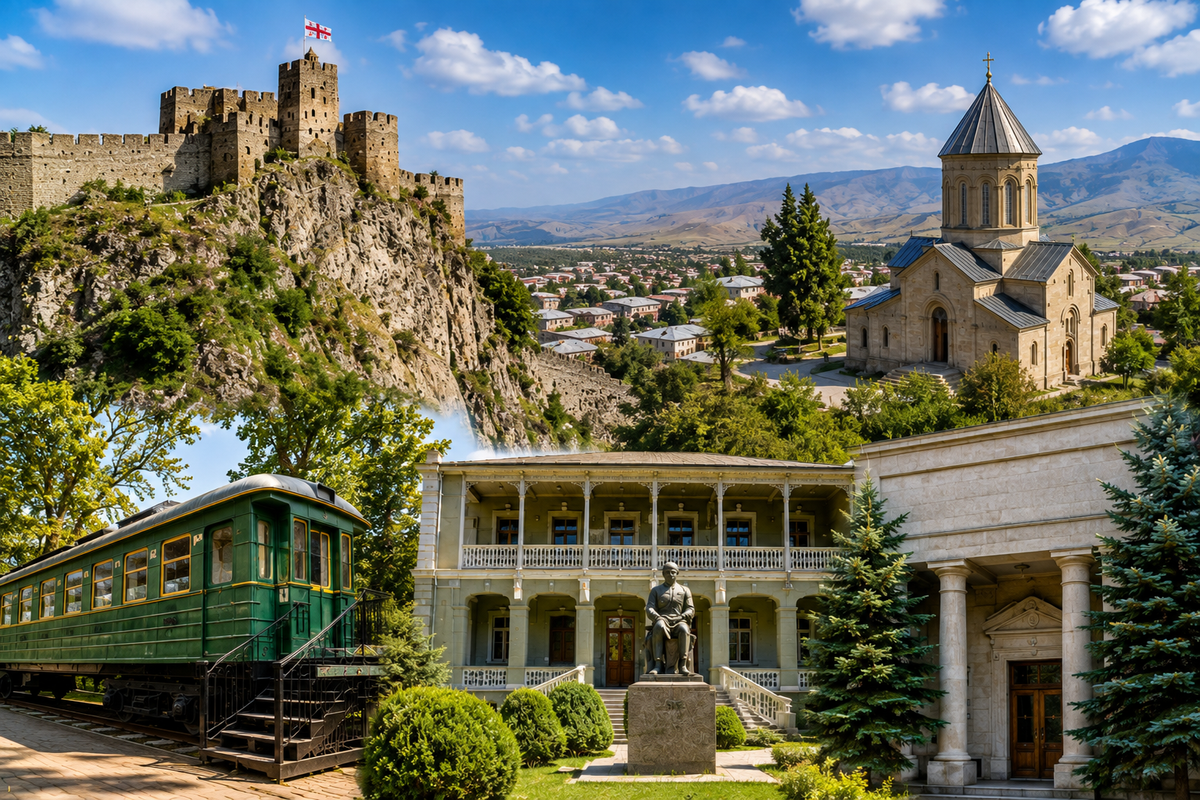
Gori is a one-museum town. That is how the coach parties from Tbilisi see it, that is how the guidebooks describe it, and on the whole they are right: the Stalin Museum remains the most visited site in Shida Kartli.
Look at the map, though, and the picture shifts. Four more museums stand within five hundred metres of the Stalin complex, ten minutes on foot. With a car, Uplistsikhe, Variani and Ergneti fit into the same day.
🚶 Five museums in the centre, all walkable
This is the practical discovery about Gori: the museums here sit close together.
The distances here are not estimates but calculated from coordinates: 137 metres from the Stalin complex to the Ethnographic Museum, 283 to the diocesan museum, 376 to the Great Patriotic War museum, 555 to the Museum of Soviet Occupation.
🏺 The Ethnographic Museum: a collection of 48,000 items
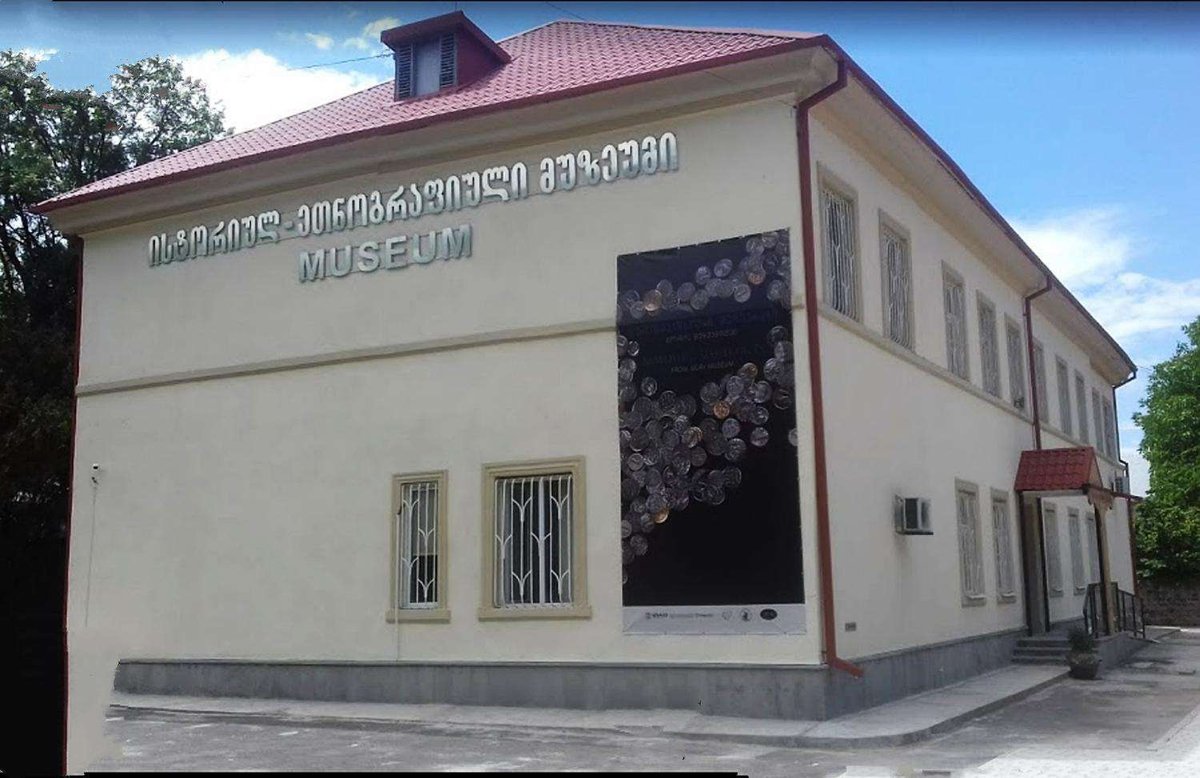
The second museum of the town by standing, and the first by the size of its holdings.
Founded in 1935 under the People's Commissariat for Education of Georgia, on the initiative of Gori's public and with the backing of three scholars: Ivane Javakhishvili, Sergi Makalatia and Ioseb Kipshidze. It began as a museum of local lore, was reorganised as a historical and ethnographic museum in 1943, and took Makalatia's name in 2005.
The collection today runs to more than 48,100 items. The museum receives and holds movable objects of cultural heritage not only from the Gori district but from Shida Kartli as a whole.
Its range is wider than you would expect of a district museum: material on metalworking, wall painting, small-scale sculpture, heraldry and folk spectacle. We have a separate piece on the history of the collection.
Address: 12 Kirion II Street.
⚔️ Two war museums two hundred metres apart
This is where visitors most often get confused, so it deserves its own section.
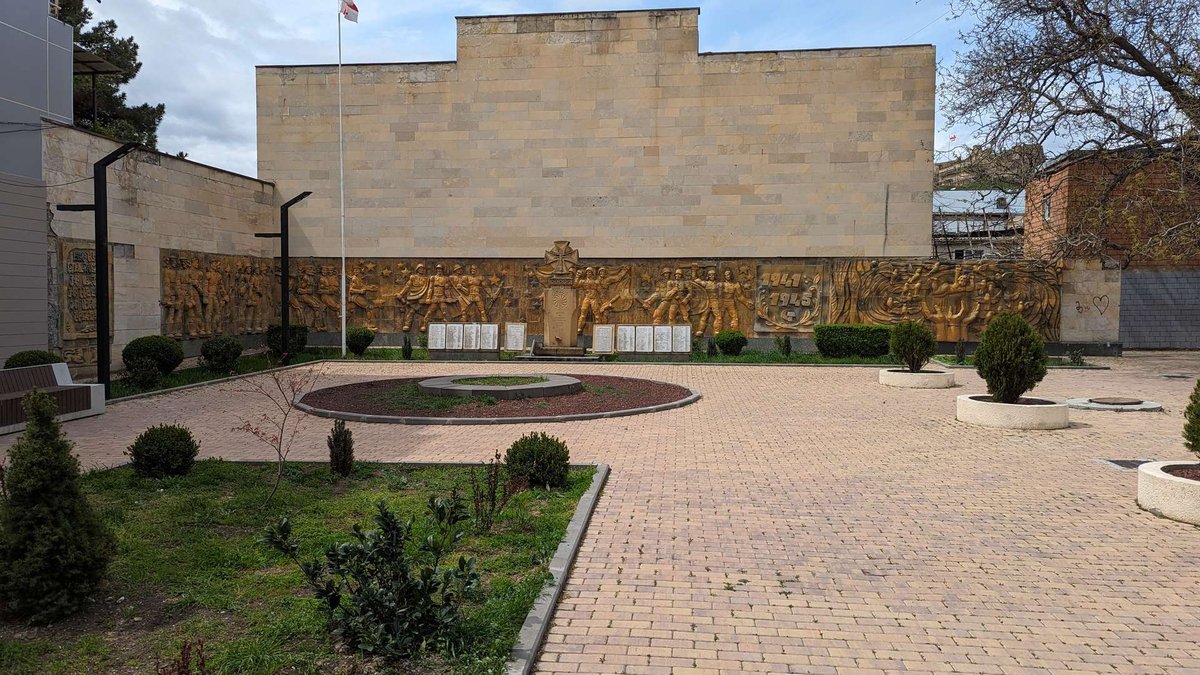
The Museum of the Great Patriotic War covers Georgia's part in the Second World War. It stands three hundred and seventy metres south of the Stalin complex.
The Museum of Soviet Occupation, on Ilia Chavchavadze Avenue. The name points to the Soviet period, while the display, judging by its description, concerns the events of August 2008. Less than two hundred metres separate the two.
If you are after one subject rather than both museums in a row, ask at the door what is actually on show: at neighbouring institutions with similar names, the contents can part company with the sign.
The full museum of the 2008 war is not here but in Ergneti, described below.
📚 The Iakob Gogebashvili house-museum at Variani
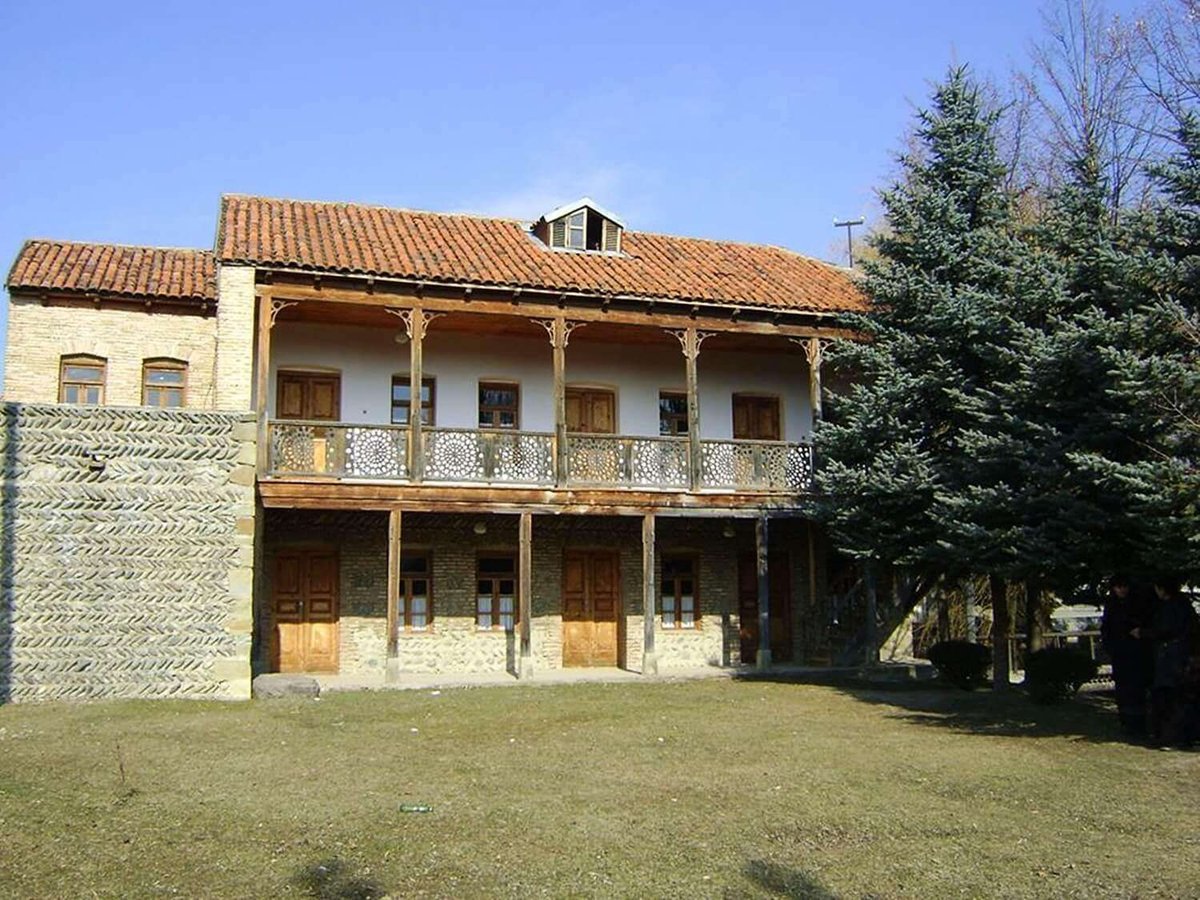
The municipality's most searched-for site after the Stalin Museum, and at the same time almost unknown to visitors.
It stands in the village of Variani, twelve kilometres from Gori, where Iakob Gogebashvili was born in 1840, the author of the primer Deda Ena. The museum has operated since 1958 and occupies two buildings: the school Gogebashvili built himself, and an exact copy of his house.
The collection runs to more than 1,500 items, including 24 memorial pieces: the furniture of his study, first editions of Deda Ena, and the lead type he made himself for the printing house.
Every year the village holds Iakoboba, a festival of the mother tongue. The full account is in the Gogebashvili house-museum.
⚠️ The museum of the 2008 war at Ergneti
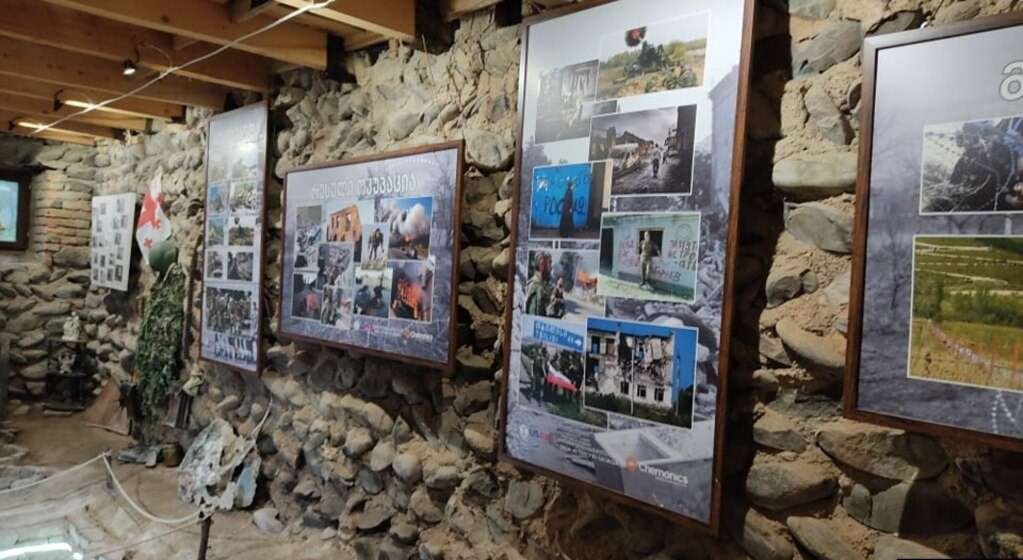
The hardest site on the list by subject and the most awkward by logistics.
The museum opened in 2017 in the village of Ergneti, twenty-seven kilometres from Gori. It occupies the basement of a house that survived the war. Inside are photographs of the events and objects brought out of occupied villages. The idea came from Lia Chlachidze, a member of the Gori municipal assembly.
A plain word about the journey. Ergneti lies right against the administrative boundary line. Approaching the line is unsafe, conditions change, and the trip calls for an understanding of where you are going. Check the current situation in advance and do not stray from the village.
The subject demands some readiness too: this is not local history but testimony to a recent war, gathered by people who lived through it.
🗿 Uplistsikhe and the rest of the municipality
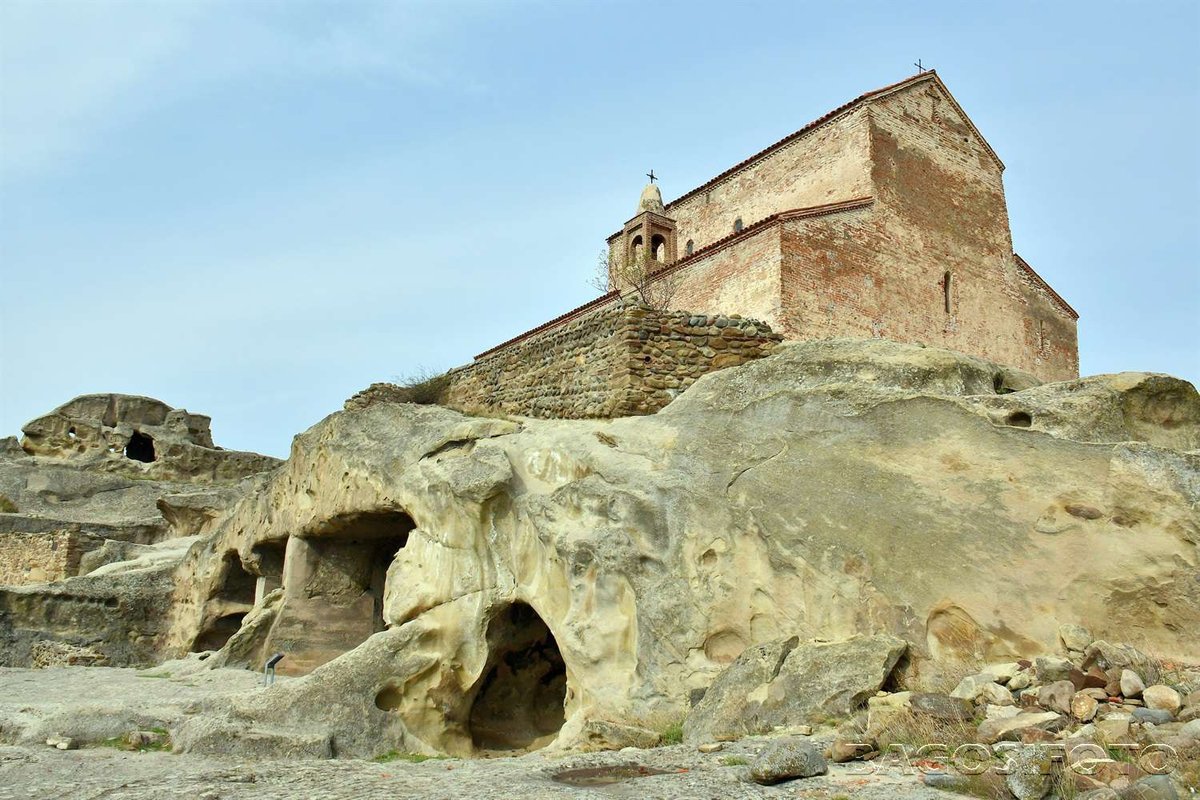
Uplistsikhe is formally listed as a historical and architectural museum reserve, though everyone treats it as a cave town. It sits eight kilometres east of Gori. Including it in a museum route is worth it for the change of register: after two or three sets of galleries, stepping into the open air acts as a reset.
The Didi Liakhvi state museum reserve, on St Bishop Alexander Street, about two kilometres from the centre. An information centre tied to the medieval monuments of the gorge.
The house-museum of Academician Alexander Javakhishvili in the village of Dzevera, fourteen kilometres from town. Devoted to the geographer whose name the institute of geography carries.
| Museum | Distance | Subject | Time |
|---|---|---|---|
| Stalin Museum | Starting point | Six halls, the birth house, the railway carriage | 1.5-2 hours |
| Ethnographic Museum | 137 m on foot | The Makalatia collection, 48,100 items | 1 hour |
| Museum of the Diocese | 283 m on foot | Church antiquities of the Gori and Ateni diocese | 30 minutes |
| Great Patriotic War Museum | 376 m on foot | Georgia's part in the Second World War | 30 minutes |
| Museum of Soviet Occupation | 555 m on foot | A record of the events of August 2008 | 30 minutes |
| Didi Liakhvi | 1.8 km | Information centre, monuments of the gorge | 30 minutes |
| Uplistsikhe | 8 km | Cave town, museum reserve | 1.5-2 hours |
| Gogebashvili House | 12 km, Variani village | Author of the Deda Ena primer, school and house | 40-60 minutes |
| A. Javakhishvili House | 14 km, Dzevera village | Academician, geographer | 30-40 minutes |
| Ergneti War Museum | 27 km, at the boundary line | August 2008, objects from occupied villages | 30-40 minutes |
| Lesya Ukrainka House | Surami, Khashuri municipality | The Ukrainian poet, her final months | 30-40 minutes |
| Dmitri Kipiani House | Kvishkheti, Khashuri municipality | A public figure of the 19th century | 30-40 minutes |
| Ivane Javakhishvili House | Khovle, Kaspi municipality | Historian, founder of the university | 30-40 minutes |
| Mazniashvili Museum | Sasireti, Kaspi municipality | General, military history | 30-40 minutes |
| Jambakur-Orbeliani Palace | Lamiskana, Kaspi municipality | A princely palace museum | 40-60 minutes |
🧭 Three ways to spend the day
The third option needs a word of explanation. Putting the Stalin Museum, the war museums in the centre and Ergneti in one day produces a stark chronological contrast: the birthplace of the man under whom the Soviet system took shape, then the Second World War, then a war fought this century half an hour's drive away. It is a heavy day, and worth planning deliberately.
🚗 Getting to Gori
The town sits on the Tbilisi to Kutaisi highway, about 85 kilometres west of the capital. Marshrutkas run from Didube station and take an hour to ninety minutes. Trains to western Georgia stop at Gori, and the centre is a twenty-minute walk from the station.
All five town museums are within walking distance of the bus station. Trips to Variani, Dzevera, Uplistsikhe and Ergneti need a car or a taxi.
🧭 Where to stay and what is nearby
Gori works well as a base for the whole of Shida Kartli: both the Dzama valley and the Tedzami gorge are close by.
Been to the museums of Gori? Leave a review on Madloba: tell us how many you managed in a day, whether you took a guide, and what opening hours you found, as they change at these museums more often than the websites do.
Information is current as of August 2026. Opening hours, ticket prices and access to individual sites all change, so check the current conditions before you travel.
❓ Frequently Asked Questions
💬 Five in the town itself: the Stalin Museum, the Ethnographic Museum with the Makalatia collection, the museum of the Gori and Ateni diocese, the Great Patriotic War museum and the Museum of Soviet Occupation. All of them stand within half a kilometre of each other. The municipality adds Didi Liakhvi, Uplistsikhe, the Gogebashvili house at Variani, the Alexander Javakhishvili house at Dzevera and the war museum at Ergneti.
💬 The town ones, yes. From the Stalin Museum it is 137 metres to the Ethnographic Museum, 283 to the diocesan museum, 376 to the Great Patriotic War museum and 555 to the Museum of Soviet Occupation. Five to seven minutes' walk between stops.
💬 The Ethnographic Museum, also known by the name of Sergi Makalatia. Founded in 1935, it now holds more than 48,100 items: material on metalworking, wall painting, small-scale sculpture, heraldry and folk spectacle.
💬 The Great Patriotic War museum covers Georgia's part in the Second World War. The Museum of Soviet Occupation, by its description, covers the events of August 2008. Less than two hundred metres separate them, so it is worth confirming the subject at the door.
💬 Iakob Gogebashvili wrote Deda Ena, the primer generations in Georgia learned to read from. The museum opened in 1958 in his home village of Variani, twelve kilometres from Gori. It holds more than 1,500 items, and the village stages the Iakoboba festival of the mother tongue each year.
💬 The museum opened in 2017 and is working, but the village lies right against the administrative boundary line, twenty-seven kilometres from Gori. Conditions there change, so check the current situation in advance and do not stray from the village.
💬 Formally yes, a historical and architectural museum reserve. It stands eight kilometres east of Gori and works well in a route after the town galleries, because it changes the register to open air.
💬 Five to six hours for the five town museums including the walking. A full day if you add Variani and Uplistsikhe. The Stalin Museum takes an hour and a half to two hours, the Ethnographic Museum about an hour, the rest half an hour each.
💬 Marshrutka from Didube station in Tbilisi, an hour to ninety minutes, or a train to Gori station, twenty minutes' walk from the centre. The town museums are within walking distance of the bus station; trips out need a car or a taxi.
💬 The hours vary: some museums are municipal, some state-run, and the diocesan museum follows the church calendar. Check the specific site in the catalogue and call ahead if you are making a special trip.
Read also

2 comments
Log in to leave a comment