




Ortubani Fortress in the scenic Dzama River Valley
One of the most exciting journeys awaits you in the Kareli region of Shida Kartli. The entire route from the village of Kintsvisi to the passes is 26 kilometers. You can travel by car, motorcycle, bicycle, or on foot. Beyond the passes, tourists will find the Gujarat Valley and the Bakuriani resort.
Hiking enthusiasts often choose this destination because it is full of unusual places and uncrowded. Complete communion with nature, religious sites, and historical landmarks surround everyone who sets foot on these trails.
Not far from the Abuhalo massif, on the Abuhalostskali River, lies a magnificent 16-meter waterfall. Another 20-meter waterfall is located 3 kilometers west of the complex, on the right tributary of the Abuhalo River. A hiking trail ascends from the valley to Mount Bardzimjvari (2,255 m), offering a magnificent panorama of Shida Kartli.
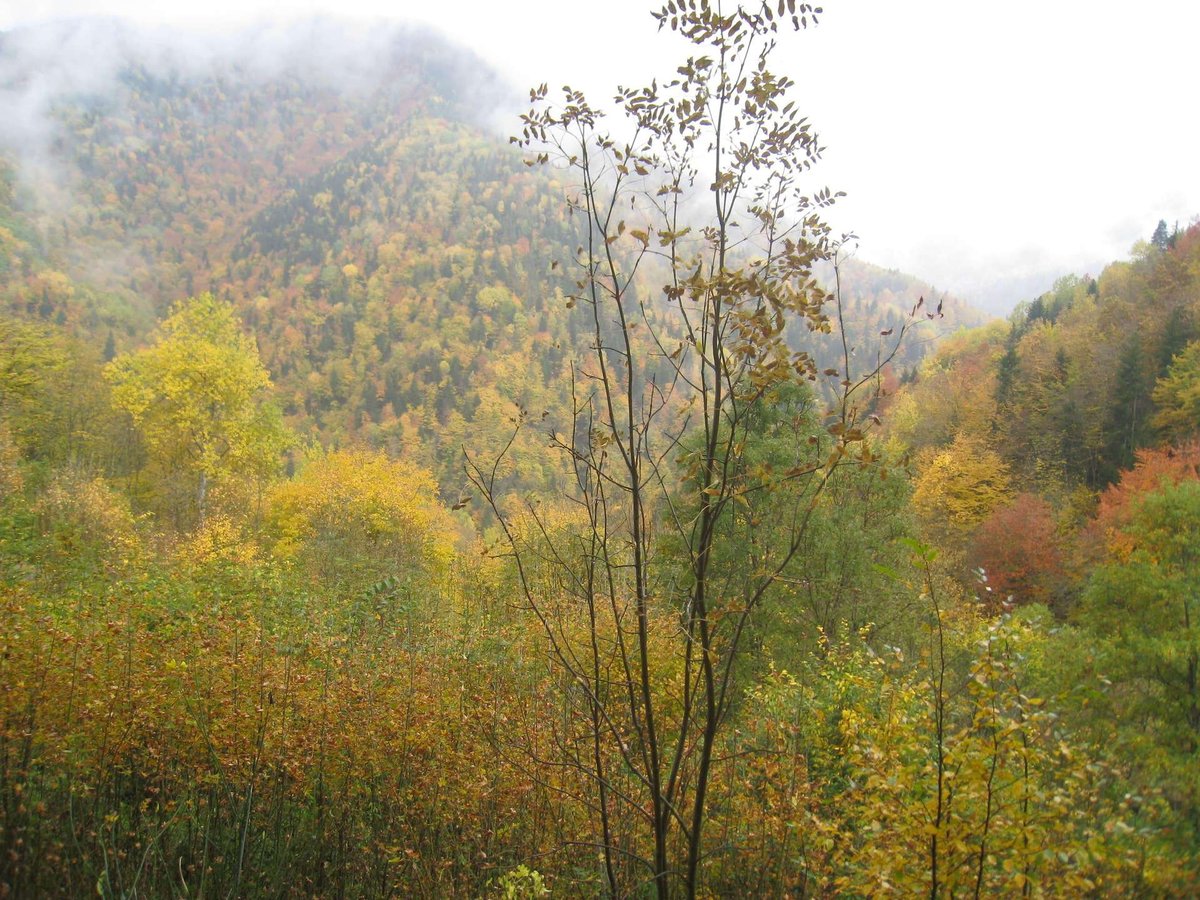
The Dzama River originates on the northern slope of the Trialeti Range, at an altitude of 2,140 meters above sea level. Along the way, it converges with several rivers and, near Kareli, joins the Kura River on the right.
Despite the valley's high elevation, it was densely populated for many centuries. Consequently, numerous historical monuments have been preserved here. These include the Kozifa (Gugomi) architectural complex consisting of five churches, the Ortubani convent and towers, the ancient churches and monasteries of Gverdzineti, the monastery complex near Elbakiani and the rock-cut Sarkineti Monastery, the rock-cut monastery of Kveda Shuano, and others.
A landmark of the valley is the medieval fortification of Dzama (Ortubani Fortress), located south of the village of Ortubani. Historically, the fortress and the upper section of the Dzama Valley were controlled by members of the Gamrekeli-Toreli family and their offshoot, the Javakhishvili. However, at various points in history, the fortress's ownership was claimed by members of the Orbodzeli and Panaskerteli-Tsitsisheili dynasties, who became its owners in the 15th century. During this period (the second half of the 15th century), Zaza Panaskerteli ("Zaza the Healer" and "Wise Ruler"), the author of the unique healing book "Karabadini," operated here.
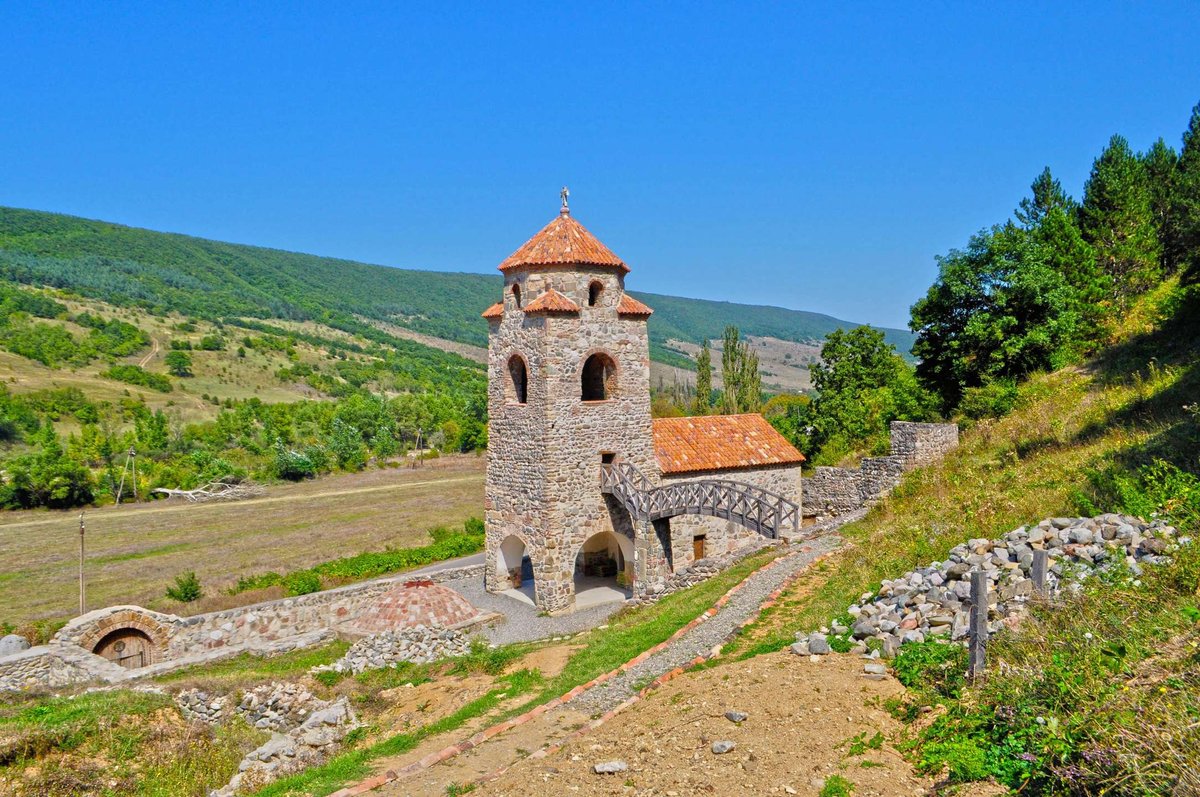
The fortress (22 x 18 meters) stands on a mountaintop. It consists of an inner fortress and a wall with several towers built into it. The complex contains several chronological layers, indicating that the fortress was repeatedly rebuilt. Initially, towers built into the wall and a freestanding tower were erected. The inner fortress, other towers, and outbuildings were built relatively later.
Read more about the unique trails and incredible hiking trails of Georgia on the pages of Madloba's directory. Here you'll find many useful links, articles, and reviews of all the country's attractions.

37 comments
Log in to leave a comment
But hey, did you happen to catch that video? It made me wonder-when’s the best time to visit these gems to avoid the crowds?
Это действительно замечательно, что люди не только строят сооружения в гармонии с природой, но и продолжают использовать их в течение времени в мирных целях. Это свидетельствует о мудрости и заботе о сохранении культурного наследия и природной красоты для будущих поколений.
Еще хочу отметить из статьи, путешествие в Карельский район, удобен путь от деревни до перевалов, тем, что можно добраться любым из способов передвижения. А за перевалами, туристов ждёт долина и курорт Бакуриани.