




🏰 Bodbe Monastery: St. Nino's Tomb, a 5th-Century Basilica and the Holy Spring
Bodbe Monastery at a glance
An active convent 2 km from Sighnaghi, founded above St. Nino's tomb in the 5th century. One of Georgia's most important Orthodox shrines and an essential stop on any Kakheti itinerary.
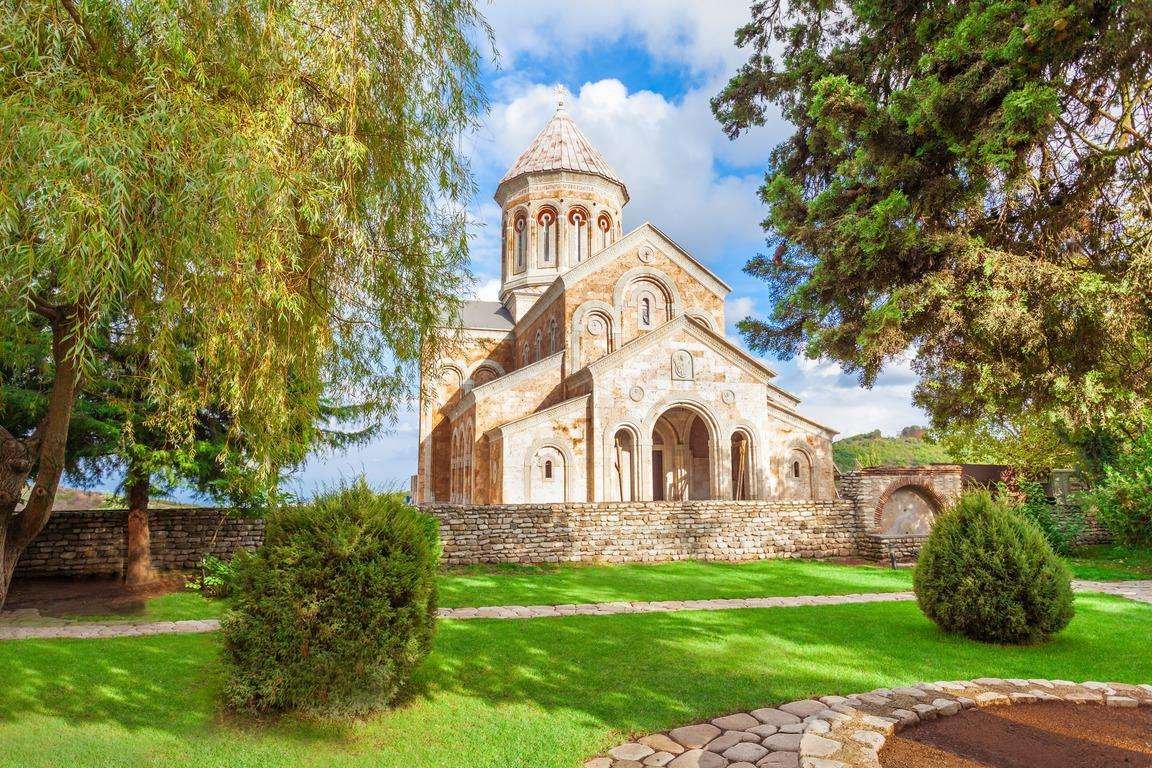
Bodbe Monastery stands on a hillside 2 km from Sighnaghi, above the Alazani Valley. It is an active women's convent and one of Georgia's most important Orthodox shrines: this is where, according to tradition, St. Nino of Cappadocia, who brought Christianity to Georgia in the 4th century, is buried. Pilgrims and tourists arrive together, and there is no contradiction in that — the monastery is large enough for both.
📜 St. Nino: Why Her Tomb Is Here
Nino of Cappadocia came to Kartli, eastern Georgia, sometime between 326 and 337 AD and converted King Mirian III and his wife Nana to Christianity. According to tradition, shortly before her death she asked to be buried at Bodbe, on the hillside where she had spent her final years preaching. Georgian kings later built a cathedral above her tomb.
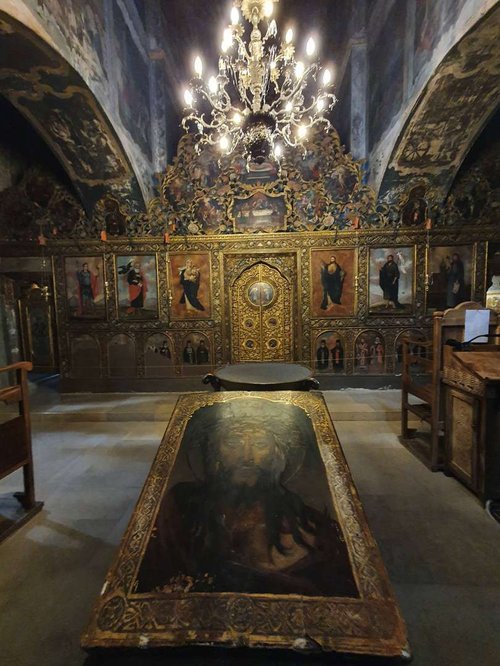
For Georgia, St. Nino's tomb is not simply a historical site. It is a spiritual centre of the nation: she stands at the very foundation of Georgian Christianity, and for believers, a pilgrimage to Bodbe carries the same significance as a journey to Jerusalem. Inside the cathedral, in the right nave, her relics rest beneath the floor. In early Christian tradition, it was precisely to relics that people came seeking healing.
🏛️ History: From the 5th Century to the Present
The episcopal complex at Bodbe was founded in the 5th century by Vakhtang Gorgasali, King of Kartli and the founder of Tbilisi. The original cathedral was built directly over St. Nino's grave. Between the 7th and 9th centuries it was rebuilt as a three-nave basilica, which survives largely intact to this day. King Demetre I of Georgia made a significant contribution to the cathedral's appearance between 1125 and 1156.
From the late 15th century Bodbe acquired a particular military and political role: the Bishop of Bodbe led a forward military unit known as the "sadroshi." In the 17th century the monastery of David Gareja also came under Bodbe's jurisdiction. In the 1820s the abbot Ione Makashvili carried out a major restoration, painting the walls, and installing a new iconostasis.
The monastery was closed in 1837. In 1889, by order of Emperor Alexander III of Russia, a women's convent opened at Bodbe: the first abbess was Mother Tamara, born Tamara Marjanishvili. A school for gentlewomen was attached to the convent. In 1924 the Bolsheviks closed it. In 1991 monastic life at Bodbe was revived, and the convent has operated continuously ever since.
The quietest time to visit is a weekday morning. On weekends and Orthodox feast days, particularly Ninooba (14 and 27 January), the monastery draws large crowds of pilgrims and queues to venerate the relics can be long. On weekdays the grounds are peaceful, the nuns go about their work, and the atmosphere of the place comes through completely differently.
💧 The Spring of St. Nino
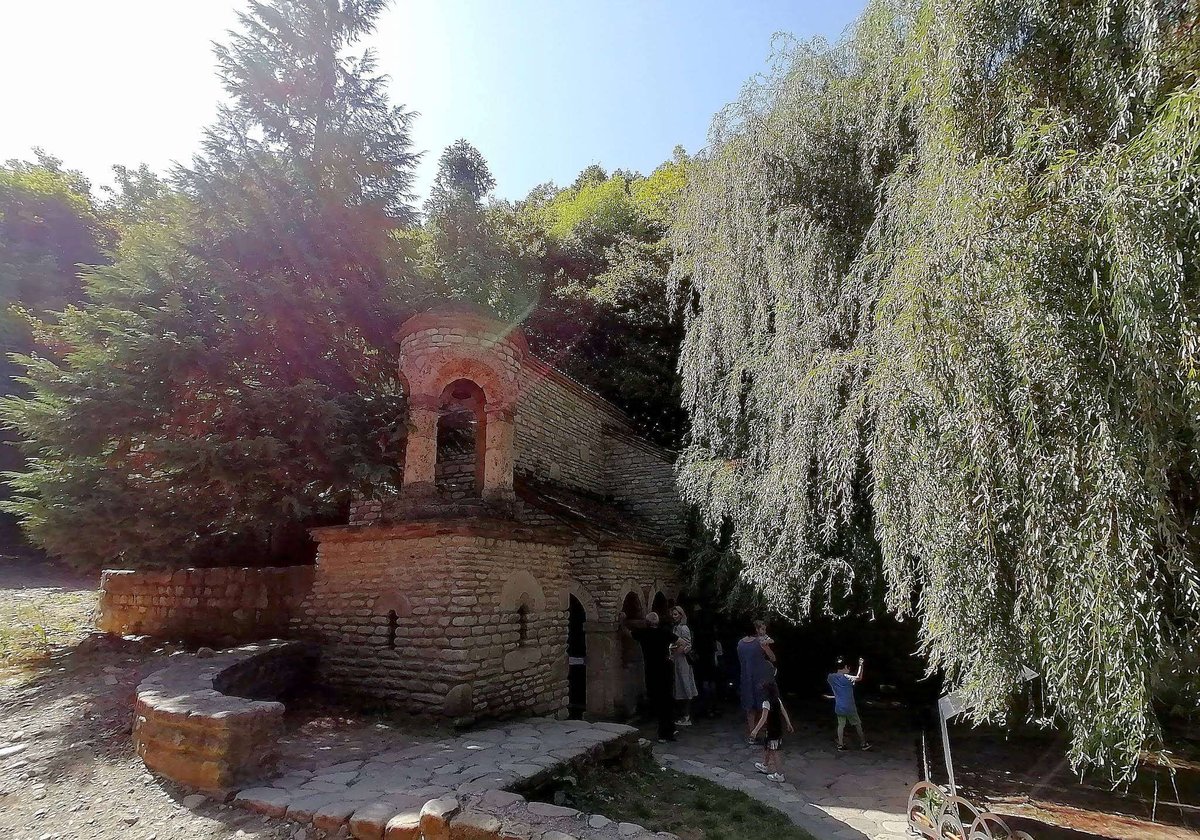
Five hundred metres downhill from the monastery lies a spring venerated by believers as miraculous. According to tradition it appeared during St. Nino's prayers. In the late 1990s a bathhouse and a small church dedicated to Saints Zavlon and Susanna, St. Nino's parents, were built here (architect Teimuraz Beridze). The spring is open daily and entry is free. The bathing pools are separate for men and women. Many visitors take water home, believing in its healing properties.
The walk down from the monastery takes about 10 minutes. The path is marked. On the return journey it is uphill, so if walking is difficult, consider visiting the spring first and the monastery second.
⛪ Inside the Monastery
The main cathedral, a three-nave basilica, holds daily services. Among its most important treasures is a miracle-working icon of the Iberian Mother of God. In the right nave, near the altar, lies the burial place of St. Nino.
The monastery runs icon-painting and craft workshops. The nuns prepare new theological books for publication using ancient manuscripts. A small monastery shop sells icons, candles, blessed oil and items made by the community.
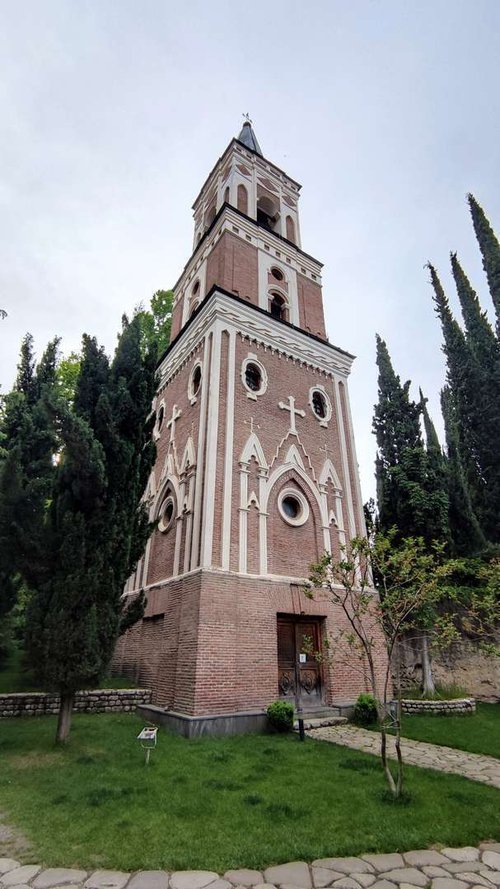
The monastery grounds are well kept: cedar alleys, clover gardens, berry bushes along the paths. In summer it is a good place to spend an hour or two simply in quiet.
📍 Getting There
From Sighnaghi, the walk to the monastery takes about 25 minutes through the old town and down the road; by taxi it is 5 minutes. There is no public transport to the monastery. Parking is available at the gates. From Tbilisi the drive is around 110 km, just over an hour and a half.
🗺️ What to See Nearby
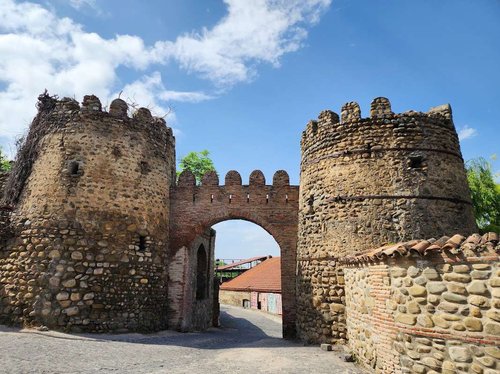
Sighnaghi Walls. 2 km away, an 18th-century fortress wall stretching 4.5 km with 23 towers. The most celebrated medieval fortification in Kakheti, with a walkable section along the top.
Sighnaghi National Museum. In the centre of Sighnaghi. Collections covering medieval Kakheti alongside works by Niko Pirosmani and Lado Gudiashvili.
Sighnaghi. Restaurants, wine, the famous round-the-clock wedding registry. Convenient to combine with the monastery in a single day.
Have you visited Bodbe Monastery? Leave a review on Madloba — share what time of day you came, whether you made it down to the spring, and what stayed with you most. It helps the next pilgrims and travellers planning the same trip.
Information current as of June 2026. Visiting arrangements during major church feasts may change — check on arrival.
❓ Frequently asked questions
2 km from Sighnaghi, Kakheti, Georgia. Around 110 km from Tbilisi. Coordinates: 41.6063, 45.9338.
Yes. The burial place of St. Nino is inside the cathedral, in the right nave near the altar. It is accessible to all visitors during opening hours, outside service times.
A spring venerated as miraculous, 500 metres downhill from the monastery. A bathhouse and the church of Saints Zavlon and Susanna were built here in the late 1990s. Entry is free, bathing pools are separated by gender, and visitors can take water home.
Yes. Women must cover their heads (headscarf), shoulders and knees. Scarves and wrap skirts are usually available to borrow at the entrance. Men should not wear shorts.
About 25 minutes on foot through the old town, or 5 minutes by taxi. There is no public transport to the monastery. Parking is available at the gates.
By car, around 110 km, just over an hour and a half. Minibuses run from Samgori station to Sighnaghi (about 2 hours, 12 GEL); from Sighnaghi, take a taxi to the monastery.
Yes. Entry to the monastery grounds is free.
A weekday morning is the quietest. On weekends and Orthodox feast days, especially Ninooba (14 January and 27 January), the monastery is very busy and queues to venerate the relics can be long.

30 comments
Log in to leave a comment