




⛪ The Ascension Cathedral of Akhaltsikhe: A Church in a Town of Four Faiths
⛪ Amagleba Cathedral: The Essentials
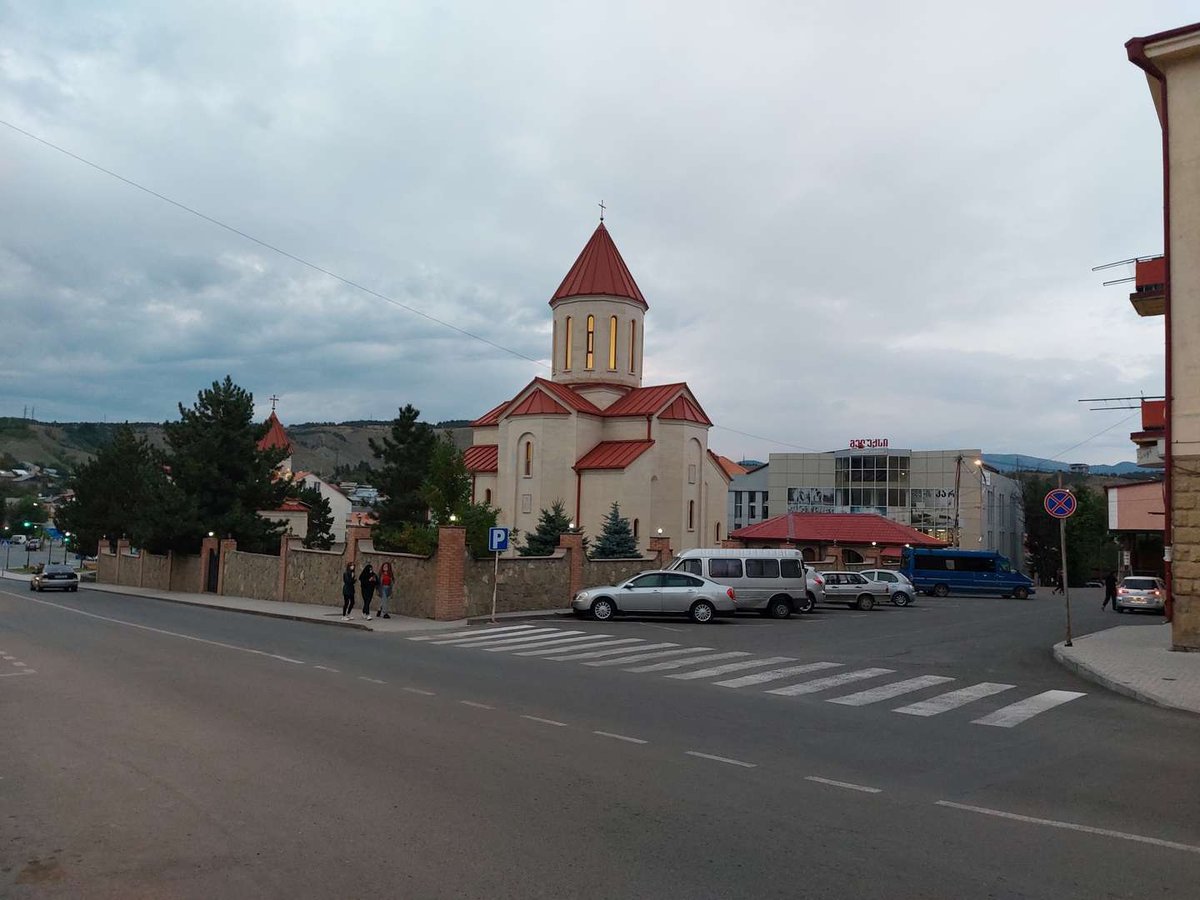
The Orthodox cathedral of the Ascension in central Akhaltsikhe, the administrative centre of Samtskhe-Javakheti. In Georgian the Ascension is ამაღლება, hence the everyday name. It stands in a town where four religious traditions have coexisted for centuries, and that shapes its place on the map as much as its architecture does.
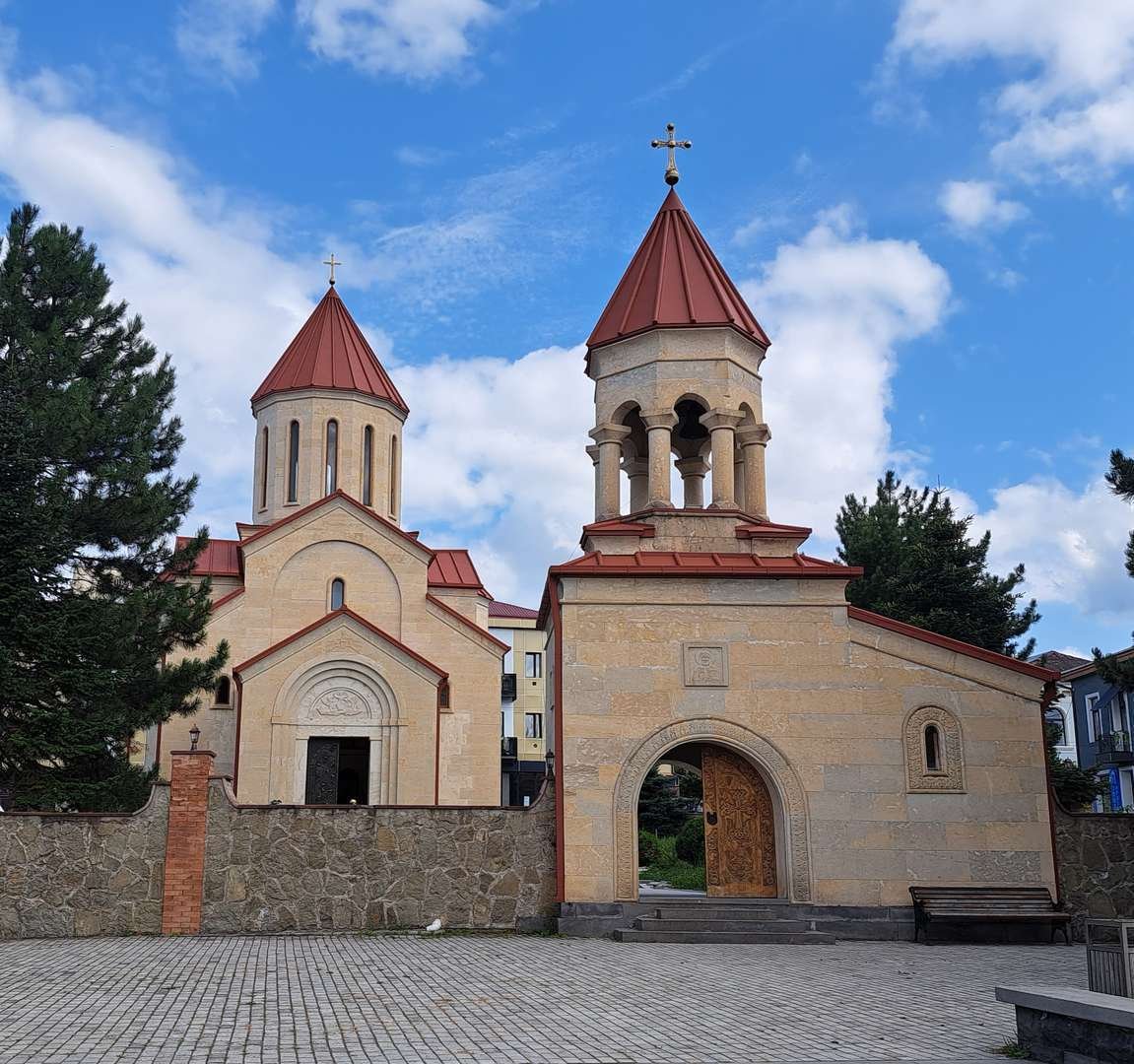
Amagleba Cathedral stands in the centre of Akhaltsikhe and serves as the town's principal Orthodox church. The name comes from the Georgian ამაღლება, the Ascension: the feast to which the church is dedicated.
One thing to note straight away, because it gets in the way of searching. There are dozens of Ascension churches in Georgia, from Tbilisi ones to village chapels, and finding the Akhaltsikhe one online is not easy: the same name brings up quite different buildings. On the cathedral's architecture and date, the open sources have almost nothing.
What there is, though, is context that makes this church more interesting than most: the town it stands in.
🕌 Akhaltsikhe: four traditions in one town
Visitors usually miss this, because they see Rabati and leave. Yet Akhaltsikhe is among the most multi-confessional towns in Georgia, and the traces are visible on the streets.
Orthodoxy. Amagleba Cathedral and the town's other churches.
Islam. Inside Rabati fortress stands the Ahmediye Mosque, built around 1752 on the model of Hagia Sophia in Constantinople. Today it forms part of the museum display.
The Armenian church. There are several here, one of them Surb Khach, 'Holy Cross'. During clearance work in 2010, fourteenth-century khachkars with Armenian inscriptions were found in the masonry of its east wall. The discovery confirmed a hypothesis put forward as early as the mid-nineteenth century by the academician Marie-Félicité Brosset: that the church was built in the Middle Ages. Numerous khachkars have also been found in the fortress itself, evidence of a long-established and substantial Armenian community.
Judaism. A synagogue survives in the town.
Four traditions in a town of some twenty thousand people is unusual even for the Caucasus. So Amagleba is best seen not in isolation but as one point on that map.
🏛️ What is known about the architecture
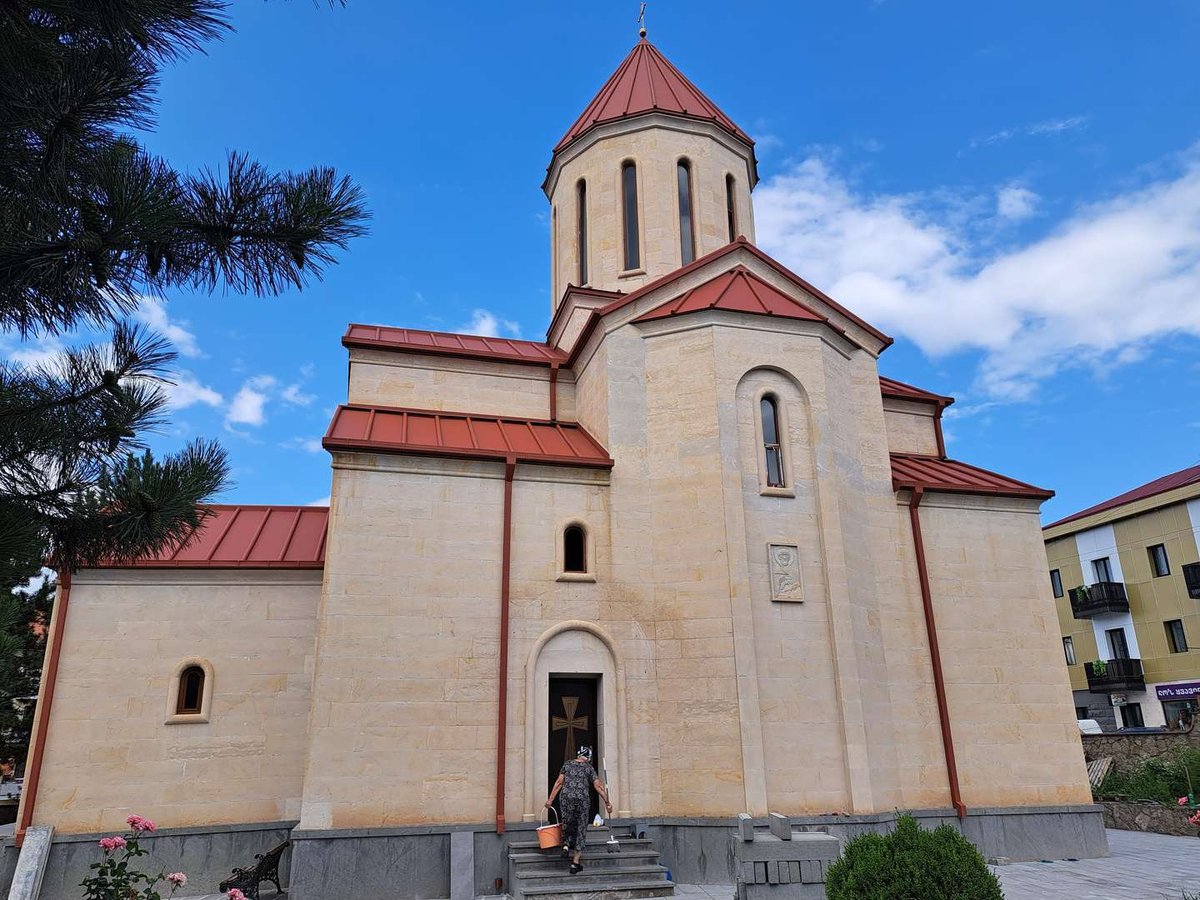
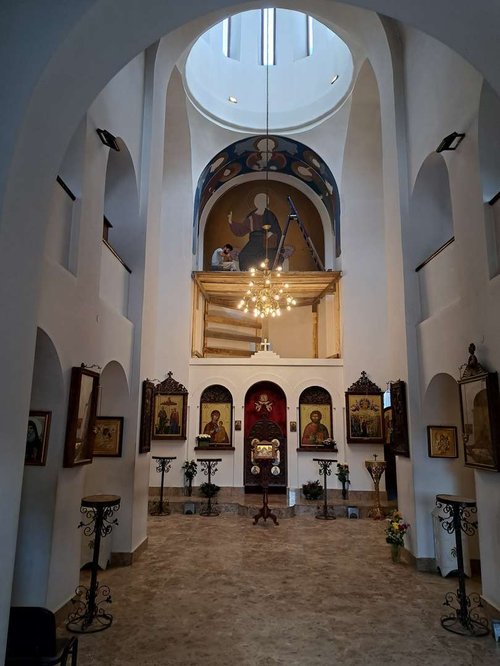
Here it has to be said plainly: detailed information about the cathedral is absent from open sources. No exact date of construction, no architect's name, no description of the interior.
That is the normal situation for Georgian town churches that do not count as ancient monuments: reference works do not describe them and no specialist literature has appeared.
What can be said for certain: the church is active and serves as the principal Orthodox cathedral of Akhaltsikhe. The dedication is to the Ascension of the Lord.
If you have been inside and know more, write to us: information of that kind is worth more than any guidebook.
🚶 Fitting it into a walk
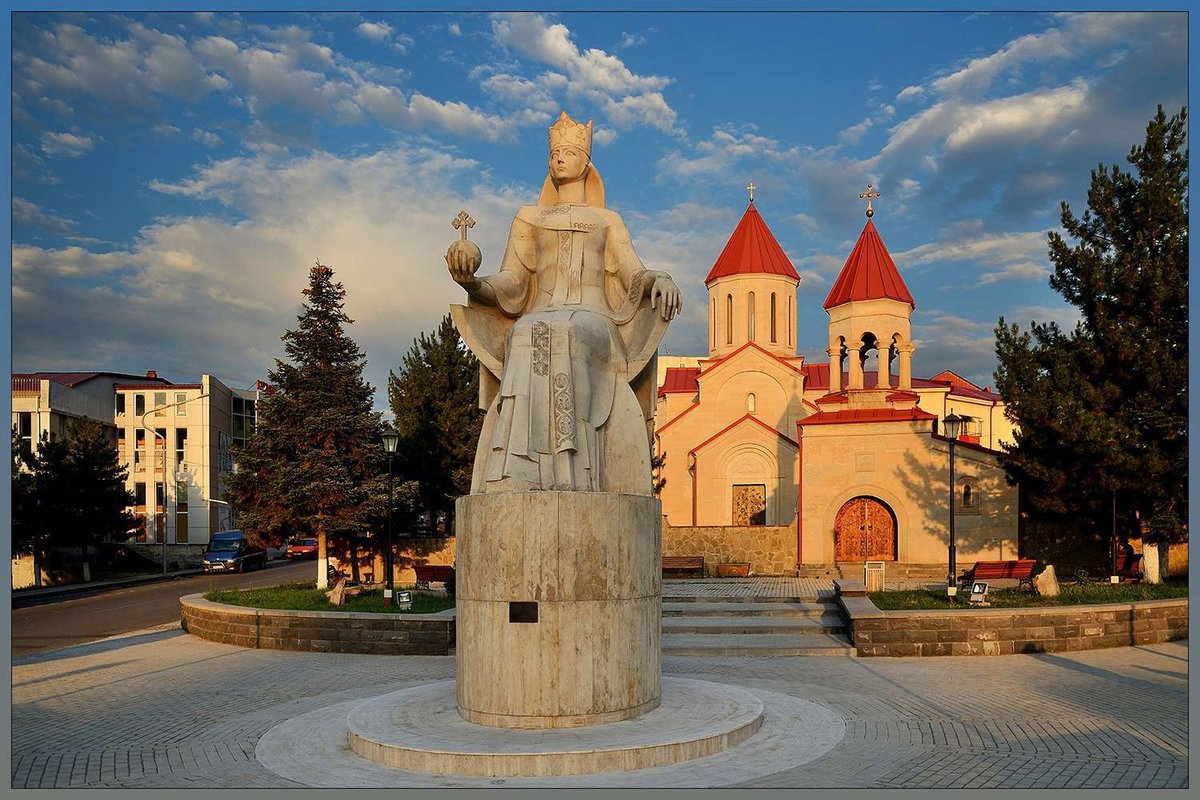
Akhaltsikhe is compact and the centre is walkable.
From the cathedral to Rabati fortress is about fifteen minutes. On the way stands the Shota Rustaveli monument, which is not there by chance: by one account the poet's byname derives from the nearby Meskhetian Rustavi.
The Ahmediye Mosque is seen together with Rabati: it stands on the fortress grounds and belongs to the museum display.
The Church of St Marina, rebuilt in 1865, with the carved stones of the older building set into its walls.
An hour and a half covers the religious side of town, not counting Rabati and its seven hectares.
The usual conventions apply at a working church: covered clothing, a headscarf for women, photography inside by agreement.
🚗 Getting to Akhaltsikhe
The town sits at the crossroads of Samtskhe-Javakheti, and reaching it is straightforward.
From Tbilisi, about three hours by marshrutka from Didube station, through Gori, Khashuri and Borjomi.
From Borjomi, roughly an hour along the Mtkvari gorge.
From Vardzia, about an hour; Akhaltsikhe usually serves as the base for that trip.
The cathedral is central, within walking distance of the bus station.
🧭 What is nearby
Rabati Fortress, the town's main site and one of the most visited in Georgia. Seven hectares, a citadel, the Ahmediye Mosque and the Samtskhe-Javakheti History Museum.
The cave monastery of Vardzia, an hour to the south.
Sapara Monastery, twelve kilometres away, an active house on a gorge slope.
Akhalkalaki on the Javakheti plateau to the south.
Been to Amagleba Cathedral? Leave a review on Madloba: tell us what you saw inside, whether you know the date of construction and whether you caught a service. There is little about this church online, and your account would be particularly useful.
Information is current as of August 2026. Service times at a working cathedral change, so check locally before you travel.
❓ FAQ
💬 In the centre of Akhaltsikhe, the administrative centre of Samtskhe-Javakheti. It is within walking distance of the bus station, and about fifteen minutes from Rabati fortress.
💬 In Georgian ამაღლება means the Ascension. The church is dedicated to the Ascension of the Lord, hence the everyday name. Georgia has many churches with this dedication, which makes them easy to confuse in search.
💬 No precise information appears in open sources: neither the year of construction nor the architect's name. That is normal for town churches not classed as ancient monuments. What is known is that the church is active and serves as the town's principal Orthodox cathedral.
💬 Yes, the Ahmediye Mosque stands on the grounds of Rabati fortress. It was built around 1752 on the model of Hagia Sophia in Constantinople and now forms part of the museum display.
💬 Besides Orthodox and Muslim, Armenian and Jewish. Armenian churches survive, among them Surb Khach with fourteenth-century khachkars in the masonry of its east wall, as does a synagogue. For a town of some twenty thousand that is a rare range.
💬 Twenty minutes for the cathedral itself. An hour and a half for the religious side of the town, not counting Rabati: its seven hectares need two to three hours of their own.
💬 About three hours from Tbilisi by marshrutka from Didube station, through Gori, Khashuri and Borjomi. Roughly an hour from Borjomi along the Mtkvari gorge, and about an hour from Vardzia.

4 comments
Log in to leave a comment
חשבתי על זה שהכנסיות הללו, כל אחת מהן, אוצרות זיכרונות ומסרים של קהילות. זה לא רק בנייה אדריכלית, אלא גם סיפור של חיים. מעניין, לפחות בעיניי, לדעת איך מקומיים חווים את המקום הזה ביומיום שלהם. האם הם מצליחים לחיות בהרמוניה? האם יש קונפליקטים שמתרחש? מה זה בשבילם להיות במקום שבו ארבע מסורות נפגשות?