

Russian Churches in Tbilisi: History and Architecture
🏛️ Quick Reference: Russian Churches in Tbilisi
| ⛪ Alexander Nevsky | 1864, 38 Marjanishvili St. The «Russian church», tomb of elder Vitaly |
| ⛪ St. John the Divine | 1898–1901, 51 Leo Kiacheli St. Suzdal style, bilingual services |
| ⛪ Michael of Tver | 1911–1913, 36 8 Marta St. Neo-Russian style, sailing-ship silhouette |
| 💰 Entry | Free at all three. Dress code: modest clothing, women cover their heads |
| 🚇 Nearest metro | Alexander Nevsky — «Marjanishvili». St. John and Michael of Tver — «Rustaveli» |
Who this article is for
Tbilisi's Russian churches are three temples built in the 19th and early 20th centuries for the Russian community and military garrisons of the Caucasus Viceroyalty. They stand in different districts, look distinct from Georgian churches, and remain important for Russian-speaking worshippers today. This guide covers all three: history, architecture, addresses.
Russian churches in Tiflis: where they came from
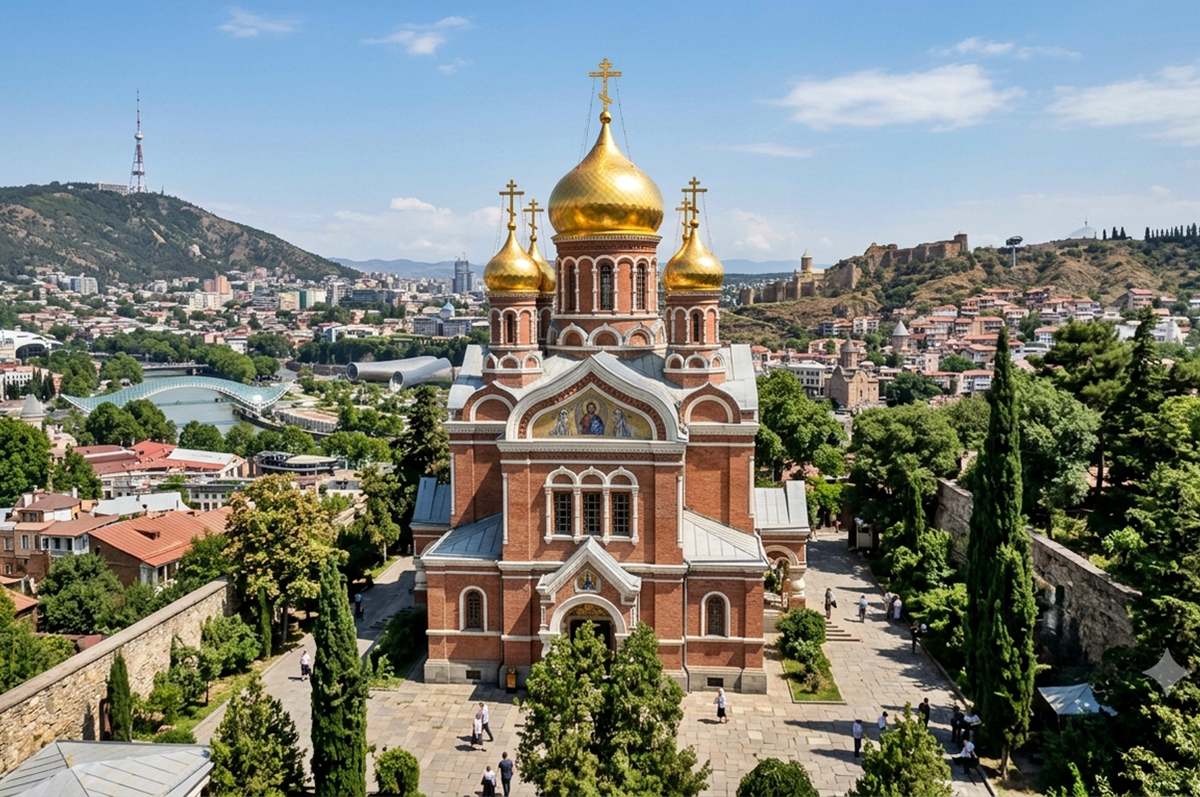
In the 19th century, Tiflis served as the administrative centre of the Russian Caucasus Viceroyalty. Officials, military officers and merchants relocated here and needed churches with services in Church Slavonic. Parishes were built specifically for the Russian congregation rather than the Georgian one.
They were constructed in the pseudo-Russian and neo-Russian styles of their era: onion domes, kokoshnik gables, tented bell towers. Against the backdrop of Georgian cross-domed basilicas and carved stone, these buildings stand out immediately.
All three churches are active today. Two — Alexander Nevsky and St. John the Divine — officially hold services in Church Slavonic; the third functions as a regular Georgian parish while keeping its Russian architectural appearance.
🏛️ Russian Churches of Tbilisi on the Map
Open in Google Maps⛪ Alexander Nevsky Church — the «Russian church»
📍 38 Kote Marjanishvili St.
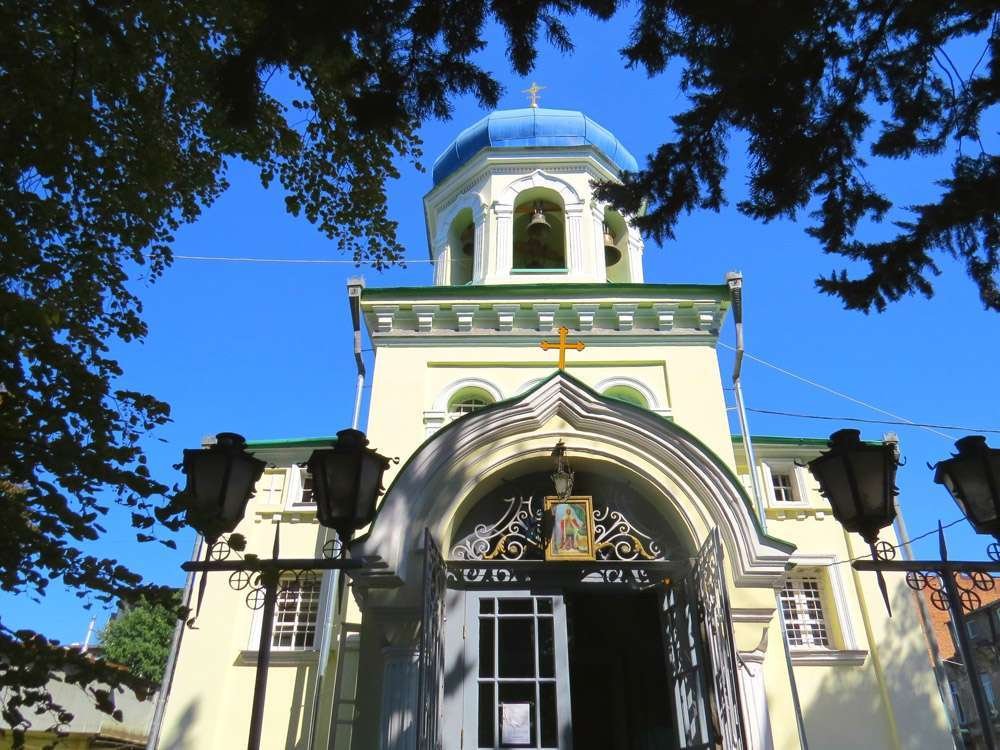
Locally known simply as the "Russian church" — the most recognised of the three. Built in 1864 with parish donations; the Holy Synod added a further 5,000 roubles. A bell tower was added in 1886, nearly doubling the building's size.
The church holds relics of St. Nino, Mary Magdalene and Shio of Mgvime. From 1950 to 1982 it was led by Metropolitan Zinovy (Mazhuga), later canonised by the Georgian Church and buried by the north wall. In the courtyard lies schema-archimandrite Vitaly (Sidorenko), a destination for pilgrims today.
Architecture: pseudo-Russian style, kokoshnik-framed windows, onion domes over the nave and bell tower. One of two churches in Tbilisi where the entire liturgy is in Church Slavonic.
⛪ St. John the Divine — Suzdal style in central Tbilisi
📍 51 Leo Kiacheli St.
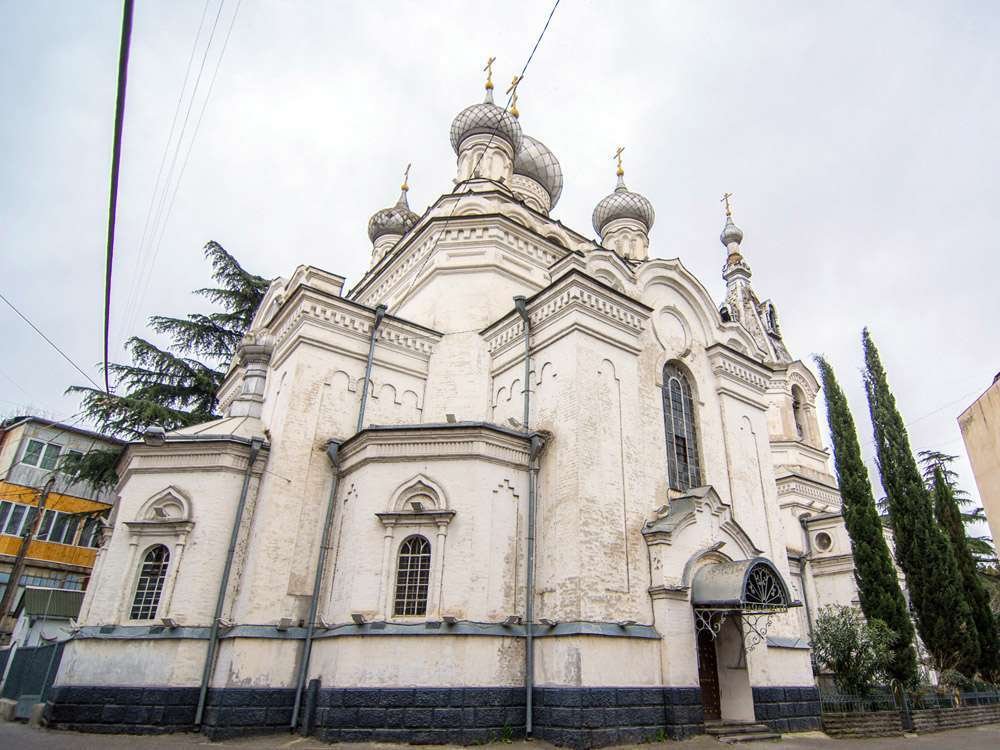
Located in the Vera district, next to the Georgian Blue Monastery (St. Andrew the First-Called). Built in 1898–1901 by order of Caucasus Viceroy Prince Grigory Golitsyn, during the development of the entire surrounding district.
Architecture: a white brick building in Suzdal style with silver onion domes, four symmetrical entrances and a restrained white-and-blue interior. The golden iconostasis stands out against the white walls.
In the early 2000s, Russian-speaking parishioners successfully petitioned to restore Church Slavonic services; Patriarch Ilia II personally promised to preserve the building's original Russian appearance. Today liturgies are held in two languages, Sundays from 9:00.
⛪ Michael of Tver Church — shaped like a ship
📍 36 8 Marta St.
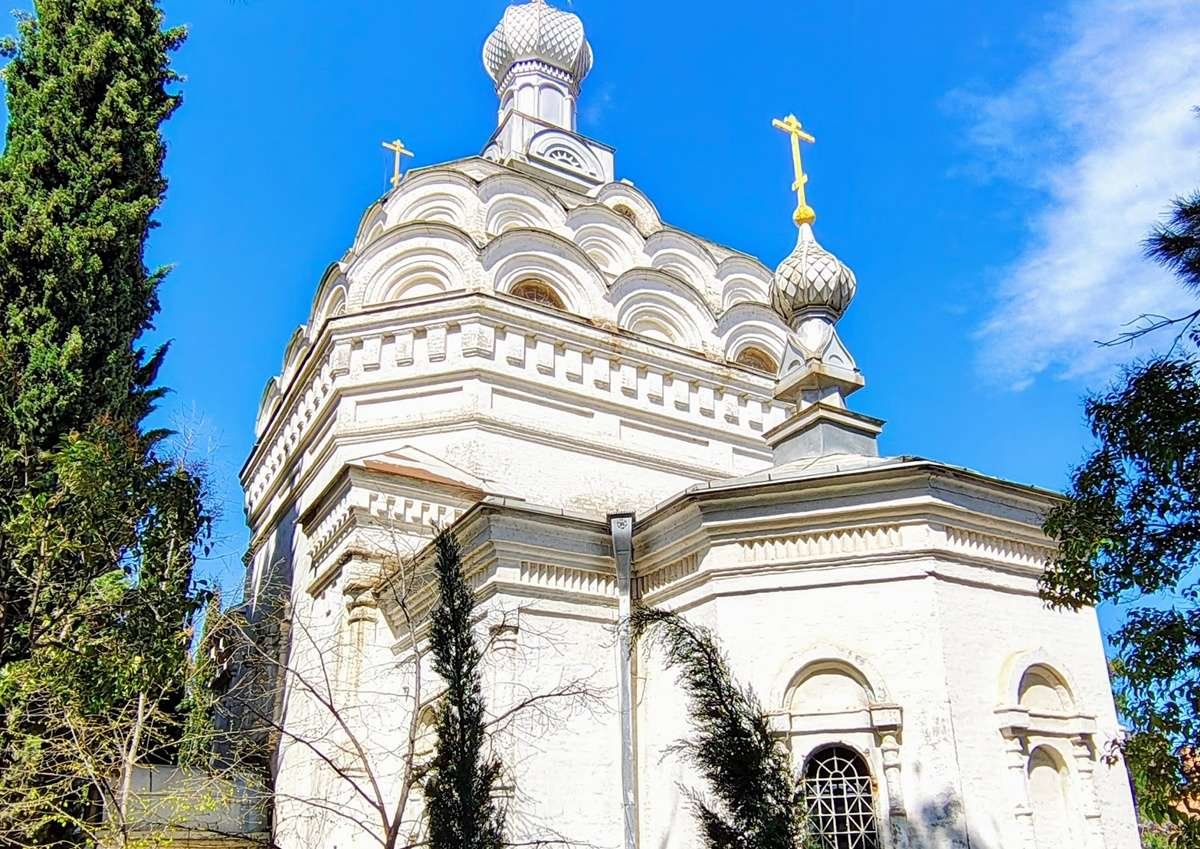
Built in 1911–1913 to mark 300 years of the Romanov dynasty, dedicated to the patron saint of Grand Duke Michael Alexandrovich. Architect: Johann Dietzmann. Most of the funding came from Countess Elizaveta Vorontsova-Dashkova, wife of the Caucasus Viceroy — of the total 48,344 roubles, she personally donated 37,680.
The architecture is unusual: a compact cube form, a tented bell-tower roof and tiered kokoshniks combine into a silhouette resembling a sailing ship. An avenue of cypress trees leads to the church — their number symbolically matches the age of Christ.
The church remained active throughout the Soviet period, when many Tbilisi churches were closed. A 1958 incident is still recalled locally: the rector protested the construction of a cable car directly over the dome — years later, a cable snapped nearby, confirming his concerns.
To hear a Church Slavonic service, go to Alexander Nevsky or St. John the Divine on a Sunday by 9:00. Michael of Tver's liturgy is in Georgian, but its architecture is the most unusual of the three — the ship shape reads best from the side, not from the main entrance.
🗺️ What makes a Russian church different from a Georgian one
The difference is visible at a glance. Georgian churches are mostly cross-domed basilicas of hewn stone, with carved facades and a drum dome resting on four pillars. Tbilisi's Russian churches follow the late 19th- and early 20th-century pseudo-Russian style: brick walls, onion domes, kokoshniks, tented bell towers — forms typical of central Russian architecture, not the Caucasus.
The interior differs too: a multi-tiered gilded iconostasis instead of the medieval Georgian tradition, and frescoes in a 19th-century academic style. The liturgical language is another marker: two of the three churches use Church Slavonic, unusual for Georgia.
🗺️ Walking route: Russian churches of Tbilisi
The three churches sit in different parts of the city, so the route works best as a loop through the centre or as separate visits.
1️⃣ Start at St. John the Divine (51 Leo Kiacheli St.) — near metro «Rustaveli». The courtyard offers a view of the neighbouring Blue Monastery.
2️⃣ Walk down to Michael of Tver (36 8 Marta St.) — about 10 minutes. Circle the building to appreciate the "ship" shape.
3️⃣ Reach Alexander Nevsky (38 Marjanishvili St.) via metro to «Marjanishvili» or on foot along Agmashenebeli Avenue. Visit the courtyard and the tomb of schema-archimandrite Vitaly.
💬 What visitors say
"A stunning and distinct temple constructed by Saint Tsar Nicholas II, but the outside is unfortunately in poor condition."
"I was glad that half the services in this church are in Russian. It creates a welcoming atmosphere for worshippers who don't know Georgian."
"A church in Russian style, looks unusual for Tbilisi. If you want to see a piece of the Russian soul in Georgia, head to Alexander Nevsky Church!"
"A beautiful church located right in the centre of the city."
🏁 Before you go
Three churches, three eras: 1864, 1901, 1913. All three survived the Soviet period — one never closed at all, others were shut and later restored. Today they are active parishes with their own congregations, history and architecture that stands out from the rest of Tbilisi.
Free entry at all three. A full walking route between them takes about two hours.
Other churches in Tbilisi: madloba.info/en/tbilisi/churches/
ℹ️ Service schedule information is current as of publication. Please verify service times before visiting.
Have you visited the Russian churches of Tbilisi? Which one stayed with you most — the cosy Alexander Nevsky, Suzdal-style St. John the Divine, or the uniquely shaped Michael of Tver? Leave a comment — we read every one.
❓ Frequently asked questions
💬 Three main ones: Alexander Nevsky (38 Marjanishvili St.), St. John the Divine (51 Leo Kiacheli St.), and Michael of Tver (36 8 Marta St.). All were built in the pre-revolutionary period and remain active.
💬 That's the local name for Alexander Nevsky Church on Kote Marjanishvili Street, 38, near the metro station of the same name. Built in 1864, it's one of two churches in the city where the entire service is in Church Slavonic.
💬 At Alexander Nevsky — entirely in Church Slavonic. At St. John the Divine — bilingual, Church Slavonic and Georgian, Sundays from 9:00. At Michael of Tver, the liturgy is in Georgian, while the building keeps its fully Russian architectural appearance.
💬 In 1898–1901, by order of Caucasus Viceroy Prince Grigory Golitsyn. It stands in the Vera district at 51 Leo Kiacheli St., next to the historic Georgian Blue Monastery.
💬 Architect Johann Dietzmann designed the building as a compact cube with a tented bell tower and tiered kokoshniks, which together create a silhouette resembling a sailing ship. Built in 1911–1913, funded mostly by Countess Elizaveta Vorontsova-Dashkova.
💬 Yes, all three hold weddings, baptisms and funeral services. It's best to confirm details and book in advance with the church's rector.
💬 Yes. Alexander Nevsky Church holds relics of St. Nino, Mary Magdalene and Shio of Mgvime. Metropolitan Zinovy (Mazhuga) and schema-archimandrite Vitaly (Sidorenko), a pilgrimage destination, are both buried there.

2 comments
Log in to leave a comment