




🌉 Kutaisi Bridges: A Guide to Crossing the Rioni
🌉 Nine crossings over Rioni and Tskalsitela · ⏱️ 1 day · 📍 Kutaisi, Imereti
🌉 Things to Know Before Your Walk
| 📍 Location | Kutaisi is situated on the Rioni River; the four main bridges are concentrated in the Old Town |
| 🌊 Rivers | Eight bridges cross the Rioni, and one crosses its tributary, the Tskaltsitela |
| 🚶 Historical Center | The Red, White, Chain, and Rustaveli bridges are located within a few minutes' walk from each other |
| 💰 Admission | Free, all bridges are open 24/7 |
| 🚗 Outer Bridges | The Balakhvani, Samtredia, Lotofone, and Blue Pipe bridges are primarily transport corridors rather than tourist sights |
🧭 Who will find this article useful
This guide is perfect for those who want to see all of Kutaisi's main bridges in one day and understand their differences, rather than just snapping a photo on the most popular one. It's also useful for those interested in exploring not just the postcard-worthy downtown area, but also the working, non-tourist part of the city.
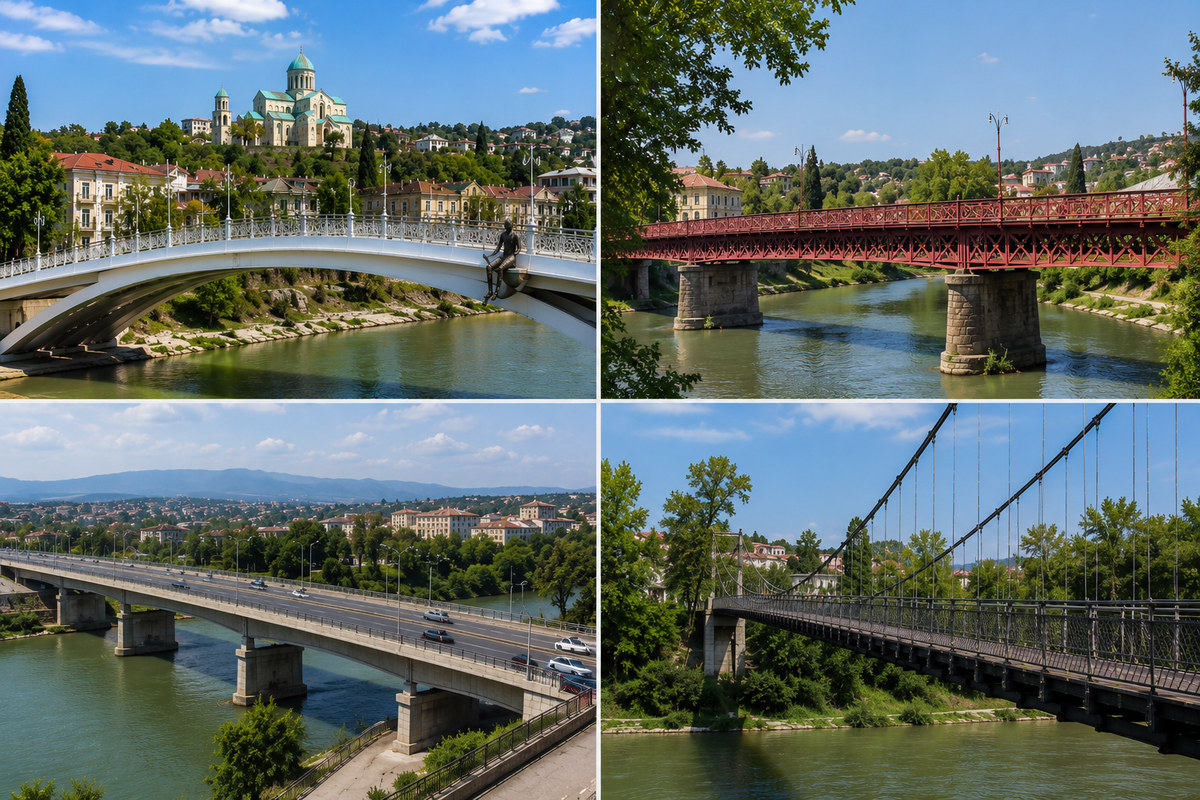
📜 A city on the bend of the Rioni
Kutaisi stands where the Rioni River makes a sharp turn, so bridges here have always been more than just crossings, but part of the city's identity. The right bank preserves the old town with its historic buildings, while the left bank boasts more modern developments, and it is the bridges that physically and symbolically connect these two parts. The Red Bridge, built between 1860 and 1862, was the first metal bridge in the Caucasus, and today's Chain Bridge stands on the site of a crossing that archaeologists estimate is over 1,500 years old. In addition to the eight bridges across the Rioni, this selection includes one bridge over the Tskalsitela tributary, whose name translates as "red water."
🌉 Historic center: four bridges just steps away from each other
This group is the most touristy; all four bridges stand in the old city almost close to each other and are clearly visible from each other.
🌉 Red Bridge
📍Shota Rustaveli Avenue, Kutaisi
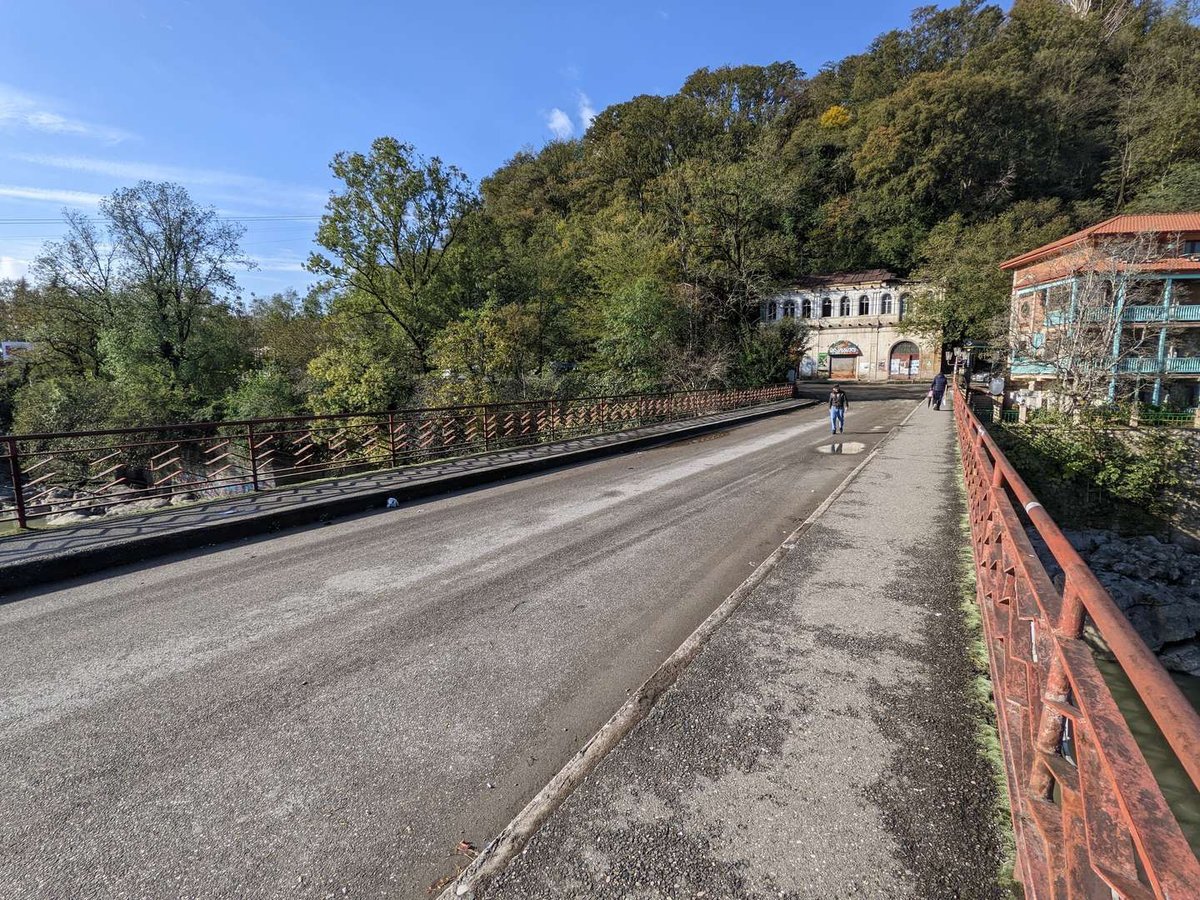
| 📅 Built | 1860-1862 |
| 🌊 River | Rioni |
| 🏗️ Type | Truss road bridge |
| ⭐ Status | Cultural heritage monument |
🔸The Red Bridge was the first metal bridge in the Caucasus: it was built between 1860 and 1862 according to the designs of engineer Postelnikov, and the metal structures were ordered from France.
🔸The 8.5-meter-wide bridge was painted red from its opening and has never changed its color since. It underwent renovations in 2011.
🔸It connects Tabidze Street with Paliashvili Street and is open 24 hours a day.
🔸The bridge offers a clear view of the wooden houses on the riverbank and the monument to poet Galaktion Tabidze nearby. The best view of the structure itself is from the embankment beneath the bridge.
🔸It can be reached on foot from the center of the Old Town in 5-10 minutes.
📖 We've already covered the bridge's full history and architecture separately: read the article "The Red Bridge in Kutaisi: The Eiffel Bridge over the Rioni" →
🌉 Chain Bridge
📍Tsminda Nino Street, Kutaisi
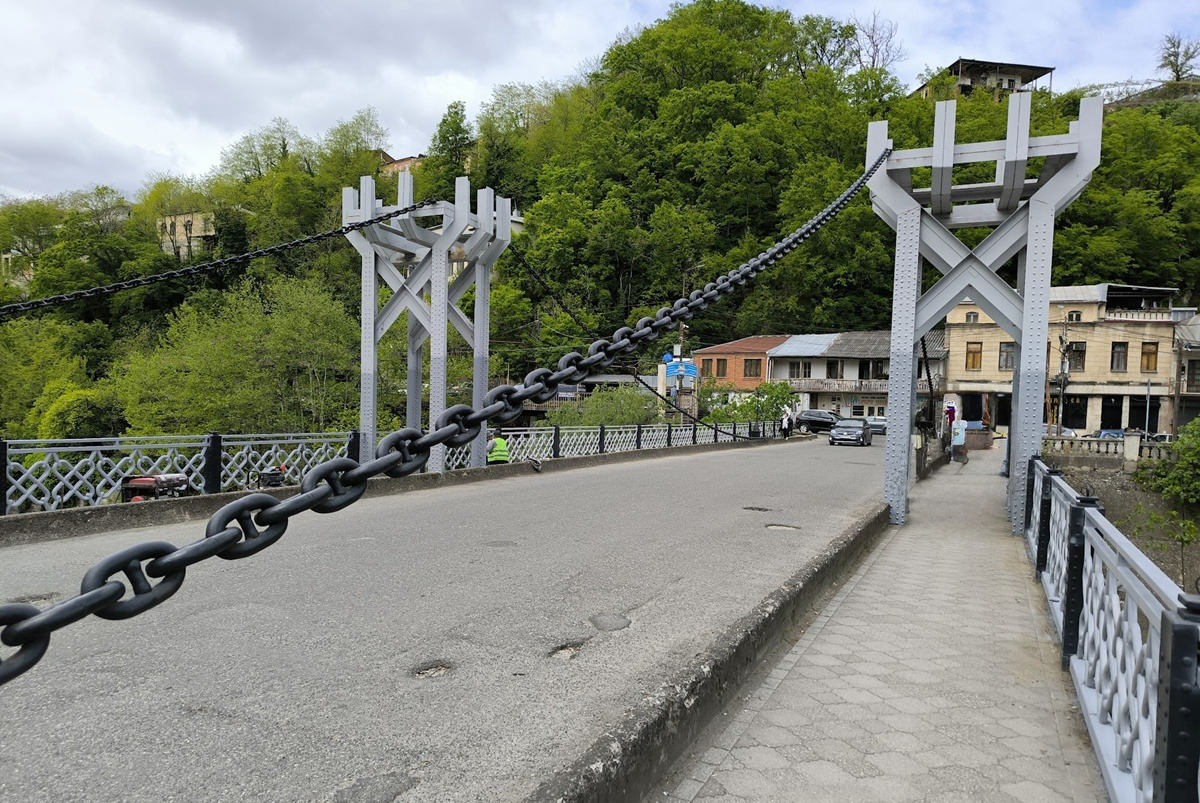
| 📅 Piers | Year 1770, 250 years in 2020 |
| 🌊 River | Rioni |
| 🏗️ Type | Suspension |
| 📜 First Crossing | 5th century |
🔹The first bridge on this site dates back to the 5th century, and the current supports were installed in 1770, when the crossing was called Arkieli.
🔹In the mid-19th century, metal chains were added to support the deck, hence the current name, and the wooden supports were later replaced with metal ones.
🔹In 2020, the bridge supports celebrated their 250th anniversary.
🔹The bridge is located in the Old Town area, upstream from the Red Bridge, and can be reached in five minutes along the embankment.
🔹The best time to visit is late afternoon, when the sun illuminates the water beneath the bridge.
🌉 White Bridge
📍 Grishashvili Street, Kutaisi
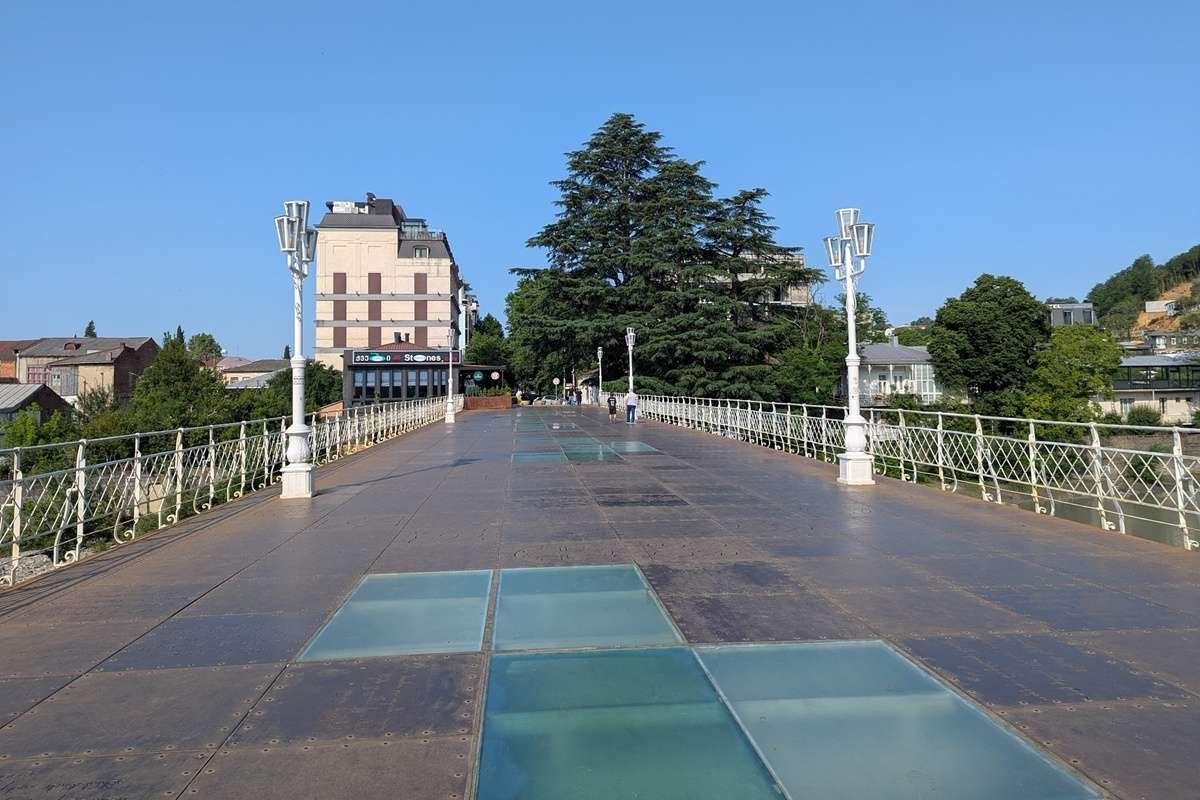
| 📅 Built | 1872 (after the collapse of the 1852 version) |
| 🌊 River | Rioni |
| 🏗️ Type | Pedestrian |
| ⭐ Feature | Glass sections in the decking |
🔸The first version of the bridge was built by military engineer Witte in 1852, but it collapsed eight years later, and the current bridge was erected in 1872 by engineers Zezman and Perel.
🔸The stone piers with wrought-iron railings were later complemented with transparent glass sections, allowing the river's flow to be seen.
🔸The bridge's main feature, a bronze sculpture of a boy with two hats on the railing, known as the "Picasso Boy," references a scene from the 1968 Soviet film "Extraordinary Exhibition."
🔸In dry weather, water flows under only one of the three spans, which is where the best shots are captured.
🔸Near the bridge is the lower station of the cable car to Gabashvili Park.
📖 We've already covered the bridge's full history and architecture separately: read the article "The White Bridge in Kutaisi: A Pedestrian Symbol over the Stormy Rioni River."→
🌉 Rustaveli Bridge
📍Shota Rustaveli Avenue, Kutaisi
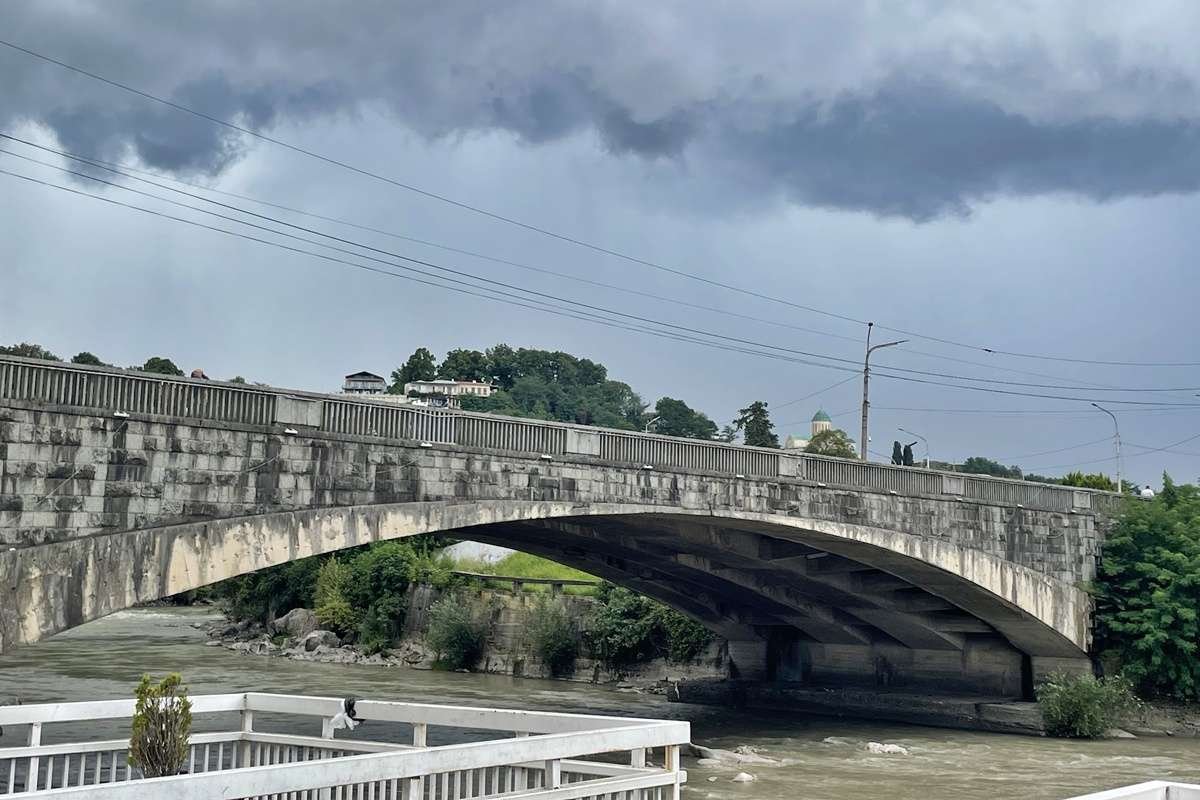
| 📅 Built | 1965 |
| 🌊 River | Rioni |
| 🏗️ Type | Road and pedestrian |
| ⭐ Feature | One of the best viewpoints among the city's bridges |
🔹The Rustaveli Bridge was built in 1965. It is the newest of the four central crossings and the only one that is both vehicular and pedestrian-friendly.
🔹Located north of the White Bridge, it is considered one of the best vantage points in Kutaisi: from here, you can see both the White and Red Bridges, the Bagrati Cathedral, and the panoramic view of residential neighborhoods on the western bank of the Rioni.
🔹Next to the bridge, between the art gallery and the park with the lower cable car station, there is a tourist information center.
🔹You can walk here from the White or Red Bridges in 5-7 minutes.
📖 We've already covered the bridge's full history and architecture separately: read the article "Rustaveli Bridge in Kutaisi: The History of the Seagull Bridge on the Rioni River" →
🚗 Transport and outlying bridges
These four bridges are further from the center and serve primarily the city, not tourists. There's almost no information about them in open sources, so below is a brief, honest summary, free of speculation.
🚗 Balakhvni Bridge
📍Agmashenebeli Street, Kutaisi
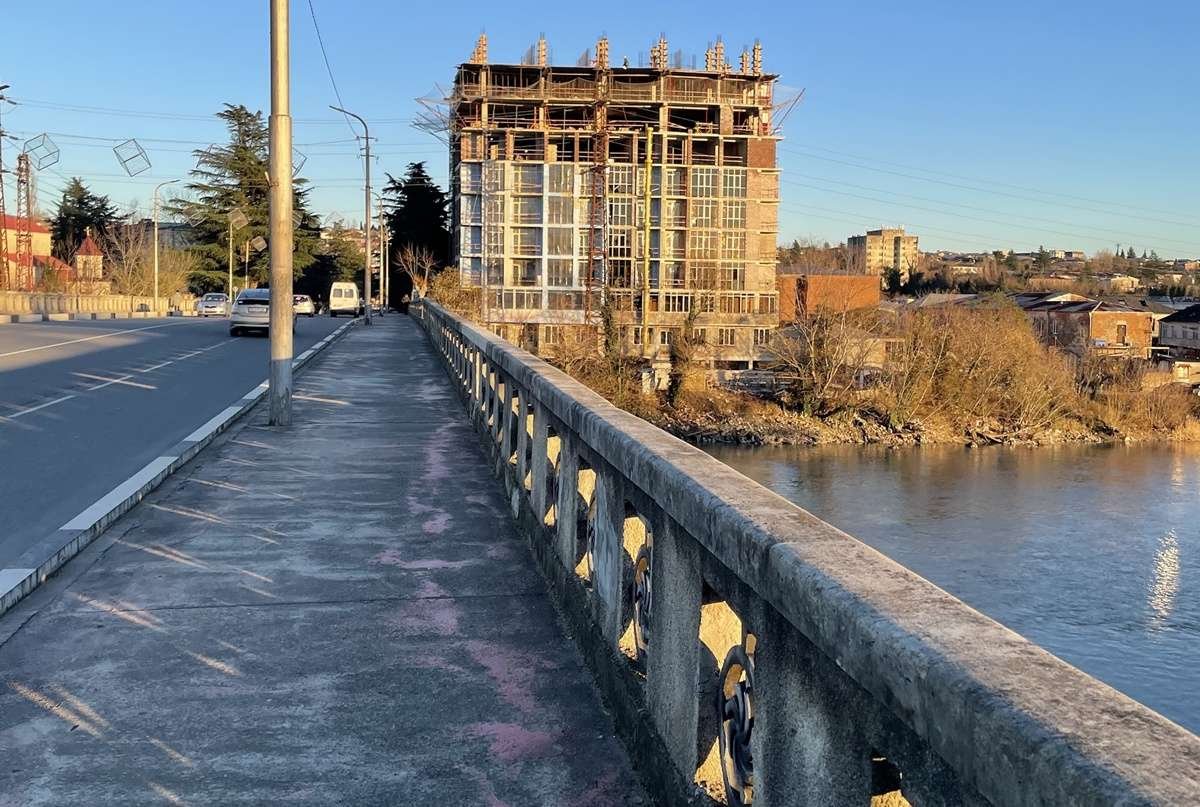
📍 Location: connects the prestigious Balakhvani district with the opposite bank of the Rioni River, near the railway station
🏗️ What it is: a simple concrete road bridge with no decorative elements; no separate documented history was found, most likely built during the Soviet era
💡 Is it worth visiting: more for those who want to see everyday Kutaisi without the tourist gloss, rather than for its architectural value
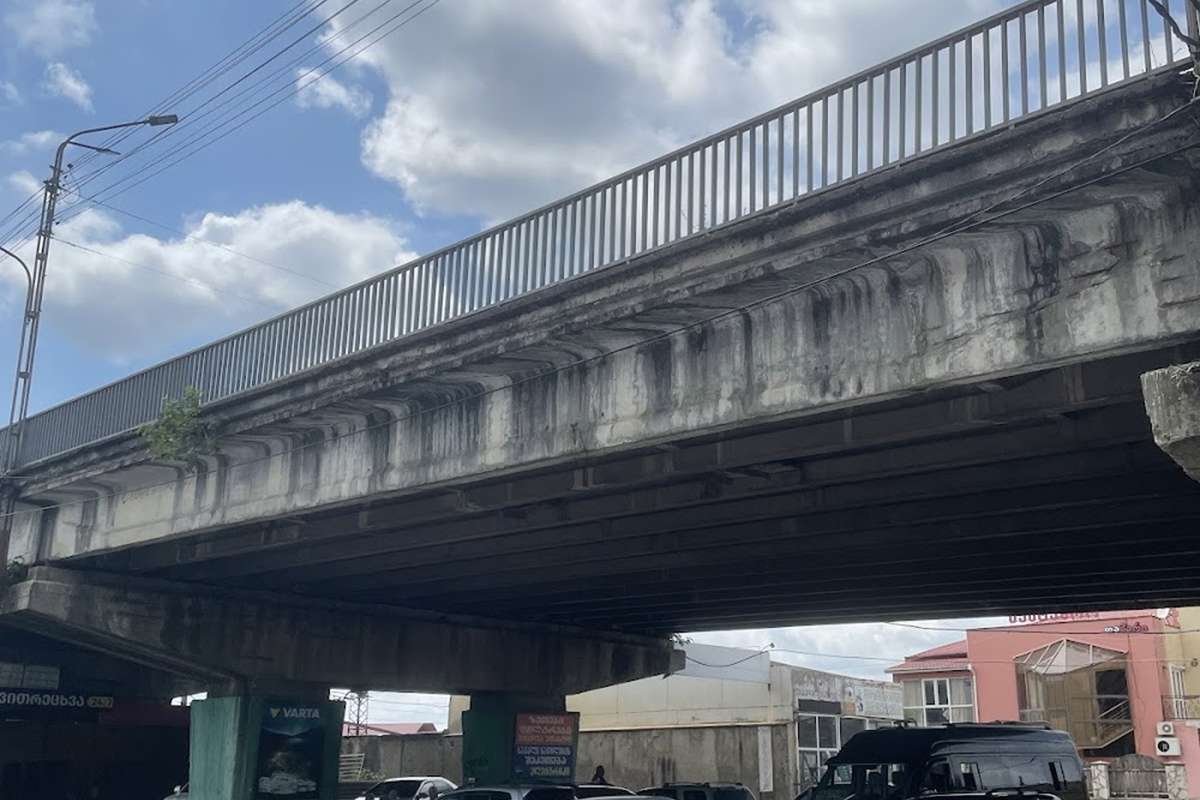
📍 Location: in the western part of the city, on the road towards Samtredia, further from the center than the main cluster of bridges
🏗️ What it is: a modern road bridge with no historical decorations; no separate history was found in open sources
💡 Is it worth visiting: if you are driving to Samtredia or Batumi, you will almost certainly cross this exact bridge; there is no reason to go there specifically for it
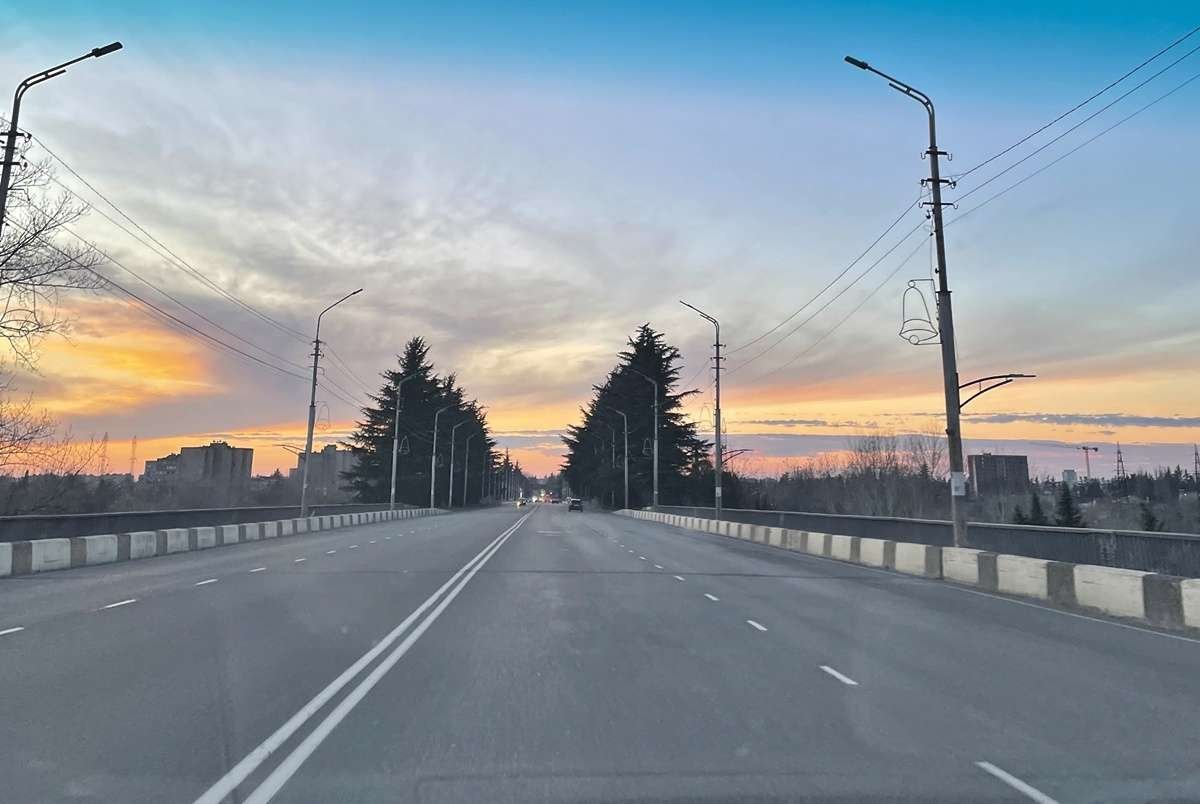
📍 Location: in the southern part of the city, closer to the outskirts, far from the tourist center
🏗️ What it is: judging by its location, it is a simple road bridge with no distinctive architectural features; there is no precise data regarding its name or construction date in available sources
💡 Is it worth visiting: more for those who are intentionally exploring every river crossing in the city rather than for a standard itinerary
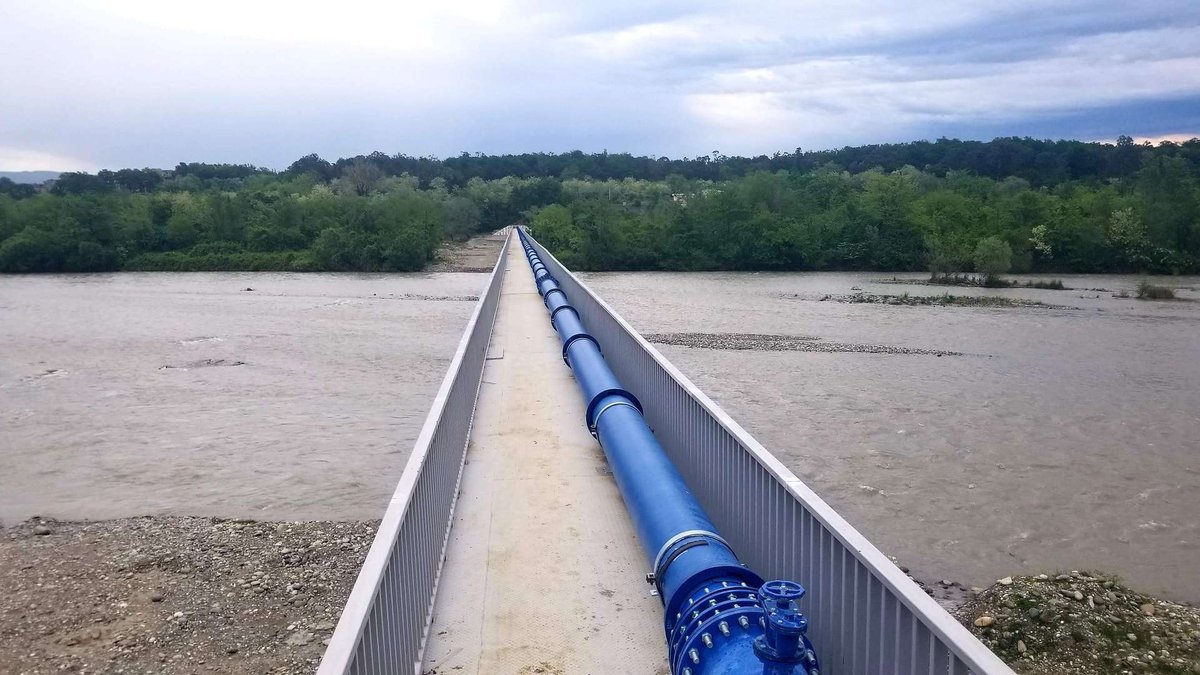
📍 Location: in the southern part of the city, downstream on the Rioni River
🏗️ What it is: in addition to the roadway, the bridge carries a utility pipe painted blue, which gives it its colloquial name; the official name is likely different
💡 Is it worth visiting: suitable for those photographing not just postcard views, but the real, working Kutaisi
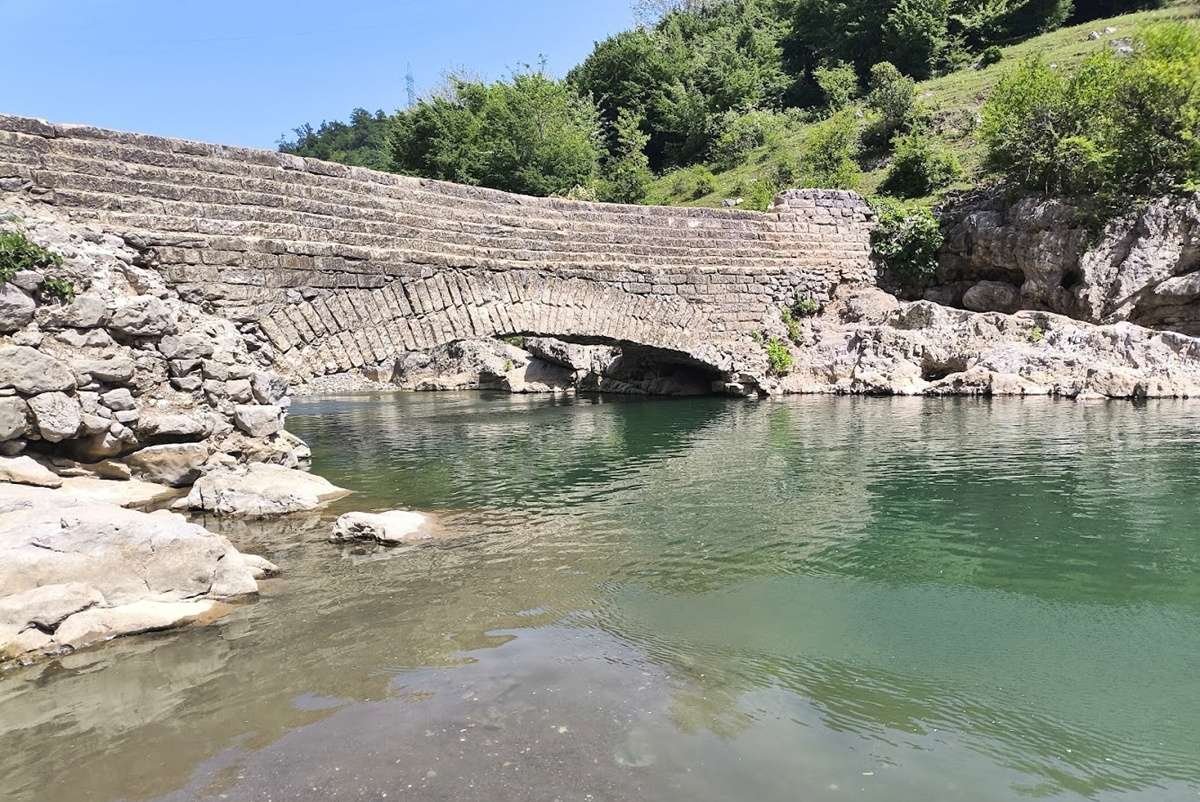
| 🌊 River | Tskaltsitela, a tributary of the Rioni |
| 🏗️ Type | Stone |
| 📍 Nearby | Motsameta Monastery |
| 📜 Name Meaning | "Red Water" |
🔸The only bridge in this collection isn't on the Rioni, but on its tributary, the Tskalsitela, whose name translates as "red water."
🔸Legend associates this color with the deaths of princes David and Constantine, whose bodies were supposedly thrown into the river. This story itself gave its name to the Motsameta Monastery, a couple of kilometers away.
🔸The stone bridge, typical for crossings over mountain tributaries in Imereti, stands apart from the central cluster of bridges and is accessible only by car.
🔸It's convenient to combine the trip with a visit to the Motsameta Monastery, as they are located in the same direction.
The four central bridges can easily be explored on foot within an hour, but to see all nine, you will need a car and a separate day. If your time is limited, choose the White, Red, and Chain bridges—they are close to each other and provide the most complete picture of Kutaisi's bridges. The outer bridges are interesting more for those who want to see the city without the tourist gloss rather than for any specific architectural value.
🛣️ Kutaisi Bridges Route in One Day
The same nine points, but numbered in logical order: from the historic center across the transport bridges to the farthest crossing over the Tskalsitela. The route is divided into three groups by marker color, so it's easy to see which is the center and which is the outskirts.
🏁 Why go see the bridges of Kutaisi
The bridges here don't just connect the banks; they reveal the full range of the city's history: from a 1,500-year-old crossing to Soviet transport bridges whose names only locals know. If you have a day, the four central bridges—Red, White, Chain, and Rustaveli—are enough to get a feel for Kutaisi's character. The other five are worth seeing if you're interested in not only the ceremonial but also the everyday life of the city.
ℹ️ Information on bridge accessibility and condition is current at the time of publication. Outlying bridges do not have official descriptions in open sources; details should be verified locally.
Which bridge in Kutaisi impressed you the most? The White Bridge with the boy on the railing, the historic Red Bridge, or perhaps one of the outer bridges that are hardly mentioned in guidebooks? Tell us, we read all the comments ❤️
❓ Frequently asked questions
💬 This collection features nine bridges: four in the historic center, four transport bridges on the outskirts, and one across the Tskalsitela tributary. Some sources mention other smaller bridges, but these nine form a complete picture of the city's crossings.
💬 Formally known as the Chain Bridge, a crossing at this location existed as early as the 5th century, although the current structure is more recent. Among the bridges that have survived in their original form, the oldest is the Red Bridge, built between 1860 and 1862.
💬 The White Bridge, with its "Picasso Boy" sculpture and transparent glass sections on the deck, is most often mentioned. It is also considered the city's main symbol.
💬 The four central bridges—Red, White, Chain, and Rustaveli—can be easily walked around in an hour. The remaining five, located on the outskirts, require a car.
💬 Eight bridges in this collection cross the Rioni, the city's main river. Another one, the Stone Bridge, stands on its tributary, the Tskalsitela.
💬 In terms of architectural value, they are inferior to the central bridges, but are interesting for those who want to see everyday, working Kutaisi outside the tourist route.

5 comments
Log in to leave a comment
მაინტერესებს, როგორ მოიძიეთ ინფორმაცია მათ შესახებ?
Cada puente tiene su propia personalidad, como si hablaran entre ellos justo bajo el murmullo del Rioni. Y lo curioso es que, a veces, me perdía entre las conversaciones de la gente, en sus risas y sus pasos apurados, como si Kutaisi fuera un escenario donde todos estamos interpretando nuestras propias historias.
¿Te parece que vale la pena visitar el puente de Rustaveli al atardecer?