



🌉 Rustaveli Bridge in Kutaisi: The Story of the Seagull Bridge on the Rioni
📋 What to Know Before Your Visit
| 📍 Location | Center of Kutaisi, crosses the Rioni on Rustaveli Avenue |
| 🕐 Traffic | 24/7, vehicular and pedestrian |
| 💰 Admission | Free |
| 📅 Built | Grounded broke in 1962, opened on November 7, 1965 |
| 🏗️ Architect | Givi Todadze, engineered by Georgy Chomakhidze, Dzhemal Tsuladze, and Nodar Mikadze |
| 🚌 Bus Stop | "Rustaveli Bridge": buses 1, 19, 22; minibuses (marshrutkas) 1, 20, 34, 100 |
🧭 Who This Article Is For
Rustaveli Bridge is a road bridge over the Rioni River in the center of Kutaisi, which carries the avenue of the same name. This article will be useful for those strolling through the city center who want to understand the story behind this structure with its unusual piers, as well as for those planning a walking tour of the four bridges of Kutaisi and looking for a logical route between them.
• Built in 1962–1965, it is one of the four bridges in the historical center
• Named after Shota Rustaveli, although it was initially meant to be called the "Seagull Bridge"
• Located downstream from the Red Bridge, connecting to Rustaveli Avenue
• The road surface underwent reconstruction in 2014
📘 What Rustaveli Bridge Is in Simple Terms
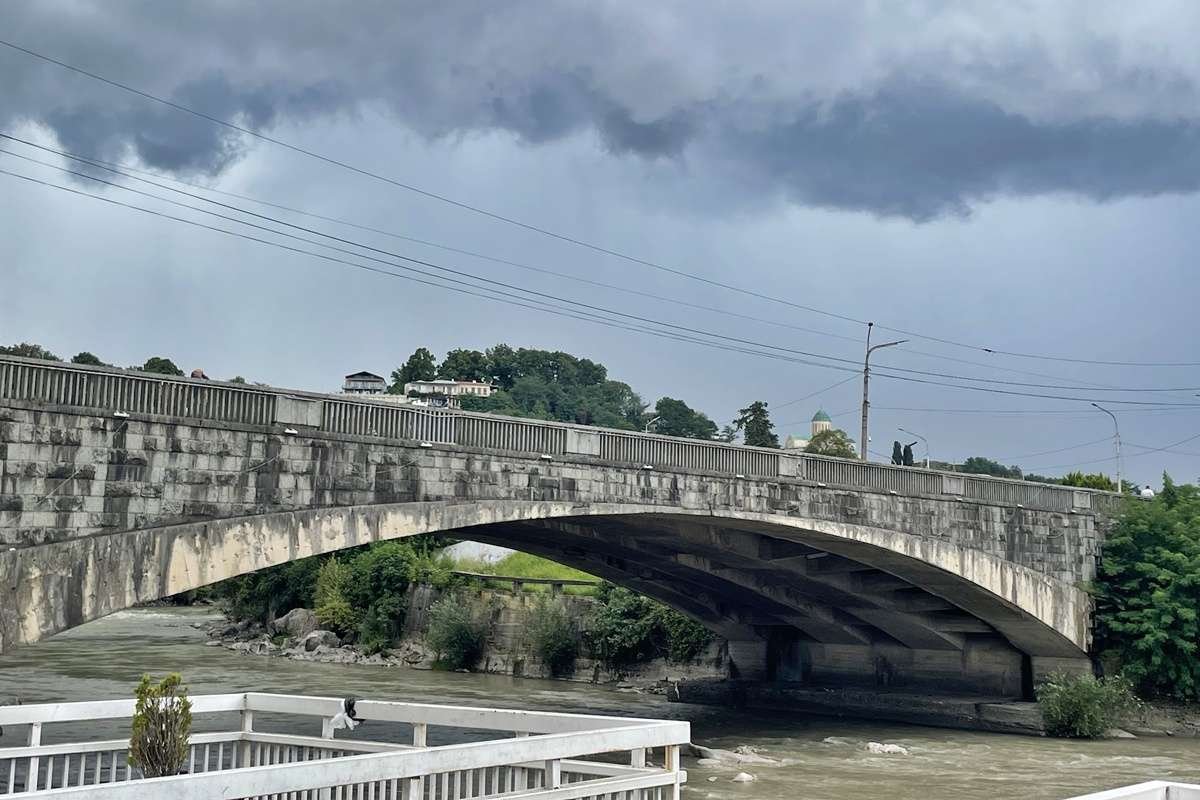
Rustaveli Bridge is a road bridge over the Rioni River in Kutaisi, connecting the central part of the city along the line of Shota Rustaveli Avenue. It is younger than its neighbors on the river: the Chain, White, and Red bridges appeared in the 19th century or earlier, while Rustaveli Bridge was built only in the 1960s. Formally, it is a very typical beam bridge on piers, but what makes it unusual is the shape of the piers themselves: the concrete structures widening towards the top resemble the wings of a bird at the moment of takeoff. This is not a random resemblance, but a part of the history of the name itself.
🕊️ History: The Bridge That Was Almost Named After a Seagull
Construction began in 1962: the old Red and White bridges could no longer handle the growing traffic, and the city needed a direct connection across the Rioni along Rustaveli Avenue. The project was designed by engineer Georgy Chomakhidze along with Dzhemal Tsuladze and Nodar Mikadze. The architectural solution belongs to Givi Todadze, and the construction work was managed by Otar Chikhladze.
According to Georgian sources, the designers initially wanted to name it the "Seagull Bridge" (თოლიას ხიდი) — precisely because of the shape of the piers, spread like bird wings over the water. However, since the bridge stands on Rustaveli Avenue, the poet's name stuck to it rather than the bird's. Traffic opened on November 7, 1965, after the structure was tested under load: 200 loaded trucks were driven across the bridge simultaneously. The drivers were given helmets, though almost no one wore them, so confident were the builders in the quality of their work.
💡 Lifehack from the Editors
The best angle to see the "seagull wings" is not from the bridge itself, but from the embankment downstream, closer to the Red Bridge. From there, you can see both the old 19th-century metal truss and the concrete piers of Rustaveli Bridge in the background at the same time. The stylistic contrast between the bridges, separated by a century, is particularly striking.
🗺️ Where Kutaisi's Bridges Are Concentrated
The Rioni divides Kutaisi into two parts, and the historical center relies on four bridges located just a few hundred meters apart. Rustaveli Bridge is the youngest and the furthest downstream among them.
| Bridge | When Built | Type |
|---|---|---|
| Chain | The first crossing has been known since the 5th century; the modern appearance took shape by the late 19th century | Pedestrian, historically with chain supports |
| White | 1852, rebuilt by 1872 after a collapse | Pedestrian, metal |
| Red | 1860–1862 | Road bridge, the first iron bridge in the Caucasus |
| Rustaveli | 1962–1965 | Road bridge, concrete, the newest one |
👀 What Can Be Seen Today
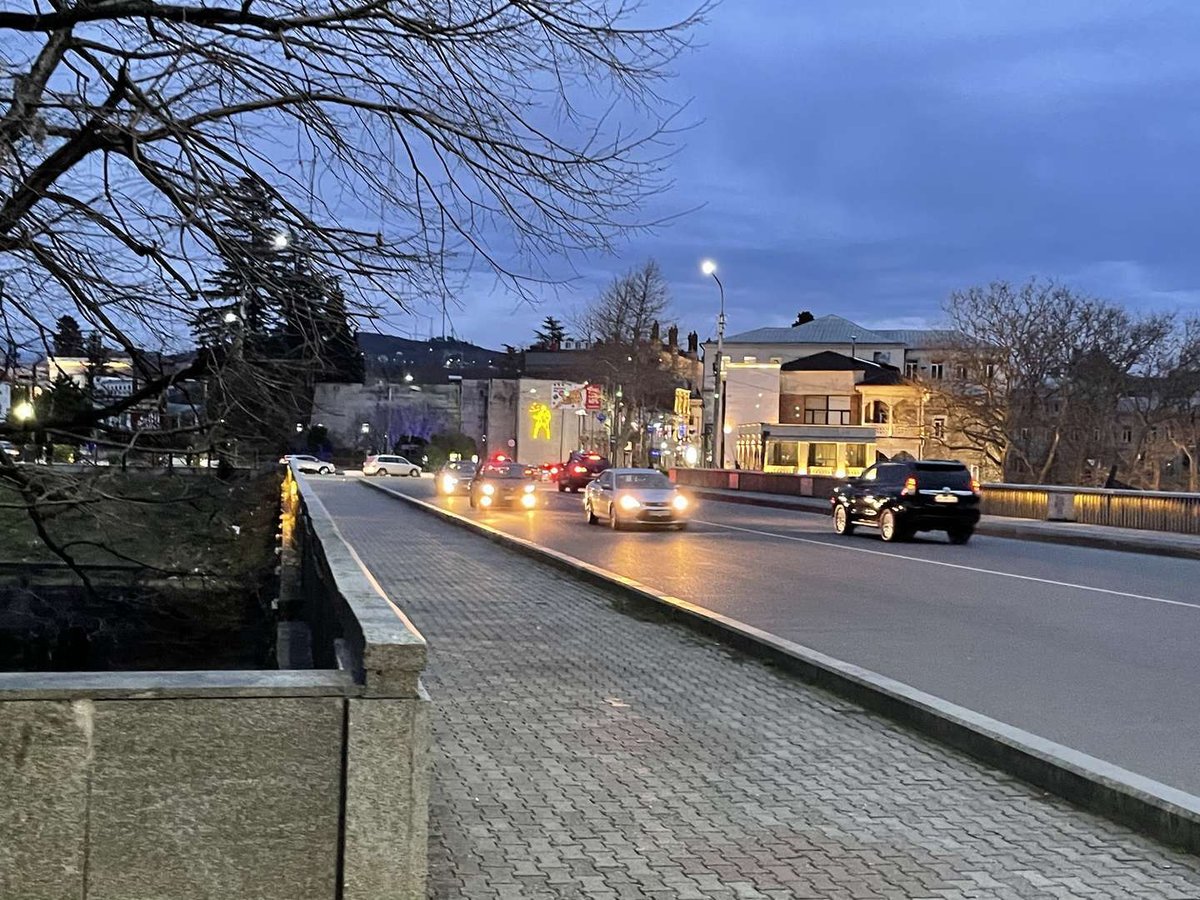
In 2014, the bridge underwent reconstruction: damaged parts of the deck were repaired, and the sidewalk was separated from the roadway. In 2018, the authorities announced a tender for decorative elements, tigers, pasqunji (mythological birds), and grape clusters in honor of Rustaveli's poem, but there is no confirmation in open sources that they were ever installed — take this as part of the project's history rather than a guaranteed detail on-site. Today, the bridge remains a working transport artery with sidewalks on both sides, and in the evening, illumination turns on, significantly changing the view of the piers from the water.
💬 What locals and tourists say: reviews on the bridge's card in the Madloba directory most frequently highlight the contrast between the daytime and evening looks — one visitor described the bridge as "a true giant among architecture" and noted that the spot by the water near the bridge is a great place to just sit and take a break from the hustle and bustle of the city.
🚶 Route Along Kutaisi's Bridges
If you are planning a walk along the river, the most logical option is to cross the chain of four bridges in a row without turning back. The markers on the map are arranged in order from the Chain Bridge to the Rustaveli Bridge.
On foot, the entire route takes about an hour without stops, and twice as long if you include photo breaks and coffee on one of the embankments.
🗺️ What to See Nearby


ℹ️ Information about dates, project authorship, and reconstruction status is current as of the time of publication. Please verify details on-site; a link to the map is provided at the beginning of the article.
💬 Tell Us
Did you notice that the bridge's piers look like seagull wings before learning this story? Share in the comments which of Kutaisi's four bridges you like the most.
🏁 In Conclusion
Rustaveli Bridge does not claim to be the main postcard landmark of Kutaisi—that role has long been shared by the White and Red bridges. But it has its own story: a road bridge that seems ordinary at first glance almost received the name of a bird instead of the name of a poet.
🧡 Read More About Kutaisi
- White Bridge in Kutaisi: A Pedestrian Symbol Over the Rushing Rioni
- Kikvidze Park in Kutaisi: A Quiet Square in the City Center
- Vladimir Mayakovsky Monument in Kutaisi: The Poet Who Grew Up in Georgia
💾 Save the article to return to it before your trip to Kutaisi.
❓ Frequently Asked Questions About Rustaveli Bridge
💬 Construction began in 1962, and traffic across the bridge officially opened on November 7, 1965.
💬 The bridge's piers widen towards the top and resemble the shape of bird wings in flight. According to Georgian sources, the designers originally wanted to give the bridge the name "Seagull Bridge," but because it stands on Rustaveli Avenue, the poet's name stuck to it.
💬 The architectural solution belongs to Givi Todadze, the engineering project was developed by Georgy Chomakhidze, Dzhemal Tsuladze, and Nodar Mikadze, and the construction work was managed by Otar Chikhladze.
💬 It is located downstream from the Red Bridge and closes the chain of the four central bridges: Chain, White, Red, and Rustaveli.
💬 Yes, according to visitor reviews, the evening illumination significantly changes the impression of the bridge and highlights the massiveness of its structure.

2 comments
Log in to leave a comment