




🌉 White Bridge Kutaisi: the pedestrian landmark above the Rioni
🌉 Pedestrian bridge · ⏱️ 20–40 min · 📍 Old town, on the Rioni River, Kutaisi
🌉 Good to know before you visit
| 📍 Location | Old Town, Rioni River, Kutaisi links the Royal Quarter to the opposite bank |
| 🕐 Access | open 24/7, free |
| 📅 History | first built 1850–1852 · rebuilt 1870–1872 |
| 🔄 Renovation | 2019 — glass tiles and Georgian poetry engravings |
| 🗿 Sculpture | «The Picasso Boy» — bronze figure from the 1968 film |
| 🌙 At night | the bridge is illuminated — a completely different feel |
🧭 Who this article is for
The White Bridge Kutaisi (Georgian: თეთრი ხიდი, Tetri Khidi) is the pedestrian bridge over the Rioni River in the old part of the city — one of Kutaisi's defining landmarks, woven into local legend, literature and film. This guide covers what the bridge is, why Kutaisi residents care so much about it, and what to do when you get there.
🌊 The bridge that fell and rose again
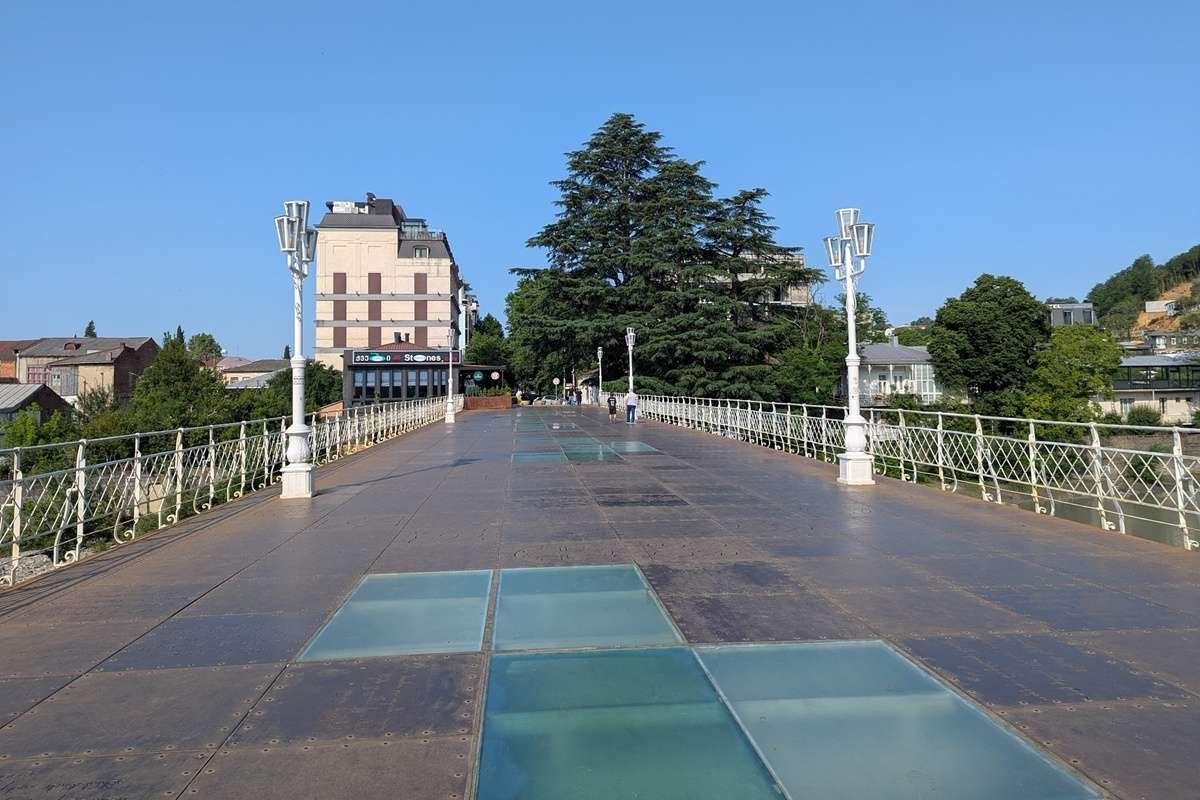
For most of the 19th century there was no permanent bridge over the Rioni at this location. In 1850, military engineer Vite began construction and finished by 1852. But eight years later, in 1860, the structure collapsed. An attempt to repair it failed.
Engineer Zezman was brought in. Metal components were ordered abroad, work ran from 1870 and by 1872 the bridge stood again. The new ironwork was painted white — and the name stuck immediately. The white painted metal matched the white limestone rocks of the Rioni riverbed, which are clearly visible in dry weather when the river runs only under the easternmost of the three spans.
Structurally it is a three-span wrought-iron bridge resting on stone piers set directly on the Rioni's limestone outcrops.
✨ The 2019 renovation: glass underfoot and poets underfoot
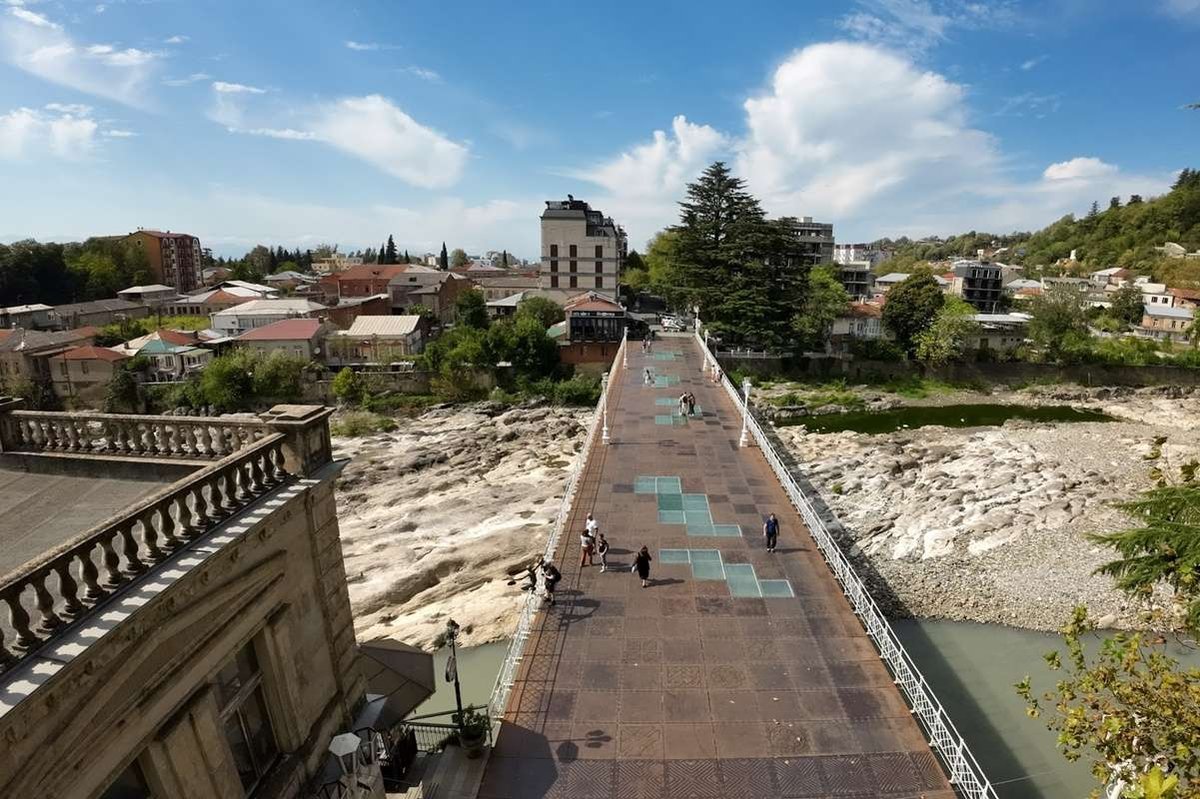
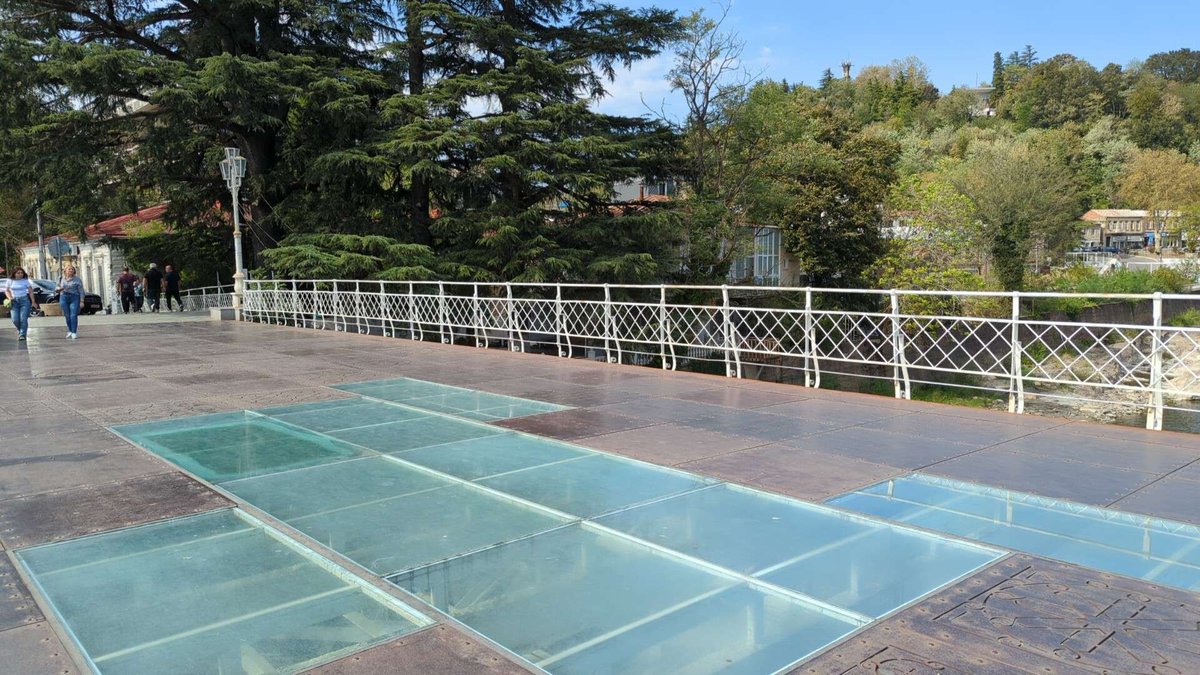
In 2019 the bridge was renovated. The wooden deck was replaced with metal tiles — and some of them were made of glass, so you can see the river flowing directly beneath your feet. The effect is unexpected: the Rioni surging below while you stand on a transparent floor.
The metal tiles also carry engravings from Georgian poets — lines about Georgia, about Kutaisi, about the bridge itself. A Tripadvisor reviewer regrets they are in Georgian script only; but that's what makes them part of the city rather than a tourist attraction.
🎭 The Picasso Boy: the bronze child on the railing
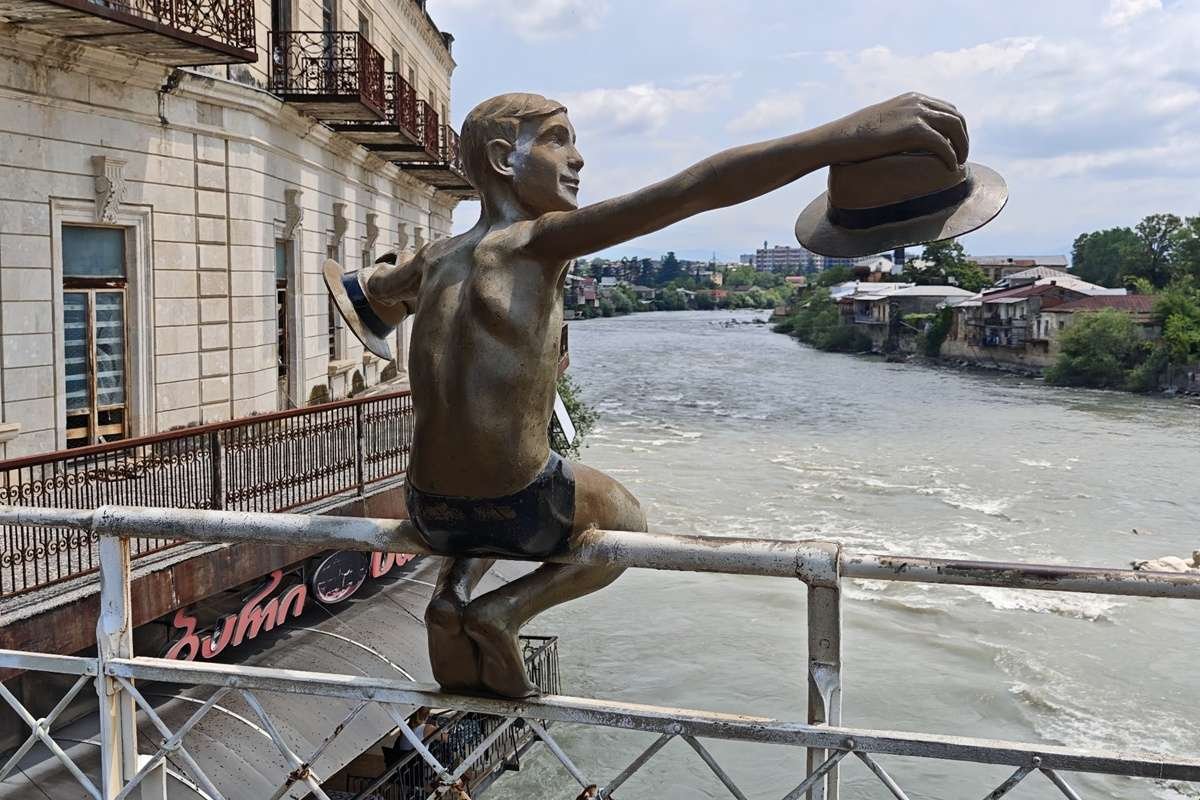
On the railing of the white bridge Kutaisi sits a bronze sculpture: a boy balancing with two hats. One hat in each hand, leaning over the river — a split second before jumping.
This is the «Picasso Boy», a character from director Eldar Shengelaia's film «An Unusual Exhibition» (1968). In the film, the protagonist crosses the White Bridge and says to his friend: «Look at that boy. Picasso painted boys like that. He is the ideal of art.» The boy turns, snatches both their hats — and jumps into the Rioni.
The sculpture was installed in 2004. The popular photo is to put your head under the hat in the boy's raised hand.
💛 The legends of the White Bridge
Jumping as proof of love
Generations of Kutaisi young men jumped from the White Bridge into the Rioni to prove the seriousness of their feelings. Locally this was called the «baptism of a Kutaisian»: if you hadn't jumped, you weren't the real thing. The leap from the white iron railing into the fast-running river took genuine courage — depth and current are unpredictable.
Kote Marjanishvili and his future actor
There is a story that the director Kote Marjanishvili — founder of Georgian theatre — once watched a boy leap fearlessly from the White Bridge into the river. The jump was so bold and effortless that the director approached him. According to the legend, this was how he first met the future great Georgian actor Giorgi Shavgulidze (1910–1959), his student and later People's Artist of the Georgian SSR.
Come twice — once in daylight and once in the evening. During the day you get the full view: the river, the limestone rocks, the old houses on the bank, mountains in the distance. In the evening the bridge is lit up and musicians sometimes play. The best shots of the Picasso Boy come from the west side — then the sculpture sits against the river rather than a wall. After the bridge, turn left into the Royal Quarter: restored 19th-century houses, murals and cafes.
🗺️ How to get there
1️⃣ On foot from the centre — from Kutaisi's main square with the fountain, 10–15 minutes downhill along Davit Agmashenebeli Street toward the river.
2️⃣ By taxi (Bolt / Yandex) — say «White Bridge» or «Tetri Khidi» or give coordinates 42.26875, 42.70045. Any Kutaisi driver knows the spot.
3️⃣ On foot from the bus station — about 20–25 minutes, or a short marshrutka ride to the old town.
💬 What visitors say
«My favourite place in Kutaisi. I recommend watching "An Unusual Exhibition" (1968) and "What Do We See When We Look at the Sky?" (2021) alongside visiting this place — two films, two eras, one city.»
«Crossed this pedestrian bridge last week after a day of continuous rain. Torrential water was flowing under the bridge — you could see it through the glass tiles. Bely (white) bridge links the Royal district with a hotel and residential area on the other side of the Rioni. Made of wood in the early 1850s, it was one of the first fixed links between both sides. In 1872 modernised when wood was replaced by metal. Recently renovated. A pity the metal tiles have inscriptions in Georgian script only — I understand they are anecdotes about living in Kutaisi. Of course there is the boy with the two hats, who needs no translation. A selfie opportunity for some, comic art or a film icon for others.»
«The White Bridge is illuminated in the evening and makes a completely different impression than in daylight. One of those Kutaisi attractions that is open 24 hours and completely free. Especially recommended at sunset or in the night lighting.»
🏁 Why come here
The White Bridge Kutaisi is a mandatory stop in the city — not because of stunning architecture, but because it is the place where Kutaisi feels most alive. Nineteenth-century engineering drama, a bronze boy frozen mid-leap from a 1968 film, the legend of young men jumping for love, glass tiles above a rushing river. Standing in the middle of this bridge is a better introduction to Kutaisi than any postcard.
Save this article or share it with anyone planning a trip to Kutaisi.
ℹ️ The bridge is open 24/7, free admission. Information is current at time of publication.
🗺️ What to see nearby


Have you been to the White Bridge in Kutaisi? Did you look through the glass tiles, see the Picasso Boy in person, or catch the bridge lit up at night? Tell us — we read every comment ❤️
❓ Frequently asked questions
💬 When the bridge was rebuilt in 1872, the entire iron structure and railing were painted white. The white paintwork matched the white limestone rocks on the Rioni riverbed, which are clearly visible in dry weather. The name was natural and immediate.
💬 The bronze sculpture (2004) depicts a character from Eldar Shengelaia's film «An Unusual Exhibition» (1968). In the film a passer-by looks at a boy sitting on the White Bridge railing and says: «Picasso painted boys like that — he is the ideal of art.» The boy grabs both their hats and jumps into the Rioni. The sculpture shows exactly that moment — the boy holding two hats, balanced on the railing, about to leap.
💬 During the 2019 renovation, the wooden deck was replaced with metal tiles. Some of the tiles are glass — you can see the Rioni flowing directly beneath your feet. The metal tiles carry engravings of lines by Georgian poets about the city and the river.
💬 Yes — it was a documented local tradition. Young men in Kutaisi jumped from the White Bridge into the Rioni to prove their feelings. The jump was known as «the baptism of a Kutaisian». Jumping is not recommended now: the Rioni's current and depth are unpredictable, especially during high water.
💬 Immediately across the bridge: the Royal Quarter with restored 19th-century buildings, street art and cafes. Within walking distance: the cable car up to Okros-Chardakhi Park and a viewpoint; the Kutaisi State History Museum (10 min east along Pushkin Street). Bagrati Cathedral — a UNESCO World Heritage site — is 20 minutes on foot.
💬 Both work. Daytime gives you the full panorama: the river, limestone rocks, old houses, distant mountains. Evening brings illumination and sometimes street musicians. Sunset is a particular highlight — the Rioni changes colour in the low light.
💬 Eldar Shengelaia filmed the key scene of «An Unusual Exhibition» here in 1968 — that scene gave birth to the bridge's bronze sculpture. In 2021 Alexander Koberidze shot «What Do We See When We Look at the Sky?» in Kutaisi; the White Bridge appears there too. Two films, fifty years apart, one bridge.

2 comments
Log in to leave a comment
听到关于这座桥的传说总是让我感到既神秘又有趣。爱情的跳跃,真是古老的传说仿佛活了过来。我常常想,如果我和家人在那座桥上许下愿望,会不会真的实现?你们觉得,去那儿的最佳时间是什么时候呢?