




🏛️ Royal residences of Imereti: Geguti and the palace of Solomon II
🏛️ Two palaces, six and a half centuries of history · ⏱️ half a day · 📍 Kutaisi and its environs, Imereti
🏛️ What You Should Know Before Your Visit
| 📍 Locations | Solomon II's Palace is in the center of Kutaisi, while Geguti Palace is 7 km south of the city. |
| ⏳ Two Eras | Geguti represents Georgia's Golden Age under Queen Tamar in the 12th century, while Solomon II's Palace reflects the final years of the Kingdom of Imereti in the early 19th century. |
| ⛪ Historical Connection | The remains of Solomon II were reburied at Gelati Monastery, located on the way to Geguti Palace. |
| 💰 Admission | Free at both sites. |
🧭 Who Will Find This Article Useful?
This article is for travelers who want to see not just one attraction in Kutaisi, but two royal palaces in a single trip, and understand how they are connected despite being separated by nearly six and a half centuries of history. It will also be useful for those who have already read our separate articles about the Geguti Palace or the Palace of Solomon II and would now like to see the broader historical picture.
📜 The Kingdom Between Two Palaces
The Kingdom of Imereti emerged at the end of the 15th century, when the unified Georgian state fragmented into several parts, and existed until 1810, when the last king was deposed by Russian troops. Kutaisi remained the capital throughout this period.
Two surviving palaces show the kingdom in two very different states. The Geguti Palace was built around 1156, during the heyday of a unified Georgia, when Queen Tamar spent her childhood and youth there. The Palace of Solomon II in Kutaisi itself is associated with the last decades of the independent Imereti Kingdom, before it became part of the Russian Empire.
Between these two points, literally and historically, stands the Gelati Monastery: the remains of Solomon II were transferred there in 1990, and it is also worth a stop on the way to Geguti.
🏰 Gegut Palace: the residence of Queen Tamara
📍 The village of Geguti, 7 km south of the center of Kutaisi
| 📅 Built | around 1156, during the reign of George III |
| 👑 Royal Residence | of Queen Tamar |
| 🏗️ Status | archaeological monument, ruins |
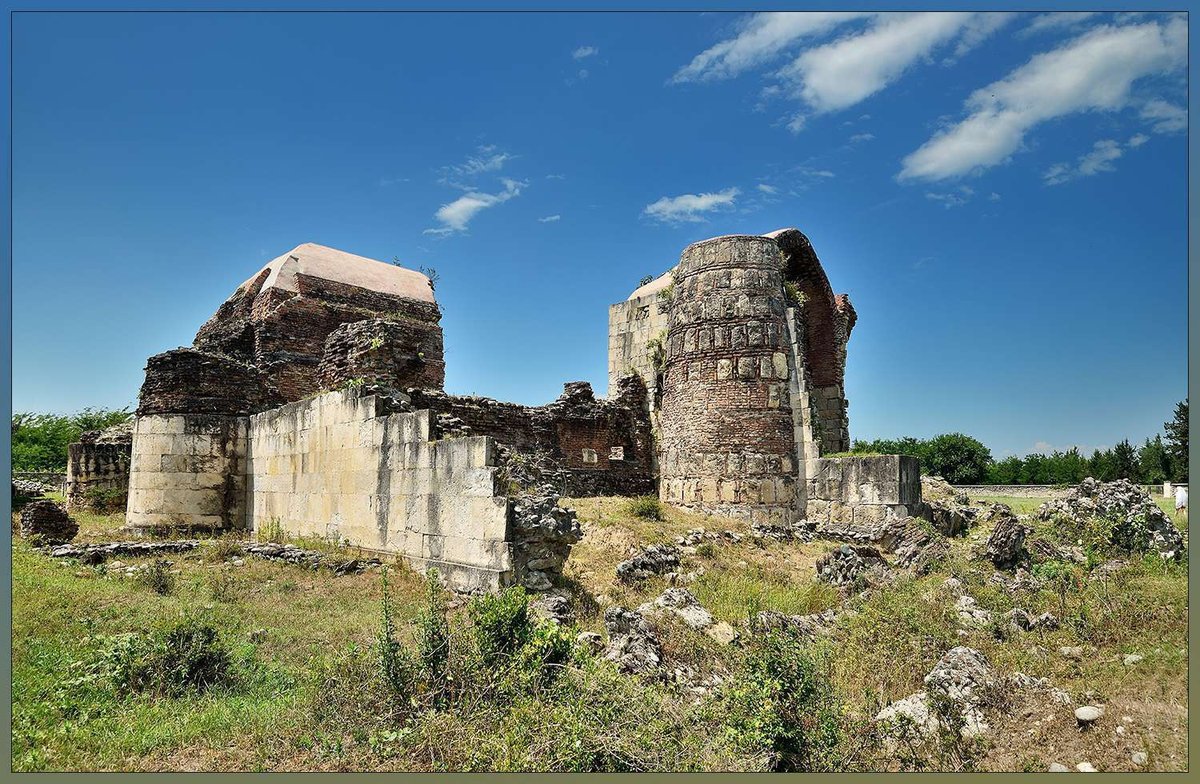
The palace was built around 1156 on the site of an older 4th-century fortress, specifically for the royal family, and it became the main country residence during the heyday of a unified Georgia.
Queen Tamar spent her childhood, youth, and part of her adult life here, and according to one version, it was in the halls of Geguti that chapters of Shota Rustaveli's poem "The Knight in the Panther's Skin" were first recited.
In 1191, during Tamar's conflict with her ex-husband, Yuri Bogolyubsky, his supporters seized the palace and proclaimed Yuri king, albeit briefly.
Of all the surviving medieval palaces in Georgia, Geguti is the only one directly associated with Tamar. According to some descriptions, it was richly decorated with marble cladding and glazed tiles, of which only fragments remain today.
📖 We've already covered the palace's full history, architecture, and legends separately: read the article about the Gegut Palace →
🏛️ Palace of Solomon II: the residence of the last king of Imereti
📍 The historic center of Kutaisi
| 👑 Owned by | Solomon II, the last King of Imereti |
| 📅 Reign | 1789–1790, then 1792–1810 |
| ⚰️ The King's Fate | Deposed and died in exile in 1815 |
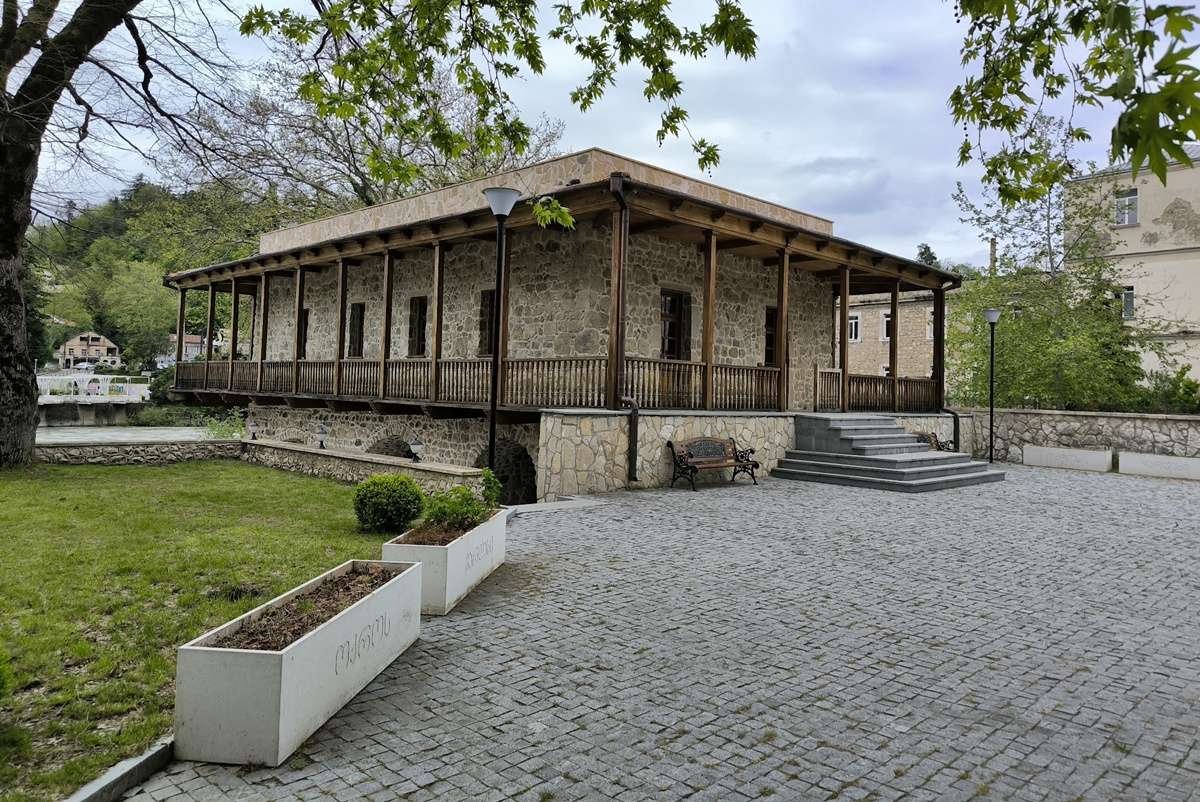
The palace was the residence of Solomon II, the nephew of Solomon I the Great, who became king of Imereti in 1789 and remained the kingdom's last independent ruler.
In 1804, under pressure from Russian General Pavel Tsitsianov, Solomon II signed an agreement establishing a Russian protectorate over Imereti, but continued to seek support from Turkey and Iran to maintain his independence.
In 1810, Russian troops entered Kutaisi and deposed the king. He rebelled, suffered defeat, and fled to Trebizond, Turkey, where he died in 1815.
In 1990, his remains were transported to Georgia and reburied in Gelati Monastery, and in 2005, the last king of Imereti was canonized by the Georgian Orthodox Church.
📖 We've already covered the full history of the palace and the fate of the last king of Imereti separately: Read the article about the palace of Solomon II →
⛪ Gelati: where two stories meet
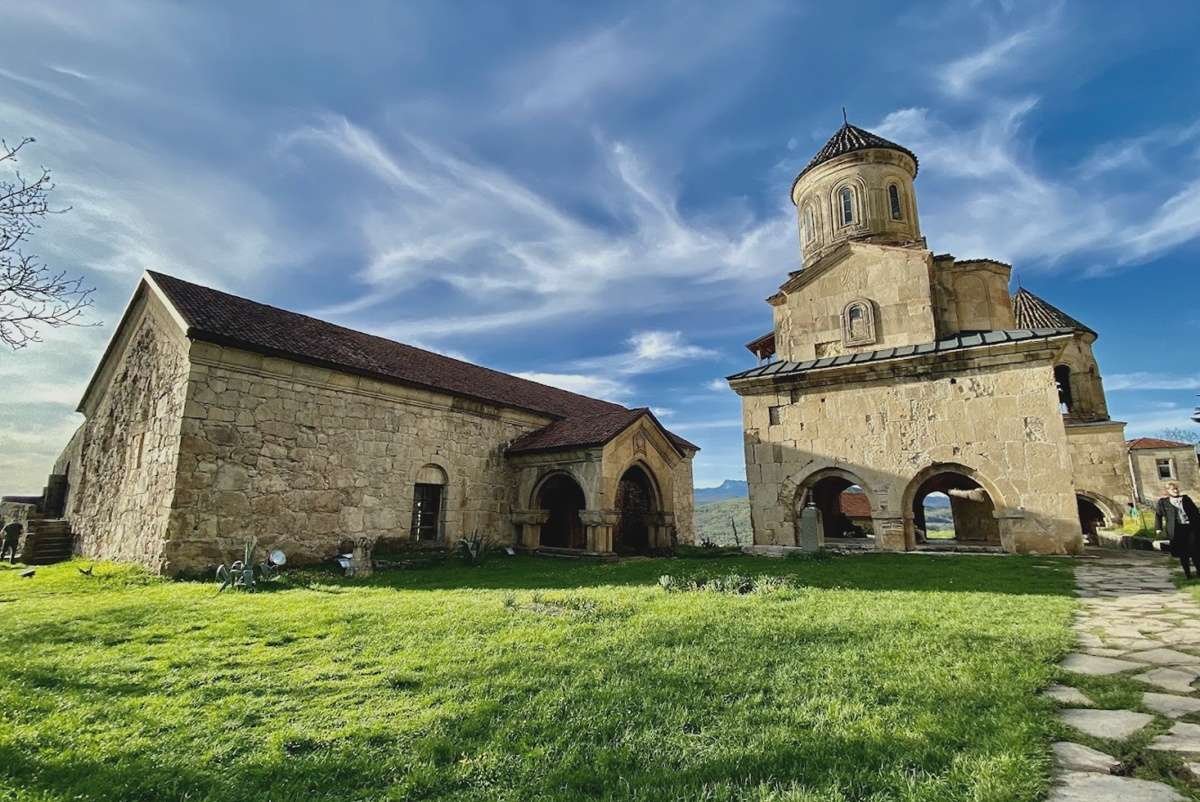
Gelati Monastery stands approximately halfway between Kutaisi and Geguti, linking the two palaces not only geographically.
It was here that Solomon II's remains were transferred in 1990, almost two centuries after his death in exile. The monastery itself was founded under David the Builder in the early 12th century, around the same time that the Geguti Palace was gaining strength.
It's a rare occasion when, by visiting a single monastery, one can mentally connect both eras of Imeretian history: its heyday under Tamar and its decline under Solomon II.
Gelati is a UNESCO World Heritage Site, so it's worth a visit, even without the palaces.
💡 This route makes sense both geographically and historically—traveling backwards from the decline of the kingdom to its golden age. On the way back from Geguti, it's convenient to return to Kutaisi via the bypass road and the Geguti–Kutaisi interchange. Keep in mind that Geguti Palace is heavily ruined: what remains are mostly foundations and archaeological remains rather than a complete building, so treat the visit as an archaeological walk rather than a palace tour.
🗺️ Route through the residences of Imereti
Both palaces and Gelati Monastery, as a logical stopover point, are marked on the map below, with descriptions and links to catalogue cards.
🏁 Why go and see both palaces
Geguti and the palace of Solomon II show the Imeretian kingdom from two opposing sides of the same history: its heyday, when the Georgian kings built country residences for relaxation and receptions, and its decline, when the last king tried to navigate between Russia, Turkey, and Iran to maintain at least some independence.
Visiting Gelati on the way between them, you can see the place where these two eras literally met: the resting place of the last king of Imereti, in a monastery founded six and a half centuries before his birth.
ℹ️ Information about the palaces' condition is current at the time of publication. Please confirm the details of your visit on site.
🧡 Continue Exploring Kutaisi & Imereti
- 🌉 Bridges of Kutaisi: A Guide to Crossings over the Rioni River
- 🏛️ Abandoned Sanatoriums of Tskaltubo: A Guide to the Ruins of a Soviet Spa Resort
- 👑 Queen Tamar Street in Kutaisi: The University and the Chinese House
💾 Save this article to come back to it before your trip.
Which of the two palaces impressed you more: the atmospheric ruins of Geguti, where Queen Tamar spent her childhood, or the residence of the last King of Imereti in the heart of Kutaisi? Share your thoughts in the comments—we read every one ❤️
❓ Frequently Asked Questions
💬 They are separated by nearly 650 years of history. Geguti was built around 1156 as a country residence for Queen Tamar during the heyday of a united Georgia. The Palace of Solomon II is associated with the last king of independent Imereti, who reigned at the turn of the 18th and 19th centuries, before the kingdom's annexation by Russia.
💬 Yes, they are a 15-20 minute drive from each other, and you can stop by Gelati Monastery along the way. Half a day is enough to see all three.
💬 These are ruins and foundations; only the skeletons of the walls and parts of the vaults remain of the once richly decorated palace. It's worth viewing more as an archaeological site than as a tourist attraction with its entire interiors.
💬 The king died in exile in Trebizond, Turkey, in 1815 and was buried there. His remains were only transported to Georgia in 1990 and reburied in the Gelati Monastery, the historic royal necropolis of Imereti.
💬 Formally, they belong to different branches of Georgian statehood: Tamar ruled a unified Georgia, while Solomon II was king of the now separate, weakened Kingdom of Imereti. There is no direct relationship between them; rather, they are united by their symbolic role as two extreme points in Imeretian history.
💬 Yes, it's a UNESCO World Heritage Site and one of Georgia's most important monasteries. Furthermore, it's where the remains of Solomon II are currently buried, so it logically connects both palaces into one route.

41 comments
Log in to leave a comment
Особо впечатляет, как авторы рейтинга рассказывают о планировке Гегутского дворца, о галереях, залах и открытых террасах, откуда открываются фантастические виды на долину и горы. А рядом с ним — Окрос Чардах, дворец‑усадьба, где гармонично переплетаются элементы архитектуры и природы. В статье есть ценные советы от местных жителей: где лучше остановиться на прогулку, какие точки выбрать для фото и в какое время дня освещение открывает самый драматичный вид на фасады.
Я уже побывал в одном из кафе недалеко от Гегутского дворца, которое упоминают в отзывах — отличная кухня и атмосфера старинной усадьбы прекрасно дополнили впечатления от экскурсии. Также в рейтинге есть ответы на частые вопросы: как добраться на общественном транспорте, где удобнее припарковаться и какие маршруты проходят мимо других интересных мест.
Мне особенно запомнились вечерние прогулки по территории дворца, когда сотни оттенков заката отражаются в камне и создают ощущение, будто ты перенёсся в другую эпоху.
Как вы думаете, лучше посетить эти резиденции в ранние утренние часы, чтобы поймать мягкий свет, или выбрать вечер для живописных закатов и тёплых тонов?
Следующая резиденция царей – Окрос Чардахи. На ее территории раньше было много строений, таких как церковь, большой и малый дома, столовая.
Хотелось бы, чтобы такие сооружения сохранялись как можно дольше!
Дом пережил разрушение и в 19 веке после реконструкции служил резиденцией. В 1960-х годах он был восстановлен в своем первоначальном виде.
"