




👑 Queen Tamara Street in Kutaisi: University and Chinese House
📋 What to Know Before You Visit
| 📍 Location | Historical part of Kutaisi from the university to the poets' park, about 700 m |
| 🕐 Access | the street and parks are open 24/7 |
| 💰 Admission | free |
| 👑 Named after | Queen Tamar, from the Golden Age of Georgia (12th–13th centuries) |
| 🏛️ Main Building | Akaki Tsereteli State University, built in 1900–1905 |
| 🌳 Nearby Parks | Niko Nikoladze Park and Poets' Park |
🧭 Who will find this article useful
Queen Tamar Street is one of Kutaisi's historic streets, built in the late 19th and early 20th centuries. This article will be useful for those who have already seen the city's central postcard views and want a walk off the beaten path, as well as for those interested in turn-of-the-century Georgian architecture and willing to walk the approximately 700 meters from the university to the park district.
• Named after Queen Tamar, one of Georgia's most famous rulers
• The street features the main building of the Akaki Tsereteli State University (1900–1905)
• Nearby is an unusual Art Nouveau mansion locally known as the "Chinese House"
• At the end of the street, there are two consecutive parks: Niko Nikoladze Park and the Poets' Park
📘 What is this street in simple terms
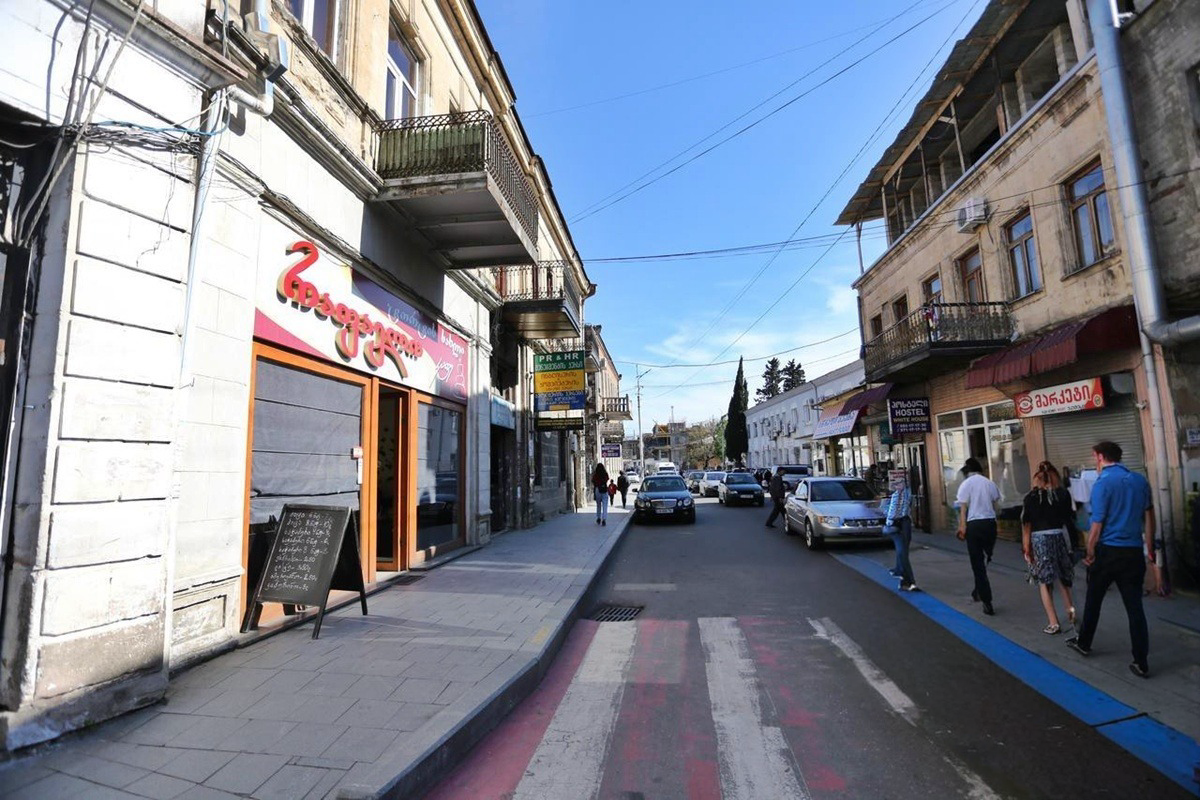
Queen Tamara Street is a typical city street in the historic part of Kutaisi, without a pedestrian zone or souvenir shops. It developed in the second half of the 19th century, when Kutaisi became the provincial capital and began to be built according to European standards. Today, on and just a few steps away, stand a university building over a century old, a private mansion with an unusual roof, a small church with the ruins of an older temple, and two parks with distinct atmospheres. A stroll along it takes about half an hour and requires no special preparation: all six points below are within walking distance of one another.
🕊️ History: A street named after Georgia's golden age
In the second half of the 19th century, after the Kutaisi Governorate was established in 1846, the city began to undergo rapid development. The abolition of serfdom in 1865 brought an influx of labor to Kutaisi, along with banks, gymnasiums, apartment buildings, and administrative buildings in the style typical of provincial capitals of the Russian Empire at the time. It was during this period that the architecture seen today on Queen Tamar Street took shape.
The choice of Queen Tamar's name for the street was no accident: she is one of the most revered rulers in Georgian history, during whose reign the country experienced a cultural and territorial flourishing in the 12th and 13th centuries, known as the Golden Age. Streets and avenues in many Georgian cities bear her name. Part of what is now Queen Tamara Street was at some point separated into a separate street and named in honor of Kote Barkaya. This is confirmed by the fact that the university's official address is now listed as Barkaya Street, 59/22, although historically this very section was part of Queen Tamara Street.
💡 Editorial Tip
If time is limited, plan your route from the university toward the parks, rather than the other way around: the university and the "Chinese House" feature more interesting architecture, and the Poets' Park is a convenient place to finish your stroll — there are benches and shade to relax before continuing your city exploration.
🏛️ What's worth seeing on and around the street
The six points below are located on Queen Tamara Street itself or within a couple of minutes' walk of it. The order is from the university toward the parks.
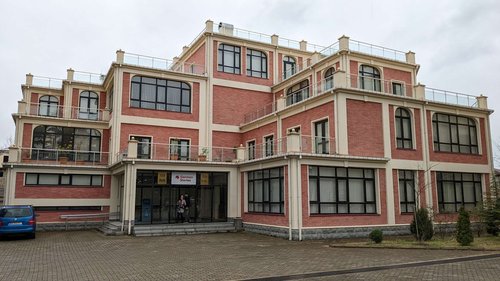
The main building of Kutaisi's oldest university was built between 1900 and 1905, before it became a university building. Today, its official address is listed as Barkaia Street, but historically, it shared the same stretch as Queen Tamara Street. Visitors note in their reviews that the old buildings create a special charm, although finding your way around the grounds can be challenging without signs.
- 🏮 Chinese House
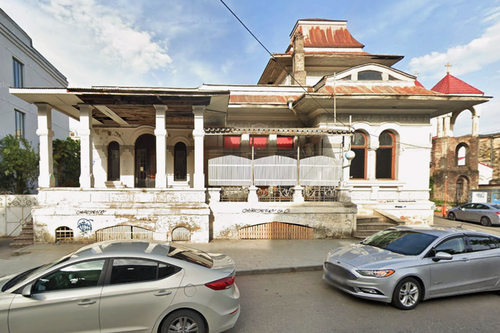
This Art Nouveau mansion from the early 1900s was built for Maryam Davitashvili-Chubinishvili. It earned the nickname "Chinese House" due to the roof's shape, which resembles the silhouette of a Buddhist pagoda, although the building has no connection to China. According to the National Tourism Administration of Georgia, the house is still inhabited, so it should only be viewed from the outside.
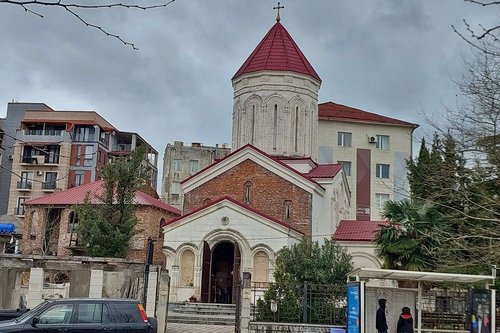
A small church near the university, listed in Madlob's catalogue under the names of Saints David and Constantine. The exact origin and history of the building should be verified on site: some public sources link this dedication to another, more well-known site near Kutaisi, so confusion is possible. One visitor described it as "a charming little church on one of the main roads leading into the center of Kutaisi."
- 🪨 Church ruins
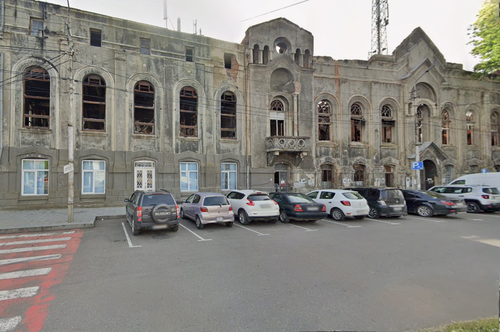
Just a few steps from the functioning church, you can see the picturesque ruins of the ancient Armenian Church of Surb Gevorg. All that remains of this once-main Armenian church in the city are its massive stone walls, beautifully entwined with greenery. This is a very picturesque and slightly mysterious spot, perfect for unusual photographs and a quick stop during a stroll through Kutaisi.
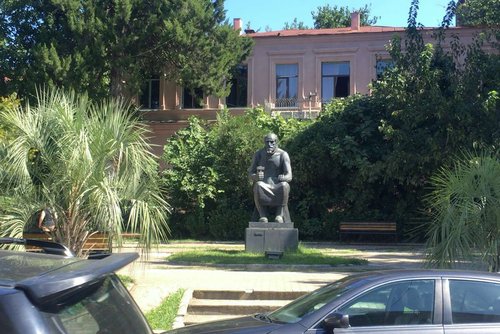
A small park, jokingly called "politicians' park" by Kutaisi residents, is a popular gathering place for local elders to discuss the latest news. It also features sculptures, a fountain illuminated at night, and a children's playground, and is stroller-accessible. It is named after Niko Nikoladze (1843–1928), a Georgian journalist and public figure, and an associate of Ilia Chavchavadze.
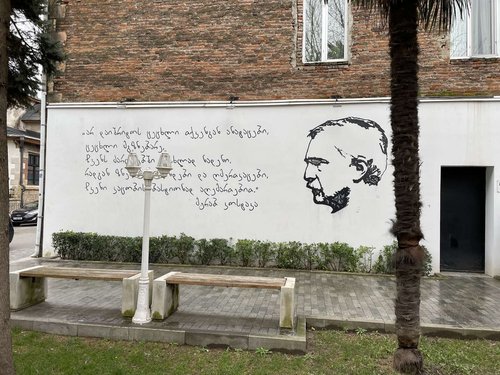
The route concludes with a small park with graffiti portraits of Georgian poets on the walls and quotes from their works next to the images. According to reviews, this is a quiet place with benches, perfect for sitting and relaxing after a walk. The vibrant murals make a great backdrop for beautiful souvenir photos. Be sure to stop by here for a beautiful and peaceful end to your day.
👀 What can you see today
All six locations continue to live their normal urban lives rather than function as open-air museums: the university houses students, the "Chinese House" remains a private residence, and the parks fill with locals in the evenings. This makes the walk less polished for tourists than along the central streets, but it offers an opportunity to see how everyday urban life and architecture from over a century ago intertwine.
Please note that there is no precise information in open sources about when exactly the street was named after Queen Tamara, so this article does not provide an exact date—only the fact that the name has stuck.
🚶 Route along Queen Tamara Street
The route connects six points in order from the university to the parks. Click on the marker to go to the point card.
On foot, the entire route from the university to the Poets' Park takes about 15–20 minutes at a leisurely pace, not including stops at landmarks.
🗺️ What to see nearby


ℹ️ Information about the construction dates, church dedication, and the status of the buildings is current at the time of publication. Some information in open sources has not been confirmed and requires on-site verification.
💬 Share Your Thoughts
Have you strolled along Queen Tamar Street? Share in the comments which of the six spots you liked the most — the university, the "Chinese House," or one of the parks.
🏁 Finally
Queen Tamara Street isn't one of Kutaisi's top postcard spots, and that's its advantage: here you can easily admire the university building, the "Chinese House," and two distinct parks without the crowds of tourists around.
🧡 Read More About Kutaisi
- 🕍 Kutaisi Synagogue: The Jewish Heritage of Imereti
- 🏛️ Palace of Solomon II in Kutaisi: Residence of the Last King of Imereti
- 🌉 Rustaveli Bridge in Kutaisi: History of the Seagull Bridge on the Rioni
💾 Save this article to revisit it before your trip to Kutaisi.
❓ Frequently asked questions about Queen Tamara Street
💬 Tamar is one of the most famous rulers in Georgian history, during whose reign the country experienced a cultural flourishing known as the Golden Age in the 12th and 13th centuries. Streets in many Georgian cities, including Kutaisi, bear her name.
💬 The main building of Akaki Tsereteli University, the "Chinese House" mansion, the Church of Saints David and Constantine with the ruins of an earlier church nearby, as well as Niko Nikoladze Park and Poets' Park.
💬 This is an early 20th-century Art Nouveau mansion built for Maryam Davitashvili-Chubinishvili. It received its nickname due to the roof's shape, reminiscent of a Buddhist pagoda, although the building has no connection to China.
💬 Local elders traditionally gather here to discuss the latest news and politics, hence the park's unofficial name.
💬 It's about a 15-20 minute walk from the university to Poets' Park, but with stops at each of the six landmarks, the walk will take about half an hour.

1 comment
Log in to leave a comment
لكن بصراحة، أحيانًا كنت أفكر... هل تجد الأجيال الجديدة نفس السحر في هذه الأماكن كما وجدنا نحن؟ 🤔 الانغماس في الفن والجدران المليئة بالكتابات المبدعة في حديقة الشعراء يثير الكثير من الأسئلة حول الهوية والتأثير. لم أستطع أن أرفع عيني عن تلك الرسومات. إذا كنت تخطط لزيارة، هل لديك أي نصائح حول أفضل الأوقات للاستمتاع بالحديقة؟