



🏛️ Solomon II's Palace in Kutaisi: the residence of the last king of Imereti
🟨 The key facts first
| 🏛️ What it is | Okros Chardakhi, the historic residence of the kings of Imereti in Kutaisi (known in catalogues and to tourists as the "Palace of Solomon II") |
| 👑 Who it relates to | Solomon II, the last king of Imereti; the palace was restored during his reign |
| 📅 Era | The residence is mentioned from the 15th century, at its height until the early 19th century |
| 📝 Name | ოქროს ჩარდახი (Okros Chardakhi), meaning the "Golden Pavilion" |
| 📍 Where | Kutaisi Old Town, the right bank of the Rioni, between the Rustaveli Bridge and the White Bridge |
| ⚠️ Status | Listed as temporarily closed on maps, with no official tours. Check access before visiting |
| 🗺️ More details | Palace of Solomon II |
💡 Tip: the best views of the palace open up from the White Bridge and from the nearby lower cable car station, so it is easy to combine with a walk through the Old Town.
🟦 What this article is about
The palace that tourists know as the "Palace of Solomon II" is in fact much older than its famous resident: this is Okros Chardakhi, the residence of the kings of Imereti in the heart of old Kutaisi. Here you will learn what this place meant for the Kingdom of Imereti, who Solomon II was and why it is his name that stuck to the palace, what remains of the residence today, and how the fate of the building echoed the fate of the kingdom itself.
It will be useful if you are interested in the history of Georgia and its last kings, are planning a route through Kutaisi, or are searching online for the "Palace of Solomon" and want to understand what this place is and what condition it is in now.
👑 Who was Solomon II, the last king of Imereti
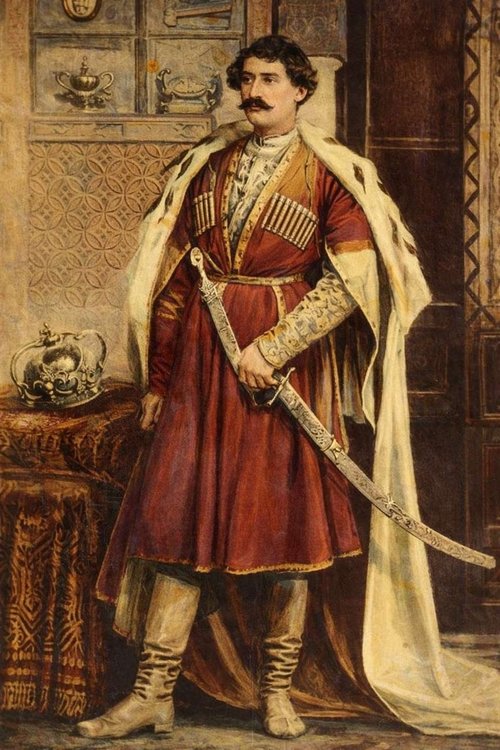
Solomon II's name is linked to the palace not because he built it, but because he became the last person to rule from here as king. At birth he was named David, he came from the Bagrationi dynasty and ascended the Imeretian throne in 1789, after the Battle of Matkhoji, where he prevailed over his rival. He received the kingdom while still very young, a realm that had long lived in the shadow of its large neighbours: the Ottoman Empire, Persia and a rising Russia.
Solomon II's reign fell in a time when the independence of the Georgian kingdoms was fading. After the Russian Empire annexed Kartli-Kakheti in the east at the beginning of the 19th century, the turn came for Imereti in the west. For a while the king manoeuvred between Saint Petersburg and Istanbul and acknowledged Russian protection, but this did not help him keep the throne.
⚔️ Revolt and exile
In 1810 the Russian administration removed Solomon II from power and brought troops into Imereti. The king fled south, to Ottoman-controlled Akhaltsikhe, and from there tried to raise a revolt and win back the throne, seeking support from Turkey, Persia and Napoleonic France. He never managed to recover the kingdom and died in exile, in Trabzon, in 1815. With him the history of the independent Kingdom of Imereti came to an end, and its lands became part of the Russian Empire.
Here the fate of the king and the fate of the palace converge on a single date. In that same year, 1810, when Solomon II lost the throne, his residence passed into the treasury of the Russian Empire. From then on the palace began a completely different life, no longer a royal one, which we cover in more detail below.
👑 Solomon II: key dates
| 1789 | Ascended the Imeretian throne after the Battle of Matkhoji |
| early 19th c. | Manoeuvred between Russia and the Ottoman Empire, acknowledged Russian protection |
| 1810 | Deposed by the Russian administration, fled to Akhaltsikhe, tried to raise a revolt |
| 1815 | Died in exile in Trabzon. The independent Kingdom of Imereti ceased to exist |
🏛️ The palace-residence: what kind of place it is
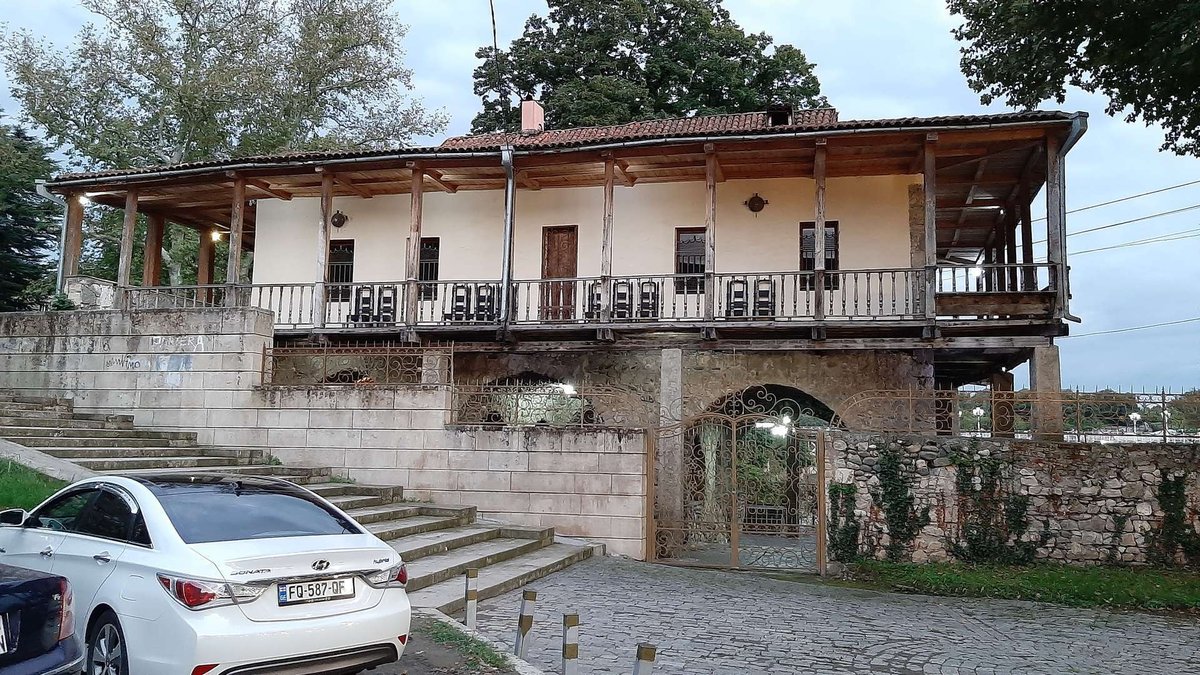
The palace's real name is Okros Chardakhi, which translates roughly as the "Golden Pavilion." This was the name of the residence of the kings of Imereti in Kutaisi: it stood on the right bank of the Rioni, in the very heart of the old town, between today's Rustaveli Bridge and the White Bridge. It was not a single building but a whole fortified complex behind a stone wall with towers.
The residence is far older than Solomon II. The first descriptions were left by foreign travellers: as early as the second half of the 15th century, the Italian Ambrogio Contarini found the palace of an Imeretian king here. Some of the buildings are associated with kings of the 17th century. In its best days the grounds held the court Church of St. George, a large and a small house and a dining hall, while in the centre of the courtyard, under spreading plane trees, stood that very chardakh: a throne under a canopy on four pillars, from which the place took its name.
After that the palace's history took a hard turn. In the 17th century the residence was damaged more than once during military attacks, and by the 1770s it stood abandoned. It was under Solomon II that it was partly restored, but this proved to be the last royal period in its story. After 1810 the palace changed many roles and owners: it served as state property, as the home of the inspector of the local gymnasium, and even as the church of an educational institution.
🧱 What remains of the palace today
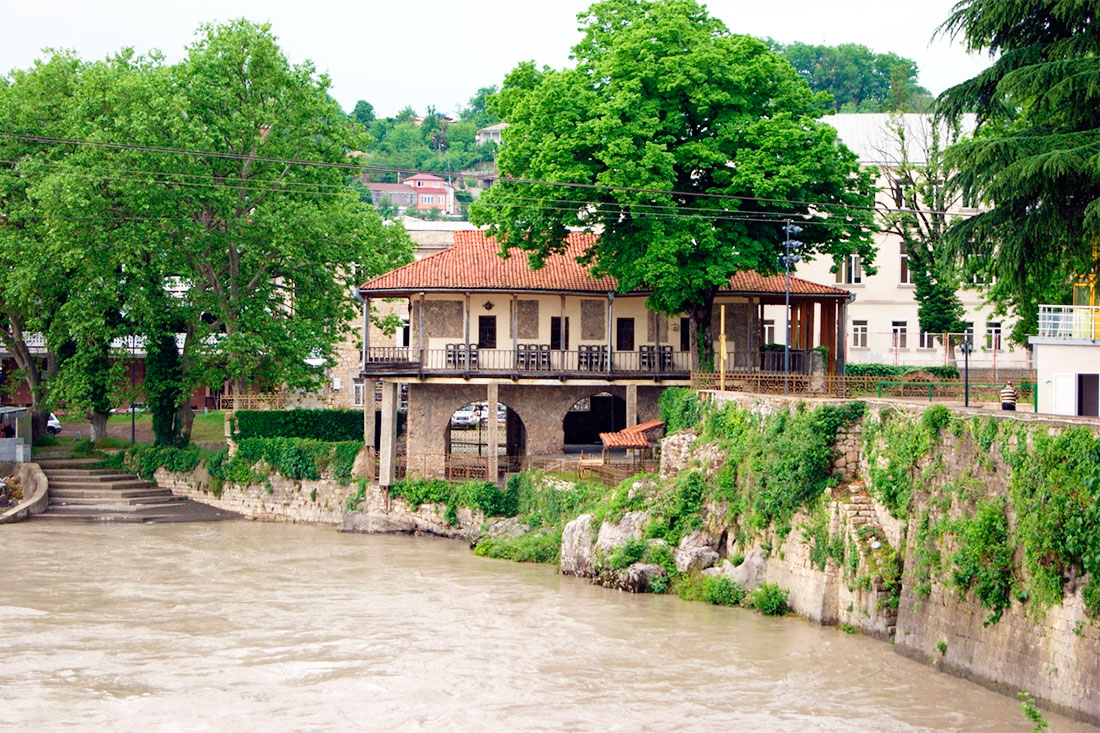
Of the large complex, only one structure has survived to our day, the so-called small house. It is a two-story stone building with a distinctive feature: the entire first floor is open with rows of arches. This was done not for beauty but to protect against the floods of the Rioni, so that water could pass freely through the lower tier. The large hall on the second floor was once decorated with paintings of 16th-17th century battle scenes.
The building was noticeably rebuilt in the 19th century, and it acquired its final present-day appearance only in the 1960s, so what stands before you today is more a preserved memory of the residence than genuine royal chambers in their full form. Even so, the monument's status is high: it is a site of national significance, and even as a single surviving house it remains an important point on the map of Georgian history.
🏛️ Okros Chardakhi at a glance
- The name translates as the "Golden Pavilion," after the chardakh (a throne under a canopy) in the courtyard
- Residence of the kings of Imereti, mentioned from the 15th century
- Once a complex: the Church of St. George, a large and a small house, a dining hall, a wall with towers
- Partly restored under Solomon II, lost its royal role after 1810
- Today only the small house survives, a monument of national significance
🖼️ What is inside: the exhibition and the atmosphere
An honest note up front: at the time this article was prepared the palace is listed as temporarily closed, there are no official tours here, and the building itself is under the care of the Patriarchate. So what is described below refers to the normal mode, when visitors are let in, and it is worth checking the status before your trip.
When the palace is open, the main room for a visitor is the large hall on the upper floor of the small house. You climb up to it by a steep stone staircase from the courtyard side, and it is here that what makes it worth going inside is gathered: objects connected with the Bagrationi dynasty and the era of the Imeretian kings. Among the exhibits are old portraits, icons and church utensils, various historical relics. In essence this is a small memorial exhibition rather than a museum in the usual sense, and it is best taken that way.
The atmosphere of the place is distinctive and rests not on the richness of its decor but on its age and location. Thick stone walls, a rather low second floor with a wooden balcony around the perimeter, many windows and light pouring in, an old plane tree in the courtyard that still remembers royal times. It is also worth keeping in mind that the building was noticeably rebuilt, so do not expect palatial luxury: the value here is historical, not ceremonial. For a traveller it is more of a quiet spot with a view over old Kutaisi and a reason to imagine how the kings' residence looked a couple of centuries ago.
⚠️ Important: access inside and the presence of an exhibition depend on the object's current status. According to maps the palace is currently temporarily closed, so check the possibility of going in and seeing the exhibits on the spot or in advance.
❓ Solomon II, Solomon I or Solomon Dodashvili: do not mix them up
The name Solomon appears more than once in Georgian history, and it is easy to confuse them in a search. So that you understand exactly who this article is about, let us briefly separate three different people.
Solomon II, to whom this material is devoted, is the last king of Imereti, the very one whose name is given to the Okros Chardakhi palace in Kutaisi. Solomon I, or Solomon the Great, ruled Imereti noticeably earlier, in the second half of the 18th century, and is remembered in history above all as a king who fought against the slave trade and strengthened the kingdom. Solomon Dodashvili, on the other hand, was not a king at all: he was a Georgian enlightener, philosopher and publicist of the 19th century, and he has no connection to the Kutaisi palace, although there are monuments to him as well.
In short: the palace in Kutaisi is linked specifically to Solomon II, the last king of Imereti. The other "Solomons" are different historical figures, and it is worth keeping them in mind when searching so as not to wander into the wrong era.
❓ Three different Solomons
| 👑 Solomon II | The last king of Imereti; the Okros Chardakhi palace in Kutaisi is linked to him (our subject) |
| 👑 Solomon I | A king of Imereti in the 18th century, known for fighting the slave trade and strengthening the kingdom |
| 📖 Solomon Dodashvili | A Georgian enlightener and philosopher of the 19th century, not a king, with no connection to the palace |
🚶 How to get there and what to know before visiting
The palace is in the Old Town of Kutaisi, on the right bank of the Rioni, between the Rustaveli Bridge and the White Bridge, so the most convenient way to find it is on foot, as part of a walk through the centre. A landmark for the tourist: head down to the embankment near the White Bridge; from there the palace is close, and you also pass other spots of the old town along the way. Nearby is the lower cable car station, which is another handy reference point on the ground.
Before visiting, be sure to check whether the palace is open. According to maps it is listed as temporarily closed, there are no official tours, and the building itself is under the care of the Patriarchate. Sometimes visitors are let in by arrangement or for a donation, but this cannot be guaranteed, so it is not worth crossing the whole city just to get inside. Even if you cannot go in, the palace looks good from the outside, and the best views of it open up from the White Bridge and the cable car.
🚶 In brief before visiting
- Old Town, right bank of the Rioni, between the Rustaveli Bridge and the White Bridge
- Landmarks: the White Bridge and the lower cable car station nearby
- Check the status first: according to maps the palace is temporarily closed, with no tours
- Visitors are sometimes let in by arrangement, but there is no guarantee
- It looks good from the outside; the best views are from the White Bridge and the cable car
📍 Exact location: Palace of Solomon II in Kutaisi
👀 What to see nearby
The palace's main advantage is that it stands right in the centre of old Kutaisi, where almost all the city's sights are within walking distance. Even if you cannot get inside, the walk around will be a rich one, and it makes sense to fit the palace into it as one of the stops.
First of all, nearby is the White Bridge, pedestrian and famous for the bronze figure of a boy on its railing, and it also offers a good view of the palace itself. A few minutes' walk away stands the Red Bridge, the one around which the legend of a French origin lives on. A little further along the river you will find the Rustaveli Bridge, and above the city, on a hill, you can see Bagrati Cathedral, the main symbol of Kutaisi. For those who want to dig deeper into the theme of the Imeretian kings, there is a thematic continuation too: the region of Imereti as a whole, and another royal residence, the Palace of Queen Darejan in Tbilisi.
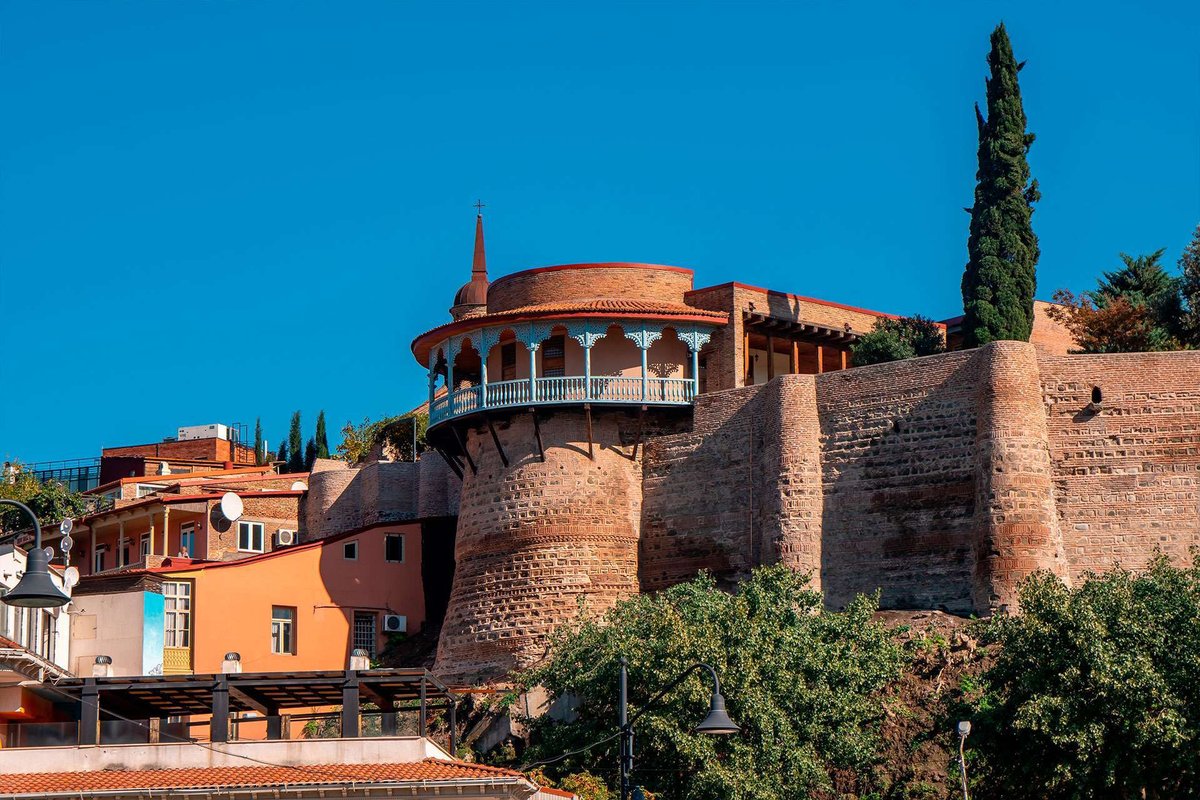
📍 Nearby and on the theme
🌉 White Bridge
A pedestrian bridge with the sculpture of a boy on its railing; a good view of the palace from here.
Read more⛪ Bagrati Cathedral
The main symbol of Kutaisi on a hill, visible from many points in the city.
Read more🗺️ Imereti region
A historic province whose centre was Kutaisi, the capital of the kingdom.
Read more🧾 Checklist before your visit
🧾 What to check and bring with you
✅ Status first: according to maps the palace is temporarily closed, check in advance whether visitors are let in
✅ Be ready for an outside view: even without going in, the palace looks good from the outside
✅ Comfortable shoes: you reach the palace and the nearby spots on foot through the old town
✅ A camera or phone: the best views of the palace are from the White Bridge and the cable car
✅ Room in your route for the White and Red Bridges, a few minutes' walk away
✅ Half an hour to walk the centre: the Rioni embankment, the bridges, views of Bagrati Cathedral
❓ Frequently asked questions about the Palace of Solomon II
💬 He was the last king of Imereti. He ascended the throne in 1789, was deposed by the Russian Empire in 1810, fled and tried to raise a revolt, and died in exile in Trabzon in 1815. With him the independent Kingdom of Imereti ceased to exist.
💬 The palace's real name is Okros Chardakhi, the "Golden Pavilion." It is the historic residence of the kings of Imereti in Kutaisi, known by the last of them, Solomon II. The palace is much older: the residence is mentioned as far back as the 15th century.
💬 No. The residence existed long before him, and Solomon II only partly restored it. His name stuck to the palace because he was the last king who ruled from here.
💬 According to maps it is listed as temporarily closed, there are no official tours, and the building is under the care of the Patriarchate. Sometimes visitors are let in by arrangement or for a donation, but this cannot be guaranteed, so it is best to check the status in advance.
💬 In the Old Town, on the right bank of the Rioni, between the Rustaveli Bridge and the White Bridge. Nearby is the lower cable car station, and the best views of the palace open up from the White Bridge.
💬 Only one structure has survived to our day, the so-called small house. It is a two-story stone building with arches along the first floor for protection against floods. It was rebuilt in the 19th century and acquired its present appearance in the 1960s.
💬 Solomon II is the last king of Imereti, and the palace is linked to him. Solomon I ruled earlier, in the 18th century. Solomon Dodashvili was not a king at all but a Georgian enlightener of the 19th century, with no connection to the palace.
🧡 The main points in brief
The palace that everyone knows as the "Palace of Solomon II" is in fact Okros Chardakhi, the ancient residence of the kings of Imereti. Solomon II became the last to rule from here, and his name stuck to this place for a reason: in 1810 he lost the throne, the palace passed into other hands, and the independent history of Imereti came to an end. Today only the small house remains of the large complex, but even it stays a living point on the map of Georgian history.
If you are in Kutaisi, drop by here during a walk through the old town, without forgetting to check the status in advance, and be sure to walk on, towards the bridges over the Rioni and Bagrati Cathedral. That way the palace turns not into a separate box to tick but into part of the larger story of the city and the kingdom.
🧡 Read more about Kutaisi
- Royal residences: the Geguti Palace and Okros Chardakhi
- The Red Bridge and the legend of its French origin
- A one day walk through the centre of Kutaisi
💾 Save the article to come back to it before your trip to Kutaisi.
🗣️ Now over to you
Have you been to the Palace of Solomon II in Kutaisi? Tell us how it went, and help other travellers plan their visit.
- Did you manage to get inside, and what condition was the palace in?
- What from the exhibition stayed with you the most?
- How did you get there, and from which angle does the palace look best?
- What else in old Kutaisi is worth seeing on the way to the palace?
Share in the comments, we read every story and add your findings to the article. ❤️
ℹ️ Information about the palace's status, access and exhibition is especially changeable: the site may be temporarily closed, and the possibility of going inside varies. The details are current as of the publication date and gathered from open sources, so be sure to check them before your trip. The exact location is given on the Palace of Solomon II page.

2 comments
Log in to leave a comment
But here's the kicker - when I got there, I wasn't sure if the place would be open. That looming uncertainty really adds an extra layer of thrill to the visit, right? 🤔 So, is it hard to find updated visiting hours, or is there a reliable source you’d recommend?