



Dashbashi Canyon: a Guide to the Glass Bridge, Waterfalls and Basalt Walls of Kvemo Kartli
🌋 What to Know About Dashbashi Canyon
A basalt canyon in Kvemo Kartli, 107 km from Tbilisi, about a 2-hour drive. Over millions of years, the Khrami River cut through a lava plateau, exposing walls with hexagonal basalt columns. Since 2021, a tourist complex has operated here, built around a glass "Diamond Bridge".
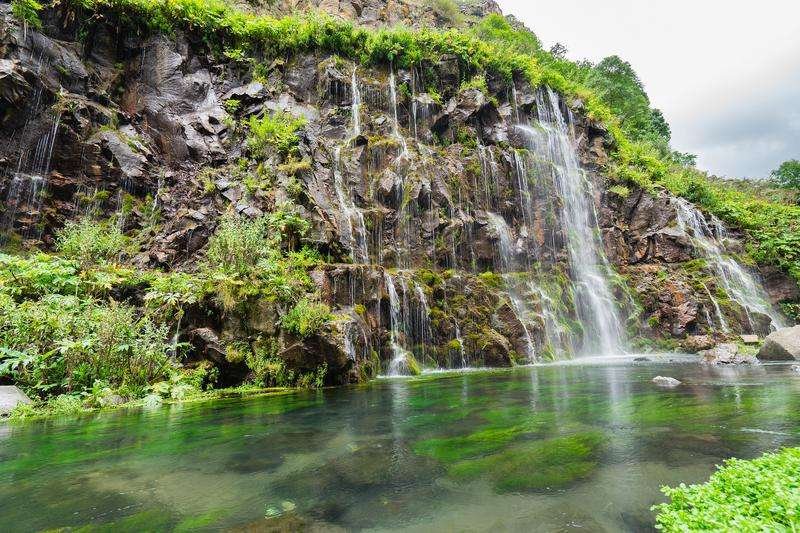
Deep in Kvemo Kartli, where the Khrami River has spent centuries cutting its way through hardened lava, lies one of southern Georgia's most unusual natural sites: Dashbashi Canyon. It's also known as Tsalka Canyon, after the municipality, though the name Dashbashi, after the neighbouring village, has stuck.
A decade ago, hardly anyone outside local fishermen and a handful of off-the-beaten-path travellers knew this place existed. Today the canyon is one of Georgia's most recognisable natural landmarks on social media, largely thanks to the glass bridge that opened in 2021. But behind the photogenic bridge lies a genuine geological story: basalt walls with hexagonal columns, tens of millions of years of landscape formation, and an ecosystem quite unlike the surrounding lava plateau.
🗺️ Dashbashi Canyon on the Map
Directions in Google Maps🌋 How the Canyon Formed: Basalt, Lava and the Khrami River
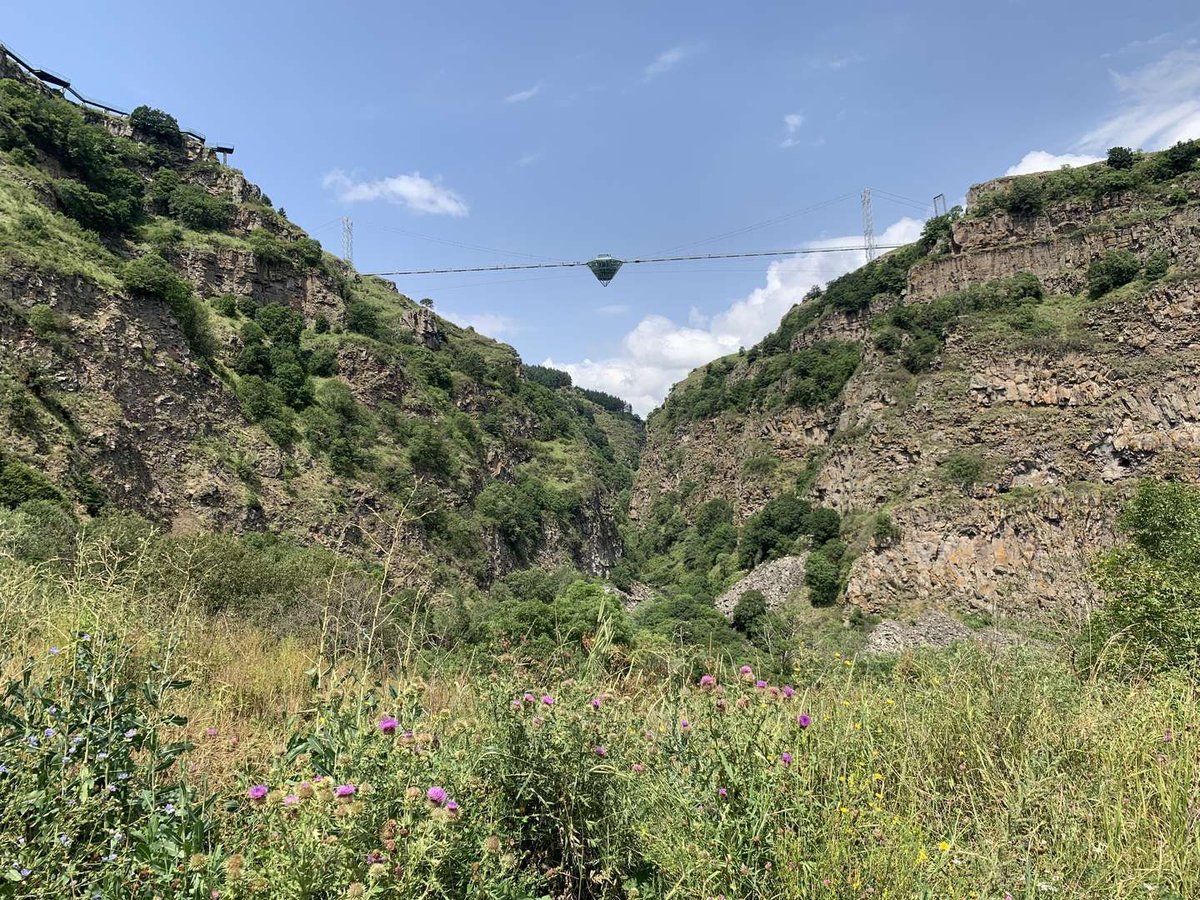
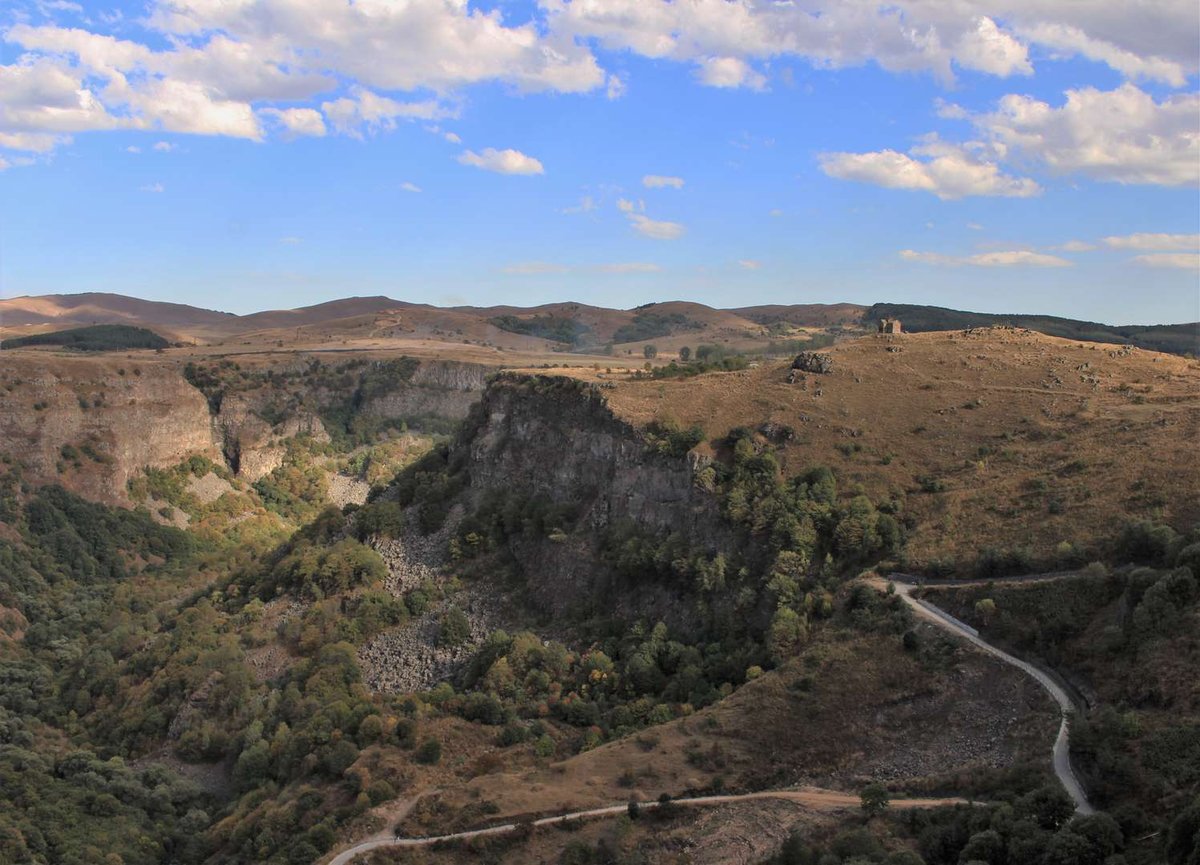
Dashbashi Canyon is a product of the volcanic activity that shaped much of Kvemo Kartli's landscape over centuries. The Khrami River (sometimes called the Ktsia) carved its bed through hardened lava, exposing basalt walls with the characteristic hexagonal columns found in other volcanic regions of the Caucasus. These rock formations are estimated to be millions of years old.
The canyon runs for roughly 8 kilometres, with elevation ranging from 1,110 to 1,448 metres, and the protected area covers about 669 hectares. Vegetation on the plateau surrounding the canyon is fairly sparse, but inside the gorge itself, thanks to the humidity and a distinct microclimate, the ecosystem is quite different: moss, shrubs and trees cling to the steep slopes, creating a sharp contrast with the surrounding steppe. The canyon was designated a natural monument of Georgia in the mid-2010s (sources give either 2014 or 2016).
🌉 The Glass Bridge and Tourist Complex
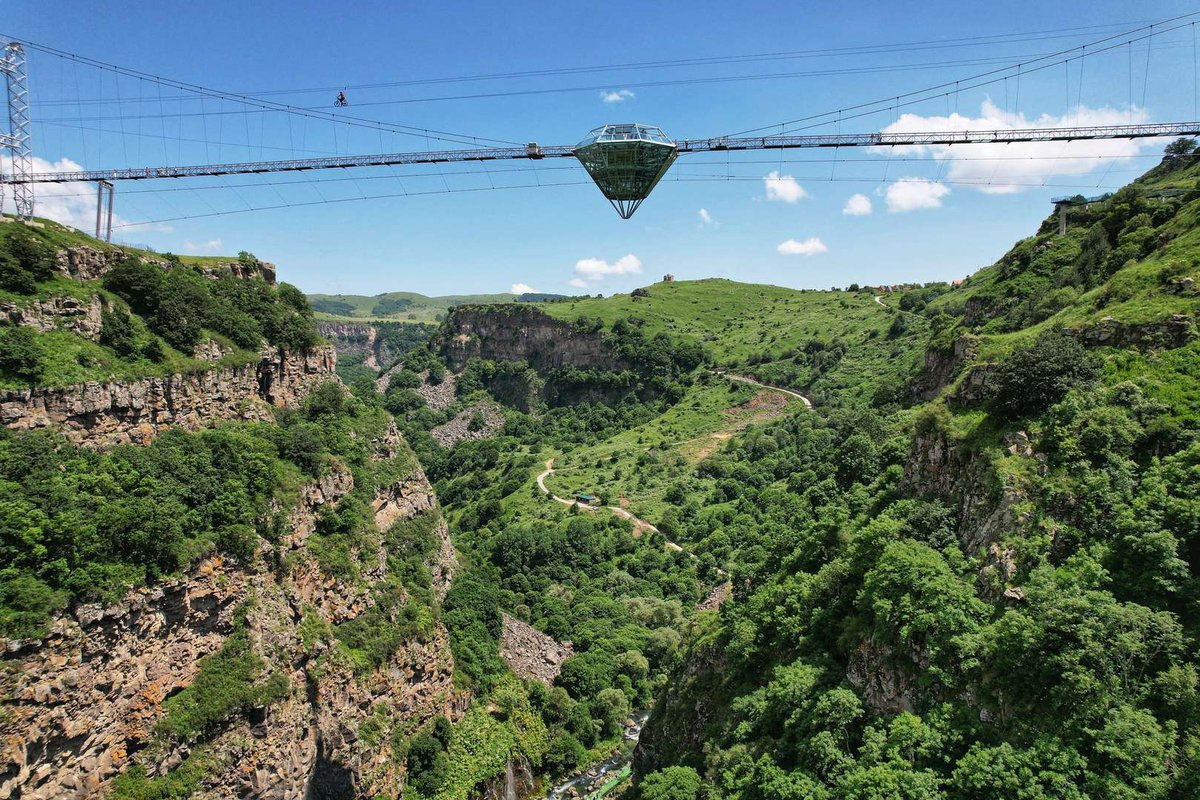
Before 2021, the canyon was known mainly to locals and fishermen. That changed with the opening of a tourist complex: a visitor centre, cottages, a restaurant, a camping area, swimming pools, and the main attraction, a 240-metre glass suspension bridge over the drop, with a diamond-shaped café-bar right at its centre. It's this "Diamond Bridge" that made Dashbashi Canyon recognisable across Georgia and beyond.
Alongside the bridge, the complex includes metal walkways at mid-height along the canyon slope, offering views of the waterfalls and basalt columns from different angles, plus extra activities such as a zipline and a swing over the drop. For those who don't want to walk back up, a small shuttle is usually available.
The entry fee deserves an honest, separate note. Figures vary widely across sources: older descriptions cite quite modest amounts, while recent 2026 visitor reviews point to a noticeably higher price, around 70-80 GEL for an adult ticket, which some travellers describe as steep for Georgia. The same recent reviews also suggest that access to individual trails may have changed: some visitors report that the path down to the waterfall is closed, leaving mainly the bridge and its viewpoints accessible. Before planning a trip specifically around reaching the water, check the current trail status, ideally with the complex's administration or the most recent visitor reviews, rather than relying on older information.
💧 Waterfalls and the "Weeping Wall"
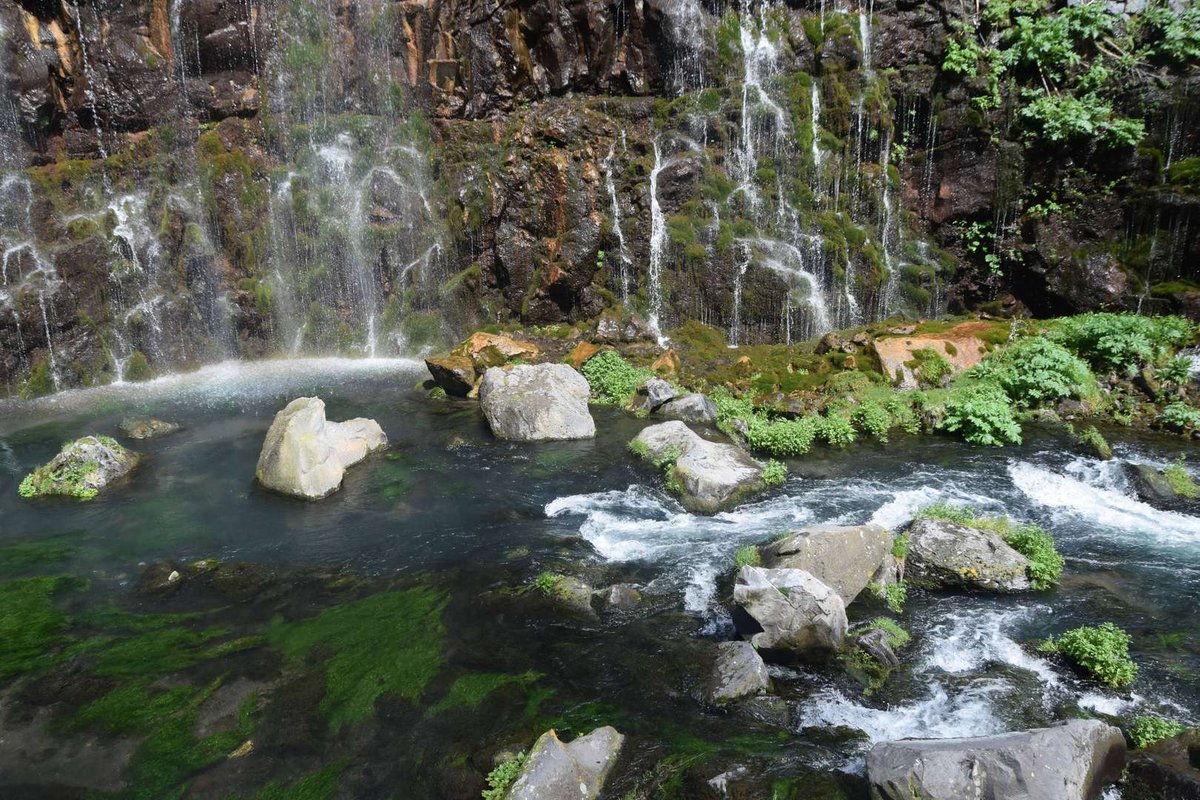
The canyon's main natural draw is its waterfalls, and the best known among them is called the Great Cascade Waterfall. Beyond it, there's a stretch that locals and travellers call the "Weeping Wall": not a classic waterfall, but a cascade of thin streams seeping straight down the basalt cliff face, where underground springs reach the surface. Scientists call these "hanging streams", as opposed to a waterfall with a single defined channel.
These karst springs feed the river fairly steadily throughout the year, which keeps the water in the canyon cold and clean almost always, good conditions for trout, and trout fishing on this stretch of the Khrami is popular among locals. Some visitors also note other natural details of the canyon: a rock outcrop resembling a face, which locals have nicknamed the canyon's guardian, and an old solitary oak on a hill above the drop, another recognisable landmark of the area.
It's worth knowing that not the entire 8-kilometre length of the canyon is walkable: a significant stretch of the riverbed is overgrown with dense vegetation and hard to access without special preparation. The developed section of the route is concentrated around the tourist complex and the bridge.
⛪ The Churches of Dashbashi Nearby
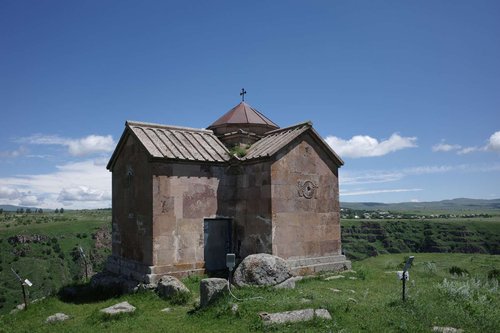
At the edge of the canyon, in the village of Dashbashi itself, two medieval churches have survived. The main one, a domed Church of St. George, dates to roughly the turn of the 10th-11th centuries and is bordered on three sides by the canyon's cliffs. The second church has survived in far worse condition. Both monuments are a subject of their own, covered separately in the blog's material on the region's churches, if it's the religious architecture of Dashbashi you're after, look there; here the focus stays on the canyon as a natural site.
🚗 How to Get to Dashbashi Canyon
From Tbilisi to the canyon's tourist complex is about 107 km, roughly a 2-hour drive. The route runs through Rustavi towards Tsalka, then follows signs to the village of Dashbashi.
There's no direct, regular public transport to the canyon itself. One option is a minibus from the Ortachala bus station or near Samgori metro station to the town of Tsalka (you'll still need to check the current timetable and the last return service, evening minibuses back to Tbilisi tend to leave early), and from Tsalka to the canyon by taxi. A more predictable option for those without their own car is a taxi from Tbilisi with waiting time, or one of the many organised day tours available from the capital.
The best time to visit is spring, April to June, when the Khrami runs higher and the waterfalls are at their most impressive. Water levels drop in autumn and winter, though in winter, when temperatures fall below freezing, part of the flow freezes, turning the "Weeping Wall" into curtains of ice, a striking sight in its own right, if you don't mind a cold-weather trip.
🗺️ What to See Nearby
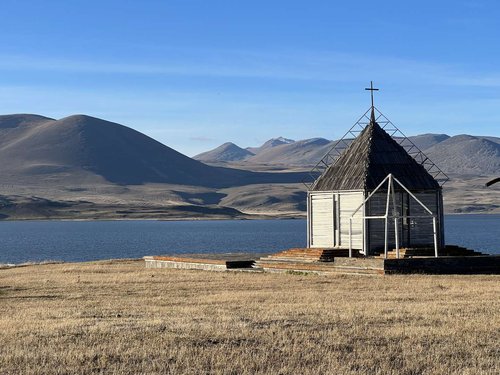
A few kilometres from the canyon lies the Tsalka Reservoir, Georgia's largest reservoir by surface area, popular with anglers and anyone after quiet scenery. Along the way, it's worth stopping at the Convent of St. Nino in the village of Poka, on Lake Paravani, where the nuns make cheese, honey and jam. Lake Paravani itself sits at over two thousand metres, one of the highest large bodies of water in the region.
History enthusiasts will find Kldekari Fortress of interest, 9th-century ruins nearby, and Dmanisi, a world-famous site of the earliest known hominid remains outside Africa, also located in this part of Kvemo Kartli. All of these points combine well with a canyon visit as part of one full day, or a two-day trip with an overnight stay in Tsalka.
📌 Before You Go
Have you already been to Dashbashi Canyon? Tell us how much you paid for entry at the time of your visit and whether you managed to reach the waterfall, this kind of information is especially valuable for anyone still planning their trip, given how quickly the visiting conditions seem to change.
Information is current as of July 2026. Entry price, opening hours and access to individual trails can change, check with the complex's administration before you go.
❓ Frequently asked questions
💬 A basalt canyon in Kvemo Kartli, near the village of Dashbashi in Tsalka municipality. It was carved by the Khrami River, which cut through a lava plateau over millions of years. It's about 8 km long and holds the status of a natural monument of Georgia.
💬 The price has changed over time: older descriptions cite modest amounts, but 2026 visitor reviews point to a noticeably higher figure, around 70-80 GEL for an adult ticket. Check the current price before your trip, it may vary by season and by which activities are included.
💬 It's a 240-metre glass suspension bridge, opened in 2021, with a diamond-shaped café-bar right at the middle of the span. It's what turned a once little-known canyon into one of Georgia's most recognisable spots on social media.
💬 The hike to the waterfall used to be the main activity on foot, but according to some recent reviews the trail down is closed in places, leaving mainly the bridge and its walkways accessible. Check the current trail status before your trip so you're not counting on a route that may be unavailable.
💬 By car it's about 107 km and a 2-hour drive, through Rustavi towards Tsalka. There's no direct regular public transport to the canyon itself, a taxi or an organised tour is more practical.
💬 In spring, April to June, when the Khrami River runs higher and the waterfalls look their most impressive. In winter part of the flow freezes, turning the "Weeping Wall" into curtains of ice, striking in its own way, though the trip is colder.
💬 Yes, two medieval churches survive at the edge of the canyon in the village itself, the main one a domed Church of St. George from around the 10th-11th centuries. For more on them, see the separate feature on Dashbashi's churches.

44 comments
Log in to leave a comment
Каньон Дашбаши — это удивительное место с глубокой расщелиной, по которой протекает чистейший горный ручей, образующий внизу бирюзовые озёра и маленькие водопады 🌄📸 Уже представляю, как гуляю по тропинке над обрывами, слушаю шум воды и наслаждаюсь каждым шагом — такого масштаба и природной силы нигде не встретишь. Здесь словно сама Земля открывает свои недра, а каждый поворот тропы дарит новые впечатления и прекрасные кадры.
Мне особенно понравилось, что в рейтинге не только описывается красота каньона, но и подробно объясняется, как лучше спланировать маршрут, сколько времени займёт прогулка и на что обратить внимание — такие детали действительно помогают подготовиться к походу ✨
Каньон Дашбаши теперь точно в моём списке мест, которые я хочу обязательно посетить в следующем путешествии по Грузии 💛
А вы уже были в каньоне Дашбаши? Какие участки вам понравились больше — лазание по тропам над обрывами или виды на бирюзовые воды внизу? 😊🌊📸
Итак, Дашбашский каньон находится в 92 км от Тбилиси. Трасса, которая ведёт к селу Дашбаши - не будет привычным выездом за пределы города🙈 это совсем другое направление, которое ещё изучать и изучать!
В навигаторе вбивайте "дашбаши", однако сам каньон он не найдёт.
⚠️Ехать туда предстоит самостоятельно, либо заказывать тур, общественный транспорт туда не ходит. ⚠️Расстояние в 92 км растянется часа в 2-2,5 из-за серпантина.
⚠️ Также приготовьтесь к перепадам давления и бесконечному закладыванию ушей. Но дорога потрясающе красивая 😍 и стоит потраченного времени.
⚠️ Одевайтесь теплее, там совершенно другой климат 🌡️вчера в Тбилиси было +21, а в Дашбаши +2 😱 и снег.
⚠️ Удобная обувь! Там нет дорог, тропинок и специальных спусков. Также, пробираться к самому каньону придется по камням и воде.
⚠️ Захватите с собой покушать, в селе есть один магазин
⚠️ Выезжать обратно стоит до 16:00-17:00, ехать по кромешной тьме - не очень приятно.
На самом деле - все эти советы по подготовке, добрая половина которых, нам бы пригодилась и самим ( если бы кто-то сказал 😊).
Спуск до каньона ( на последнем фото начало пути ) занимает 1300 метров. Спускались мы минут 20, а вот поднимались минут 50 🏃😰
Какая же нетронутая красота ждала нас внизу 😍😍😍 бесконечно красиво, кадры не передают и треть этого волшебства. Мы очень советуем включить эту локацию в своё путешествие по Грузии 🇬🇪 Эмоций и впечатлений будет масса 💫🙌🏼
Выбирайте хорошую погоду ☝️🏼 там бездорожье, если начнется дождь - вы застрянете внизу.
⁉️ Можно ли купаться летом ? - можно, но вода ледяная 🌊
Самые смелые - пожалуйста 😉 В этом регионе очень ветрено и у половины домов - выбиты окна, даже в жилых. А из интересного, именно из этого региона поставляют всю картошку Грузии 🇬🇪.
Остались вопросы? - задавайте их в комментариях👇🏼 #грузия #дашбаш #каньон #georgia #madloba
лекс.Удивительно!Прищеры тоже хранят свою историю.Интересно будет посетить каньон Дашбаши.