




🏰 Shatberdi in Shida Kartli: A Name Carried Over From Tao-Klarjeti
🏰 Shatberdi Monastery: The Essentials
A men's monastery of St Catherine in the Dzama valley, Kareli municipality, Shida Kartli. It stands right by the road into the valley. Its name repeats that of the famous Tao-Klarjeti house, but this is a different place.
Shida Kartli, Kareli municipality, the valley of the Dzama river. The monastery sits directly on the road into the valley, so it's easier to reach than the houses further up the gorge.
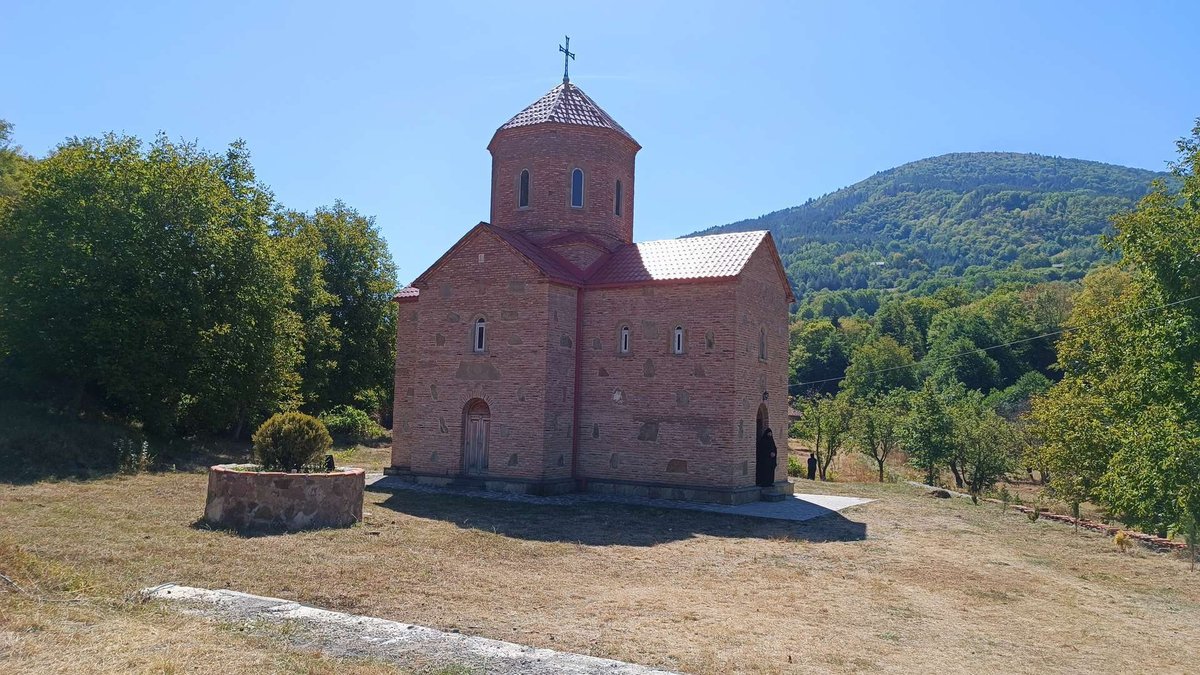
Shatberdi Monastery is an active men's house of St Catherine in the valley of the Dzama river, in the Kareli municipality of Shida Kartli. It stands right by the road into the valley, which makes it more accessible than most of the monasteries here. The region's other churches are gathered in the catalog on the Churches, Cathedrals and Monasteries of Shida Kartli page.
But the place to start isn't the description; it's the untangling. There's real confusion around the name "Shatberdi" in search results, and it isn't accidental: two different monasteries carry this name, separated by hundreds of kilometres and a whole historical era.
🔑 Two Shatberdis: Where the Confusion Comes From
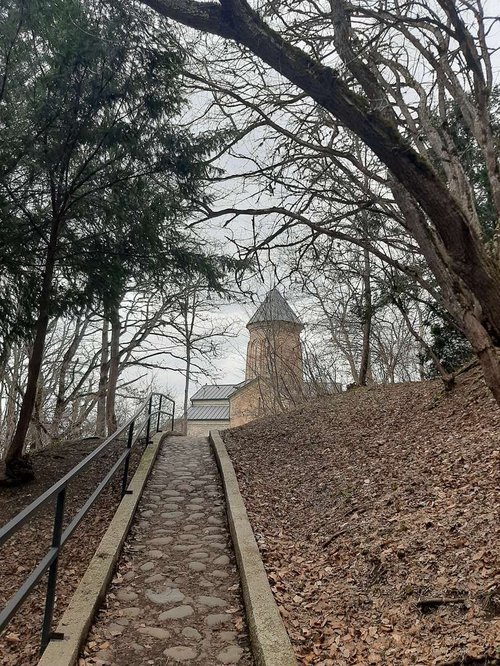
If you were searching for Shatberdi and came across mentions of ancient manuscripts, you were most likely looking for somewhere else.
The historical Shatberdi stood in Klarjeti, in the region of Tao-Klarjeti, today part of Turkey. It belonged to the circle of monasteries of Saint Grigol Khandzteli and was one of the principal centres of learning in medieval Georgia. It was there that the Shatberdi Collection was compiled, and there in 897 that the Adishi Gospels were copied, one of the oldest Georgian manuscripts, which we covered in our article on the Church of St George in Adishi.
Shatberdi in the Dzama valley is an entirely different place: a house in Shida Kartli dedicated to Saint Catherine.
And here's what makes the story genuinely interesting. The shared name is not coincidence but tradition. A whole group of monasteries in the Dzama valley was founded under the names of Tao-Klarjeti houses. The names of monasteries lost to Georgia were deliberately carried over to new foundations in the country's interior, keeping their memory alive.
🏛️ What the House Is Like Today
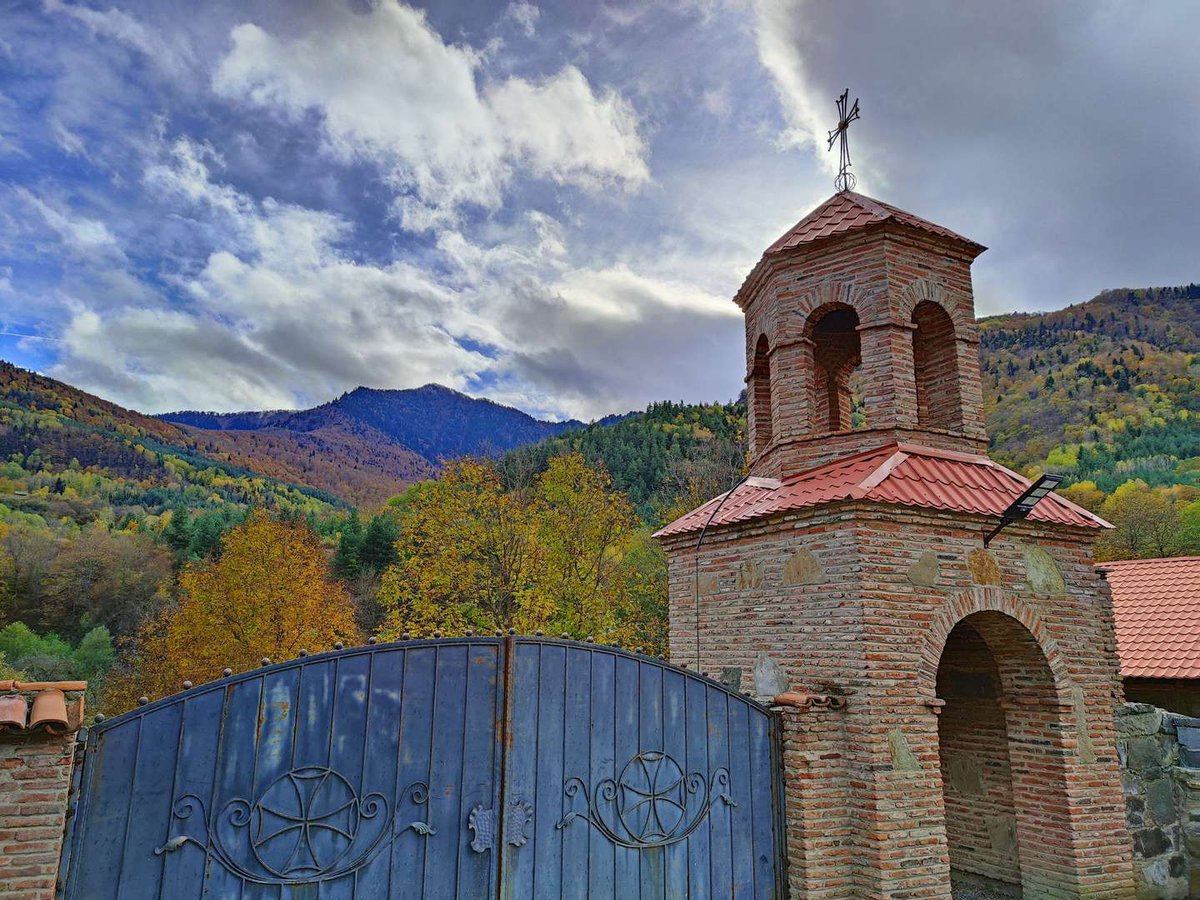
The Dzama Shatberdi is an active men's monastery, not a museum and not a ruin. A brotherhood lives here, and the house is going through a revival: the abbots working in the valley describe their task in exactly those terms, as re-establishing monastic life in a new place.
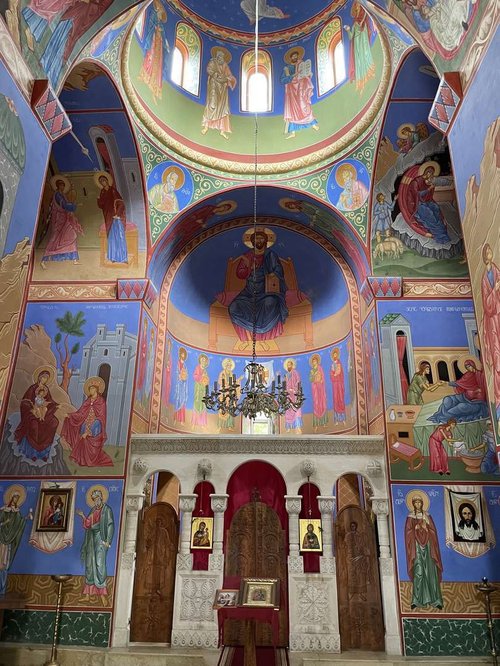
Stone and brick were used in its construction, and the combination of traditional material with contemporary execution is immediately apparent: the house looks less like a medieval monument than a living, recently built complex. Don't come expecting ancient frescoes or thousand-year-old walls; the value of the place lies elsewhere, in the continuity of a tradition and in the context of the valley itself.
Since the monastery is active, the usual rules apply: covered clothing, a headscarf for women, and photography best agreed with the brothers.
⛪ Khondzi Monastery: a neighbour a kilometre and a half away
If you have made it to Shatberdi, the second monastery is barely any distance at all. Khondzi men's monastery stands about a kilometre and a half to the east, and combining the two in one trip is the obvious move: no detour required.
Let me be straight about this: detailed information on this house is almost entirely absent from open sources. No founding history, no dating, no description of the buildings. That is the normal state of affairs in the Dzama valley, where several dozen monasteries are active and only a handful have been studied and written up.
So the only way to learn anything about Khondzi is to go and ask on the spot. In this valley that works: the brethren and the priests often tell visitors the history themselves, and their account is usually richer than any guidebook.
The conventions are the same as at Shatberdi: covered clothing, a headscarf for women, photography by agreement.
🏞️ The Dzama Valley: Why There Are So Many Monasteries Here
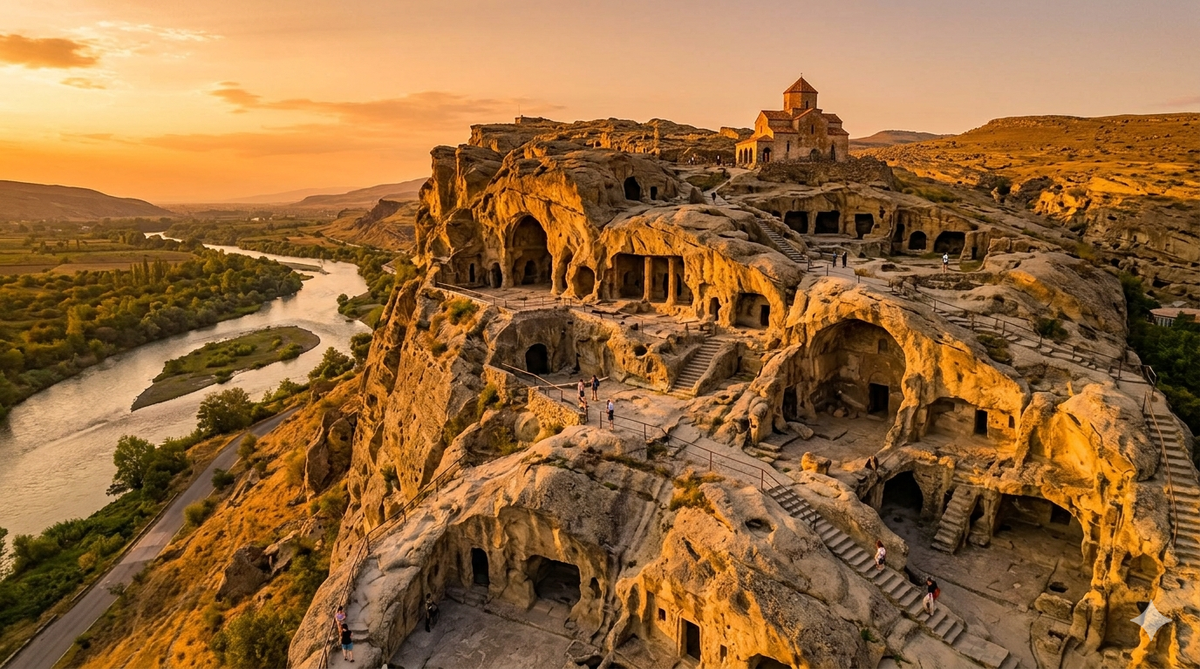
The valley of the Dzama is one of those places in Shida Kartli where history lies in dense layers.
The numbers give a sense of the scale. The valley holds some 58 historical monuments, monasteries and fortresses together, and according to the monks more than forty working houses. Locals put it this way: one day the Dzama valley will "close like Mount Athos", becoming monastic territory throughout. For a gorge a few dozen kilometres long, that density is unusual.
In the tenth century this was the seat of Adarnase, prince of Dzama, who took part in the struggle to unite the Georgian principalities. In the time of Queen Tamar the valley played a notable part in the political and cultural life of the kingdom. The position was strategic: routes ran from inner Kartli southwards through here, and control of the valley counted for a great deal.
Hence the concentration of religious centres. Besides Shatberdi, other houses are active in the valley, among them several that likewise carry transferred names.
🚗 How to Get There
The base town is Kareli, the administrative centre of the municipality, sitting on the Tbilisi to Gori to Khashuri road. From there you turn off into the Dzama valley and follow the river upstream.
Shatberdi's advantage is that it stands right on the valley road, not up a slope or deep in the gorge. That simplifies a visit considerably: no walking in and no hunting for access, as with the houses further up. Khondzi Monastery is about a kilometre and a half away, so the two go together naturally.
There's virtually no public transport into the valley, so you'll need your own vehicle or an arrangement with locals in Kareli.
🧭 Where to Stay and Eat
Kareli and Gori serve as bases. Below are the catalog sections.
Been to Shatberdi Monastery? Leave a review on Madloba: tell us how the road into the valley was, whether you managed to see neighbouring Khondzi, and what first-time visitors should know.
Information is current as of July 2026. Visiting arrangements at an active monastery and the state of the valley road both change; check locally before you travel.
❓ FAQ
💬 In Shida Kartli, Kareli municipality, in the valley of the Dzama river. The house stands by the road leading into the valley, which makes it easier to reach than the monasteries further up the gorge.
💬 The name was carried over from Tao-Klarjeti. A whole group of houses in the Dzama valley was founded under the names of Tao-Klarjeti monasteries, a way of preserving the memory of spiritual centres lost to Georgia.
💬 No. The historical Shatberdi, a centre of learning in Grigol Khandzteli's circle, stood in Klarjeti, in what is now Turkey. That is where the Shatberdi Collection was compiled and where the Adishi Gospels were copied in 897. The Dzama Shatberdi is a different house with the same name.
💬 To Saint Catherine. Its full name is the Shatberdi Men's Monastery of St Catherine.
💬 Yes, it's an active men's monastery with a resident brotherhood. Covered clothing is required on a visit, a headscarf for women, and photography is best agreed first.
💬 In the 10th century it was the seat of Adarnase, prince of Dzama, who took part in the struggle to unite the Georgian principalities, and under Queen Tamar the valley played a notable part in the life of the state. Hence the density of monasteries and fortresses.
💬 Khondzi Monastery is about a kilometre and a half away, so the two combine easily. Further up the valley lie the Mzovreti complex and Ortubani fortress.
💬 Your reference point is the town of Kareli on the Tbilisi to Gori to Khashuri road. From there you turn into the Dzama valley. There's almost no public transport, so you'll need your own vehicle or an arrangement with locals.

5 comments
Log in to leave a comment
有时候,面对这样的景色和历史,我感到自己无比渺小,但同时又被这份悠久的力量所吸引。也许,这就是旅行的魅力所在。探索的不仅是眼前的美景,还有那些久远的记忆与情感。每一次的探访都让我更加想了解这片土地的过去,恨不得把每一个角落都纳入心中。