




🏰 Mzovreti and Dzama Fortress: Three Names for One Place in Shida Kartli
🏰 Mzovreti: The Essentials
A medieval fortress on a high hill in the Dzama valley, with a men's monastery beside it. The site stands on the ground of the historical town of Mzovreti and turns up in the sources under three different names.
Shida Kartli, Kareli municipality, the Dzama valley, beside the village of Ortubani. The village itself lies about 14 km from Kareli on the right bank of the Dzama.
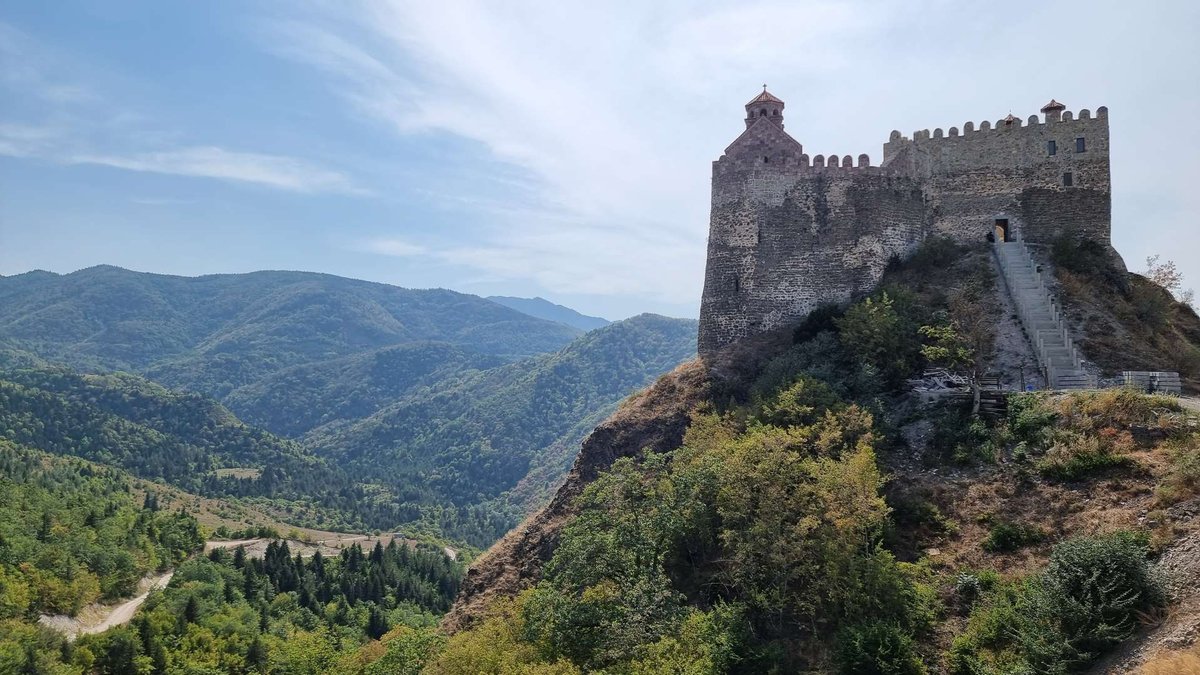
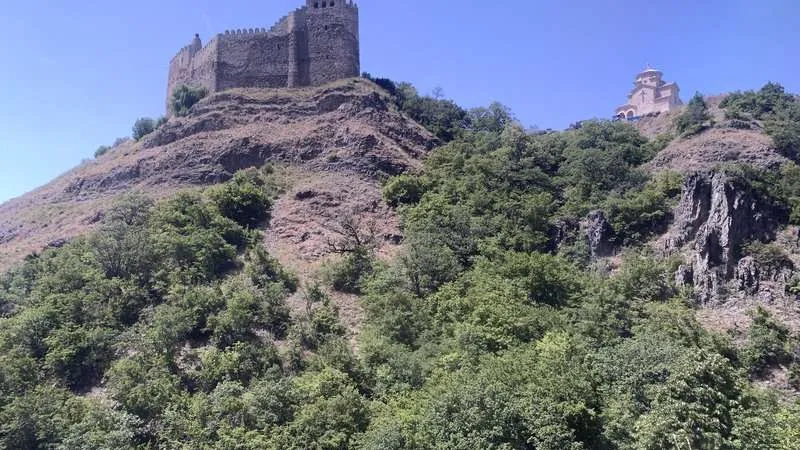
Mzovreti is a knot where a fortress, a monastery and a vanished town all meet. The medieval fortress stands on a high hill in the valley of the Dzama river, beside the village of Ortubani in the Kareli municipality, with an active men's monastery alongside it. The region's other churches are gathered in the catalog on the Churches, Cathedrals and Monasteries of Shida Kartli page.
The place to begin is with the names, because that's exactly where both search engines and guidebooks trip up.
🔑 Mzovreti, Dzama, Ortubani: Three Names for One Place
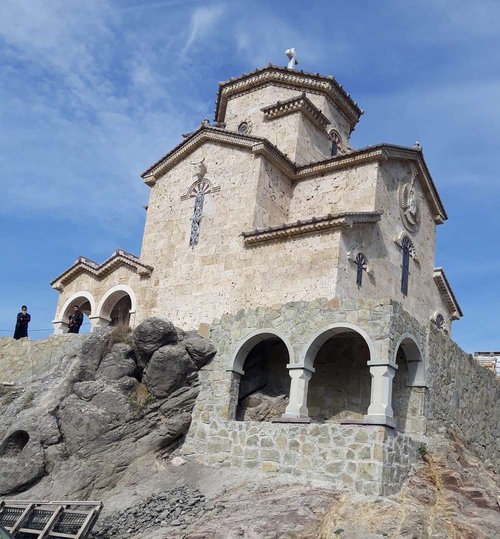
If you were looking for Mzovreti and kept running into "Dzama fortress" and "Ortubani", you weren't in the wrong place. It's one site with three layers of naming.
Mzovreti is the name of the historical town that stood here. The town is long gone; the name stayed with the monastery.
Dzama fortress is the standard name for the stronghold in the Georgian tradition. It was the administrative and political centre of Dzamiskhevi and controlled one of the main roads of Trialeti and Upper Kartli.
Ortubani fortress is the same stronghold, named after the village of Ortubani on whose territory it sits. The village is small: the 2014 census recorded 72 residents. It lies on the right bank of the Dzama in the northern foothills of the Trialeti range at around 850 metres, 14 km from Kareli.
🗼 How the Fortress Is Built
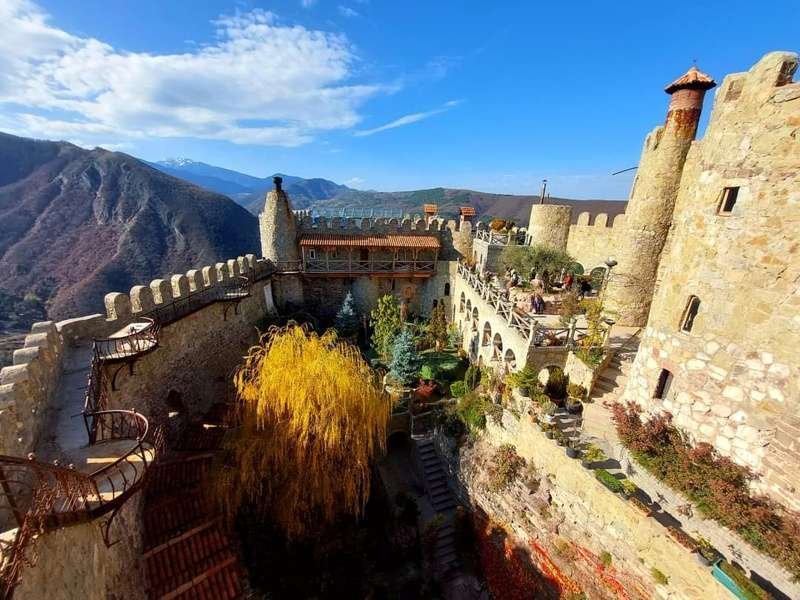
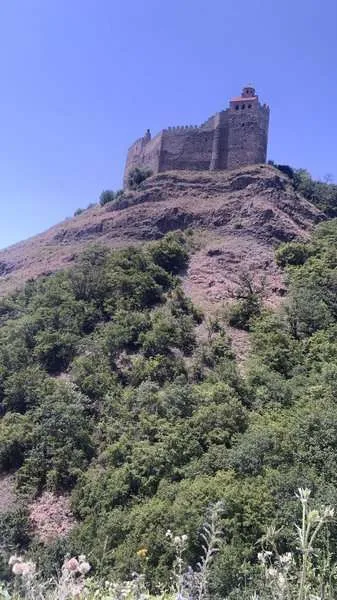
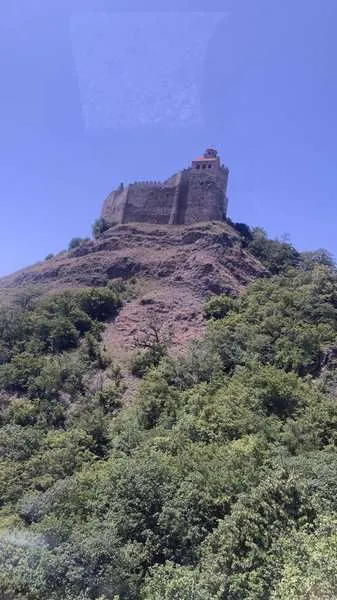
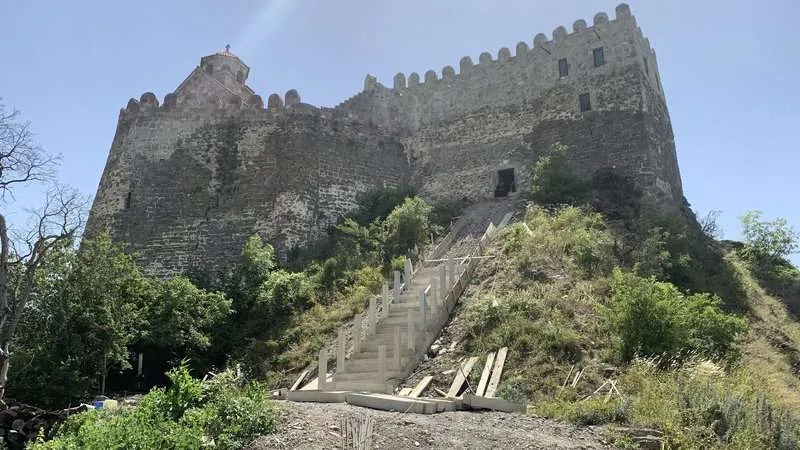
The complex consists of an inner fortress and a curtain wall. The wall is rectangular in plan, and set into its northeastern corner is a four-cornered tower reinforced with buttresses. Only three storeys of the tower survive, but even those show how seriously it was built.
The site was chosen strategically: the fortress was placed to cover the important road from Shida Kartli towards southern Georgia. Hence its political weight, too. Dzama fortress wasn't merely a stronghold but the seat of authority over an entire valley.
⚔️ The Three-Month Siege: How the Fortress Entered the Chronicles
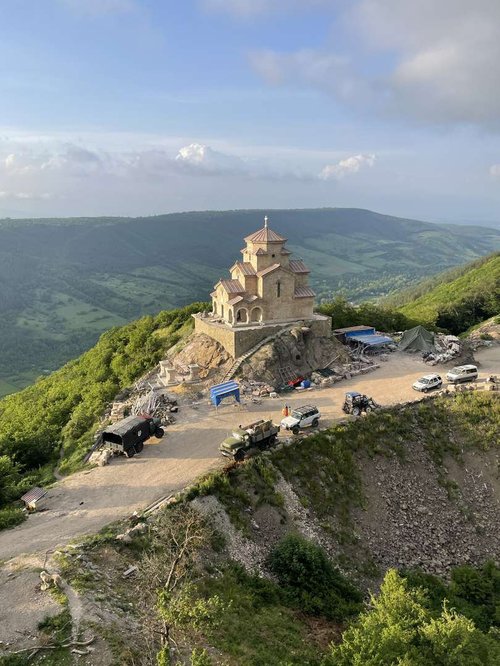
The most vivid episode in its history belongs to the 10th century, and it explains why a fortress like this was needed at all.
Theodosius, a claimant to the throne of the Abkhazian kingdom, that is western Georgia, asked for help from Adarnase, ruler of the Dzama valley. Adarnase sheltered the fugitive in his residence, Dzama fortress. The response came quickly: King Demetre sent an army, which laid siege to the place. According to the chronicle, the siege and the fighting went on for around three months.
Theodosius did eventually take the throne, entering history as Theodosius III. And the fortress proved its worth: three months under siege was a serious showing for a stronghold of that era.
It changed hands more than once afterwards. In the 11th and 12th centuries the fortress and its lands were governed by a high-ranking royal official, the eristavt-eristavi of Kartli. In the 13th century it belonged to Toreli Gamrekeli, son of Kakha, eristavt-eristavi of Akhalkalaki. In the early 14th century it was taken by Ossetians.
⚔️ The Fortress in the Chronicles
Dates follow Georgian sources; the earliest episodes come down through the chronicle tradition.
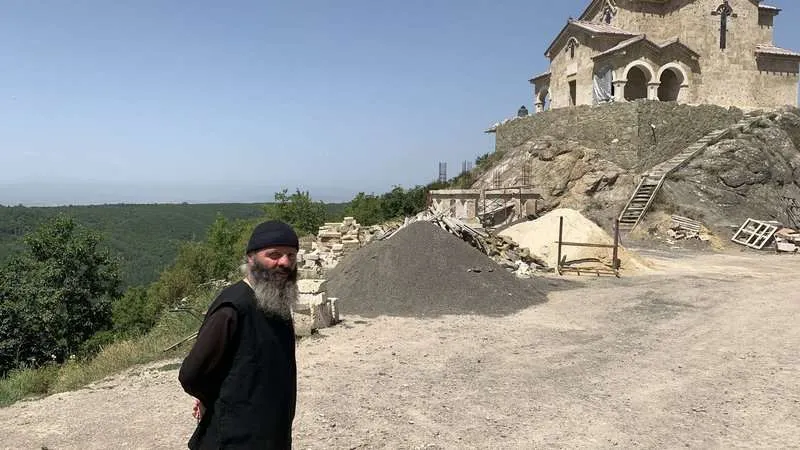
📚 Mzovreti as a Centre of Learning
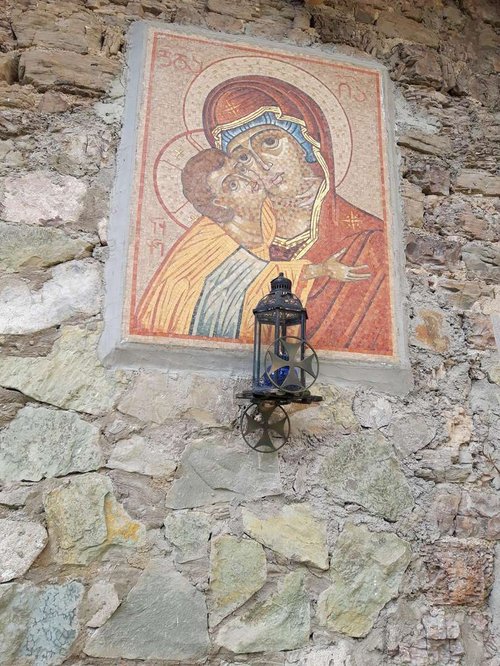
Here's what usually goes untold. Mzovreti was not only a fortress but a place of serious cultural and educational work, an important point in Dzamiskhevi.
Two notable figures are named among the scholars who worked here. Zaza Panaskerteli-Tsitsishvili, author of the celebrated Karabadini, a medical compendium and one of the key monuments of Georgian scientific writing. And Nodar Tsitsishvili, one of the interpolators of The Knight in the Panther's Skin, meaning a man whose additions entered the text of Georgia's central poem.
The Tsitsishvili family features in the next turn of the story too: in the 17th century they moved the seat of their feudal domain from Samtsevrisi to Mzovreti, and through the 17th and 18th centuries Ortubani served as their residence. That's why Ortubani is described as one of the best-preserved historical fortress-towns in the Kareli district, and such places have all but disappeared in Georgia.
⚠️ Two Complexes That Get Confused
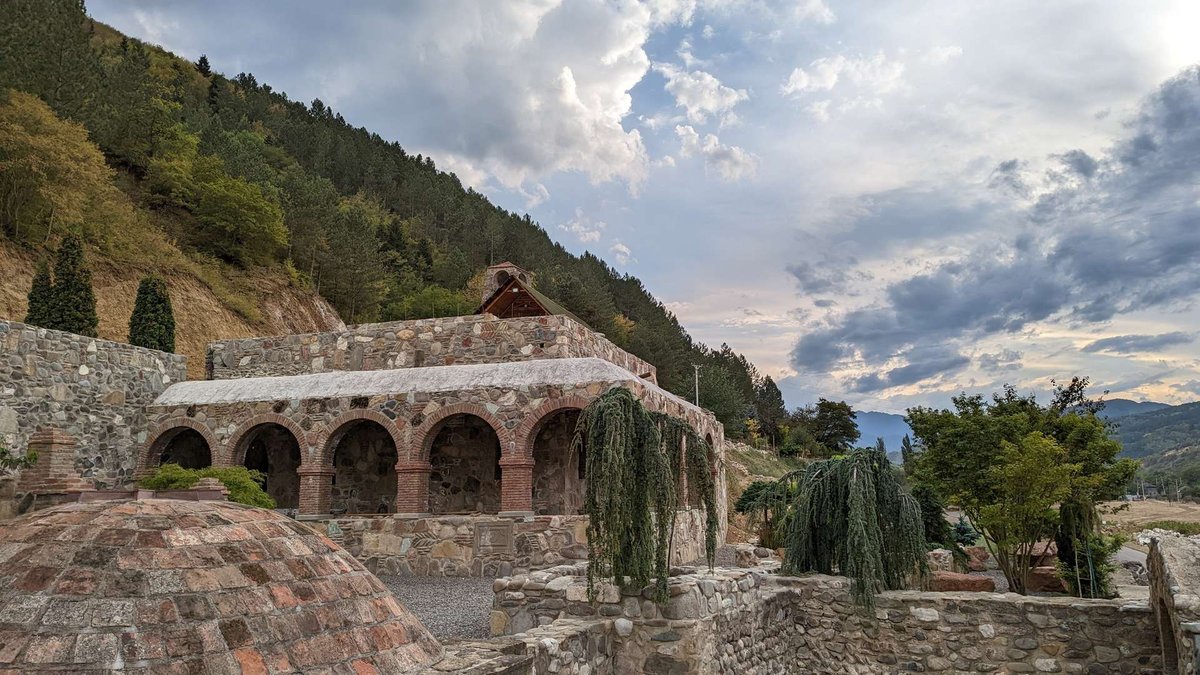
There are two different sites in and beside Ortubani, and the sources mix them up constantly.
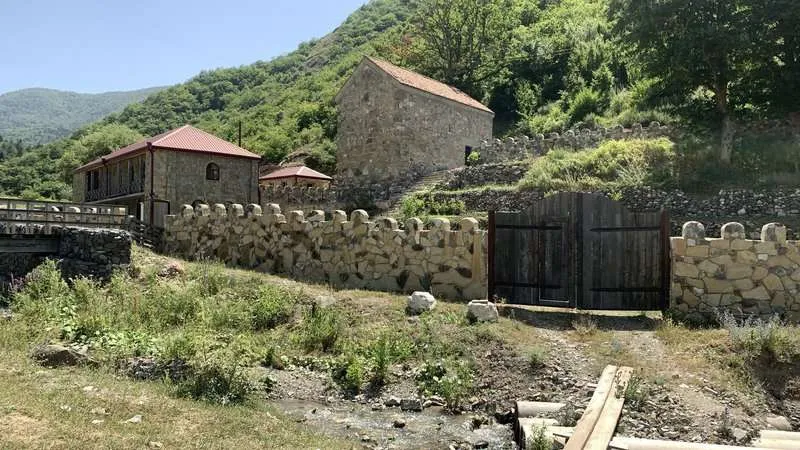
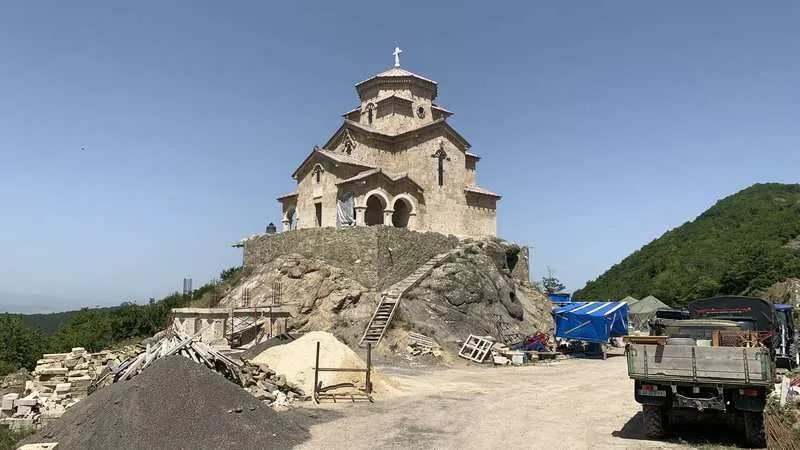
The hill fortress and the Mzovreti men's monastery, the subject of this article: a medieval stronghold with a tower and curtain wall, standing on high ground near the village.
The Mzovreti fortress-palace in the village itself, a 17th-century complex built when the Tsitsishvili seat was moved here. It houses the women's monastery of the Nativity of the Theotokos. That's a different era and a different building.
If a source mentions the 17th century and a women's house, it's talking about the second site.
🚗 How to Get There
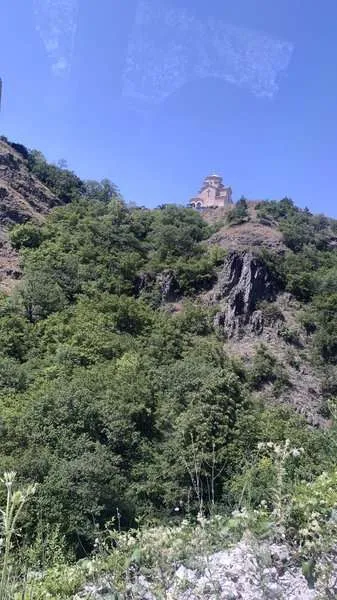
The base town is Kareli, on the Tbilisi to Gori to Khashuri road. From there it's about 14 km up the Dzama valley to the village of Ortubani. The fortress isn't in the village but above it on the hill, so the final stretch means walking uphill.
There's virtually no public transport into the valley, so you'll need your own vehicle or an arrangement with locals. The trip combines naturally with the valley's other sites: Shatberdi Monastery and the Khondzi house are not far off, and the valley's wider context is covered in The Dzama River Valley.
🧭 Where to Stay and Eat
Kareli and Gori serve as bases. Below are the catalog sections.
Been to Mzovreti? Leave a review on Madloba: tell us how the road and the climb went, what you could see from the tower, and whether it's worth combining with the valley's monasteries.
Information is current as of July 2026. The state of the valley road and the climb to the fortress both change; check locally before you travel.
❓ Frequently Asked Questions
💬 In Shida Kartli, Kareli municipality, in the Dzama valley, on the hill beside the village of Ortubani. The village is about 14 km from Kareli, on the right bank of the Dzama at around 850 metres.
💬 Yes, it's one site. Mzovreti is the name of the historical town that stood here. Dzama fortress is the standard name for the stronghold. Ortubani is the same stronghold, named after the village on whose territory it sits.
💬 In the 10th century Theodosius, a claimant to the throne of the Abkhazian kingdom, took refuge in the fortress with Adarnase, prince of Dzama. King Demetre sent an army and the siege, with fighting, lasted around three months. Theodosius later took the throne as Theodosius III.
💬 The complex consists of an inner fortress and a rectangular curtain wall. A four-cornered tower reinforced with buttresses is set into the northeastern corner, of which three storeys remain.
💬 Serious scholarly and educational work went on here. Among those who worked at Mzovreti are Zaza Panaskerteli-Tsitsishvili, author of the Karabadini, and Nodar Tsitsishvili, one of the interpolators of The Knight in the Panther's Skin.
💬 They're separate sites. On the hill stands the medieval fortress with the Mzovreti men's monastery. In the village of Ortubani itself is a 17th-century fortress-palace, built when the Tsitsishvili seat was moved here, housing the women's monastery of the Nativity of the Theotokos.
💬 In the 11th and 12th centuries it was governed by the eristavt-eristavi of Kartli; in the 13th it belonged to Toreli Gamrekeli, son of Kakha, eristavt-eristavi of Akhalkalaki. In the early 14th century Ossetians took it, and in the 17th the Tsitsishvilis moved their seat here.
💬 Your reference point is Kareli on the Tbilisi to Gori to Khashuri road. From there it's about 14 km up the Dzama valley to Ortubani, then a walk uphill. There's almost no public transport, so you'll need your own vehicle.

46 comments
Log in to leave a comment
هذا المكان يبدو كـ "تابوت زمني" حيث تتداخل القصص والأساطير. سأتمنى يومًا زيارة هذه المواقع لأشعر بتلك الأجواء الغامضة بنفسي. لكن لدي سؤال: هل هناك مسارات سياحية محددة تساعد في اكتشاف كل التفاصيل المثيرة في المنطقة؟ 🤔
ду здесь основан монастырь.Недалеко расположен храм Кинцвиси и церковь Самцевриси.Крепость защищала от нападений и захвата террито-
рии.Место богато историческими событиями.Побывать там будет очень интересно.Монахи проведут экскурсию и расскажут много фактов из исто-
рии многовековой давности.Нужно запомнить очень важный момент,что в дни поста женщинам посещать монастырь не желательно.
Кстати, поедем с подругой в Грузию весной. Самое хорошее время для путешествия. Ищем единомышленников и тех,кто отправляется в эту интересную страну не в первый раз.