




🏰 The Shio Mghvime Community in the Dzama Valley: How a New Rock Church Was Cut in 2008
🏰 Sarkineti Monastery: The Essentials
A working monastery in the Dzama valley, Kareli Municipality, Shida Kartli. What sets it apart from its neighbours: the church here is not ancient but was cut into the rock in 2008, using modern equipment and following an old Georgian tradition. It is dedicated to St Shio of Mghvime.
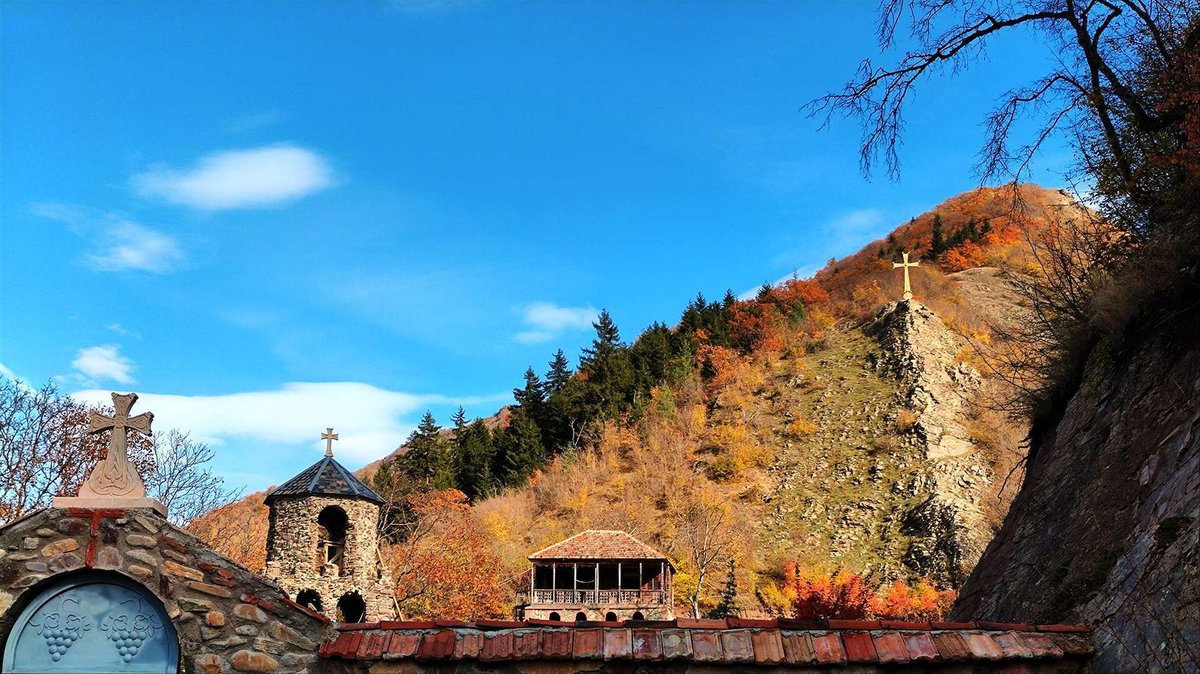
Sarkineti Monastery is a working community of monks in the village of Sarkineti, Kareli Municipality, in the valley of the Dzama river. Its full name is the Monastery of St Shio of Mghvime, the Great Wonderworker.
It differs from the other houses of the valley in a fundamental way, and the difference is not age but its opposite: the main church here was cut into the rock not a thousand years ago but in 2008.
⛰️ A Cave Church Not Yet Twenty Years Old
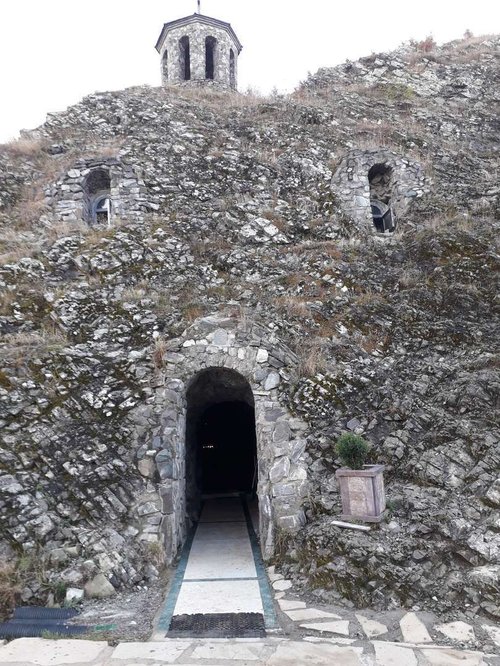
When people in Georgia speak of a church cut into rock, they usually mean Vardzia, David Gareja or Uplistsikhe, which is to say the Middle Ages. Sarkineti is the same thing, made within living memory.
In 2008, with the blessing of Metropolitan Ioba, the decision was taken to cut a church directly into the rock face. The work was carried out with modern equipment.
The reasoning is straightforward and was set out by those who built it: Georgians had a centuries-old tradition of cutting churches into rock, and the examples are many. So the form was not chosen for exotic effect but as the continuation of a practice broken off centuries ago.
For a visitor this produces an unusual sensation. The technique is ancient and the stone is real, but the tool marks are fresh, and you can see exactly how such churches came about.
🏛️ What Stood Here Before the Monastery
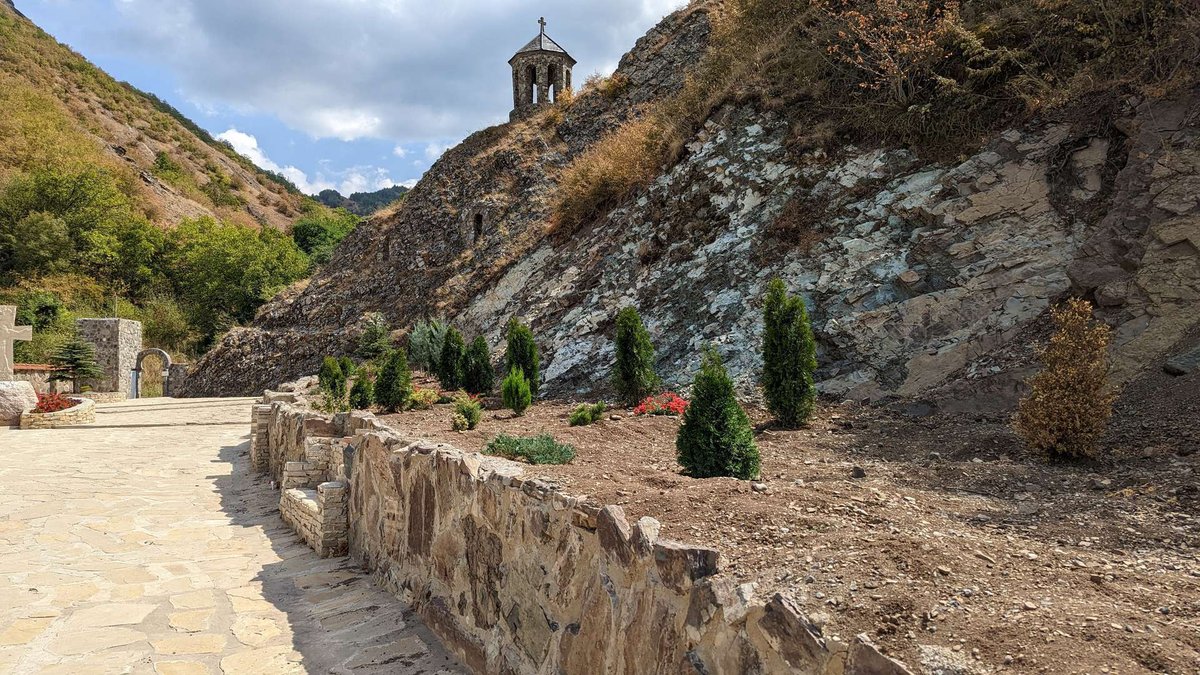
The history of the site is a thousand years older than the community itself.
In the tenth century this was the seat of Adarnase, prince of Dzama. He took part in the struggle to unite the Georgian principalities, the process that eventually produced a single Georgian kingdom.
The Dzama valley as a whole held a strategic position: routes ran through it linking Shida Kartli with the southern provinces, and it was densely built up and fortified in consequence. Strongholds stood along this valley in a chain, with monasteries between them.
So the rock into which a church has now been cut does not stand in an empty place, but where a local ruler sat a thousand years ago.
🙏 The Dedication and Who Lives Here
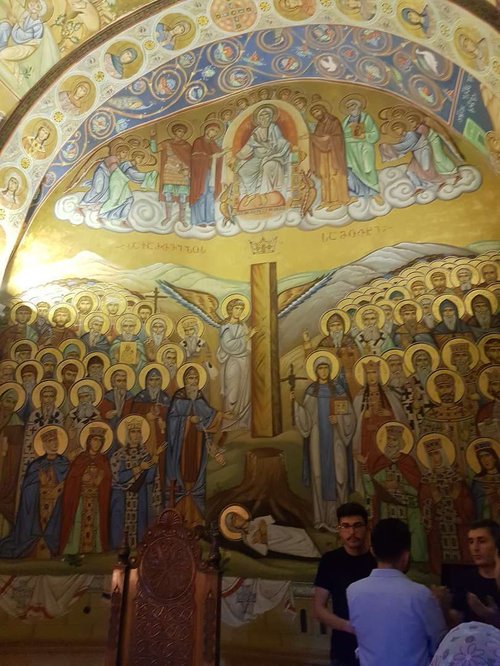
The house bears the name of St Shio of Mghvime, one of the thirteen Assyrian Fathers who came to Georgia in the sixth century. Shio is known precisely for his life in a cave: he lived as an ascetic in one he dug himself, and the monastery he founded, Shiomghvime, stands not far from Mtskheta.
The dedication is exactly chosen. A rock-cut church named for a saint who lived in a cave is not a coincidence but a deliberate link.
The monastery also serves as the residence of Metropolitan Ioba (Akiashvili), who has headed the Urbnisi and Ruisi diocese since 21 October 1996. The revival of church life across this whole area is associated with him: the convent at Ortubani was founded with his blessing, and he consecrated the church at Itria in 1997.
Because of its status as a residence, visiting here is more tightly regulated than at an ordinary village house. Worth knowing in advance.
A note on a confusion visible in the search data: the monastery is looked for both as a house of monks and as a convent. Changes of community did occur in the Dzama valley, and for one house the reason is stated outright, the conditions being hard for the sisters. Whether that applies to Sarkineti could not be confirmed from available sources. Today it is a house of monks.
🗺️ The Dzama Valley Around the Monastery
Sarkineti is one point in a valley that holds dozens. Coming here for it alone makes less sense than seeing it in context.
| Site | What it is | Why it matters |
|---|---|---|
| Mzovreti | A hilltop fortress and a house of monks | A tenth-century siege, three names for one place |
| Ortubani | A convent inside a darbazi fortress | A Tsitsishvili residence of the 17th-18th centuries |
| Shatberdi | The convent of St Catherine | Another working house in the valley |
| Kozipa | A house of monks | Associated with a tradition about a tree in the yard |
| Bateti | A landslide lake | The natural stop higher up the valley |
🚗 Getting There
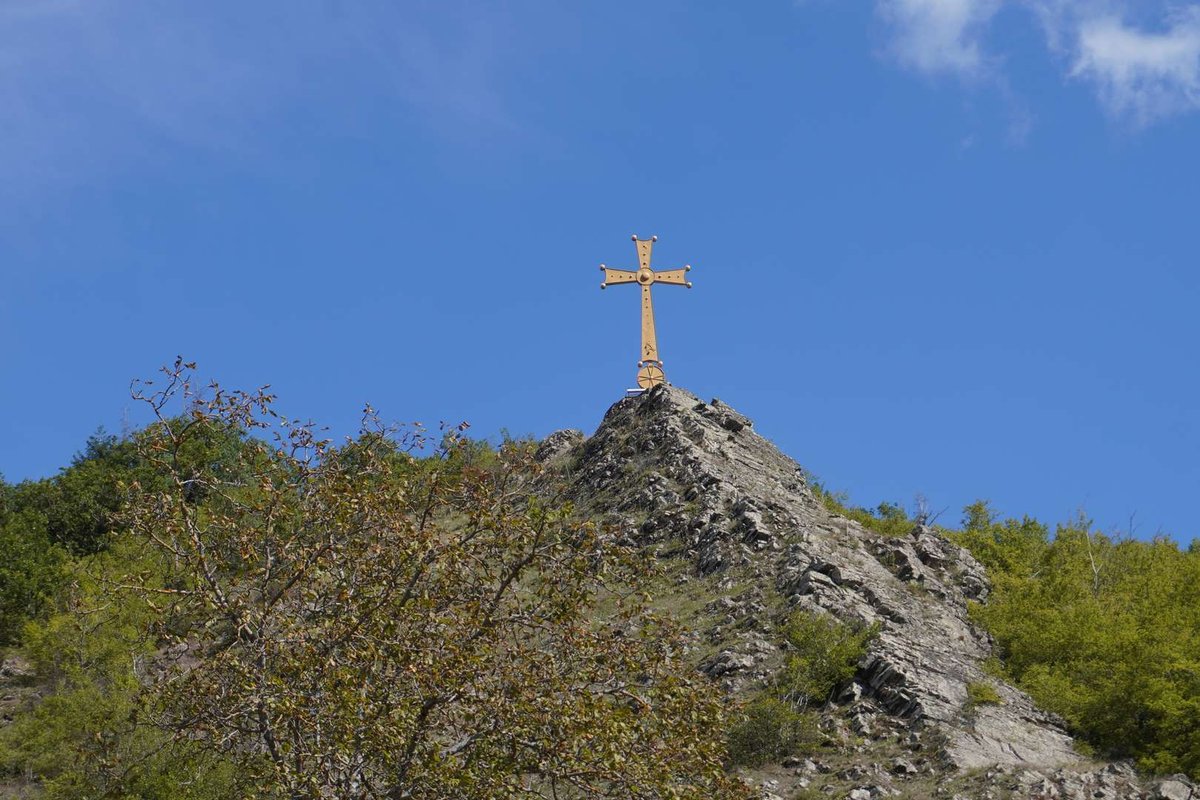
Your reference town is Kareli, on the Tbilisi to Gori to Khashuri highway. From there the road runs south, up the Dzama valley.
Public transport into the valley is irregular, and the question of whether the valley's monasteries can be toured by ordinary marshrutka has been debated on local forums for years without a clear answer. A car or a taxi from Kareli, with the return agreed in advance, is the practical option.
The village of Elbakiantkari, next to which the complex stands, serves as a landmark. That is why the monastery is often searched for together with that name.
After rain the road through the valley gets heavy, so check the surface locally.
🙏 Before You Visit
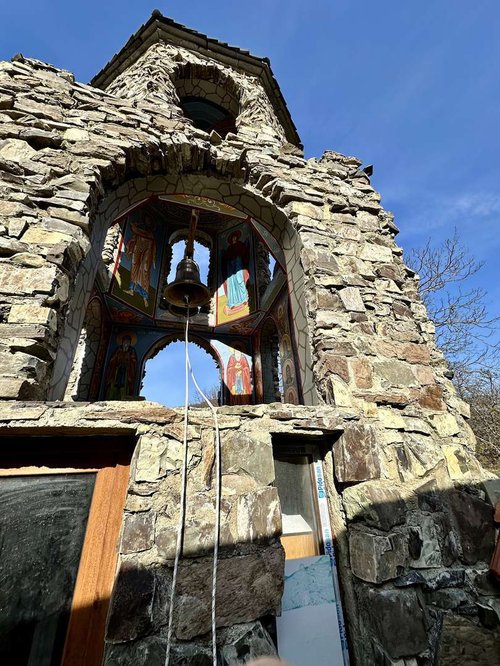
Everything here is stricter than at an ordinary house, and the reason is not the character of the brethren but the fact that this is the ruling bishop's residence.
Dress covered, with a headscarf for women. Photography by agreement, and ask at the entrance rather than once the camera is already out. Check the visiting schedule in advance, particularly if you are travelling any distance or during a fast.
And a general rule for the whole valley: this is not a museum zone but a place where monastic communities live. Loud groups are out of place.
🧭 Where to Stay and What Is Nearby
There is no accommodation in the valley, so Kareli or Gori serve as a base.
Been to Sarkineti? Leave a review on Madloba: tell us whether you got inside the rock church, what condition the road was in, and how many of the valley's sites you managed in a day.
Information is current as of August 2026. Visiting arrangements at a working monastery and road conditions in the valley both change, so check locally before you travel.
❓ FAQ
💬 In Georgia, Shida Kartli region, Kareli Municipality, in the village of Sarkineti in the Dzama river valley. The neighbouring village of Elbakiantkari serves as a landmark, which is why the monastery is often searched for alongside that name.
💬 Yes, and that is its defining feature. The church was cut directly into the rock face in 2008 with the blessing of Metropolitan Ioba, using modern equipment. So this is not a medieval cave complex but the continuation of an old Georgian tradition in our own time
💬 St Shio of Mghvime, the Great Wonderworker, one of the thirteen Assyrian Fathers of the sixth century. He is known for his life in a cave, so dedicating a rock-cut church to him was a deliberate choice.
💬 In the tenth century this was the seat of Adarnase, prince of Dzama, who took part in the struggle to unite the Georgian principalities.
💬 A house of monks. Searches for a Sarkineti convent do occur, and changes of community did happen in the Dzama valley, but no confirmation could be found for this house specifically.
💬 Metropolitan Ioba (Akiashvili), head of the Urbnisi and Ruisi diocese since 21 October 1996. Sarkineti serves as his residence. The revival of church life across the area is associated with him, including the convent at Ortubani and the consecration of the church at Itria.
💬 Stricter than usual, since this is the ruling bishop's residence. Covered clothing, a headscarf for women, photography by agreement. Check the schedule in advance, particularly during a fast.
💬 South from Kareli, up the Dzama valley. Public transport is irregular, so a car or a taxi from Kareli is the practical option. The road gets heavy after rain.
💬 Mzovreti with its hilltop fortress, the convent at Ortubani inside a darbazi fortress, Shatberdi, Kozipa, and higher up the valley the landslide lake of Bateti. Three or four sites in a day is realistic with a car.

2 comments
Log in to leave a comment