




🏰 The Mzovreti Darbazi Fortress at Ortubani: How a Tsitsishvili Residence Became a Nunnery
🏰 Ortubani Monastery: The Essentials
A working nunnery in the village of Ortubani, Kareli Municipality, housed inside the Mzovreti darbazi fortress. The seventeenth- and eighteenth-century complex went up when the Panaskerteli-Tsitsishvili family moved the seat of its domain here. Today a community of nuns lives within the walls of what was once a princely residence.
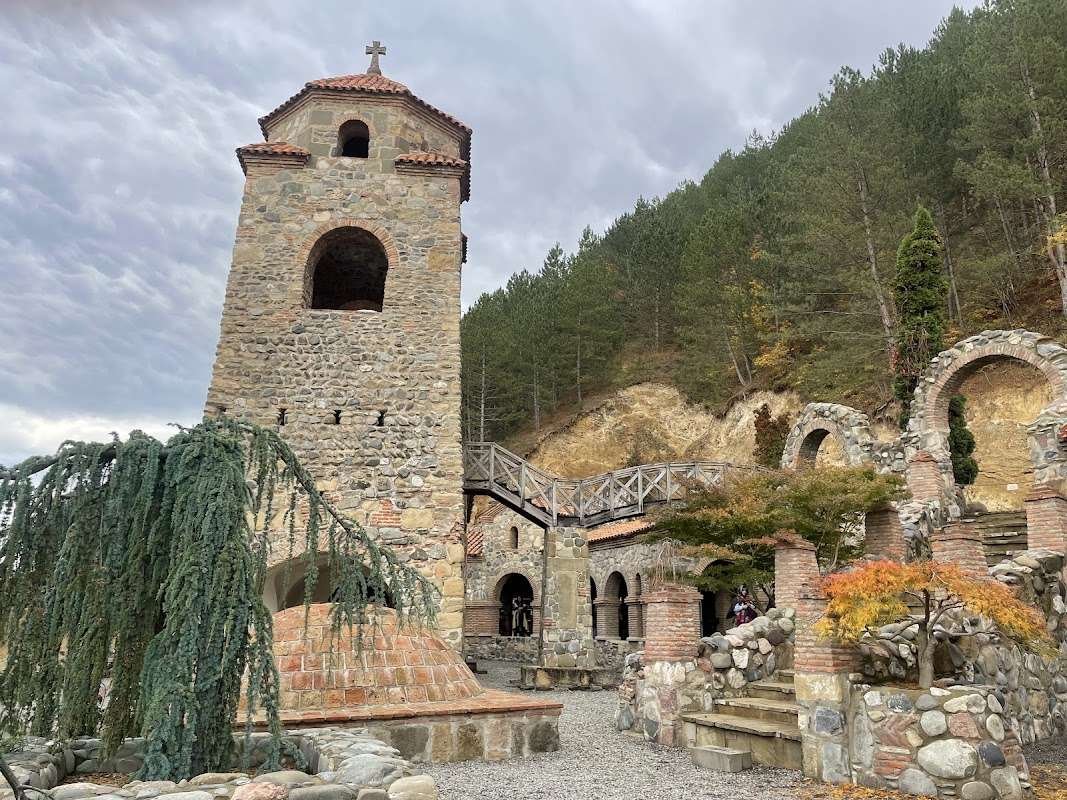
Ortubani Nunnery is a working convent in Kareli Municipality, Shida Kartli, occupying the Mzovreti darbazi fortress in the village of the same name. A darbazi is a type of Georgian dwelling; here the word covers the whole fortified compound, with its wall, church and tower.
The place confuses almost everyone searching for it online, because half a kilometre away sits another Mzovreti: a hilltop fortress with a men's monastery. Start by telling them apart, and the history follows.
⚠️ Two Mzovretis: Why They Keep Getting Mixed Up
Both sites carry the same name, stand in the same valley and belong to the same village. After that the differences begin.
The hilltop fortress. A medieval stronghold with a tower and enclosing wall on high ground above the village. A men's monastery operates there. We cover that site separately in Mzovreti and the Dzama Fortress, which also takes in the three-month siege of the tenth century.
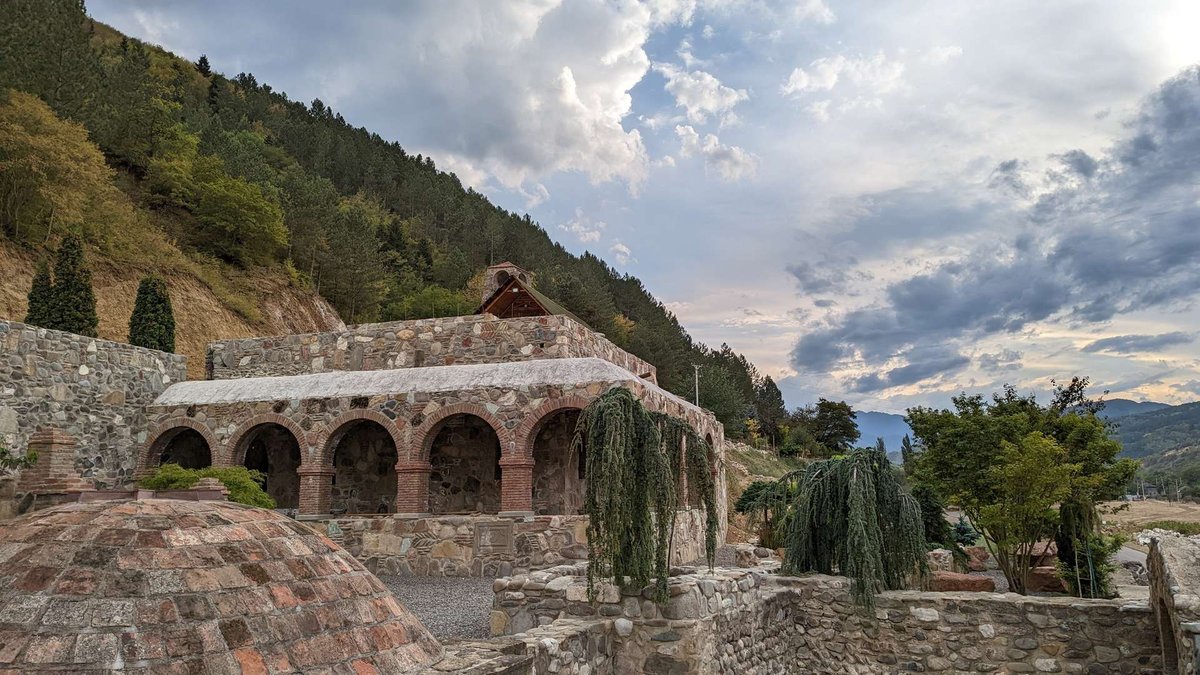
The darbazi fortress in the village itself. A seventeenth- and eighteenth-century complex, built in another era and for another reason. This is where the women's community lives, and it is the subject of this piece.
Less than a kilometre separates them, but six or seven centuries lie between. If a source mentions the seventeenth century, the Tsitsishvili family and a nunnery, it means the second site.
🏛️ How a Princely Seat Ended Up in a Village
To understand why a fortified compound on this scale sits in a small village, look at who owned it.
In the fourteenth century the land belonged to Gamrekeli, son of Kakha, and his heirs. In the sixteenth and seventeenth centuries the Panaskerteli-Tsitsishvili family arrived and moved their residence here from Samtsevrisi. Mzovreti became the political centre of their satavado, their princely domain.
That move is what produced the present complex. The darbazi was not built as a monastery but as the seat of an influential family, and one capable of holding a defence.
The story then runs downhill. From the eighteenth century the town's status fell, and documents began calling it a 'small town'. In the nineteenth century the Tsitsishvilis left, and the town ceased to exist altogether. What remained was a village, a wall and a church.
Two figures of note in Georgian culture are tied to the family: Zaza Panaskerteli-Tsitsishvili, author of the medical compendium Karabadini, and Nodar Tsitsishvili, one of the interpolators of The Knight in the Panther's Skin. Their work connects to Mzovreti as a centre of learning.
⛪ What Stands Behind the Wall
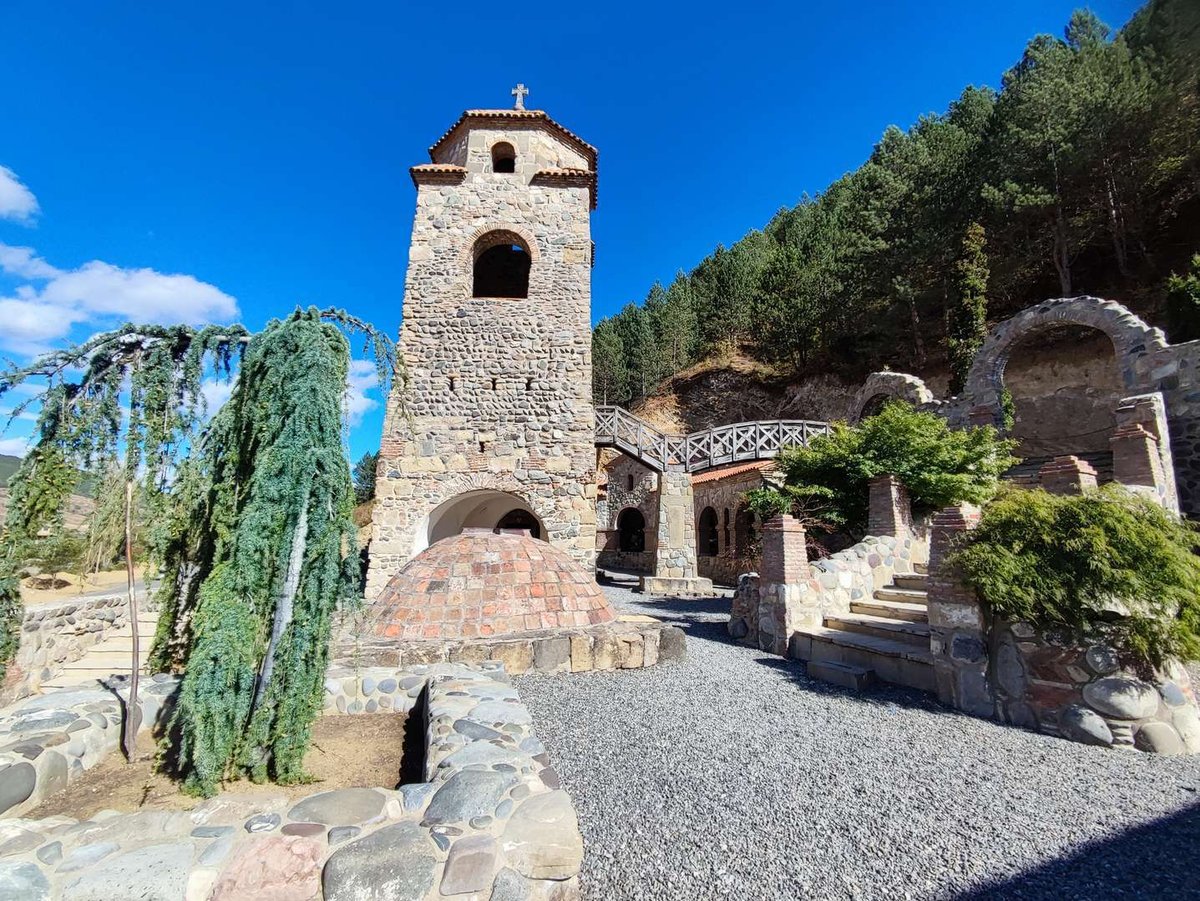
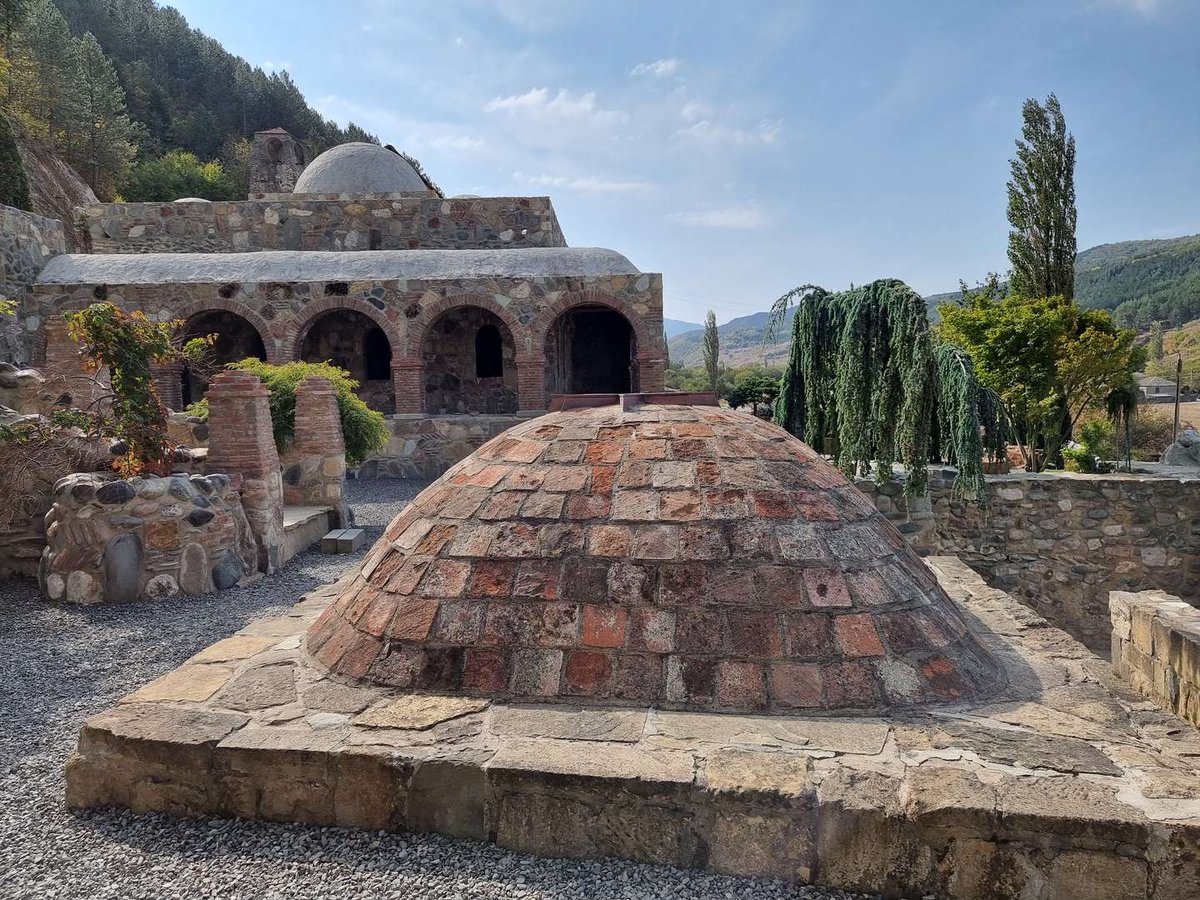
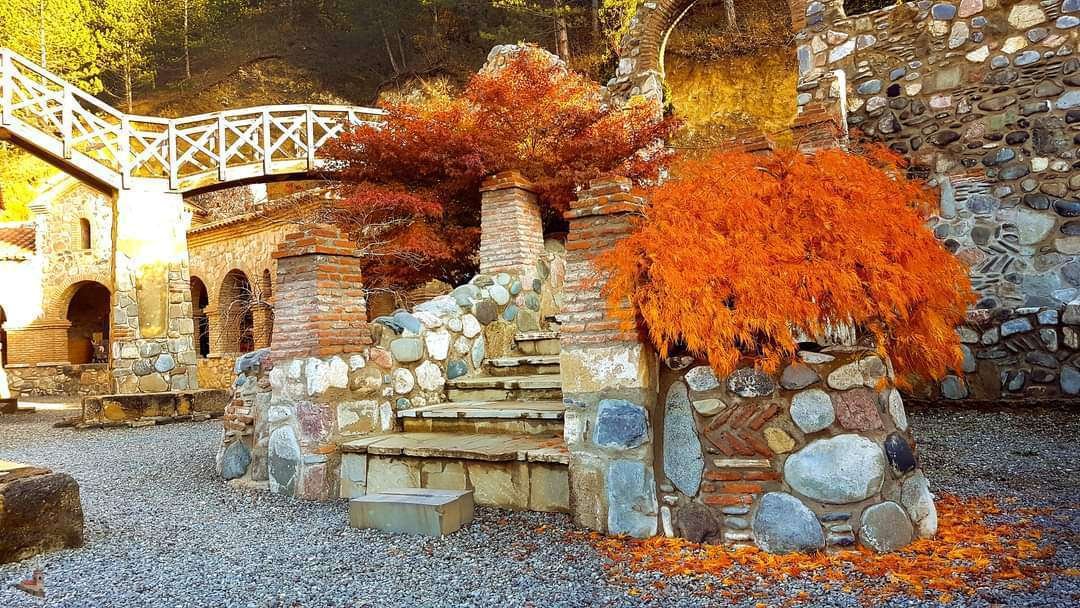
The darbazi occupies a long stretch at the foot of the slope and was originally walled around its full perimeter. The northern section survives intact today, the eastern and western sides only in part.
The church. A hall-type church built of rough-hewn stone. The sanctuary is closed off by a massive stone screen, a notable feature for a village church. The building is dated to the seventeenth century.
The bell tower. Attached to the west wall of the church. Sources diverge here: some describe a three-storey addition from the second half of the eighteenth century, others a seven-storey bell tower. Visitors more often describe a tall tower, but no confirmed figure exists.
The dedication. Most sources name it a church of the Nativity of the Virgin. A Dormition variant also appears. Worth keeping in mind if you compare guidebooks.
A residential building and the remains of outbuildings complete the compound. They make it plain that this was a residence rather than a monastery from the outset.
🌿 The Community Today
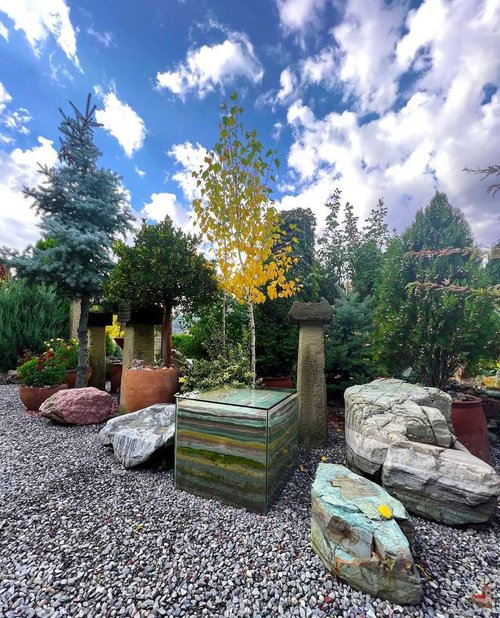
The convent is active, founded with the blessing of Metropolitan Ioba (Akiashvili), who heads the diocese covering the Dzama valley.
What Georgian coverage of the community mentions first is this: the abbess turned the grounds into a flowering garden. For a site where an abandoned princely house stood for centuries, that is the significant change of recent years, and it registers from the gate.
Services follow the typikon, as in the other houses of the valley. The Dzama gorge is dense with monasteries, and locals sometimes compare it to Athos for the number of communities per kilometre.
Visitors should expect the usual monastic conventions: covered clothing, a headscarf for women, photography by agreement. Check the visiting schedule in advance, particularly during fasts.
🚗 Getting to Ortubani
Your reference town is Kareli, on the Tbilisi to Gori to Khashuri highway. From there it is about fourteen kilometres up the Dzama valley. The village sits on the right bank of the river, in the northern foothills of the Trialeti range, at roughly 850 metres.
Ortubani itself is tiny: the 2014 census recorded 72 residents.
The convent has the advantage of standing in the village itself, right by the road, with no climb involved. That sets it apart from the hilltop fortress, where you walk uphill.
Public transport into the valley is all but absent. You need your own car or an arrangement with locals in Kareli. The road gets heavy after rain, so check the surface in advance.
🧭 Where to Stay and What Is Nearby
Gori or Kareli make sense for the night: there is virtually no accommodation in the valley itself.
Been to Ortubani? Leave a review on Madloba: tell us whether you got inside the church, what condition the road was in, and whether the convent is worth combining with the climb to the hilltop fortress.
Information is current as of July 2026. Visiting arrangements at a working convent and road conditions in the valley both change, so check before you travel.
❓ FAQ
💬 In Georgia, Shida Kartli, Kareli Municipality, in the village of Ortubani in the Dzama river valley. About fourteen kilometres from the town of Kareli, on the right bank of the river, at roughly 850 metres.
💬 They are separate sites half a kilometre apart. On the hill above the village stands a medieval fortress with a men's monastery. In the village itself is a seventeenth- and eighteenth-century darbazi fortress with the nunnery. All they share is the name Mzovreti, inherited from the historic town.
💬 A fortified residential compound. This one appeared when the Panaskerteli-Tsitsishvili family moved their residence here from Samtsevrisi and made Mzovreti the political centre of their domain. It became a monastery considerably later.
💬 Most sources name it a church of the Nativity of the Virgin, though a Dormition variant appears too. It is a hall-type building of rough-hewn stone, with the sanctuary closed off by a massive stone screen.
💬 It is attached to the west wall of the church. Sources differ: some describe a three-storey addition from the second half of the eighteenth century, others a seven-storey tower. No single confirmed figure exists.
💬 It is small: the 2014 census recorded 72 residents. It stands on the right bank of the Dzama in the northern foothills of the Trialeti range. A town once stood here, downgraded to a 'small town' in the eighteenth century and gone by the nineteenth.
💬 A princely family that moved the seat of its domain here in the sixteenth and seventeenth centuries. Associated with them are Zaza Panaskerteli-Tsitsishvili, author of the medical compendium Karabadini, and Nodar Tsitsishvili, one of the interpolators of The Knight in the Panther's Skin.
💬 The convent is active, so the usual monastic conventions apply: covered clothing, a headscarf for women, photography by agreement. Access can change during fasts and services, so check in advance.
💬 About fourteen kilometres from Kareli up the Dzama valley. The convent stands in the village itself, by the road, with no climb needed, unlike the hilltop fortress. Public transport is scarce, so a car or an arrangement with locals is required.
💬 The fortress and men's monastery of Mzovreti on the hill, Shatberdi Monastery, the house at Khondzi, and further up the valley the landslide lake of Bateti. The valley is dense with monuments, so plan a day rather than a run to one point.

1 comment
Log in to leave a comment