


📖 Monument to Ilia Chavchavadze in Kutaisi: the father who became a saint
📋 What You Need to Know Before Visiting
| 📍 Location | Kutaisi |
| 🕐 Access | Open 24/7, free of charge |
| ✒️ Who Is Depicted | Ilia Chavchavadze (1837–1907), writer, publicist, and public figure |
| 🕊️ Canonization | Canonized by the Georgian Orthodox Church in 1987 as Saint Righteous Ilia |
| 🎓 Connection to Kutaisi | In 1864, he was assigned here as an official responsible for implementing the peasant reform |
🧭 What This Article Is About
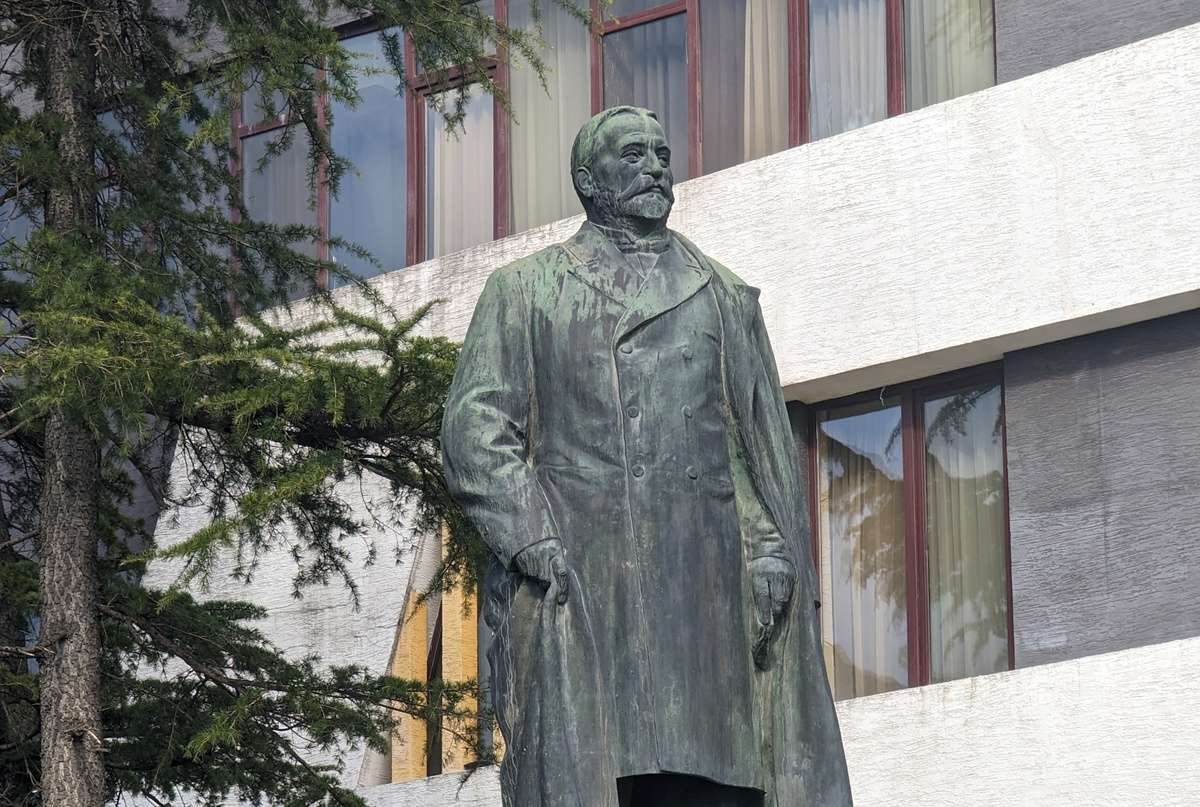
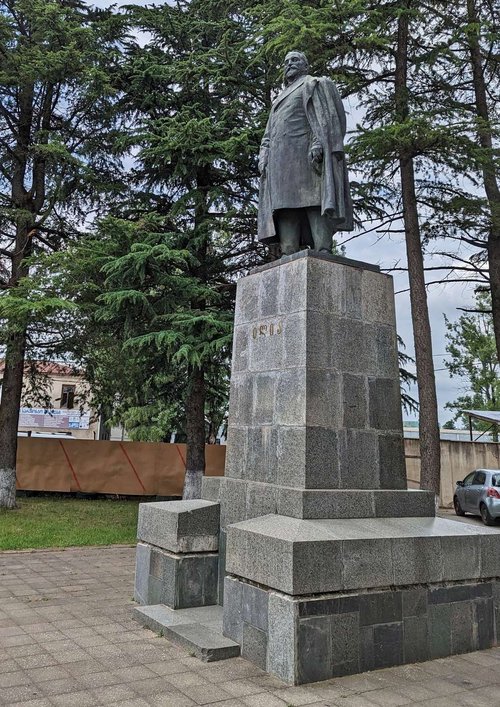
In Kutaisi stands a monument to Ilia Chavchavadze-a writer, publicist, and public figure who is revered in Georgia almost as a national symbol and was canonized by the Georgian Orthodox Church. This article is for anyone who has seen the monument and wants to understand who he was and why he is remembered in this way.
📚 Quick Facts
Ilia Chavchavadze is one of the most revered figures in Georgian history: a 19th-century writer, publicist, translator, and public figure, known by his contemporaries as the "uncrowned king" and by his descendants as the "father of the fatherland." This isn't some tourist brochure exaggeration: Chavchavadze practically championed the very foundations of a state - reforms, education, literature, and the protection of the Georgian language - but he ended his life tragically, at the hands of assassins. In 1987, the Georgian Orthodox Church canonized him.
🎓 Kutaisi trace in biography
Ilia Chavchavadze was born on October 27 (November 8, new style), 1837, in the Kakhetian village of Kvareli, to a princely family. He received his law degree from St. Petersburg University from 1857 to 1861, where he led a circle of Georgian students fascinated by the revolutionary democratic ideas of his time. It was during this period that his social and literary views were formed.
He became connected to Kutaisi through his specific government service: in 1864, when the peasant reform was being implemented in the Caucasus Viceroyalty, Chavchavadze was sent to Kutaisi Governorate as a special official to sort out relations between landowners and peasants after the abolition of serfdom. That same year, he became a peace mediator for the Dusheti District, and ten years later, a justice of the peace there. Later, he headed the Society for the Spread of Literacy Among the Georgian Population – essentially doing the same thing that education ministries do today.
💡 Editor's Tip
If the monument inspires you to learn more, visit the Chavchavadze House Museums in Kvareli (his ancestral estate) or Tbilisi. They offer a detailed look at his everyday life, going beyond the political and literary achievements most often highlighted in history books.
✍️ Writer, translator, editor
Chavchavadze translated Pushkin, Lermontov, Turgenev, Heine, and Goethe into Georgian, and, together with Prince Ivan Machabeli, translated Shakespeare's King Lear into Georgian. He also edited the literary journal Iveria, which published works by leading Georgian authors of the era.
🕯️"Precisely because you are Ilya"
Chavchavadze advocated the abolition of the death penalty in Russia, fought for broad agrarian and social reforms, the independence of Georgia, and the restoration of the autocephaly of the Georgian Church. This stance, including his opposition to the growing radical political movements, made him a target: a smear campaign against him in the Bolshevik newspaper Mogzauri failed, and, according to contemporaries, his opponents sentenced him to death.
On August 30, 1907, Ilia Chavchavadze and his wife Olga were traveling in an open carriage from Tbilisi to Saguramo. Near the village of Tsitsamuri, the carriage was stopped by an armed gang led by Gigla Berbicashvili. According to testimony, Chavchavadze stood up and said, "I'm Ilya, don't shoot," but the response was, "It's precisely because you're Ilya that we must shoot." He is buried in the Mtatsminda Pantheon in Tbilisi. The murderers were later tried and executed, despite Chavchavadze's widow personally petitioning for their pardon—a gesture remarkably consistent with her husband's convictions.
📍 Полезные места рядом


ℹ️ Dates are based on available biographical sources; birth dates are given in both the Old and New Styles. An official description of the artistic concept of the Kutaisi monument (sculptor, year of installation) could not be found in open sources at the time of publication. If such information is available, it should be clarified and added.
💬 Tell Us
Did you know Ilia Chavchavadze's story before seeing his monument? Share in the comments which part of his life surprised you the most.
📝 Let's sum it up
The monument in Kutaisi is a reason to remember not an abstract "literary classic," but a man whose real work - reforms, education, translation, journalism - still shapes how Georgia sees itself.
🧡 Read More About Kutaisi
- ✒️ Galaktion Tabidze Monument in Kutaisi: The Poet and His Muse
- 🎶 The Ishkhneli Sisters in Kutaisi: Voices Known Across the Country
- 🗿 David the Builder Monument in Kutaisi: History and Significance
💾 Save this article so you can come back to it before your trip to Kutaisi.
❓ Frequently searched questions about the Ilia Chavchavadze monument
💬 Georgian writer, publicist, translator, and public figure of the 19th century, called the "Father of the Fatherland" and the "Uncrowned King of Georgia." He was canonized by the Georgian Orthodox Church in 1987.
💬 In 1864, he was sent to the Kutaisi Governorate as a special official to sort out relations between landowners and peasants after the abolition of serfdom.
💬 On August 30, 1907, he was assassinated by an armed group on the road from Tbilisi to Saguramo, presumably for political reasons, following a harassment campaign in a Bolshevik newspaper.
💬 Yes. In 1895–1896, his magazine "Iveria" published seven poems by a seminarian writing under the pseudonym "Soso" - the future Joseph Stalin.
💬 In 1987, the Georgian Orthodox Church canonized him as Saint Ilia in recognition of his contribution to the defense of Georgian culture, language, and the church.

1 comment
Log in to leave a comment
然而,阅读他的悲剧故事,让我心中难免会浮现出一些疑问。历史真的是那么简单吗?是光辉的理想还是神秘的命运在操控这一切?我想知道,当地人对这个雕像和查夫查瓦泽的看法是什么,他们是否感受到他留下的那份精神遗产?