




🎶 The Ishkhneli Sisters in Kutaisi: Voices Known Throughout the Country
📋 What You Need to Know Before Your Visit
| 📍 Location | Central Park, Kutaisi |
| 🕐 Access | Open 24/7, as it is an outdoor sculpture in the park |
| 💰 Admission | Free |
| 📅 Installed | in 2006 |
| 🎼 Depicts | Singing women with traditional Georgian musical instruments |
🧭 What This Article Is About
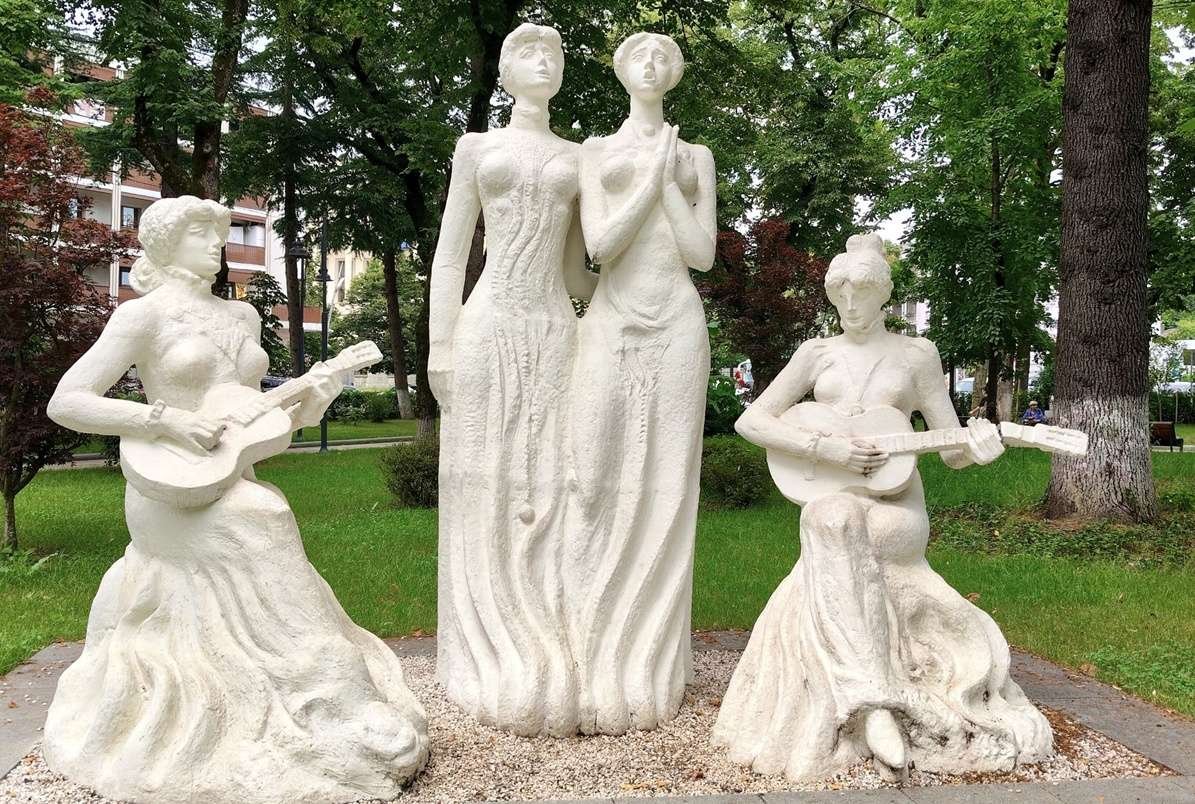
In Kutaisi's Central Park stands a sculpture dedicated to the Ishkhneli Sisters, a vocal quartet that made Georgian urban folk songs famous throughout the Soviet Union during the 20th century. This article is for anyone who has seen the monument and wants to learn who these women were and why they hold such an important place in Kutaisi's cultural history.
📘 Who are the Ishkhneli sisters
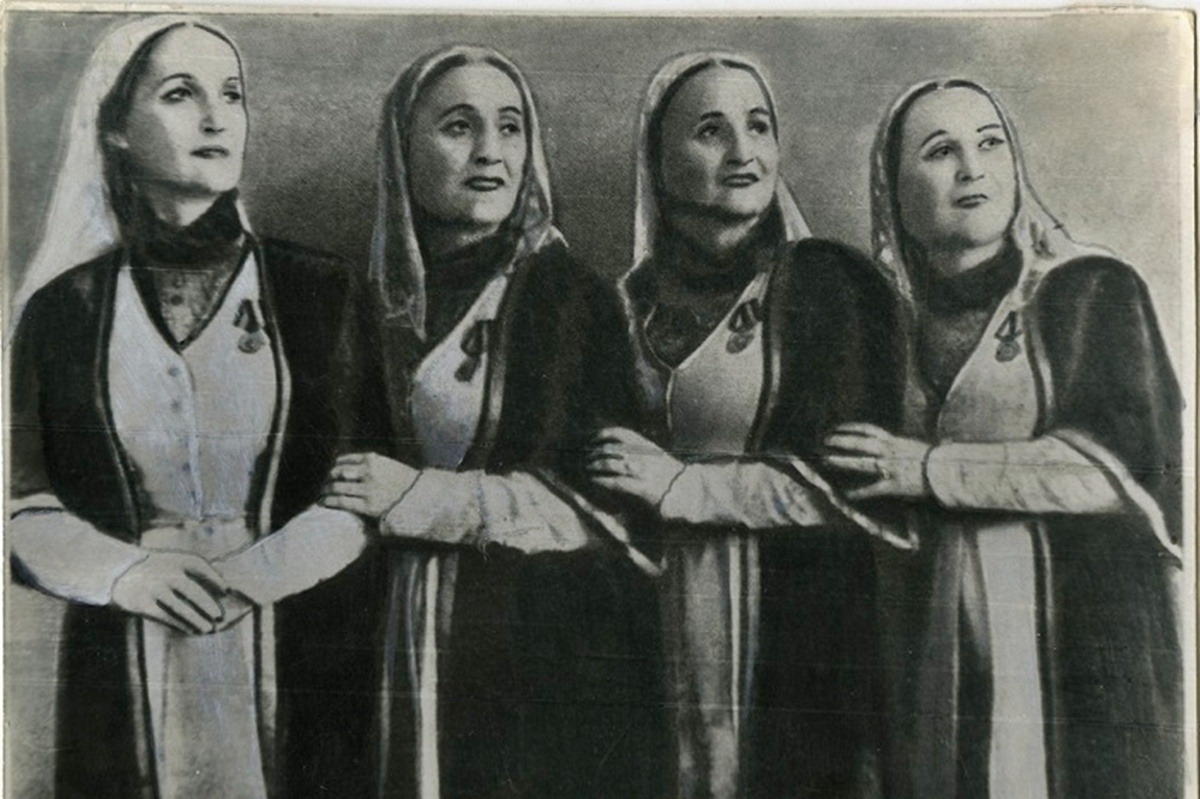
The Ishkhneli sisters are a real family from Kutaisi, four (actually five) women who became some of the most recognizable performers of Georgian urban songs in the 20th century. It was through their performances that the entire country first heard "Suliko"—a song based on the poetry of Akaki Tsereteli, which became one of the most famous Georgian musical symbols outside of Georgia. Born in Kutaisi, not far from Bagrati Cathedral, they founded the quartet genre of Georgian urban romance, and today streets and monuments are named after them in Kutaisi and Tbilisi.

🎼 History: From Grammar School to All-Union Glory
The Ishkhneli sisters were born in the historic part of Kutaisi, near the Bagrati Cathedral, to Giorgi Ishkhneli. At first, seven members of the family sang and performed amateurly—parents and children performing various Georgian urban songs at home, for themselves.
Their first public performance occurred in childhood, at the Kutaisi gymnasium. According to family legend, the performance itself was organized after the wife of politician Noe Zhordania was invited to sing at a charity event at the Kutaisi theater in 1909. The children were so stage frightened that they deliberately dimmed the lights before going on stage, and Shalva Dadiani led them onto the stage by the hand. The people of Kutaisi enjoyed the performance so much that a commemorative plaque was later erected at the site.
Later, the girls, then still high school students, were invited to perform at an anniversary evening at the theater by Galaktion Tabidze himself, the greatest Georgian poet of the 20th century. The problem was that female students at the school were forbidden from performing on stage, and female ensembles simply didn't exist at the time—there were only male choirs. The parents promised the school administration that they would no longer allow their children to perform on stage, and for a time, they kept their word.
The Ishkhneli Sisters' ensemble was officially formed only in 1941, and that same year, the Georgian Philharmonic invited them to perform in concerts. From that moment on, the sisters' career became not just a family hobby, but a profession.
💡 Editor's Tip
Before visiting the monument, take a few minutes to listen to Suliko performed by the Ishkhneli Sisters—it is easy to find on YouTube. Many visitors take photos beside the sculpture without realizing that the women depicted are not symbolic figures but real performers whose distinctive voices can still be heard today.
🎻 Who's who in the quartet
The core lineup of the vocal quartet was composed of Nino (1898–1967), Tamara (1900–1994), Zinaida (1902–1968), and Alexandra (1904–1955) Ishkhneli. After Alexandra's death in 1955, she was succeeded in the quartet by her older sister, Mariam (1889–1973).
Tamara Ishkhneli remained prominent for the longest time—she led the ensemble for many years, performed solo, sang both Georgian and Russian romances, and wrote her own songs. Tamara died on October 23, 1994, and is buried in the Didube Pantheon of Writers and Public Figures in Tbilisi. In 1949, she was awarded the title of Honored Artist of the Georgian SSR. Her granddaughter is the famous Georgian singer, composer and artist Manana Menabde.
🖼️ What does the sculpture depict
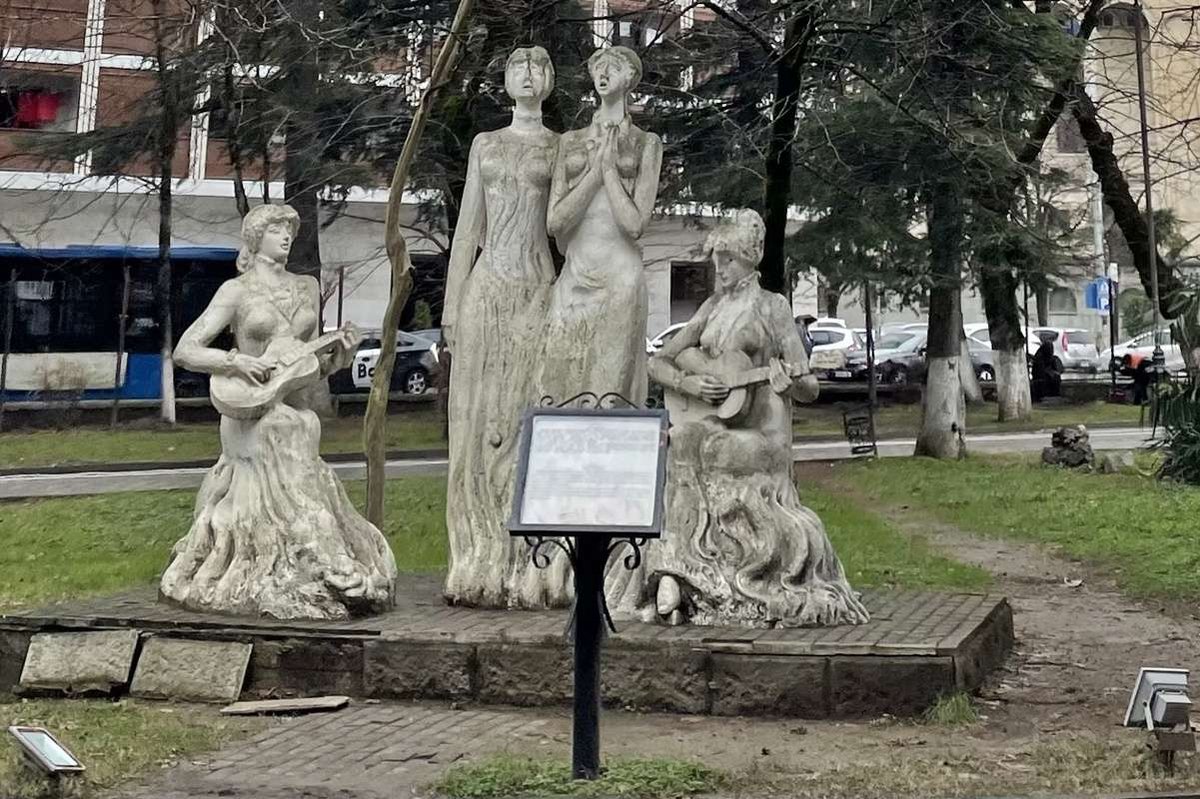
The Ishkhneli Sisters Monument was erected in Kutaisi's Central Park in 2006. The composition depicts singing girls holding folk musical instruments—a composite image of a quartet, rather than a portrait of the individual sisters. It is one of the few sculptures in Kutaisi dedicated not to a historical figure or saint, but to the city's musical heritage.
👀 Visitor impressions
Reviews of the sculpture are generally cautiously positive: visitors note the calm and harmonious atmosphere of the park surrounding the monument, and the composition itself is described as "a work that evokes emotion and highlights the region's cultural heritage." Please note: some reviews of the card are confused with a similar monument to the sisters in Tbilisi—both cities honor the sisters with separate sculptures, and this is not an error, but a fact: monuments exist in both cities.
🌟 Near this place


ℹ️ The sisters' years of life and details of their early biographies differ slightly in different sources (for example, there are two versions of Tamara's year of birth: 1896 and 1900). This article uses dates from the Georgian Wikipedia as the most detailed source; the story about Stalin and "Suliko" is an oral tradition, not a documented fact.
💬 Tell Us
Had you heard Suliko performed by the Ishkhneli Sisters before reading this article? Share your thoughts on their performance in the comments.
❤️ What is memorable about this place
The sculpture in the park is just the entry point into a story that began with seven singing relatives at home in Kutaisi and ended with a song recognized throughout the country, and then with monuments in two Georgian cities.
🧡 Read More About Kutaisi
- 🗿 David the Builder Monument in Kutaisi: History and Significance
- 🗿 Vladimir Mayakovsky Monument in Kutaisi: The Poet Who Grew Up in Georgia
- ⛲ Colchis Fountain in Kutaisi: The Main Symbol of the Central Square
💾 Save this article so you can come back to it before your trip to Kutaisi.
❓ Frequently searched questions about the Ishkhneli sisters
💬 A family of Georgian urban song performers from Kutaisi: Nino, Tamara, Zinaida, and Alexandra (later Mariam) Ishkhneli. They founded the quartet genre of Georgian urban romance and made the song "Suliko" famous throughout the Soviet Union.
💬 In Kutaisi Central Park. The sculpture was erected in 2006 and is open to the public 24/7 and free of charge.
💬 Yes, the entire Soviet Union recognized the song based on Akaki Tsereteli's lyrics as performed by the Ishkhneli sisters, although the song itself existed earlier.
💬 Tamara Ishkhneli—she remained in the public eye the longest, led an ensemble, performed solo, and wrote her own songs. Her granddaughter is the famous Georgian singer Manana Menabde.
💬 Yes, in addition to Kutaisi, there is a monument and street in their honor in Tbilisi, where they also lived and performed.

3 comments
Log in to leave a comment