

✒️ Monument to Galaktion Tabidze in Kutaisi: the poet and his muse
📋 What You Need to Know Before Visiting
| 📍 Location | Tabidze Square, Galaktion Tabidze Street, Kutaisi between the Red Bridge and Rustaveli Bridge, at the entrance to B. Gabashvili Park |
| 🕐 Access | Open 24/7, free of charge |
| ✒️ Who Is Depicted | Galaktion Tabidze (1892–1959), one of the leading Georgian poets of the 20th century |
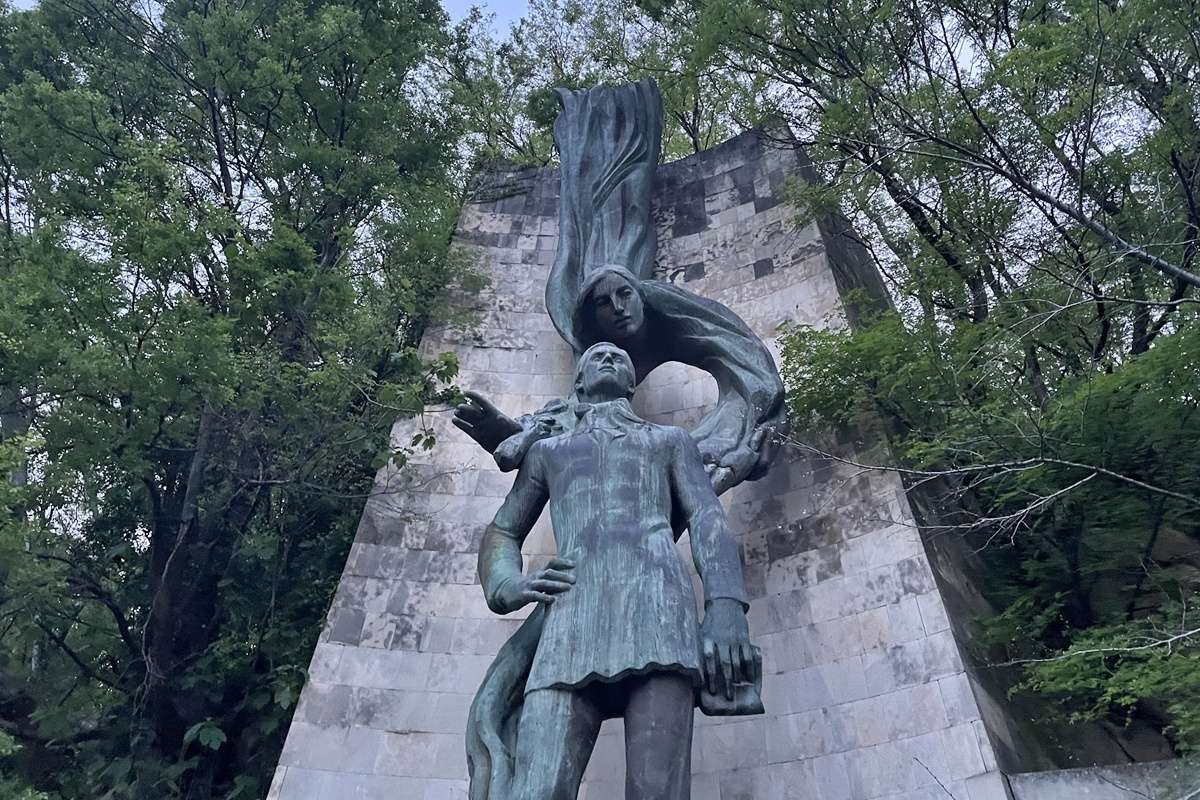
| 👑 Legend | According to a local legend, the figure towering above the poet represents his muse, Princess Mary |
| 🎓 Connection to Kutaisi | He studied here, worked for local newspaper editorial offices, and published his first collection of poems |
🧭 What This Article Is About
In the square on the street that bears his name in Kutaisi stands a monument to Galaktion Tabidze, one of the most influential Georgian poets of the 20th century, whose youth and first literary publications were closely connected with this city. This article is for anyone who has seen the monument and wants to understand who he was and why he is remembered in this way.
📘 A brief overview of the monument
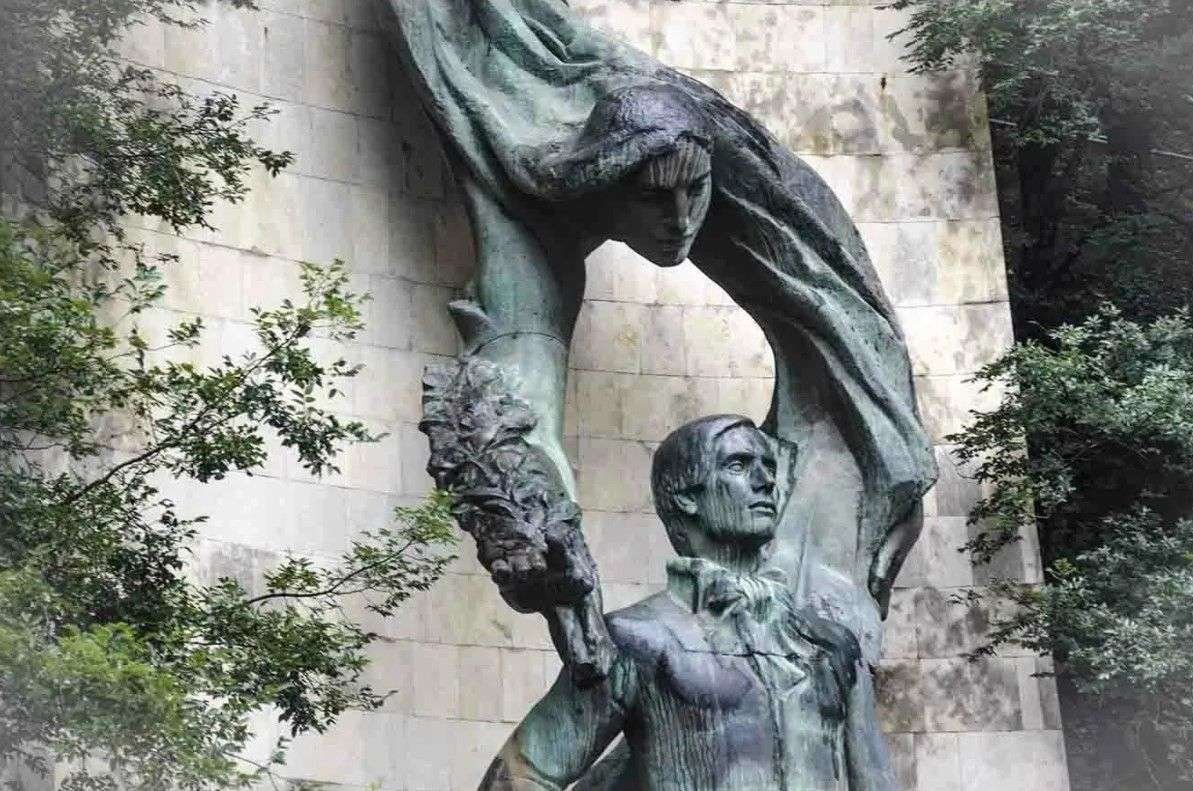
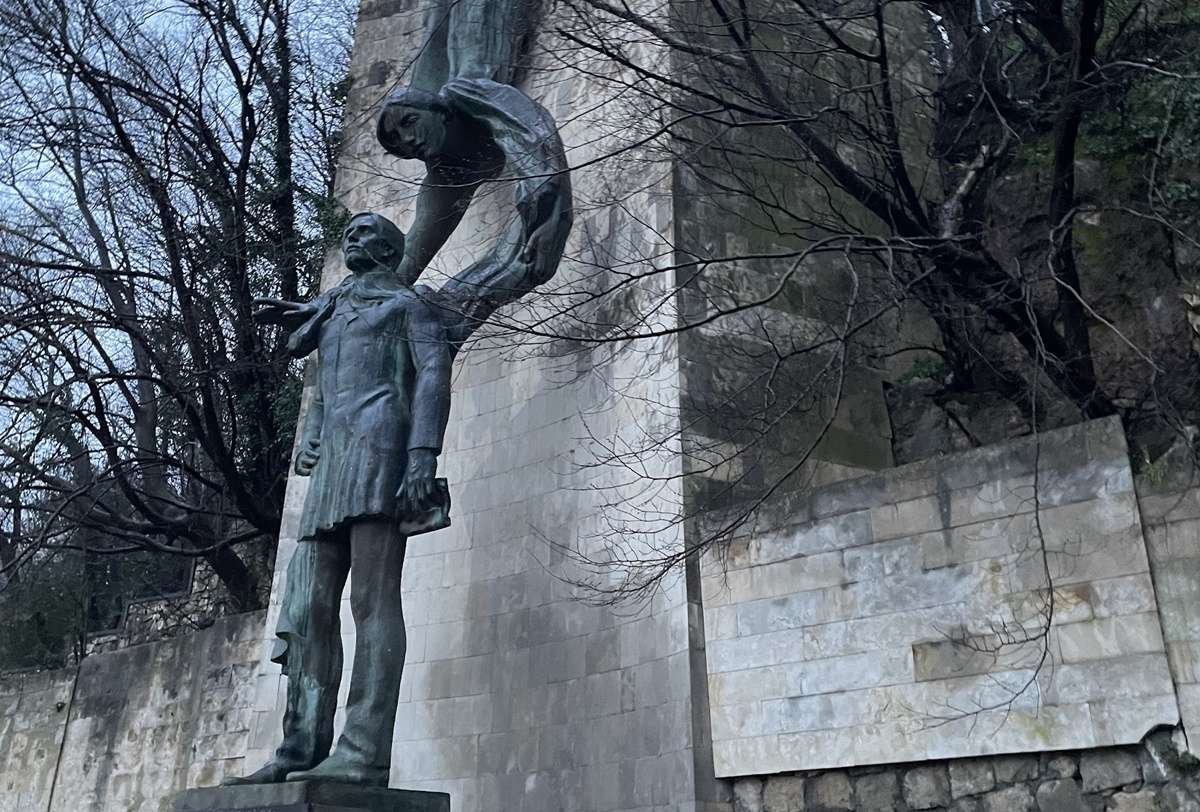
The monument to Galaktion Tabidze stands in the eponymous square in the center of Kutaisi, between the Red Bridge and the Rustaveli Bridge. It's not an abstract figure of a "poet in general," but a portrait of a specific individual, known in his lifetime as the "king of poets," whose name in Georgia requires no surname—just as Pushkin does in Russian culture. Born in a village in Imereti, Tabidze graduated from college in Kutaisi, began publishing, and published his first collection of poems. Therefore, the city's connection with the poet is not an honorary formality, but part of his true biography.
🎓 The Kutaisi youth of the future "king of poets"
Galaktion Tabidze was born on November 17 (or 18, according to other sources), 1892, in the village of Chkhvishi near Kutaisi, to the village priest and teacher Vasily Tabidze, who died at age 23, a few months before his birth. His mother, Makrine Adeishvili, according to family legend, was descended from the Shervashidze family, connected to the Abkhazian kings—the poet himself wrote that he had "Abkhazian, Gurian, and Imeretian" blood.
In 1900, the boy was sent to a theological school in Kutaisi. He later worked on the editorial boards of the local newspapers "Kolkhida," "Mnatobi," and "Tanamedrove Azri," and even then, his poetry was noticed and highly praised by renowned literary figures, including Akaki Tsereteli. In 1912, his poem “Invisible” took third place in the literary competition of the newspaper “Temi”, and in 1914, it was in Kutaisi, at the Tutku Gvaramia publishing house, that Tabidze’s first collection of poems was published.
💡 Editor's Tip
Before visiting the monument, it's worth reading—or listening to—Tabidze's poem "Mary". According to local tradition, it is connected with the figure towering above the poet in the monument's composition. With this context, the sculpture becomes more than just a monument to a poet—it tells a specific story.
💔 Princess Mary: The Muse Who Didn't Know About Her Poet
According to legend recounted by visitors to the monument, the figure above Galaktion in the Kutaisi sculpture symbolizes his eternal muse—Princess Mary Shervashidze (1890–1986), one of the most beautiful women of her era. The story behind this is true and well-documented: in 1915, three days before Mary's wedding to Prince Giorgi (Gutsa) Eristavi in Kutaisi, Tabidze wrote and sent her the poem "Mary"—today one of his most famous works.
Mary Shervashidze lived a long and truly illustrious life: in 1921, she won a beauty contest in Istanbul and later emigrated to Paris, where she became the muse of artist Savely Sorin and one of Coco Chanel's models. At the same time, she always claimed that she never knew Tabidze personally and had never even read his poetry—she didn't speak Georgian. It turns out that one of the most important poems of 20th-century Georgian poetry is dedicated to a woman who likely never knew of his existence.
🕯️Confession and a tragic ending
Tabidze experienced triumphs few poets ever achieve in their lifetime: in 1927, he was given a gala evening in Sukhumi and presented with a lyre inscribed "To Galaktion, the King of Poets." In 1933, he received the title of People's Poet of the Georgian SSR, and in 1944, he became an academician of the republic's Academy of Sciences. Meanwhile, in 1924, he had already been arrested and imprisoned in Metekhi Prison for a poem that the Soviet authorities deemed too harsh a response to the tragic events in Georgia in the early 1920s. The entire print run of the magazine containing the poem was destroyed.
Tabidze survived the Stalinist repressions of the 1930s, but in the post-Stalin era, he found himself under renewed pressure from the Soviet authorities, leading to severe depression. On March 17, 1959, the poet committed suicide in a Tbilisi clinic. He was buried in the Mtatsminda Pantheon in Tbilisi. Today, streets in various Georgian cities bear his name, and monuments to him stand in Kutaisi, Tbilisi, and Batumi.
🧭 Explore the surroundings


ℹ️ Sources give Galaktion Tabidze's date of birth differently (November 17 or 18, 1892). The legend that the sculptural composition depicts Princess Mary Shervashidze is based on the comments of visitors to the monument and has not been officially confirmed by the monument's creators.
💬 Tell Us
Had you read the poetry of Galaktion Tabidze before learning the story behind this monument? Share in the comments which of his poems speaks to you the most.
🎯 The main thing about the place
The monument in Tabidze Square is a rare example where the sculpture is not simply a generic phrase, "a poet and his work," but rather a specific story of unrequited love and the city where it began.
🧡 Read More About Kutaisi
- 🎶 The Ishkhneli Sisters in Kutaisi: The Voices the Whole Country Knew
- 🏁 The Flag of Georgia in Kutaisi: The City Where Symbols Were Raised
- 🗿 Vladimir Mayakovsky Monument in Kutaisi: The Poet Who Grew Up in Georgia
💾 Save this article so you can come back to it before your trip to Kutaisi.
❓ Voprosy, kotoryye chasto ishchut o pamyatnike Galaktionu Tabidze
💬 One of the leading Georgian poets of the 20th century, called the "king of poets" by his contemporaries. He was born in 1892, studied and began publishing in Kutaisi, and died in 1959.
💬 In Tabidze Square on Tabidze Street, between the Red Bridge and the Rustaveli Bridge, at the entrance to B. Gabashvili Park.
💬 According to legend told by visitors, this is the image of Princess Mary Shervashidze, the woman to whom one of Tabidze's most famous poems, "Mary," is dedicated.
💬 No, this is more a story of unrequited adoration: Mary Shervashidze herself claimed to have never met Tabidze personally.
💬 This title was bestowed upon him by his contemporaries during his lifetime, in 1927, at a gala evening in Sukhumi, where the poet was presented with a lyre with the appropriate inscription—in recognition of his influence on Georgian literature.

4 comments
Log in to leave a comment
Cuánto deseo pasear por esa plaza y sentir la energía del lugar. Imaginar a los transeúntes leyendo sus poemas al aire libre, como un eco eterno. Kutaisi tiene un alma vibrante, y este monumento la captura, con su tristesa y belleza. ¡Viva la poesía! 🎉✨