




🦕 Sataplia Nature Reserve near Kutaisi: dinosaur footprints and a cave
📋 What You Need to Know Before Your Visit
| 📍 Location | The villages of Gumbra, Banojha, and Khomuli, Tskaltubo Municipality Sataplia Mountain, about 9 km from Kutaisi |
| 🕐 Opening Hours | Daily, 10:00 AM–5:00 PM |
| 💰 Admission | Approximately 15 GEL for Georgian citizens and residents, 30 GEL for foreign visitors Prices vary between official sources, so it's best to confirm them on-site |
| 📅 Established | In 1935; dinosaur footprints were discovered in 1933 |
| 🏛️ Managed by | Agency of Protected Areas of Georgia (apa.gov.ge) |
| 🚗 Getting There | Public transport is unreliable, so taking a taxi from Kutaisi is the most convenient option |
🧭 What This Article Is About
Sataplia is a nature reserve near Kutaisi where dinosaur footprints, a karst cave, and a glass observation deck overlooking a cliff can all be found in one place. This guide is for anyone planning a day trip around Kutaisi and wondering whether Sataplia is worth visiting.
📘 Sataplia in simple words
Sataplia isn't just one landmark, but an entire nature reserve on the eponymous mountain, approximately 500 meters high, about 9 km from Kutaisi. Within a relatively small area, four different reasons to visit coexist: genuine dinosaur footprints dating back tens of millions of years, a well-maintained karst cave, an observation deck with a glass floor overlooking a cliff, and a section of relict Colchian forest. This is a rather unusual combination for Georgia: typically, natural and paleontological sites are scattered across different locations, but here, everything is in one place, with a single ticket.
🕊️ History: From Honey Mountain to Tourist Route
The name "Sataplia" translates from Georgian as "honey place" derived from the word "tapli," meaning honey. The mountain gained its reputation for the wild bees that nested for centuries in the limestone crevices on the slopes; honey is still collected here today.
The modern history of the reserve was pioneered by local naturalist Petre Chabukiani. In 1925, he discovered a karst cave, and in 1933, not far from it, on marly limestone rocks, he discovered a true sensation: dozens of clear dinosaur footprints.
Sources differ on the details: the age of the footprints is estimated at 120 to 165 million years, and their number at around 200, but they agree on one thing: a similar accumulation of footprints in such a state of preservation has never been found anywhere else in the world.
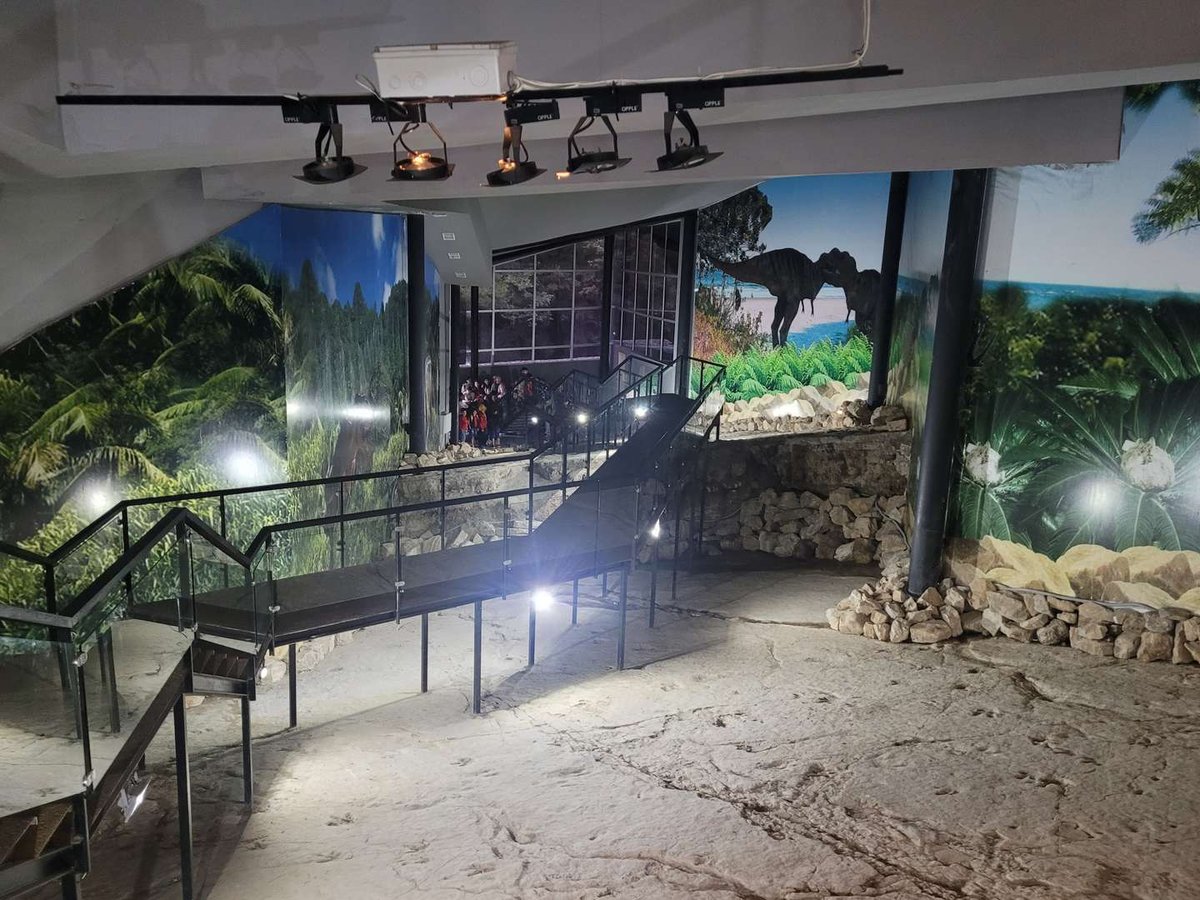
In 1935, the area was officially designated a nature reserve, and the cave was landscaped and opened to visitors—according to some reports, it was the first karst cave in Georgia with tourist infrastructure. In 2010, a protective pavilion was built over the footprints themselves to protect them from further destruction.
💡 Editor's Tip
It's convenient to combine Sataplia Nature Reserve with Prometheus Cave, as they're located close to each other, although each has its own entrance and admission ticket. A good itinerary is to visit Sataplia first (dinosaur footprints are best seen in daylight), then continue to Prometheus Cave, where the lighting is the same regardless of the time of day.
🏛️ Route through the reserve: four points
The route through the reserve is built around four main points, and all of them are included in a single ticket.
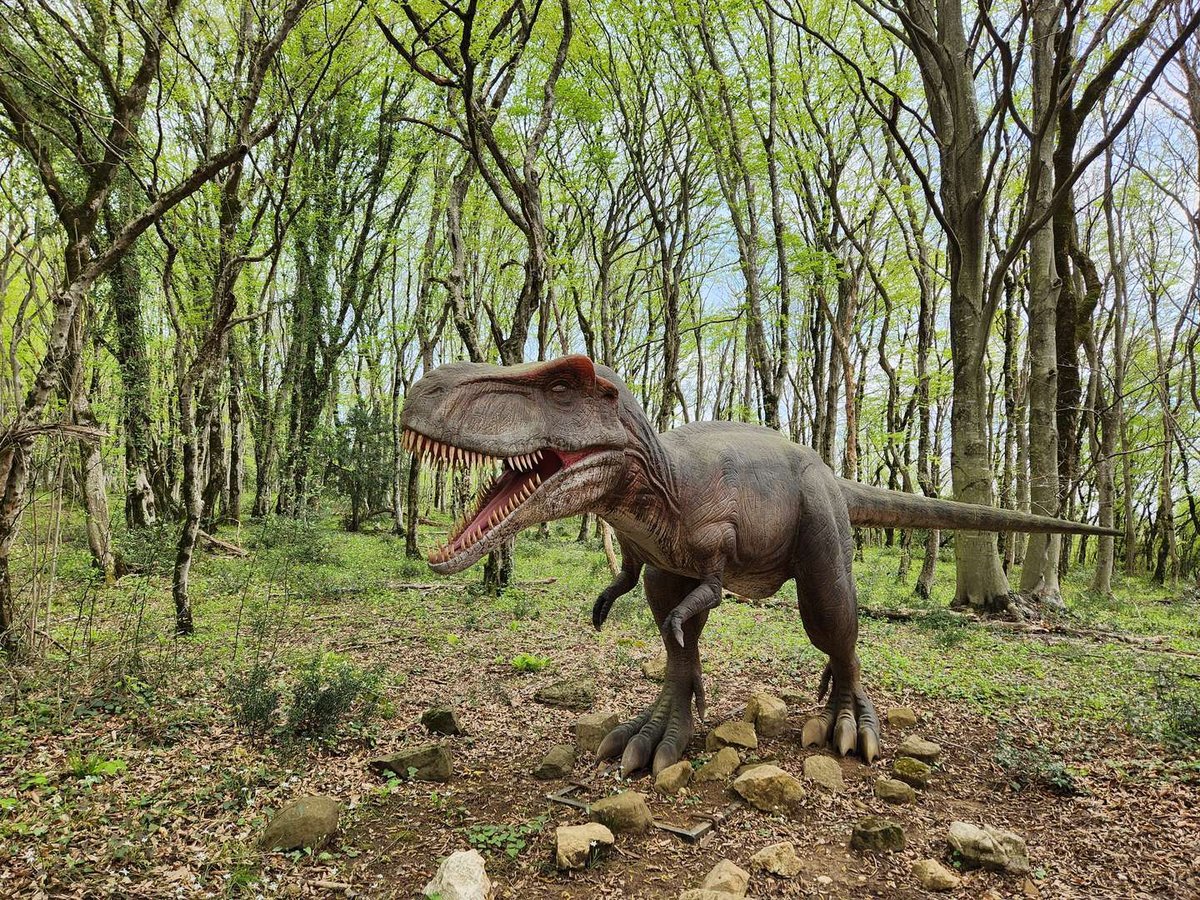
- Dinosaur Footprints. The reserve's main exhibit is the footprints of carnivorous and herbivorous dinosaurs, preserved on a cliff face beneath a protective pavilion. For added ambiance, realistic mechanical dinosaurs, roaring and moving, have been placed along the route: children tend to enjoy them far more than adults, but the photos are unforgettable.
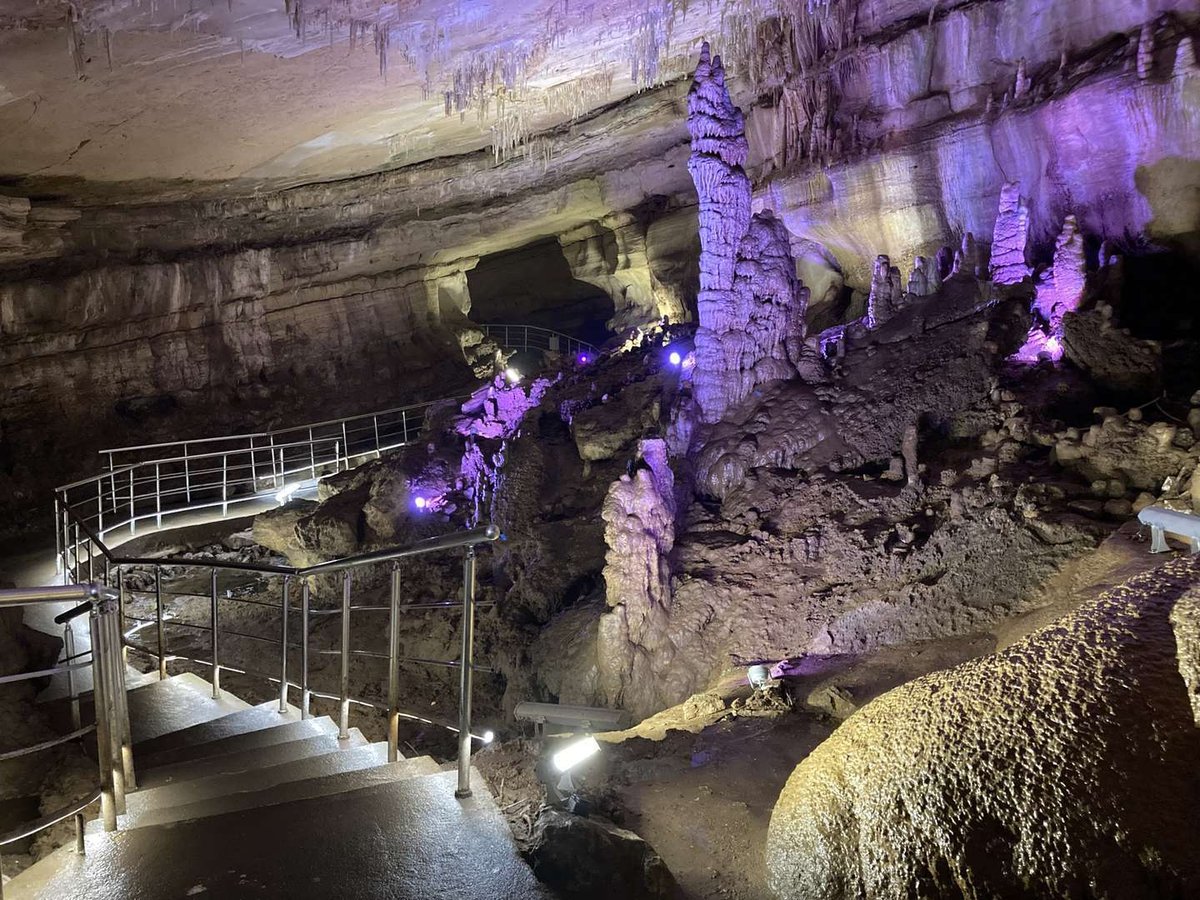
- Karst Cave. This well-maintained cave, approximately 900 meters long, is one of the first in Georgia to be regularly open to tourists. Inside, there are stalactites, stalagmites, and lighting that helps you see the details.
- Glass Observation Deck. The horseshoe-shaped platform with a glass floor overhangs a cliff, which locals call the Bee Cliff, named after the wild bees. The view from above is impressive, although the glass has become scratched by visitors over the years. The platform is closed during rainy weather for safety reasons.
- Colchis Forest. A relict forest area with approximately 70 tree species, where there are almost no conifers, is a rare ecosystem for Georgia, preserved from the pre-glacial period.
👀 Visitor reviews: not only admiration
Reviews of the reserve are mixed, and it's worth knowing this in advance. Many praise the tranquil atmosphere and the vastness of the Colchis forest, but there is also criticism: some visitors complain that the route through the territory is overly rigid—the group is "led along a well-trodden path" rather than allowed to wander freely, and the infrastructure in places looks tired and in need of repair. However, almost everyone agrees that the dinosaur tracks themselves and the view from the glass platform are worth visiting at least once.
🗺️ What to see nearby


ℹ️ Information on opening hours and entrance fees is current at the time of publication; pricing discrepancies between sections on the reserve's map may occur, so it's best to confirm the final cost on site.
💬 Tell Us
Have you visited Sataplia? Share your experience in the comments—what impressed you the most: the dinosaur footprints, the cave, or the glass observation deck?
🏁 Finally
Sataplia is a rare opportunity to experience paleontology, speleology, and botany all in one place, just 9 km from Kutaisi.
The reserve is ten kilometres from Kutaisi, but no city transport goes there and there is nowhere to catch a taxi on the way back.
Useful services
A car with a driver: the price is fixed in advance, stops along the way are free.
Book online with free cancellation.
Affiliate link: we may earn a commission, your price stays the same.
🧡 Continue Exploring Kutaisi
- 🏛️ Royal Residences of Imereti: Geguti Palace and Solomon II's Palace
- 🕳️ Prometheus Cave in Tskaltubo: The Underground Kingdom of Imereti
- 🕍 Kutaisi Synagogue: The Jewish Heritage of Imereti
💾 Save this article so you can easily find it before your trip to Kutaisi.
❓ Frequently Searched Questions about the Sataplia Nature Reserve
💬 Sources give different ages, ranging from 120 to 165 million years. Experts haven't yet definitively determined the exact figure, but they agree that the footprints date back to the Cretaceous period.
💬 The price depends on citizenship and age: approximately 15 GEL for Georgian citizens and residents, 30 GEL for foreigners, and children under 6 are free. It's best to confirm the exact, up-to-date price on site.
💬 There is no regular public transportation to the reserve. The most reliable way is a roundtrip taxi or a tour, which is often combined with a visit to Prometheus Cave.
💬 Dinosaur footprints under a protective pavilion, a 900-meter-long karst cave, a glass observation deck over a cliff, and a route through the Colchis forest.
💬 The name translates as "honey place" - from the Georgian word "tapli" (honey). It refers to the wild bees that have long nested in the limestone crevices of the mountain.

38 comments
Log in to leave a comment
ვიზიტორების ხვედრითი წილი ვფიქრობ, რამდენი ადამიანი შემოაბიჯებს ამ ბუნების მშვენიერებაზე და მერე აღფრთოვანებით გაიხსენებს? ისე კი, მინდა მნახო ეს შუშის სადამკვირვებლო პლატფორმა. მთვარის ქვეშ რომ გაწვდო ზედიდან ხედი და ამათივე ერთად მოუჭმარი გულწრფელი სინათლე. იქნებ მართლა ღირს?
მართლა მაინტერესებს, რამდენი ხანი უნდა გაჩერდე, რომ მთლიანად მოიცვა აქაური სილამაზე?
Честно, мне интересно, правда ли там так красиво, как на фотографиях, и какова высота той смотровой площадки? Не страшно ли на ней стоять?
Заповедник Сатаплия известен в первую очередь как парк Юрского периода, где на площади около 800 кв. м нашли около 200 уникальных следов динозавров — как травоядных, так и хищных, возрастом миллионы лет.
Помимо следов древних жителей Земли, здесь есть:
• карстовая пещера протяжённостью около 900 м с залами, сталактитами и сталагмитами;
• панорамная обзорная площадка с прозрачным полом, с которой открываются красивые виды на окрестности;
• Колхидский лес — густая зелень с редкими растениями и птицами;
• музей, центр посетителей и маркированные тропы для прогулок и изучения природы. 
Название «Сатаплия» переводится как «место мёда» — так называли гору, на которой расположен заповедник, из‑за пчёл, живших в пещерах и собирающих мёд с древних времён. 
Статья отлично сочетает научные факты и туристические советы, делая место понятным даже тем, кто раньше о нём не слышал: здесь можно не только увидеть следы динозавров, но и погулять по лесу, посетить пещеру и насладиться панорамами 📸. 
Спасибо за вдохновляющий обзор!
А вы бывали в Сатаплии? Что вам там понравилось больше — следы древних ящеров, карстовая пещера или виды с обзорной площадки? 🏞️✨
в заповедеике более 200 различных следов. Это доказывает, что миллионы лет назад здесь действительно они тут жили. Посещение заповедника позволит узнать больше об истории нашей планеты.
Нигде такого не встретить: следы более 2000 древних ящериц! Это настоящее золото: увидеть такую древность своими глазами, этот след, оставленный миллионы лет назад.
на земле обитали динозавры. Это очень захватывает дух .
В одном только заповеднике Сатаплия нашли около 200 видов останков динозавров.
Они первые были плотоядными, после их исчезновения были травоядные.
Говорят что остались их следы , которые веками покрылись на несколько метров грунтом.
Они здесь обитали в множеством , потому что растительность было в обилье и климат был теплый
удобный для их размножения.
В заповеднике сейчас есть музей где расположены скелеты динозавров во вес рост.
В этом заповеднике много пещер , каньенов и лесов из колхидских деревьев.
В некоторых источниках говорится что даже сохранились кратеры потухшего вулкана, и стоянки древних людей.
В известковых расщелинах гнездятся пчелы которые с давних времен собирают тут мед.
От этого и названия заповедника - ,,Сатапллия ,,
Здесь есть пещера который является естественным руслом реки Огаскури.
Спасибо автору за интересную статью!