

Georgia Independence Day on May 26 — The Country's Biggest Celebration: 2026 Program, Traditions and Tips for Visitors
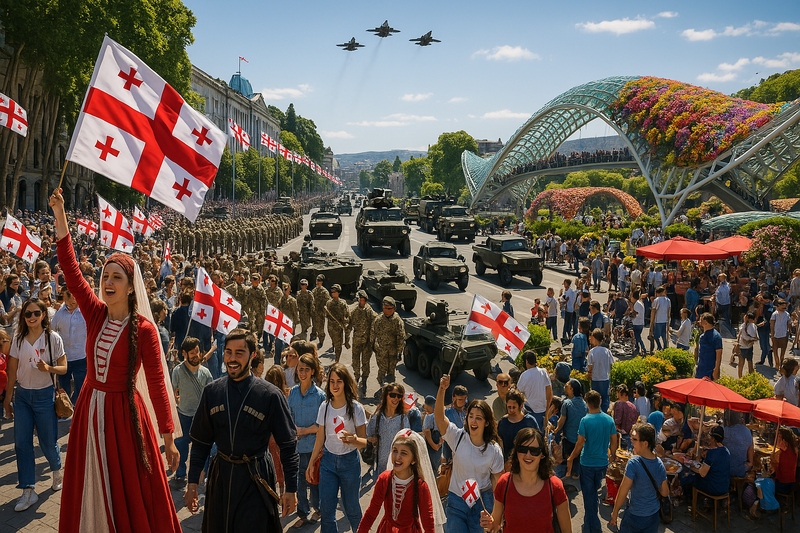
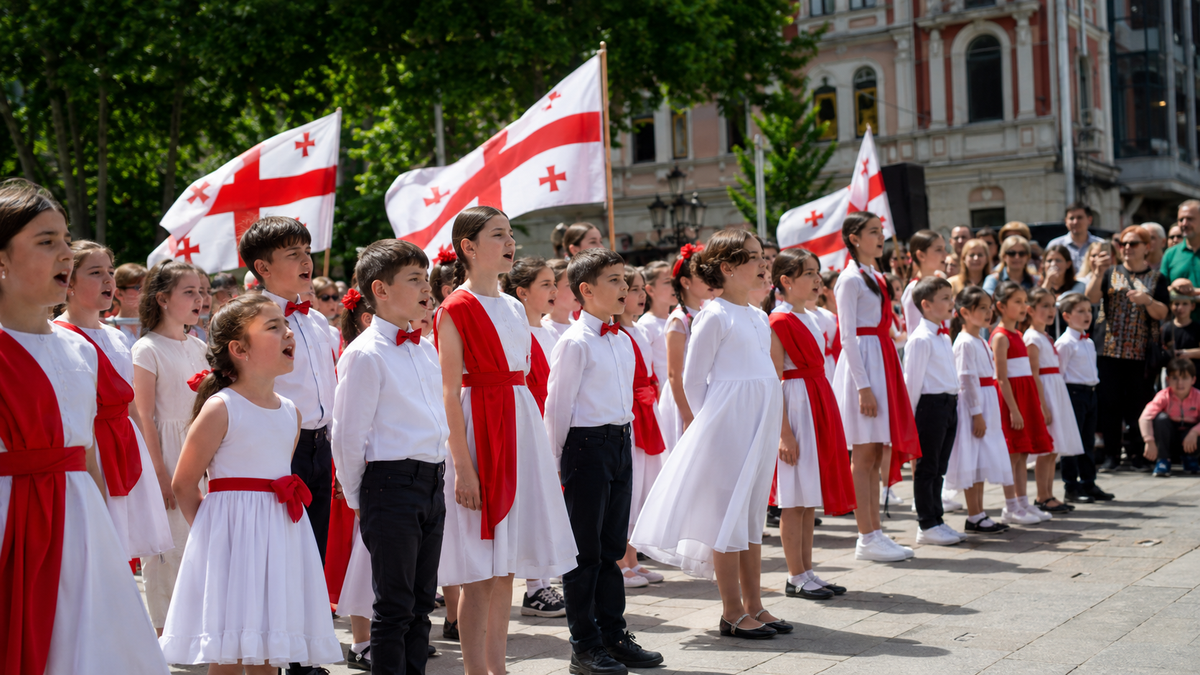
Every year on May 26, at exactly 17:10, conversations stop and footsteps slow across every city in Georgia — and the national anthem begins. It was at this exact moment, 108 years ago, that Noe Zhordania's government signed the Act of Independence. On Freedom Square in Tbilisi, 300 children sing it together in chorus; in Batumi, by the sea; in mountain villages, outside community halls. This is the defining moment of Georgia's most important national holiday.
This guide covers everything you need to know: the 2026 celebration program, the best places to experience the holiday, a brief history, and practical tips for visitors who'll be in Georgia on May 26.
⚡ The Short Version
Georgia Independence Day 2026: What's Happening on May 26
The celebration begins in the early morning and runs well past midnight. In Tbilisi, the main venues are Freedom Square, Alexander Garden, Orbeliani Street and First Republic Square. In other cities, events unfold on central squares.
Where to Celebrate in Tbilisi: Best Spots on Independence Day
The centre of Tbilisi essentially becomes a pedestrian zone on this day. Hardly any traffic, enormous crowds, and a genuine sense of occasion everywhere you walk.
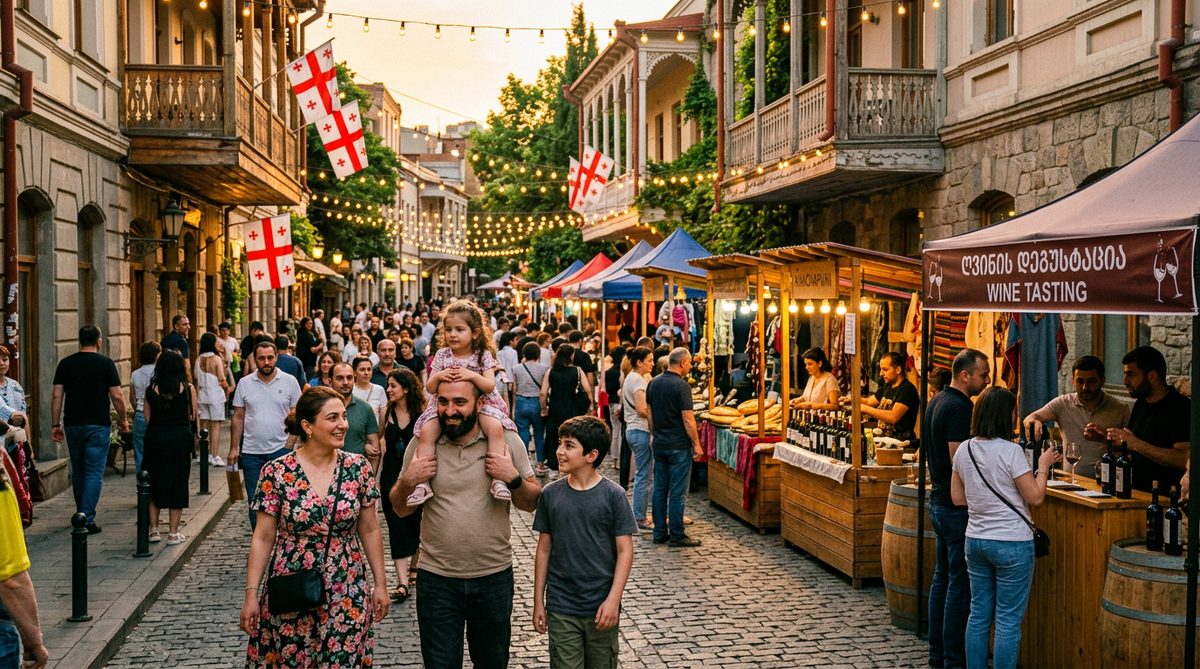
💡 Tip: if you're travelling with children, Alexander Garden is ideal. If you want to catch the main moment of the day, be at Freedom Square by 17:00. After the anthem, it's an easy walk to First Republic Square for the concert.
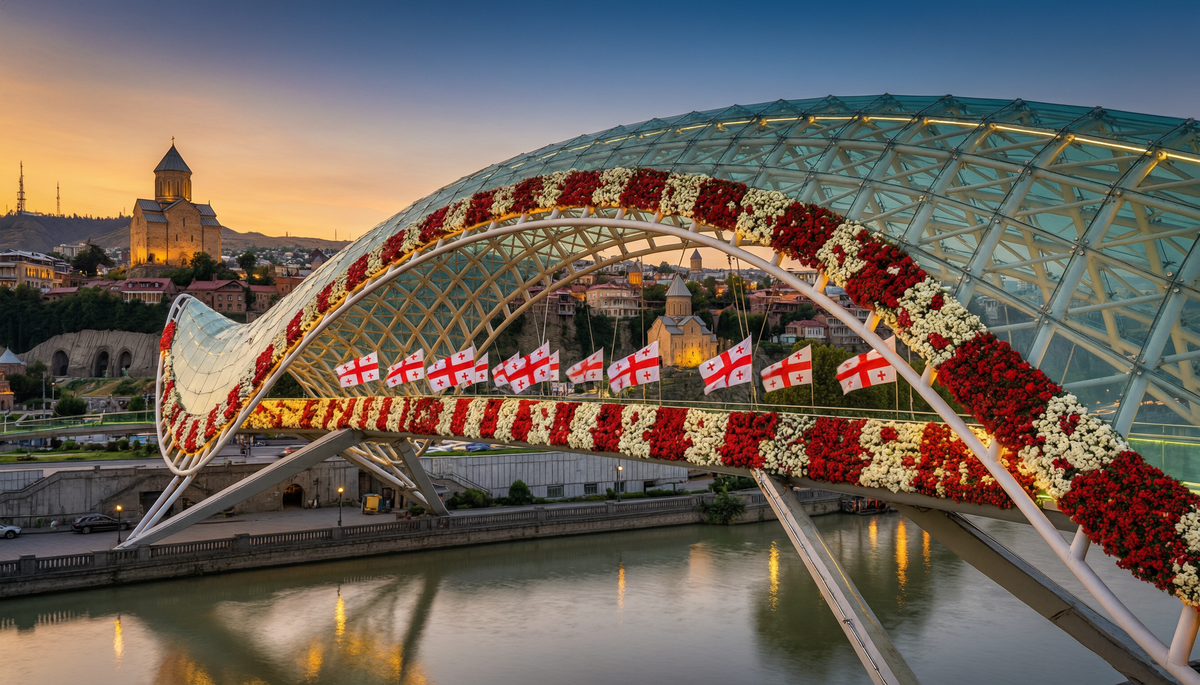
The Peace Bridge takes on a special character on Independence Day — it's traditionally decorated with flowers and becomes one of Tbilisi's most photographed spots of the year. Worth seeing.
Georgia Independence Day Celebrations Beyond Tbilisi
May 26 isn't just a Tbilisi holiday. In 2026, celebrations span 21 cities across the country. The format is consistent everywhere: local producer exhibitions, concerts, food zones — and the anthem at 17:10.
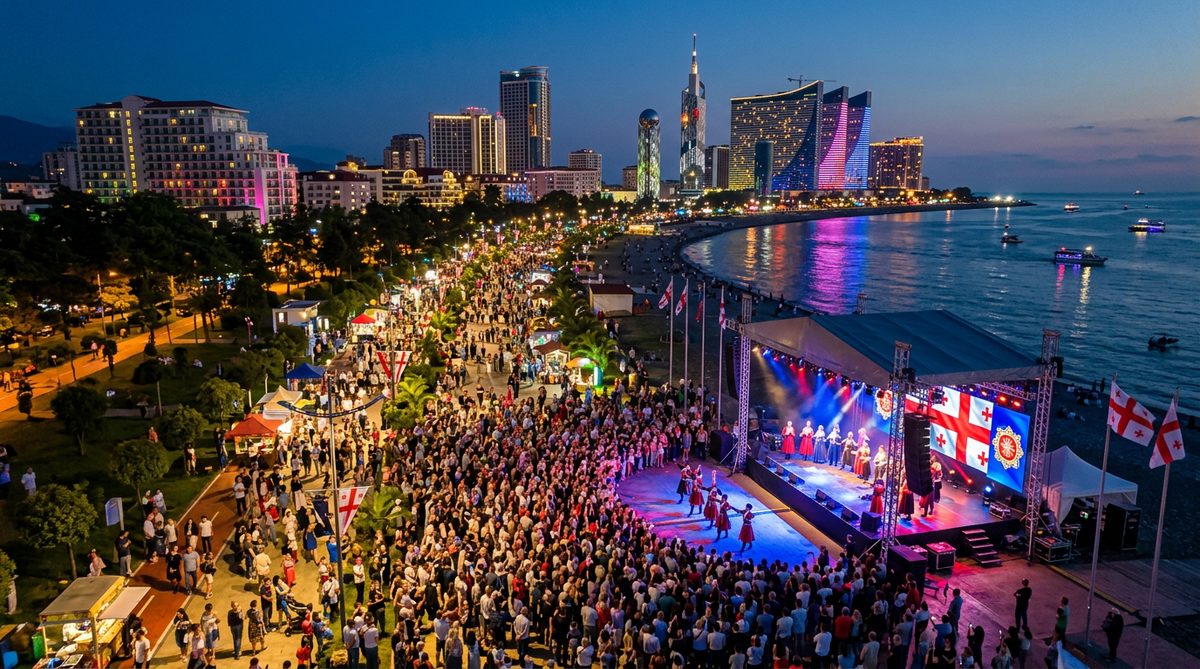
- 🌊 Batumi — celebrations along Batumi's famous seafront boulevard: live music, Adjarian food tastings, evening concert by the Black Sea
- 🏛 Kutaisi — large-scale event on the central square, historically one of the main celebration cities
- ⛪ Mtskheta — ceremonies at Svetitskhoveli Cathedral, Georgia's most sacred site: spiritual and cultural program
- 🍇 Telavi — a celebration at the heart of Kakheti wine country: wine, folklore and vineyard tastings
- 🏔 Mestia — one of the country's most spectacular settings: festivities against the backdrop of the Greater Caucasus peaks in Svaneti
- 🌿 Gori, Zugdidi, Rustavi, Poti, Akhaltsikhe, Ambrolauri — local concerts and craft exhibitions
If you're not in the capital, don't worry. The atmosphere in smaller Georgian cities on Independence Day is often warmer and more genuine than in the busy Tbilisi centre.
Practical Tips for Visitors: What's Open on May 26
This is an official public holiday, so a few things are worth knowing in advance.
Closed:
- Banks, justice houses, ministries, notaries
- Post offices and government agencies
- Civil registry and consular services
Open as normal:
- Shops, restaurants, cafes, supermarkets
- Museums — often with extended or free programmes
- Airport, border crossings, public transport
The best restaurants in Tbilisi fill up 2–3 days in advance. Book ahead, or head to the food zone on Orbeliani Street where everything is open with no reservation needed.
When Did Georgia Become Independent — and Why May 26?
This question often causes confusion: Georgia has two independence dates — 1918 and 1991. Here's the short version.
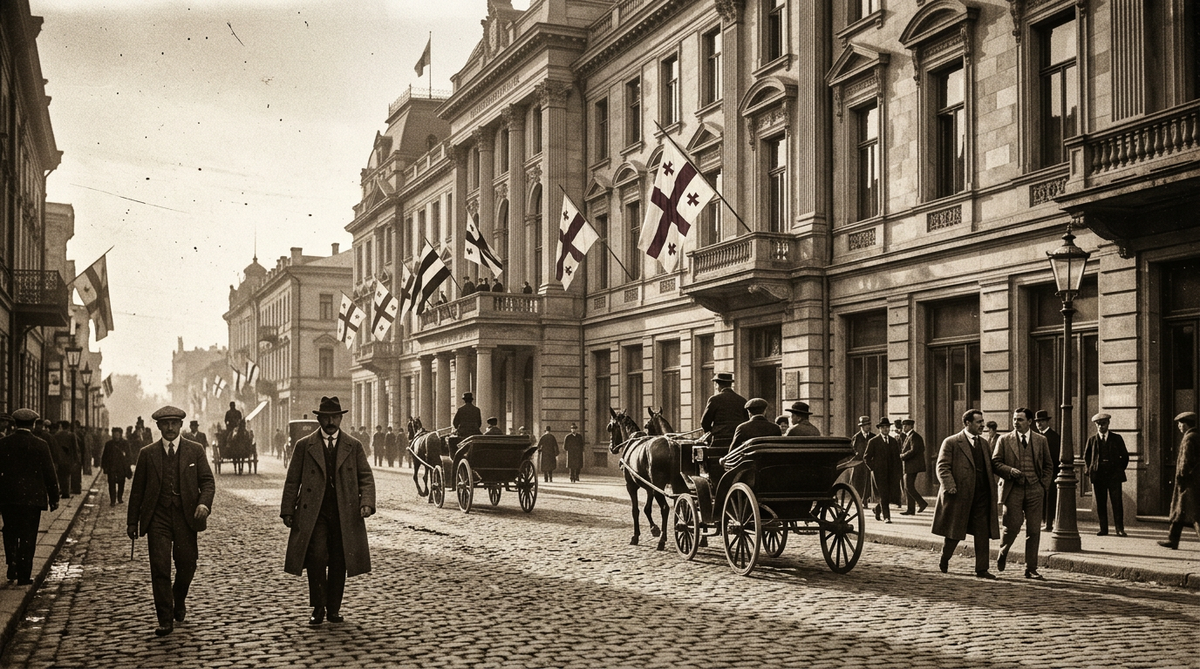
May 26, 1918, at 17:10 — in the White Hall of the Tbilisi Viceroy's Palace, the government of Noe Zhordania signs the Act of Independence of Georgia. The First Democratic Republic lasted just 2 years and 10 months — in February 1921, the Red Army invaded and Georgia was absorbed into the Soviet Union.
April 9, 1991 — amid the collapse of the USSR, the Supreme Council of Georgia adopts the Act on the Restoration of Independence. The declaration of 1918 serves as its legal foundation — modern Georgia considers itself the direct continuation of that republic.
That's why the holiday is May 26 and not April 9. This isn't just a choice of date — it's a political statement: Georgia traces its statehood to 1918, not 1991.
The History Behind the Holiday: From the First Republic to Today
The First Democratic Republic of Georgia is one of the most underappreciated political experiments of the early twentieth century. In less than three years of existence, it achieved things that many European countries hadn't managed yet: women's suffrage, a multiparty parliament, equal civil rights for all citizens regardless of ethnicity, religion or social background.
The republic was recognised by 23 states — the UK, France, Germany, Italy, Turkey, Argentina, Soviet Russia among them. Its 1921 constitution was among the most progressive in Europe at the time. Historian Eric Lee, who wrote a book on this period, put it plainly: "Noe Zhordania deserves world recognition and should occupy a central place in Georgian history."
When the Red Army entered Tbilisi in February 1921, the government didn't surrender — it went into exile and continued to exist legally. This is precisely why 1991 is described as a restoration of independence, not a declaration of a new one. Georgia wasn't starting over — it was continuing what had been interrupted by force.
🇬🇪 This context explains why May 26 is more than just a day off. For Georgians, it's a conversation about who they were, what they lost, and what they reclaimed. The toast „გაუმარჯოს საქართველოს" — "Victory to Georgia" — carries a different weight on this day than any other.

What's New on Georgia Independence Day 2026
Three things make the 2026 celebration different from previous years.
1,700 years of Christianity. In 326 AD, King Mirian III declared Christianity the state religion of Georgia. In 2026, this anniversary is officially woven into the holiday programme, adding a spiritual dimension that connects the country's ancient faith with its modern statehood. Georgian Orthodox Christian traditions and national history are particularly intertwined this year.
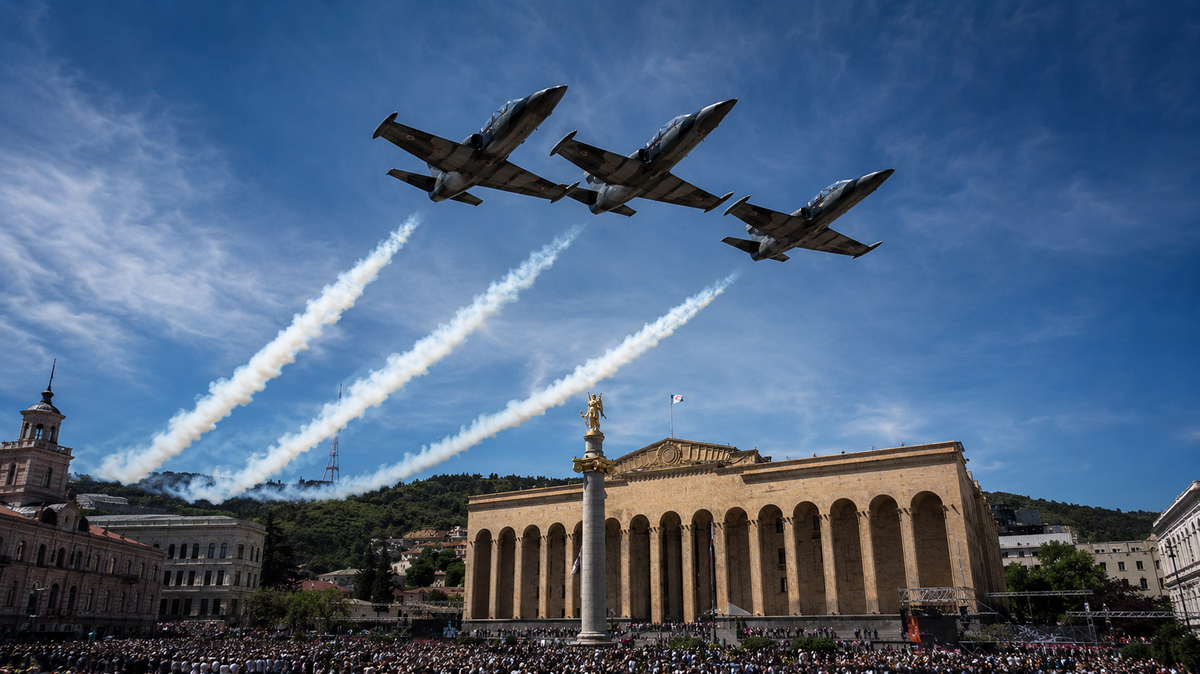
No military parade. Since 2025, the traditional march along Rustaveli Avenue has been replaced by an expanded cultural programme. The air show and oath ceremony remain — but the column of armoured vehicles through the main street is gone.
Bigger regional coverage. In 2026, celebrations reach 21 cities nationwide. The celebration budget has grown to approximately 8 million GEL.
Other Georgian National Holidays Worth Knowing
If you're planning a trip to Georgia and want to time your visit around a celebration, here are a few more dates:
- April 9 — National Unity Day. Commemorates the victims of the 1989 tragedy and marks the 1991 restoration. More solemn in tone than May 26.
- May 6 — St. George's Day. Georgia's patron saint is honoured twice a year — the second time in November.
- October 14 — Svetitskhovloba. The festival of Georgia's most sacred cathedral in the ancient capital of Mtskheta. Large pilgrimage and folk celebrations.
- November 23 — Giorgoba. The second day of St. George — one of the most beloved folk holidays in Georgia.
The full calendar of Georgian holidays is a useful tool for planning a trip around something special.
Frequently Asked Questions
May 26 — every year. It is the country's main national holiday and an official public holiday. In 2026 it falls on a Tuesday.
Yes. On May 26, 1918, Noe Zhordania's government declared Georgia's independence from the Russian Empire. In 1991, this date was confirmed as the official holiday when independence was restored — based on the 1918 declaration as its legal foundation.
Both are connected to independence. May 26 is the date of the 1918 declaration — the main national holiday. April 9 is National Unity Day: it marks the tragic 1989 crackdown and the 1991 Act of Restoration. The mood on April 9 is more reflective and solemn.
No. Since 2025, the traditional Rustaveli Avenue parade has been discontinued. The air show over Freedom Square and the military oath ceremony are still held.
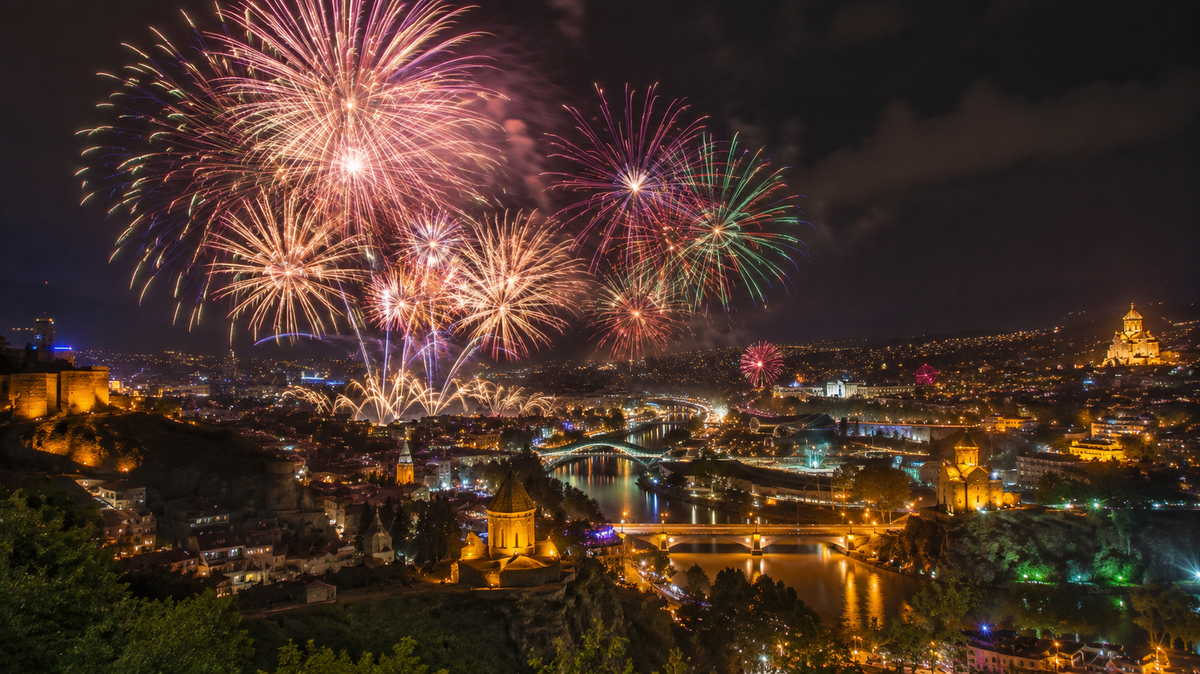
Mtatsminda Hill gives you the best panoramic view over the city. The Mtkvari riverbank near the Peace Bridge is another excellent option. Arrive at First Republic Square before 20:00 if you want a spot near the stage — it fills up fast.
Shops, restaurants, cafes, museums, transport and the airport all operate normally. Closed: banks, government offices, justice houses, notaries and the post office.
Alexander Garden and Orbeliani Street are ideal. From 12:00, you'll find children's craft workshops, a liquid nitrogen show, face painting and an outdoor Georgian animation screening.
Some samples at the holiday wine zone are free; others are offered at a symbolic price. For a proper guided tasting with a sommelier, plan a separate visit to Georgia's wine region of Kakheti — just 90 minutes from Tbilisi and absolutely worth the trip.

34 comments
Log in to leave a comment
لا بد من زيارة هذه الاحتفالات في تبليسي، ولكنني أتساءل، كيف يبدو الوضع بالضبط في القرى الجبلية؟ هل يختلف الاحتفال هناك عن المدن الكبرى؟
История становления Грузии как независимого государства напоминает о сложном пути, который пришлось пройти грузинскому народу, чтобы достичь этой важной цели. Каждый грузин гордится своим наследием и неизменно отмечает День независимости с глубоким уважением и любовью к своей стране.
The celebration of Independence Day in Georgia is a vibrant affair. Festivities commence with solemn ceremonies, including flag-raising ceremonies and the singing of the national anthem. People come together to honor the sacrifices made by their ancestors in the struggle for independence.
One of the prominent traditions during this celebration is the parade. Colorful processions fill the streets, featuring various military units, cultural groups, and marching bands. The parade showcases the strength and unity of the nation and serves as a reminder of the country's progress since gaining independence.
In addition to the parade, cultural events and performances take place throughout the day. Traditional music, dance, and folk performances highlight Georgia's diverse cultural heritage. It is also common to witness art exhibitions, sports competitions, and fireworks displays, which add to the festive atmosphere.
On this special day, Georgians often come together with family and friends to enjoy traditional delicacies and meals. Feast tables are filled with mouthwatering dishes, such as khachapuri (cheese-filled bread) and khinkali (dumplings), accompanied by local wines and spirits. Sharing meals and engaging in lively conversations strengthen the bonds of kinship and camaraderie.
Independence Day in Georgia serves as a reminder of the country's resilience and determination in pursuing freedom. It is a time to honor the past, celebrate the present, and look towards a brighter future. The festivities and traditions associated with this grand national event bring the people of Georgia together, fostering a sense of unity and pride in their shared history and cultural heritage.