




🎊 The Autumn 2026 Calendar in Georgia: Rtveli, Tbilisoba, Mtskhetoba and Giorgoba
🎊 Autumn 2026: four events worth planning a trip around
Autumn is Georgia's busiest season for events. The grape harvest turns all of Kakheti upside down, the capital celebrates its city day, Mtskheta fills with pilgrims, and November closes the season with the feast of St George.
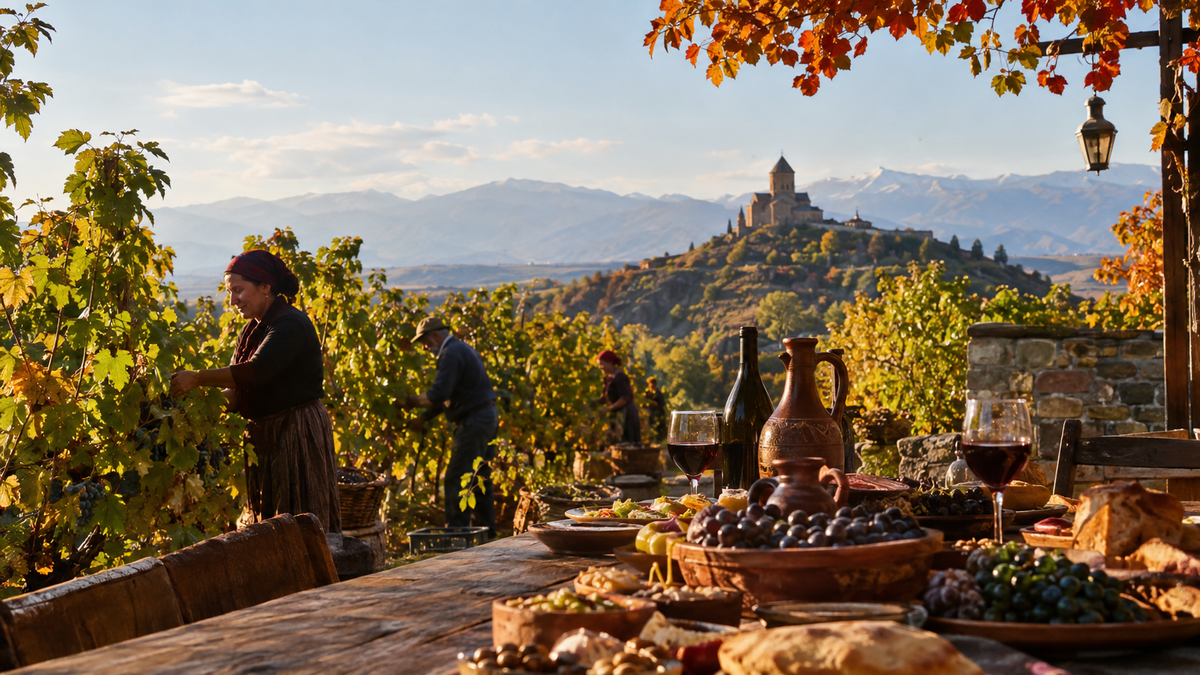
Autumn is the best season to visit Georgia for reasons beyond the weather. September and October bring what many people come for: the grape harvest, city fairs, patronal feasts and the kind of long table dinners that happen by themselves at this time of year.
Below is the autumn 2026 calendar with dates, an explanation of each occasion and links to fuller pieces on them.
🗓️ The autumn 2026 calendar
We start with the dates, since that is usually what people come for.
Now each one in turn.
🍇 Rtveli: the grape harvest, September and October
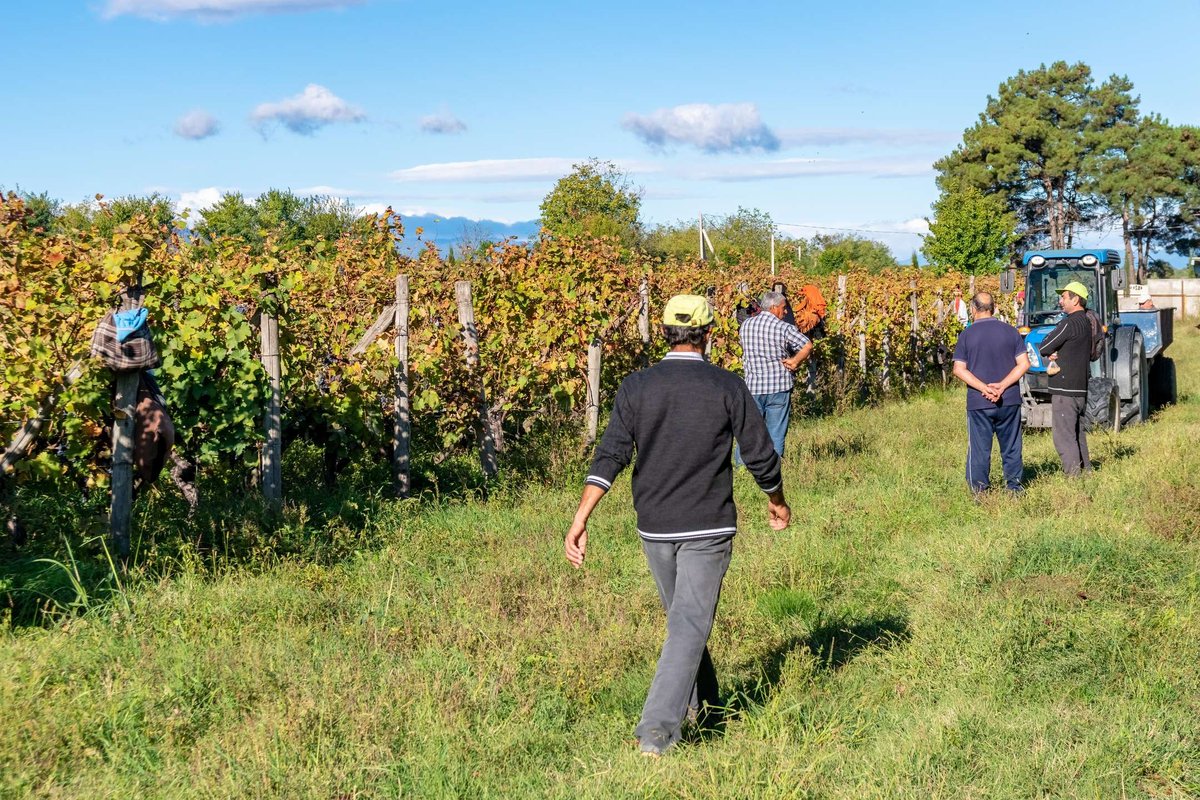
The central ritual of the Georgian year, and the only event on this list that lasts six weeks rather than a day.
What it is. Rtveli is the grape harvest and everything that goes with it: the pressing, the must going into qvevri, and the feast that marks the end of the work. For Kakheti it is not a holiday in the calendar sense but a working season that the whole family and all the neighbours spend in the vineyard.
When. In Kakheti it begins in late August and the first days of September, later in the mountain districts. The active phase falls in the second half of September: in 2025 the region had processed over a hundred thousand tonnes of grapes by the third week, with daily throughput above ten thousand tonnes. In October picking continues only in the late and mountain areas.
How a visitor takes part. Many estates let guests join in, and this is not a staged programme laid on for coaches but ordinary life you are allowed to share. The two anchor towns are Telavi and Sighnaghi. Which estates to visit is in the ranking of Kakheti wineries, and if you are planning the whole trip there is a ready-made route in a week in Georgia.
One caveat. Dates depend on the grape variety, the district and the weather, and they shift by several days each year. If you are coming specifically to take part, write to the estate in advance: a week either way decides whether you see the pressing or the tanks already washed out.
A fuller account of the tradition, its rituals and regional differences is in the separate piece on rtveli.
🎪 Tbilisoba: city day, 3 and 4 October
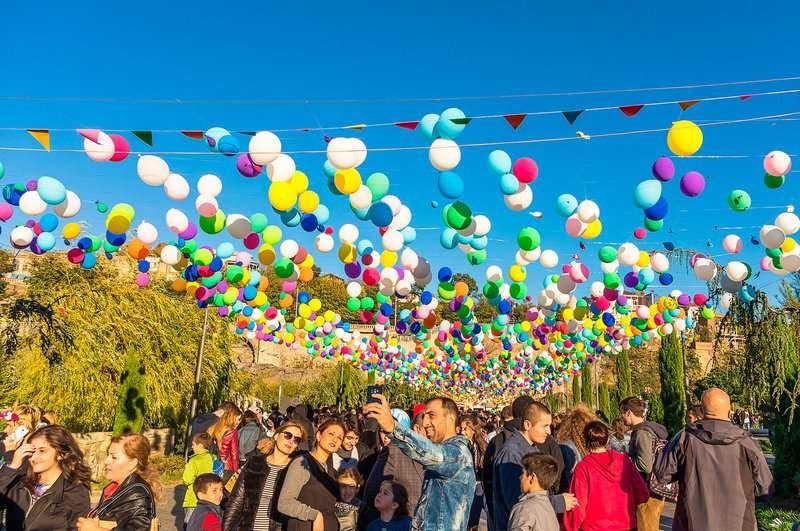
The country's main urban festival and the busiest event of the autumn.
What it is. Tbilisoba began in 1979 on the initiative of the Georgian leadership of the time: the idea was to show off the capital's traditional urban culture, its multi-ethnic character, its crafts, food and winemaking. It has since grown into a two-day fair.
What happens. Grapes are pressed in the street, craft rows open, mtsvadi goes on the grill, new wine is poured and concerts run through the day. The city hall announces the venues, usually Rike Park and the surrounding parts of the old town.
When. The festival takes place on the first weekend of October, which in 2026 falls on the 3rd and 4th. Tbilisi city hall confirms the exact dates and programme, and the announcement usually comes in September.
What to plan for. The city fills up over that weekend, accommodation gets more expensive and the centre is crowded. Book ahead.
The festival's history, its programme and how it has changed are covered in the national festival of Tbilisoba.
⛪ Mtskhetoba-Svetitskhovloba: 14 October
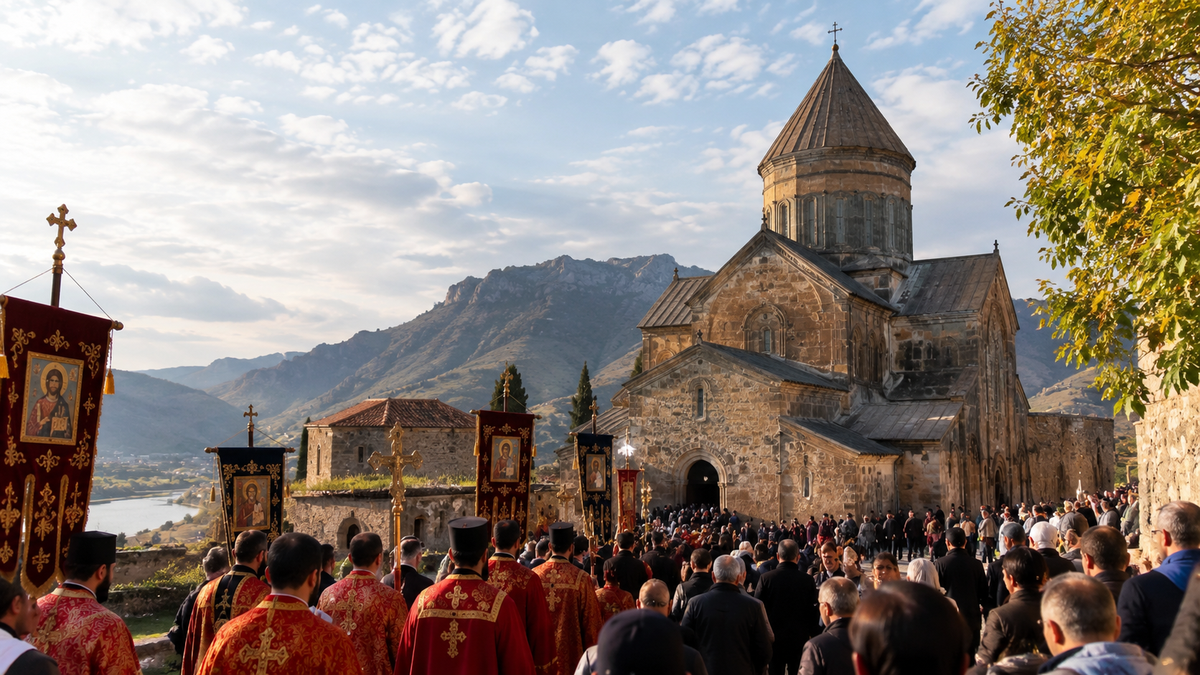
The first of autumn's two public holidays and the season's principal religious occasion.
What it is. The patronal feast of Svetitskhoveli Cathedral in Mtskheta, Georgia's ancient capital. It is associated with the Robe of Christ, which by tradition rests beneath the cathedral. The full name of the day covers Mtskhetoba, Svetitskhovloba and the feast of the Robe.
What happens. A service in Svetitskhoveli, a procession, and pilgrims from across the country. On that day Mtskheta stops being a tourist site and works as a living centre of pilgrimage, which is an entirely different experience of the place.
When and what status. 14 October, an official state holiday. Some institutions and shops across the country keep holiday hours.
Getting there. About half an hour from Tbilisi by marshrutka or car. On the day the road is busy and parking in Mtskheta is full, so allow extra time and preferably take public transport.
What else to see there. Beyond Svetitskhoveli there is Jvari on the hill above the town, and the confluence of the Mtkvari and Aragvi, which looks particularly good in autumn.
🐎 Giorgoba: 23 November
Autumn's second public holiday and the event that closes the season.
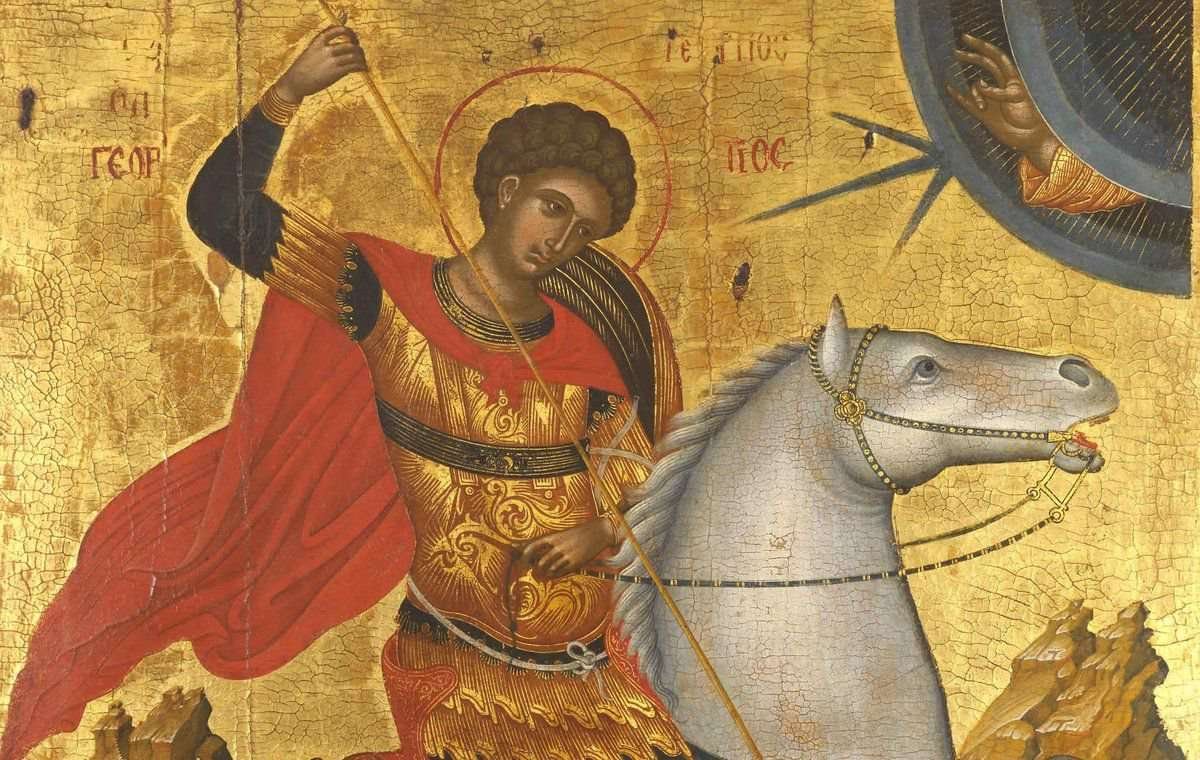
What it is. The feast of St George, patron saint of Georgia. His name is the source of the country's name in European languages, and he appears on the national coat of arms. For Georgians he is among the most significant saints, and Giorgi is the most common male name in the country.
An important detail. Giorgoba is celebrated twice a year: on 6 May and on 23 November. The autumn one carries the status of a state holiday; the spring one is a church feast only. So if you are looking up the date, check which of the two is meant.
What happens. Services nationwide, particularly crowded in the hundreds of churches dedicated to St George. Family feasts. In Kakheti the date coincides with the end of the winemaking cycle, and the new wine is ready to taste by then.
What a traveller should know. 23 November is a day off: government offices are closed, some shops keep shorter hours and transport runs to a holiday timetable.
More on the veneration of St George and the customs of the day is in the separate piece on Giorgoba.
🕯️ What else happens in autumn
Beyond the four main dates there are smaller occasions worth knowing about.
Mariamoba, 28 August. Formally still summer, but the day sets the tone for the season: the Dormition of the Mother of God, a public holiday with services across the country. It is where Georgia's run of autumn feasts begins. Details are in the history and traditions of Mariamoba.
Mtavarangelozoba, 21 November. The Synaxis of the Archangels Michael and Gabriel. A church feast without the status of a day off, but the churches are full.
Municipal harvest festivals. Through the autumn, towns and villages in Kakheti hold their own fairs to mark the end of picking. Local administrations announce the dates and programmes, usually a couple of weeks ahead, and there is no single calendar for them. If you are heading to a particular district, check the municipality's announcements before you set out.
Winery tasting programmes. Many estates run seasonal formats in autumn: joining the harvest, workshops on filling qvevri, dinners with the new wine. These are not festivals with fixed dates but programmes booked directly. Beyond Kakheti it is worth looking at the Imeretian wineries near Kutaisi: different grapes and a different style of wine.
The wider picture of the events year is in festivals in Georgia.
🍷 Etiquette: how to behave in a marani and at the table
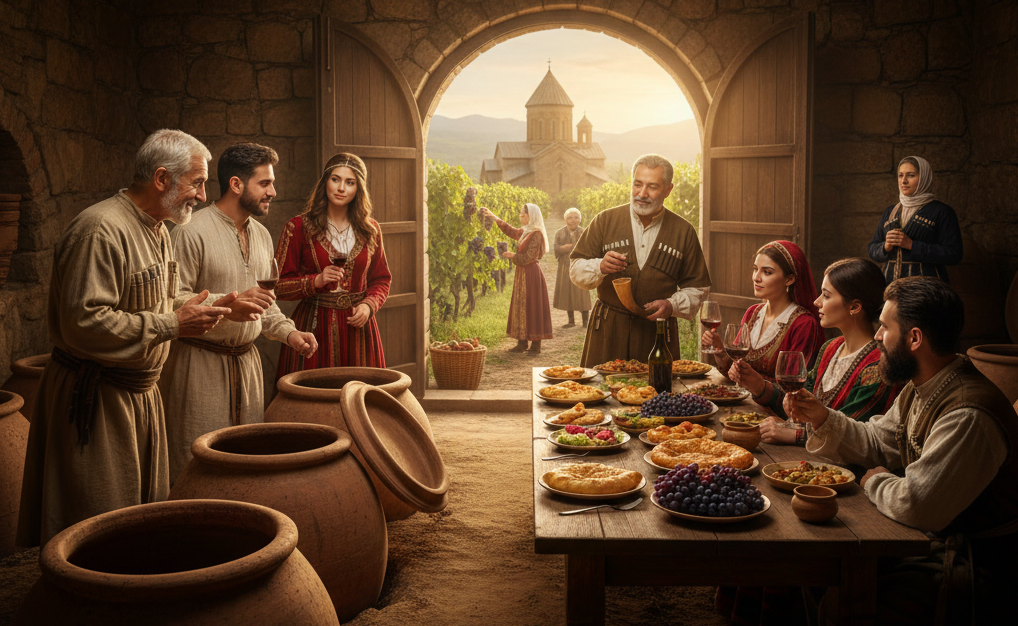
If you end up at a harvest or a festive supra, a few things are worth knowing in advance.
In the marani, the wine cellar, qvevri are treated seriously. Do not look into an open vessel without the owner's say-so and do not reach into it: this is not superstition but the hygiene of fermentation.
At the table the tamada leads the order of toasts, and interrupting is not done. Drinking between toasts is not done either, though no one will hold a guest strictly to it.
Declining. If you do not drink, say so immediately and plainly rather than deflecting all evening. That is taken perfectly well; a full glass you never touch is what looks odd.
At the harvest, if you have been invited, work alongside everyone else. Coming to watch and standing aside is allowed, but taking part is valued far more highly.
In church at Mtskhetoba or Giorgoba: covered clothing and a headscarf for women. Photography during a service only with permission.
📅 How to plan a trip around the events
The practical question: what can actually be combined.
September. Rtveli plus everything else the month offers. The full picture is in a September trip to Georgia.
The first half of October. Here you are in luck: Tbilisoba on the 3rd and 4th and Mtskhetoba on the 14th fit into one trip with ten days between them. In the gap you can go to Kakheti for the late harvest or to the spa towns. What else works in the month is covered in an October trip to Georgia.
November. Giorgoba stands apart: almost a month of nothing precedes it and the weather is already wintry. Travelling specifically for a single day makes sense only if the religious side is what interests you.
If your trip is short and singular, the richest window runs from 20 September to 15 October: the peak of rtveli, Tbilisoba and Mtskhetoba all fall within four weeks.
Do not try to build a trip around all four events. Almost six weeks separate Mtskhetoba from Giorgoba, and you would have to fill them with something else.
The window that works is late September and the first half of October. You arrive for the peak of the harvest, return from Kakheti to the capital for Tbilisoba, and ten days later catch Mtskhetoba. Three of the four events in one trip, all within a hundred kilometres.
Been to Georgia for the autumn festivals? Leave a review on Madloba: tell us which event you caught, on what dates, and whether it is worth arranging a trip around them.
Information is current as of September 2026. Local administrations confirm the dates of Tbilisoba and municipal festivals, and the timing of rtveli shifts each year with the grape variety and the weather. Check current announcements before you travel.
❓ FAQ
💬 In Kakheti the harvest begins in late August and the first days of September, later in the mountain districts. The active phase falls in the second half of September, and in October only the late and mountain plots are picked. Exact dates depend on the variety, the district and the weather, and shift each year.
💬 The festival runs on the first weekend of October, which in 2026 is the 3rd and 4th. Tbilisi city hall confirms the dates, venues and programme, and the announcement usually comes in September, so check the official notice before booking.
💬 Yes. Many estates in Kakheti take guests and let them work alongside everyone else. This is not a staged programme but a family's ordinary life in season. Write ahead: a week either way decides whether you see the pressing or the tanks already washed out.
💬 Mtskhetoba-Svetitskhovloba, the patronal feast of Svetitskhoveli Cathedral in Mtskheta and an official public holiday. It is associated with the Robe of Christ, which by tradition rests beneath the cathedral. The day brings a service, a procession and pilgrims from across the country.
💬 Giorgoba is celebrated twice a year, on 6 May and 23 November. The November one carries the status of a state holiday; the May one is a church feast only. It marks the feast of St George, patron saint of Georgia.
💬 Two: 14 October and 23 November. Georgia has 117 official days off in 2026, but 104 of them land on Saturdays and Sundays. Rtveli and Tbilisoba are not days off; the country works through them.
💬 From 20 September to 15 October. That window holds the peak of the harvest, Tbilisoba on 3 and 4 October and Mtskhetoba on 14 October, all within a hundred kilometres of the capital.
💬 The tamada leads the order of toasts and interrupting is not done, nor is drinking between toasts. If you do not drink, say so plainly at the start; that is taken well. At the harvest, if you have been invited, work alongside everyone else: taking part is valued more than watching.
💬 Yes, smaller ones. Mariamoba on 28 August, a public holiday that opens the season. Mtavarangelozoba on 21 November, a church feast without day-off status. Plus harvest festivals in the municipalities of Kakheti, whose dates local administrations announce a couple of weeks ahead.

0 comments
Log in to leave a comment