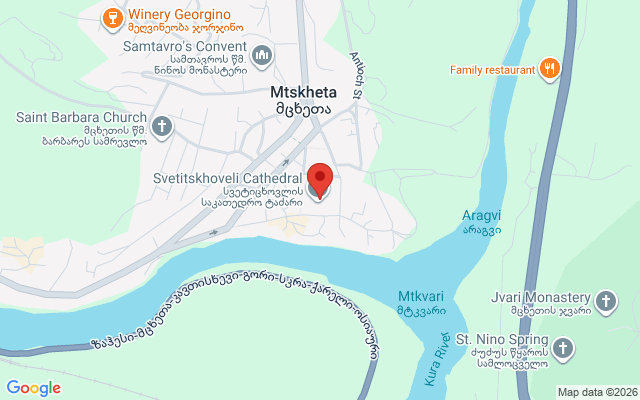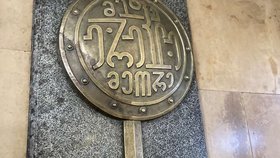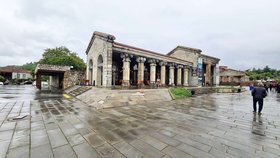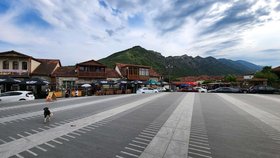




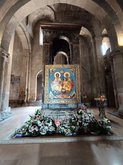

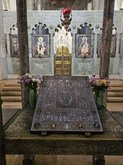

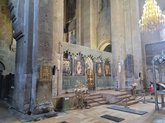



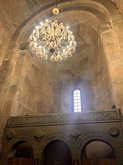


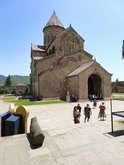

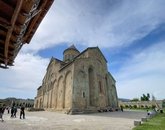

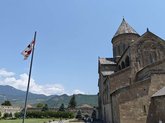

The cathedral is located in Mtskheta, among the sights of the city, at the confluence of the Aragvi and Mtkvari rivers. The name "Svetitskhoveli" translates as "the Life-Giving Pillar." The current building was constructed between 1010 and 1029 by architect Arsukidze, at the invitation of Catholicos Melchizedek, on the site of earlier structures: a wooden church built by King Mirian III (4th century) and a basilica by Vakhtang Gorgasali (late 5th century), discovered during restoration in 1970-71.
According to Georgian tradition, the cathedral is the burial site of Christ's robe: a Jewish man from Mtskheta named Elioz was present at the crucifixion in Jerusalem, bought the robe from a Roman soldier, and brought it home. His sister Sidonia, upon touching the relic, died overwhelmed by emotion, and the robe clung so tightly to her body that it couldn't be removed, so she was buried with it. A cedar tree grew on her grave, later used to make seven columns for the church's foundation; the seventh, according to legend, possessed miraculous properties, giving the cathedral its name. The architect Arsukidze's own fate was tragic: one version of the legend says he was falsely accused by a jealous rival, another that the king ordered his right hand severed, fearing he might create an even greater masterpiece. A relief of his hand survives on the north facade.
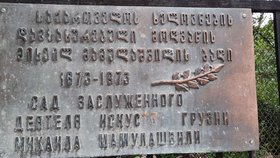
For more on the cathedral's history and the nearby Mikheil Mamulashvili garden, see the article on Svetitskhoveli Cathedral.
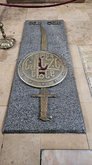
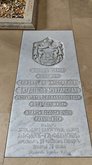
The cathedral served as the coronation and burial site of Georgian kings, including Vakhtang Gorgasali, Erekle II, and Georgia's last king, George XII. The surrounding fortress wall was built in 1787 under Erekle II, with eight towers and gun slits on the upper level. The cathedral stands 54 metres tall under its dome, making it one of medieval Georgia's tallest cathedrals. Today Svetitskhoveli remains an active cathedral and the seat of the Catholicos-Patriarch of All Georgia, as well as a UNESCO World Heritage site as part of the Historic Monuments of Mtskheta, alongside Jvari Monastery.