




Borano: Cheese Dish from Adjara — Recipe and Where to Try
🟨 What you need to know right away
📍 Region: Adjara (mountain villages of Keda and Khulo)
🧀 Ingredients: aged sulguni cheese and clarified butter
🍳 Cooking technique: slow cooking in a clay dish (ketsi)
💰 Restaurant price: from 12 to 25 GEL
📸 Popularity: included in tourist gastronomic routes
🌿 Suitable for vegetarians: yes
🍷 Best pairing: mchadi cornbread and a glass of white wine
👋 Why is this worth reading?
🧀 Borano is more than just cheese. It's a true symbol of mountainous Adjara, woven into its everyday life, traditions, and feasts.
📜 This dish has a history. We'll tell you where it came from, how our ancestors cooked it in a wood-fired oven, and why it remains the pride of local cuisine.
🍽️ How does borano differ from other cheese treats? What ingredients make it unique? What role do butter and spices play?
📍 Planning a trip to Batumi or the mountain villages? We'll tell you where to try authentic borano, prepared according to ancient recipes—at a restaurant, at a festival, or with locals.
📜 History and origin
🧈 The name "borano" comes from the verb "to fry"—and that's no coincidence. The dish is made with processed cheese simmered in melted butter, which gives it a rich flavor and unique texture.
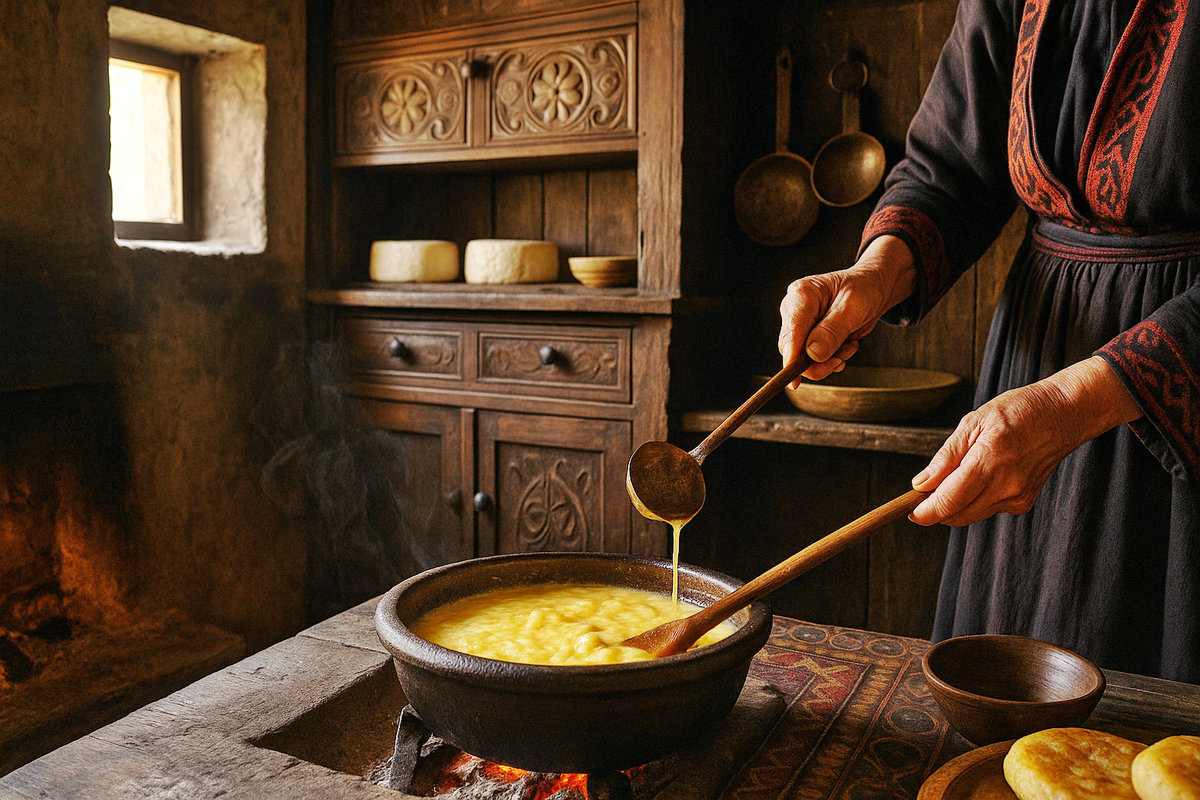
⛰️ The birthplace of this delicacy is mountainous Adjara, where life has always demanded hearty, simple, and quick meals. Borano was ideal for woodcutters, shepherds, and haymakers, who worked in harsh conditions and needed nutritious and warm food. No sophistication—only natural ingredients and deeply rooted traditions.
🥣 Over time, this simple dish became a true symbol of the region. It was served not only at home, but also at village festivals, family celebrations, and as a treat for guests. Today, borano can be found in Batumi's tourist restaurants and even at food festivals.
🏅 In 2019, borano was officially recognized as a cultural heritage of the country—it is included in the list of intangible cultural heritage of Georgia. It's not just delicious; it's part of Georgian identity.
🧈 Composition and traditional products
🧀 The base of borano is a mature cheese that has undergone natural fermentation. Braided suluguni is most often used—it stretches well, has a rich flavor, and is ideal for melting. Imeretian cheese is sometimes included in the recipe, especially in regions where it is traditionally produced.
🔥 The second main ingredient is clarified butter, called iaghi in Adjara. It is simmered over low heat until it develops a caramel aroma and a golden hue. This butter imparts a nutty flavor and a unique silky texture to the dish. It is this butter that transforms the cheese into a tender yet chewy delicacy, leaving a crispy crust on the bottom of the pan.
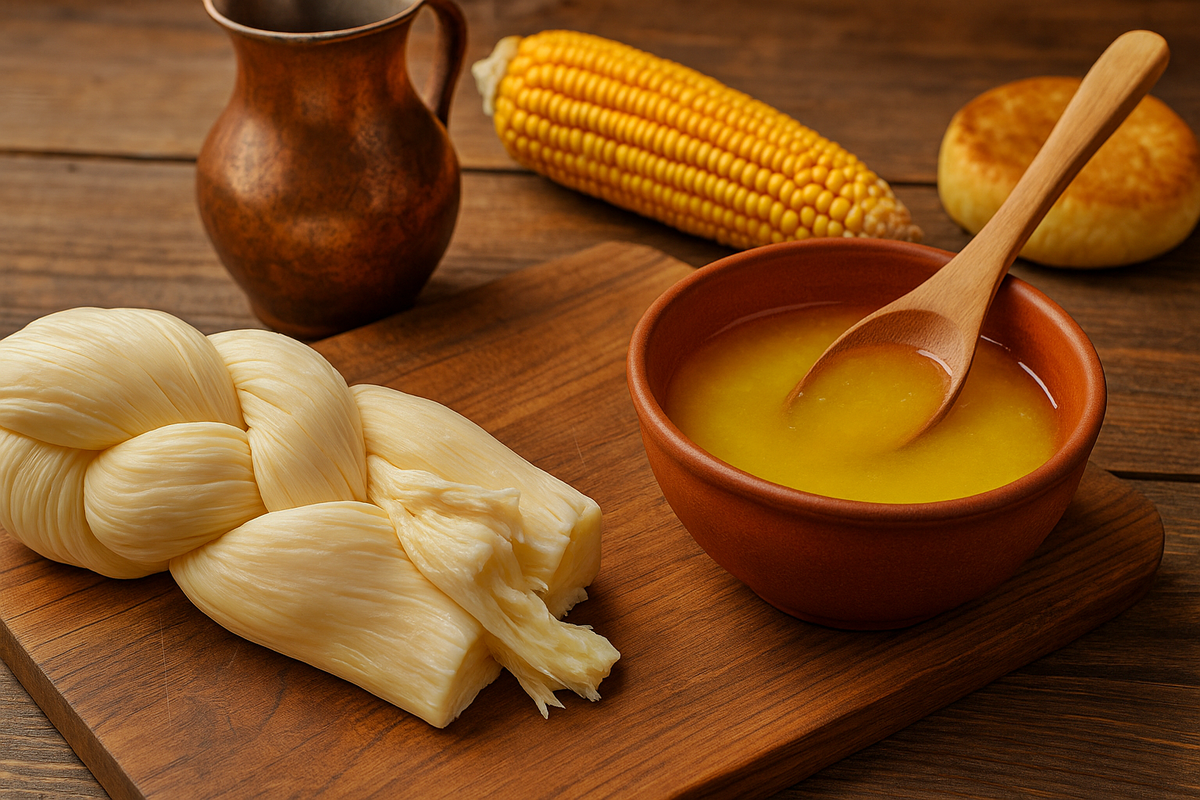
🍳 The classic recipe is extremely minimalist: just cheese and butter. But in village cuisine, there are signature variations passed down through families:
— a beaten egg is added,
— sometimes a little cornmeal for firmness,
— and in some villages, even pieces of boiled potato.
🌾 These additions don't make the dish more complicated; on the contrary, they emphasize its accessibility and flexibility. The main thing is to preserve the homemade flavor and texture of melted cheese in butter.
🍳 How to prepare borano - a step-by-step process
👩🍳 Making borano isn't just a culinary process, it's a small ritual where everything is important: the aroma of the butter, the texture of the cheese, and even the choice of utensils. Here's how this dish is made in the mountains of Adjara:
🔹 First, the cheese is cut and kneaded by hand to prepare it for melting. Braided suluguni or mature Imeretian cheese are most often used. Before frying, it is lightly rinsed in hot water—this helps remove excess salt and achieve the perfect texture when heated.
🧈 Then, a ketsi—a traditional clay pan with a thick bottom—is placed on the fire. A generous lump of clarified butter (iaghi) is added and cooked until it reaches a "nutty aroma"—the butter should tingle, acquire a golden color, and have a caramel aroma.
🫕 When the butter is ready, the cheese is dropped in and simmered over low heat. The process takes just a few minutes—the cheese melts, stretches, and develops a crispy crust, filling the kitchen with a delicious aroma. It's important not to overcook it, or the cheese will become tough.
🍽️ The finished borano is served immediately, piping hot. It cannot be reheated—it loses its flavor, texture, and charm. It's best eaten straight from the ketsi, scooping it up with pieces of corn tortilla or fresh bread.
🥣 Sometimes borano is served with fermented milk products, mint, or ayran—these help balance the fat content of the dish and add a fresh flavor to the meal.
🍽️ How to serve and what to eat with it
🔥 Borano is always served hot—straight from a ketsi (traditional clay pan) or deep bowl—to keep the cheese soft and stretchy. This way, the dish reveals its full flavor and aroma—from the nutty notes of the melted butter to the delicate texture of the cheese.
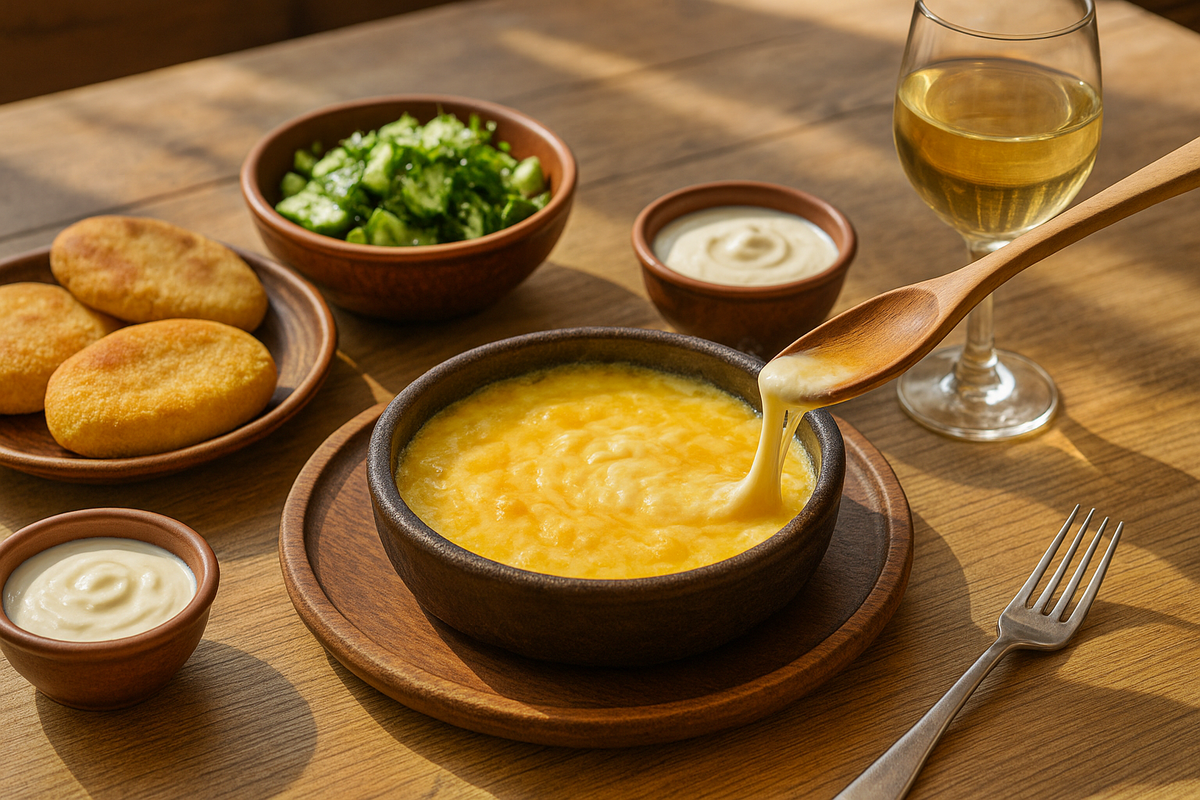
🫓 A classic pairing for borano is mchadi, a flatbread made from corn flour. It has a neutral flavor and absorbs the oil perfectly, making every bite rich.
🧅 Fresh vegetables are often served with the dish: tomatoes, cucumbers, red onions, or aromatic herbs. This adds lightness and balance to the rich, rich cheese.
🍷 For drinks, a glass of Adjarian wine or a refreshing matsoni, a local fermented milk drink, are excellent. It softens the flavor and helps digest the hearty meal.
🥄 Some tourists call borano "Georgian fondue," and there's some truth to that. Like fondue, it's eaten by dipping pieces of bread or mchadi in melted cheese. But borano is a much more authentic and ancient dish, infused with the spirit of the mountains and traditions.
📸 In restaurants, the dish is often garnished with fresh herbs or served with a view of the fjords, creating a true culinary ritual. If you're traveling through Adjara, be sure to order borano—it will tell you more about the region than any guidebook.
🌟 Interesting Facts About Borano
- 📜 Borano is recognized as part of Georgia’s cultural heritage.
- 🧑🍳 Experienced cooks used to determine when the dish was ready by listening to its characteristic “sizzling” sound.
- 🧀 In the mountains, cheese was intentionally aged to the right maturity specifically for making borano.
- 🛖 Traditionally, borano was eaten by the whole family from a single dish.
- 📍 In Batumi, borano is served as a gastronomic symbol of the region.
🧭 Where to try borano in Georgia
📍 The best flavors are in Adjara. If you want to try real, authentic borano, head to the mountain villages of Keda and Khulo. Here, the dish is prepared according to ancient recipes: on a ketsi, with aged cheese and fragrant melted butter. You'll also find worthy places in Batumi—look for restaurants with the words "homemade borano" or "Adjarian" on the menu.
🍽️ For a tourist, it's not just food, it's an experience. Borano in Georgia is flavor, atmosphere, and tradition all in one dish. It's served hot, with the squeak of butter and the smoky aroma of the ketsi. You'll see the cheese stretching, the butter sizzling, and you'll understand—it's a culinary spectacle that can't be replicated at home.
👩🍳 Is it possible to make borano yourself? Theoretically, yes. If you can find good suluguni cheese, burnt ghee, and a thick-walled frying pan, you can try it. But without a real yaghi and Georgian ketsi, it won't quite taste the same. At home, it's a remake, not the original. Borano is a dish about a moment, a place, the spirit of the mountains.
✨ Our tip: Be sure to try borano in Georgia, especially in the mountains. Then decide whether you want to repeat the experience at home or keep it as a special travel memory 🏔️💛
🔚 What's the bottom line?
Borano is an authentic taste of Adjara that cannot be described in words—it must be experienced in person. Simple, filling, and aromatic, it reflects the character of the mountains and carefully preserved culinary traditions.
📩 Have you tried borano in the mountains or at a restaurant in Batumi? Leave a review, and we'll add your favorite place to our Georgian culinary itinerary.
❓ FAQ — Frequently Asked Questions
👉 This is a complete hot dish that replaces both a main course and a cheese appetizer. It's filling, high-calorie, and served at the beginning of a meal or as a standalone treat.
👉 Because ghee doesn't burn, gives off a nutty aroma, and is traditionally used in the mountains—it keeps better there.
👉 Yes, but the flavor won't be as authentic. An alternative is mozzarella or unsalted brine cheese.
👉 Traditionally, it's served by dipping the flatbread in melted cheese. However, in restaurants, it's served with a spoon or fork.
👉 No. The classic recipe only calls for cheese and butter. The power lies in the quality of the ingredients.
👉 With mchadi (corn flatbread), fresh vegetables, matsoni and a glass of white wine.
👉 In Adjara - especially in the villages of Keda and Khulo, as well as in Batumi restaurants with authentic cuisine.
👉 Yes. Use a thick-walled frying pan or ovenproof dish. The key is even heating.
👉 Yes. It's soft, tender, and unspiced. Just be careful—it's served hot.
👉 In rustic recipes, yes, especially in winter. But in the classics, it's just cheese and butter.

18 comments
Log in to leave a comment
Автор так живо описывает историю борцано и его особую текстуру — мягкую, тягучую, с насыщенным молочным вкусом — что я уже представляю, как сижу в кафе на набережной Батуми у Чёрного моря, укутавшись в тёплый платок, а передо мной тарелка только что поданного борцано с хрустящим лавашом.
Очень ценно, что в рейтинге есть советы от местных: где искать настоящее борцано, как его сочетают с другими блюдами Аджарии и почему лучше подавать его тёплым, чтобы сыр плавился до совершенства.
Отдельно вдохновили отзывы путешественников, которые пробовали борцано в семейных двориках в Хелвачах или на рынке в Кобулети — они говорили, что это одна из тех вкусовых находок, которые остаются с тобой надолго.
Спасибо автору за такой насыщенный и дружелюбный материал!
А вы уже пробовали борцано в Аджарии — больше понравился классический вариант у моря или в уютном деревенском кафе? 🧀🌊✨