




🍆 Georgian Ajapsandal: Eggplant, Pepper and Tomato Stew Recipe
Eggplant, sweet pepper, tomatoes and onion are stewed in their own juices, then finished with garlic and plenty of fresh herbs. The Georgian classic has no meat.
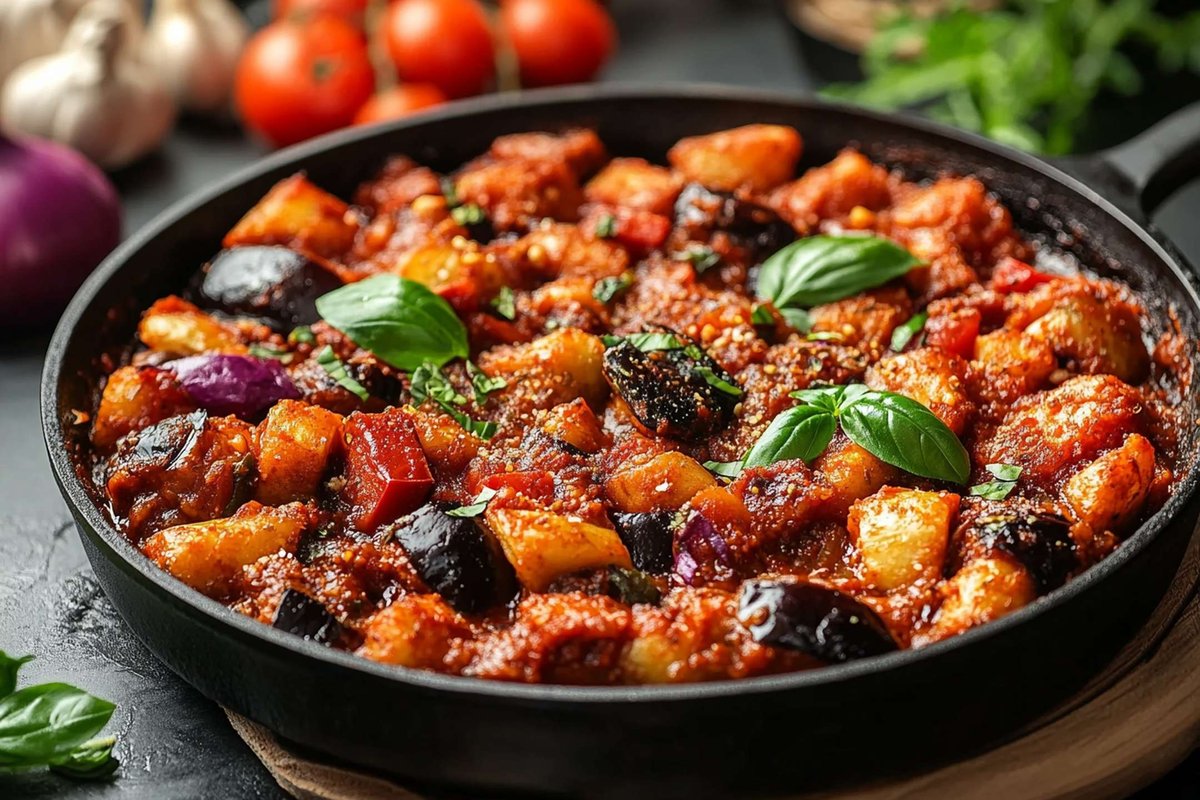
Georgians make ajapsandali every summer, when the markets are piled high with eggplant, peppers and ripe tomatoes. It is a simple meat-free stew eaten cold, with bread to mop it up, and set on the table next to cheese and grilled meat. Below we cover what the name really means, whose dish it is, how to cook it the Georgian way and how it differs from French ratatouille.
🔤 What the Word “Ajapsandali” Means
The honest answer: there is no exact explanation. Georgia’s official tourism portal says the meaning of the word is unknown, and that over time it came to mean a “jumble” or a “mix-up” of different parts. That describes the dish well, since everything is stewed together.
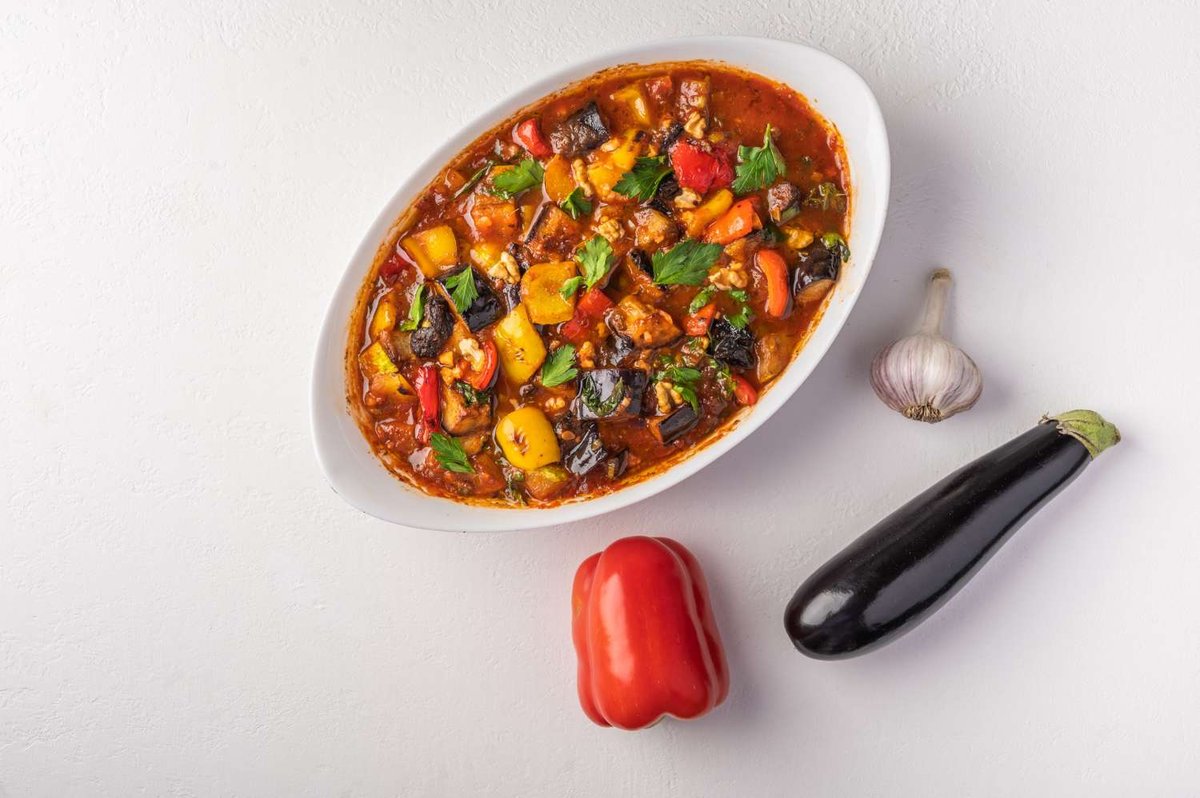
The word has the same meaning in Armenia. In the comedy Khatabala by the Armenian playwright Gabriel Sundukyan, a character’s affairs are said to have turned into an ajapsandal, that is, into complete chaos.
The most popular version links the first part of the word to the Arabic ajab, meaning “wonder” or “marvel”. That word did enter Persian and Turkic languages and is well known in the Caucasus. But we found no reliable confirmation that the name of the dish actually comes from it, so this is a hypothesis, not a fact.
Ajapsandali or ajapsandal? In Georgian the dish is called აჯაფსანდალი (ajapsandali), because most Georgian nouns end in “-i”. The Armenian and Azerbaijani names have no such ending, so in Russian both forms took hold. Neither is a mistake.
🌍 Whose Dish Is It
There is no point arguing who came first: each country has its own version, and all of them are good.
The origin of the dish is also explained in different ways. One widespread version ties it to mountain shepherds, who needed simple food made from whatever was at hand. Another stresses the influence of Persian cuisine, where herb-rich vegetable stews have long been known. Neither version has documentary proof.
🧺 Ingredients for 4 Servings
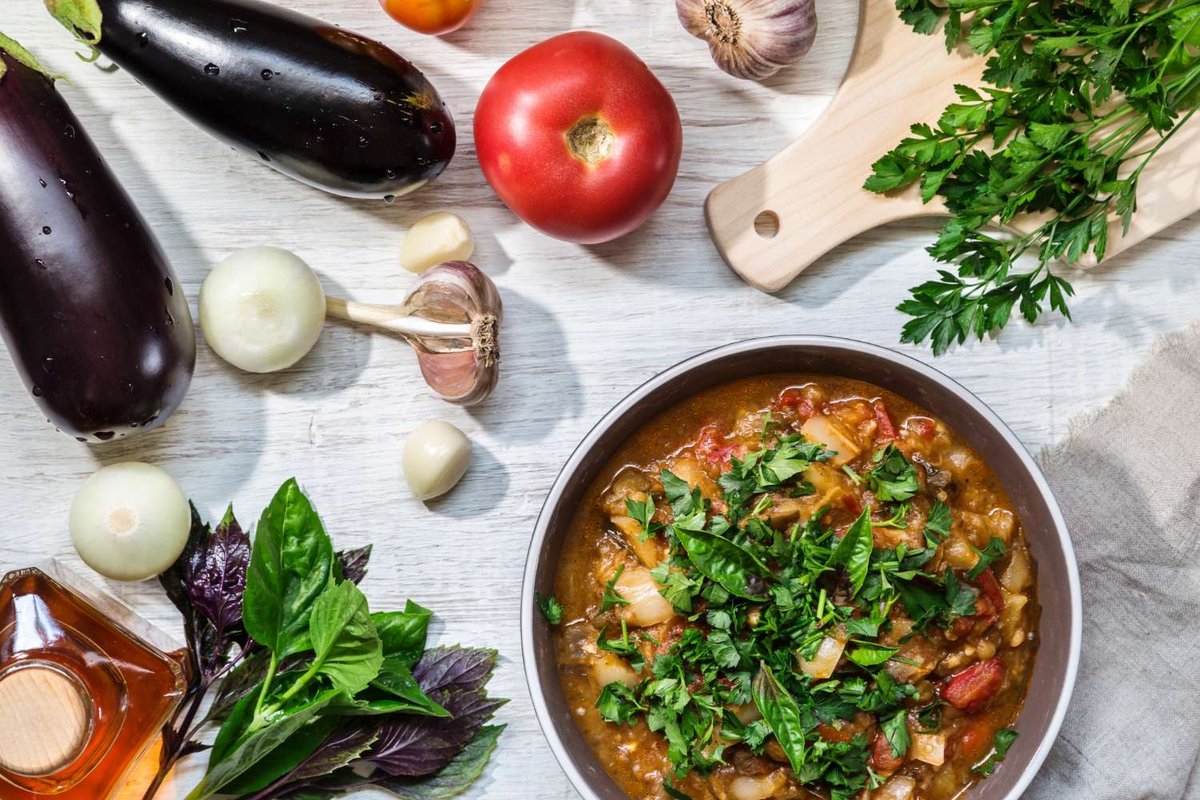
What matters in ajapsandali is not exact grams but the quality of the vegetables. The tomatoes must be truly ripe and sweet, otherwise the stew turns out sour and watery. In winter you can replace them with 2 tablespoons of tomato paste dissolved in a little water, but the flavour will be different.
👩🍳 Step-by-Step Recipe
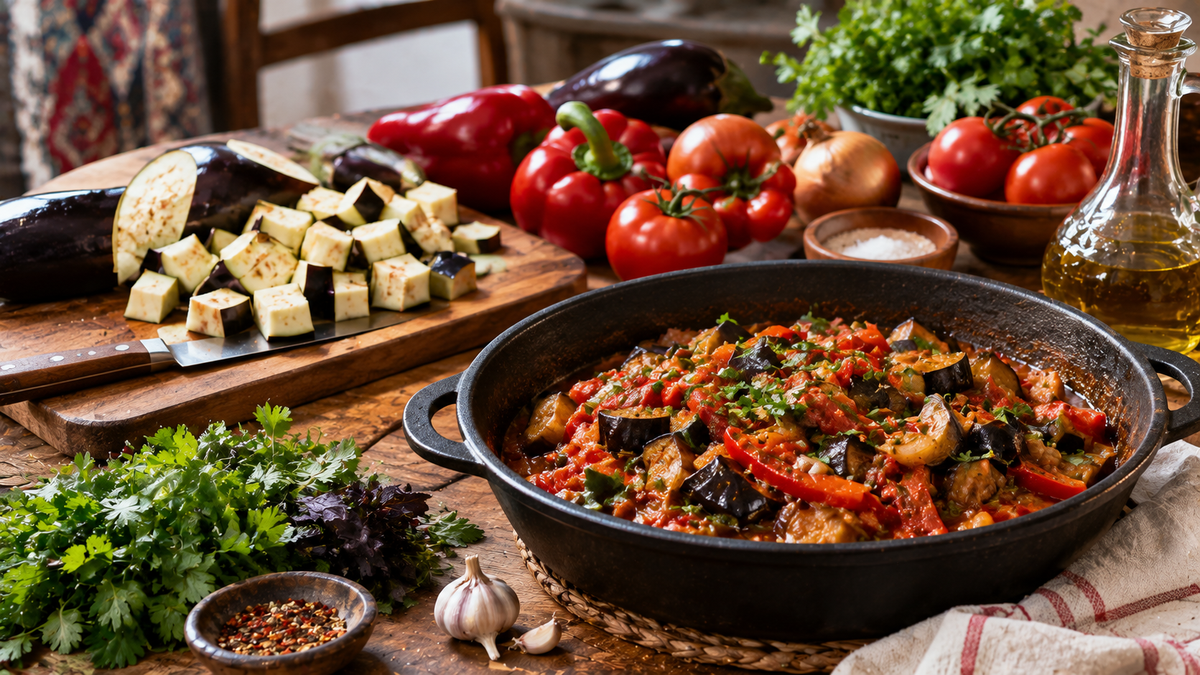
- Prepare the eggplantCut it into 2–3 cm cubes, salt generously and leave for 30 minutes. Then rinse and squeeze it well: this removes the bitterness and the eggplant will absorb less oil.
- Fry the eggplantHeat 3 tbsp of oil in a cauldron or heavy-bottomed pan and fry the eggplant until golden, 8–10 minutes. Move it to a plate.
- Onion and pepperAdd the remaining oil to the same pot and fry the onion in half-rings until translucent, about 5 minutes. Add the sweet pepper cut in strips and cook for another 5 minutes.
- TomatoesScore the tomatoes with a cross, pour boiling water over them and peel. Chop finely or grate and add to the peppers. Let them simmer for 5 minutes.
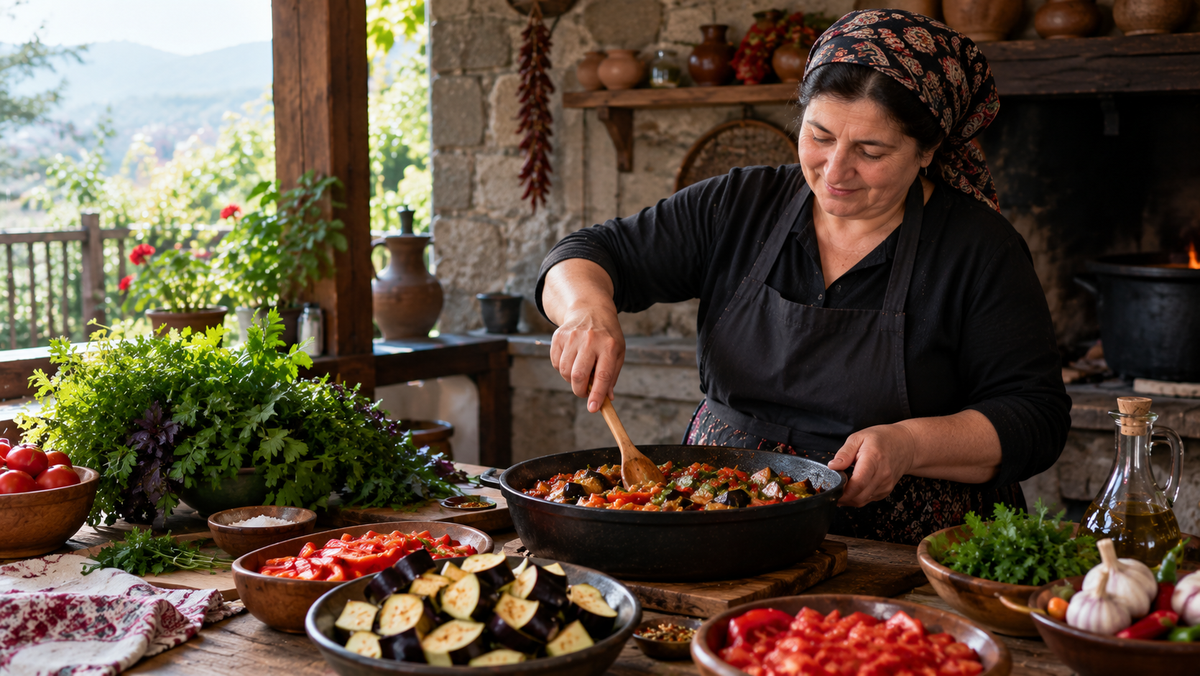
- StewReturn the eggplant, add the finely chopped chili, salt and spices. Cover and stew over low heat for 20–25 minutes. Stir rarely and gently so the vegetables do not turn to mush.
- Garlic and herbsTake the pot off the heat, stir in crushed garlic and plenty of chopped coriander, reyhan and parsley. Cover and let it stand for at least 15 minutes.
- Let it restAjapsandali tastes best after a few hours or the next day, straight from the fridge. In a closed container it keeps for 2–3 days.
🔁 Variations: Oven, Charcoal Grill, With Meat
🍞 What to Serve With Ajapsandali
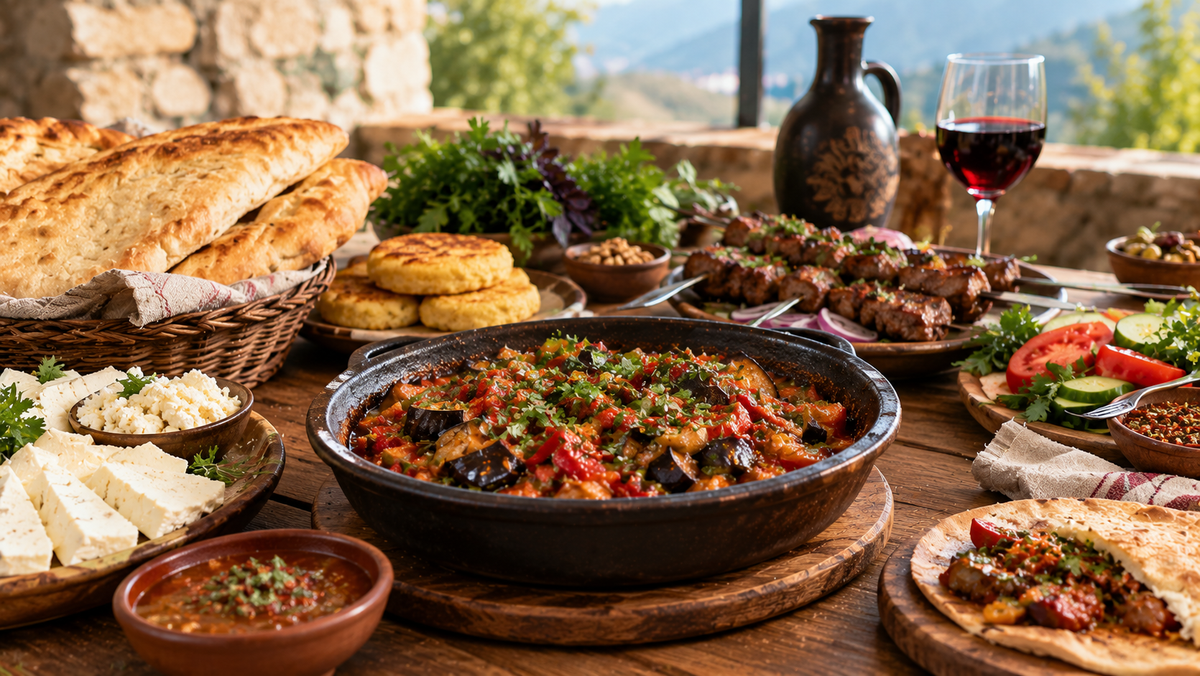
In Georgia ajapsandali is most often served cold, as an appetizer or a dish on its own in hot weather. It is eaten with shoti bread or cornmeal mchadi, with sulguni or Imeretian cheese next to it. It is an excellent side for mtsvadi, meat grilled on skewers, and any charcoal-grilled meat. For vegetarians and those who fast, ajapsandali is a full lunch, especially with potatoes.
If you like Georgian meat-free dishes, see our selection of vegetarian Georgian dishes and the recipe for lobio in a clay pot.
🇫🇷 Ajapsandali vs Ratatouille: What Is the Difference
🔥 Calories in Ajapsandali
By our calculation, for the recipe above one serving weighs about 350 g and contains about 280 kcal, that is, 60–80 kcal per 100 g of the finished dish. Almost half of the calories come from the oil that the eggplant absorbs. If you bake the vegetables in the oven or on a charcoal grill, the figure drops to about 40–50 kcal per 100 g. Potatoes add about 15 kcal per 100 g of finished stew.
📍 Where to Try It in Georgia
Ajapsandali is on the menu of most Georgian restaurants, especially from June to October, when the vegetables are local and cheap. On menus it is usually under cold appetizers or vegetable dishes. Lists of places are collected in the catalogues of Georgian restaurants in Tbilisi and Georgian restaurants in Batumi. The tastiest home version is often served in family guesthouses in the regions.
Do not skimp on herbs, and do not add them while stewing: coriander and reyhan should go into the hot vegetables only after the pot is off the heat. Fresh herbs and garlic are what set Georgian ajapsandali apart from an ordinary vegetable stew. If you cannot find reyhan, use regular basil, but do not replace the coriander with anything.
Do you cook ajapsandali your own way, or know a place that serves it especially well? Tell us in the comments whether you add potatoes or meat, or roast the vegetables over coals.
Current as of October 2026. The recipe was checked against Georgian and Armenian sources; the calories were calculated by the editors. The fresh vegetable season in Georgia runs from June to October.
❓ Frequently Asked Questions About Ajapsandali
💬 It is a Caucasian vegetable stew of eggplant, sweet pepper, tomatoes and onion, with garlic and plenty of fresh herbs. In Georgia it is made without meat and most often served cold.
💬 There is no exact translation: the origin of the word has not been established. In everyday speech it means “a jumble”, “everything mixed together”. The version linking it to the Arabic ajab, “wonder”, is popular but unconfirmed.
💬 It is cooked in Georgia, Armenia and Azerbaijan, as well as in the North Caucasus. The Georgian version is all vegetables, while the Armenian one often has meat and pre-baked vegetables.
💬 Both are correct. “Ajapsandali” is the Georgian form, where nouns end in “-i”. “Ajapsandal” is closer to the Armenian and Azerbaijani name.
💬 Either way. In Georgia it is most often served cold or lukewarm, and it is considered best the next day.
💬 There are no potatoes in the strict classic, but many people add them to make it more filling. Decide by taste.
💬 By our calculation about 60–80 kcal per 100 g, and one serving is about 280 kcal. The oven or charcoal-grill version is lighter, about 40–50 kcal per 100 g.
💬 Ajapsandali usually has no zucchini, but it has coriander, reyhan, garlic and hot pepper. It is mostly eaten cold, while ratatouille is eaten warm.
💬 Yes. Bake the prepared vegetables under foil for 40 minutes at 190 °C, then 10 minutes uncovered, and add the garlic and herbs at the end.
💬 In the fridge, in a closed container, 2–3 days. During the first day the flavour only improves.

0 comments
Log in to leave a comment